Acta Aeronautica et Astronautica Sinica ›› 2025, Vol. 46 ›› Issue (8): 631458.doi: 10.7527/S1000-6893.2024.31458
• special column • Previous Articles
Chengpeng WANG, Chenguang HAO, Hao LI, Longsheng XUE( ), Yun JIAO, Siyu WU, Zhangyu MA, Ye YUAN, Weijun LI, Puchen HOU
Received:2024-10-29
Revised:2024-11-12
Accepted:2025-01-03
Online:2025-02-06
Published:2025-02-06
Contact:
Longsheng XUE
E-mail:xuels@nuaa.edu.cn
Supported by:CLC Number:
Chengpeng WANG, Chenguang HAO, Hao LI, Longsheng XUE, Yun JIAO, Siyu WU, Zhangyu MA, Ye YUAN, Weijun LI, Puchen HOU. Application of minimum entropy production principle to analysis of shock wave/boundary layer interactions[J]. Acta Aeronautica et Astronautica Sinica, 2025, 46(8): 631458.
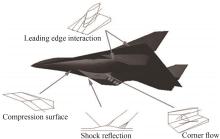
Fig.1
Shock wave/boundary layer interaction phenomena involved in high-speed vehicles[11]
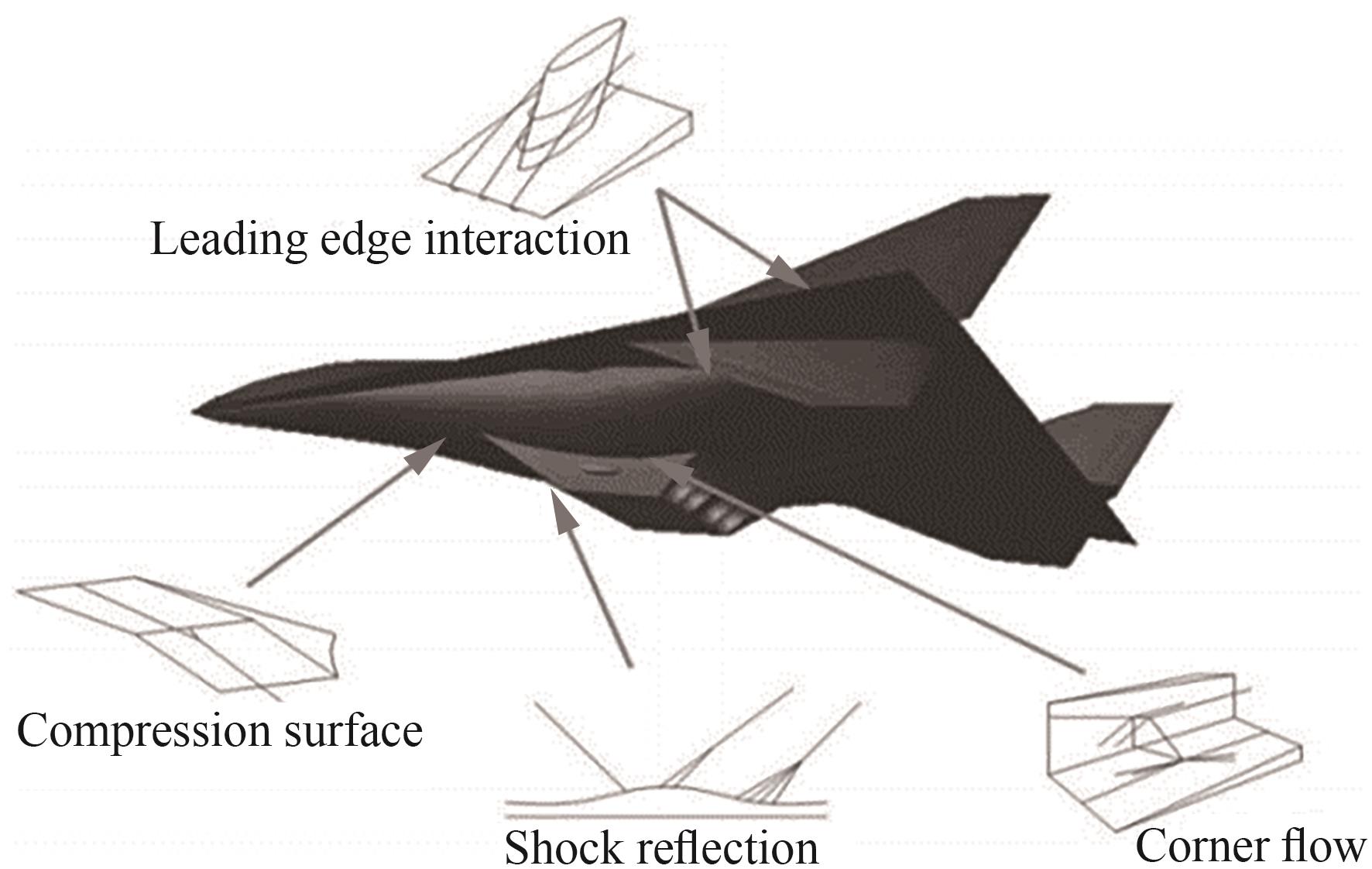
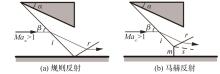
Fig.2
Two types of shock wave reflection structures in ideal inviscid flow[3]
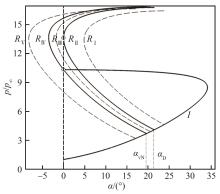
Fig.3
Detachment criterion and von Neumann criterion shock polars at Ma∞=3[3]
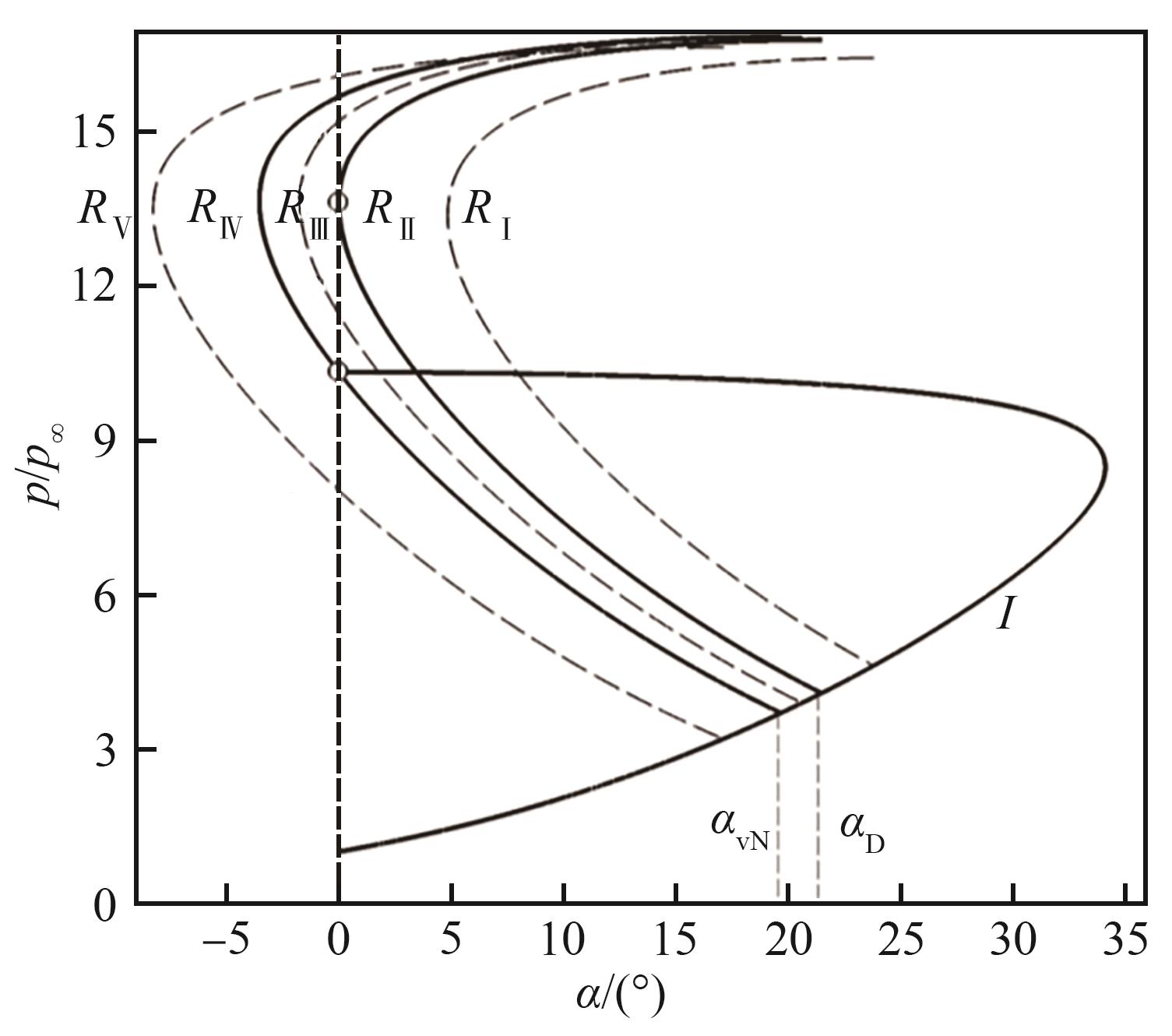
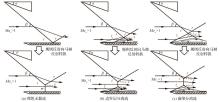
Fig.4
Three typical flow structures[3]
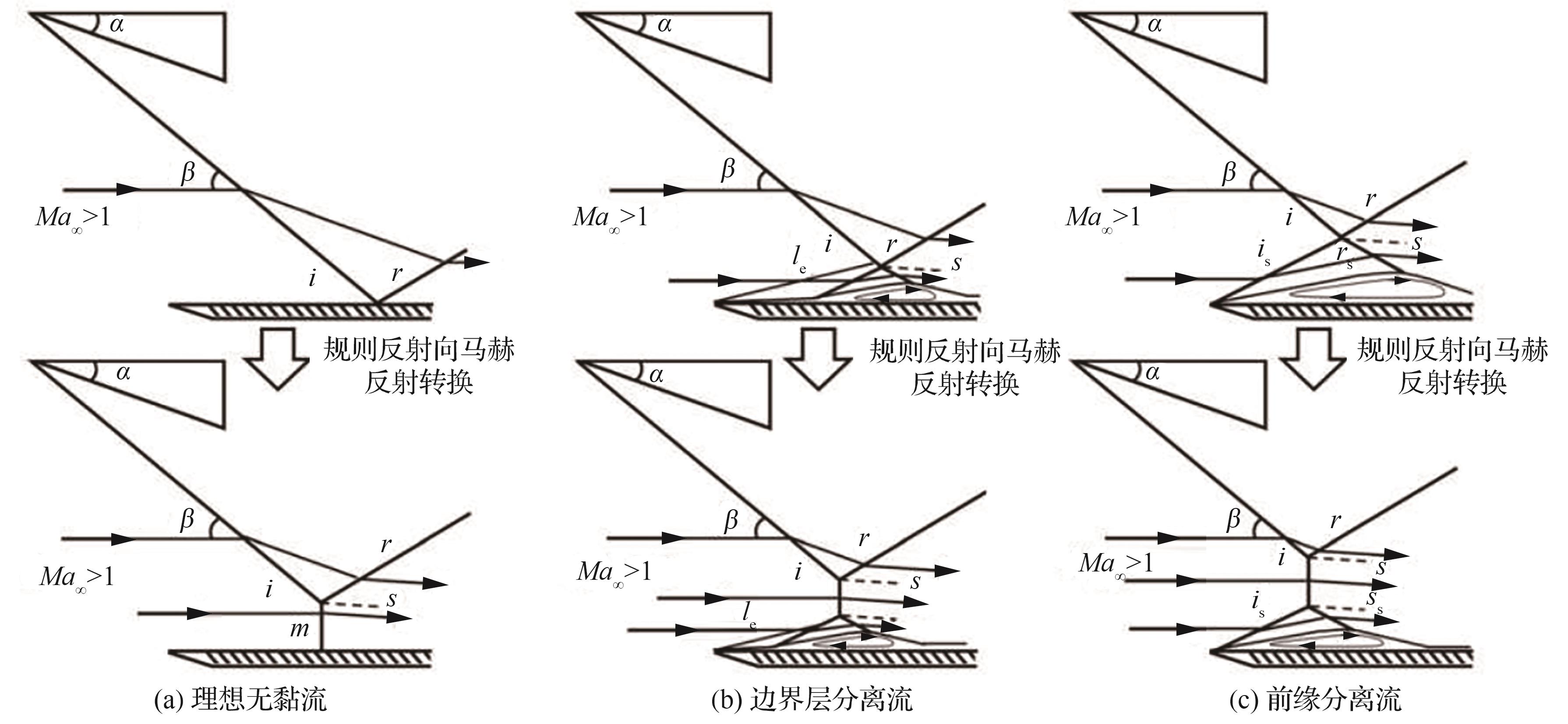
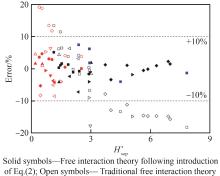
Fig.5
Comparison of uncertainty of plateau pressure estimated by free interaction theory following introduction of Eq.(2) and traditional free interaction theory [30]
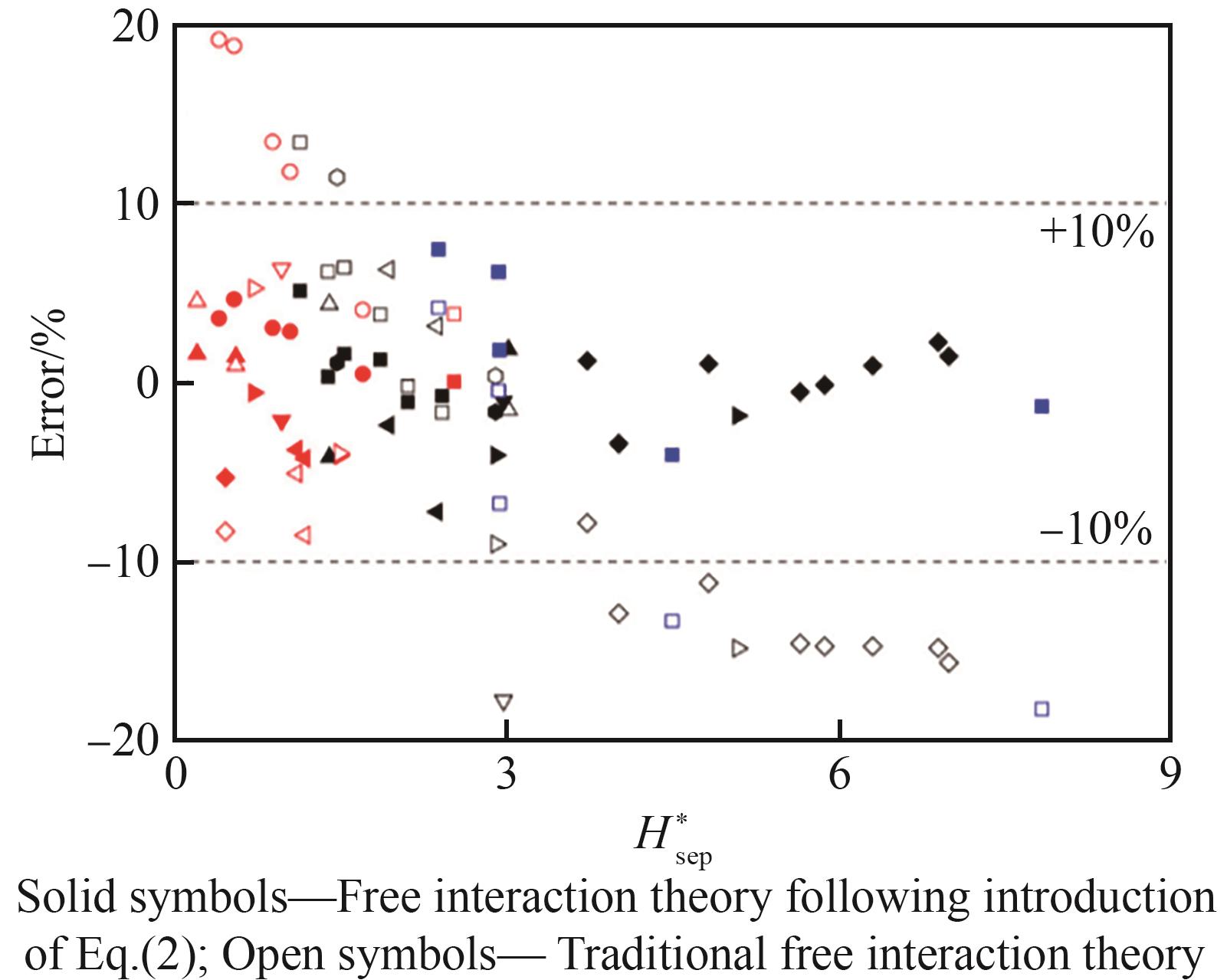
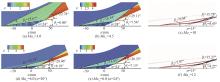
Fig.6
Comparison of theoretical analysis results (dashed line) and numerical simulation results[31]
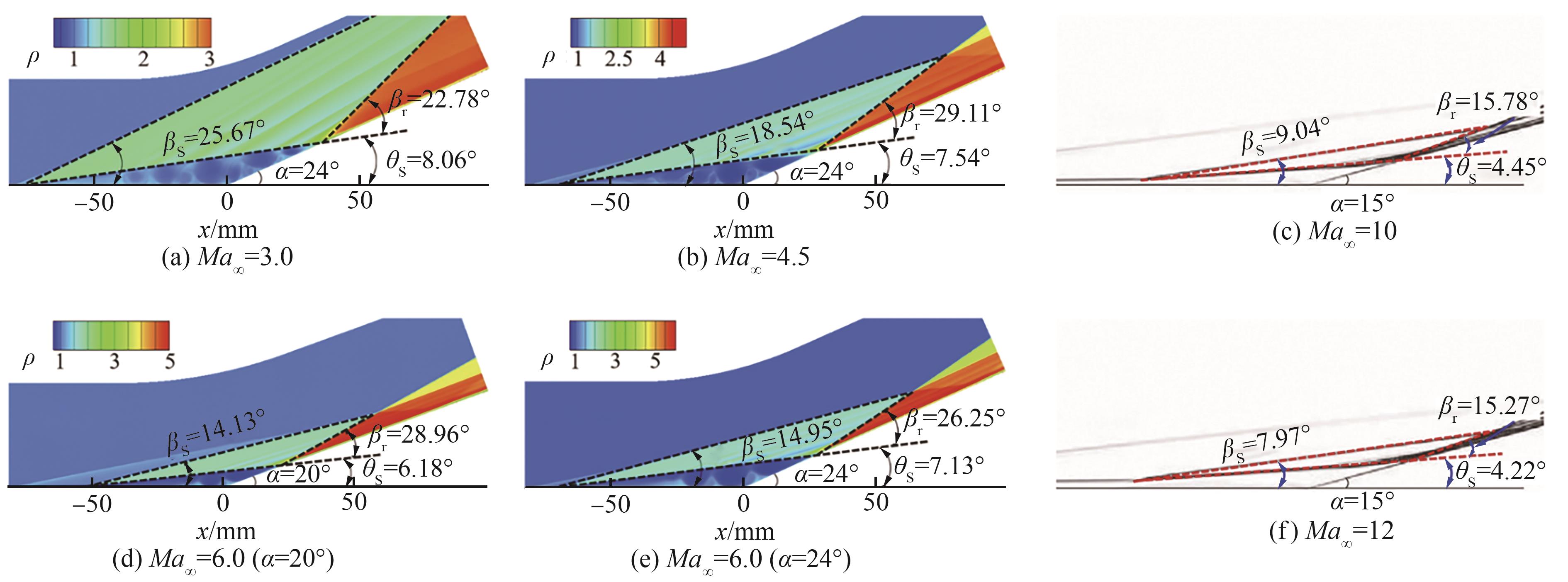
Fig.7
Flow region division of curved shock wave/ turbulent boundary layer interaction[32]
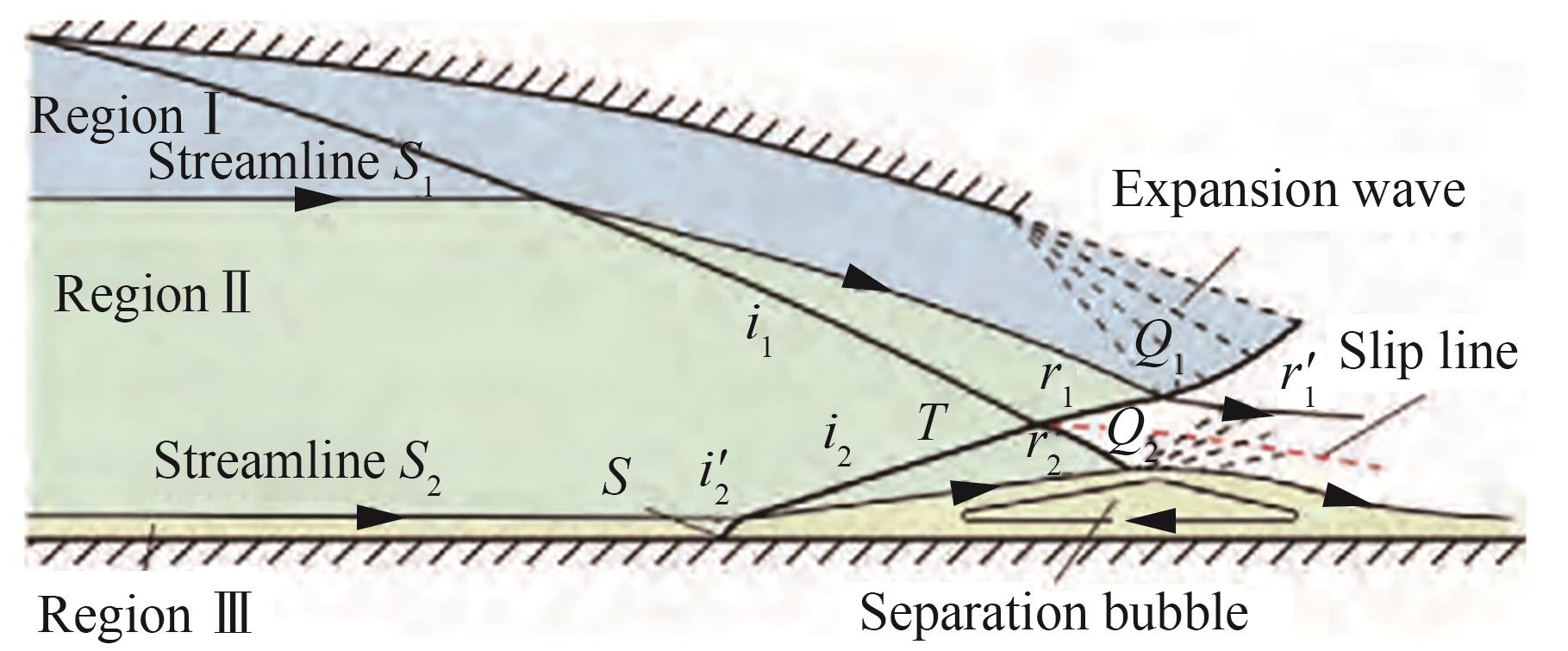
Fig.8
Schematic diagram of Type IV shock wave interaction flow field[33]
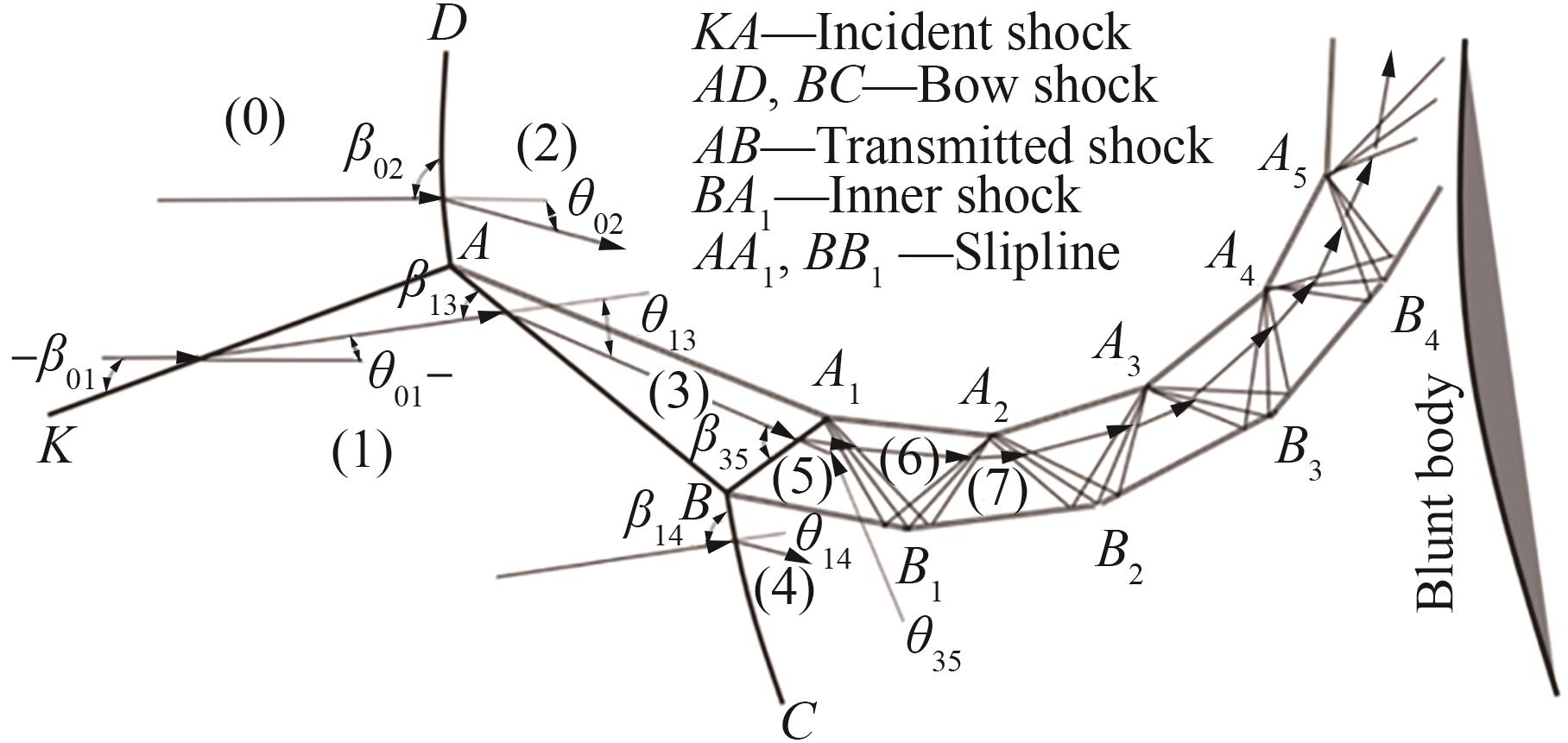
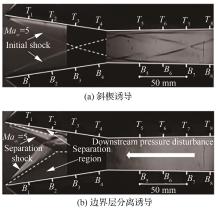
Fig.9
Schlieren images of shock wave reflection at incoming Mach number 5[37]
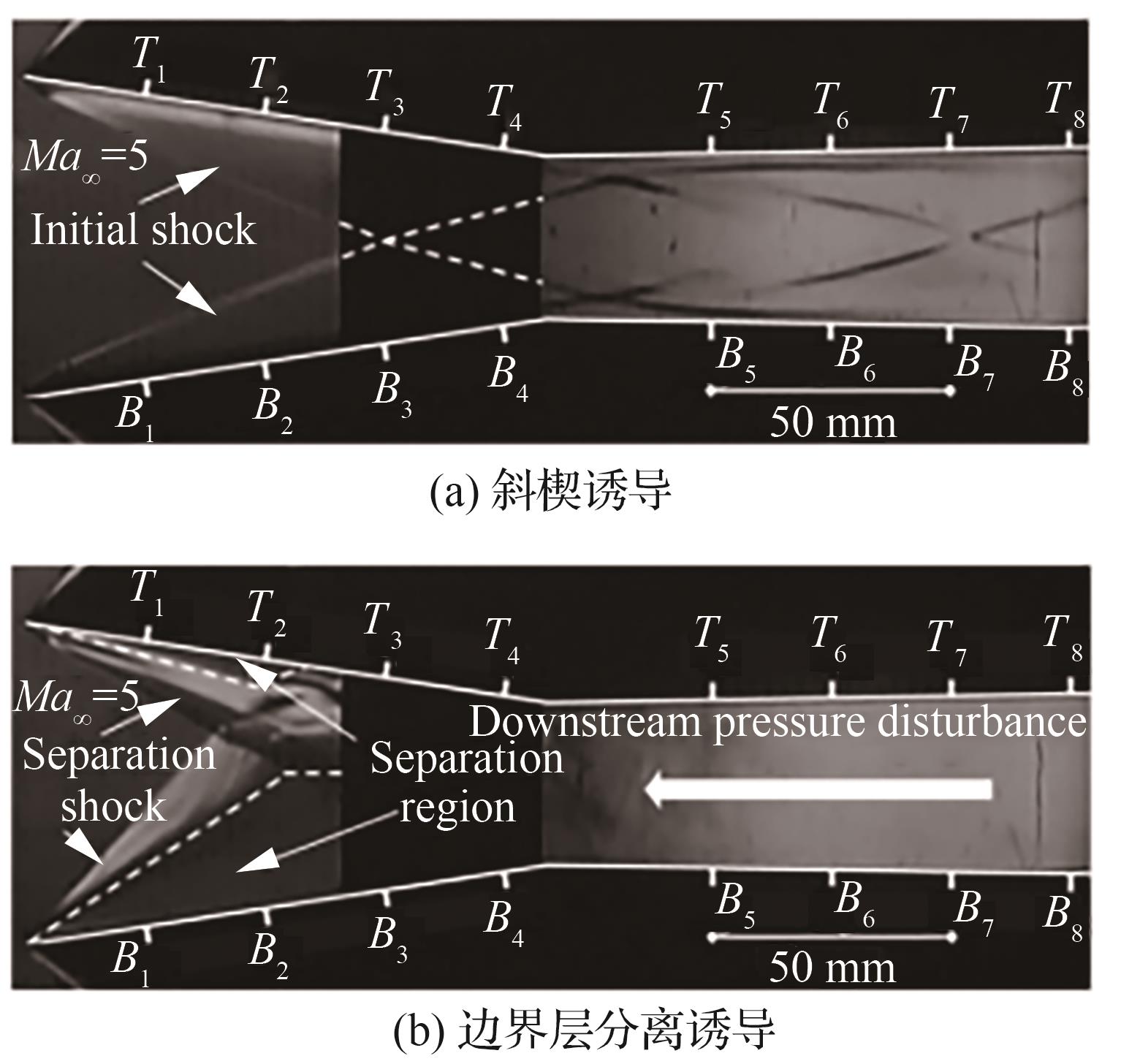
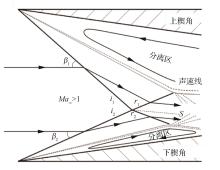
Fig.10
Upper and lower double separation shock wave interference and reflection structure [37]
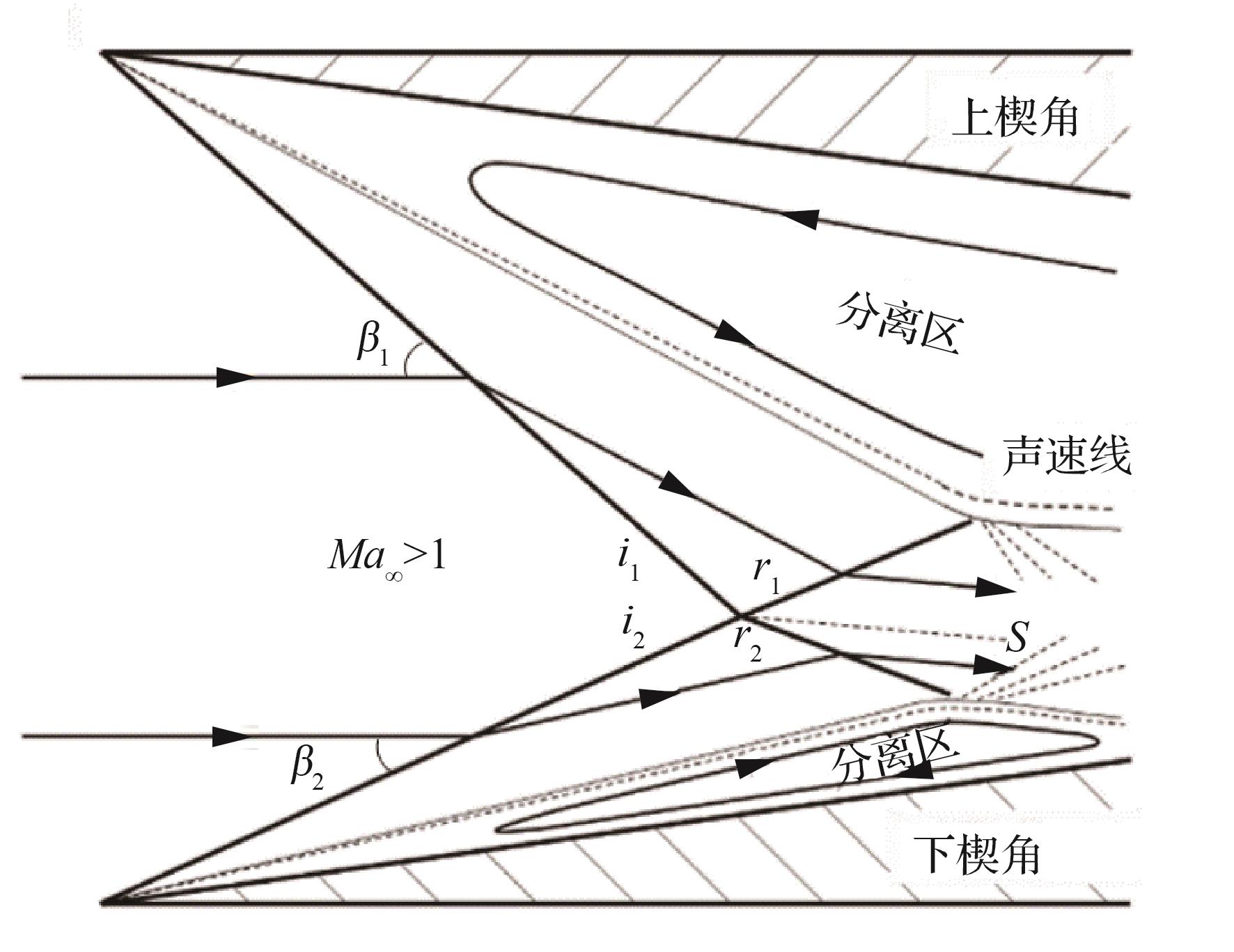
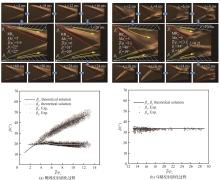
Fig.11
Evolution process of Regular Reflection (RR) and Mach Reflection (MR), and comparison of theoretical solutions with shadowgraph image statistical results[37]
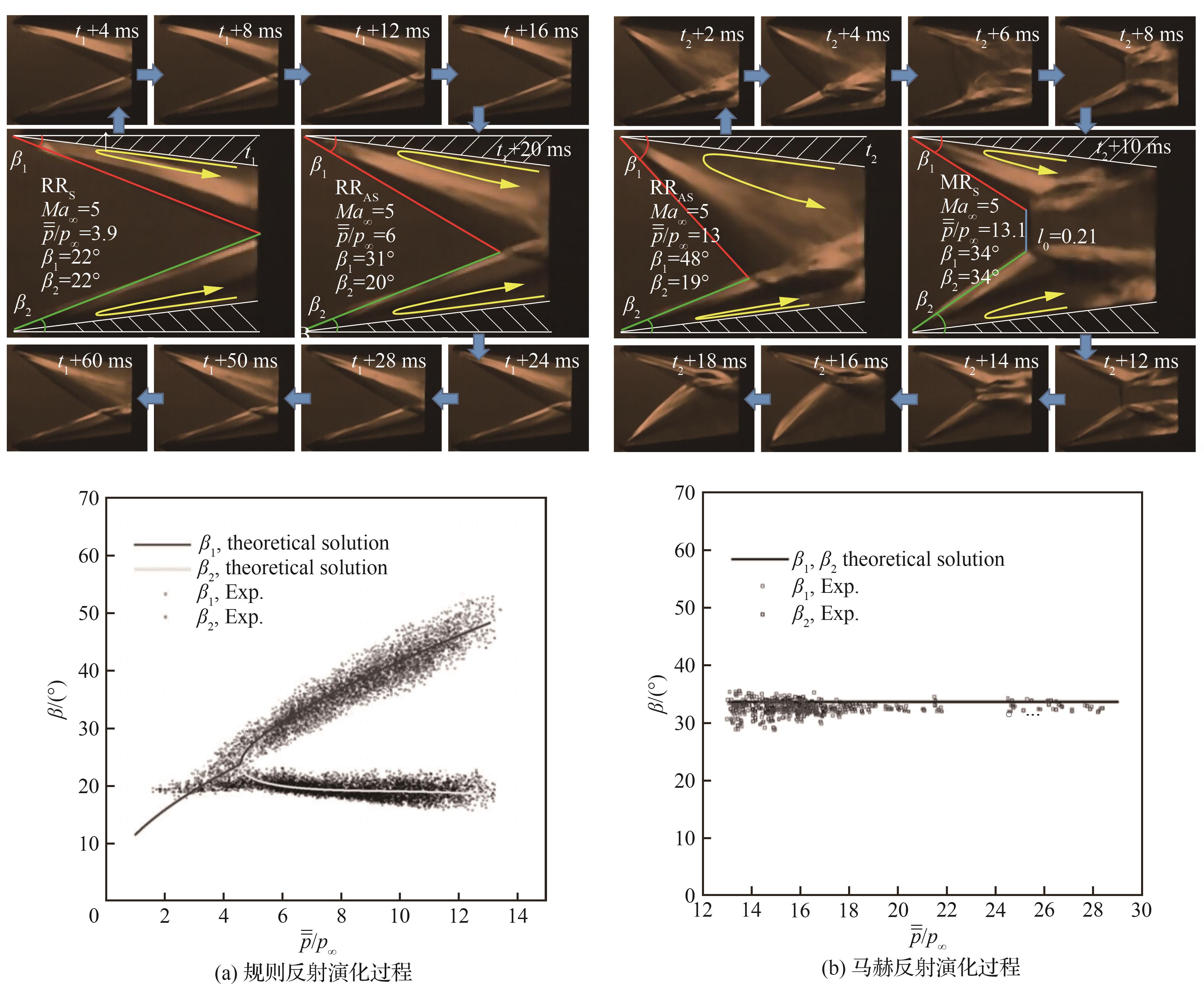
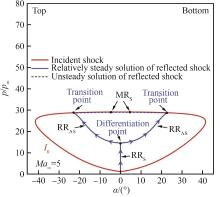
Fig.12
Reflection shock solution path that satisfies MEP[37]
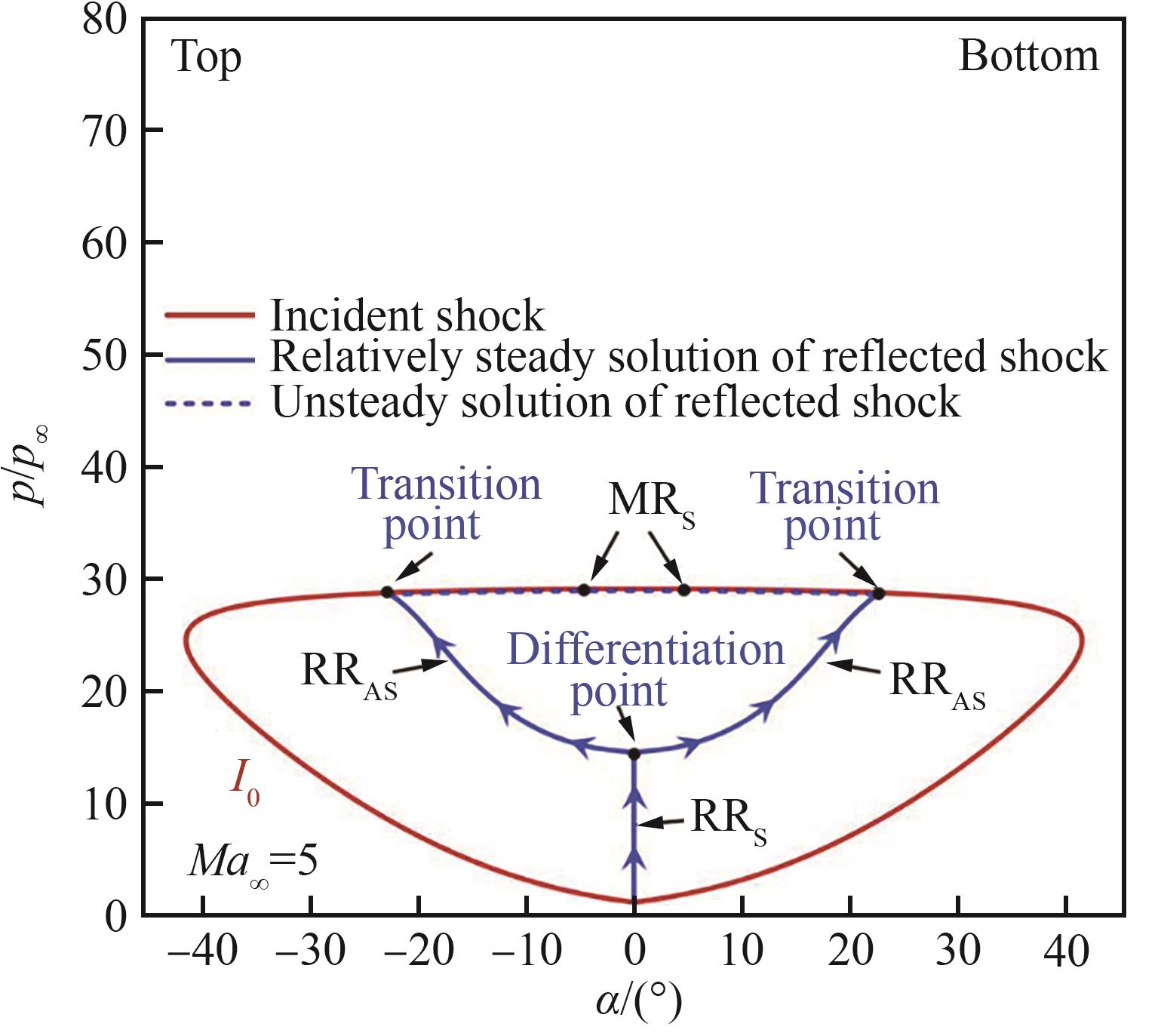
Fig.13
Detailed division of flow field in RR SWBLI[39]
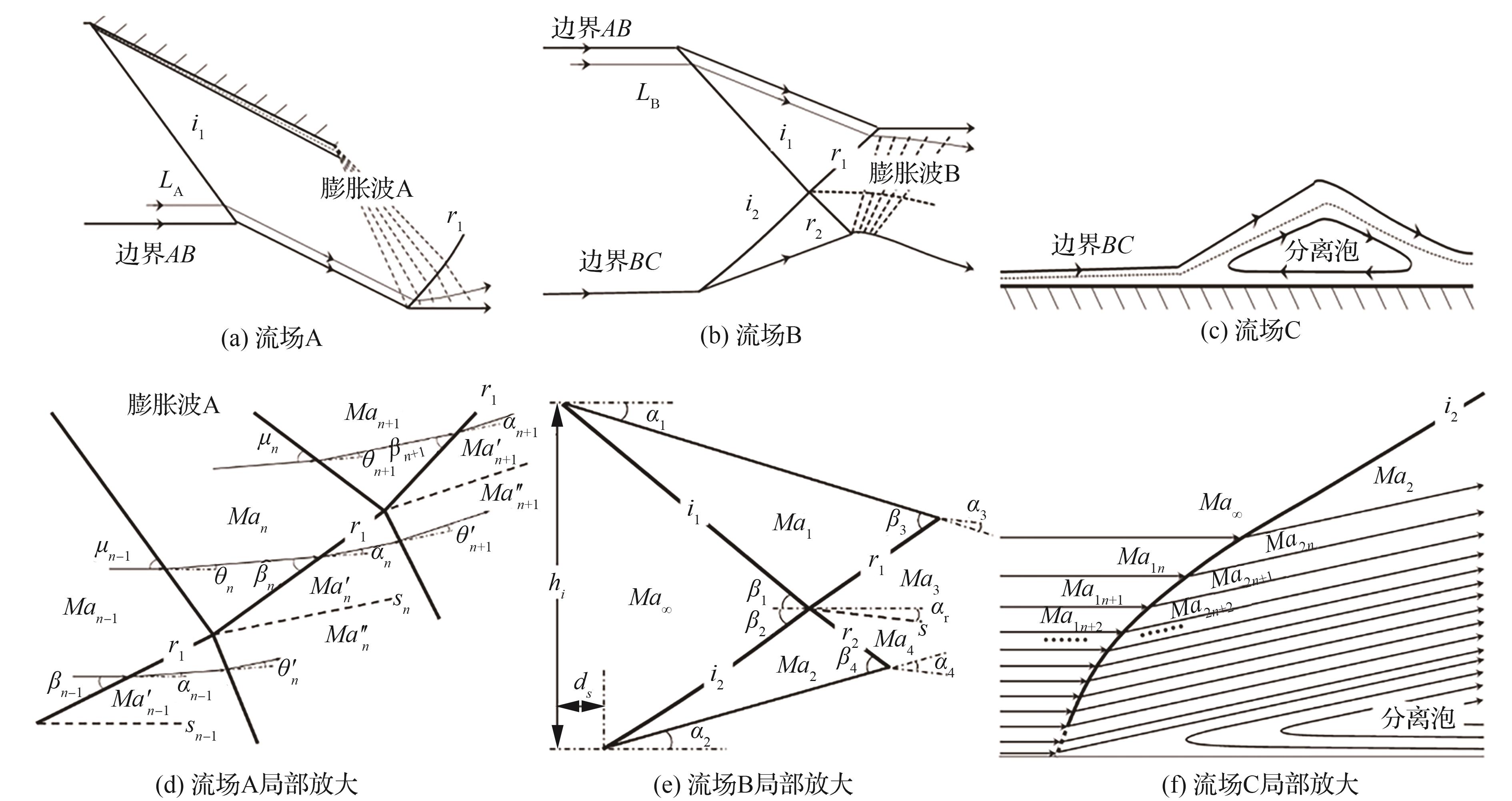
Fig.14
Theoretical analysis solution of shock separation angle[39]
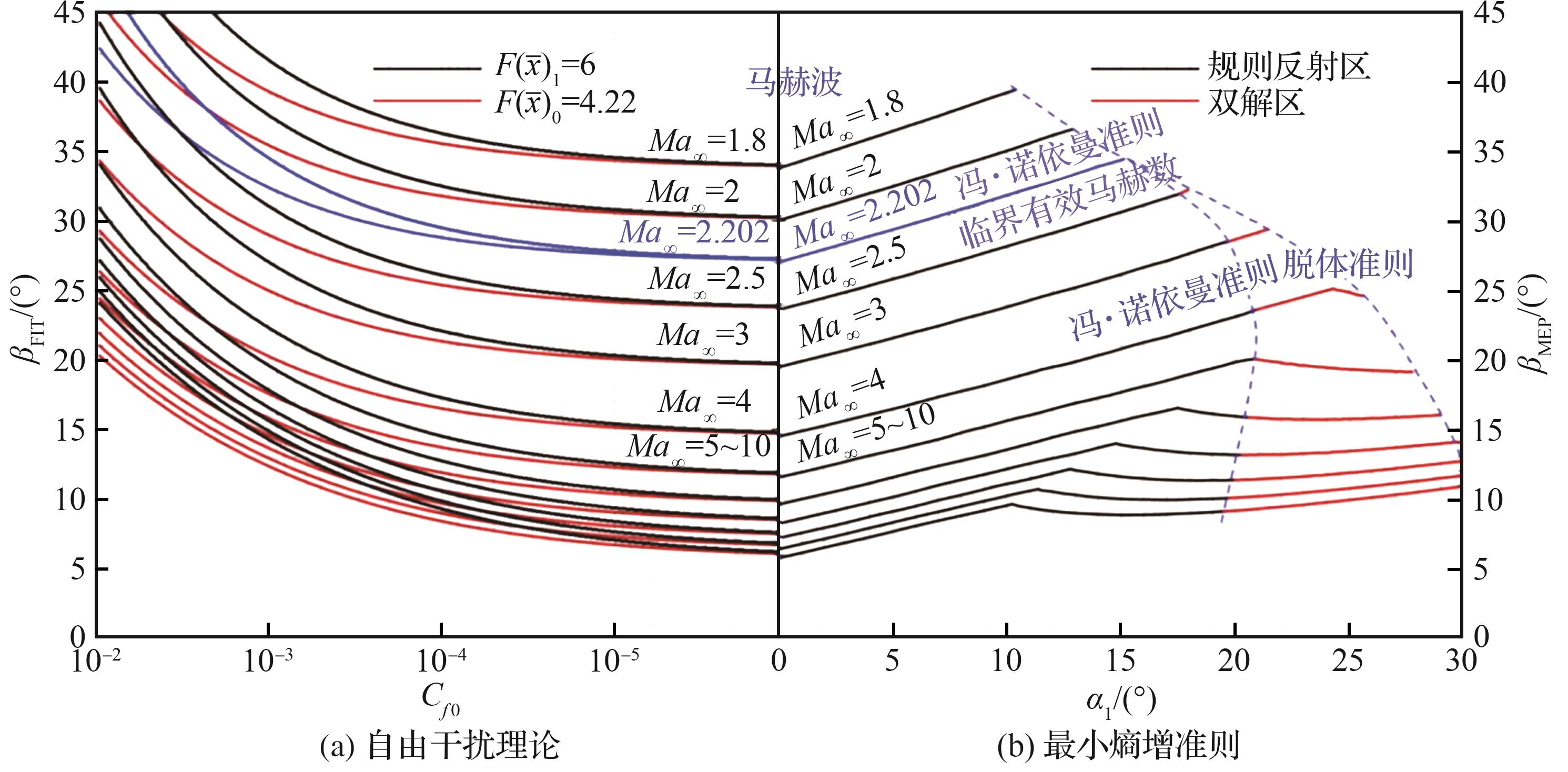
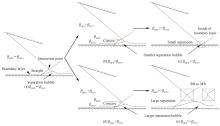
Fig.15
Different combinations of MEP and FIT[39]
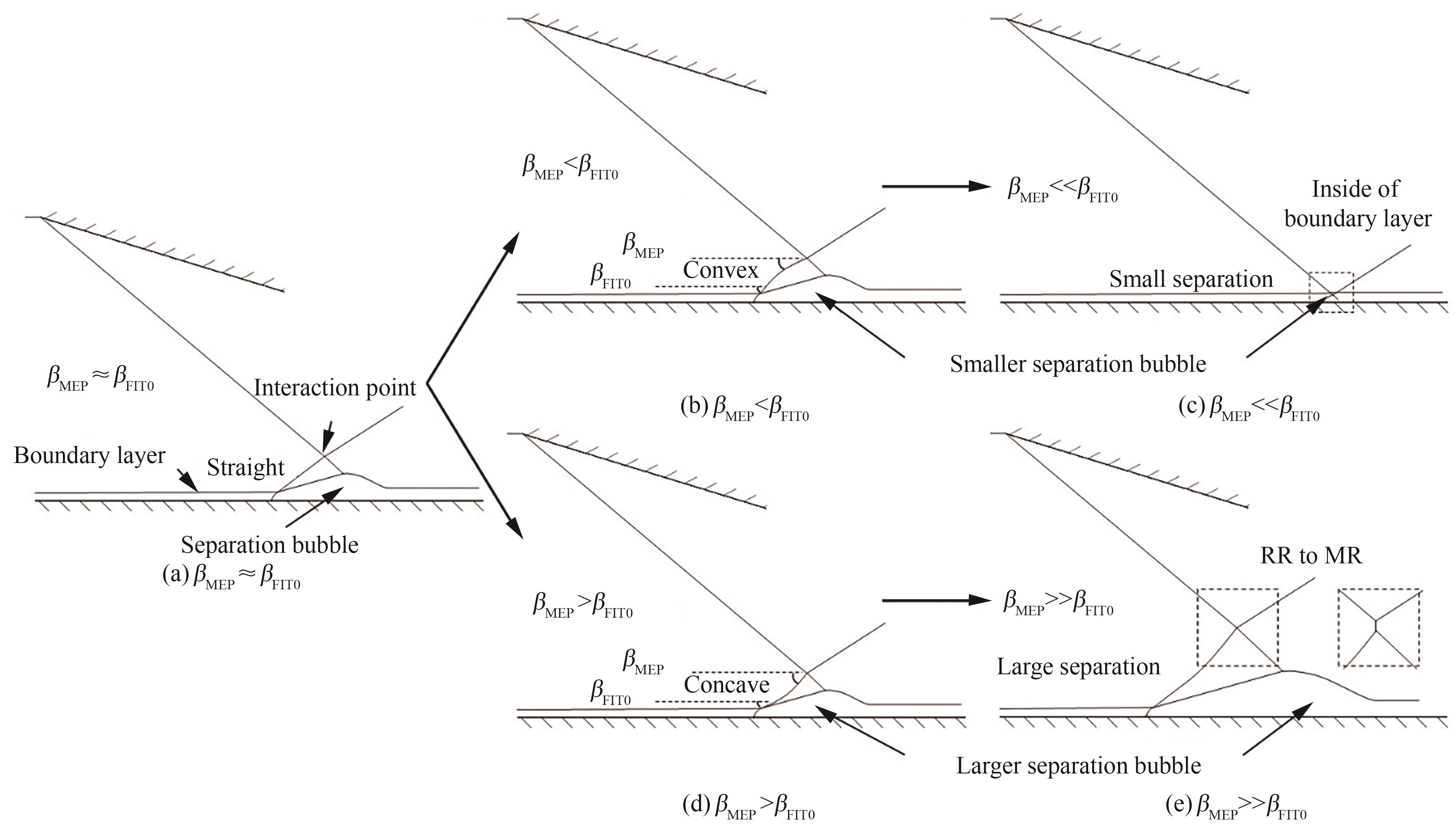
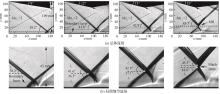
Fig.16
Schlieren images at Ma∞=2 and AReff=1.38[39]
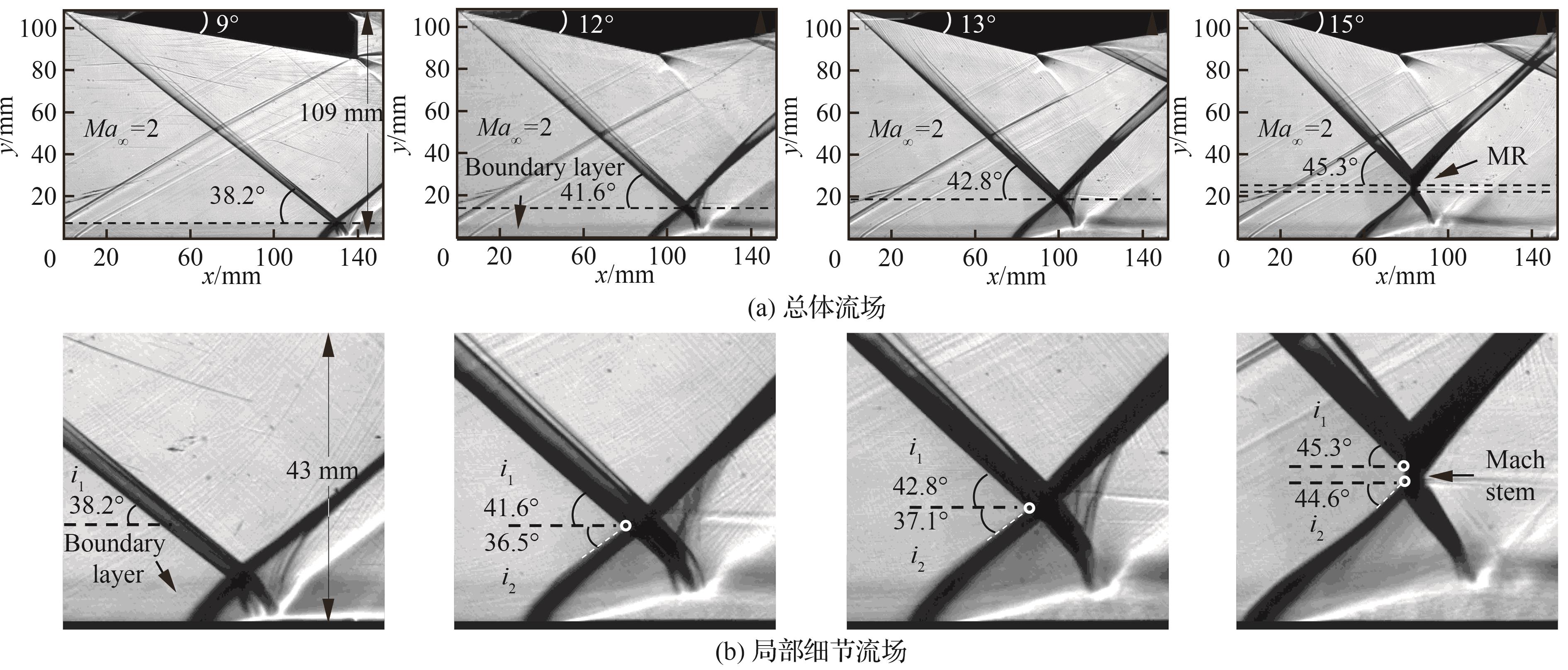
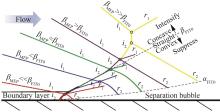
Fig.17
A summary of flow structure of boundary layer separation induced by incident shock wave[39]
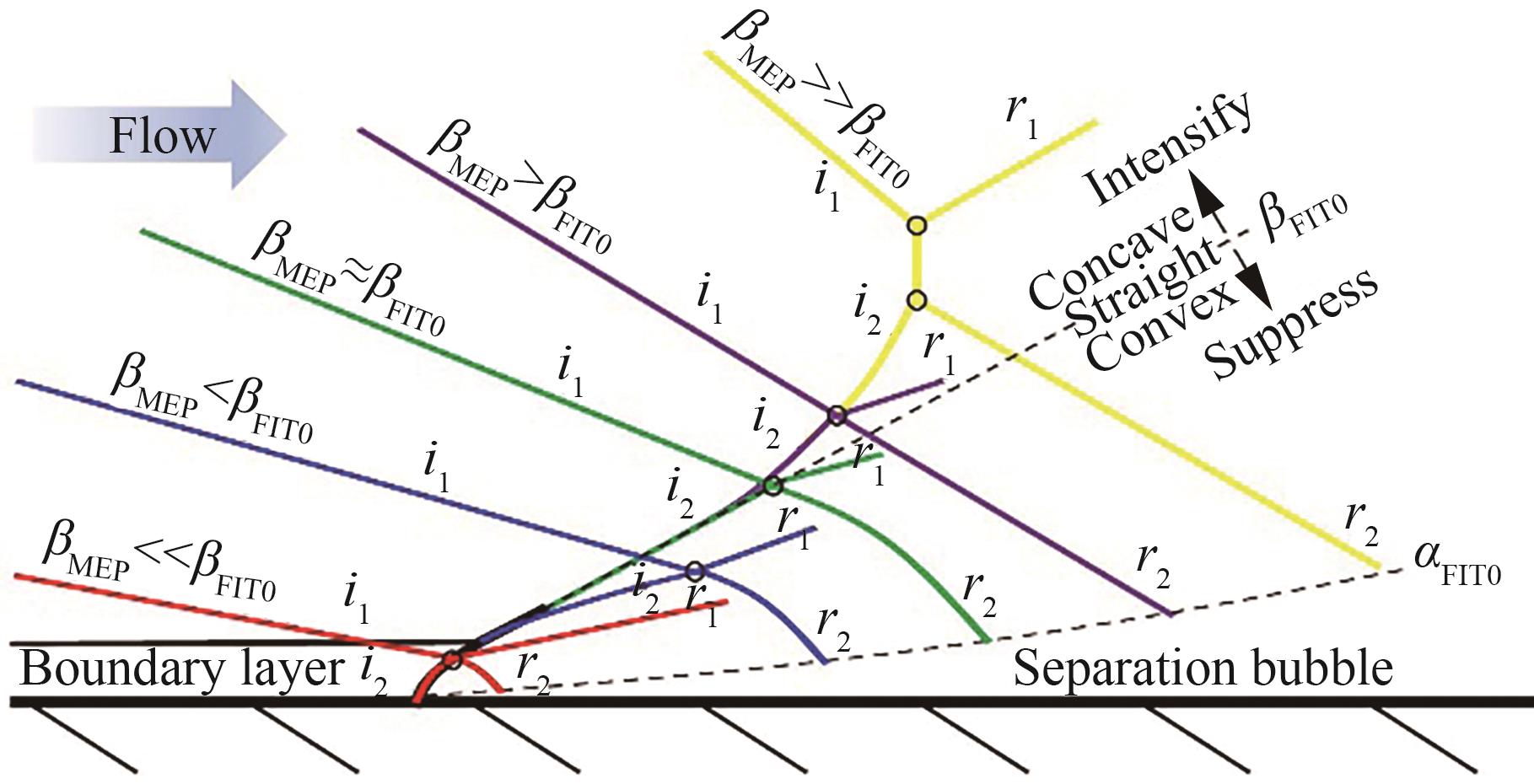
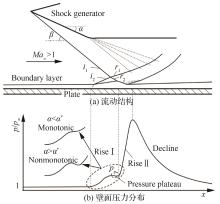
Fig.18
Schematic diagram of boundary layer separation induced by incident shock wave[40]
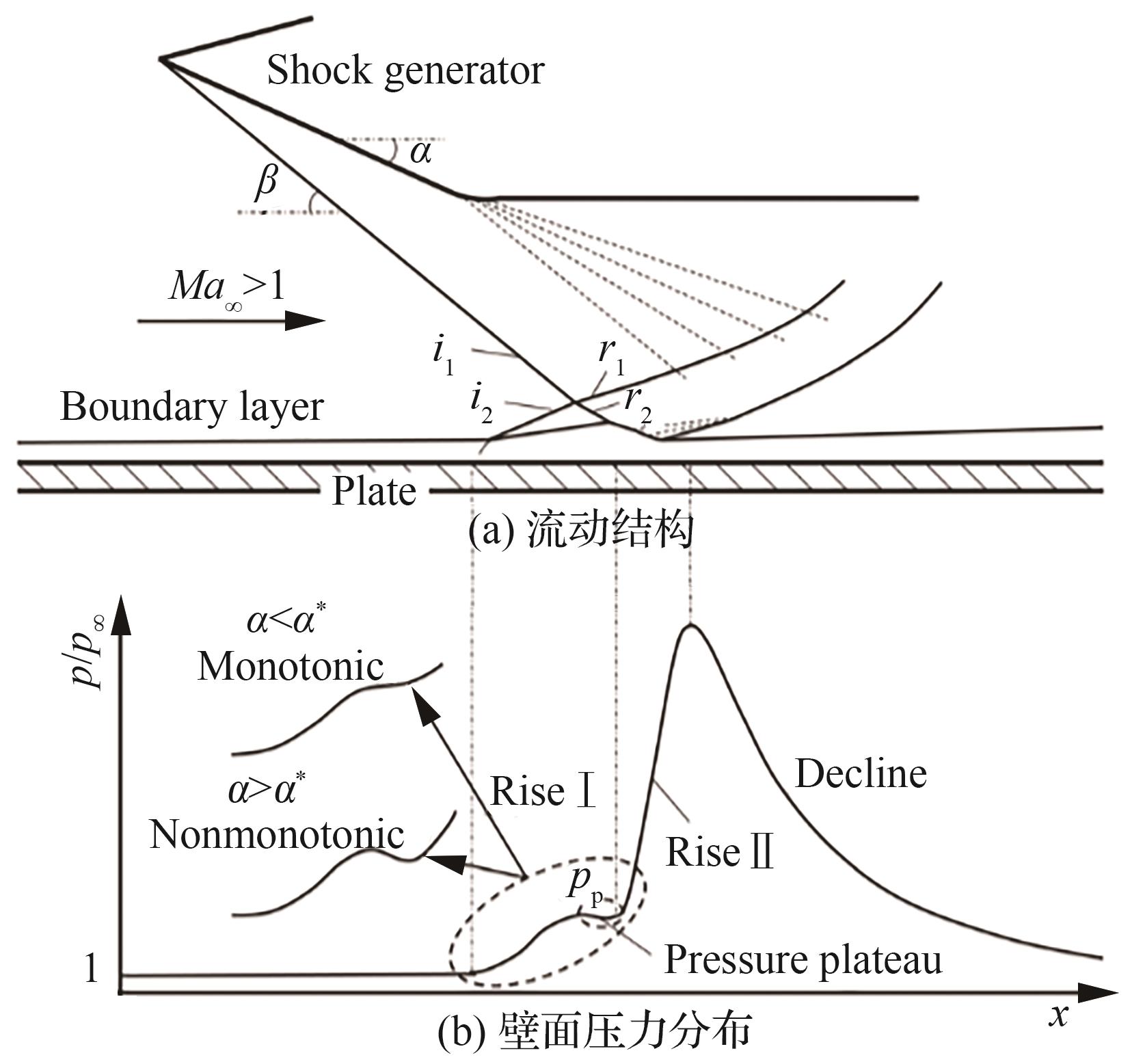
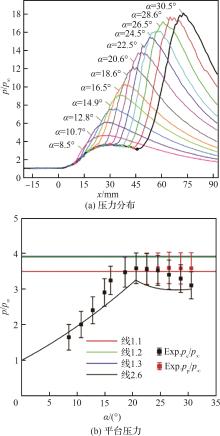
Fig.19
Test results at different deflection angles[40]
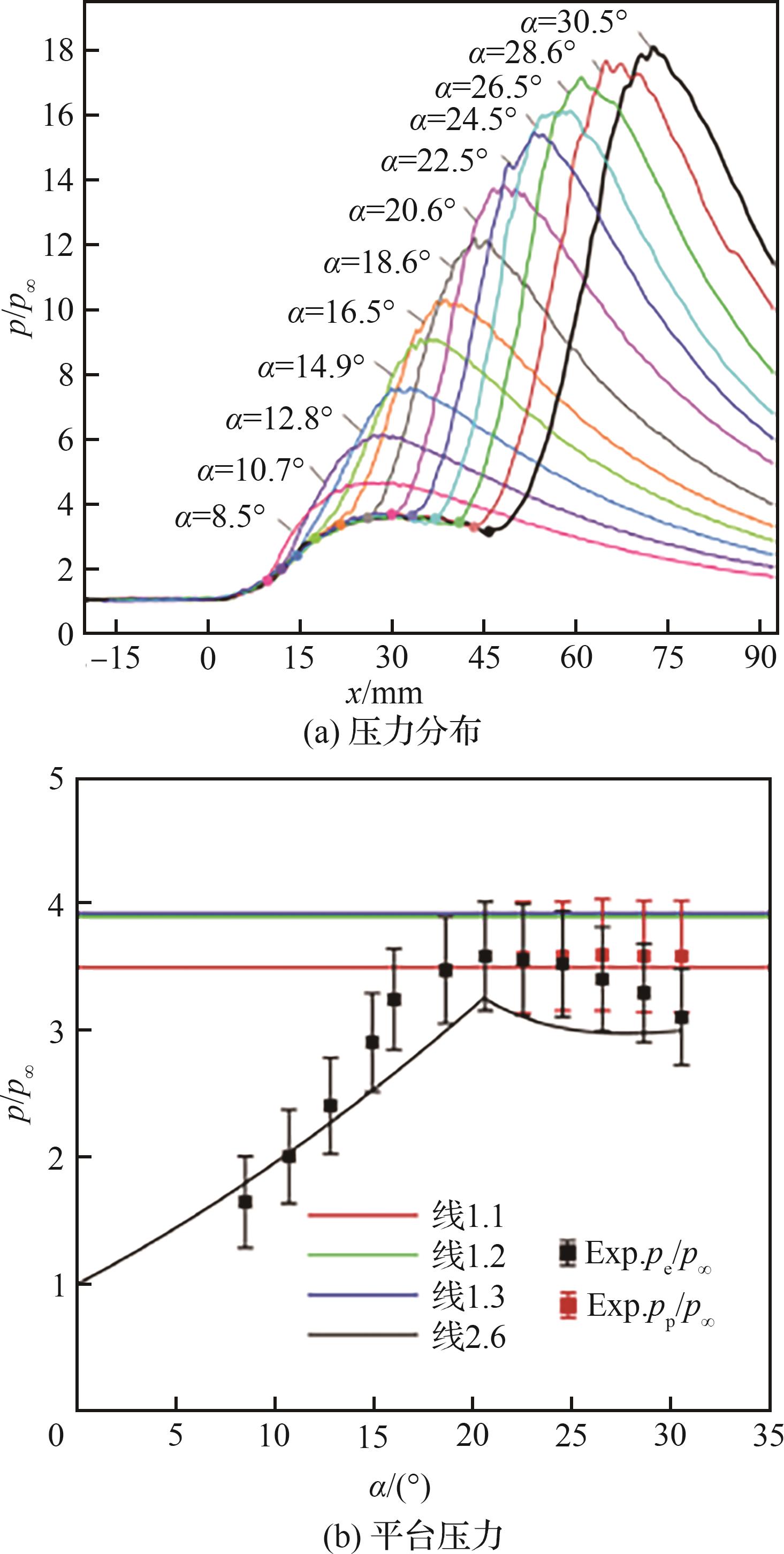
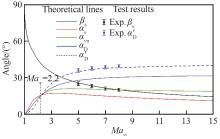
Fig.20
Comparison of theoretical and test results at different Mach numbers[41]
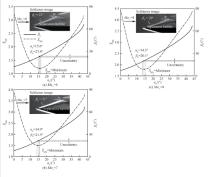
Fig.21
Comparison of MEP solutions and test results (Ma∞ = 6, 7, 8)[41]
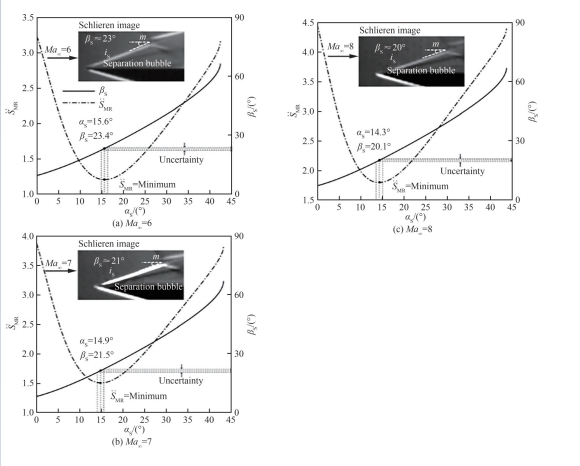
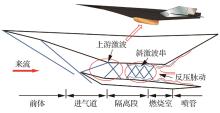
Fig.22
Schematic diagram of propulsion systems for hypersonic vehicles in near-space[42]
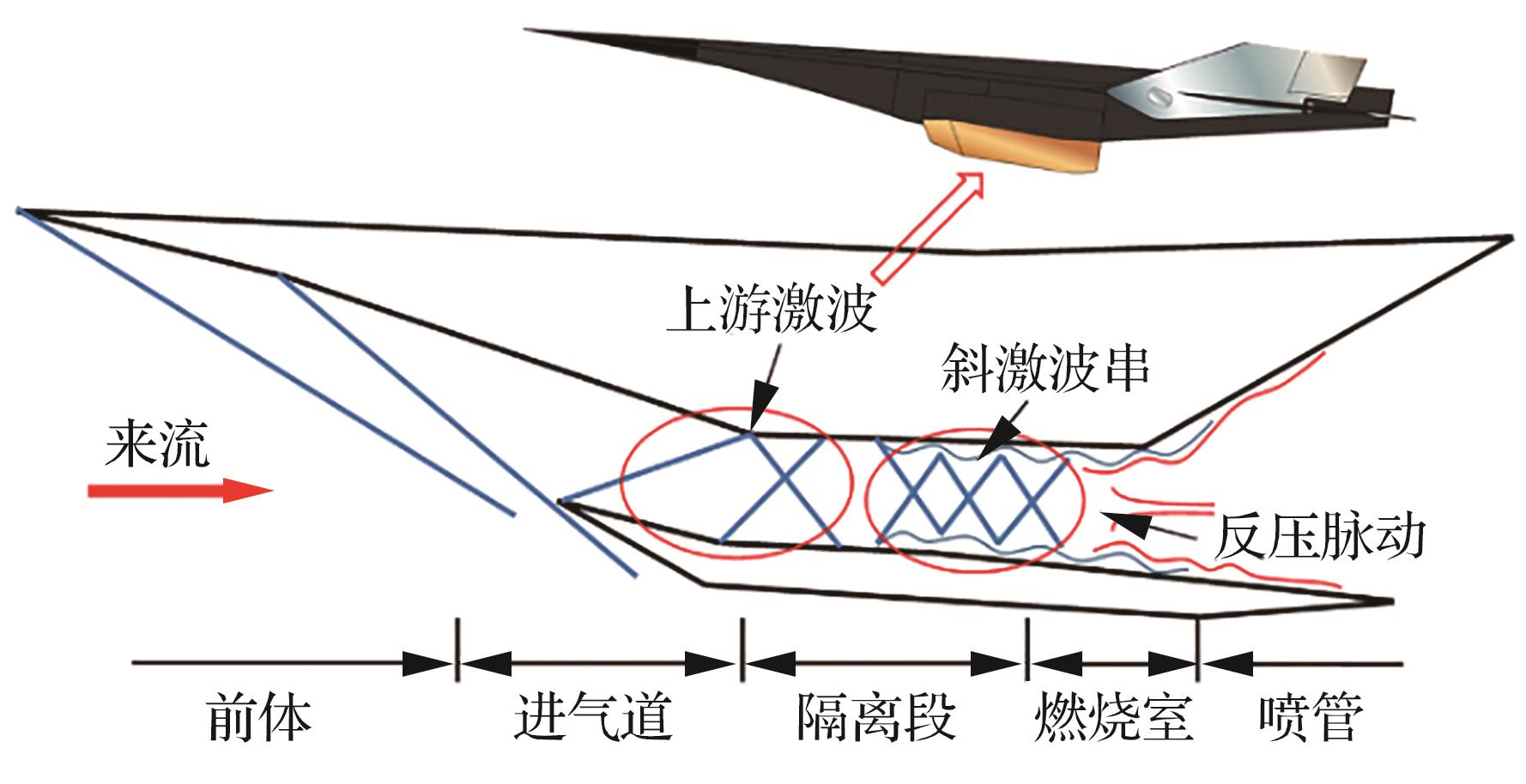
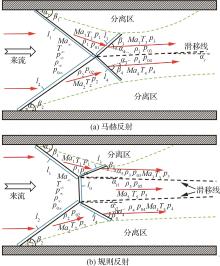
Fig.23
Schematic diagram of simplified structure of shock train[42]
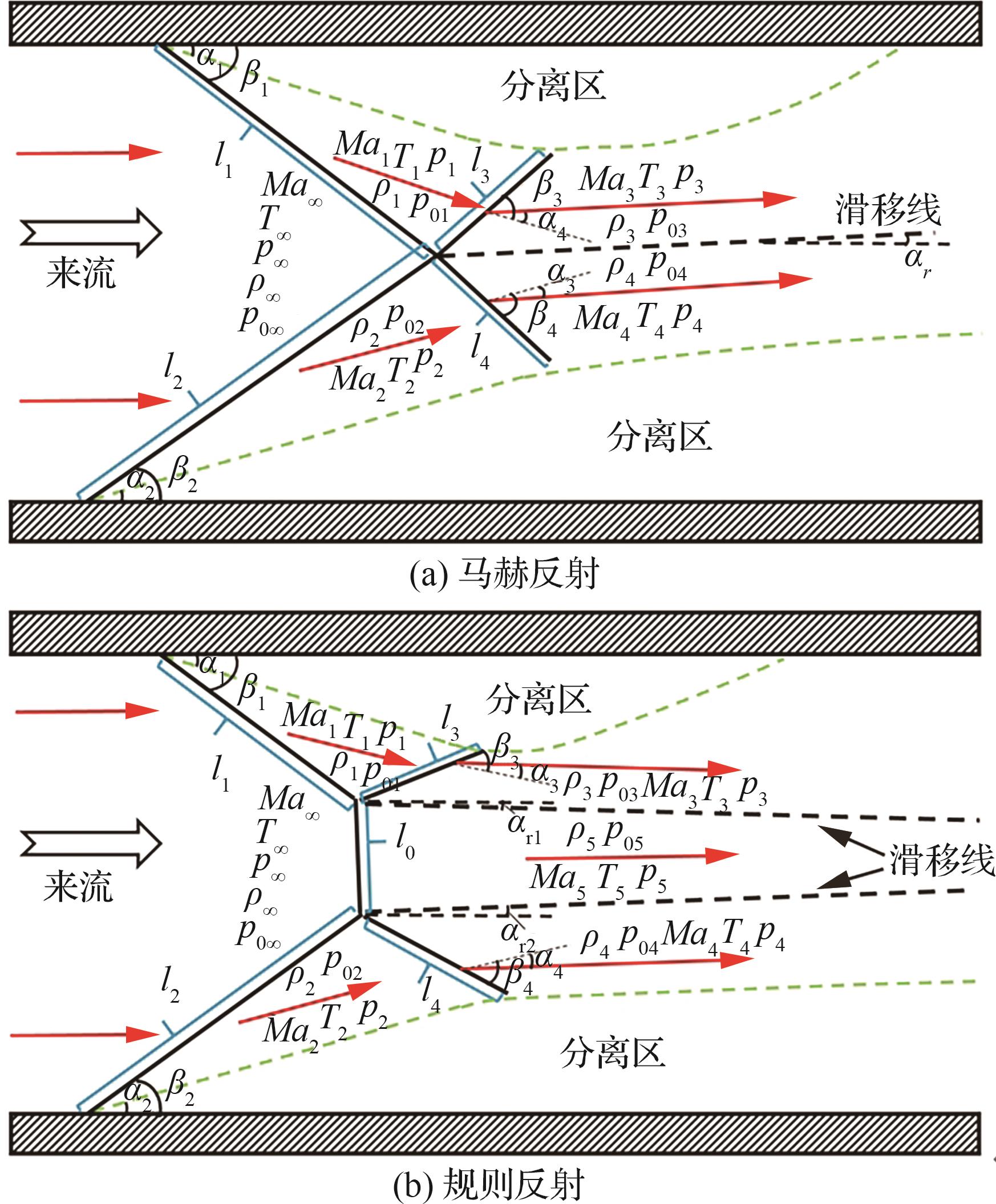
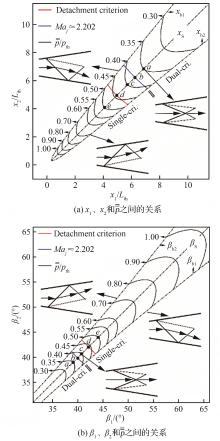
Fig.24
Schematic representation of possible separation positions and shock angles
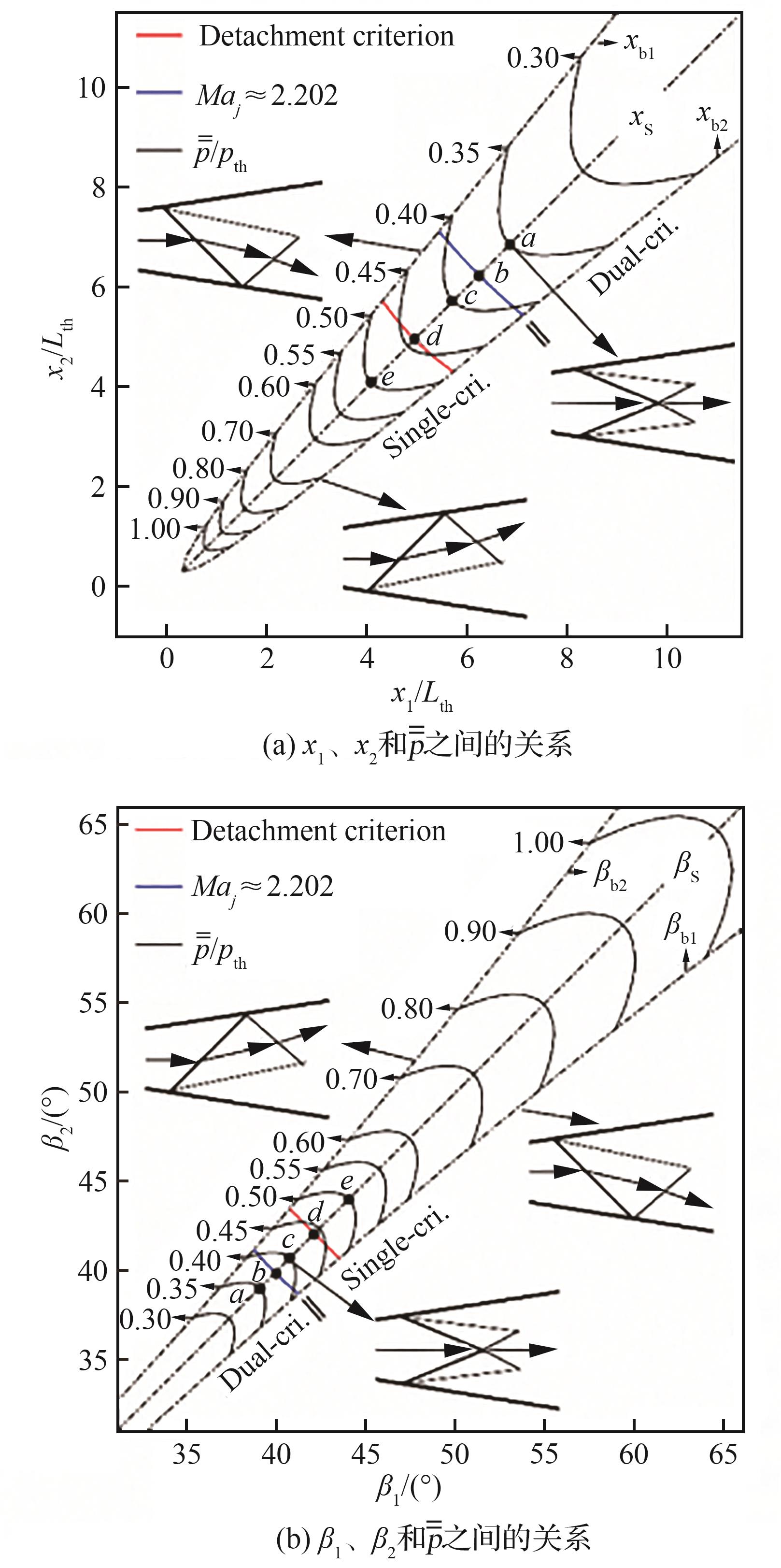
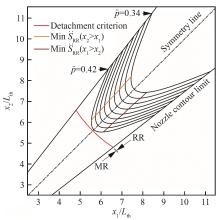
Fig.25
MEP solutions of RR
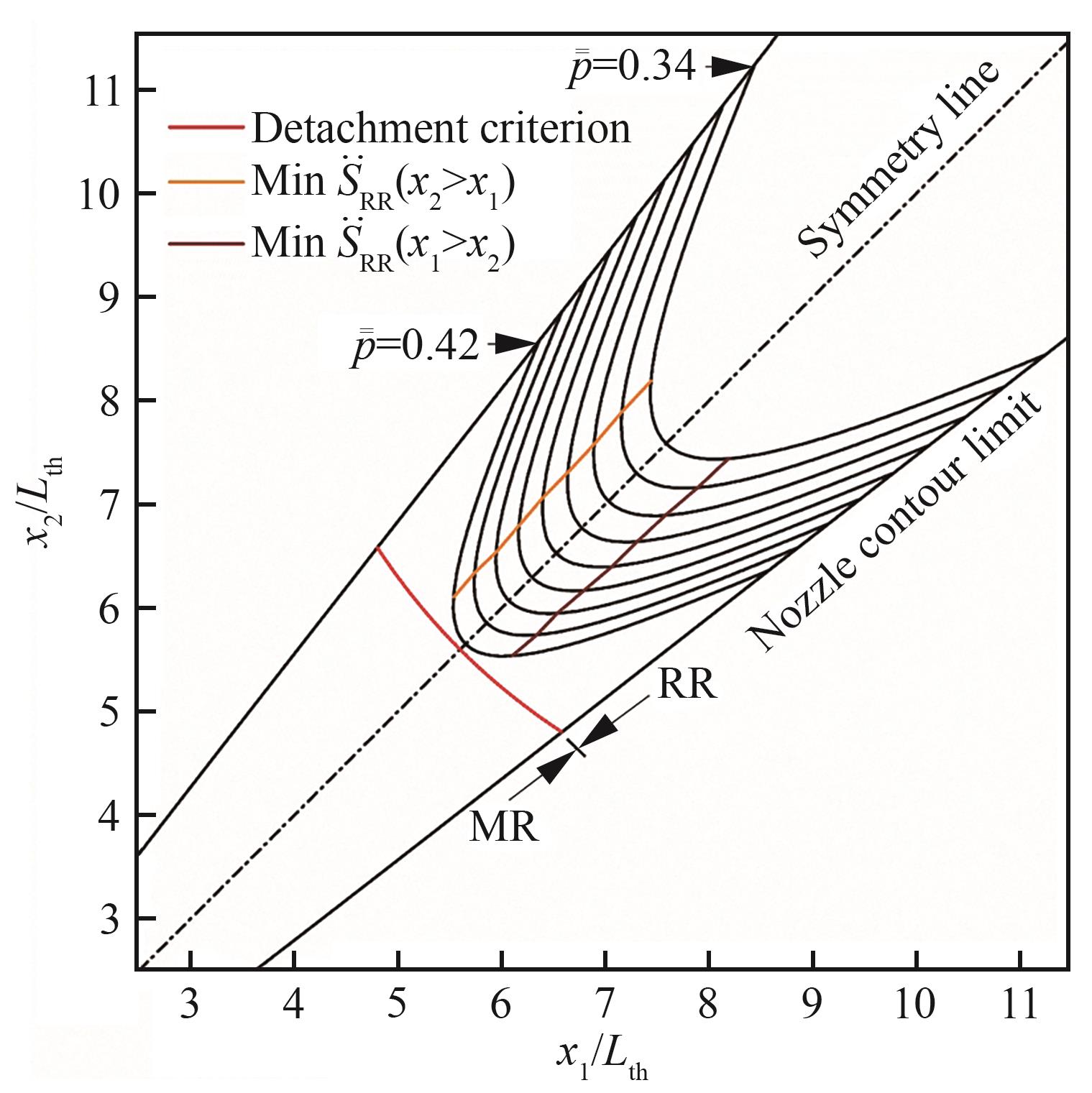
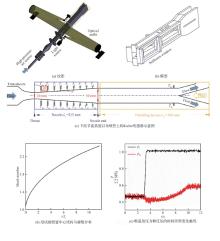
Fig.26
Schematic of experiment setup
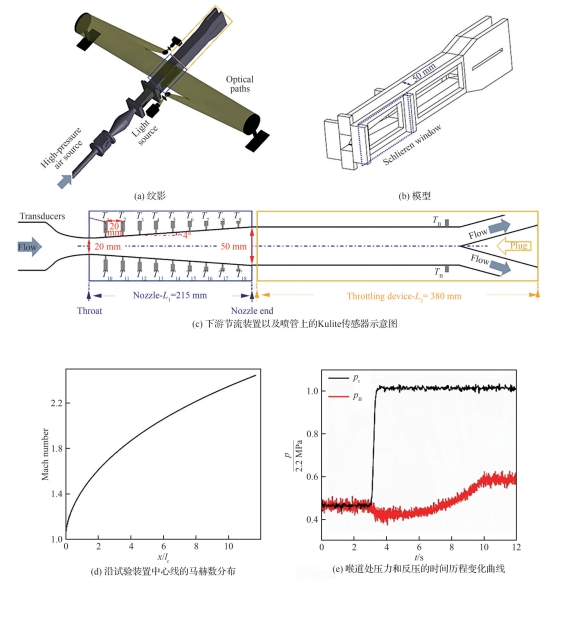
Fig.27
Evolution of shock wave
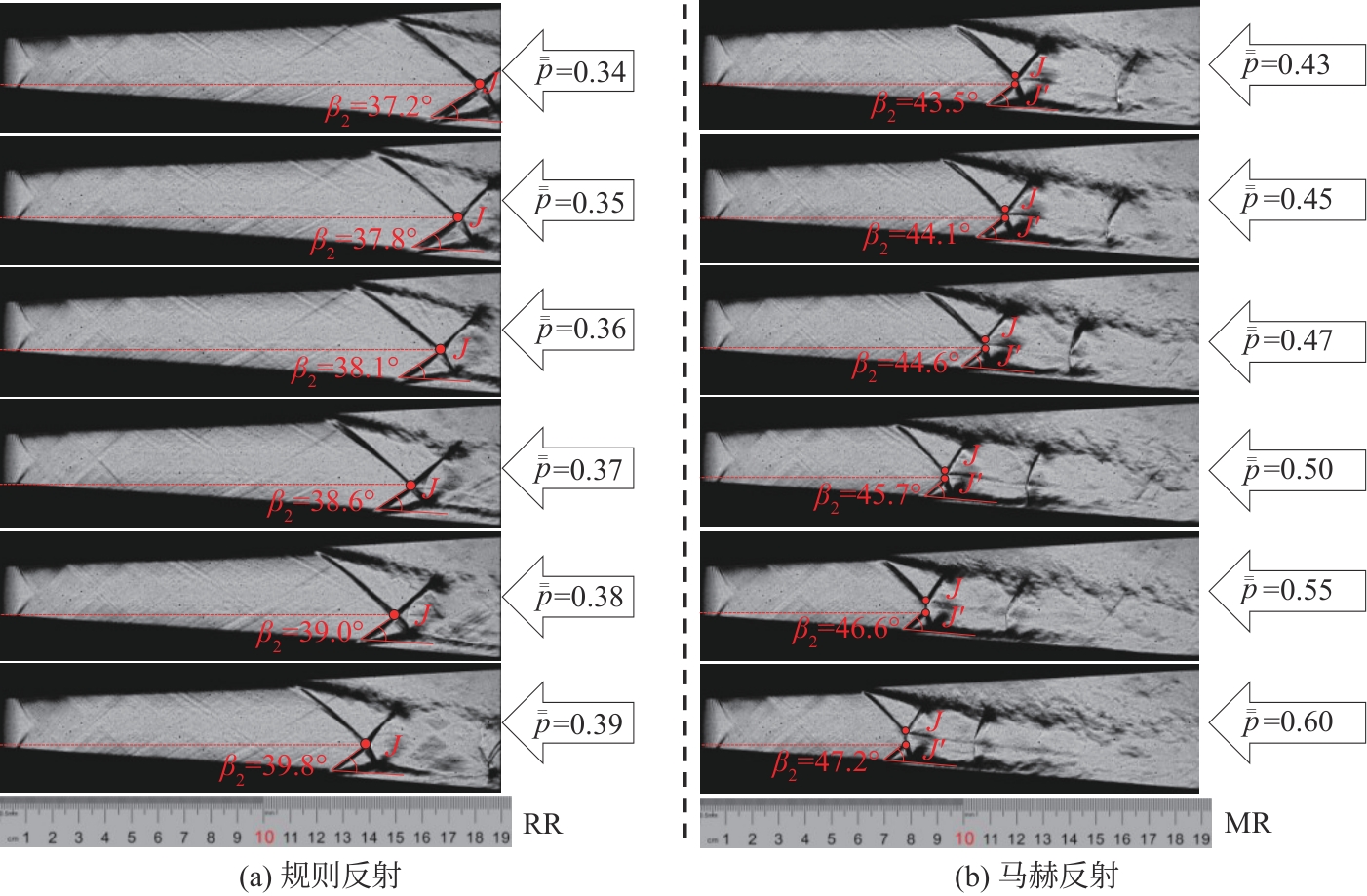
Fig.28
Shock polar satisfying MEP
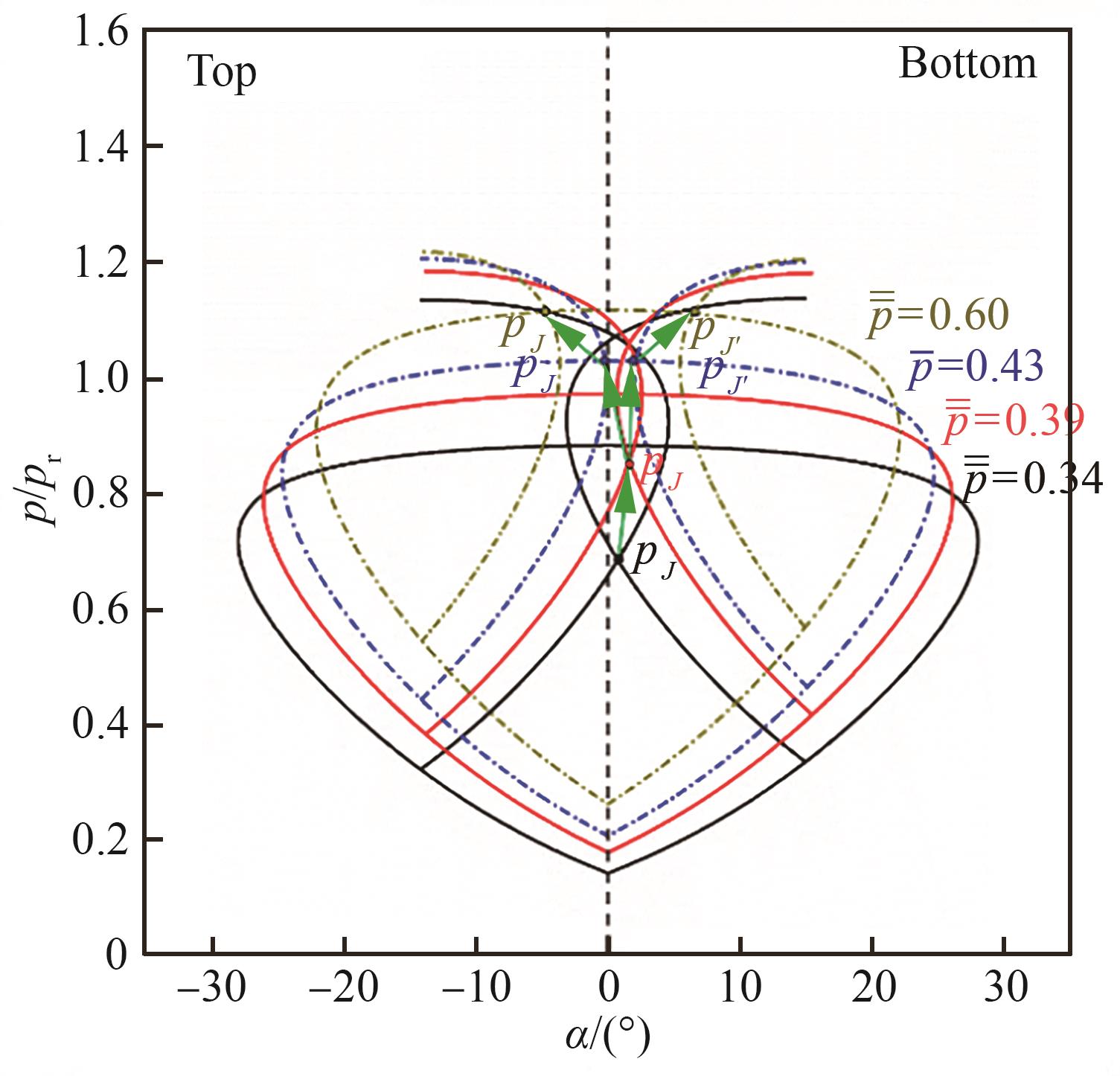
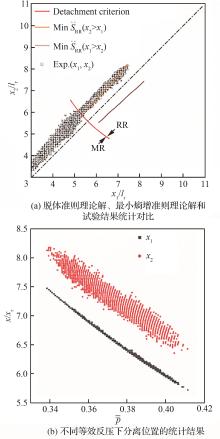
Fig.29
Comparison of statistical results of separation positions observed in schlieren images with theoretical solution
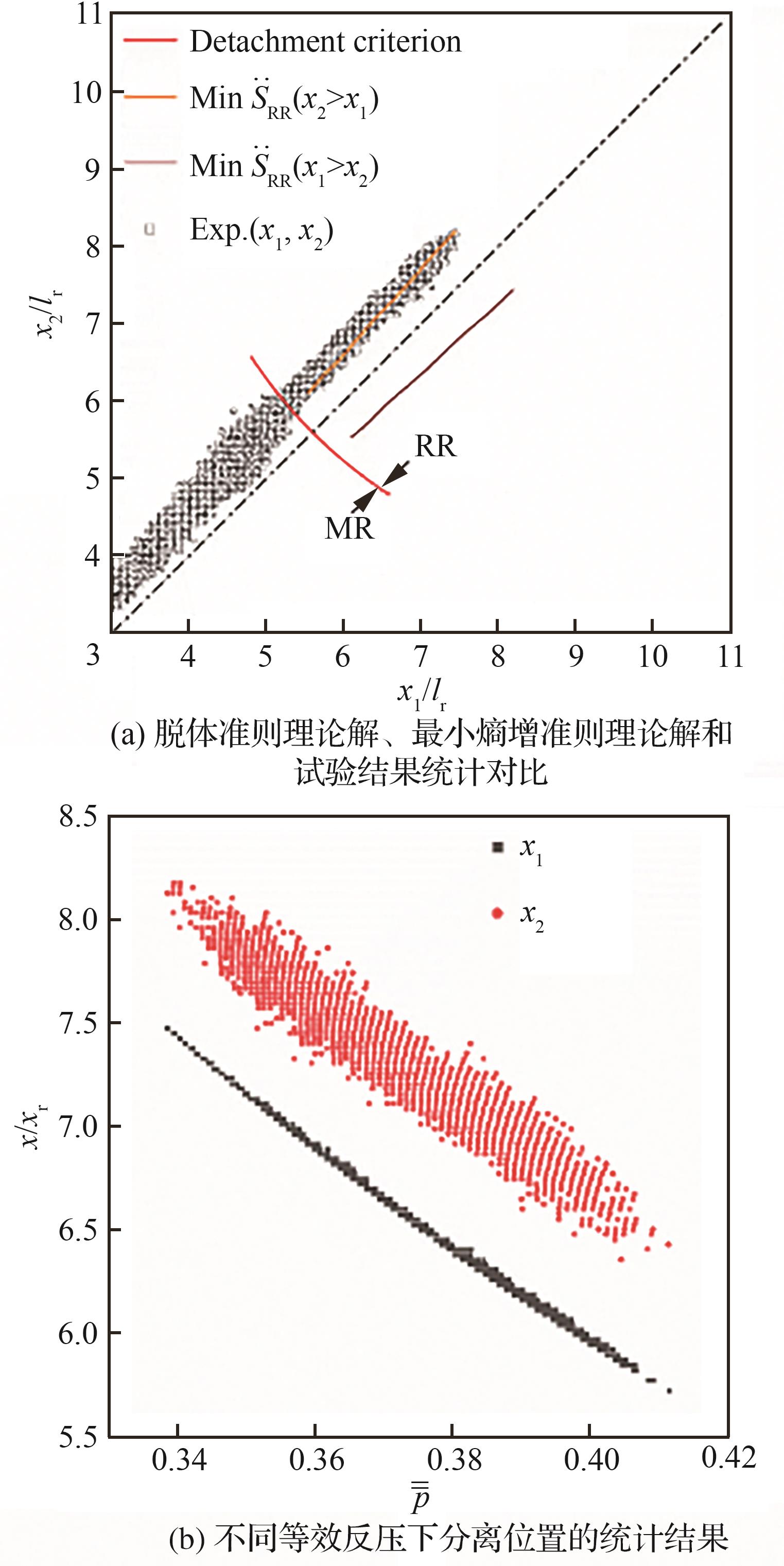
Fig.30
Entropy increase model of two-dimensional compressed corner flow field[50]
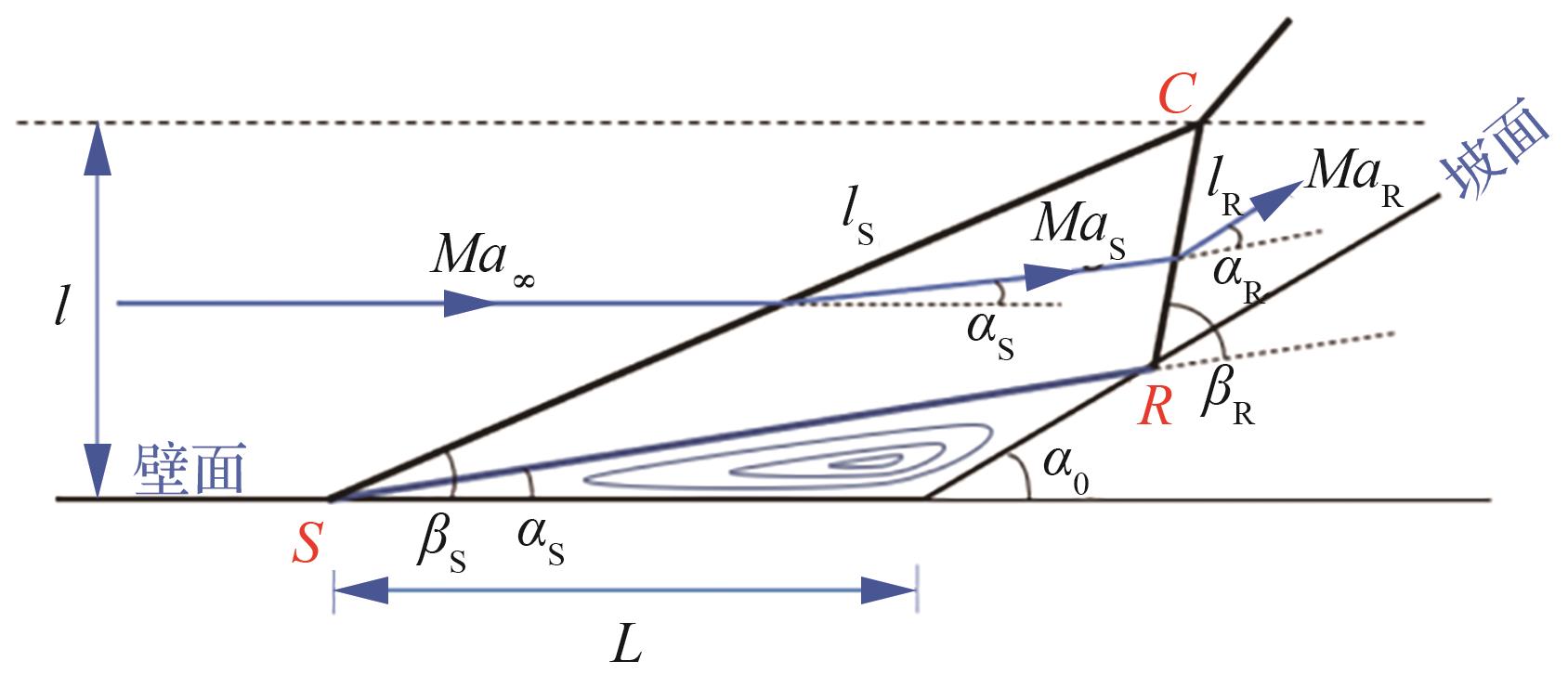
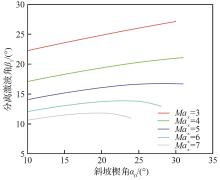
Fig.31
MEP solutions for compression inflection separation of surge angles at different incoming Mach numbers[50]
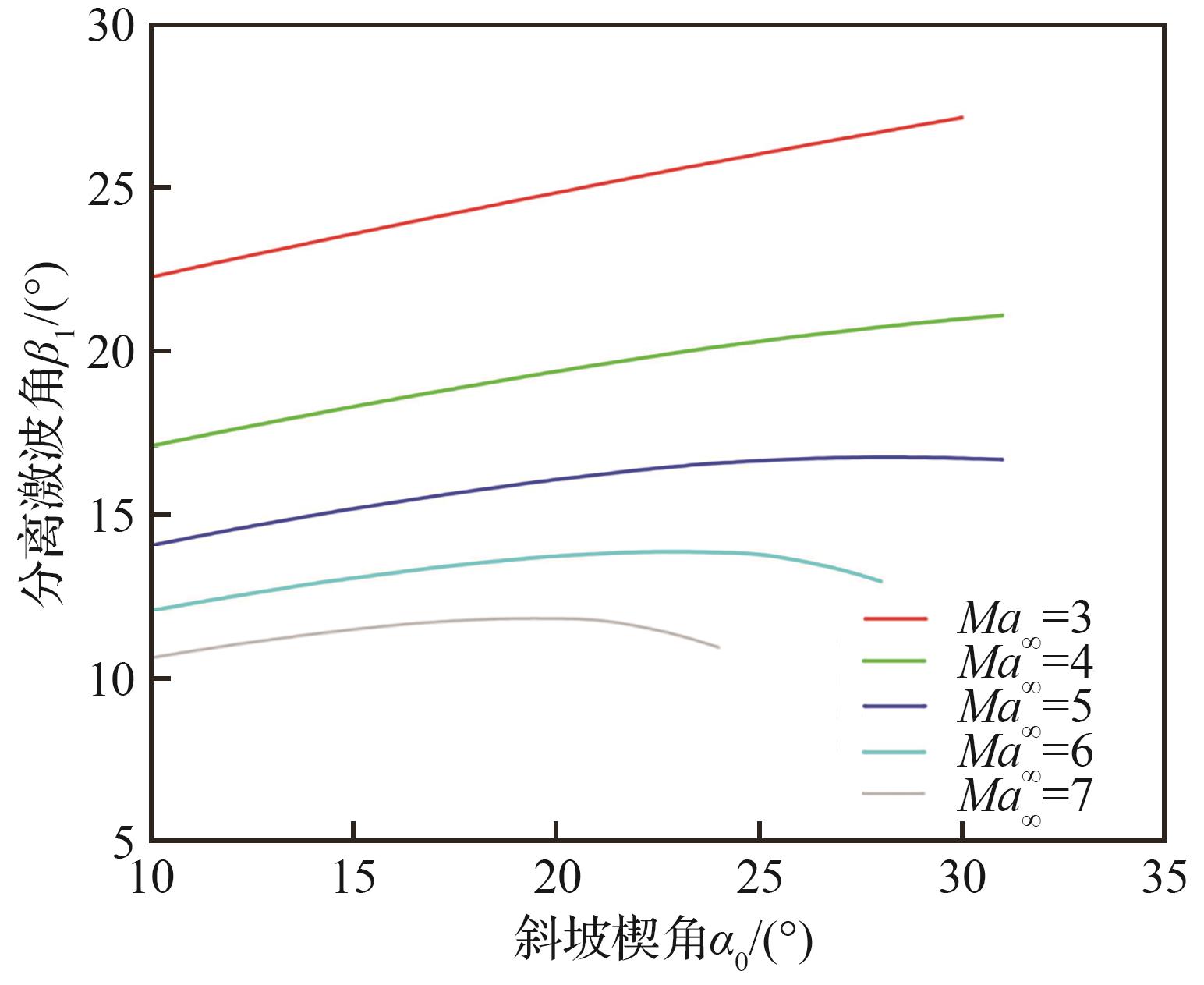
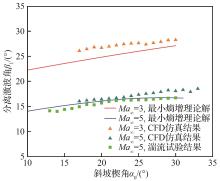
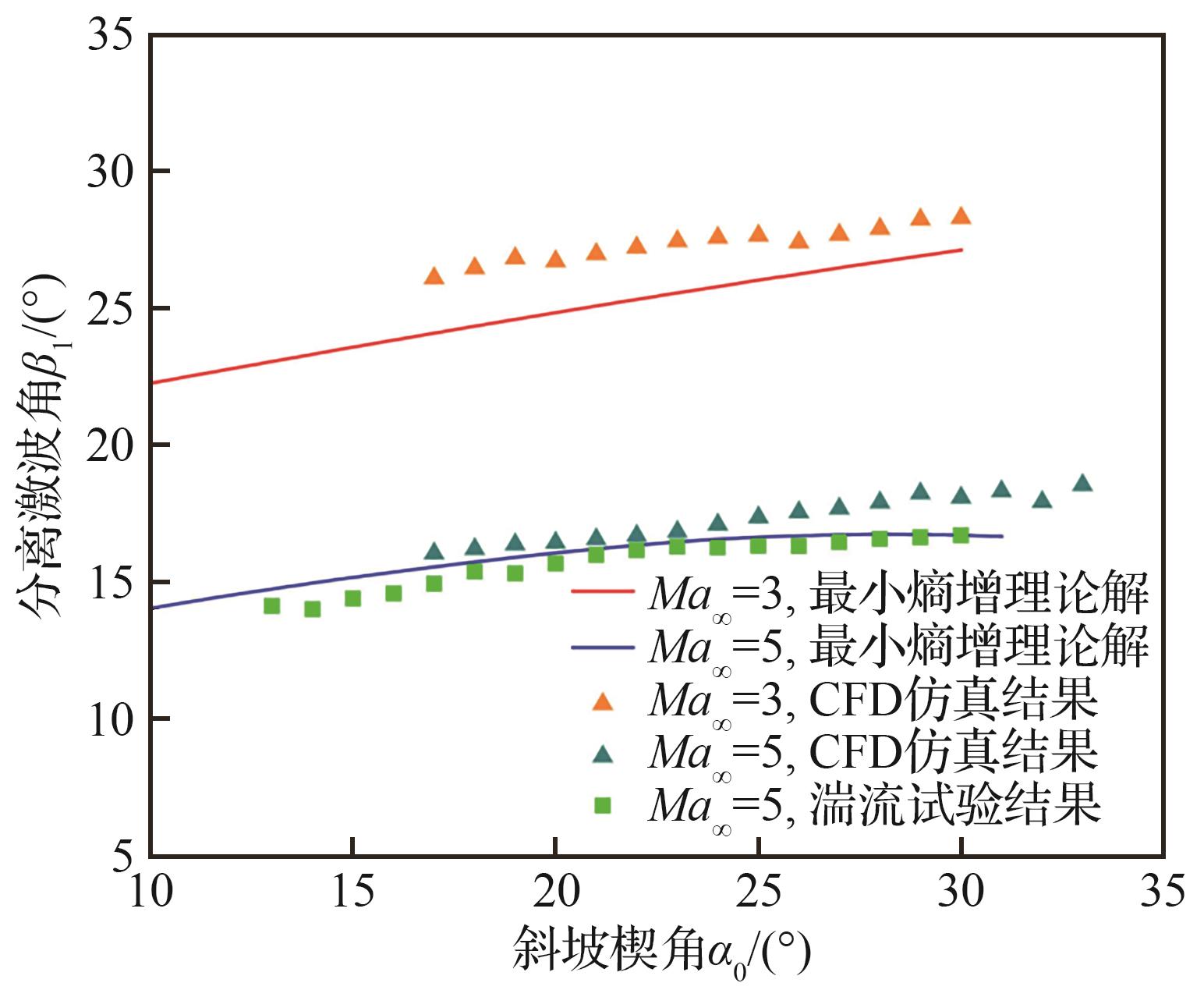
Fig.32
Comparison of MEP solutions, CFD results and test results for separating surge angles at different incoming Mach numbers[50]
| 1 | 安复兴, 李磊, 苏伟, 等. 高超声速飞行器气动设计中的若干关键问题[J]. 中国科学: 物理学 力学 天文学, 2021, 51(10): 6-25. |
| AN F X, LI L, SU W, et al. Key issues in hypersonic vehicle aerodynamic design[J]. Scientia Sinica (Physica, Mechanica & Astronomica), 2021, 51(10): 6-25 (in Chinese). | |
| 2 | HARSHA P, KEEL L, CASTROGIOVANNI A, et al. X-43A vehicle design and manufacture: AIAA-2005-3334 [R]. Reston: AIAA, 2005. |
| 3 | 薛龙生. 高超飞行器前体进气道一体化气动设计与试验研究[D]. 南京: 南京航空航天大学, 2018. |
| XUE L S. Integrated aerodynamic design and experimental study on forebody and inlet of a hypersonic vehicle[D]. Nanjing: Nanjing University of Aeronautics and Astronautics, 2018 (in Chinese). | |
| 4 | 范孝华, 唐志共, 王刚, 等. 激波/湍流边界层干扰低频非定常性研究评述[J]. 航空学报, 2022, 43(1): 625917. |
| FAN X H, TANG Z G, WANG G, et al. Review of low-frequency unsteadiness in shock wave/turbulent boundary layer interaction[J]. Acta Aeronautica et Astronautica Sinica, 2022, 43(1): 625917 (in Chinese). | |
| 5 | DOLLING D S. Fifty years of shock-wave/boundary-layer interaction research: What next?[J]. AIAA Journal, 2001, 39(8): 1517-1531. |
| 6 | CLEMENS N T, NARAYANASWAMY V. Low-frequency unsteadiness of shock wave/turbulent boundary layer interactions[J]. Annual Review of Fluid Mechanics, 2014, 46: 469-492. |
| 7 | 童福林, 周桂宇, 孙东, 等. 膨胀效应对激波/湍流边界层干扰的影响[J]. 航空学报, 2020, 41(9): 123731. |
| TONG F L, ZHOU G Y, SUN D, et al. Expansion effect on shock wave and turbulent boundary layer interactions[J]. Acta Aeronautica et Astronautica Sinica, 2020, 41(9): 123731 (in Chinese). | |
| 8 | 陆小革, 易仕和, 何霖, 等. 高分辨率激波/边界层干扰时间演化过程分析[J]. 航空学报, 2022, 43(1): 626147. |
| LU X G, YI S H, HE L, et al. Time evolution process of high resolution shock wave/turbulent boundary layer interaction[J]. Acta Aeronautica et Astronautica Sinica, 2022, 43(1): 626147 (in Chinese). | |
| 9 | 刘晓东, 刘朋欣, 李辰, 等. 高焓激波/湍流边界层干扰直接数值模拟[J]. 航空学报, 2023, 44(13): 127832. |
| LIU X D, LIU P X, LI C, et al. Direct numerical simulation of high enthalpy shock wave/turbulent boundary layer interaction[J]. Acta Aeronautica et Astronautica Sinica, 2023, 44(13): 127832 (in Chinese). | |
| 10 | ANDREOPOULOS J, MUCK K. Some new aspects of the shock wave boundary layer interaction in compression ramp flows: AIAA-1986-0342[R]. Reston: AIAA, 1986. |
| 11 | HUMBLE R, SCARANO F, OUDHEUSDEN B. Unsteady flow organization of a shock wave/turbulent boundary layer interaction[C]∥IUTAM Symposium on Unsteady Separated Flows and their Control. Dordrecht: Springer, 2009: 319-330. |
| 12 | HUANG W, WU H, YANG Y G, et al. Recent advances in the shock wave/boundary layer interaction and its control in internal and external flows[J]. Acta Astronautica, 2020, 174: 103-122. |
| 13 | TAN H J, SUN S, YIN Z L. Oscillatory flows of rectangular hypersonic inlet unstart caused by downstream mass-flow choking[J]. Journal of Propulsion and Power, 2009, 25(1): 138-147. |
| 14 | DUSSAUGE J P, DUPONT P, DEBIÈVE J F. Unsteadiness in shock wave boundary layer interactions with separation[J]. Aerospace Science and Technology, 2006, 10(2): 85-91. |
| 15 | VON NEUMANN J. Oblique reflection of shocks, explosive research rep 12[R]. Washington D.C.: Navy Department, Bureau of Ordnance, 1943. |
| 16 | VON NEUMANN J. Refraction, intersection and reflection of shock waves: NAVORD Rep 203-45[R]. Washington D.C.: Navy Department, Bureau of Ordnance, 1943. |
| 17 | HENDERSON L F, LOZZI A. Experiments on transition of Mach reflexion[J]. Journal of Fluid Mechanics, 1975, 68(1): 139-145. |
| 18 | MÖLDER S. Particular conditions for the termination of regular reflection of shock waves[J]. Transactions of the Canadian Aeronautics and Space Institute, 1979, 25(1):44-49. |
| 19 | KAWAMURA R, SAITO H. Reflection of shock waves-1 Pseudo-stationary case[J]. Journal of the Physical Society of Japan, 1956, 11(5): 584-592. |
| 20 | CHAPMAN D, KUEHN D M, LARSON H K. Investigation of separated flows in supersonic and subsonic streams with emphasis on the effect of transition: NACA Rept. 1356[R]. Washington, D.C.: NACA, 1958. |
| 21 | ERDOS J, PALLONE A. Shock-boundary layer interaction and flow separation[C]∥Proceedings of the 1962 Heat Transfer and Fluid Mechanics Institute. Stanford: Stanford University Press, 1962: 239-254. |
| 22 | BABINSKY H, HARVEY J. Shock wave-boundary-layer interactions[M]. Cambridge: Cambridge University Press, 2011: 423-427. |
| 23 | MATHEIS J, HICKEL S. On the transition between regular and irregular shock patterns of shock-wave/boundary-layer interactions[J]. Journal of Fluid Mechanics, 2015, 776: 200-234. |
| 24 | GIEPMAN R H M, SCHRIJER F F J, VAN OUDHEUSDEN B W. A parametric study of laminar and transitional oblique shock wave reflections[J]. Journal of Fluid Mechanics, 2018, 844: 187-215. |
| 25 | THIVET F, KNIGHT D D, ZHELTOVODOV A A, et al. Insights in turbulence modeling for crossing-shock-wave/boundary-layer interactions[J]. AIAA Journal, 2001, 39(6): 985-995. |
| 26 | TAO Y, FAN X Q, ZHAO Y L. Viscous effects of shock reflection hysteresis in steady supersonic flows[J]. Journal of Fluid Mechanics, 2014, 759: 134-148. |
| 27 | TAO Y, LIU W D, FAN X Q, et al. A study of the asymmetric shock reflection configurations in steady flows[J]. Journal of Fluid Mechanics, 2017, 825: 1-15. |
| 28 | DÉLERY J, MARVIN J G, RESHOTKO E. Shock-wave boundary layer interactions: AGARD-AG-280 [R]. Paris: AGARD, 1986. |
| 29 | GROSSMAN I J, BRUCE P J K. Confinement effects on regular-irregular transition in shock-wave-boundary-layer interactions[J]. Journal of Fluid Mechanics, 2018, 853: 171-204. |
| 30 | XIE W Z, YANG S Z, ZENG C, et al. Improvement of the free-interaction theory for shock wave/turbulent boundary layer interactions[J]. Physics of Fluids, 2021, 33(7): 075104. |
| 31 | HU Y C, ZHOU W F, YANG Y G, et al. Prediction of plateau and peak of pressure in a compression ramp flow with large separation[J]. Physics of Fluids, 2020, 32(10): 101702. |
| 32 | 程剑锐, 施崇广, 瞿丽霞, 等. 二维弯曲激波/湍流边界层干扰流动理论建模[J]. 航空学报, 2022, 43(9): 125993. |
| CHENG J R, SHI C G, QU L X, et al. Theoretical model of 2D curved shock wave/turbulent boundary layer interaction[J]. Acta Aeronautica et Astronautica Sinica, 2022, 43(9): 125993 (in Chinese). | |
| 33 | BAI C Y, WU Z N. Type Ⅳ shock interaction with a two-branch structured transonic jet[J]. Journal of Fluid Mechanics, 2022, 941: A45. |
| 34 | GLANSDORFF P, PRIGOGINE I, HILL R N. Thermodynamic theory of structure, stability and fluctuations[J]. American Journal of Physics, 1973, 41(1): 147-148. |
| 35 | LI H, BEN-DOR G. Application of the principle of minimum entropy production to shock wave reflections. I. Steady flows[J]. Journal of Applied Physics,1996, 80(4): 2027-2037. |
| 36 | CHPOUN A, PASSEREL D, LI H, et al. Reconsideration of oblique shock wave reflections in steady flows. Part 1. Experimental investigation[J]. Journal of Fluid Mechanics, 1995, 301: 19-35. |
| 37 | WANG C P, XUE L S, CHENG K M. Application of the minimum entropy production principle to shock reflection induced by separation[J]. Journal of Fluid Mechanics, 2018, 857: 784-805. |
| 38 | 杨馨. 基于最小熵增原理的分离诱导的激波反射结构研究[D]. 南京: 南京航空航天大学, 2020. |
| YANG X. Study on the structure of shock reflection induced by separation based on the principle of minimum entropy production[D]. Nanjing: Nanjing University of Aeronautics and Astronautics, 2020 (in Chinese). | |
| 39 | XUE L S, SCHRIJER F F J, VAN OUDHEUSDEN W B, et al. Theoretical study on regular reflection of shock wave-boundary layer interactions[J]. Journal of Fluid Mechanics, 2020, 899: A30. |
| 40 | XUE L S, JIAO Y, WANG C P, et al. Pressure plateau of separation induced by shock impingement in a Mach 5 flow[J]. Journal of Fluid Mechaics, 2023, 972: R1. |
| 41 | XUE L S, WANG C P, CHENG K M. A study on the RR-to-MR transition of shock wave reflections near the leading edge in hypersonic flows[J]. Journal of Fluid Mechanics, 2021, 919: A40. |
| 42 | 徐培. 超声速流动中复杂激波干扰结构研究[D]. 南京: 南京航空航天大学, 2019. |
| XU P. Complex shock wave interaction in supersonic flow[D]. Nanjing: Nanjing University of Aeronautics and Astronautics, 2019 (in Chinese). | |
| 43 | HUNT R L, GAMBA M. Shock train unsteadiness characteristics, oblique-to-normal transition, and three-dimensional leading shock structure[J]. AIAA Journal, 2018, 56(4): 1569-1587. |
| 44 | MATSUO K, MIYAZATO Y, KIM H D. Shock train and pseudo-shock phenomena in internal gas flows[J]. Progress in Aerospace Sciences, 1999, 35(1): 33-100. |
| 45 | WANG C P, XUE L S, TIAN X A. Experimental characteristics of oblique shock train upstream propagation[J]. Chinese Journal of Aeronautics, 2017, 30(2): 663-676. |
| 46 | SUN B, WANG C P, ZHUO C F. Theoretical model and numerical analysis for asymmetry of shock train in supersonic flows[J]. Symmetry, 2020, 12(4): 518. |
| 47 | 杨锦富. 激波反射与分离主控的高速流动结构分析[D]. 南京: 南京航空航天大学, 2020. |
| YANG J F. Analysis of high speed flow structure controlled by shock reflection and separation[D]. Nanjing: Nanjing University of Aeronautics and Astronautics, 2020 (in Chinese). | |
| 48 | 周博宇. 复杂流动条件下的激波/附面层干扰结构研究[D]. 南京: 南京航空航天大学, 2021. |
| ZHOU B Y. Study on the structure of shock wave and boundary layer under complicated incoming flow[D]. Nanjing: Nanjing University of Aeronautics and Astronautics, 2021 (in Chinese). | |
| 49 | 徐惊雷, 马静, 沙江, 等. 超声速复杂内、外流场的PIV实验研究[C]∥第三届高超声速科技学术会议会议文集. 南京: 南京航空航天大学, 2010: 8. |
| XU J L, MA J, SHA J, et al. PIV experimental research on the supersonic complex internal/external flowfield[C]∥Proceedings of the Third Hypersonic Science and Technology Conference. Nanjing: Nanjing University of Aeronautics and Astronautics, 2010: 8 (in Chinese). | |
| 50 | 张蓝天. 压缩拐角的激波干扰流场结构研究[D].南京: 南京航空航天大学, 2023. |
| ZHNAG L T. Research on the structure of shock wave interference flow field at compressed corner[D]. Nanjing: Nanjing University of Aeronautics and Astronautics, 2023 (in Chinese). |
| [1] | Guangning LI, Kunpeng LEI, Xiaomin AN, Min XU, Yong XU. Numerical flight simulation of an airfoil with time varing Mach number effect acrossing transonic region [J]. Acta Aeronautica et Astronautica Sinica, 2024, 45(S1): 730875-730875. |
| [2] | Yu ZHU, Jianhui CHENG, Cheng CHEN, Hexia HUANG, Huijun TAN. Mechanism of Bump inlet stable working at supersonic speed [J]. Acta Aeronautica et Astronautica Sinica, 2024, 45(24): 130408-130408. |
| [3] | Jiang LAI, Zhaolin FAN, Qian WANG, Siwei DONG, Fulin TONG, Xianxu YUAN. Direct numerical simulation of hypersonic cone-flare model at angle of attack [J]. Acta Aeronautica et Astronautica Sinica, 2024, 45(2): 128610-128610. |
| [4] | Youde XIONG, Chuangchuang LI, Zhenhui ZHANG, Jie WU. Measurement of freestream disturbance in hypersonic wind tunnel with hot-wire anemometer [J]. Acta Aeronautica et Astronautica Sinica, 2024, 45(10): 129042-129042. |
| [5] | Weijia LIU, Yingkun LI, Xiong CHEN, Chunlei LI. Panel flutter characteristics on shock wave/boundary layer interaction based on fluid⁃structure coupling [J]. ACTA AERONAUTICAET ASTRONAUTICA SINICA, 2023, 44(6): 127085-127085. |
| [6] | Kailong XU, Zaigang LIU, Shengli JIANG, Xing WANG, Pan ZHANG. Treatment of boundary condition at multiple outlets with recirculating flow and specified flow ratios [J]. ACTA AERONAUTICAET ASTRONAUTICA SINICA, 2023, 44(5): 126830-126830. |
| [7] | Huangsheng WEI, Zhu HUANG, Guang XI. A dissipation control method based on amplitude and wavenumber [J]. ACTA AERONAUTICAET ASTRONAUTICA SINICA, 2023, 44(4): 126589-126589. |
| [8] | Bo ZHU, Daxiong LIAO, Zhenhua CHEN, Jiming CHEN. Fine measurement for fluctuation mode and turbulence level in transonic flow [J]. ACTA AERONAUTICAET ASTRONAUTICA SINICA, 2023, 44(4): 126378-126378. |
| [9] | Mengge WANG, Xiaoming HE, Juanjuan WANG, Yue ZHANG, Kun WANG, Huijun TAN, Liugang LI. Shock wave/boundary layer interaction control method based on oscillating vortex generator [J]. Acta Aeronautica et Astronautica Sinica, 2023, 44(20): 128503-128503. |
| [10] | Shanshan TIAN, Liang JIN, Zhaobo DU, Xiangyu ZHONG, Wei HUANG, Yuanyang LIU. Research progress of shock wave/boundary layer interaction controls induced by bump [J]. Acta Aeronautica et Astronautica Sinica, 2023, 44(18): 28411-028411. |
| [11] | Zhenbing LUO, Wei XIE, Xuzhen XIE, Yan ZHOU, Qiang LIU. Research progress of active flow control of shock wave and its interaction [J]. Acta Aeronautica et Astronautica Sinica, 2023, 44(15): 529002-529002. |
| [12] | Shuyao HU, Chongwen JIANG, Chun-Hian LEE. Disturbance region update method with multigrid for compressible flows [J]. ACTA AERONAUTICAET ASTRONAUTICA SINICA, 2023, 44(11): 127649-127649. |
| [13] | CHENG Jianrui, SHI Chongguang, QU Lixia, XU Yue, YOU Yancheng, ZHU Chengxiang. Theoretical model of 2D curved shock wave/turbulent boundary layer interaction [J]. ACTA AERONAUTICAET ASTRONAUTICA SINICA, 2022, 43(9): 125993-125993. |
| [14] | ZHANG Haoyuan, SUN Dong, QIU Bo, ZHU Yandan, WANG Anling. Influence of turbulent kinetic energy on shock wave/boundary layer interaction [J]. ACTA AERONAUTICAET ASTRONAUTICA SINICA, 2022, 43(7): 125504-125504. |
| [15] | WANG Hongyu, YANG Yanguang, HU Weibo, CHEN Zhi, FENG Liming, ZHOU Youtian. Experimental study on unsteadiness characteristics of shock wave/turbulent boundary layer interaction controlled by high-frequency microsecond pulse discharge [J]. ACTA AERONAUTICAET ASTRONAUTICA SINICA, 2022, 43(1): 625905-625905. |
| Viewed | ||||||
|
Full text |
|
|||||
|
Abstract |
|
|||||
Address: No.238, Baiyan Buiding, Beisihuan Zhonglu Road, Haidian District, Beijing, China
Postal code : 100083
E-mail:hkxb@buaa.edu.cn
Total visits: 6658907 Today visits: 1341All copyright © editorial office of Chinese Journal of Aeronautics
All copyright © editorial office of Chinese Journal of Aeronautics
Total visits: 6658907 Today visits: 1341

 CJA
CJA
