Acta Aeronautica et Astronautica Sinica ›› 2025, Vol. 46 ›› Issue (16): 131569.doi: 10.7527/S1000-6893.2024.31569
• Fluid Mechanics and Flight Mechanics •
Penghui SU1,2, Yihao LIU1,2, Xuhong JIN1,2,3( ), Xiaoli CHENG1,2
Received:2024-11-25
Revised:2024-12-12
Accepted:2024-12-30
Online:2025-08-25
Published:2025-01-07
Contact:
Xuhong JIN
E-mail:jinxuhong08@163.com
CLC Number:
Penghui SU, Yihao LIU, Xuhong JIN, Xiaoli CHENG. Numerical investigation of inlet performance of an atmosphere-breathing electric propulsion system and its feasibility analysis[J]. Acta Aeronautica et Astronautica Sinica, 2025, 46(16): 131569.
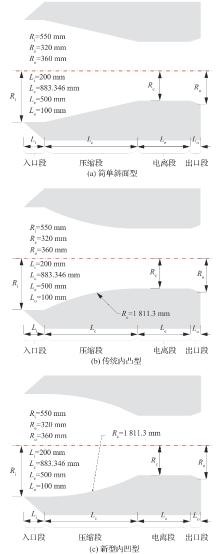
Fig.1
Inlet geometry
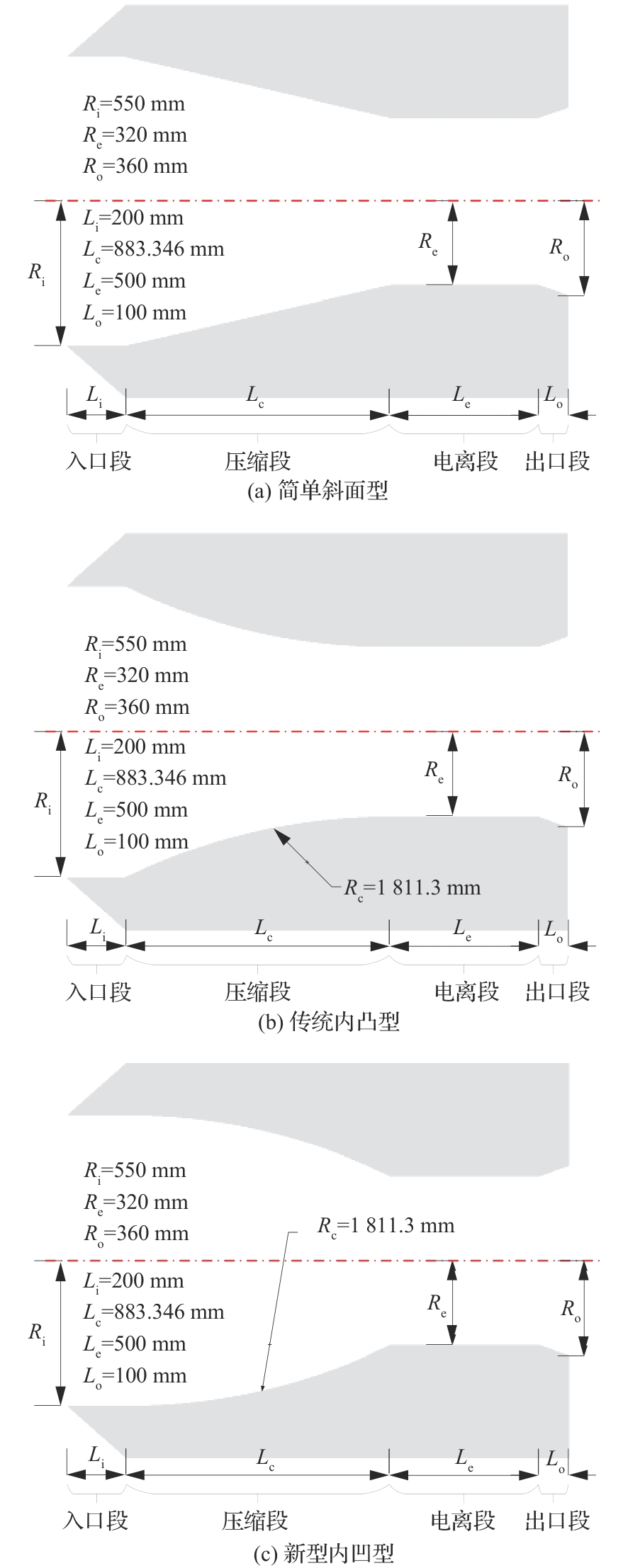
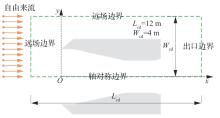
Fig.2
Computational domain and boundary conditions

Table 1
Freestream parameters
| H/km | 摩尔比例 | n∞/m-3 | T∞/K | ||
|---|---|---|---|---|---|
| N2 | O2 | O | |||
| 180 | 0.483 | 0.035 | 0.482 | 1.40×10¹⁶ | 790.07 |
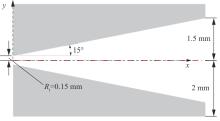
Fig.3
Geometry of micronozzle
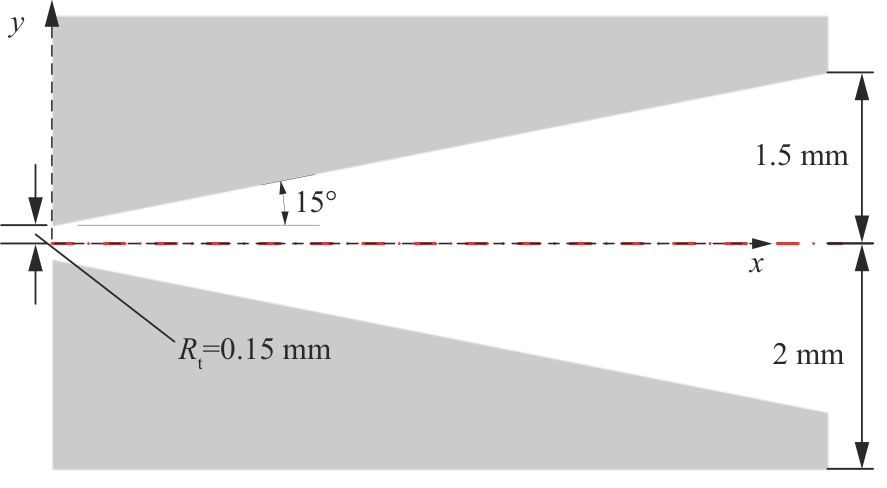
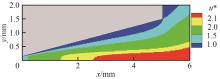
Fig.4
Streamwise velocity contours of micronozzle
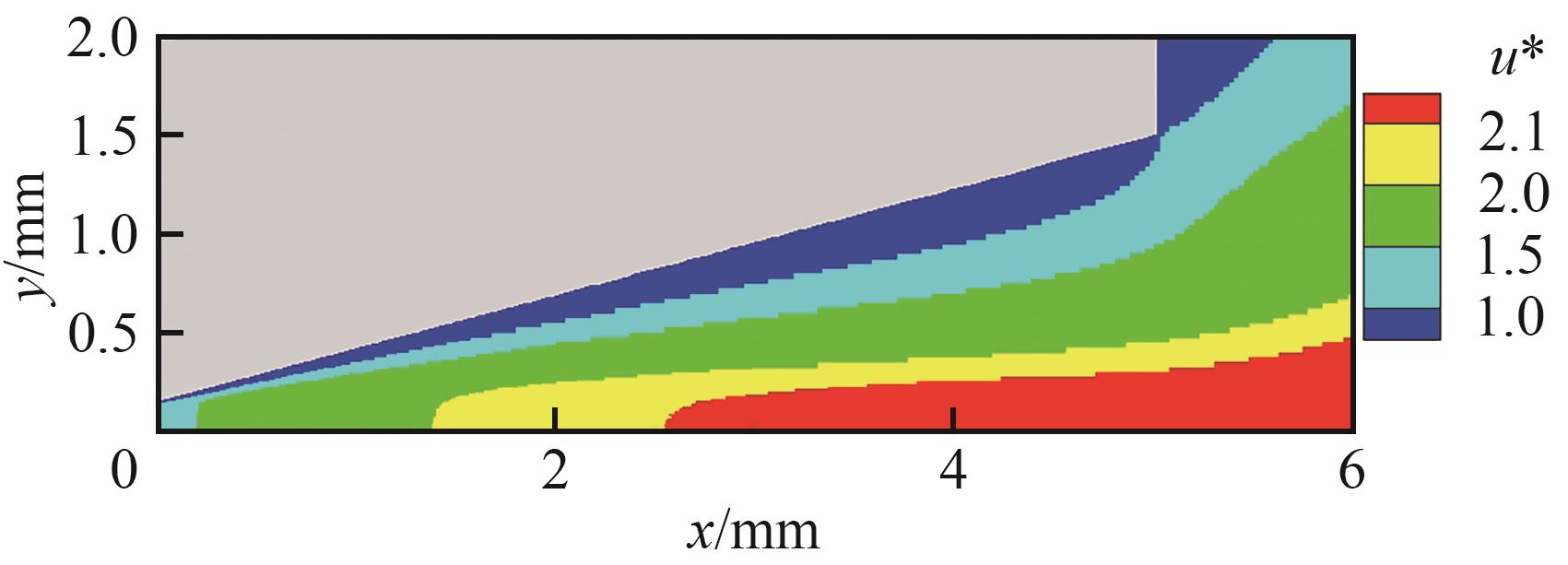
Fig.5
Variation of streamwise velocity along the symmetry axis
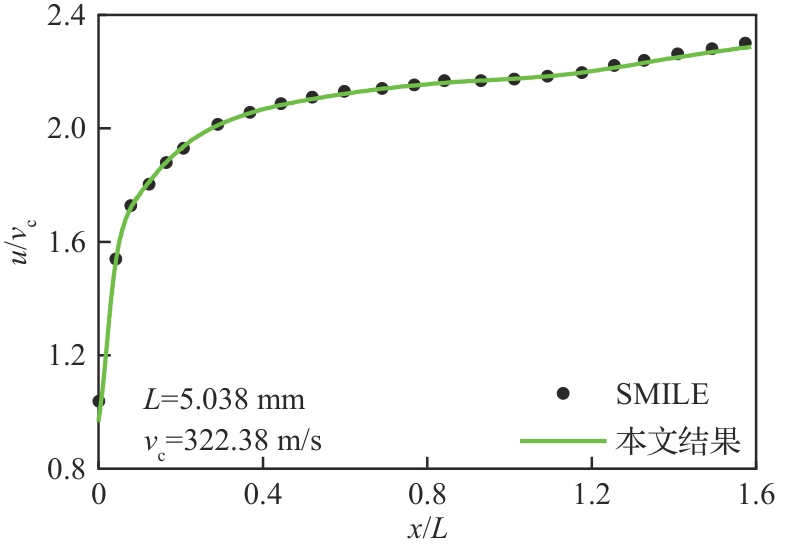
Fig.6
Contours of compression ratio p/p∞ (σ=1)
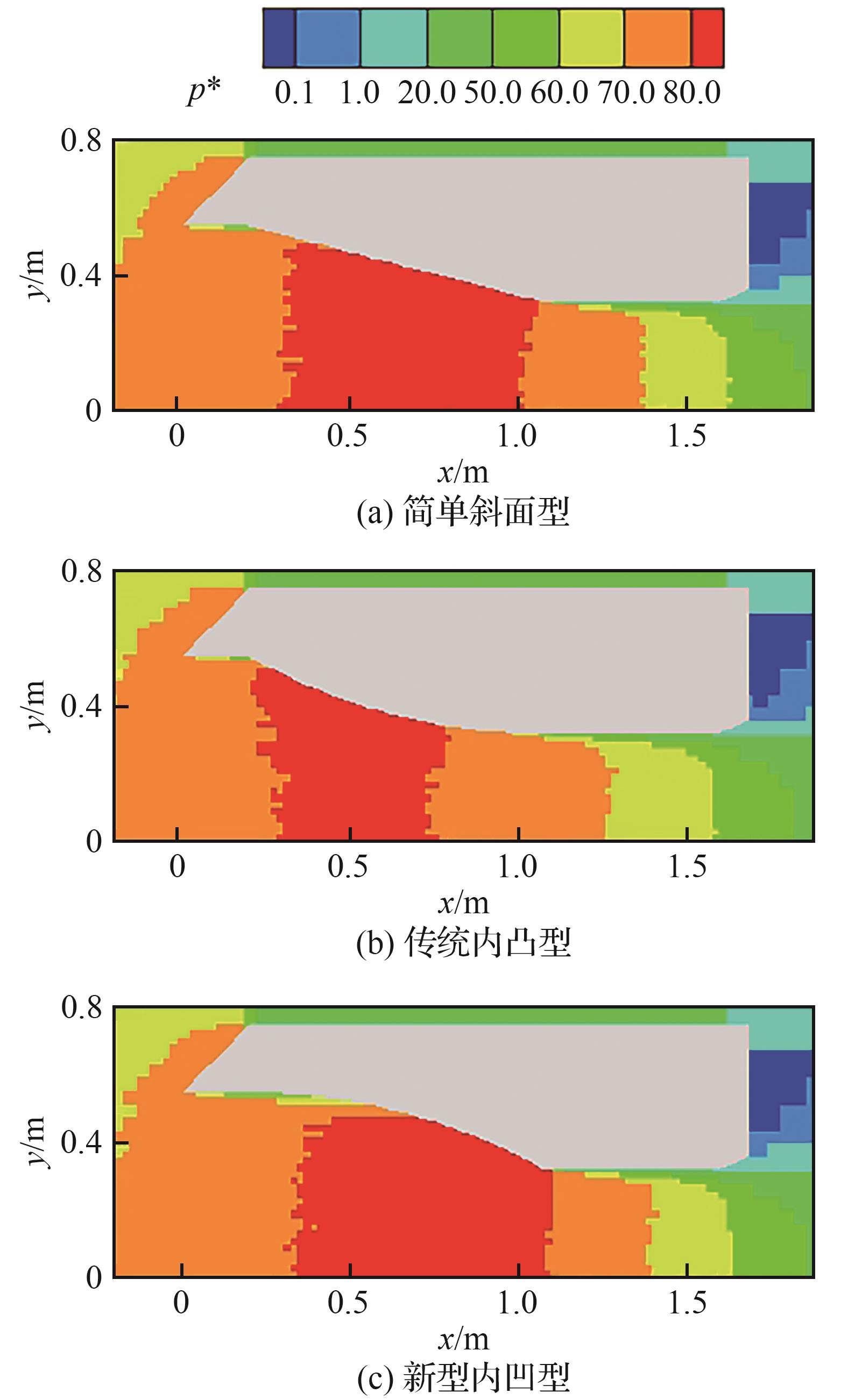
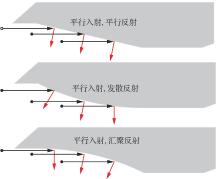
Fig.7
Schematic drawing of gas molecules reflecting diffusely from three types of inlet geometries
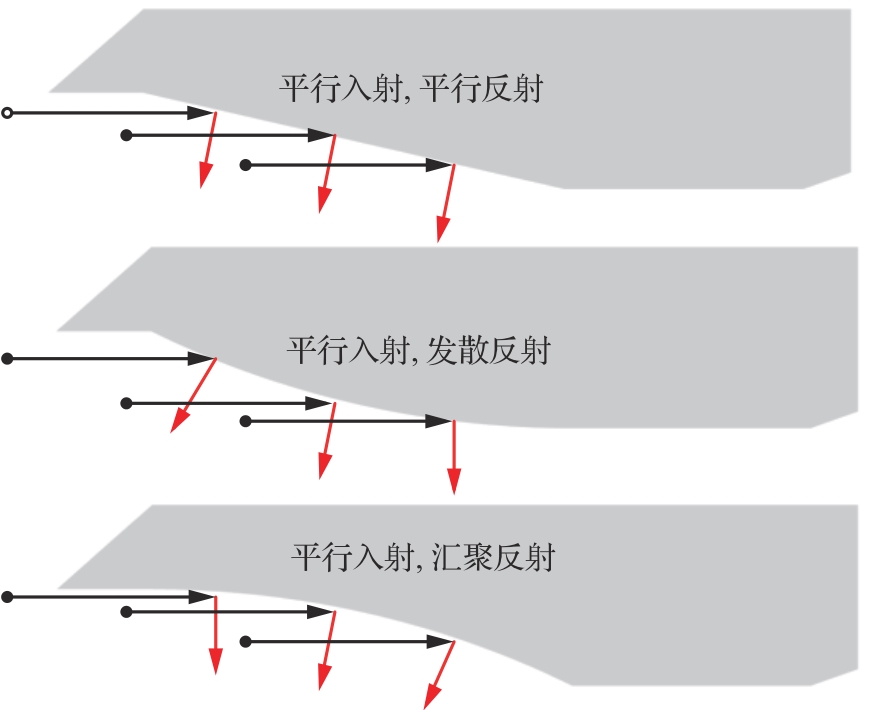
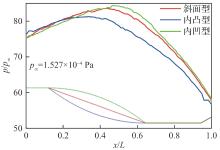
Fig.8
Pressure distribution along the symmetry axis of inlet (σ=1)
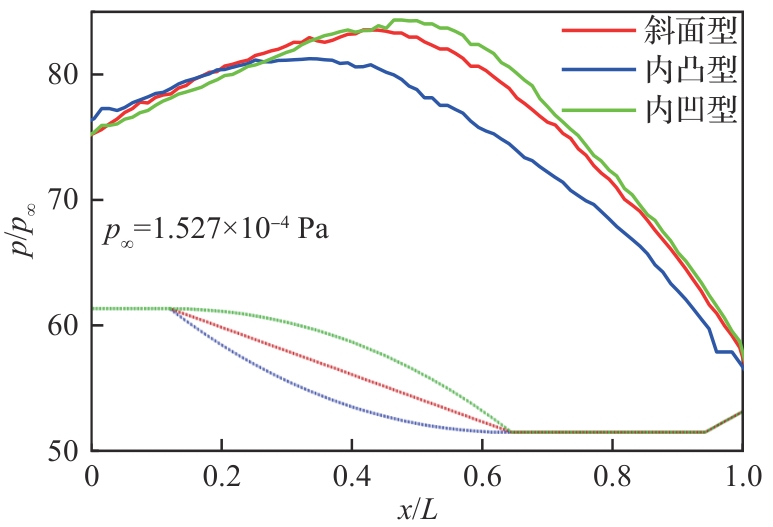
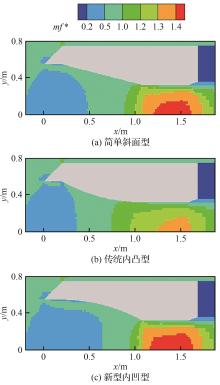
Fig.9
Contours of mass flux ratio(ρu)/(ρ∞u∞ ) (σ=1)
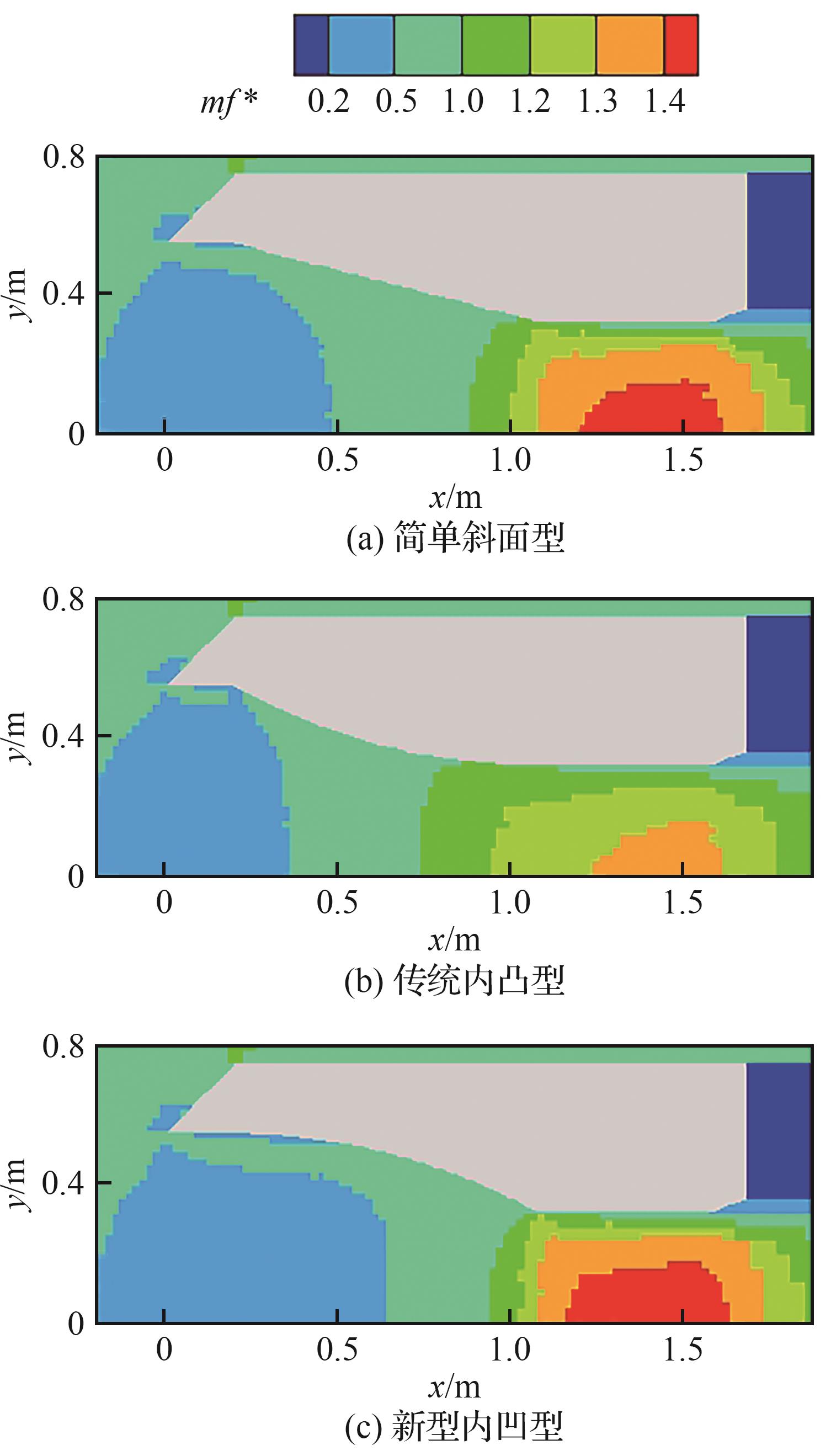
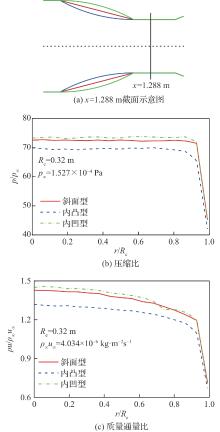
Fig.10
Flow-field profiles across the slice of x=1.288 m in the ionization section (σ=1)
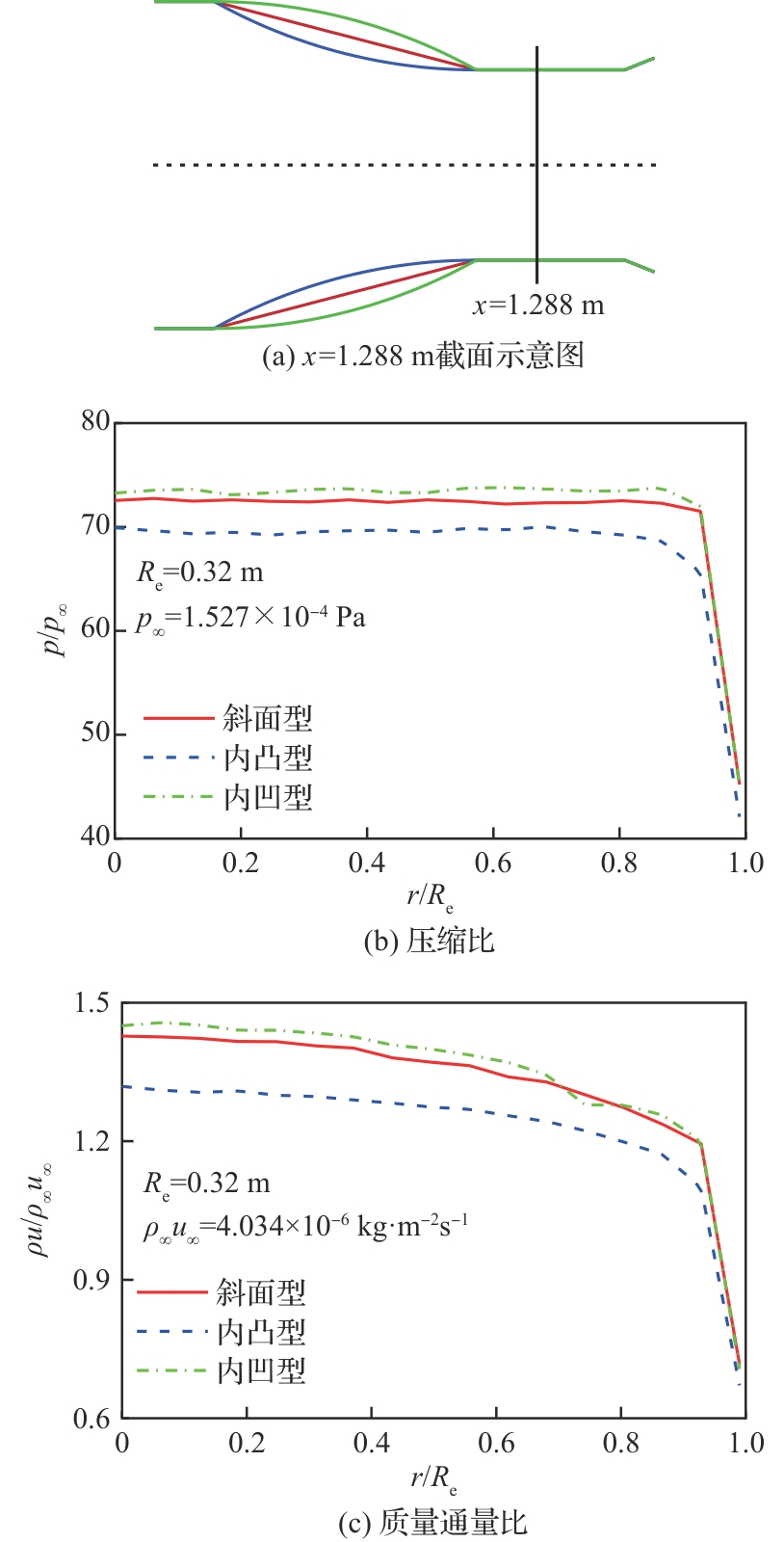
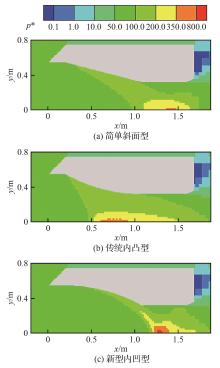
Fig.11
Contours of compression ratio p/p∞ (σ=0.5)
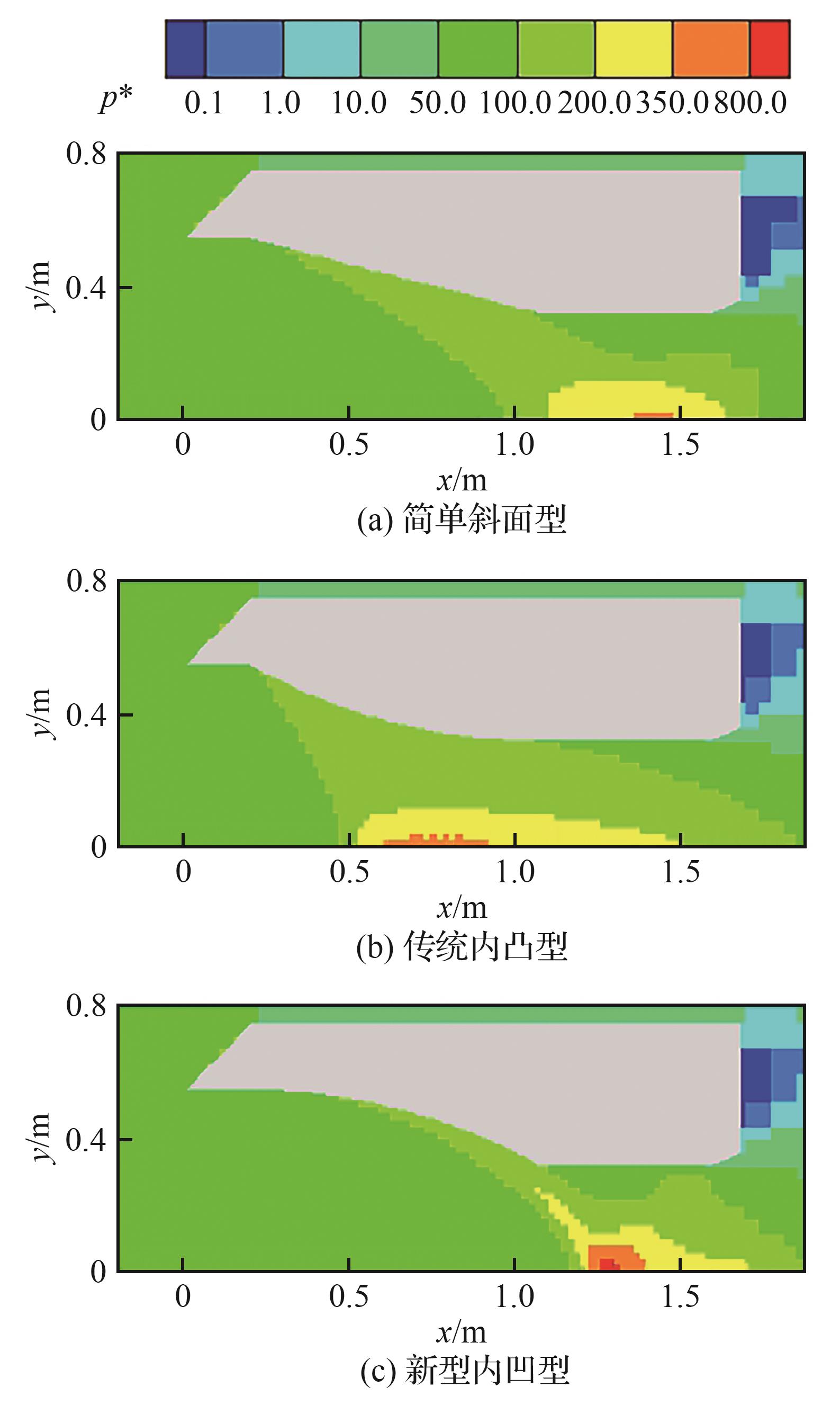
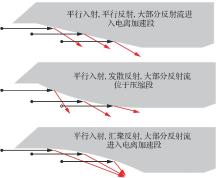
Fig.12
Schematic drawing of gas molecules reflecting specularly from three types of inlet geometries
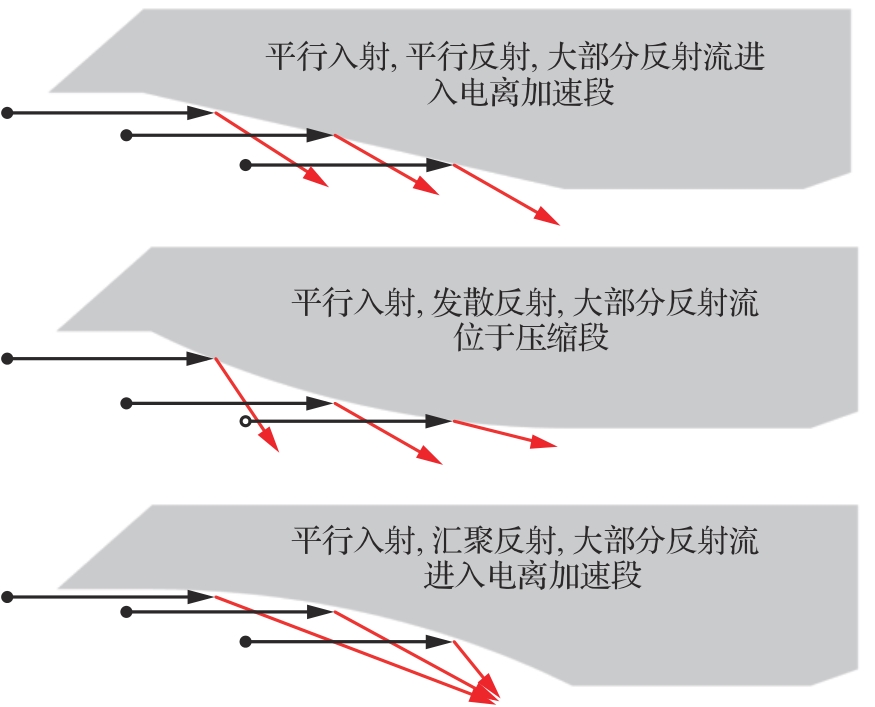
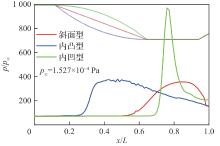
Fig.13
Pressure distribution along the symmetry axis of inlet (σ=0.5)
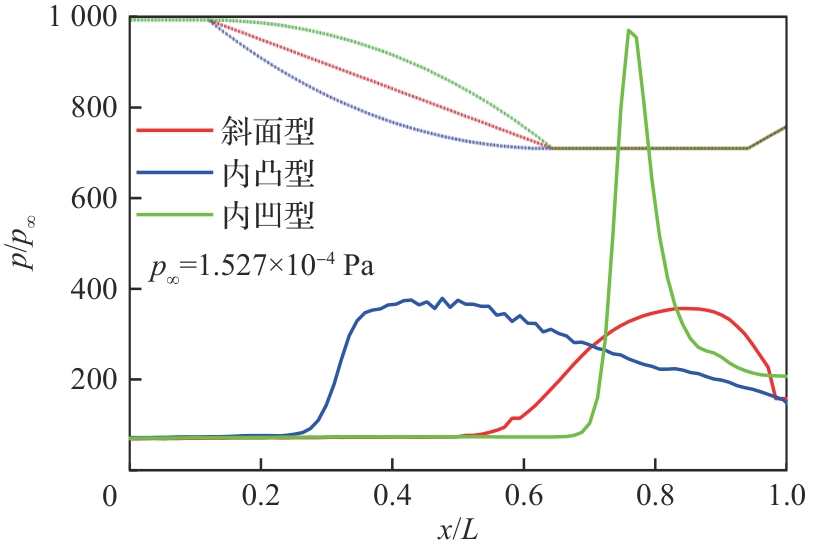
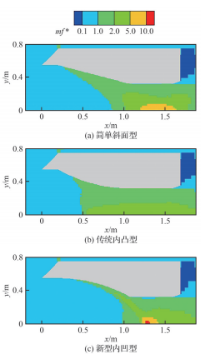
Fig.14
Contours of mass flux ratio(ρu)/(ρ∞u∞ ) (σ = 0.5)
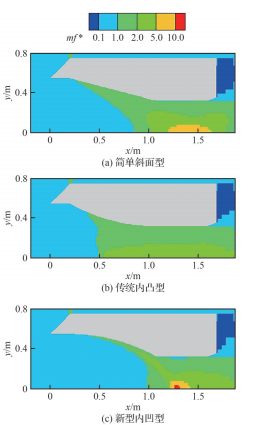
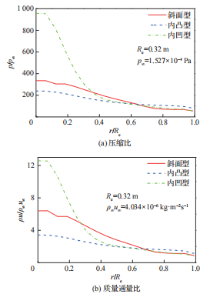
Fig.15
Flow-field profiles across the slice of x=1.288 m in the ionization section (σ=0.5)
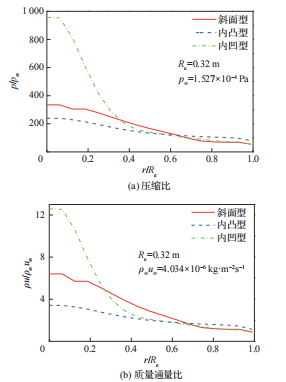
Table 2
Compression and collection performances of different inlets (σ=1)
| 进气道 | 平均压缩比 | 收集效率 | ||
|---|---|---|---|---|
| 绝对值 | 相对变化率/ % | 绝对值/ % | 相对变化率/ % | |
| 斜面型 | 71.776 | 44.23 | ||
| 内凸型 | 68.493 | -4.57 | 41.23 | -6.79 |
| 内凹型 | 72.812 | 1.44 | 44.75 | 1.16 |
Table 3
Compression and collection performances of different inlets (σ=0.5)
| 进气道 | 平均压缩比 | 收集效率 | ||
|---|---|---|---|---|
| 绝对值 | 相对变化率/ % | 绝对值/ % | 相对变化率/ % | |
| 斜面型 | 148.827 | 73.53 | ||
| 内凸型 | 127.469 | -14.35 | 63.80 | -13.23 |
| 内凹型 | 163.737 | 10.02 | 78.38 | 6.60 |
Table 4
Relative variations of compression and collection performances of different inlets with the decrease of accommodation coefficients from 1 to 0.5
| 进气道 | 斜面型 | 内凸型 | 内凹型 |
|---|---|---|---|
| 压缩比相对变化率/% | 85.82 | 86.10 | 124.88 |
| 收集效率相对变化率/% | 76.66 | 54.73 | 75.16 |
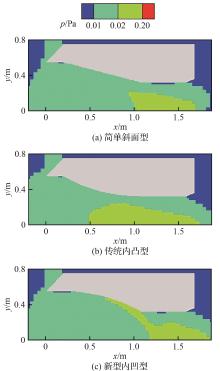
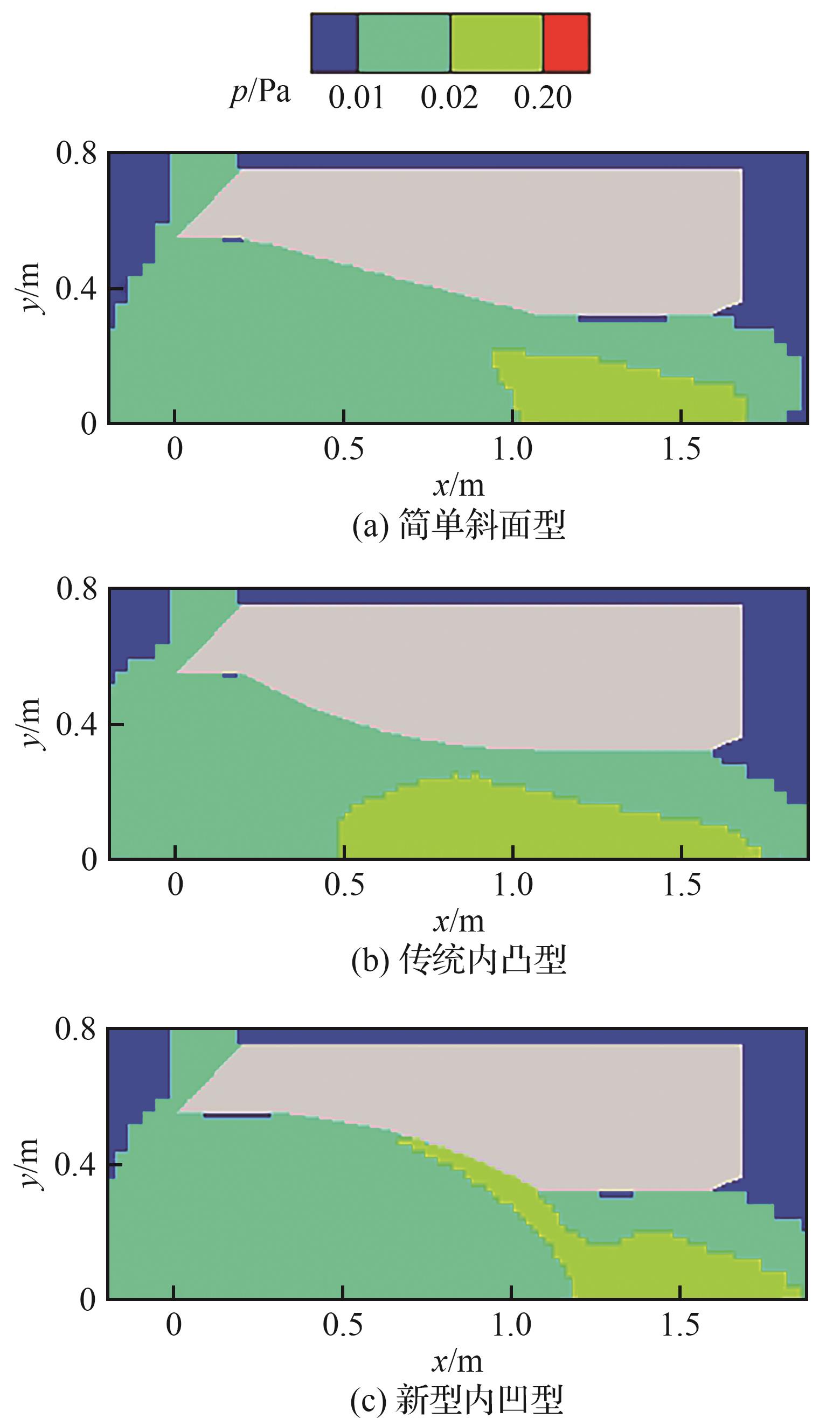
Fig.16
Pressure range of inlets for σ=0.5
| [1] | 中国科协. 中国科协发布2023重大科学问题、工程技术难题和产业技术问题[EB/OL]. (2023-10-23)[2024-1-30]. . |
| China Association for Science and Technology. China Association for Science and Technology unveils top science, engineering, and industrial challenges of 2023 at its 25th Annual Meeting [EB/OL]. (2023-10-23)[2024-1-30]. (in Chinese). | |
| [2] | 沈清, 黄飞, 程晓丽, 等. 飞行器上层大气层空气动力特性探讨[J]. 气体物理, 2021, 6(1): 1-9. |
| SHEN Q, HUANG F, CHENG X L, et al. On characteristics of upper atmosphere aerodynamics of flying vehicles[J]. Physics of Gases, 2021, 6(1): 1-9 (in Chinese). | |
| [3] | CHEN Z, HUANG F, JIN X H, et al. A novel lightweight aerodynamic design for the wings of hypersonic vehicles cruising in the upper atmosphere[J]. Aerospace Science and Technology, 2021, 109: 106418. |
| [4] | CRISP N H, ROBERTS P C E, LIVADIOTTI S, et al. The benefits of very low earth orbit for earth observation missions[J]. Progress in Aerospace Sciences, 2020, 117: 100619. |
| [5] | 靳旭红, 黄飞, 张俊, 等. 上层大气层飞行器研究进展及气动技术挑战[J]. 航空学报, 2024, 45(22): 30254. |
| JIN X H, HUANG F, ZHANG J, et al. Spacecraft in upper atmosphere: Research development and aerodynamic challenges[J]. Acta Aeronautica et Astronautica Sinica, 2024, 45(22): 30254 (in Chinese). | |
| [6] | CRISP N H, ROBERTS P C E, LIVADIOTTI S, et al. In-orbit aerodynamic coefficient measurements using SOAR (Satellite for Orbital Aerodynamics Research)[J]. Acta Astronautica, 2021, 180: 85-99. |
| [7] | PRIETO D M, GRAZIANO B P, ROBERTS P. Spacecraft drag modelling[J]. Progress in Aerospace Sciences, 2014, 64: 56-65. |
| [8] | NISHIYAMA K. Air breathing ion engine concept: AIAA-2003-IAC-03-S.4.02[R]. Reston: AIAA, 2003. |
| [9] | ANDREUSSI T, FERRATO E, PAISSONI C A, et al. The AETHER project: Development of air-breathing electric propulsion for VLEO missions[J]. CEAS Space Journal, 2022, 14(4): 717-740. |
| [10] | SINGH L A, WALKER M L R. A review of research in low earth orbit propellant collection[J]. Progress in Aerospace Sciences, 2015, 75: 15-25. |
| [11] | BERNER F, CAMAC M. Air scooping vehicle[J]. Planetary and Space Science, 1961, 4: 159-183. |
| [12] | CONLEY B. R. Utilization of ambient gas as a propellant for low earth orbit electric propulsion[D]. Cambridge: Massachusetts Institute of Technology, 1995. |
| [13] | 靳旭红, 程晓丽, 沈清, 等. 吸气式电推进系统进气道气体流动数值分析[J]. 中国科学: 物理学 力学 天文学, 2024, 54(3): 150-161. |
| JIN X H, CHENG X L, SHEN Q, et al. Numerical analysis of inlet flows in an atmosphere-breathing electric propulsion system[J]. Scientia Sinica (Physica, Mechanica & Astronomica), 2024, 54(3): 150-161 (in Chinese). | |
| [14] | ROMANO F, CHAN Y A, HERDRICH G, et al. RF Helicon-based inductive plasma thruster (IPT) design for an atmosphere-breathing electric propulsion system (ABEP)[J]. Acta Astronautica, 2020, 176: 476-483. |
| [15] | WU J J, ZHENG P, ZHANG Y, et al. Recent development of intake devices for atmosphere-breathing electric propulsion system[J]. Progress in Aerospace Sciences, 2022, 133: 100848. |
| [16] | ANDREUSSI T, FERRATO E, GIANNETTI V. A review of air-breathing electric propulsion: from mission studies to technology verification[J]. Journal of Electric Propulsion, 2022, 1: 31. |
| [17] | JACKSON S W, MARSHALL R. Conceptual design of an air-breathing electric thruster for CubeSat applications[J]. Journal of Spacecraft and Rockets, 2017, 55(3): 632-639. |
| [18] | ZHENG P, WU J J, WU B Q, et al. Design and numerical investigation on the intake of atmosphere-breathing electric propulsion[J]. Acta Astronautica, 2021, 188: 215-228. |
| [19] | 谢晓乐, 李济源, 王娴, 等. 吸气式电推进系统进气道结构对进气性能的影响[J]. 航空学报, 2022, 43(3): 125272. |
| XIE X L, LI J Y, WANG X, et al. Influence of air-intake structure in air-breathing electric propulsion system on intake performance[J]. Acta Aeronautica et Astronautica Sinica, 2022, 43(3): 125272 (in Chinese). | |
| [20] | JIN X H, MIAO W B, CHENG X L, et al. Monte Carlo simulation of inlet flows in atmosphere-breathing electric propulsion[J]. AIAA Journal, 2024, 62(2): 518-529. |
| [21] | JIN X H, CHENG X L, HUANG Y Q, et al. Numerical analysis of inlet flows at different altitudes in the upper atmosphere[J]. Physics of Fluids, 2023, 35(9): 093605. |
| [22] | LI Y W, CHEN X, LI D M, et al. Design and analysis of vacuum air-intake device used in air-breathing electric propulsion[J]. Vacuum, 2015, 120: 89-95. |
| [23] | PAPULOV A, UZHINSKY I. Assessment and design of the active intake for VLEO operation [C]∥PASCALE E. Proceedings of the International Astronautical Congress 2020. CyberSpace: International Astronautical Federation, 2020: 12-14. |
| [24] | 靳旭红, 黄飞, 程晓丽, 等. Maxwell气固相互作用模型对稀薄高超声速凹腔绕流流动特征和热环境的影响[J]. 航空学报, 2021, 42(3): 124118. |
| JIN X H, HUANG F, CHENG X L, et al. Effect of Maxwell gas-surface interaction models on flow characteristics and thermodynamic properties of rarefied hypersonic cavity flows[J]. Acta Aeronautica et Astronautica Sinica, 2021, 42(3): 124118 (in Chinese). | |
| [25] | LIVADIOTTI S, CRISP N H, ROBERTS P C E, et al. A review of gas-surface interaction models for orbital aerodynamics applications[J]. Progress in Aerospace Sciences, 2020, 119: 100675. |
| [26] | TAO R L, WANG Z H. Gas-surface interaction features under effects of gas-gas molecules interaction in high-speed flows[J]. Chinese Journal of Aeronautics, 2024, 37(5): 228-242. |
| [27] | DENG J C, ZHANG J, LIANG T F, et al. A modified Cercignani-Lampis model with independent momentum and thermal accommodation coefficients for gas molecules scattering on surfaces[J]. Physics of Fluids, 2022, 34(10): 107108. |
| [28] | BIRD G A. Approach to translational equilibrium in a rigid sphere gas[J]. Physics of Fluids, 1963, 6(10): 1518-1519. |
| [29] | BIRD G A. Molecular gas dynamics and the direct simulation of gas flows[M]. New York: Oxford University Press, 1994: 340-346. |
| [30] | BIRD G A. Monte Carlo simulation of gas flows[J]. Annual Review of Fluid Mechanics, 1978, 10(8): 11-31. |
| [31] | 靳旭红, 黄飞, 程晓丽, 等. 稀薄流区高超声速飞行器表面缝隙流动结构及气动热环境的分子模拟[J]. 航空动力学报, 2019, 34(1): 201-209. |
| JIN X H, HUANG F, CHENG X L, et al. Monte Carlo simulation for the flow-field structure and aerodynamic heating due to cavities on hypersonic vehicle surfaces in the rarefied flow regime[J]. Journal of Aerospace Power, 2019, 34(1): 201-209 (in Chinese). | |
| [32] | BORGNAKKE C, LARSEN P S. Statistical collision model for Monte Carlo simulation of polyatomic gas mixture[J]. Journal of Computational Physics, 1975, 18(4): 405-420. |
| [33] | ALEXEENKO A A, LEVIN D A, GIMELSHEIN S F, et al. Numerical modeling of axisymmetric and three-dimensional flows in microelectromechanical systems nozzles[J]. AIAA Journal, 2002, 40(5): 897-904. |
| [34] | GARRIGUES L. Computational study of Hall-effect thruster with ambient atmospheric gas as propellant[J]. Journal of Propulsion and Power, 2012, 28: 344-354. |
| [1] | Xuhong JIN, Fei HUANG, Jun ZHANG, Xuede WANG, Xiaoli CHENG, Qing SHEN. Spacecraft in upper atmosphere: Research development and aerodynamic challenges [J]. Acta Aeronautica et Astronautica Sinica, 2024, 45(22): 30254-030254. |
| [2] | Junhong LI, Fei HUANG, Xuhong JIN, Wenbo MIAO, Xiaoli CHENG. Aerodynamic layout optimization design of upper atmosphere aircraft [J]. Acta Aeronautica et Astronautica Sinica, 2024, 45(22): 130164-130164. |
| [3] | Jun ZHANG, Yifan JIANG, Song CHEN, Shuaihui LI. Overview of aerodynamic drag calculation and reduction design for very low Earth orbit satellites [J]. Acta Aeronautica et Astronautica Sinica, 2024, 45(21): 29796-029796. |
| [4] | XIE Xiaole, LI Jiyuan, WANG Xian, LU Haifeng, HAN Xianwei. Influence of air-intake structure in air-breathing electric propulsion system on intake performance [J]. ACTA AERONAUTICAET ASTRONAUTICA SINICA, 2022, 43(3): 125272-125272. |
| [5] | JIN Xuhong, HUANG Fei, CHENG Xiaoli, SU Penghui. Effect of Maxwell gas-surface interaction models on flow characteristics and thermodynamic properties of rarefied hypersonic cavity flows [J]. ACTA AERONAUTICAET ASTRONAUTICA SINICA, 2021, 42(3): 124118-124118. |
| [6] | Li Bo;Liang Dewang. Numerical Simulation and Experiment of Integral Flow Fieldof Diverterless Supersonic Inlet/Forebody [J]. ACTA AERONAUTICAET ASTRONAUTICA SINICA, 2009, 30(9): 1597-1604. |
| Viewed | ||||||
|
Full text |
|
|||||
|
Abstract |
|
|||||
Address: No.238, Baiyan Buiding, Beisihuan Zhonglu Road, Haidian District, Beijing, China
Postal code : 100083
E-mail:hkxb@buaa.edu.cn
Total visits: 6658907 Today visits: 1341All copyright © editorial office of Chinese Journal of Aeronautics
All copyright © editorial office of Chinese Journal of Aeronautics
Total visits: 6658907 Today visits: 1341

 CJA
CJA
