Acta Aeronautica et Astronautica Sinica ›› 2026, Vol. 47 ›› Issue (4): 232328.doi: 10.7527/S1000-6893.2025.32328
• Solid Mechanics and Vehicle Conceptual Design • Previous Articles
Zihao WANG1, Wanxiang WANG2, Chenglong WU1, Junyu SHAN3, Shuai YUE1( ), Zhonghua DU1, Lei ZHAO1
Received:2025-05-30
Revised:2025-06-18
Accepted:2025-07-11
Online:2025-07-16
Published:2025-07-15
Contact:
Shuai YUE
E-mail:yueshuai@njust.edu.cn
Supported by:CLC Number:
Zihao WANG, Wanxiang WANG, Chenglong WU, Junyu SHAN, Shuai YUE, Zhonghua DU, Lei ZHAO. Buffering characteristics and parameter influence of launch canister of space launch devices[J]. Acta Aeronautica et Astronautica Sinica, 2026, 47(4): 232328.
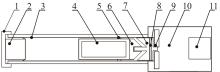
Fig.1
Buffer structure
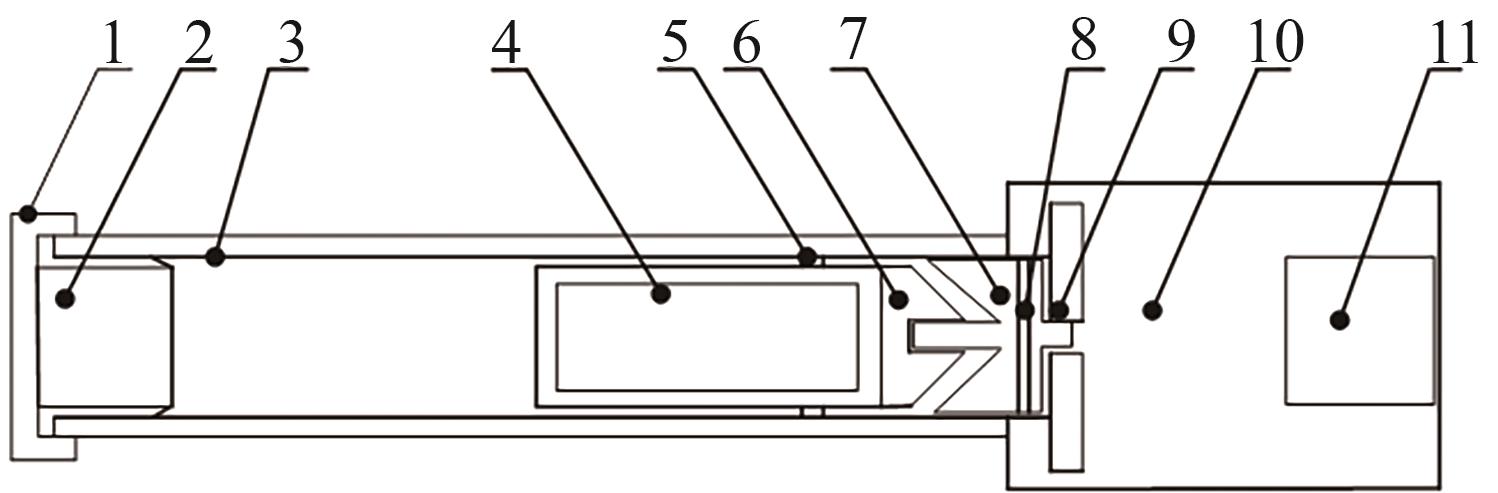

Table 1
Name of parts
| 序号 | 部件 | 材料 | 质量/g |
|---|---|---|---|
| 1 | 压盖 | 30CrMnSiA | 17 |
| 2 | 吸能环 | 2A12-T4 | 1 |
| 3 | 发射管 | TC4 | 38 |
| 4 | 牵引体 | 12Cr18Ni9 | 0.87 |
| 5 | 前定心 | PA66 | 5.91 |
| 6 | 后定心 | 7075-T6 | 0.22 |
| 7 | 吸能活塞 | 7075-T6 | 1 |
| 8 | 密封圈 | NBR | 0.2 |
| 9 | 螺堵 | 7075-T6 | 1.5 |
| 10 | 药室 | 7075-T6 | 80 |
| 11 | 点火器 | 2 |
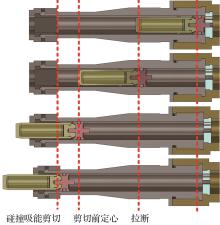
Fig.2
Working process
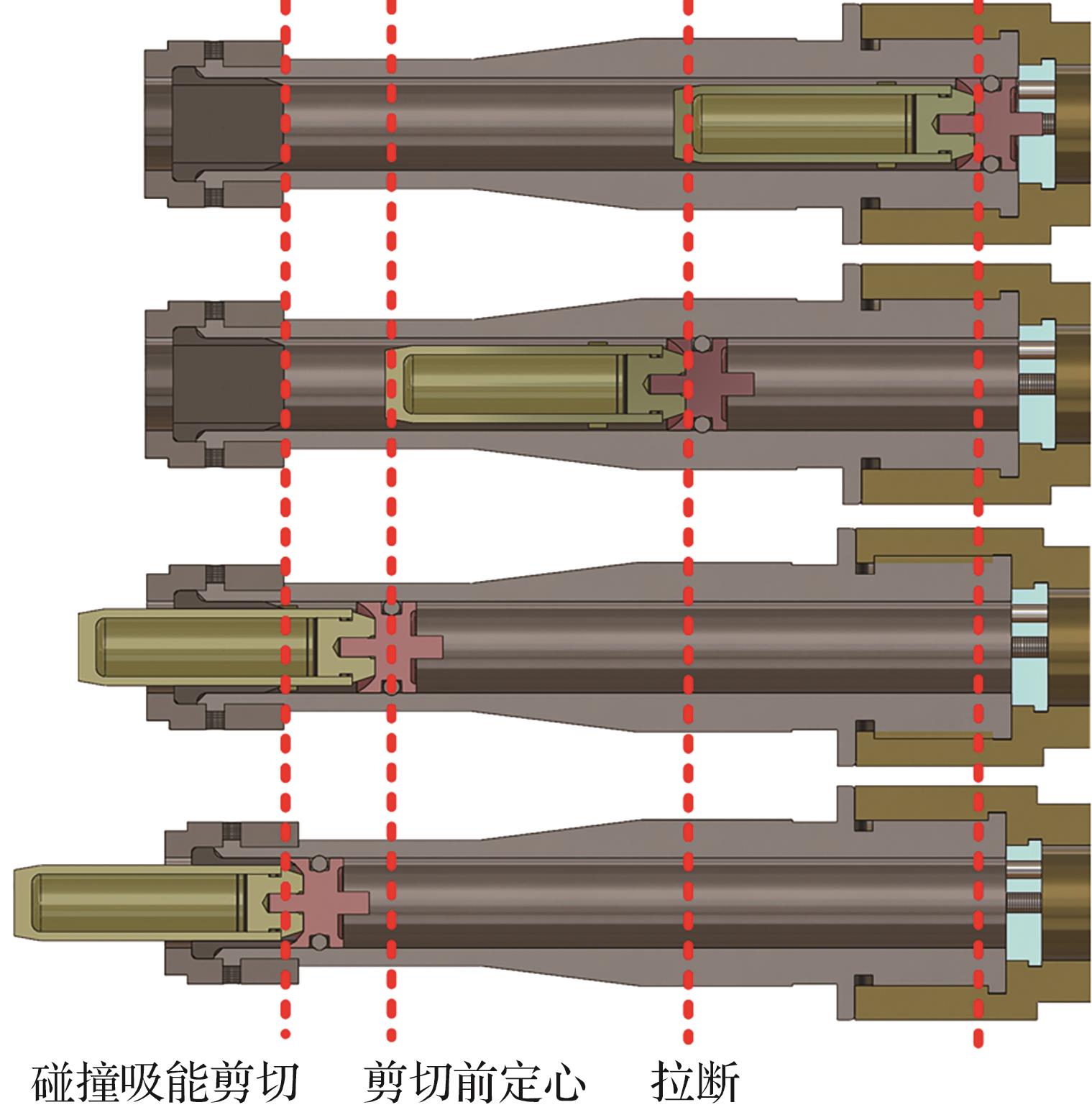
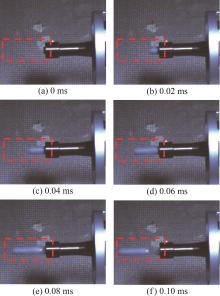
Fig.3
High-speed camera timing diagram
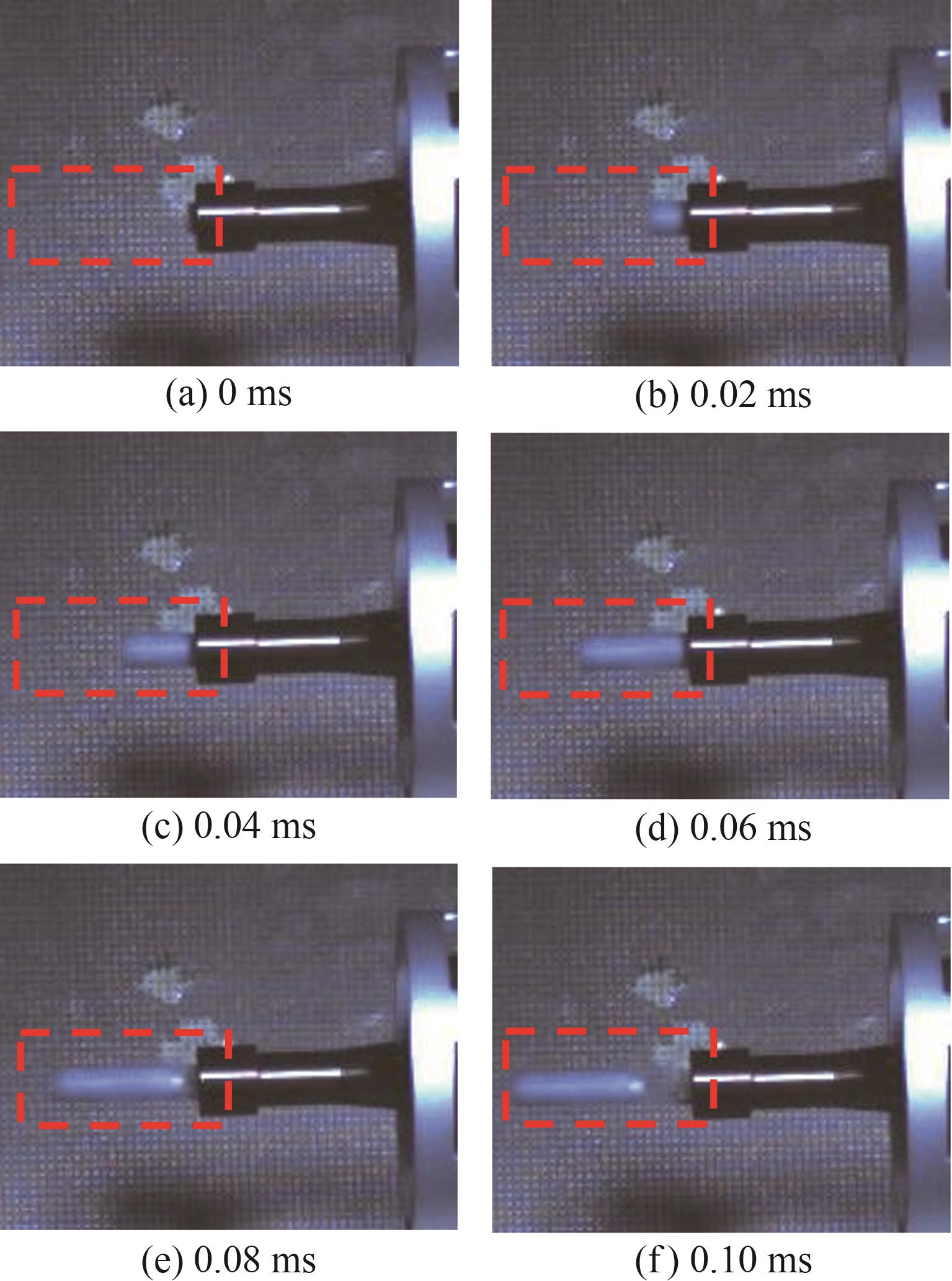
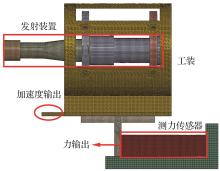
Fig.4
Finite element modeling

Table 2
Primary material parameters of 2A12-T4 aluminum alloy[29]
| 密度 | 弹性模量 | 泊松比 |
|---|---|---|
| 2 770 | 71.7 | 0.33 |
Table 3
Johnson-Cook constitutive model parameters
| A/MPa | B/MPa | C | ||
|---|---|---|---|---|
| 400 | 424 | 0.35 | 0.001 | 1.426 |
Table 4
Johnson-Cook failure criterion parameters
| D1 | D2 | D3 | D4 | D5 |
|---|---|---|---|---|
| 0.116 | 0.211 | -2.172 | 0.012 | -0.012 56 |

Fig.5
Interior ballistics curves

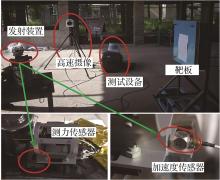
Fig.6
Experimental layout
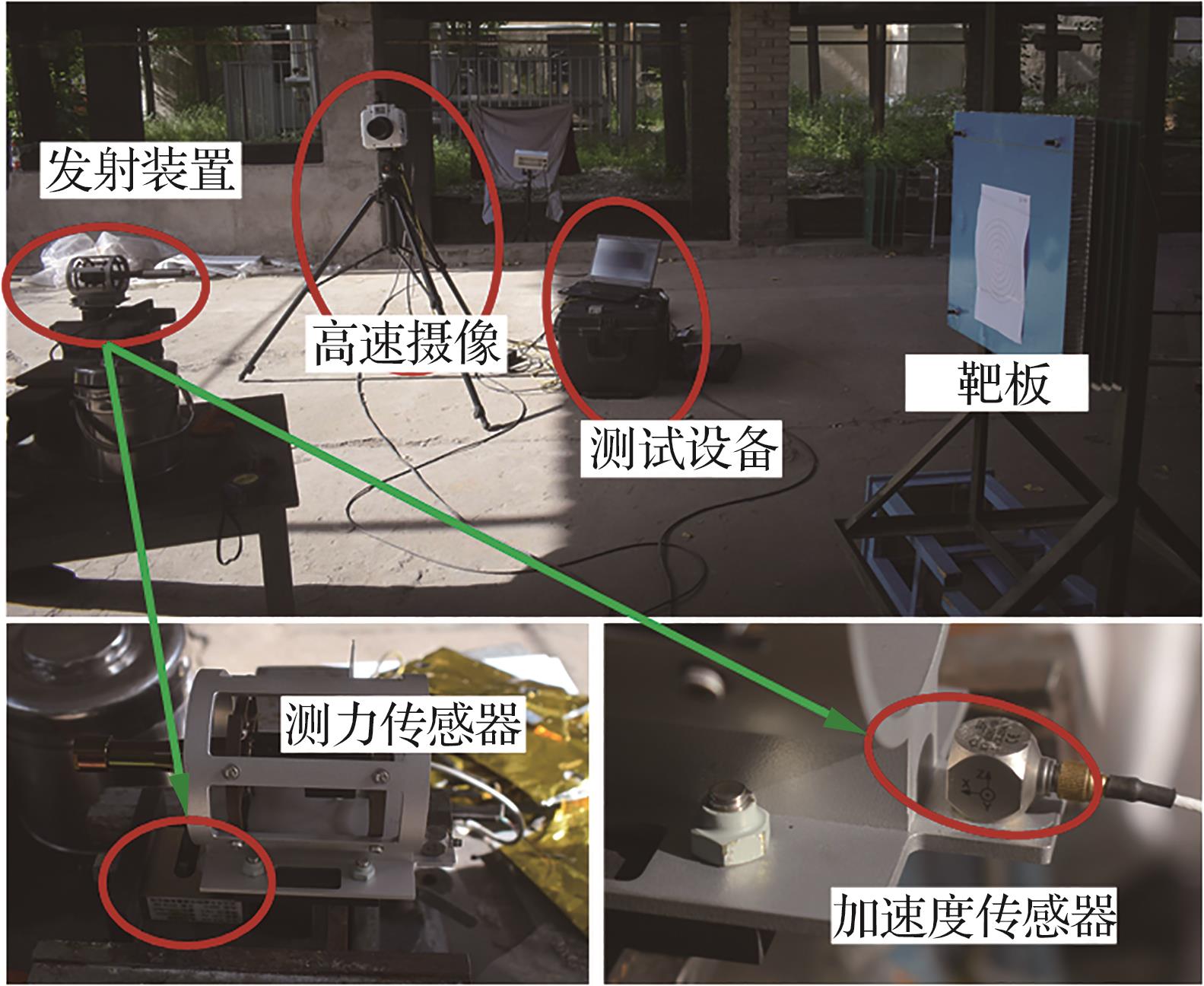

Fig.7
Stress contour of energy-absorbing ring during deformation
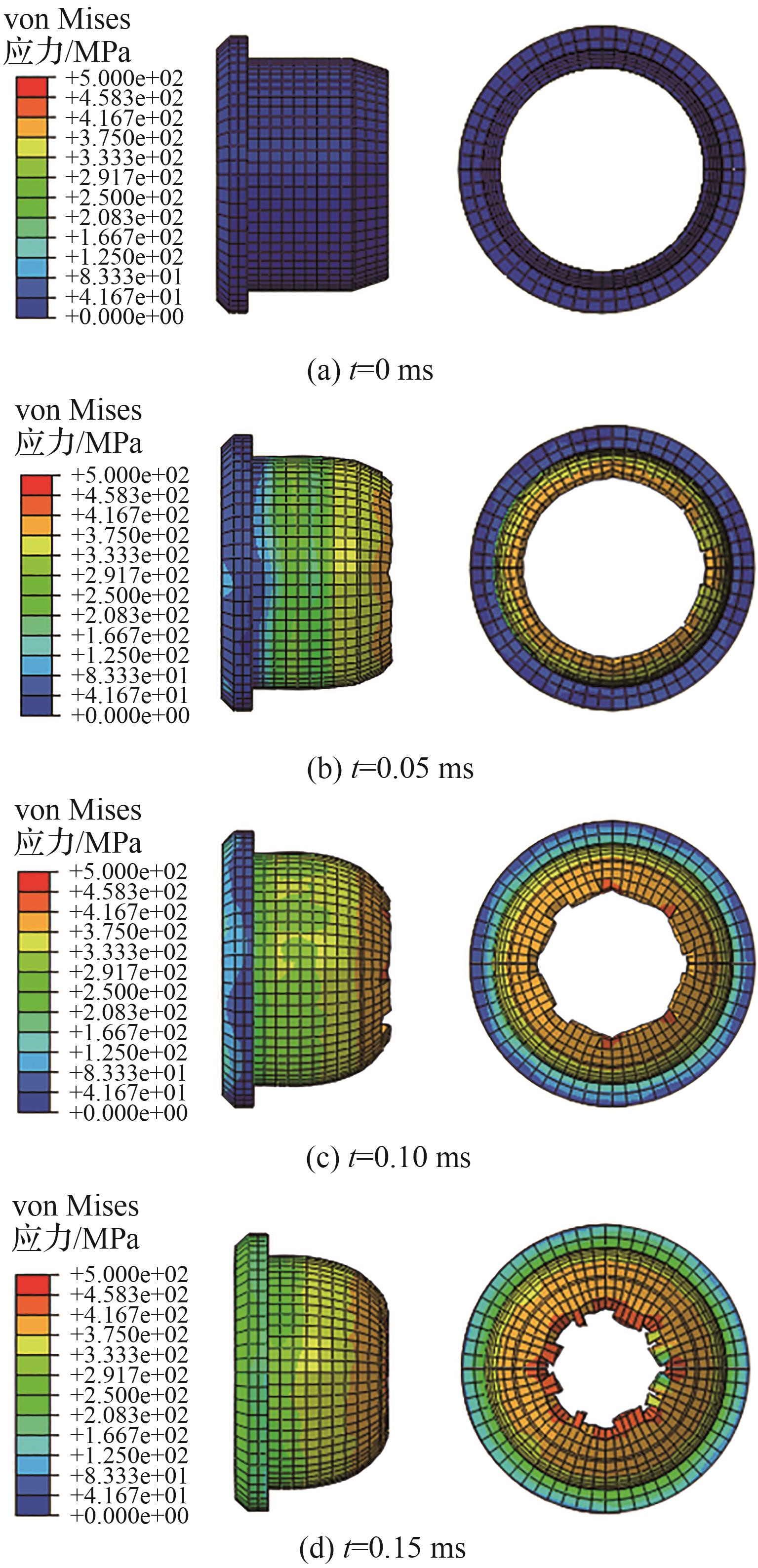

Fig.8
Energy-absorbing ring transformation

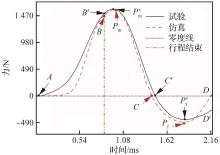
Fig.9
Test and simulation force comparison curves
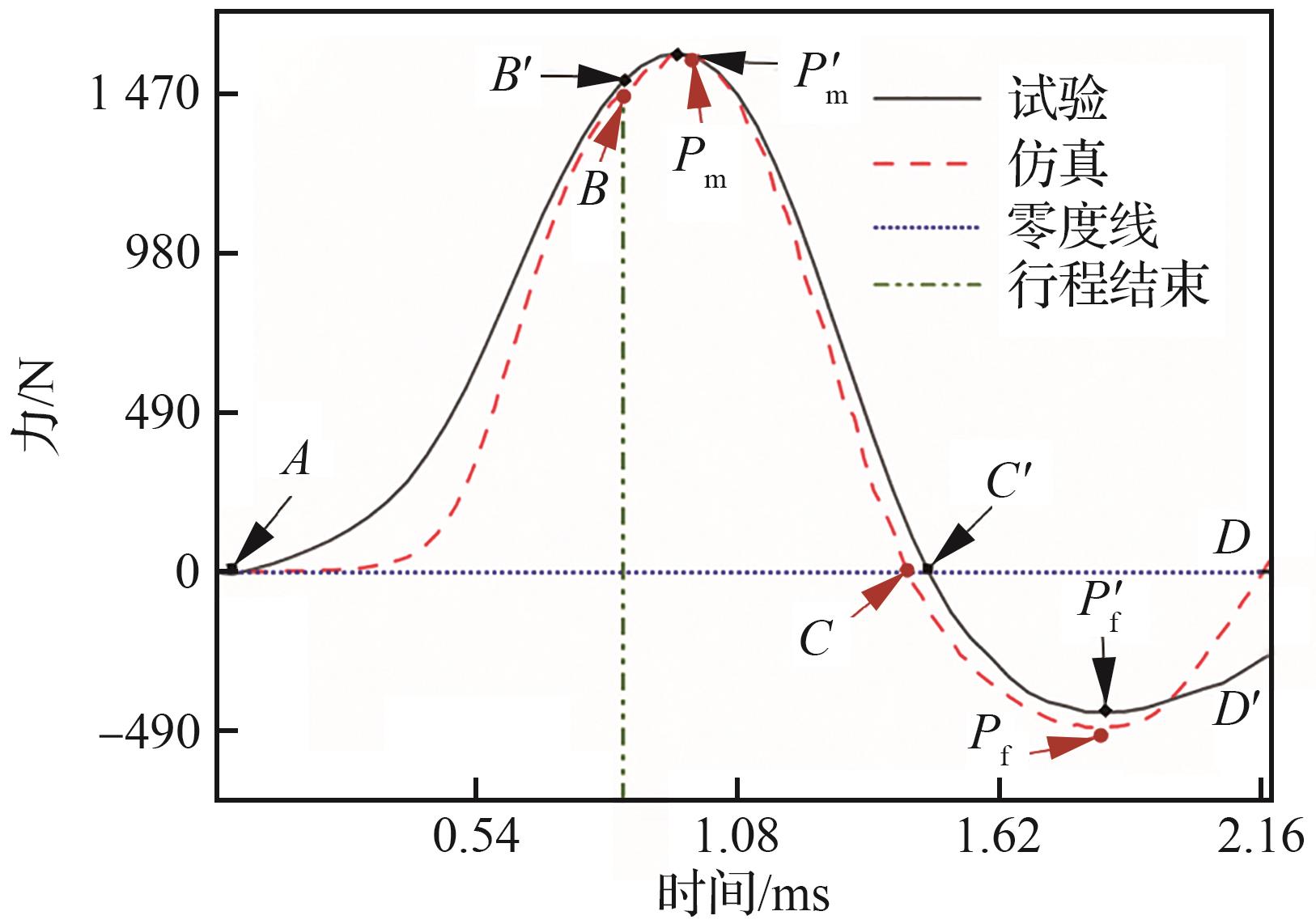

Fig.10
Internal ballistics, simulation and experimental velocity curves
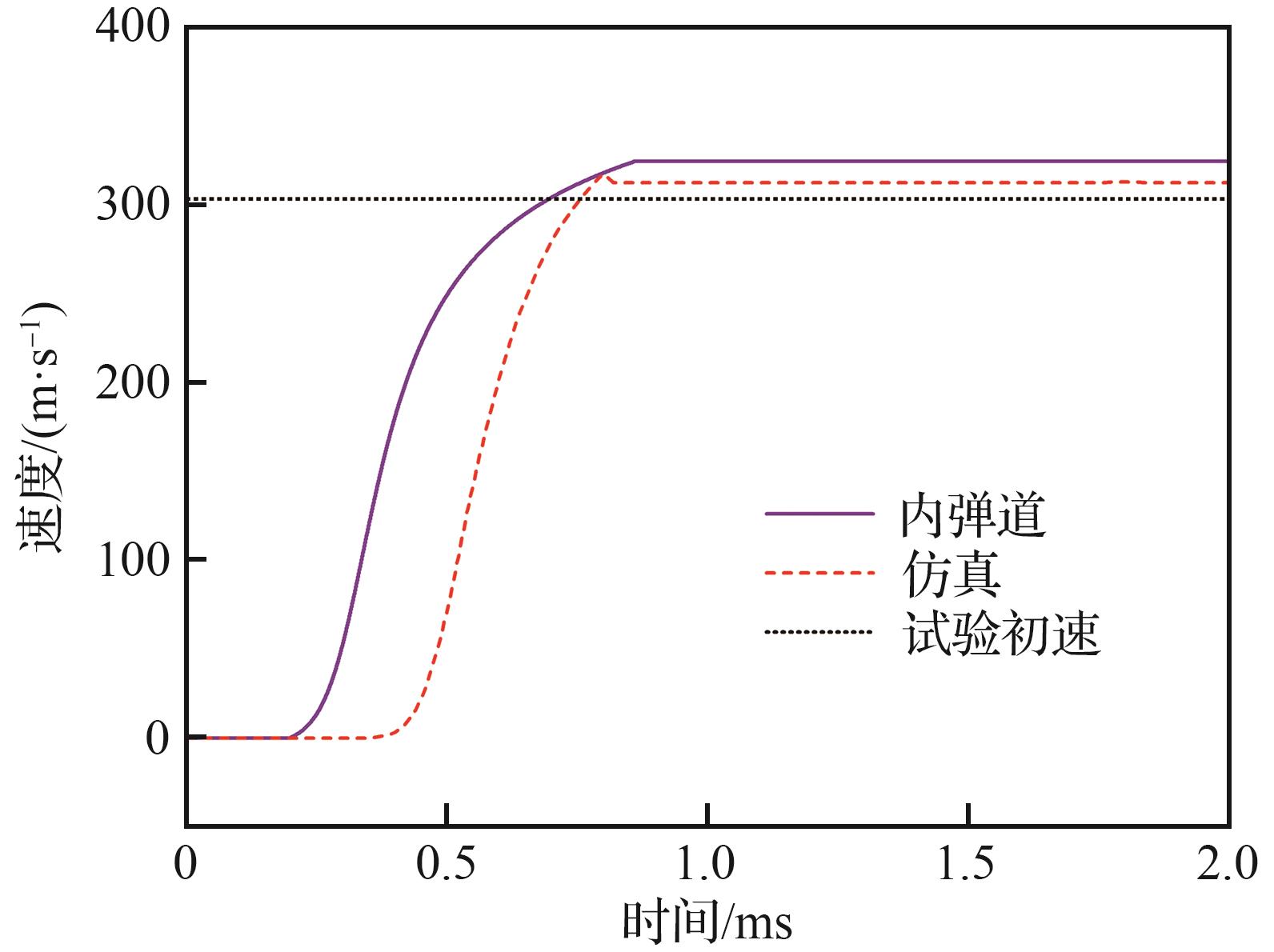
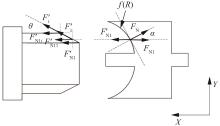
Fig.11
Energy-absorbing ring and piston force diagram
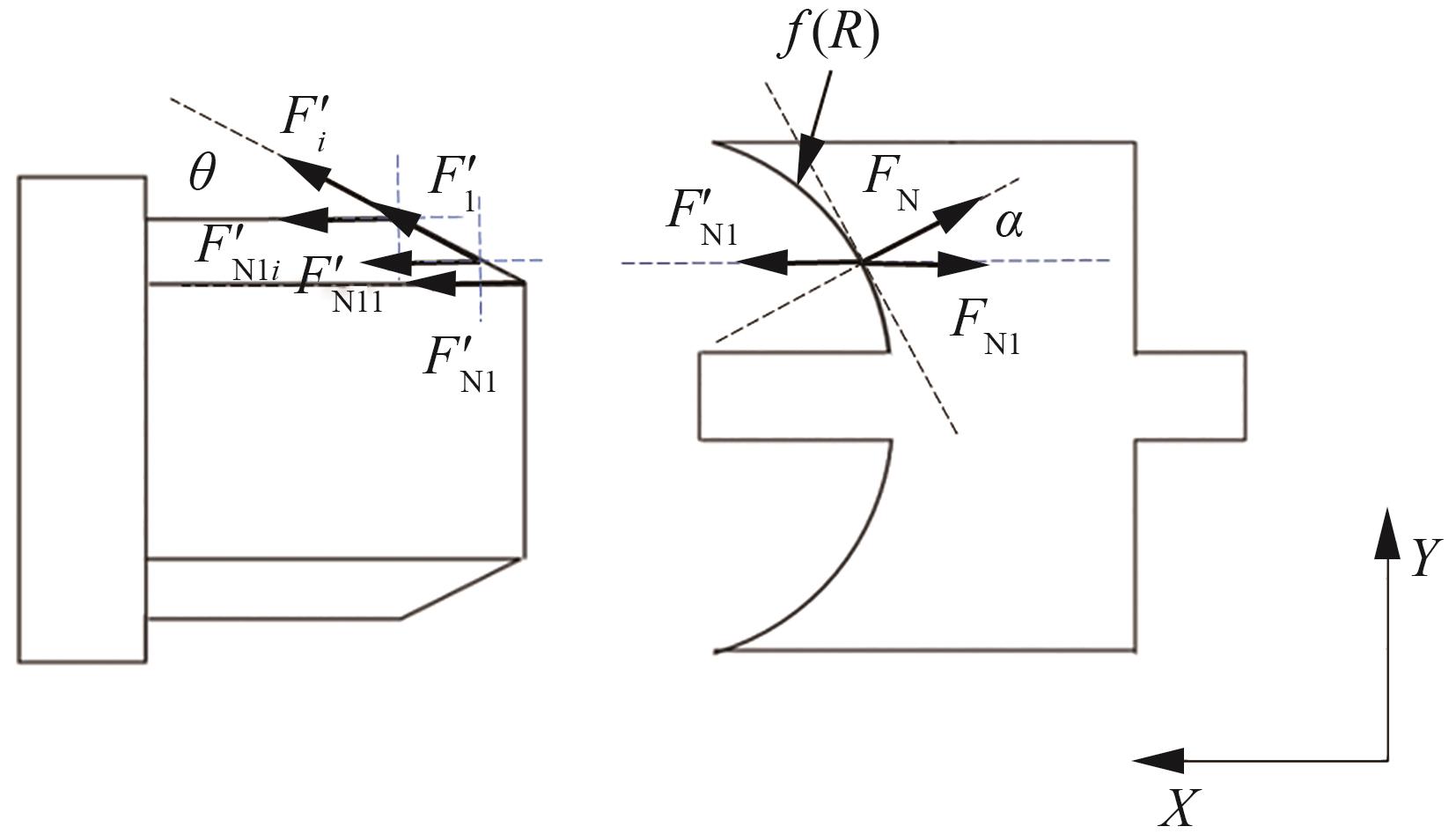

Fig.12
Force curves at different angles of inclination
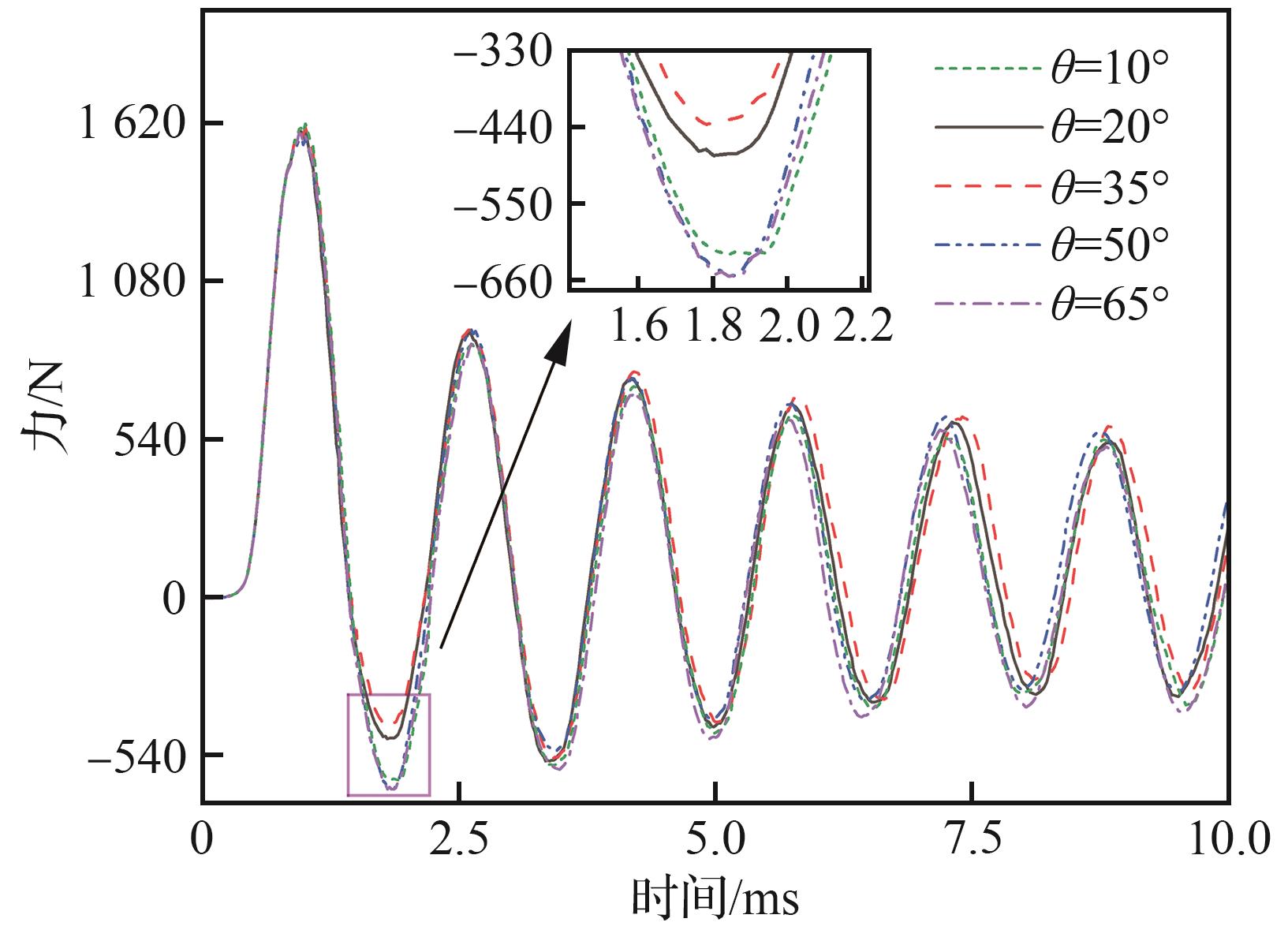
Table 5
Peaks of forward impact force for different θ
| 前冲力峰值/N | |
|---|---|
| 10 | 622.17 |
| 20 | 480.09 |
| 35 | 435.84 |
| 50 | 651.99 |
| 65 | 652.45 |

Fig.13
Pitch displacement of launch canister
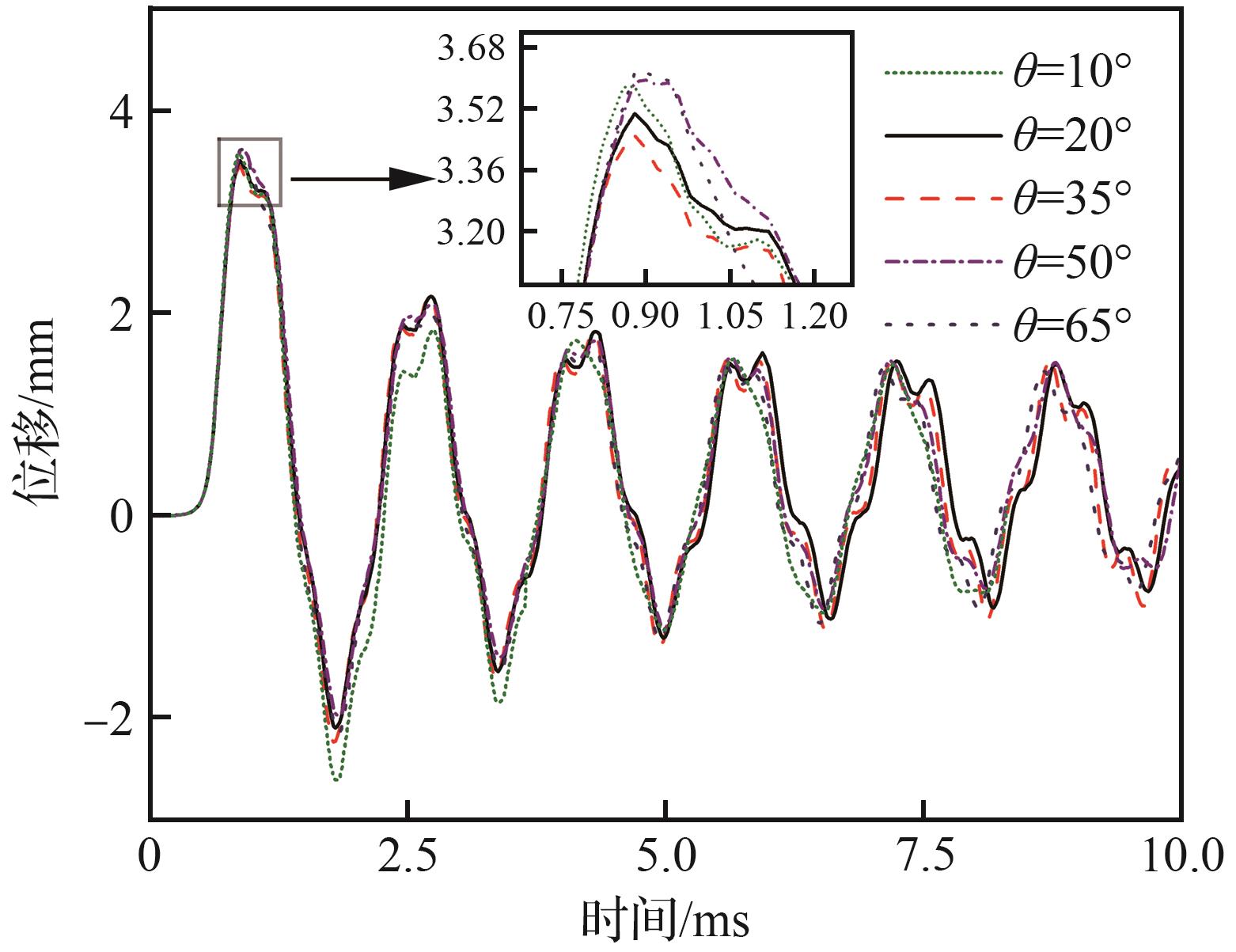
Table 6
Peaks of pitch displacement for different θ
| 最大俯仰位移/mm | |
|---|---|
| 10 | 3.57 |
| 20 | 3.51 |
| 35 | 3.45 |
| 50 | 3.59 |
| 65 | 3.61 |

Fig.14
Force curves at different radius
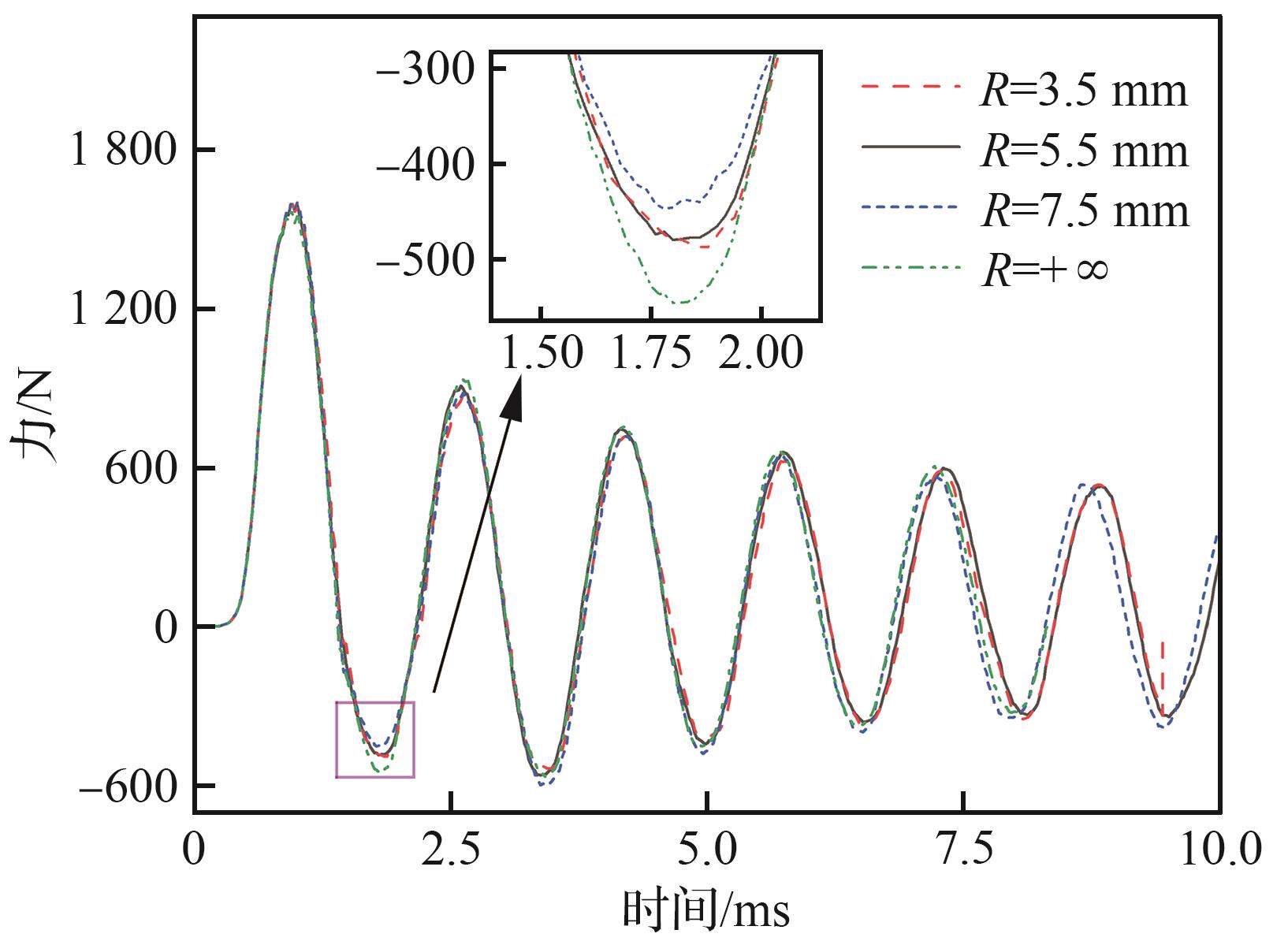
Table 7
Peaks of forward impact force of different R
| 前冲力峰值/N | |
|---|---|
| 3.5 | 487.55 |
| 5.5 | 480.09 |
| 7.5 | 447.28 |
| +∞ | 546.04 |
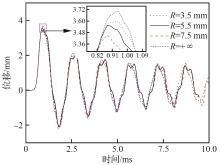
Fig.15
Pitch displacement of launch canister

Table 8
Peaks of pitch displacement for different R
| 最大俯仰位移/mm | |
|---|---|
| 3.5 | 3.60 |
| 5.5 | 3.51 |
| 7.5 | 3.45 |
| +∞ | 3.70 |
Table 9
Sensitivity results for θ
| 10 | +29.59 | -0.59 | +1.71 | -0.034 |
| 35 | -9.22 | -0.12 | -1.71 | -0.023 |
| 50 | +35.80 | +0.24 | +2.39 | +0.016 |
| 65 | +35.90 | +0.16 | +2.96 | +0.013 |
Table 10
Sensitivity results for R
| 3.5 | +1.55 | -0.043 | +2.50 | -0.069 |
| 7.5 | -6.83 | -0.188 | -1.65 | -0.045 |
| +∞ | +13.94 | +0.139 | +5.50 | +0.055 |
| [1] | 龚自正, 赵秋艳, 李明, 等. 空间碎片防护研究前沿问题与展望[J]. 空间碎片研究, 2019, 19(3): 2-13. |
| GONG Z Z, ZHAO Q Y, LI M, et al. The frontier problem and prospect of space debris protection research[J]. Space Debris Research, 2019, 19(3): 2-13 (in Chinese). | |
| [2] | 郑世贵, 闫军. 空间碎片防护需求与防护材料进展[J]. 国际太空, 2014(6): 49-53. |
| ZHENG S G, YAN J. Requirements of space debris protection and progress of protective materials[J]. Space International, 2014(6): 49-53 (in Chinese). | |
| [3] | ZHOU M Q, JIANG X Q, ZOU C L. On-orbit placement optimization of proximity defense shield for space station[J]. Acta Astronautica, 2022, 198: 295-308. |
| [4] | XIA X, SUN Y P, SUN J L. Dynamics and experiments of a tendon-actuated flexible robotic arm for capturing a floating target[J]. Defence Technology, 2025, 47: 216-241. |
| [5] | TSUNO K, WADA S, OGAWA T, et al. Laser ablation induced impulse study for removal of space debris mission using small satellite[J]. Applied Physics A, 2022, 128(10): 932. |
| [6] | WANG R L, LIU W, YAN R D, et al. Refined study of space debris collision warning techniques for LEO satellites[J]. Journal of Space Safety Engineering, 2020, 7(3): 262-267. |
| [7] | ZHU W L, PANG Z J, HE J, et al. Tensile experiment based nonlinear tether element model for tethered space net[J]. Acta Astronautica, 2025, 228: 643-651. |
| [8] | BOTTA E M, MILES C, SHARF I. Simulation and tension control of a tether-actuated closing mechanism for net-based capture of space debris[J]. Acta Astronautica, 2020, 174: 347-358. |
| [9] | HUANG W C, ZOU H W, LIU H W, et al. Contact dynamic analysis of tether-net system for space debris capture using incremental potential formulation[J]. Advances in Space Research, 2023, 72(6): 2039-2050. |
| [10] | ZHU W L, PANG Z J, HE J, et al. Dynamic modeling and prediction of post launch rebound mechanism of tethered space net[J]. Applied Mathematical Modelling, 2025, 140: 115861. |
| [11] | SHI W H, YUE S, LIU Z, et al. Dynamics analysis and experimental validation of the aluminum honeycomb buffer in the tether-net launcher[J]. Advances in Space Research, 2022, 70(11): 3405-3417. |
| [12] | BOTTA E M, SHARF I, MISRA A K. Contact dynamics modeling and simulation of tether nets for space-debris capture[J]. Journal of Guidance, Control, and Dynamics, 2016, 40(1): 110-123. |
| [13] | HUANG W C, HE D Z, LI Y B, et al. Nonlinear dynamic modeling of a tether-net system for space debris capture[J]. Nonlinear Dynamics, 2022, 110(3): 2297-2315. |
| [14] | LINSKENS H, MOOIJ E. Tether dynamics analysis for active space debris removal[C]∥AIAA Guidance, Navigation, and Control Conference. Reston: AIAA, 2016. |
| [15] | AGLIETTI G S, TAYLOR B, FELLOWES S, et al. The active space debris removal mission RemoveDebris. Part 2: in orbit operations[J]. Acta Astronautica, 2020, 168: 310-322. |
| [16] | 史文辉, 岳帅, 刘洲, 等. 适应火工装置冲击环境的铝蜂窝缓冲特性研究[J]. 振动与冲击, 2024, 43(5): 292-301, 314. |
| SHI W H, YUE S, LIU Z, et al. Aluminum honeycomb buffering characteristics adapted to impact environment of pyrotechnic device[J]. Journal of Vibration and Shock, 2024, 43(5): 292-301, 314 (in Chinese). | |
| [17] | 潘忠文, 谭祖玮, 张新宇, 等. 航天火工冲击环境预示技术研究现状与展望[J]. 宇航总体技术, 2025, 9(1): 1-9. |
| PAN Z W, TAN Z W, ZHANG X Y, et al. Research status and prospects on aerospace pyroshock environment prediction techniques[J]. Astronautical Systems Engineering Technology, 2025, 9(1): 1-9 (in Chinese). | |
| [18] | 宋杰, 廖振强, 咸东鹏, 等. 基于前冲击发原理的某自动榴弹发射器动力学仿真[J]. 系统仿真学报, 2014, 26(6): 1378-1383. |
| SONG J, LIAO Z Q, XIAN D P, et al. Dynamics simulation of grenade launcher based on advancing ignition principle[J]. Journal of System Simulation, 2014, 26(6): 1378-1383 (in Chinese). | |
| [19] | 杨军荣. 基于软后坐技术的某自动迫击炮动力学分析[J]. 弹道学报, 2006, 18(1): 63-67. |
| YANG J R. Dynamic analysis of an auto mortar based on the soft recoil technology[J]. Journal of Ballistics, 2006, 18(1): 63-67 (in Chinese). | |
| [20] | WANG X X, YU T, YAN H P, et al. Application of stress wave theory for pyroshock isolation at spacecraft-rocket interface[J]. Chinese Journal of Aeronautics, 2021, 34(8): 75-86. |
| [21] | 王朋朋, 高博, 艾永强, 等. 基于冲击响应分析的星载可展天线解锁策略优化[J]. 振动与冲击, 2017, 36(10): 57-62. |
| WANG P P, GAO B, AI Y Q, et al. Release strategy optimization for deployable satellite antennas based on shock response analysis[J]. Journal of Vibration and Shock, 2017, 36(10): 57-62 (in Chinese). | |
| [22] | 赵相禹, 赵春娟, 张雷, 等. 微纳卫星火工冲击载荷缓冲装置设计及验证[J]. 振动与冲击, 2023, 42(3): 187-192. |
| ZHAO X Y, ZHAO C J, ZHANG L, et al. Design and verification of pyrotechnic impact load buffer device for micro-nano satellite[J]. Journal of Vibration and Shock, 2023, 42(3): 187-192 (in Chinese). | |
| [23] | 王锡雄, 秦朝烨, 丁继锋, 等. 基于激光激励的火工冲击响应及其特性研究[J]. 宇航学报, 2018, 39(4): 464-470. |
| WANG X X, QIN Z Y, DING J F, et al. Analysis of shock response induced by laser and its features[J]. Journal of Astronautics, 2018, 39(4): 464-470 (in Chinese). | |
| [24] | 杨新峰, 邹轶群, 邓卫华, 等. 航天器组件高量级冲击环境的一种评估方法[J]. 宇航学报, 2017, 38(8): 872-878. |
| YANG X F, ZOU Y Q, DENG W H, et al. An approach to evaluate high level shock for aerospace units[J]. Journal of Astronautics, 2017, 38(8): 872-878 (in Chinese). | |
| [25] | 冯丽娜, 李东, 田建东, 等. 削弱槽位置对膨胀管分离装置冲击特性的影响[J]. 导弹与航天运载技术, 2019(3): 29-35. |
| FENG L N, LI D, TIAN J D, et al. Influence of Notch position on the shock characteristic of the expanding tube separation device[J]. Missiles and Space Vehicles, 2019(3): 29-35 (in Chinese). | |
| [26] | SHI W H, YUE S, WU C B, et al. Temperature influences of the recoil characteristics for aluminum honeycomb buffer in the tether-net launcher[J]. Defence Technology, 2023, 29: 39-54. |
| [27] | MAO L J, ZHAO W, HE J, et al. Study on material J-C parameter fitting and cushioning characteristics of 2A12 aluminum honeycomb sandwich under impact environment[J]. Journal of Sandwich Structures & Materials, 2025, 27(4): 813-842. |
| [28] | PANG Z J, MAO L J, HU T, et al. Study on the penetration-harpoon attachment characteristics of a space harpoon to an aluminum honeycomb sandwich plate[J]. Journal of Sandwich Structures & Materials, 2025, 27(7): 1404-1435. |
| [29] | WU C B, YUE S, SHI W H, et al. Research on adaptive penetration characteristics of space harpoon based on aluminum honeycomb buffer[J]. Advances in Space Research, 2024, 74(10): 5100-5117. |
| [30] | FAN Z, SONG Z, XIAO D, et al. Influence of deformation temperature on flow stress and dislocation structure of 2A12 aluminum alloy under quasi-static and dynamic compression[J]. Experimental Mechanics, 2023, 63(4): 703-714. |
| [31] | 杭宇, 孔德仁, 商飞. 串联发射弹丸内弹道力学特性测试方法研究[J]. 振动与冲击, 2022, 41(3): 1-7, 26. |
| HANG Y, KONG D R, SHANG F. Test method for interior ballistic mechanical characteristics of series launched projectile[J]. Journal of Vibration and Shock, 2022, 41(3): 1-7, 26 (in Chinese). | |
| [32] | ZHANG C, SUN Y Y, BUI T Q, et al. Crushing performance and energy absorption characteristics of aluminum/CFRP hybrid thin-walled tubes: Experimental and numerical investigations[J]. Composites Communications, 2024, 51: 102089. |
| [33] | 王冠. 铝合金薄壁梁结构轻量化设计及其变形行为的研究[D]. 长沙: 湖南大学, 2013: 102-103. |
| WANG G. Lightweight design and deformation behavior of aluminum thin-walled structure[D]. Changsha: Hunan University, 2013: 102-103 (in Chinese) . | |
| [34] | FARD S H M, SAJEDIN A, KHALKHALI A. Sensitivity analyzes turbocharging variables for optimum engine performance[J]. New York Science Journal, 2016,9(9):96-102. |
| [1] | Guocheng YAN, Honglun WANG, Yanxiang WANG, Yuebin LUN, Junfan ZHU. Prescribed performance anti-swing control for wing rotation process of UAV towed aerial recovery [J]. Acta Aeronautica et Astronautica Sinica, 2025, 46(24): 331840-331840. |
| [2] | Zihan JIN, Changxuan WEN, Dong QIAO. Impact analysis of satellite debris cloud on low-orbit constellation [J]. Acta Aeronautica et Astronautica Sinica, 2024, 45(S1): 730601-730601. |
| [3] | Pan ZHOU, Renliang CHEN, Ningmeng YANG, Bowen NIE, Guoqiang LI. Control strategy for quad-tiltrotor aircraft [J]. Acta Aeronautica et Astronautica Sinica, 2024, 45(22): 130165-130165. |
| [4] | Hui LI, Jianfei GU, Jinan LI, Zhanbin SUN, Kaihua SUN, Xiaochuan LIU, Xin WANG, Bingjie ZHANG, Xiangping WANG, Hui MA. Dynamics modeling and validation of L-shaped pipeline in aero-engine under multi-source excitations [J]. Acta Aeronautica et Astronautica Sinica, 2024, 45(12): 229375-229375. |
| [5] | Zhiguang SHI, Yujie YANG, Zongyu ZUO. Multi-element coupled modeling and simulation for multi-capsule near-space airships [J]. Acta Aeronautica et Astronautica Sinica, 2023, 44(16): 228451-228451. |
| [6] | WU Huisong, LIN Qi, LIU Ting, LIU Zhen, SHI Lu, WANG Xiaoguang. Wire-driven parallel suspension mechanism of virtual flight test model in wind tunnel [J]. ACTA AERONAUTICAET ASTRONAUTICA SINICA, 2022, 43(8): 125758-125758. |
| [7] | LIU Yanbin, DENG Zenghui, SANG Deyu. High-speed dynamic performance of cylindrical roller bearing with V-shape pocket [J]. ACTA AERONAUTICAET ASTRONAUTICA SINICA, 2021, 42(7): 424135-424135. |
| [8] | GUO Jia, PANG Zhaojun, YUE Shuai, DU Zhonghua. De-orbit strategy using Bang-Bang control for space tethered-combination [J]. ACTA AERONAUTICAET ASTRONAUTICA SINICA, 2021, 42(12): 324738-324738. |
| [9] | ZHAO Yanqin, CHEN Renliang. Systematical modelling of low-altitude windshear and its qualitative threat analysis to helicopter flight safety [J]. ACTA AERONAUTICAET ASTRONAUTICA SINICA, 2020, 41(7): 123413-123413. |
| [10] | PAN Muxuan, CHEN Qianglong, ZHOU Yongquan, ZHOU Wenxiang, HUANG Jinquan. A multi-dynamics approach to turbofan engine modeling [J]. ACTA AERONAUTICAET ASTRONAUTICA SINICA, 2019, 40(5): 122632-122632. |
| [11] | YAN Xufei, CHI Cheng, CHEN Renliang, LI Pan. Analysis of low-speed height-velocity diagram of variable speed rotor helicopter in one engine inoperative situation [J]. ACTA AERONAUTICAET ASTRONAUTICA SINICA, 2018, 39(10): 122107-122107. |
| [12] | LIU Yuan, PANG Baojun, CHI Runqiang, CAI Yuan. A damage pattern recognition method for hypervelocity impact on aluminum honeycomb core sandwich based on acoustic emission [J]. ACTA AERONAUTICAET ASTRONAUTICA SINICA, 2017, 38(5): 220401-220401. |
| [13] | E Wei, WEI Cheng, TAN Chunlin, ZHANG Dawei, ZHAO Yang. Verification of flexible cable model using visual material point tracking [J]. ACTA AERONAUTICAET ASTRONAUTICA SINICA, 2017, 38(12): 221334-221334. |
| [14] | LU Zhejun, HU Weidong. State estimation of space debris group based on random finite set [J]. ACTA AERONAUTICAET ASTRONAUTICA SINICA, 2017, 38(11): 321200-321200. |
| [15] | JI Yangfeng, LIN Qi, HU Zhenghong, PENG Miaojiao, WANG Yuqi. Research on feasibility of dynamic stability derivatives test of SDM with wire-driven parallel robot suspension system [J]. ACTA AERONAUTICAET ASTRONAUTICA SINICA, 2017, 38(11): 121330-121330. |
| Viewed | ||||||
|
Full text |
|
|||||
|
Abstract |
|
|||||
Address: No.238, Baiyan Buiding, Beisihuan Zhonglu Road, Haidian District, Beijing, China
Postal code : 100083
E-mail:hkxb@buaa.edu.cn
Total visits: 6658907 Today visits: 1341All copyright © editorial office of Chinese Journal of Aeronautics
All copyright © editorial office of Chinese Journal of Aeronautics
Total visits: 6658907 Today visits: 1341

 CJA
CJA
