Acta Aeronautica et Astronautica Sinica ›› 2026, Vol. 47 ›› Issue (14): 132878.doi: 10.7527/S1000-6893.2026.32878
• Fluid Mechanics and Flight Mechanics • Previous Articles
Yezhen SUN1,2, Jun CHEN3, Guozhu LIANG1,2( ), Zhigang WANG4, Liangen XIA4, Xiaodong WANG4
Received:2025-10-10
Revised:2025-11-24
Accepted:2026-01-06
Online:2026-01-16
Published:2026-01-15
Contact:
Guozhu LIANG
E-mail:lgz@buaa.edu.cn
CLC Number:
Yezhen SUN, Jun CHEN, Guozhu LIANG, Zhigang WANG, Liangen XIA, Xiaodong WANG. Gas dynamic resonance internal heating rapid catalytic ignition startup of low temperature hydroxylammonium nitrate-based monopropellant thruster[J]. Acta Aeronautica et Astronautica Sinica, 2026, 47(14): 132878.
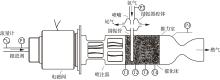
Fig.1
Schematic of test device of 20 N HAN-based thruster with resonance heater
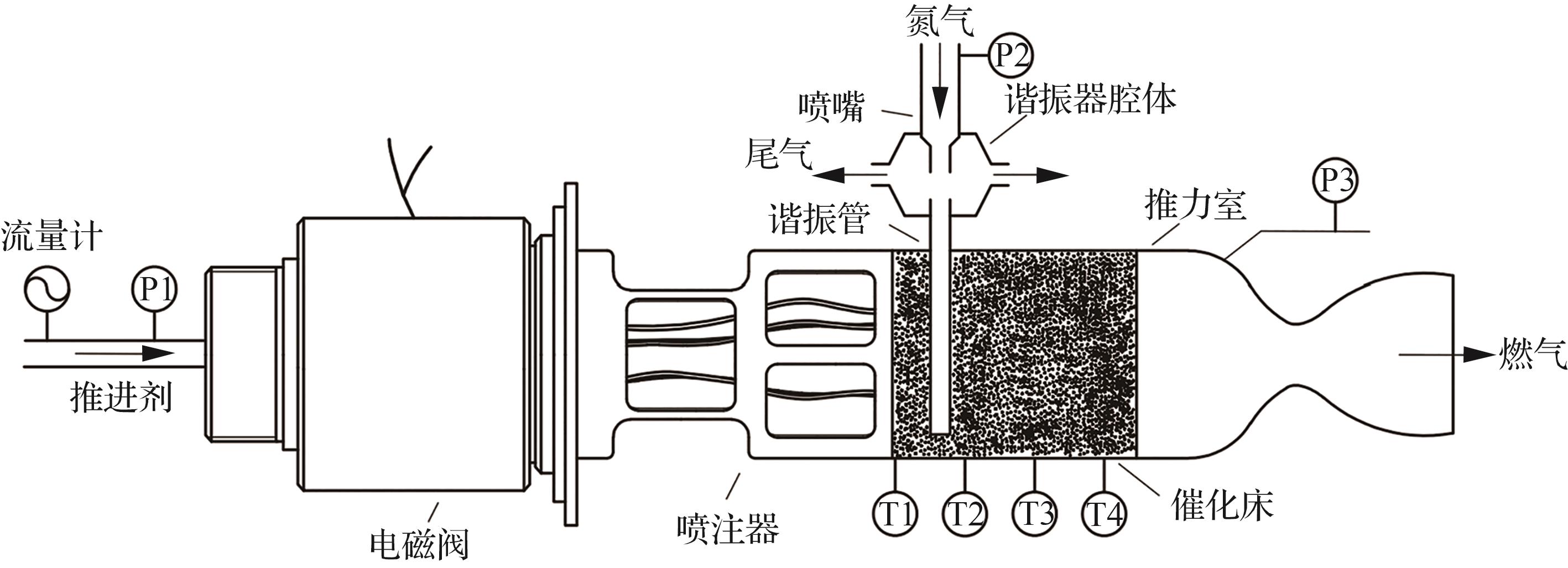
Table 1
Gas components and content in combustor
| 组分 | 摩尔分数 | 质量分数 |
|---|---|---|
| H2O | 0.587 94 | 0.454 94 |
| CO2 | 0.029 08 | 0.055 00 |
| N2 | 0.212 83 | 0.256 17 |
| O2 | 0.169 17 | 0.232 71 |
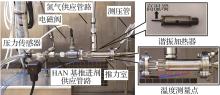
Fig.2
Test rig of 20 N HAN-based thruster with resonance heater
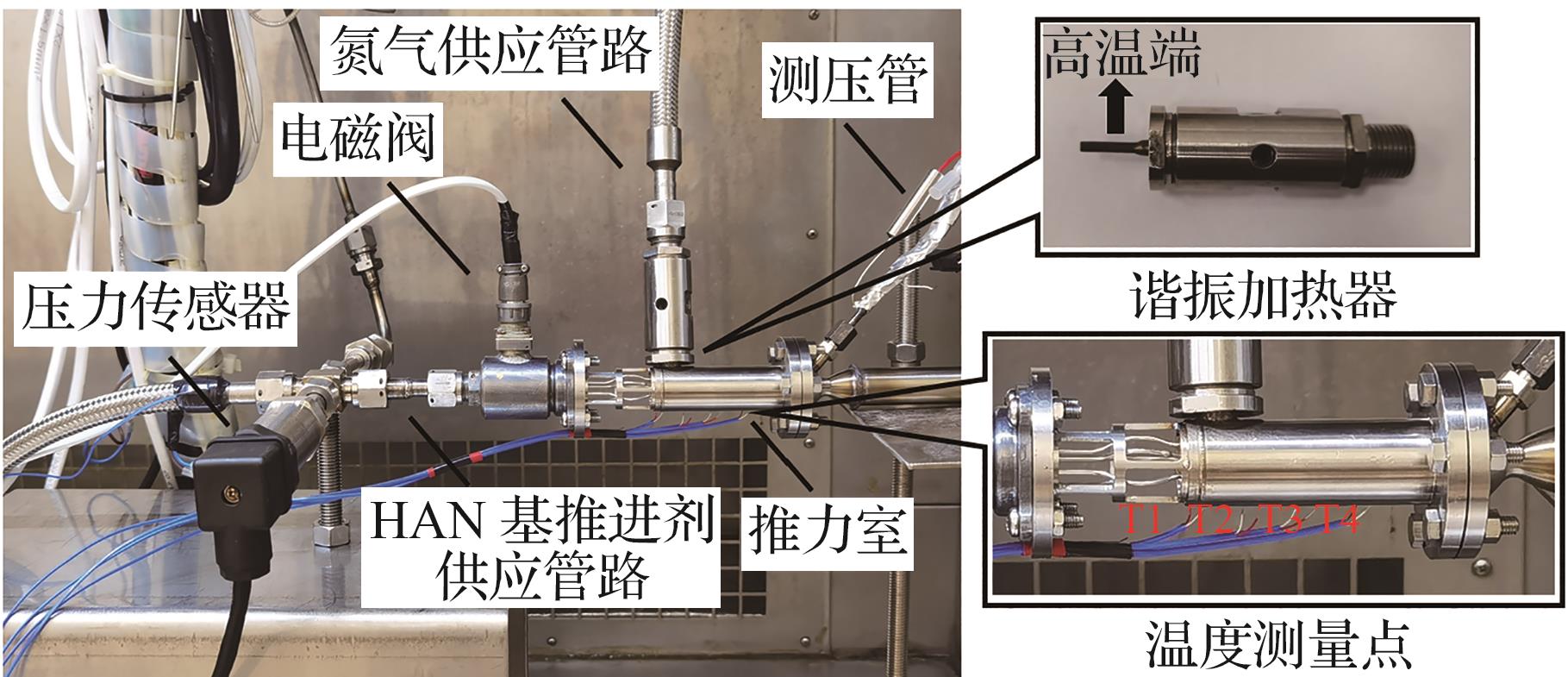
Fig.3
20 N HAN-based thruster in low temperature environment
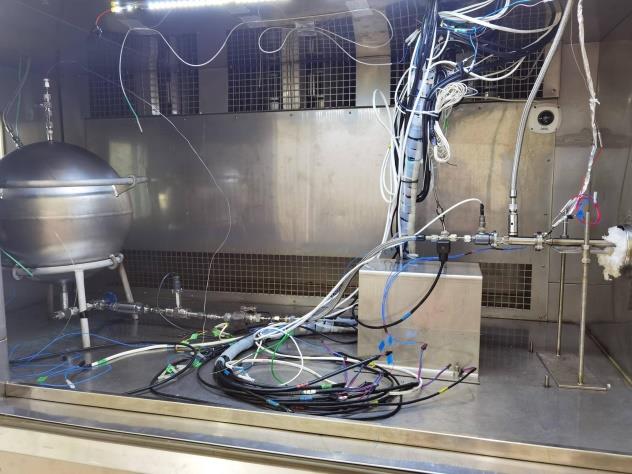
Table 2
Main test parameters
| 编号 | 初始温度/℃ | 氮气通气时间/s | 预脉冲点火和脉冲工作 | 连续工作 | |||||
|---|---|---|---|---|---|---|---|---|---|
| T1 | T2 | T3 | T4 | 起动时序/s | 起动程序 | 起动时序/s | 工作时间/s | ||
| S-01 | -9.38 | -9.02 | -9.18 | -9.10 | 75 | 61.533 | (0.05 s/1.00 s)×10 | ||
| 82.952 | (0.1 s/1.0 s)×50 | ||||||||
| S-02 | -9.64 | -9.25 | -9.37 | -9.33 | 50 | 56.141 | (0.05 s/0.95 s)×10 | 66.160 | 10 |
| 83.145 | (0.1 s/1.0 s)×50 | 167.415 | 10 | ||||||
| S-03 | -9.60 | -9.20 | -9.35 | -9.24 | 20 | 25.361 | (0.05 s/1.00 s)×10 | ||
| 41.781 | (0.1 s/1.0 s)×50 | ||||||||
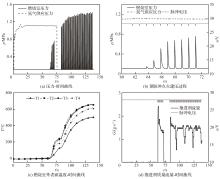
Fig.4
Test results of S-01 resonance heating catalytic ignition of 20 N HAN-based thruster at low temperature
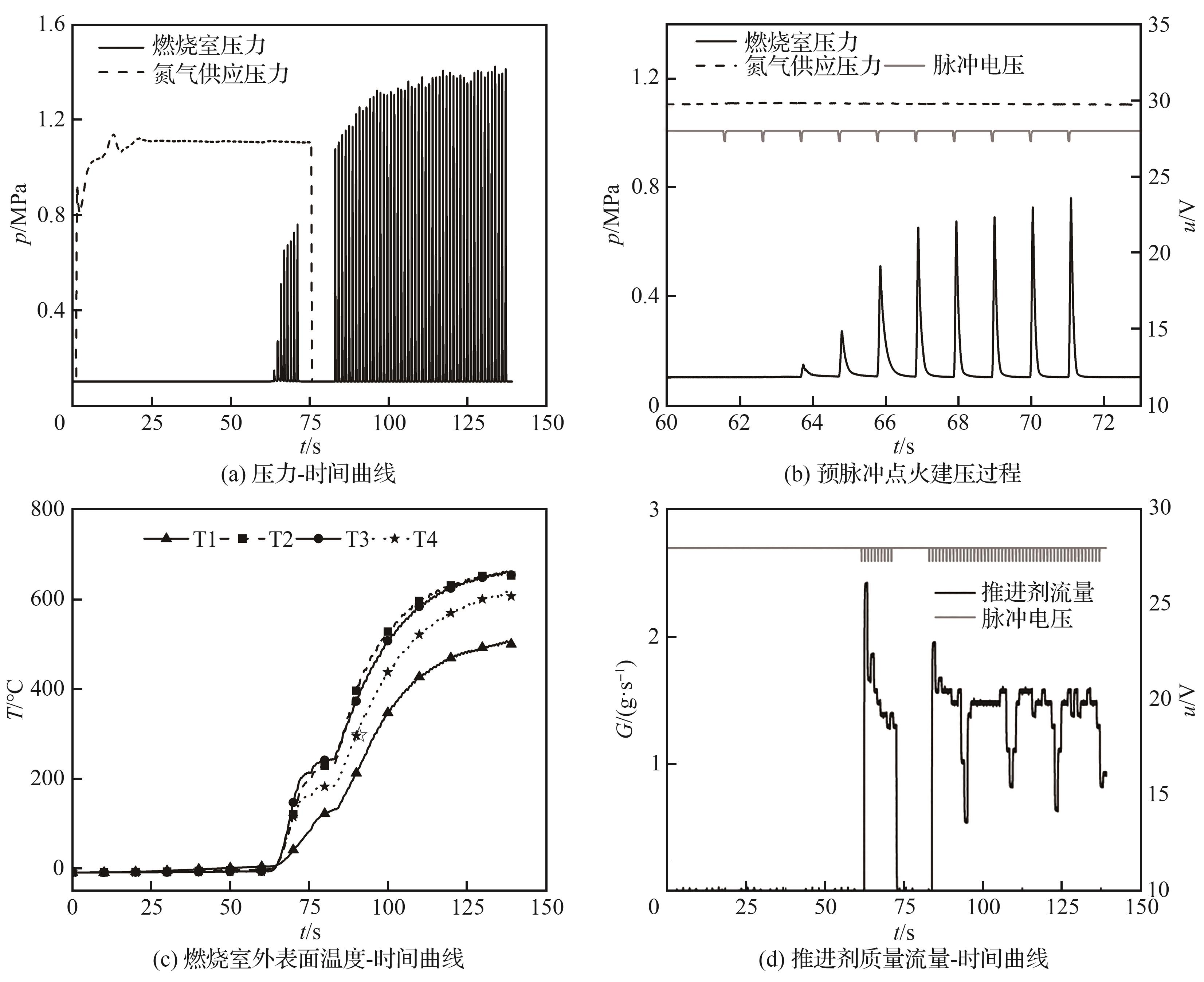
Fig.5
Axial distribution of combustion chamber outer wall temperature of S-01 Test
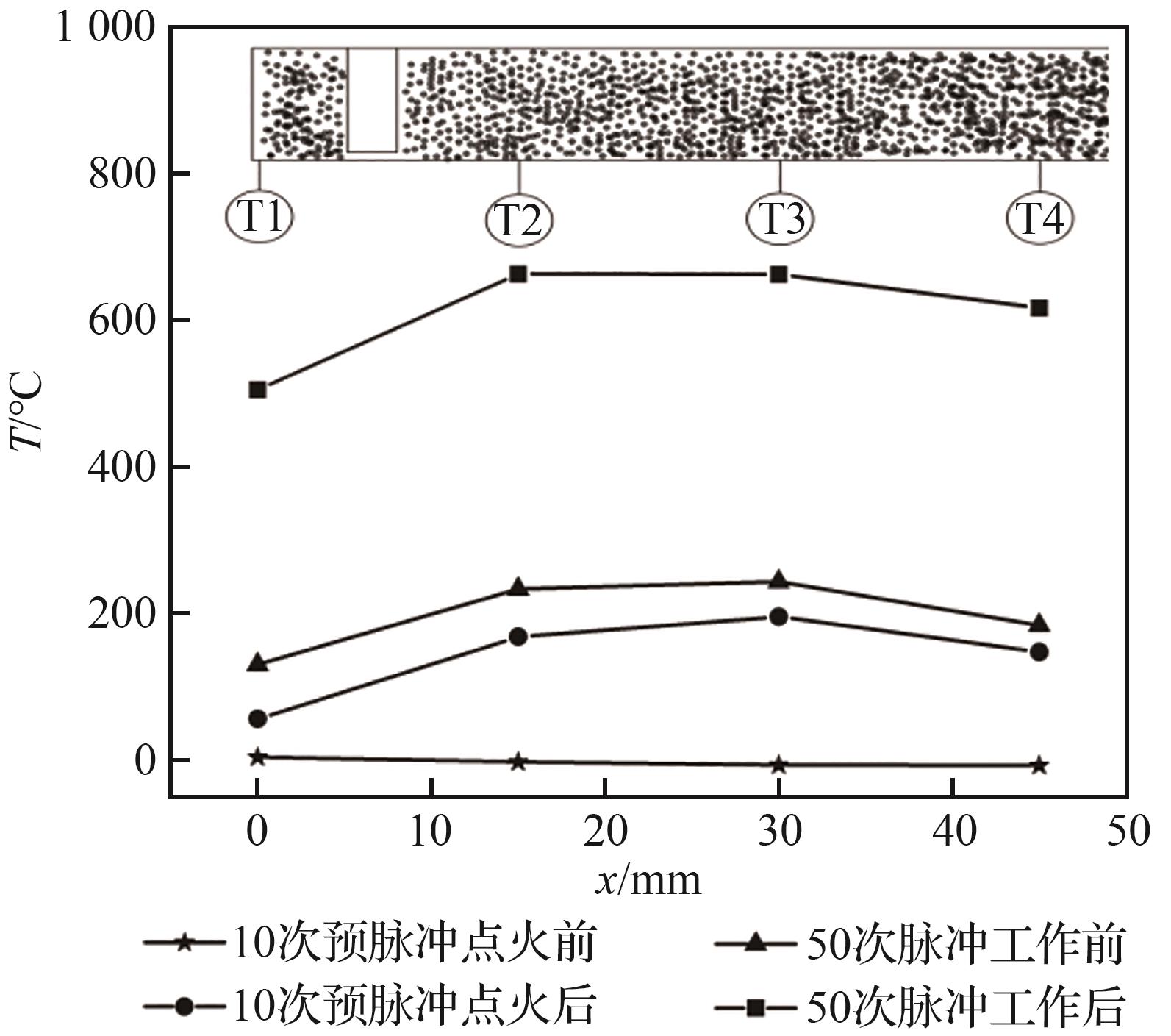
Table 3
Temperature of combustion chamber outer wall of S-01 Test
| 工况 | 温度/℃ | |||
|---|---|---|---|---|
| T1 | T2 | T3 | T4 | |
| 10次预脉冲点火前 | 4.33 | -2.14 | -6.37 | -7.00 |
| 10次预脉冲点火后 | 56.34 | 168.23 | 195.63 | 147.72 |
| 50次脉冲工作前 | 130.46 | 233.14 | 243.30 | 183.85 |
| 50次脉冲工作后 | 505.15 | 662.51 | 661.79 | 616.01 |
Fig.6
Test results of S-02 resonance heating catalytic ignition of 20 N HAN-based thruster at low temperature
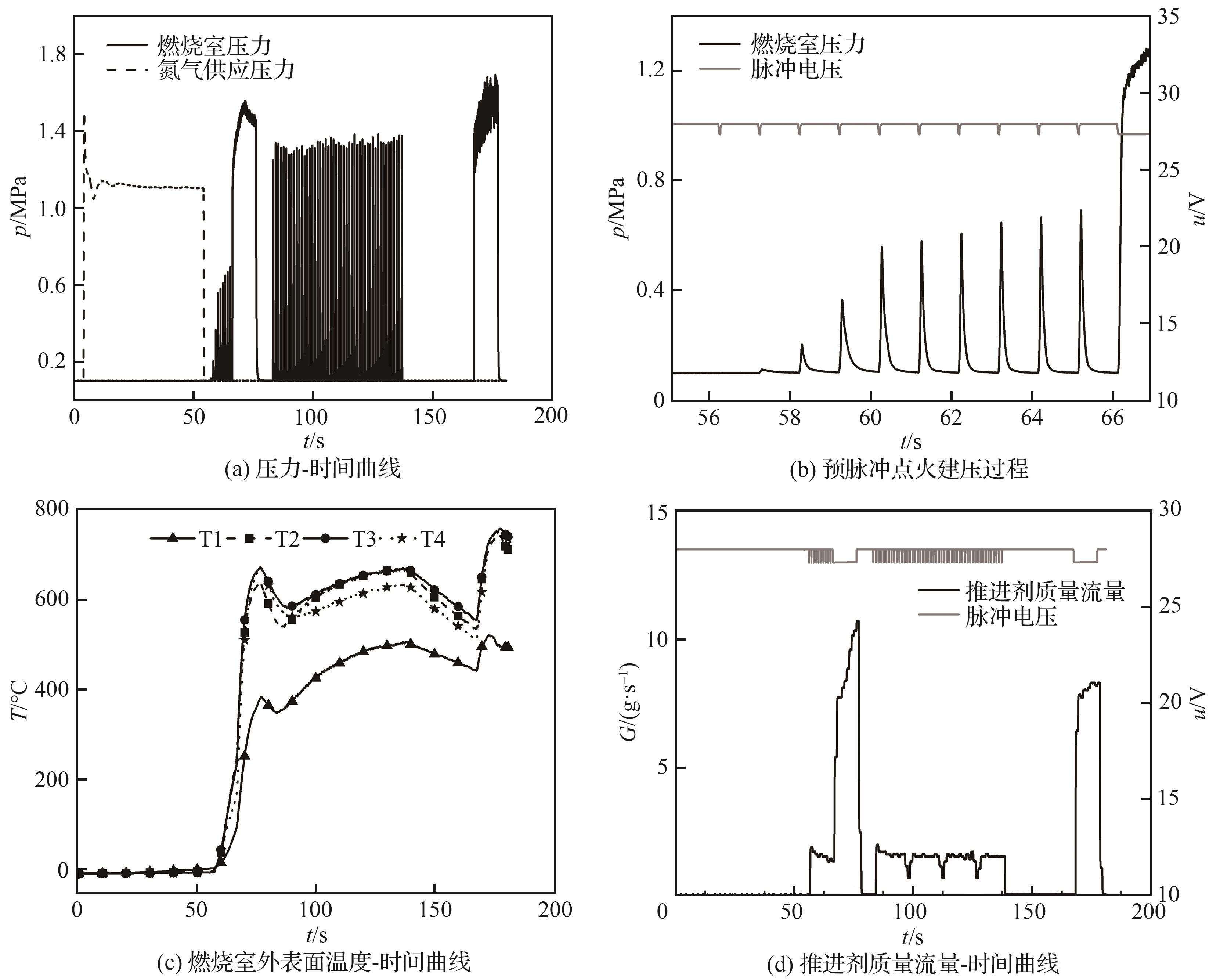
Table 4
Temperature of combustion chamber outer wall of S-02 Test
| 工况 | 温度/℃ | |||
|---|---|---|---|---|
| T1 | T2 | T3 | T4 | |
| 10次预脉冲点火前 | -0.51 | -4.79 | -7.65 | -7.96 |
| 10次预脉冲点火后 | 86.21 | 235.47 | 221.99 | 157.60 |
| 第1次连续工作后 | 373.95 | 634.54 | 667.49 | 664.47 |
| 50次脉冲工作前 | 349.61 | 553.03 | 608.69 | 591.57 |
| 50次脉冲工作后 | 504.30 | 668.23 | 668.56 | 633.50 |
| 第2次连续工作前 | 442.57 | 535.70 | 555.55 | 514.01 |
| 第2次连续工作后 | 497.92 | 738.34 | 752.66 | 753.53 |
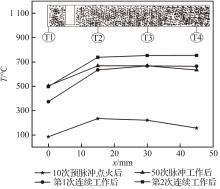
Fig.7
Axial distribution of combustion chamber outer wall temperature of S-02 Test
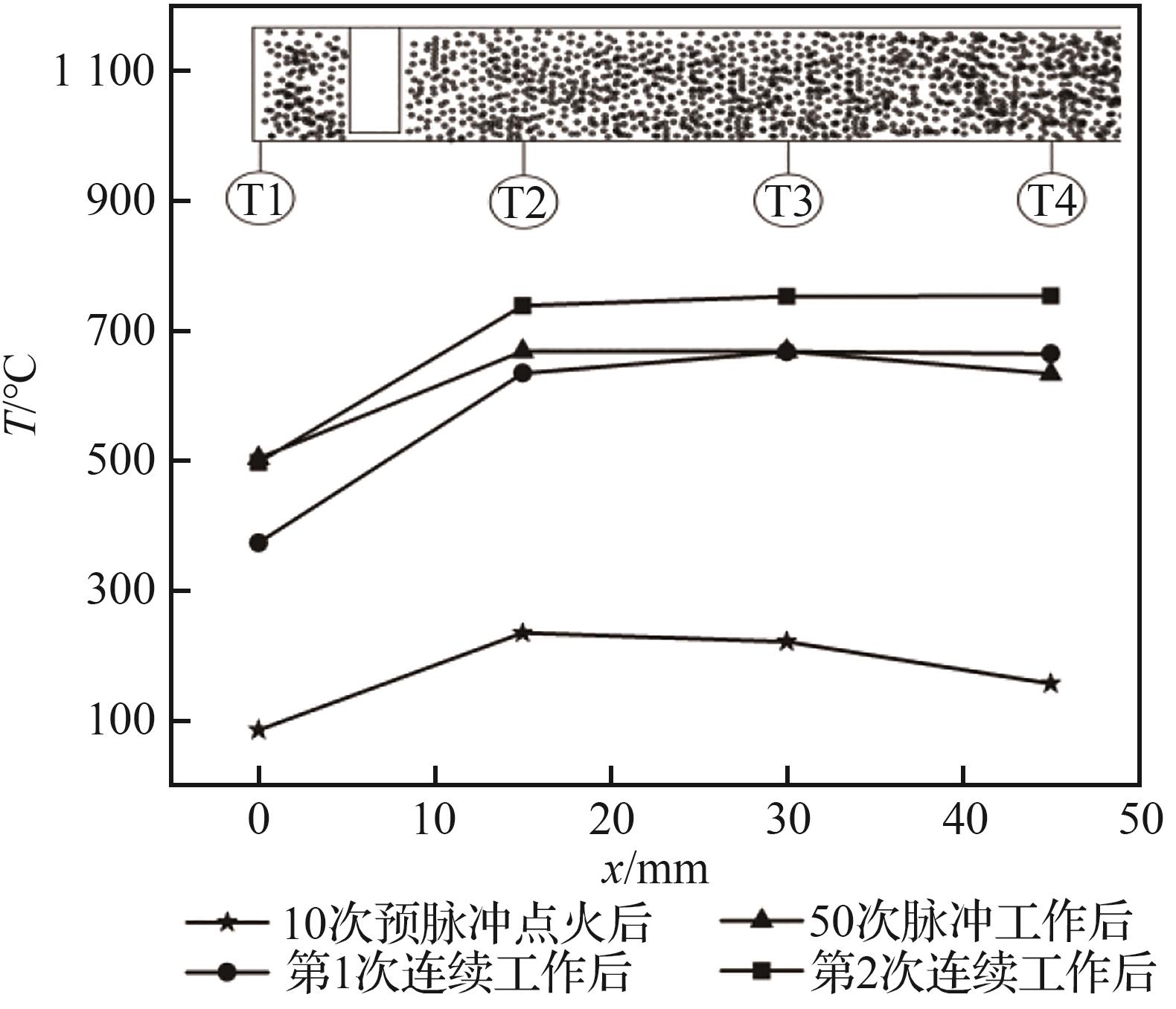
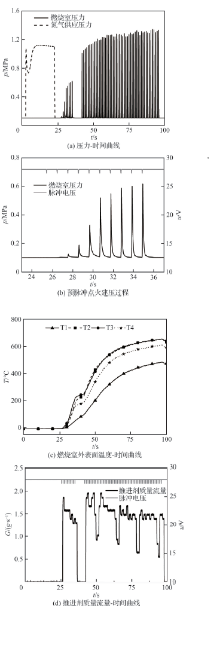
Fig.8
Test results of S-03 resonance heating catalytic ignition of 20 N HAN-based thruster at low temperature
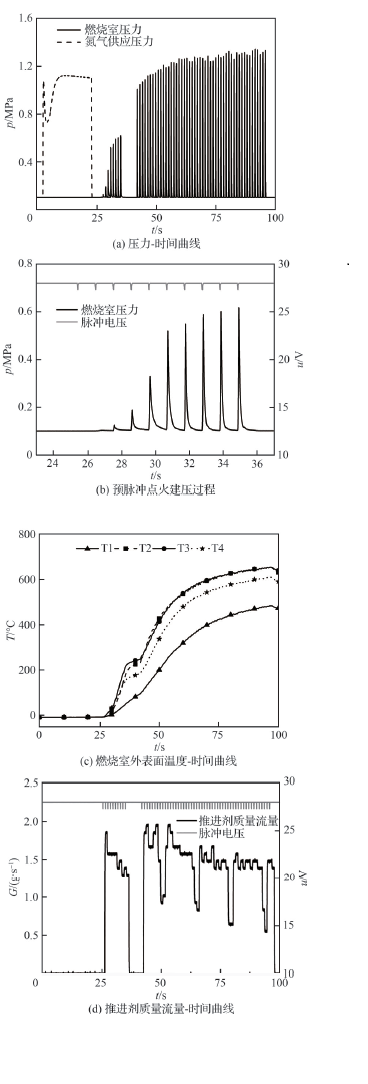
Table 5
Temperature of combustion chamber outer wall of S-03 Test
| 工况 | 温度/℃ | |||
|---|---|---|---|---|
| T1 | T2 | T3 | T4 | |
| 10次预脉冲点火前 | -7.47 | -8.14 | -8.94 | -8.87 |
| 10次预脉冲点火后 | 55.53 | 196.73 | 225.57 | 161.27 |
| 50次脉冲工作前 | 99.97 | 247.67 | 258.86 | 193.16 |
| 50次脉冲工作后 | 478.91 | 644.33 | 647.96 | 602.10 |
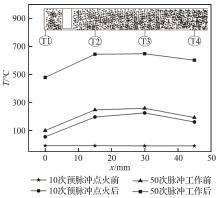
Fig.9
Axial distribution of combustion chamber outer wall temperature of S-03 Test
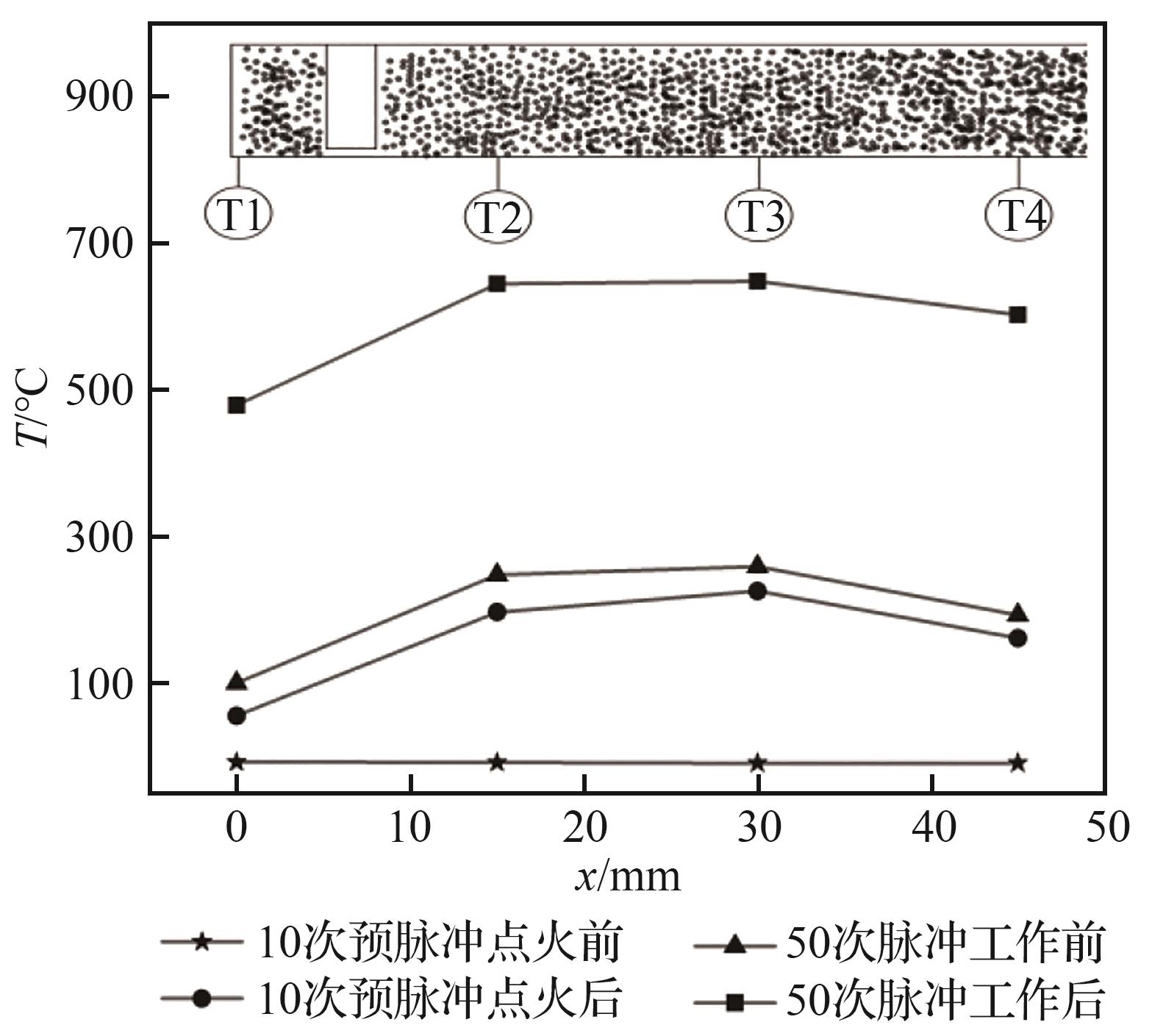
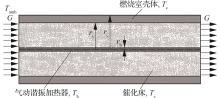
Fig.10
Schematic of internal heating structure of HAN-based monopropellant thruster chamber
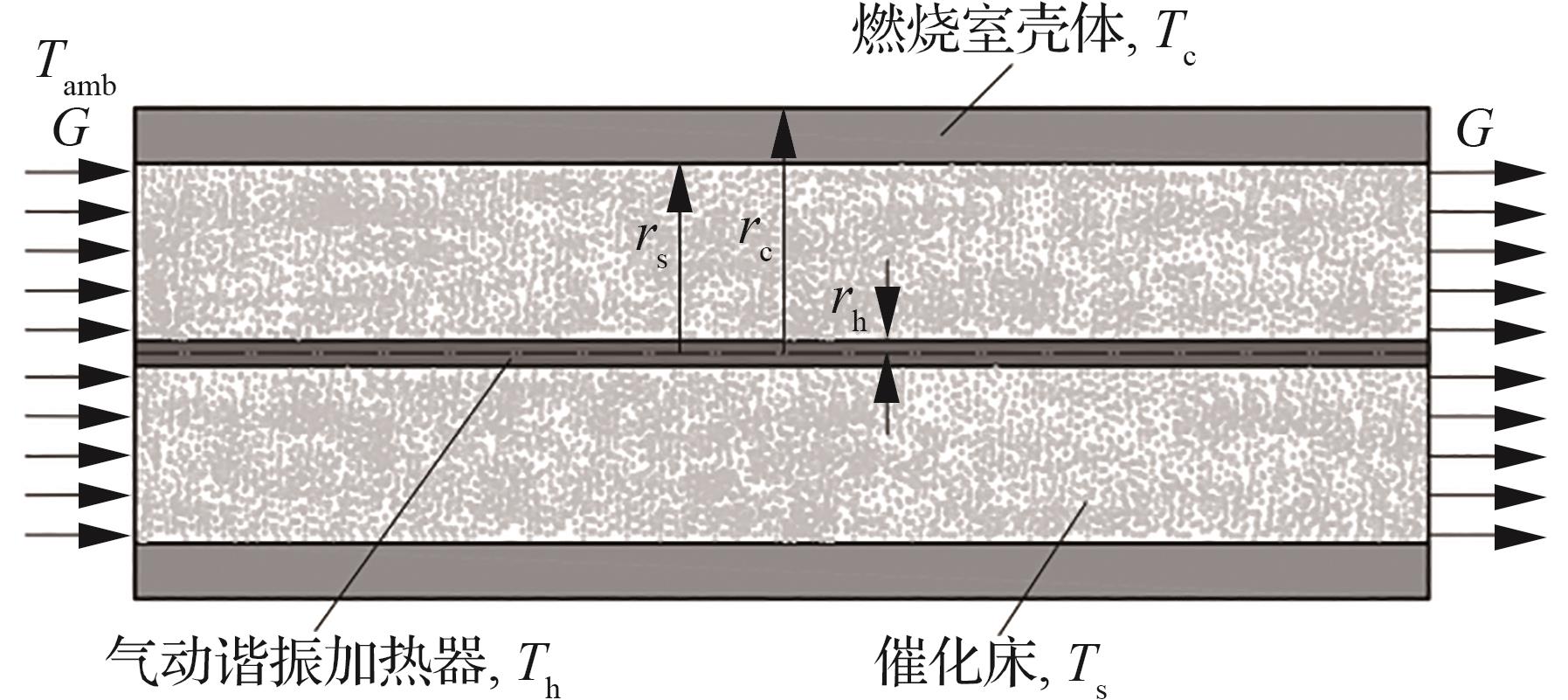
Fig.11
Comparison between calculated and test results for S-01 Test
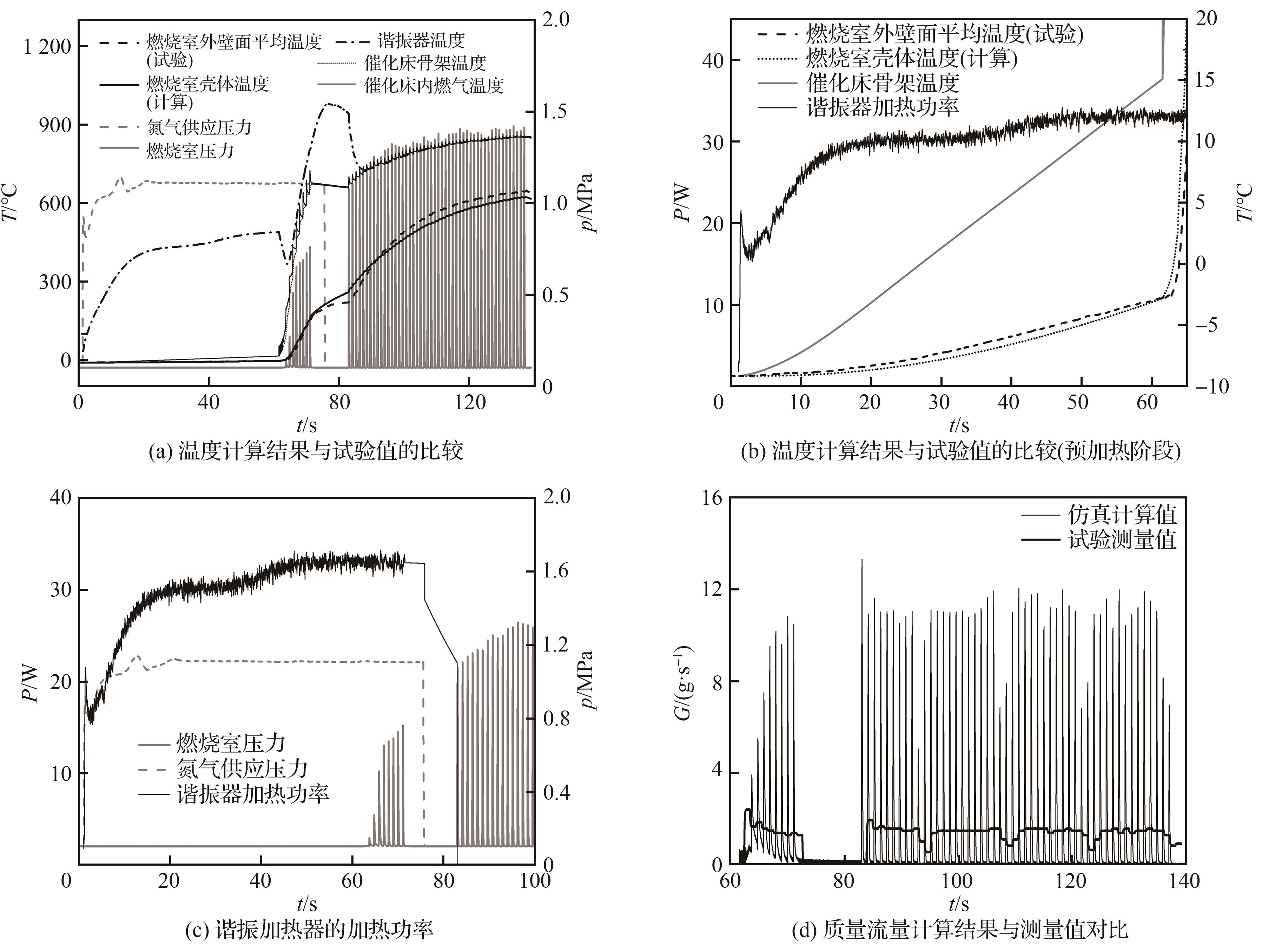
Fig.12
Comparison between calculated and test results for S-02 Test
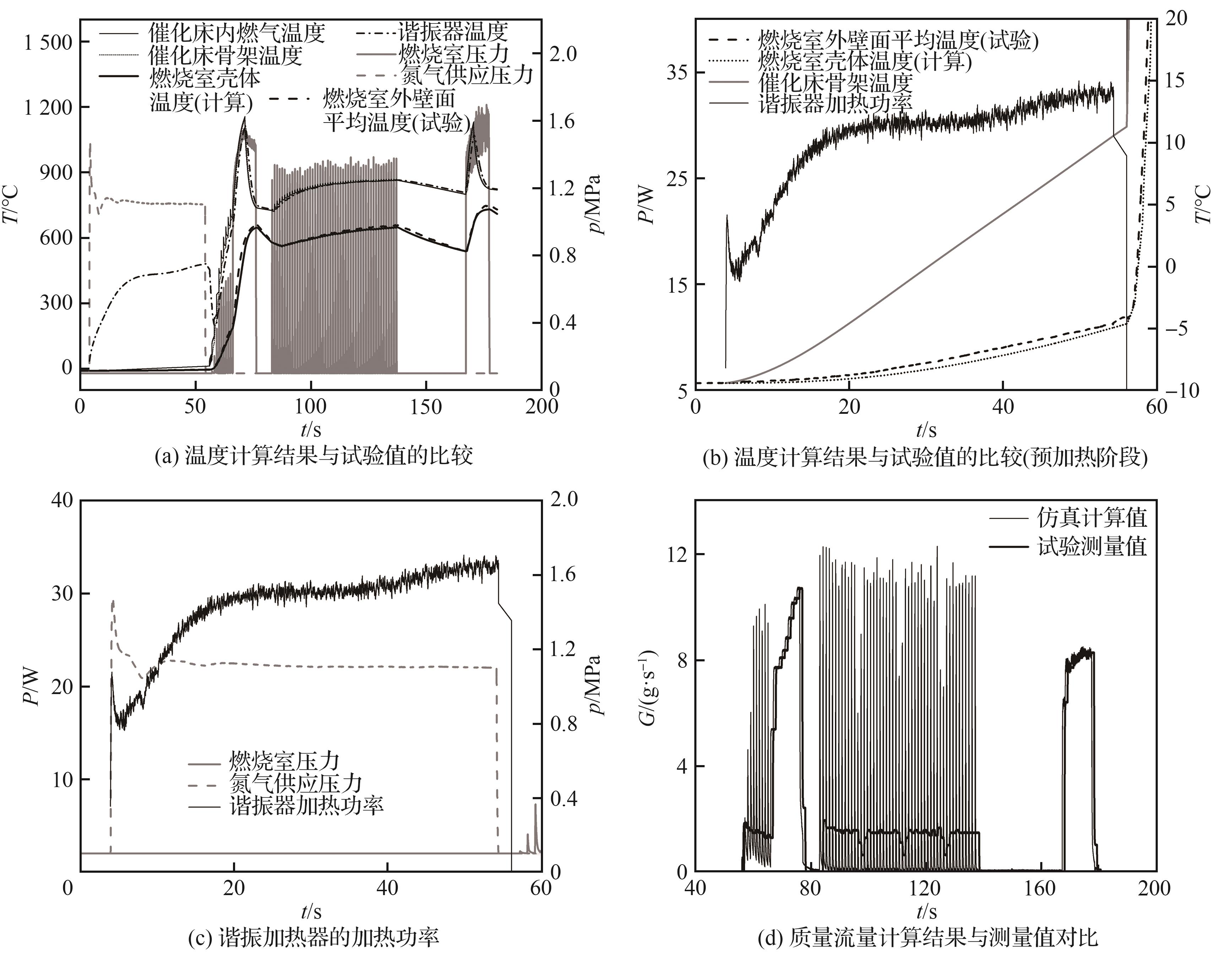
Fig.13
Comparison between calculated and test results for S-03 Test
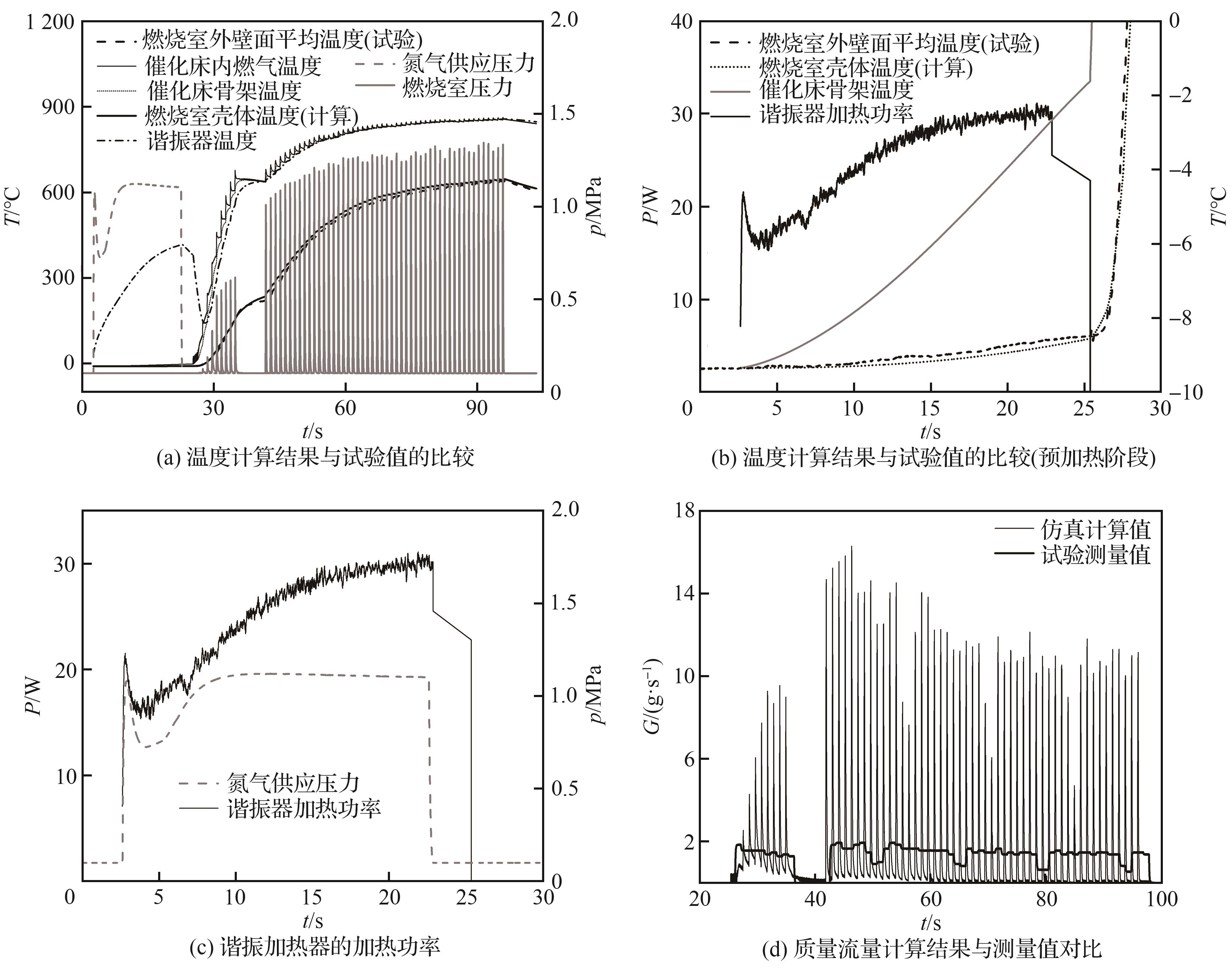
Table 6
Comparison between simulated and measured values of propellant consumption
| 工况 | 推进剂消耗计算值/g | 推进剂消耗测量值/g | 相对误差/% |
|---|---|---|---|
| S-01 | 92.333 | 93.571 | 1.32 |
| S-02 | 268.578 | 266.627 | 0.73 |
| S-03 | 95.339 | 95.166 | 0.18 |
| [1] | 周汉申. 单组元液体火箭发动机设计与研究[M]. 北京: 中国宇航出版社, 2009: 1. |
| ZHOU H S. Design and research of monopropellant liquid rocket engine[M]. Beijing: China Astronautic Publishing House, 2009: 1 (in Chinese). | |
| [2] | 周悦, 公绪滨, 方涛. 硝酸羟铵基无毒单组元推进剂应用探讨[J]. 导弹与航天运载技术, 2015(4): 32-35. |
| ZHOU Y, GONG X B, FANG T. Applicable discussion on HAN-based nontoxic monopropellant[J]. Missiles and Space Vehicles, 2015(4): 32-35 (in Chinese). | |
| [3] | 白梅杉, 戴佳, 姚天亮, 等. HAN基无毒单元发动机常温启动技术研究[J]. 宇航总体技术, 2019, 3(2): 36-43. |
| BAI M S, DAI J, YAO T L, et al. Research of HAN-based green monopropellant thruster start under normal temperature[J]. Astronautical Systems Engineering Technology, 2019, 3(2): 36-43 (in Chinese). | |
| [4] | 刘川, 赵峰, 刘俊. HAN基无毒单组元1 N发动机设计研究[J]. 上海航天, 2016, 33(4): 32-37. |
| LIU C, ZHAO F, LIU J. Research on HAN-based green 1 N monopropellant thruster[J]. Aerospace Shanghai, 2016, 33(4): 32-37 (in Chinese). | |
| [5] | 王新强, 邓康清, 李洪旭, 等. HAN基绿色推进剂点火技术研究进展[J]. 火箭推进, 2017, 43(2): 72-76. |
| WANG X Q, DENG K Q, LI H X, et al. Research progress on ignition of HAN-based green propellant[J]. Journal of Rocket Propulsion, 2017, 43(2): 72-76 (in Chinese). | |
| [6] | 姚兆普, 陈君, 刘旭辉, 等. 绿色液体空间推进进展[M]. 杭州: 浙江大学出版社, 2023: 97-114. |
| YAO Z P, CHEN J, LIU X H, et al. Advances in green space liquid propulsion[M]. Hangzhou: Zhejiang University Press, 2023: 97-114 (in Chinese). | |
| [7] | AMROUSSE R, KATSUMI T, AZUMA N, et al. Hydroxylammonium nitrate (HAN)-based green propellant as alternative energy resource for potential hydrazine substitution: From lab scale to pilot plant scale-up[J]. Combustion and Flame, 2017, 176: 334-348. |
| [8] | AMROUSSE R, KATSUMI T, BACHAR A, et al. Chemical engineering study for hydroxylammonium nitrate monopropellant decomposition over monolith and grain metal-based catalysts[J]. Reaction Kinetics, Mechanisms and Catalysis, 2014, 111(1): 71-88. |
| [9] | MCLEAN C H. Green propellant infusion mission: Program construct, technology development, and mission results[C]∥ AIAA Propulsion and Energy 2020 Forum. Reston: AIAA, 2020. |
| [10] | MASSE R, ALLEN M, SPORES R, et al. AF-M315E propulsion system advances and improvements[C]∥ 52nd AIAA/SAE/ASEE Joint Propulsion Conference. Reston: AIAA, 2016. |
| [11] | 鲍立荣, 汪辉, 陈永义, 等. 硝酸羟胺基绿色推进剂研究进展[J]. 含能材料, 2020, 28(12): 1200-1210. |
| BAO L R, WANG H, CHEN Y Y, et al. Review on hydroxylammonium nitrate based green propellant[J]. Chinese Journal of Energetic Materials, 2020, 28(12): 1200-1210 (in Chinese). | |
| [12] | COURTHÉOUX L, AMARIEI D, ROSSIGNOL S, et al. Thermal and catalytic decomposition of HNF and HAN liquid ionic as propellants[J]. Applied Catalysis B: Environmental, 2006, 62(3/4): 217-225. |
| [13] | KATSUMI T, HORI K. Successful development of HAN based green propellant[J]. Energetic Materials Frontiers, 2021, 2(3): 228-237. |
| [14] | 任晓光, 李明慧, 王爱琴, 等. 室温条件下硝酸羟胺的催化分解[J]. 催化学报, 2007(1): 1-2. |
| REN X G, LI M H, WANG A Q, et al. Catalytic decomposition of hydroxyl ammonium nitrate at room temperature[J]. Chinese Journal of Catalysis, 2007(1): 1-2 (in Chinese). | |
| [15] | 刘海娃, 胡承云, 叶胜. HAN基无毒单组元发动机热控研究[J]. 火箭推进, 2020, 46(4): 38-45. |
| LIU H W, HU C Y, YE S. Study on thermal control of HAN-based green monopropellant thruster[J]. Journal of Rocket Propulsion, 2020, 46(4): 38-45 (in Chinese). | |
| [16] | 侯思焓, 叶胜, 李海英, 等. HAN基无毒推力器用瓦式铠装加热器研制[C]∥ 第五届空天动力联合会议暨中国航天第三专业信息网第41届技术交流会会议集. 南京: 中国科协航空发动机产学联合体, 2020: 68-75. |
| HOU S H, YE S, LI H Y, et al. Development of tile type armored heater for HAN-Based nontoxic thruster[C]∥ Proceedings of the 5th Aerospace Propulsion Joint Conference and the 41st Technical Exchange Conference of China Aerospace Third Professional Information Network. Nanjing: CAAEIA, 2020: 68-75 (in Chinese). | |
| [17] | 刘俊, 邱鑫, 段德莉. 新型加热器在运载火箭绿色单元发动机上的应用[J]. 上海航天(中英文), 2020, 37(1): 113-118, 124. |
| LIU J, QIU X, DUAN D L. Application of new type heaters in the green monopropellant thruster of launch vehicle[J]. Aerospace Shanghai (Chinese & English), 2020, 37(1): 113-118, 124 (in Chinese). | |
| [18] | AGUILAR D I. Testing of a 1N AF-M315E thruster[D]. Texas: University of Texas, 2018: 26-29. |
| [19] | 吴靖, 孙威, 蔡国飙. 内加热式N2O单组元推力器预热过程仿真与试验[J]. 航空动力学报, 2013, 28(3): 556-560. |
| WU J, SUN W, CAI G B. Simulation and experiment for preheating process of N2O monopropellant thruster with inner-heater[J]. Journal of Aerospace Power, 2013, 28(3): 556-560 (in Chinese). | |
| [20] | 刘川, 刘俊, 姚天亮, 等. HAN基单组元发动机均匀分配喷注器设计及试验研究[J]. 推进技术, 2021, 42(7): 1606-1614. |
| LIU C, LIU J, YAO T L, et al. Design and experimental investigation on uniform distributed injector in HAN-based monopropellant thruster[J]. Journal of Propulsion Technology, 2021, 42(7): 1606-1614 (in Chinese). | |
| [21] | WILSON J, RESLER JR E L. A mechanism of resonance tubes[J]. Journal of the Aerospace Sciences, 1959, 26(7): 461-462. |
| [22] | 梁国柱, 马彬, 程显辰, 等. 气动谐振管加热效应初步实验[J]. 推进技术, 2002, 23(1): 52-56. |
| LIANG G Z, MA B, CHENG X C, et al. Preliminary experimental investigation on gas dynamic resonance tube heating effect[J]. Journal of Propulsion Technology, 2002, 23(1): 52-56 (in Chinese). | |
| [23] | 张国舟, 童晓艳, 梁国柱, 等. 液体火箭发动机气动谐振点火技术的研究[J]. 宇航学报, 2001, 22(4): 81-84. |
| ZHANG G Z, TONG X Y, LIANG G Z, et al. Investigation on gas dynamic resonance ignition technology for liquid propellant rocket engine[J]. Journal of Astronautics, 2001, 22(4): 81-84 (in Chinese). | |
| [24] | 孙得川, 姚天亮. 硝酸羟胺基单组元液体火箭发动机起动过程的模拟[J]. 推进技术, 2020, 41(1): 58-64. |
| SUN D C, YAO T L. Simulation of start-up transient process for hydroxylamine nitrate-based liquid monopropellant rocket engine[J]. Journal of Propulsion Techno-logy, 2020, 41(1): 58-64 (in Chinese). | |
| [25] | 孙得川, 张国强, 姚天亮, 等. 催化床结构对HAN基单组元发动机性能的影响[J]. 航空学报, 2024, 45(16): 129818. |
| SUN D C, ZHANG G Q, YAO T L, et al. Influence of catalyst bed structure on performance of HAN-based monopropellant engine[J]. Acta Aeronautica et Astronautica Sinica, 2024, 45(16): 129818 (in Chinese). | |
| [26] | 蒋耀东, 徐全勇, 马玉林, 等. 肼基单组元火箭发动机的动态响应[J]. 航空学报, 2023, 44(21): 529170. |
| JIANG Y D, XU Q Y, MA Y L, et al. Dynamic response of hydrazine-based monocomponent rocket engine[J]. Acta Aeronautica et Astronautica Sinica, 2023, 44(21): 529170 (in Chinese). | |
| [27] | ZAKIROV V, ZHANG H Y. A model for the operation of nitrous oxide monopropellant[J]. Aerospace Science and Technology, 2008, 12(4): 318-323. |
| [28] | ZAKIROV V, ZHANG H. Model for N2O monopropellant thruster operation[J]. Proceedings of the Institution of Mechanical Engineers, Part G: Journal of Aerospace Engineering, 2008, 222(1): 103-108. |
| [29] | 刘昌国, 关亮, 施伟, 等. 单组元300N发动机低温试验研究[J]. 推进技术, 2021, 42(7): 1662-1670. |
| LIU C G, GUAN L, SHI W, et al. Low temperature experimental research on mono-propellant 300N engine[J]. Journal of Propulsion Technology, 2021, 42(7): 1662-1670 (in Chinese). | |
| [30] | 杨世铭, 陶文铨. 传热学[M]. 4版. 北京: 高等教育出版社, 2006: 268-269. |
| YANG S M, TAO W Q. Heat transfer[M]. 4th ed. Beijing: Higher Education Press, 2006: 268-269 (in Chinese). | |
| [31] | NIELD D A, BEJAN A. Convection in porous media[M]. Cham: Springer International Publishing, 2017: 95-97. |
| [1] | . Study on the variable thrust process of electric pump-fed engines based on active torque control [J]. Acta Aeronautica et Astronautica Sinica, 0, (): 1-0. |
| [2] | . Exhaust-Plume Spectroscopic Diagnostics of Liquid Rocket Engine Faults: From Qualitative to Quantitative—A Review [J]. Acta Aeronautica et Astronautica Sinica, 0, (): 1-0. |
| [3] | . Analysis of dynamic characteristics during startup process of liquid oxygen-methane electric pump-fed engine [J]. Acta Aeronautica et Astronautica Sinica, 0, (): 1-0. |
| [4] | Fang ZHANG, Weibin XIANG, Kai XIAO, Siqi XIAO, Liang XIANG, Bing WANG. Simulation and experiment of attitude control propulsion system’s dynamic characteristics [J]. Acta Aeronautica et Astronautica Sinica, 2025, 46(S1): 732329-732329. |
| [5] | Shuming YANG, Jianjun WU, Changlin XIE, Yuqiang CHENG, Biao WANG. Application issues of data-driven intelligent fault diagnosis technologies for liquid rocket engines [J]. Acta Aeronautica et Astronautica Sinica, 2025, 46(15): 131427-131427. |
| [6] | Haipeng CHEN, Wenxing FU, Jie YAN. Fault diagnosis of thrust offset loss of launch vehicle based on AGABP neural network [J]. Acta Aeronautica et Astronautica Sinica, 2025, 46(8): 231148-231148. |
| [7] | Tao LIANG, Wanwu XU, Zhiyan LI, Saiqiang ZHANG, Gang LI, Dongdong ZHANG. Starting and operating characteristics of precooled supersonic ejector [J]. Acta Aeronautica et Astronautica Sinica, 2025, 46(2): 130701-130701. |
| [8] | Lingsheng HAN, Yishun CHENG, Xinbo DUAN, Lingqi ZENG, Haibo LIU, Kuo LIU, Yongqing WANG. Cryogenic fluid labyrinth sealing characteristics considering cavitation effect [J]. Acta Aeronautica et Astronautica Sinica, 2025, 46(1): 430652-430652. |
| [9] | Dechuan SUN, Guoqiang ZHANG, Tianliang YAO, Liang GUAN. Influence of catalyst bed structure on performance of HAN⁃based monopropellant engine [J]. Acta Aeronautica et Astronautica Sinica, 2024, 45(16): 129818-129818. |
| [10] | Guangxu WANG, Baoe YANG, Yonghua TAN, Yushan GAO, Bin LI. Randomness of high frequency longitudinal combustion instability in liquid rocket engines [J]. Acta Aeronautica et Astronautica Sinica, 2024, 45(14): 129485-129485. |
| [11] | Huibo WU, Anlong YANG, Feng ZHANG, Baoe YANG, Junkai LIAN, Chenglong TANG. Effects of back pressure on atomization characteristics of impinging jet injector [J]. Acta Aeronautica et Astronautica Sinica, 2024, 45(11): 529213-529213. |
| [12] | Guangxu WANG, Bin LI, Yonghua TAN, Yushan GAO. High frequency combustion instability in liquid rocket engines: Review [J]. Acta Aeronautica et Astronautica Sinica, 2024, 45(11): 529450-529450. |
| [13] | Meng DONG, Lixiang XING, Haohai XU. Self⁃excited oscillation and stability of flow regulator pipeline system [J]. Acta Aeronautica et Astronautica Sinica, 2024, 45(11): 529427-529427. |
| [14] | Yonghua TAN. Research progress in high thrust liquid oxygen methane rocket engine technology [J]. Acta Aeronautica et Astronautica Sinica, 2024, 45(11): 529690-529690. |
| [15] | Ruida CHEN, Xiachao CHEN, Hongyu CHEN, Hui XU, Xin HONG. Ignition characteristics and exhaust experiment of 120 N engine at simulated high lunar temperature [J]. Acta Aeronautica et Astronautica Sinica, 2024, 45(11): 529112-529112. |
| Viewed | ||||||
|
Full text |
|
|||||
|
Abstract |
|
|||||
Address: No.238, Baiyan Buiding, Beisihuan Zhonglu Road, Haidian District, Beijing, China
Postal code : 100083
E-mail:hkxb@buaa.edu.cn
Total visits: 6658907 Today visits: 1341All copyright © editorial office of Chinese Journal of Aeronautics
All copyright © editorial office of Chinese Journal of Aeronautics
Total visits: 6658907 Today visits: 1341

 CJA
CJA
