Acta Aeronautica et Astronautica Sinica ›› 2025, Vol. 46 ›› Issue (4): 330883.doi: 10.7527/S1000-6893.2024.30883
• Electronics and Electrical Engineering and Control • Previous Articles
Ge SONG( ), Pengfei HAN, Yuxiang LUO, Weijun PAN
Received:2024-07-01
Revised:2024-08-14
Accepted:2024-10-08
Online:2024-10-30
Published:2024-10-23
Contact:
Ge SONG
E-mail:songge@cafuc.edu.cn
Supported by:CLC Number:
Ge SONG, Pengfei HAN, Yuxiang LUO, Weijun PAN. Trajectory classification and anomaly detection based on stochastic depth ResNet[J]. Acta Aeronautica et Astronautica Sinica, 2025, 46(4): 330883.
Fig.1
Trajectory classification schematic
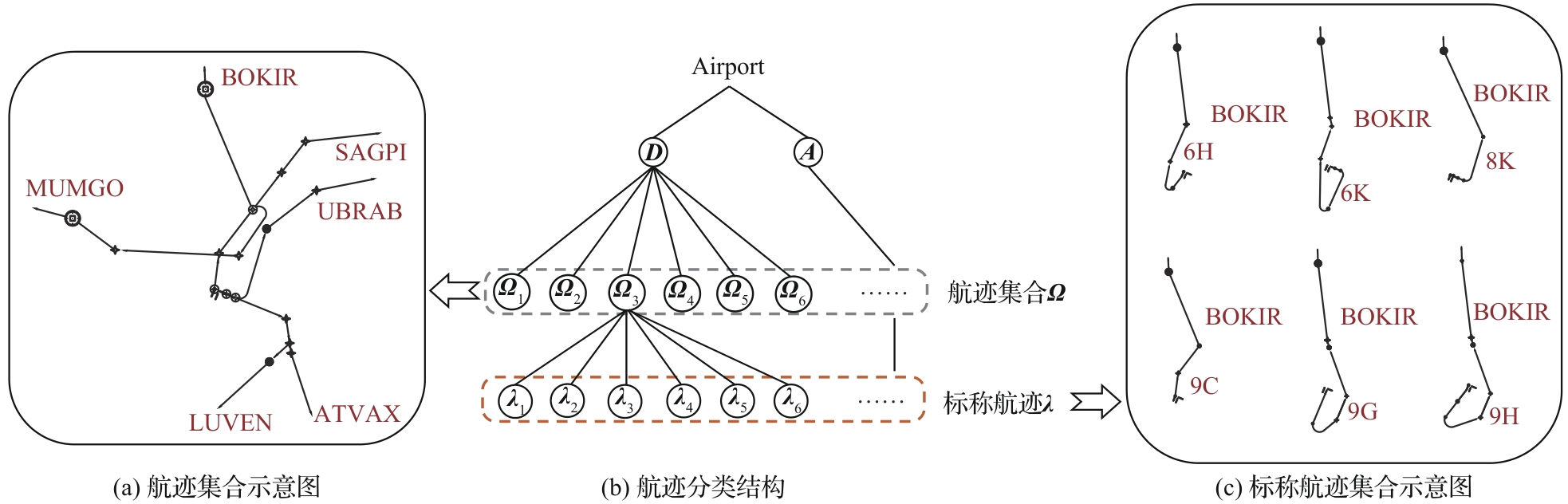
Fig.2
Principles of stochastic depth ResNet architecture of linear decay
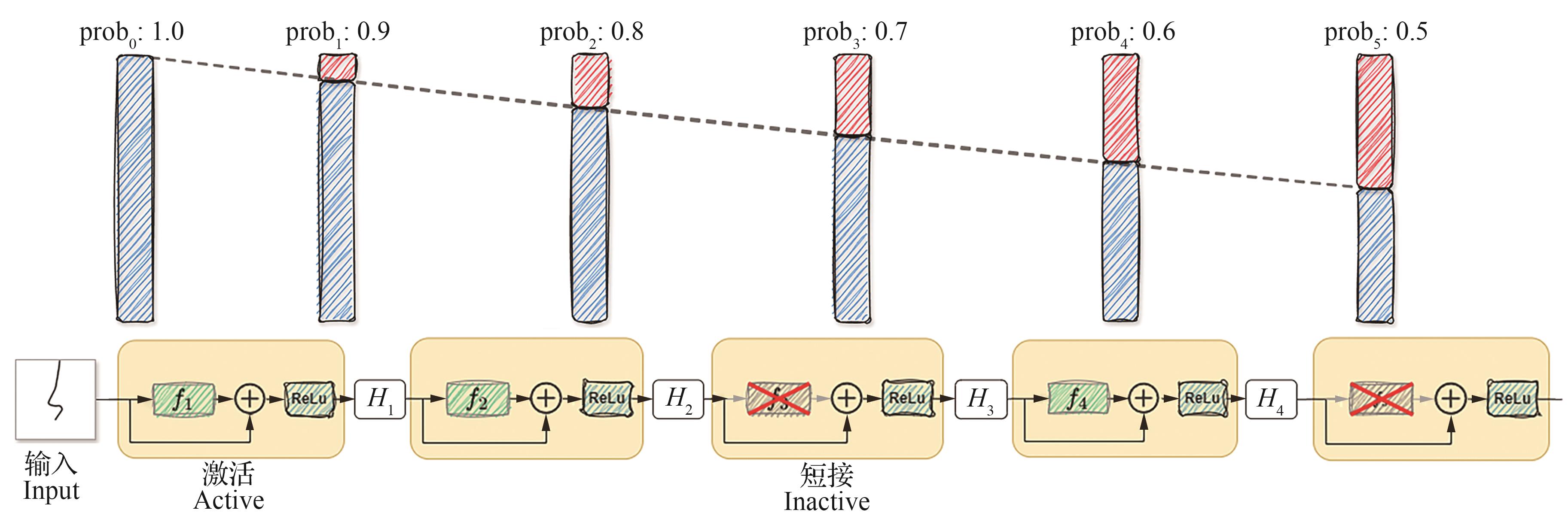
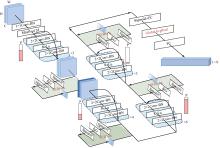
Fig.3
Model structure of GAP-SE-Stochastic-Depth network
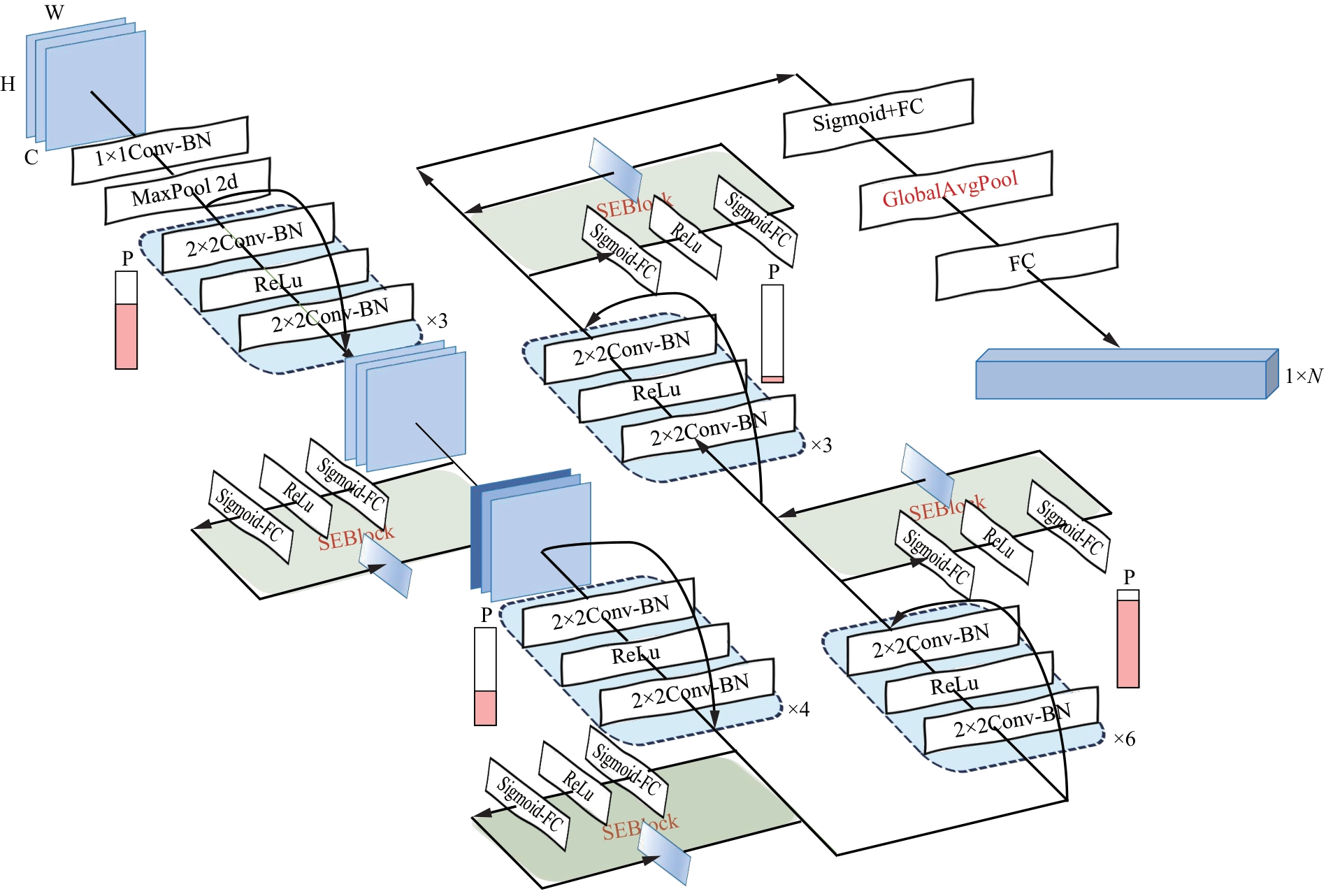
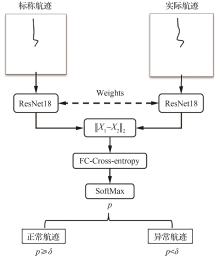
Fig.4
Improved twin network model structure
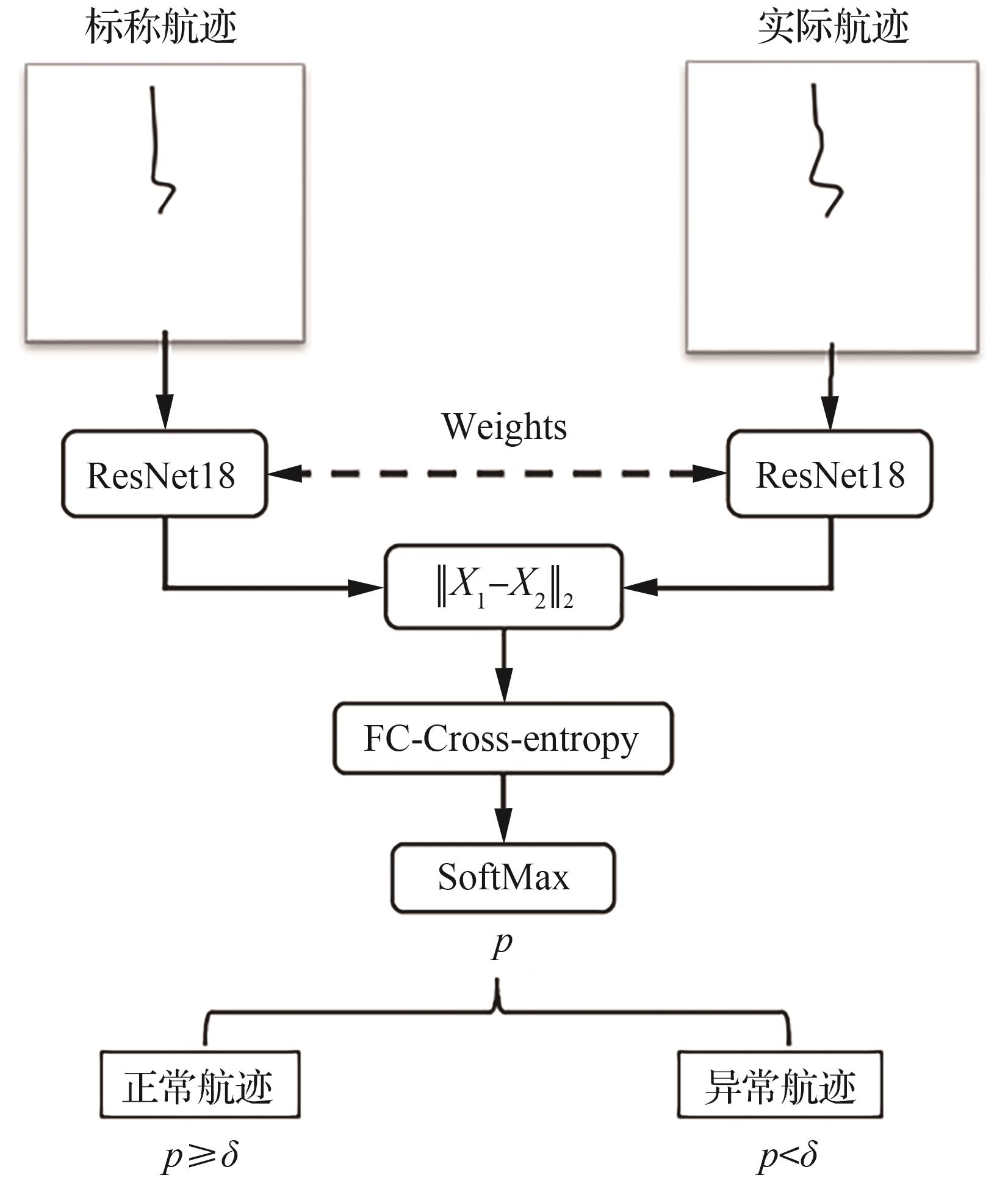
Table 1
Unprocessed raw trajectory data
| 序号 | 航班号 | 日期 | 起飞机场 | 目的机场 | 航迹点数 | 航迹信息 |
|---|---|---|---|---|---|---|
| 1 | 3U3731 | 2023-08-01 | TFU | WUS | 150 | {lon, lat,…} |
| 2 | KN5228 | 2023-08-01 | TFU | PKX | 114 | {lon, lat,…} |
| 3 | 3U6975 | 2023-08-01 | TFU | YTY | 196 | {lon, lat,…} |
| ︙ | ︙ | ︙ | ︙ | ︙ | ︙ | {lon, lat,…} |
| 12 063 | ZH9569 | 2023-08-10 | NKG | TFU | 156 | {lon, lat,…} |
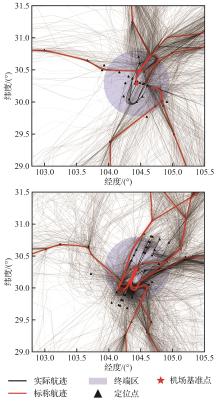
Fig.5
Departure and arrival trajectories at ZUTF Airport
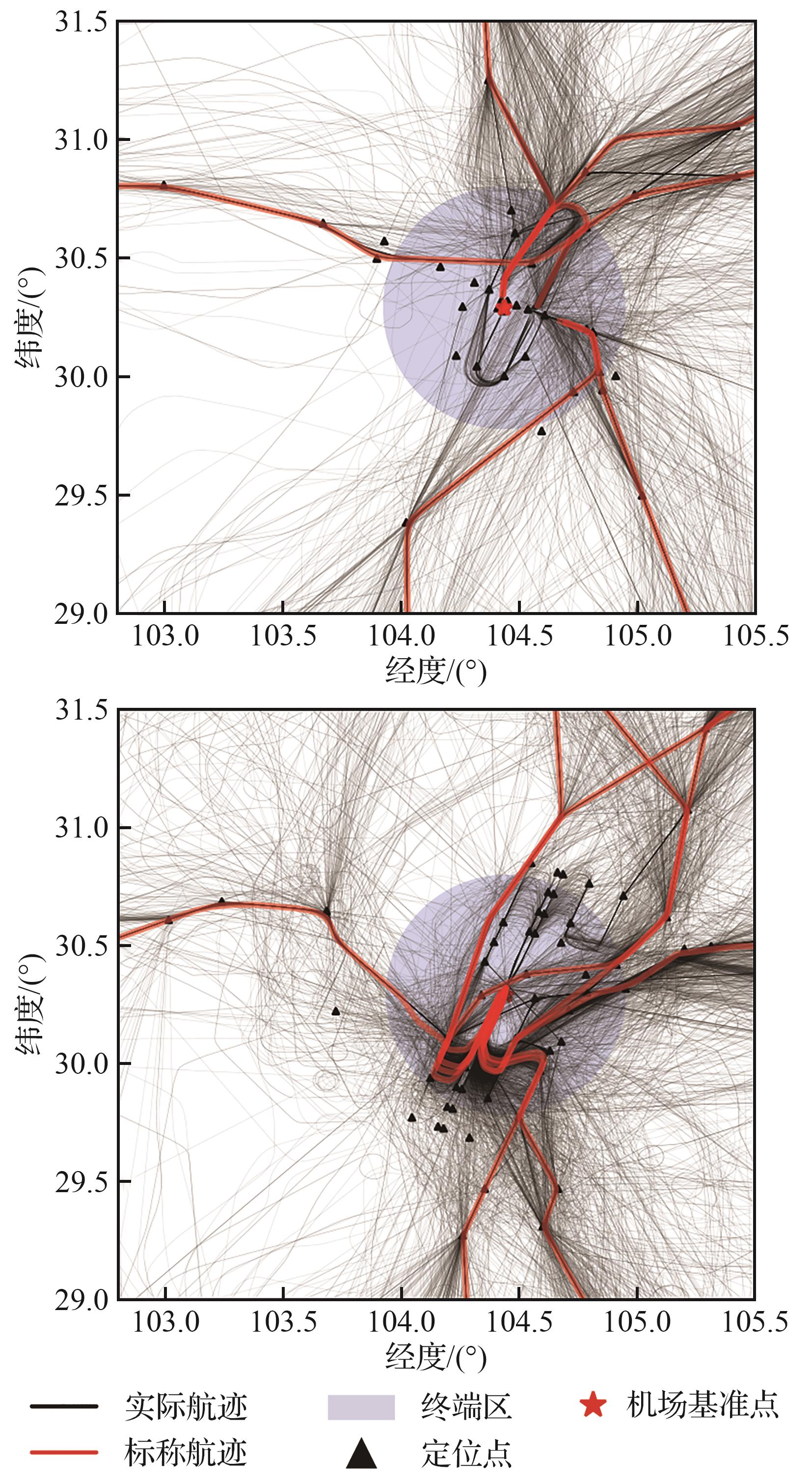
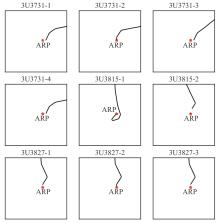
Fig.6
Trajectory feature map
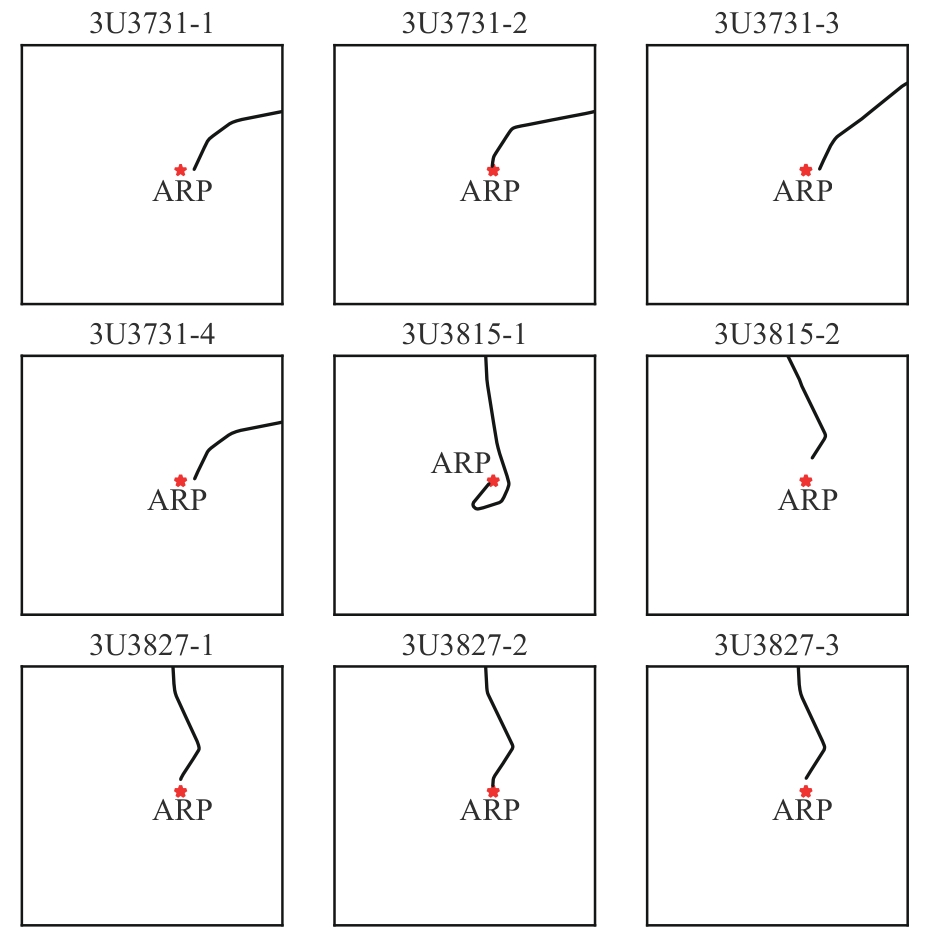
Table 2
Table of trajectory categories
| 标称航迹名称 | 航迹集合Ω | 具体航迹λ | 标称航迹名称 | 航迹集合Ω | 具体航迹λ |
|---|---|---|---|---|---|
| AT-9C | Ω1 | Ω1-λ1 | MU-8K | Ω4 | Ω4-λ3 |
| AT-9E | Ω1 | Ω1-λ2 | MU-9C | Ω4 | Ω4-λ4 |
| AT-9G | Ω1 | Ω1-λ3 | MU-9E | Ω4 | Ω4-λ5 |
| AT-9H | Ω1 | Ω1-λ4 | MU-9G | Ω4 | Ω4-λ6 |
| AT-9K | Ω1 | Ω1-λ5 | MU-9H | Ω4 | Ω4-λ7 |
| BO-6H | Ω2 | Ω2-λ1 | SA-6H | Ω5 | Ω5-λ1 |
| BO-6K | Ω2 | Ω2-λ2 | SA-6K | Ω5 | Ω5-λ2 |
| BO-8K | Ω2 | Ω2-λ3 | SA-8K | Ω5 | Ω5-λ3 |
| BO-9C | Ω2 | Ω2-λ4 | SA-9C | Ω5 | Ω5-λ4 |
| BO-9G | Ω2 | Ω2-λ5 | SA-9E | Ω5 | Ω5-λ5 |
| BO-9H | Ω2 | Ω2-λ6 | SA-9G | Ω5 | Ω5-λ6 |
| LU-9C | Ω3 | Ω3-λ1 | SA-9H | Ω5 | Ω5-λ7 |
| LU-9E | Ω3 | Ω3-λ2 | UB-6K | Ω6 | Ω6-λ1 |
| LU-9G | Ω3 | Ω3-λ3 | UB-8K | Ω6 | Ω6-λ2 |
| LU-9H | Ω3 | Ω3-λ4 | UB-9C | Ω6 | Ω6-λ3 |
| LU-9K | Ω3 | Ω3-λ5 | UB-9E | Ω6 | Ω6-λ4 |
| MU-6H | Ω4 | Ω4-λ1 | UB-9G | Ω6 | Ω6-λ5 |
| MU-6K | Ω4 | Ω4-λ2 | UB-9H | Ω6 | Ω6-λ6 |
Table 3
Confusion matrix
| 混淆矩阵 | 预测值 | ||
|---|---|---|---|
| 反例 | 正例 | ||
| 真实值 | 反例 | TN(真反例) | FP(假正例) |
| 正例 | FN(假反例) | TP(真正例) | |
Table 4
Simulation environment
| 环境 | 版本 |
|---|---|
| 操作系统 | Windows11 |
| 内存 | 32 GB |
| CPU | 12th Gen Intel Core i7-12700K 3.60 GHz |
| GPU | NVIDIA GeForce RTX 3070Ti |
| CUDA | 12.2 |
| Python | 3.8.16 |
| Pytorch | 2.1.1+cu121 |
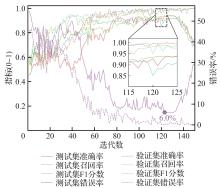
Fig.7
Iteration performance metrics of network model
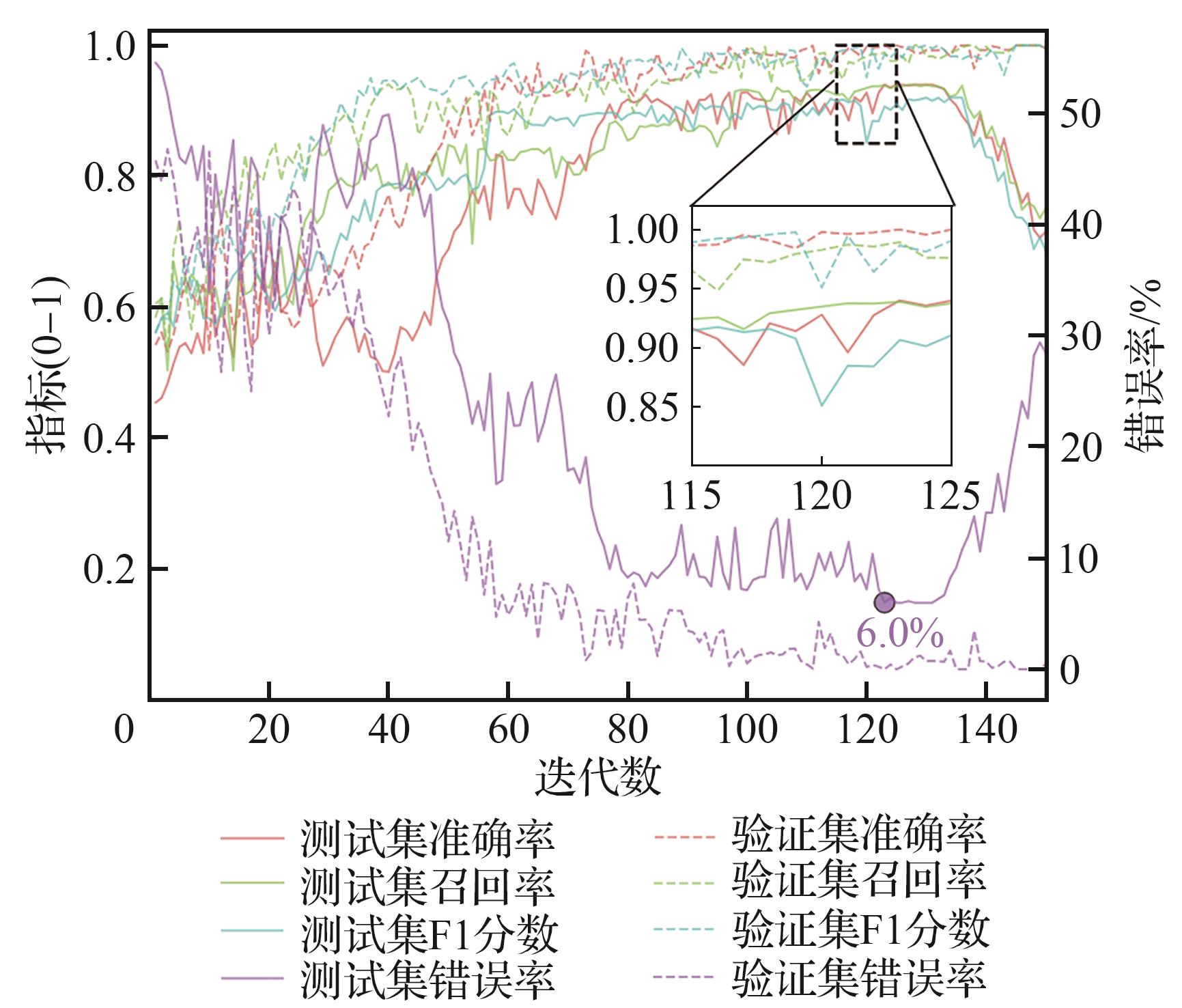
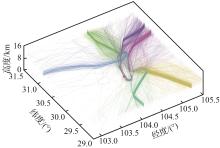
Fig.8
3D visualization of departure trajectory sets
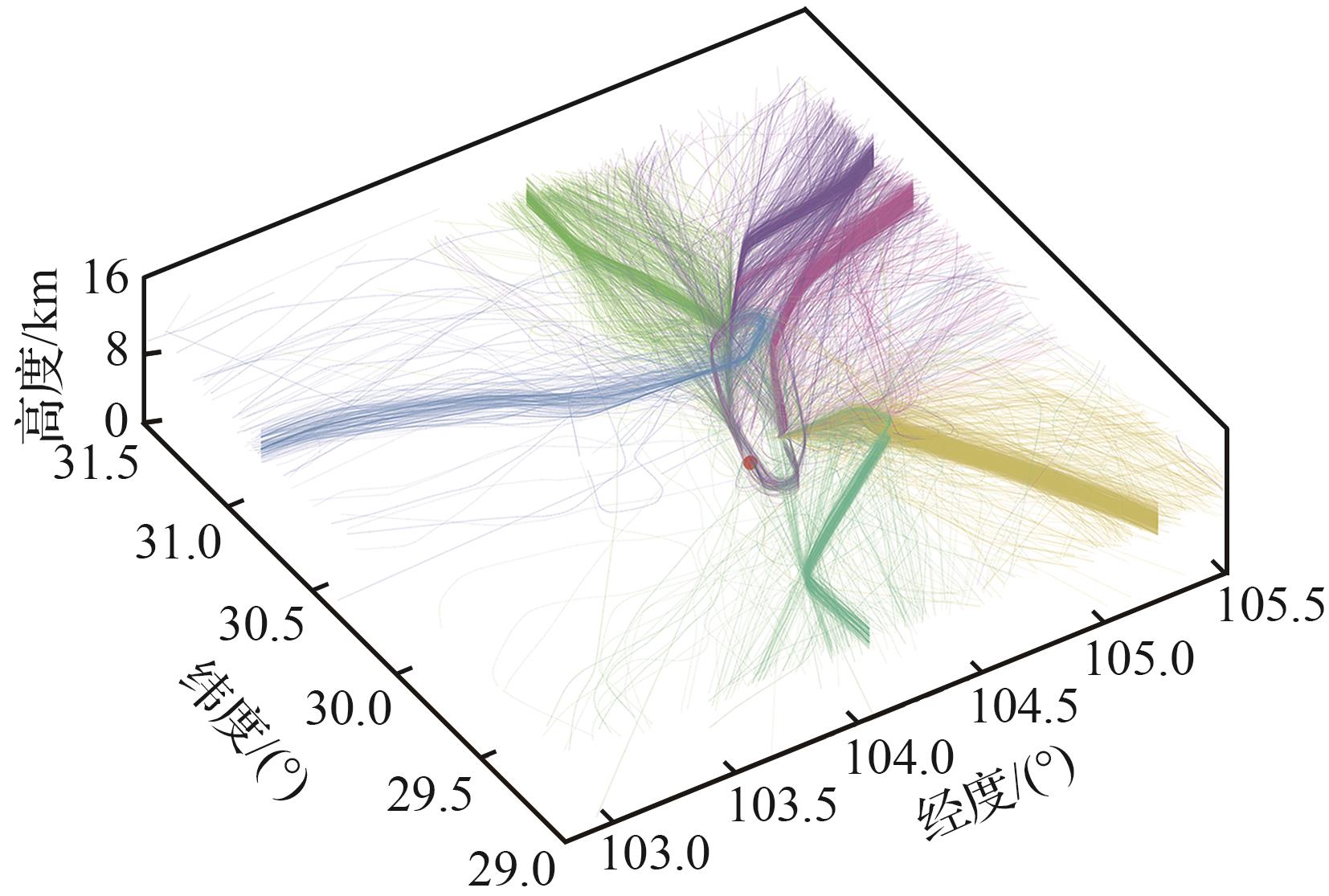
Fig.9
Departure trajectory sets projection
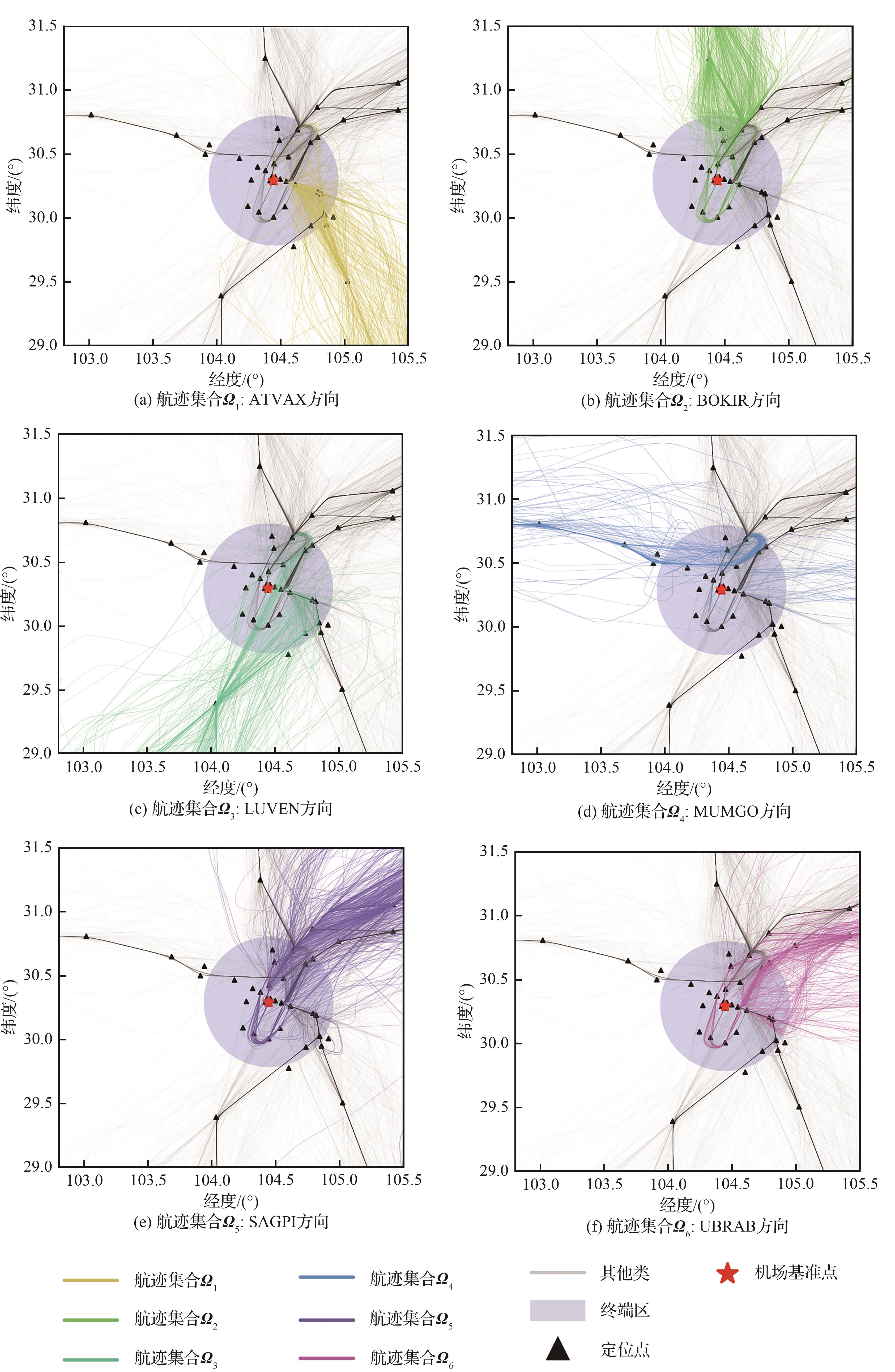
Fig.10
Six types of specific trajectories in departure trajectory Set 2
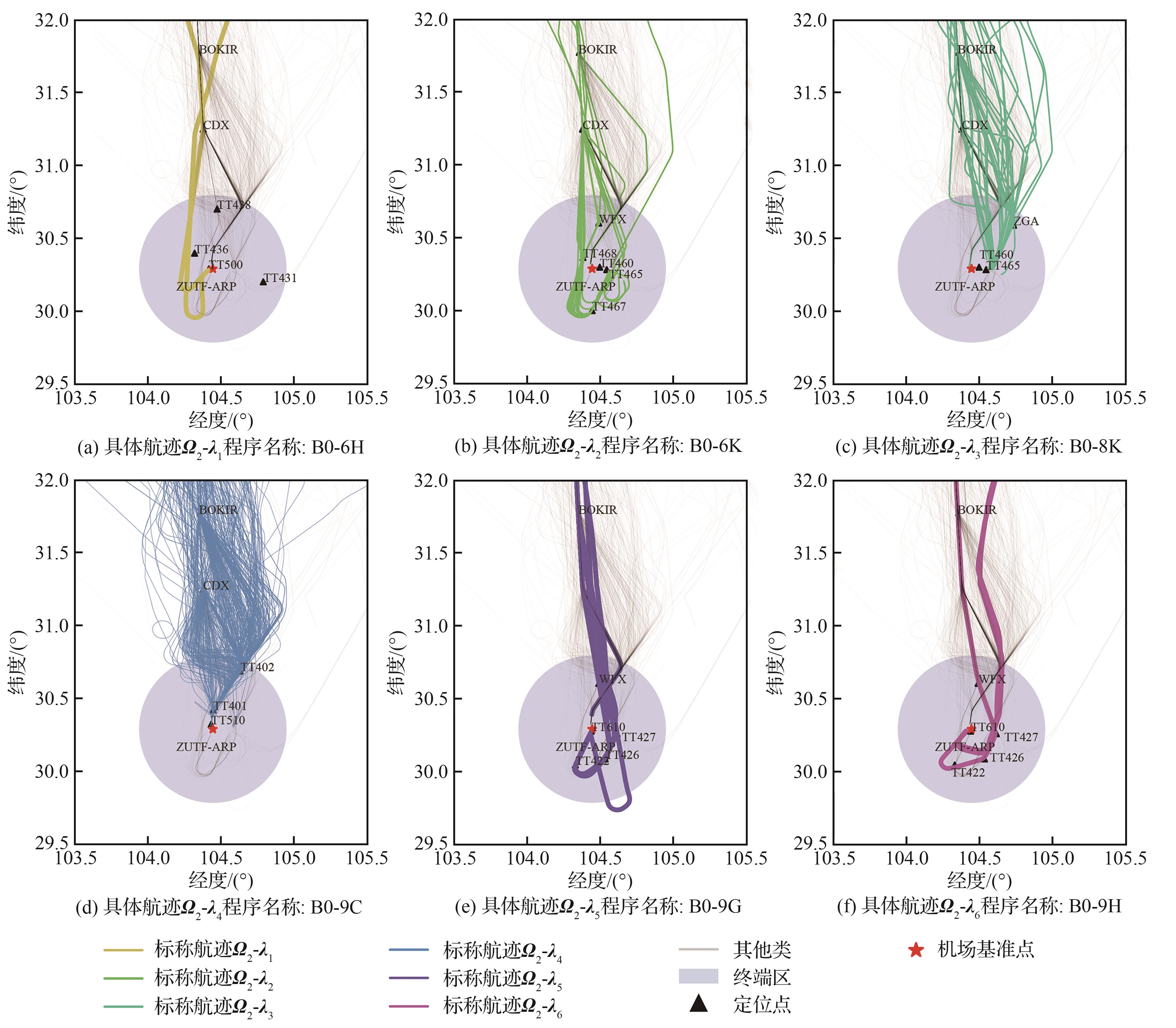
Fig.11
Anomaly detection network model metrics
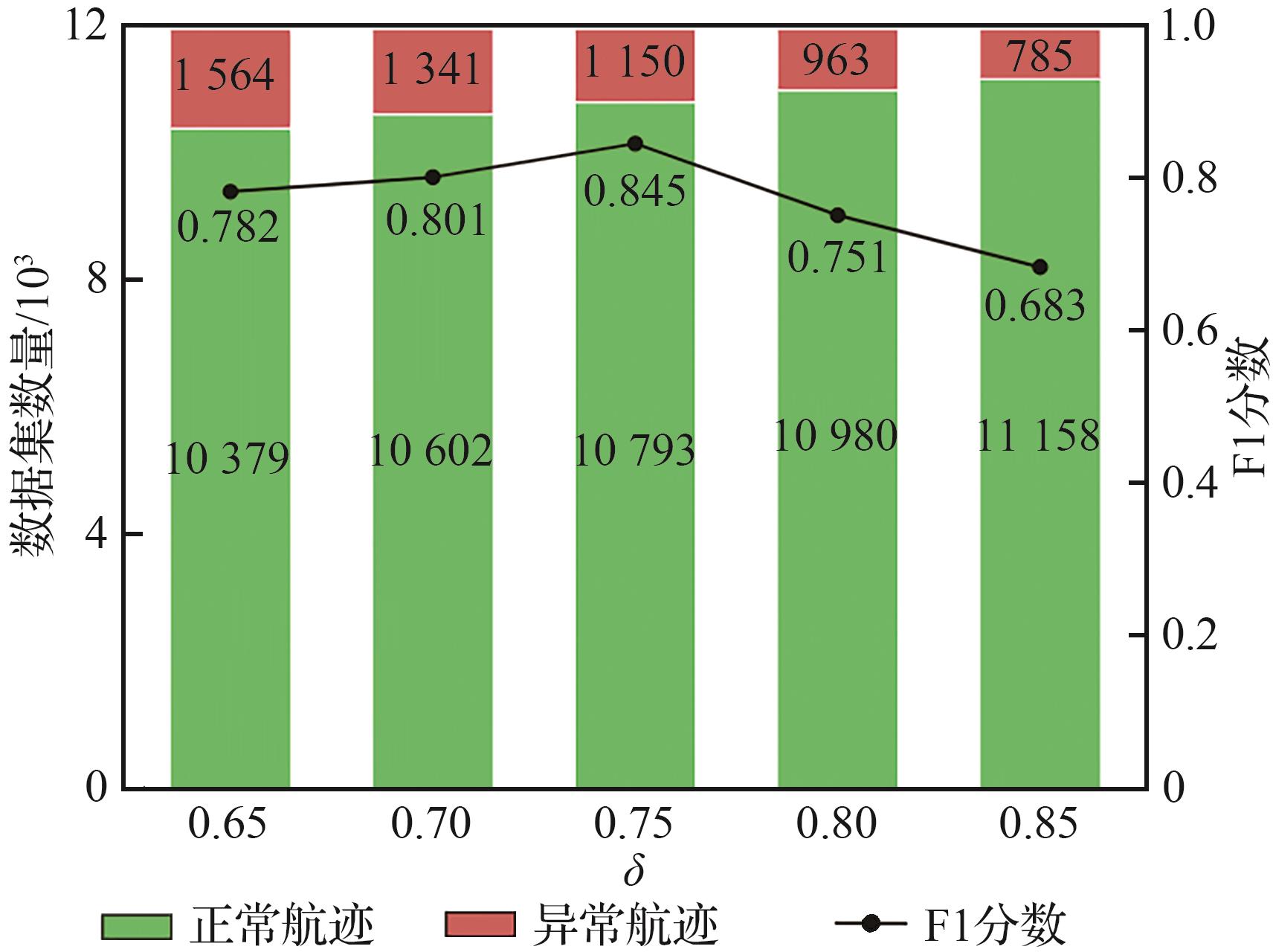
Table 5
Statistics of anomalous arrival and departure trajectories
| 类别 | 航迹总数 | 有效 航迹数 | 异常 航迹数 | 异常航迹占比/% |
|---|---|---|---|---|
| 离场航迹 | 6 030 | 5 958 | 334 | 5.61 |
| 进场航迹 | 6 033 | 5 985 | 816 | 13.63 |
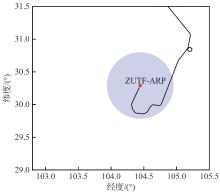
Fig.13
Example 2 of anomalous trajectory
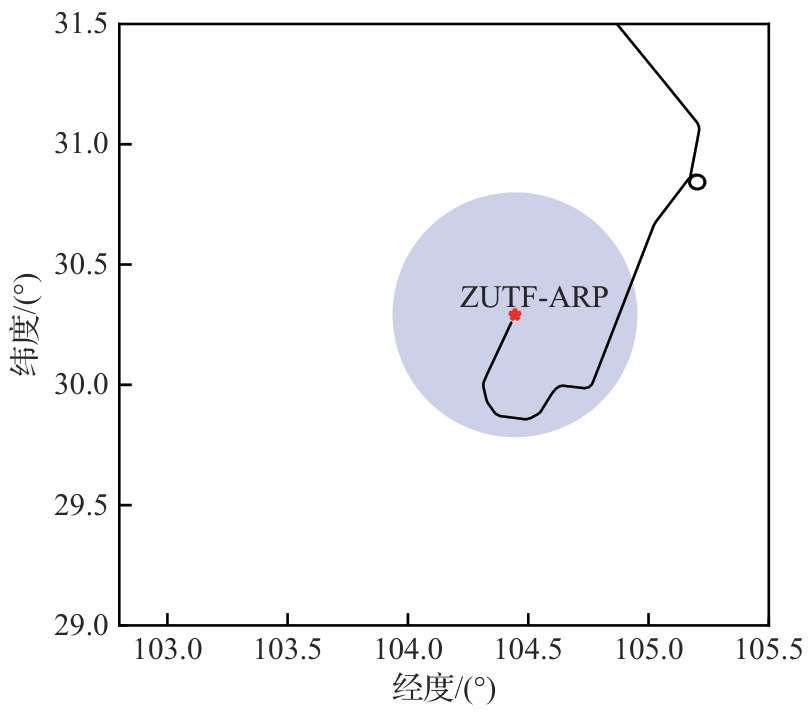
Fig.14
Variations in heading and altitude
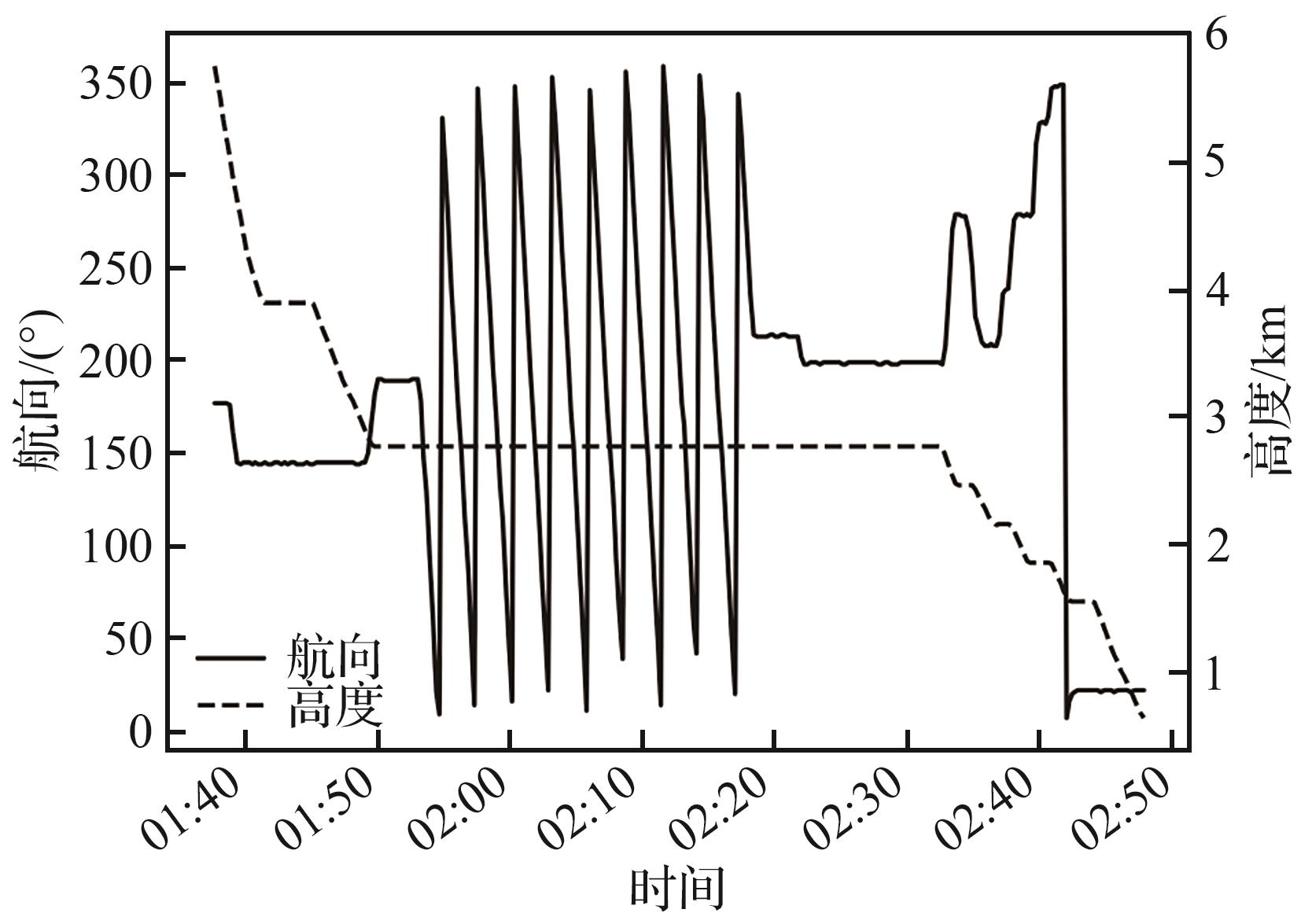
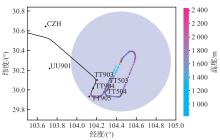
Fig.15
Example 3 of anomalous trajectory
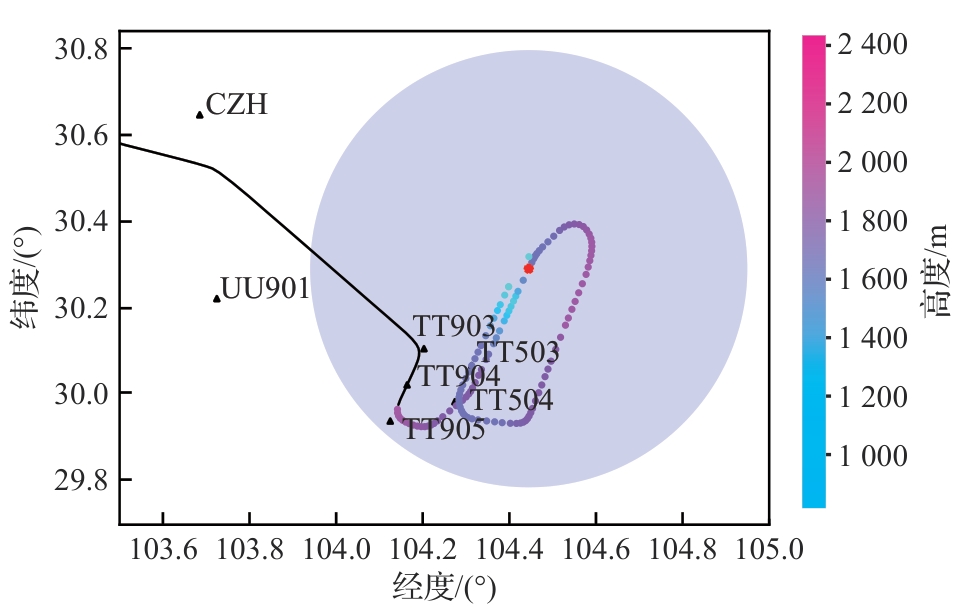
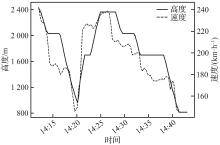
Fig.16
Variations in altitude and speed
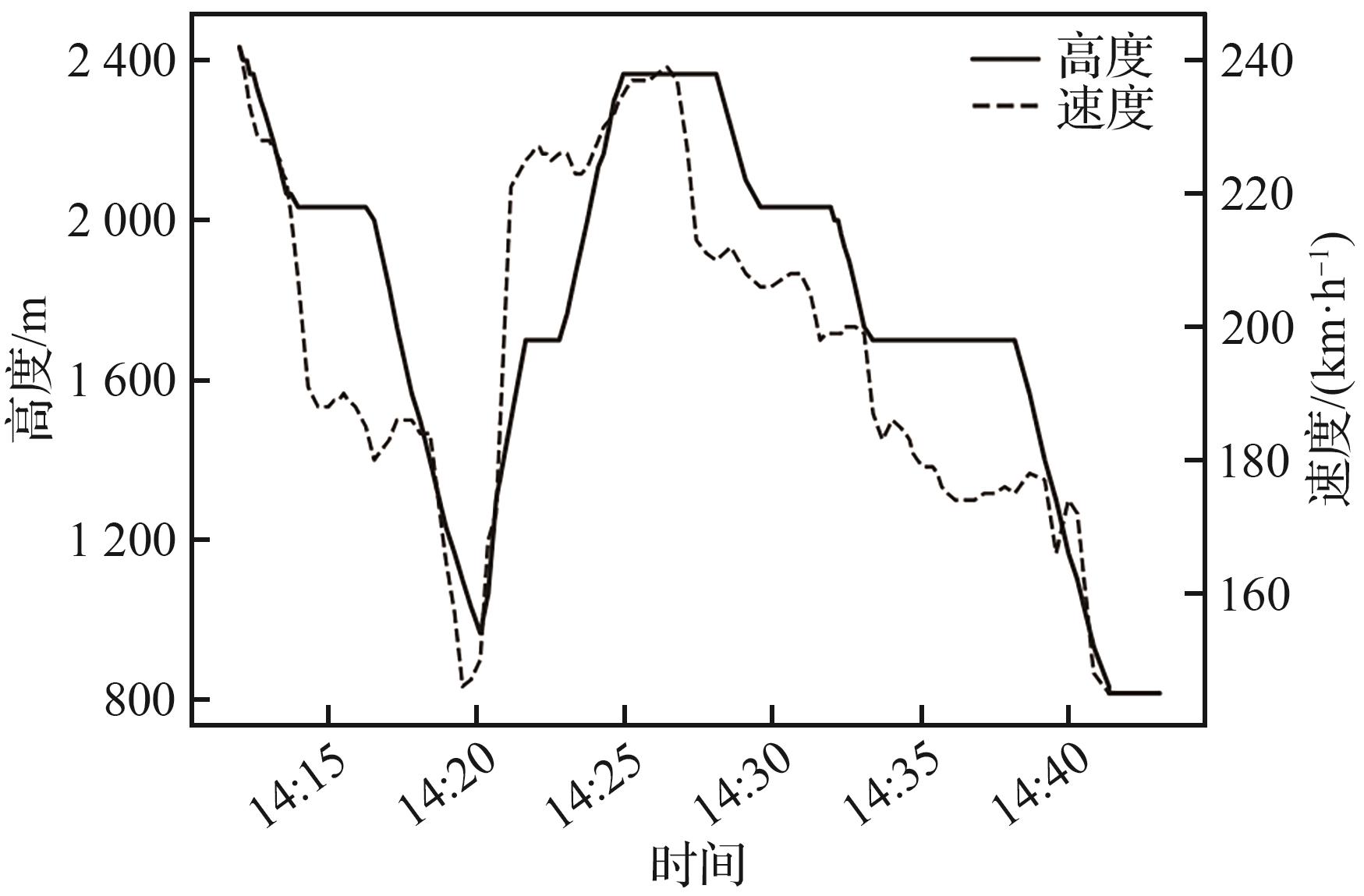
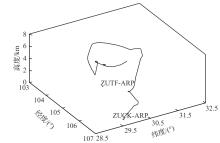
Fig.17
Example 4 of anomalous trajectory
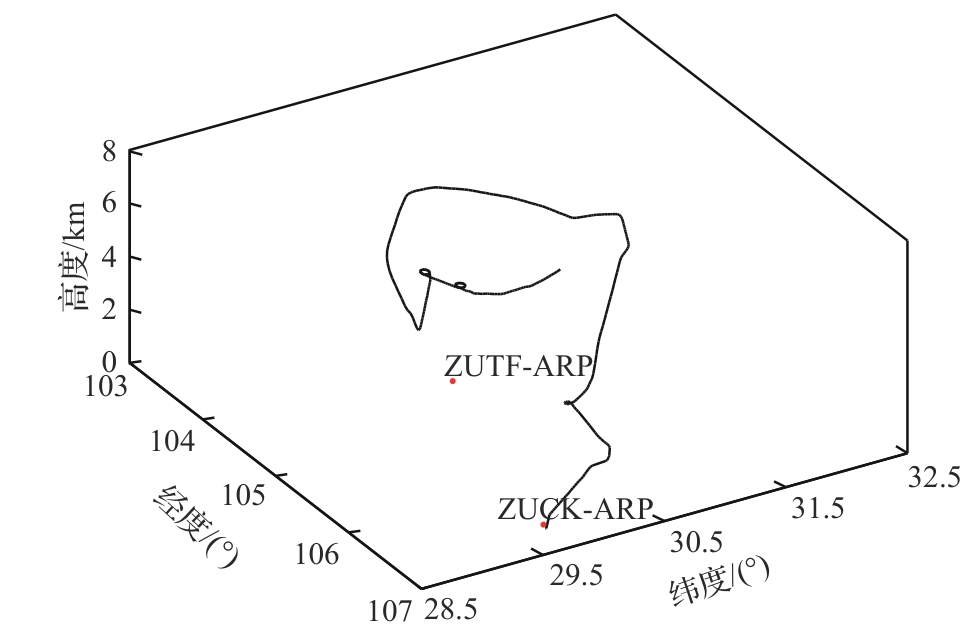
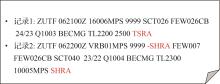
Fig.18
Segment of METAR meteorological messages of ZUTF Airport
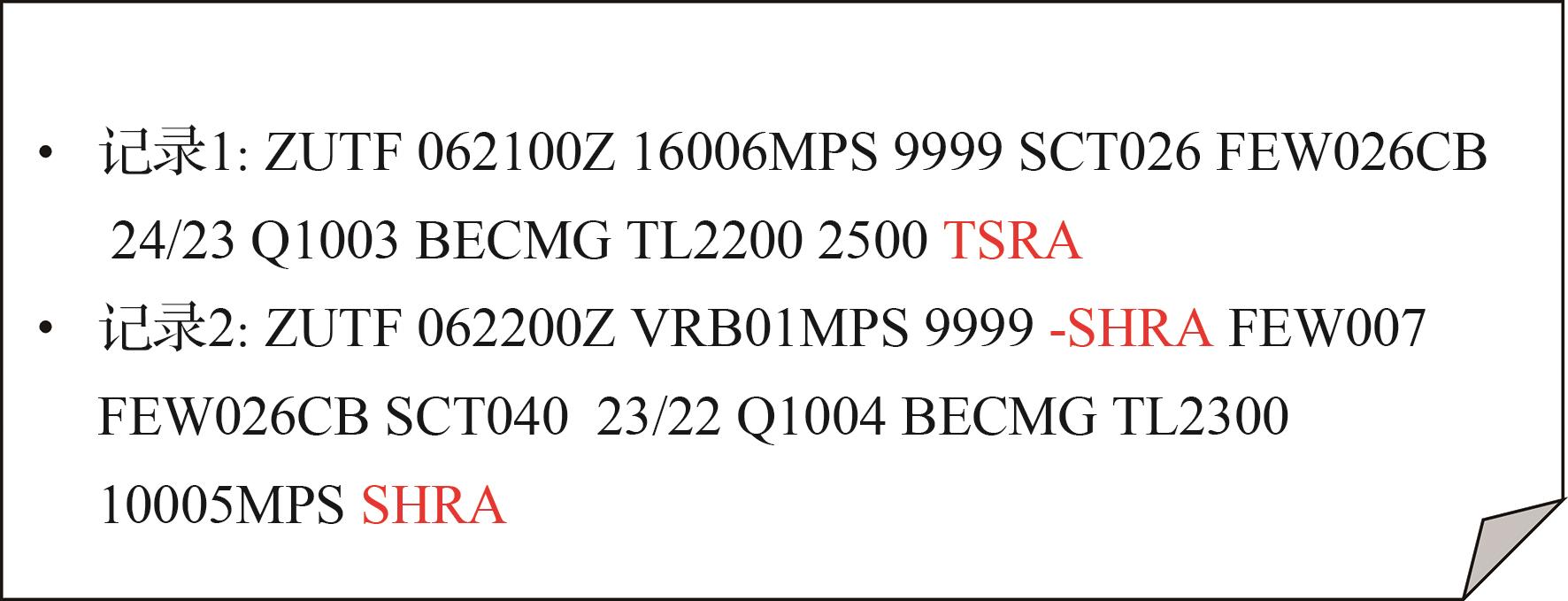
Table 6
Comparison of trajectory clustering with the classification method in this paper
| 评价指标 | 聚类算法 | 本文分类算法 |
|---|---|---|
| 学习方式 | 无监督 | 有监督 |
| 聚类/分类精度 | 航迹集合 | 具体标称航迹 |
| 输入数据质量要求 | 较高 | 较低 |
| 时间复杂度 | O(N2) | 依赖于训练次数 |
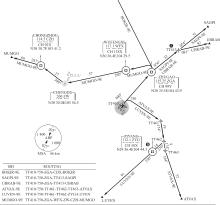
Fig.19
Departure chart of ZUTF
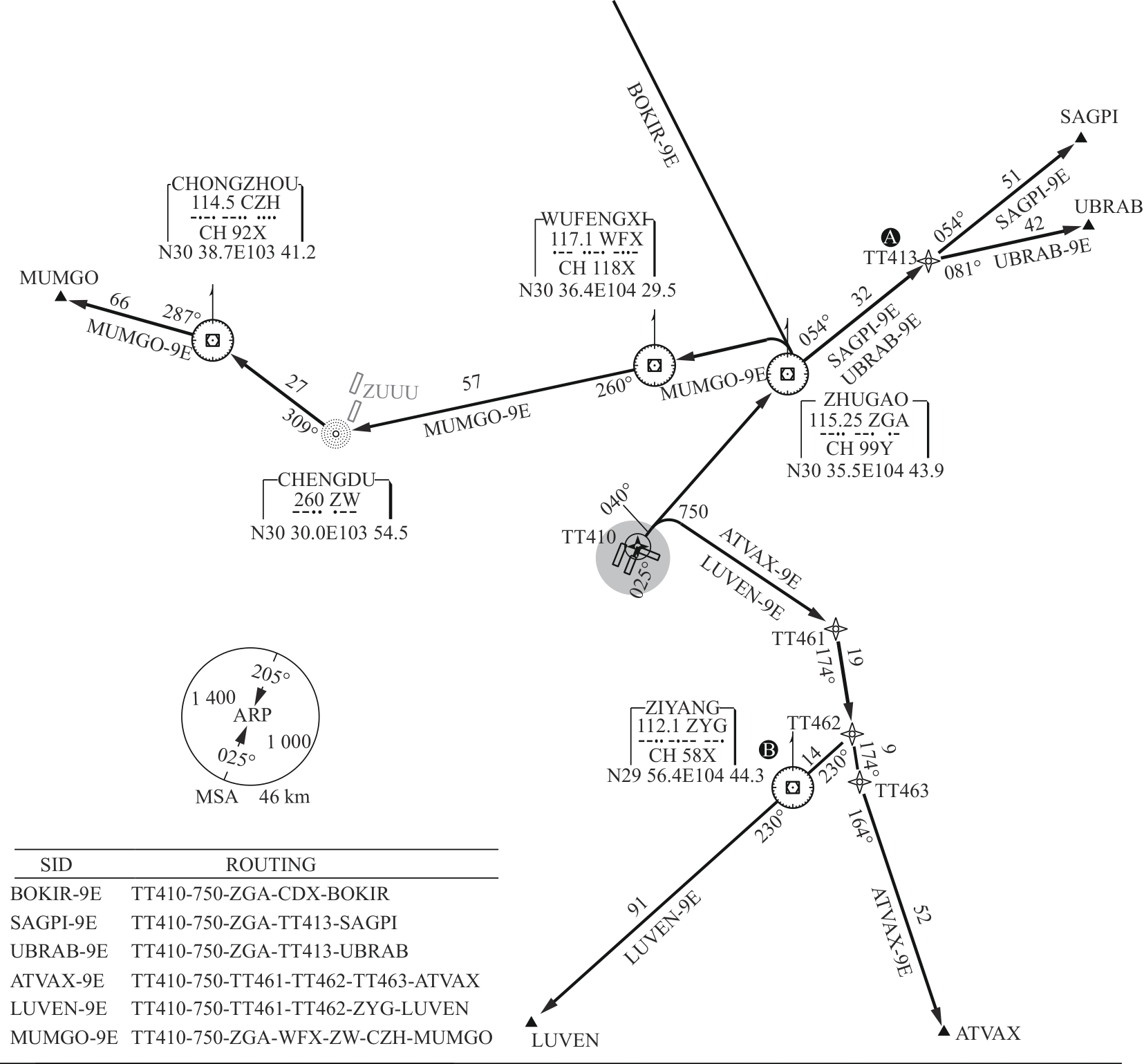
Fig.20
Experiments with clustering and classification algorithms proposed in this paper
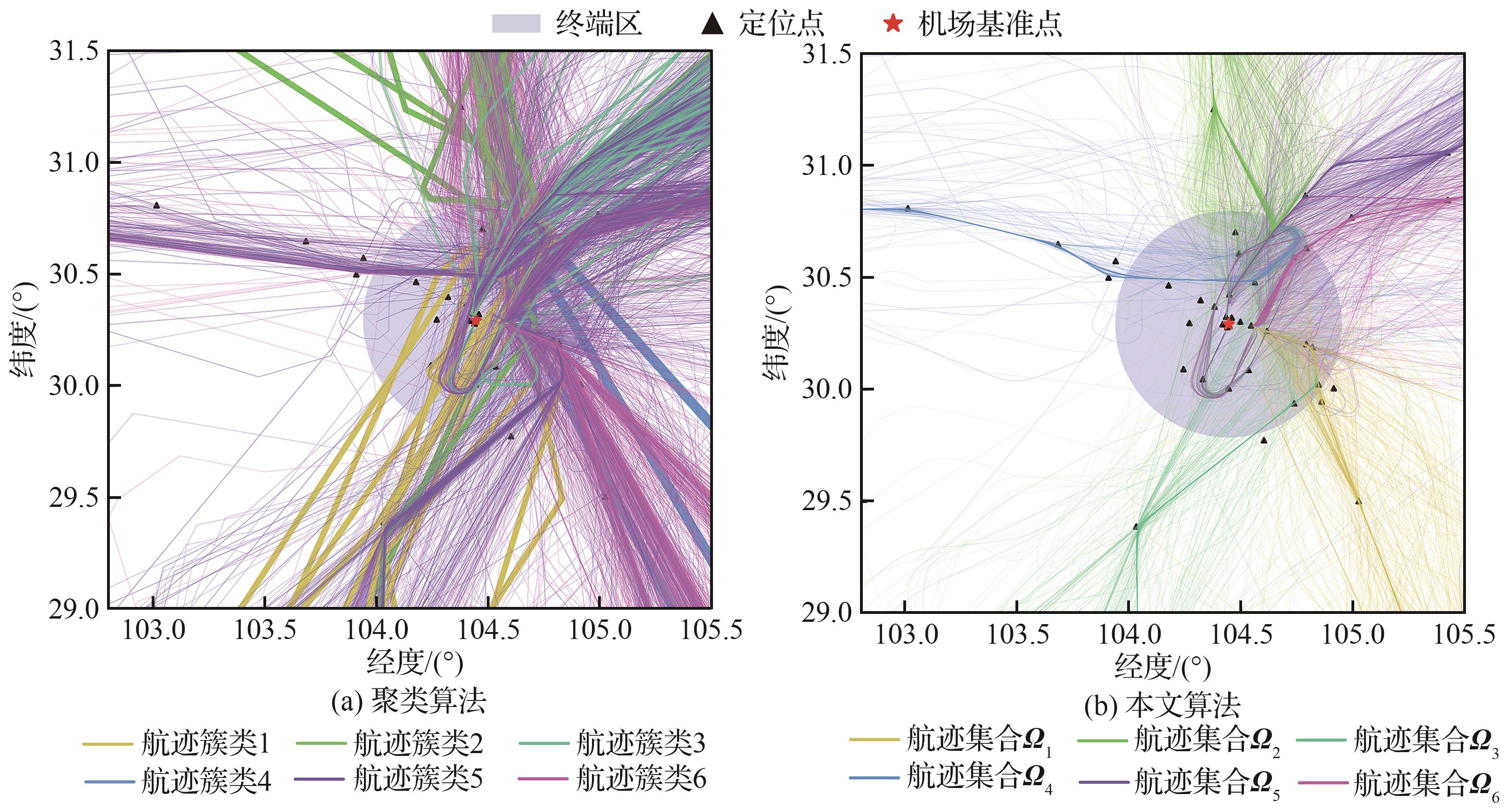
Fig.21
Input datasets required for different algorithms
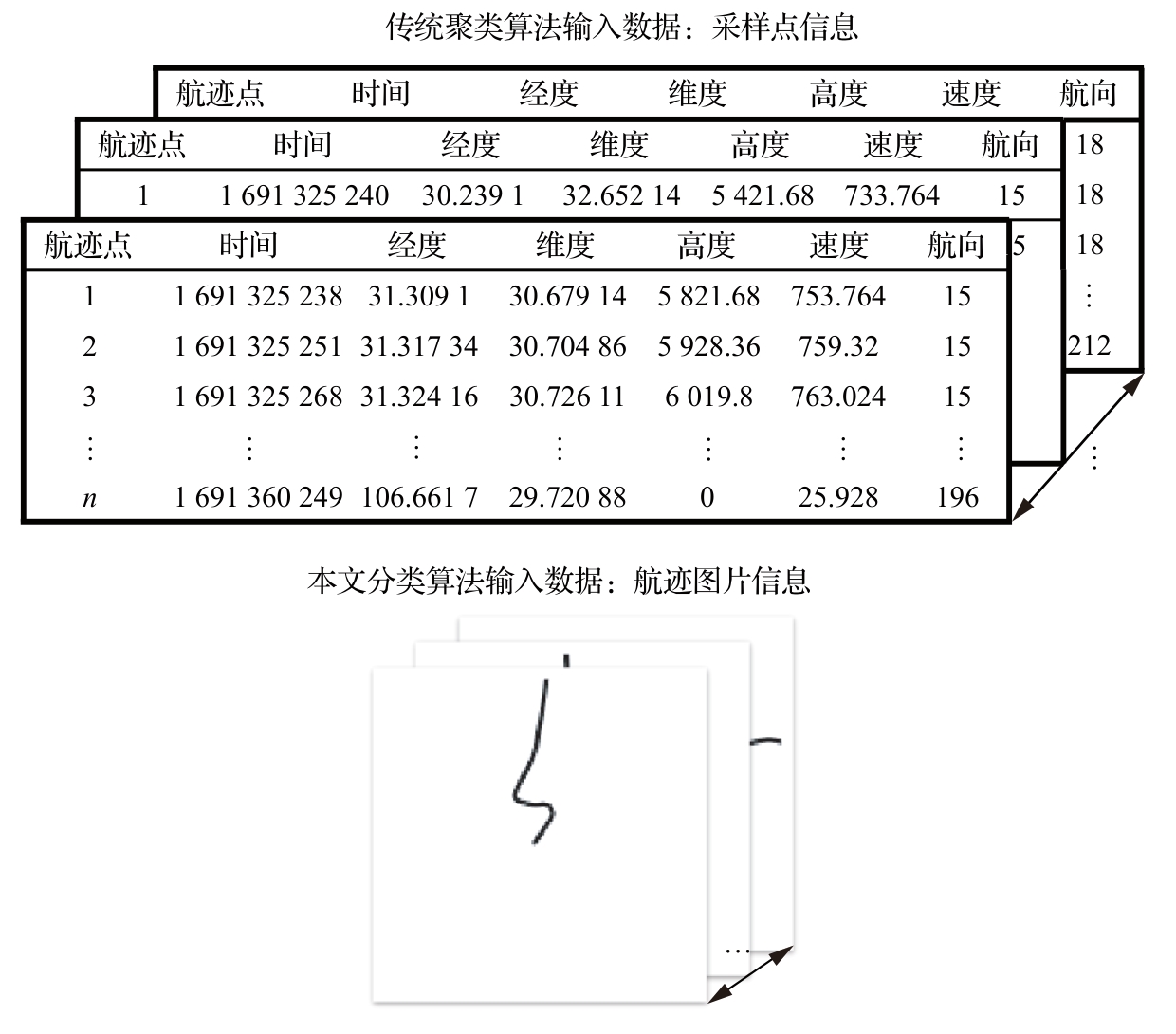
Table 7
Network effects of different classification models
| 模型 | 准确率/% | 推理速度 item/s |
|---|---|---|
| ResNet50 | 74.4 | 483 |
| Stochastic50 | 89.3 | 834 |
| GAP-SE-Stochastic-ResNet50 | 94.8 | 1 000 |
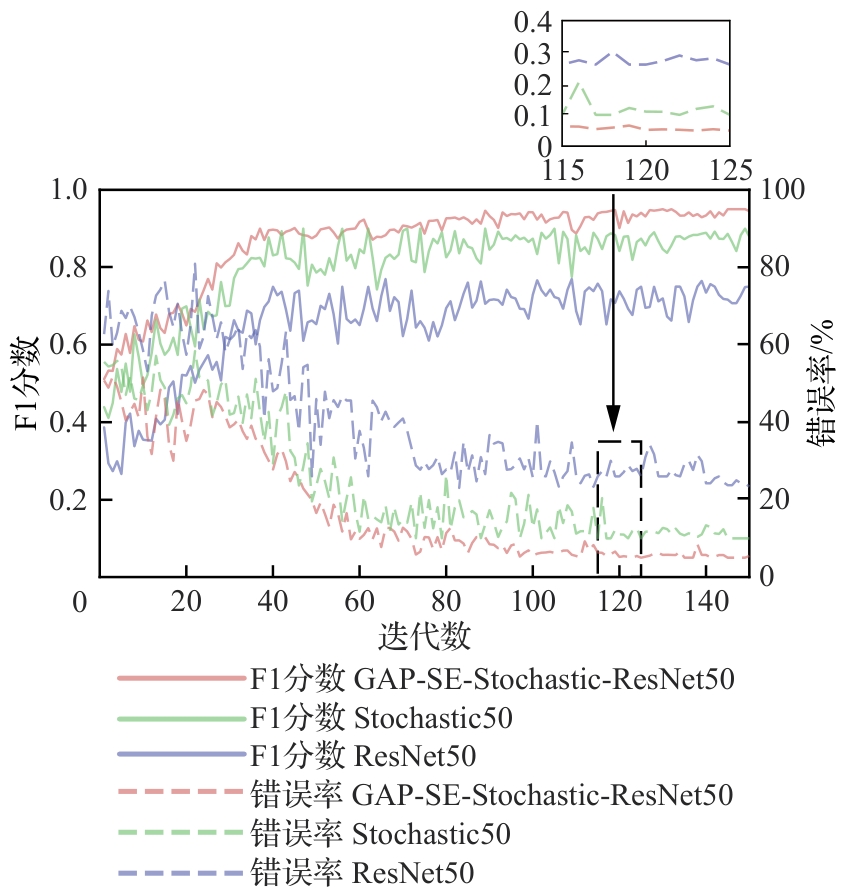
Fig.22
Iterative metrics for ablation experiments
| 1 | WANG D, MIWA T, MORIKAWA T. Big trajectory data mining: A survey of methods, applications, and services[J]. Sensors, 2020, 20(16): 4571. |
| 2 | LIU Y, NG K K H, CHU N N, et al. Spatiotemporal image-based flight trajectory clustering model with deep convolutional autoencoder network[J]. Journal of Aerospace Information Systems, 2023, 20(9): 575-587. |
| 3 | DENG W, LI K P, ZHAO H M. A flight arrival time prediction method based on cluster clustering-based modular with deep neural network[J]. IEEE Transactions on Intelligent Transportation Systems, 2024, 25(6): 6238-6247. |
| 4 | 刘继新, 董欣放, 徐晨, 等. 基于密度峰值的终端区航迹聚类与异常识别[J]. 交通运输工程学报, 2021, 21(5): 214-226. |
| LIU J X, DONG X F, XU C, et al. Aircraft trajectory clustering in terminal area and anomaly recognition based on density peak[J]. Journal of Traffic and Transportation Engineering, 2021, 21(5): 214-226 (in Chinese). | |
| 5 | WANG C, HUANG J H, WANG Y H, et al. A deep spatiotemporal trajectory representation learning framework for clustering[J]. IEEE Transactions on Intelligent Transportation Systems, 2024, 25(7): 7687-7700. |
| 6 | REDDY B S T, VALARMATHI J. Machine Learning Based Track Classification and Estimation using Kalman Filter[J]. International Journal of Recent Technology and Engineering (IJRTE), 2020, 9(1): 1700-1704. |
| 7 | 王增福, 潘泉, 陈丽平, 等. 基于航路-航迹关联的天波超视距雷达航迹分类[J]. 系统工程与电子技术, 2012, 34(10): 2018-2022. |
| WANG Z F, PAN Q, CHEN L P, et al. Tracks classification based on airway-track association for over-the-horizon radar[J]. Systems Engineering and Electronics, 2012, 34(10): 2018-2022 (in Chinese). | |
| 8 | 刘莉. 基于语义分析的航迹优化和分类[D]. 苏州: 苏州大学, 2020. |
| LIU L. Route optimization and classification based on semantic analysis[D]. Suzhou: Soochow University, 2020 (in Chinese). | |
| 9 | 王超, 王明明, 王飞. 基于改进的模糊C-Means航迹聚类方法研究[J]. 中国民航大学学报, 2013, 31(3): 14-18. |
| WANG C, WANG M M, WANG F. Trajectory clustering method research based on improved Fuzzy C-Means[J]. Journal of Civil Aviation University of China, 2013, 31(3): 14-18 (in Chinese). | |
| 10 | 杨翠芳, 刘硕, 李宏博, 等. 一种基于随机森林的航迹起始算法[J]. 信息化研究, 2018, 44(6): 16-20. |
| YANG C F, LIU S, LI H B, et al. A new track initiation algorithm based on random forest[J]. Informatization Research, 2018, 44(6): 16-20 (in Chinese). | |
| 11 | GUI X H, ZHANG J F, PENG Z H. Trajectory clustering for arrival aircraft via new trajectory representation[J]. Journal of Systems Engineering and Electronics, 2021, 32(2): 473-486. |
| 12 | OLIVE X, MORIO J. Trajectory clustering of air traffic flows around airports[J]. Aerospace Science and Technology, 2019, 84: 776-781. |
| 13 | 申正义, 李平, 王洪林, 等. 基于航迹数据的改进DBSCAN聚类算法研究[J]. 空天预警研究学报, 2024, 38(02): 128-131. |
| SHEN Z Y, LI P, WANG H L,et al. Research on improved DBSCAN clustering algorithm based on trajectory data[J]. Journal of Air and Space Warning Research,2024,38(02):128-131 (in Chinese). | |
| 14 | ZENG W L, XU Z F, CAI Z P, et al. Aircraft trajectory clustering in terminal airspace based on deep autoencoder and Gaussian mixture model[J]. Aerospace, 2021, 8(9): 266. |
| 15 | 王超, 李昊昱, 陈含露. 基于形态特征的终端区进场中心航迹识别方法[J]. 科学技术与工程, 2023, 23(26): 11445-11451. |
| WANG C, LI H Y, CHEN H L. Center trajectory extraction in terminal area based on one way distance and density-peak clustering[J]. Science Technology and Engineering, 2023, 23(26): 11445-11451 (in Chinese). | |
| 16 | KRIZHEVSKY A, SUTSKEVER I, HINTON G E. ImageNet classification with deep convolutional neural networks[J]. Communications of the ACM, 2017, 60(6): 84-90. |
| 17 | SIMONYAN K, ZISSERMAN A. Very deep convolutional networks for large-scale image recognition[DB/OL]. arXiv preprint: 1409.1556;2014. |
| 18 | SZEGEDY C, LIU W, JIA Y Q, et al. Going deeper with convolutions[C]∥2015 IEEE Conference on Computer Vision and Pattern Recognition (CVPR). Piscataway: IEEE Press, 2015: 1-9. |
| 19 | HE K M, ZHANG X Y, REN S Q, et al. Deep residual learning for image recognition[C]∥2016 IEEE Conference on Computer Vision and Pattern Recognition (CVPR). Piscataway: IEEE Press, 2016: 770-778. |
| 20 | 李超能, 冯冠文, 姚航, 等. 轨迹异常检测研究综述[J]. 软件学报, 2024, 35(2): 927-974. |
| LI C N, FENG G W, YAO H, et al. Survey on trajectory anomaly detection[J]. Journal of Software, 2024, 35(2): 927-974 (in Chinese). | |
| 21 | 潘新龙, 王海鹏, 何友, 等. 基于多维航迹特征的异常行为检测方法[J]. 航空学报, 2017, 38(4): 320442. |
| PAN X L, WANG H P, HE Y, et al. Anomalous behavior detection method based on multidimensional trajectory characteristics[J]. Acta Aeronautica et Astronautica Sinica, 2017, 38(4): 320442 (in Chinese). | |
| 22 | KUMAR D, BEZDEK J C, RAJASEGARAR S, et al. A visual-numeric approach to clustering and anomaly detection for trajectory data[J]. The Visual Computer, 2017, 33(3): 265-281. |
| 23 | SALARPOUR A, KHOTANLOU H. Direction-based similarity measure to trajectory clustering[J]. IET Signal Processing, 2019, 13(1): 70-76. |
| 24 | 饶丹, 时宏伟. 基于深度聚类的航空交通流识别与异常检测研究[J]. 计算机科学, 2023, 50(3): 121-128. |
| RAO D, SHI H W. Study on air traffic flow recognition and anomaly detection based on deep clustering[J]. Computer Science, 2023, 50(3): 121-128 (in Chinese). | |
| 25 | 王志森, 张召悦, 冯朝辉, 等. 终端区飞行轨迹聚类分析及异常轨迹识别[J]. 科学技术与工程, 2022, 22(9): 3807-3814. |
| WANG Z S, ZHANG Z Y, FENG Z H, et al. Cluster analysis of flight trajectories in terminal area and identification of abnormal trajectories[J]. Science, Technology and Engineering, 2022, 22(9): 3807-3814 (in Chinese). | |
| 26 | 王华溢, 黄要诚, 蔡波. 基于传统方法与深度学习方法的图片相似度算法比较[J]. 计算机系统应用, 2024, 33(2): 253-264. |
| WANG H Y, HUANG Y C, CAI B. Comparison of image similarity algorithms based on traditional methods and deep learning methods[J]. Computer Systems & Applications, 2024, 33(2): 253-264 (in Chinese). | |
| 27 | HUANG G, SUN Y, LIU Z, et al. Deep networks with stochastic depth[M]∥LEIBE B, MATAS J, SEBE N, et al, eds. Lecture Notes in Computer Science. Cham: Springer Cham, 2016: 646-661. |
| 28 | LAXHAMMAR R, FALKMAN G. Online learning and sequential anomaly detection in trajectories[J]. IEEE Transactions on Pattern Analysis and Machine Intelligence, 2014, 36(6): 1158-1173. |
| 29 | TAHA A A, HANBURY A. An efficient algorithm for calculating the exact Hausdorff distance[J]. IEEE Transactions on Pattern Analysis and Machine Intelligence, 2015, 37(11): 2153-2163. |
| [1] | Qing GUO, Xiaoyang LIU, Junfeng FAN, Yu FU, Hongfu ZUO. Adaptive gas path fault diagnosis method of civil aviation engine fusing prior information [J]. Acta Aeronautica et Astronautica Sinica, 2025, 46(4): 230871-230871. |
| [2] | Jiahui HE, Zhijun CHENG, Bo GUO. Telemetry anomaly detection method based on joint dictionary learning and OCSVM [J]. Acta Aeronautica et Astronautica Sinica, 2023, 44(13): 327931-327931. |
| [3] | WANG Xinglong, SHI Zongbei, CHEN Ziyan. Air traffic network motif recognition and sub-graph structure resilience evaluation [J]. ACTA AERONAUTICAET ASTRONAUTICA SINICA, 2021, 42(7): 324715-324715. |
| [4] | YAN Tijin, XIA Yuanqing, ZHANG Hongwei, WEI Minfeng, ZHOU Tong. An anomaly detection method for irregularly sampled spacecraft time series data [J]. ACTA AERONAUTICAET ASTRONAUTICA SINICA, 2021, 42(4): 525019-525019. |
| [5] | LUO Peng, WANG Buhong, LI Tengyao. ADS-B anomaly data detection model based on BiGRU-SVDD [J]. ACTA AERONAUTICAET ASTRONAUTICA SINICA, 2020, 41(10): 323878-323878. |
| [6] | DING Jianli, ZOU Yunkai, WANG Jing, WANG Huaichao. ADS-B anomaly data detection model based on deep learning [J]. ACTA AERONAUTICAET ASTRONAUTICA SINICA, 2019, 40(12): 323220-323220. |
| [7] | LI Lei, XIE Li, ZHANG Yongjie, WU Qin. Application of data mining in intelligence test of launch vehicles [J]. ACTA AERONAUTICAET ASTRONAUTICA SINICA, 2018, 39(S1): 722203-722203. |
| [8] | ZHANG Chi, LIN Yuzhen, XU Huasheng, XU Quanhong. Development Status and Level of Low Emissions Combustor Technologies for Civil Aero-engine [J]. ACTA AERONAUTICAET ASTRONAUTICA SINICA, 2014, 35(2): 332-350. |
| [9] | LI Yulong, SHI Xiaopeng. Investigation of the Present Status of Research on Bird Impacting on Commercial Airplanes [J]. ACTA AERONAUTICAET ASTRONAUTICA SINICA, 2012, 33(2): 189-198. |
| [10] | Liu Hui;Li Xiaomin;Wang Yinfeng;Zhang Qishan. APPLICATION OF COMBINED GPS AND GLONASS IN CIVIL AVIATION [J]. ACTA AERONAUTICAET ASTRONAUTICA SINICA, 1998, 19(S1): 40-45. |
| Viewed | ||||||
|
Full text |
|
|||||
|
Abstract |
|
|||||
Address: No.238, Baiyan Buiding, Beisihuan Zhonglu Road, Haidian District, Beijing, China
Postal code : 100083
E-mail:hkxb@buaa.edu.cn
Total visits: 6658907 Today visits: 1341All copyright © editorial office of Chinese Journal of Aeronautics
All copyright © editorial office of Chinese Journal of Aeronautics
Total visits: 6658907 Today visits: 1341

 CJA
CJA
