Acta Aeronautica et Astronautica Sinica ›› 2025, Vol. 46 ›› Issue (20): 531895.doi: 10.7527/S1000-6893.2025.31895
• Special Issue: Key Technologies for Supersonic Civil Aircraft • Previous Articles
Lin TANG1,2, Xuanshi MENG1,3, Ruidi LIU2, Xingshi GU2, Xian YI2( )
)
Received:2025-02-26
Revised:2025-03-21
Accepted:2025-04-11
Online:2025-04-18
Published:2025-04-17
Contact:
Xian YI
E-mail:yixian_2010@163.com
Supported by:CLC Number:
Lin TANG, Xuanshi MENG, Ruidi LIU, Xingshi GU, Xian YI. Structural modeling and elastic modulus prediction of aircraft wing ice[J]. Acta Aeronautica et Astronautica Sinica, 2025, 46(20): 531895.
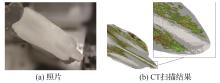
Fig.1
Sample of wing ice
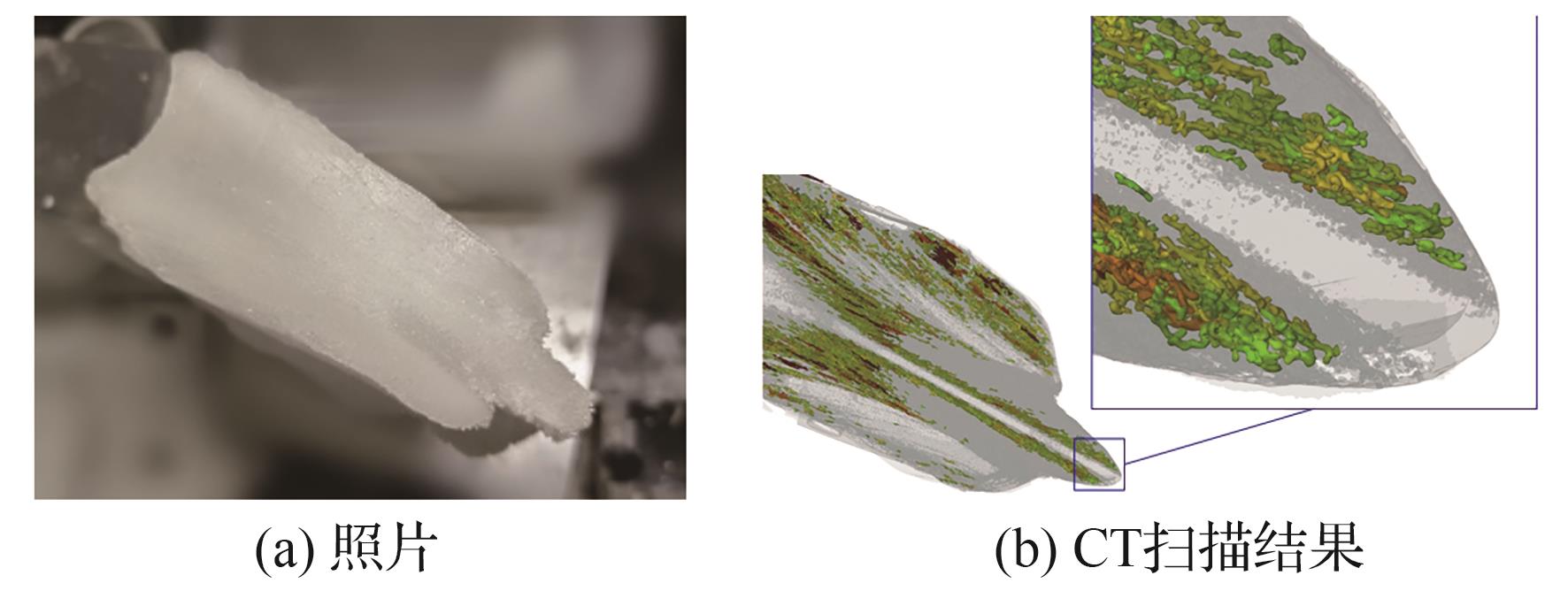
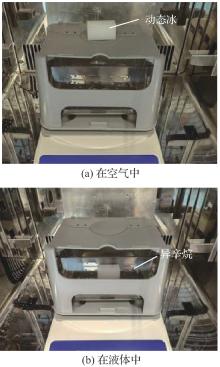
Fig.2
Density measurement method for wing ice
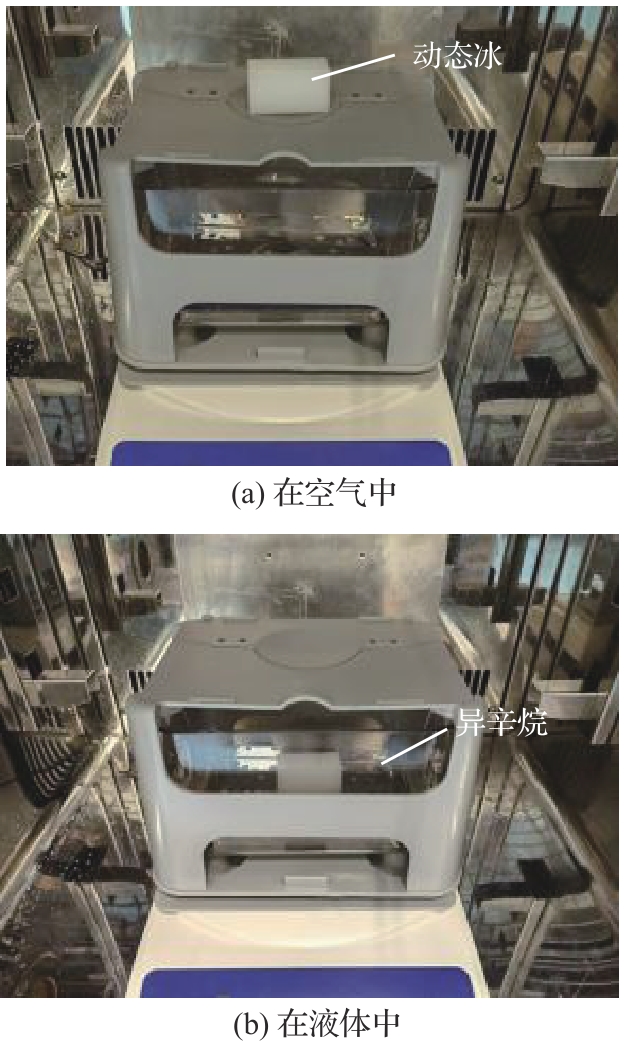
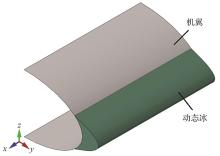
Fig.3
Diagram of wing ice direction
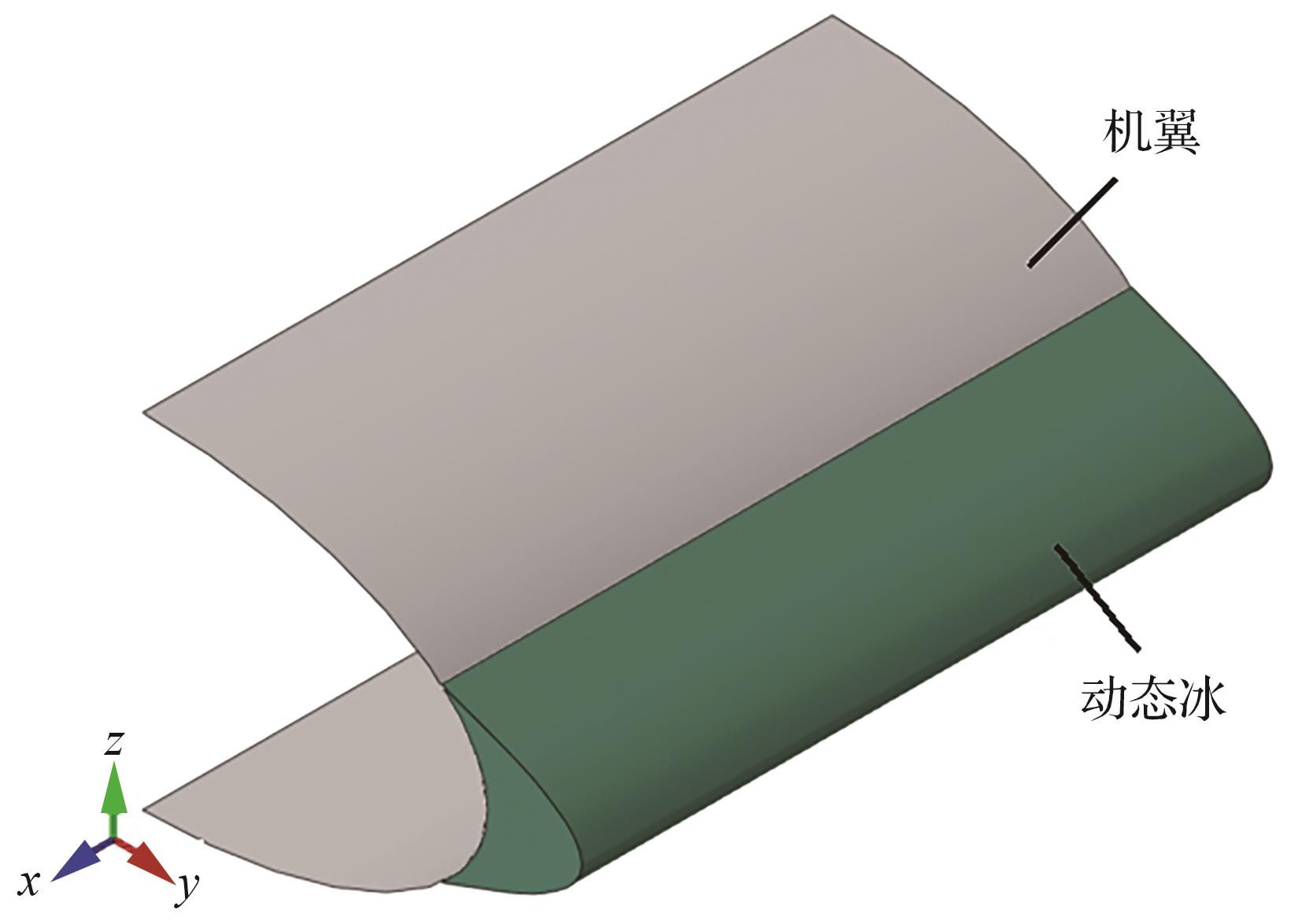

Table 1
Icing condition
| 样本 | 风速/(m·s-1) | 温度/℃ | 水滴平均粒径/ μm | 液态水含量/ (g·m-3) | 结冰高度/m | 机翼后掠角/(°) | 马赫数 |
|---|---|---|---|---|---|---|---|
| a | 80.0 | -7 | 24 | 0.6 | 1 900 | 0 | 0.24 |
| b | 67.1 | -23 | 20 | 1.0 | 0 | 30 | 0.21 |
| c | 67.1 | -23 | 20 | 1.0 | 0 | 0 | 0.21 |
| d | 67.1 | -23 | 20 | 1.0 | 0 | 45 | 0.21 |
| e | 105.6 | -10 | 20 | 0.5 | 4 500 | 0 | 0.32 |
| f | 80.0 | -8 | 30 | 0.6 | 1 900 | 0 | 0.25 |
Fig.4
Test specimens of wing ice
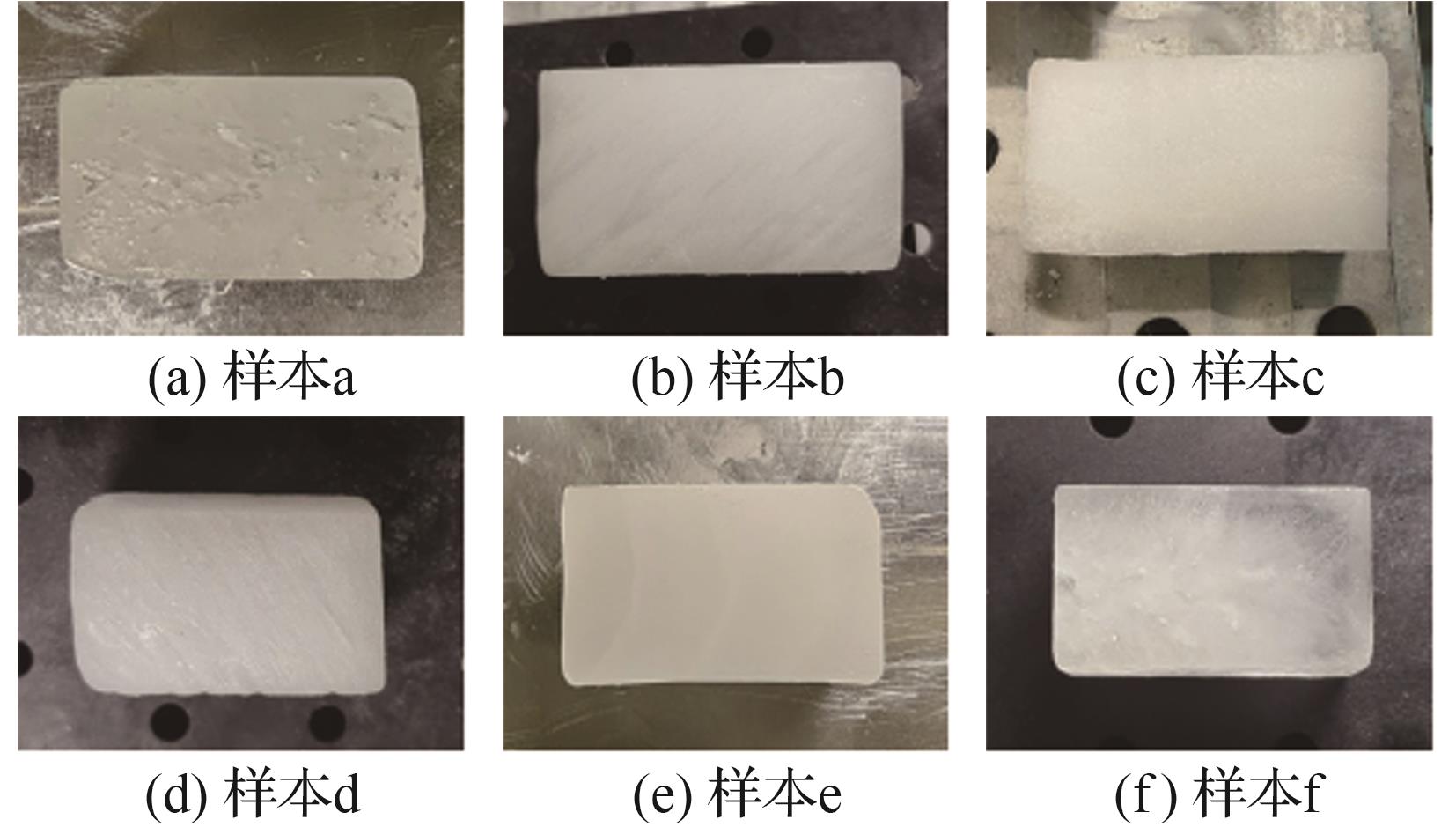
Table 2
Density test results of wing ice
| 样本 | 方向 | 质量/ g | 密度/ (kg·m-3) | 孔隙率/% | 平均孔隙率/% |
|---|---|---|---|---|---|
| a | y | 15.535 | 880 | 4.35 | 4.08 |
| x | 22.575 | 885 | 3.80 | ||
| b | y | 34.755 | 842 | 8.48 | 8.70 |
| x | 43.336 | 838 | 8.91 | ||
| c | y | 22.951 | 833 | 9.46 | 9.67 |
| x | 12.472 | 829 | 9.89 | ||
| d | y | 19.025 | 813 | 11.63 | 11.47 |
| x | 19.664 | 816 | 11.30 | ||
| e | y | 12.905 | 854 | 7.17 | 7.28 |
| x | 35.439 | 852 | 7.39 | ||
| f | y | 15.675 | 868 | 5.65 | 5.38 |
| x | 44.891 | 873 | 5.11 |
Fig.5
Test equipment
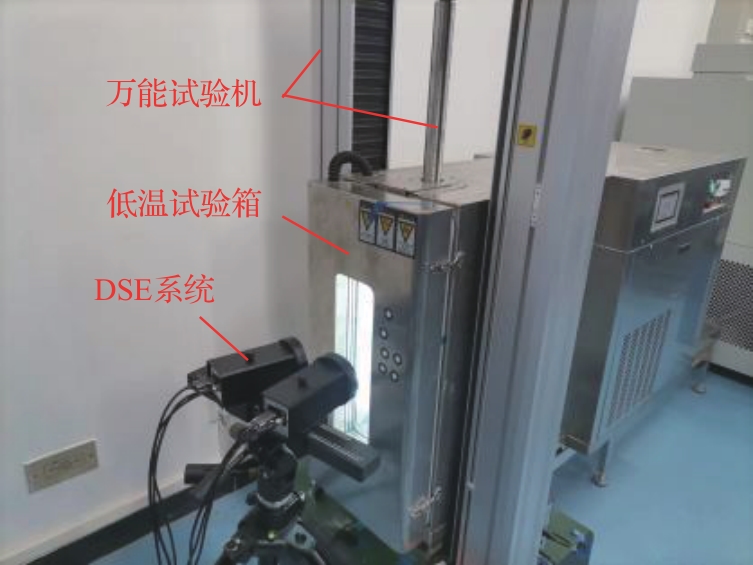
Fig.6
Diagram of speckle spray effect
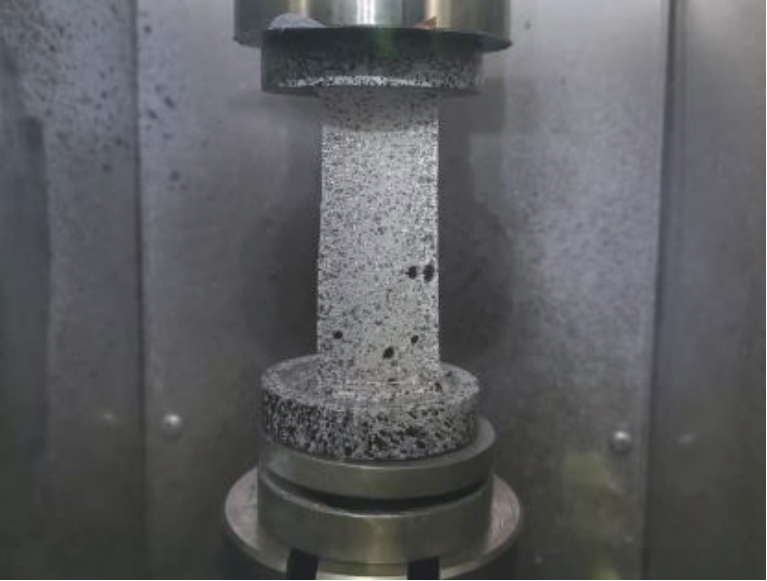
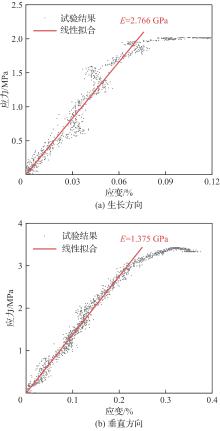
Fig.7
Stress-strain curves of Sample c
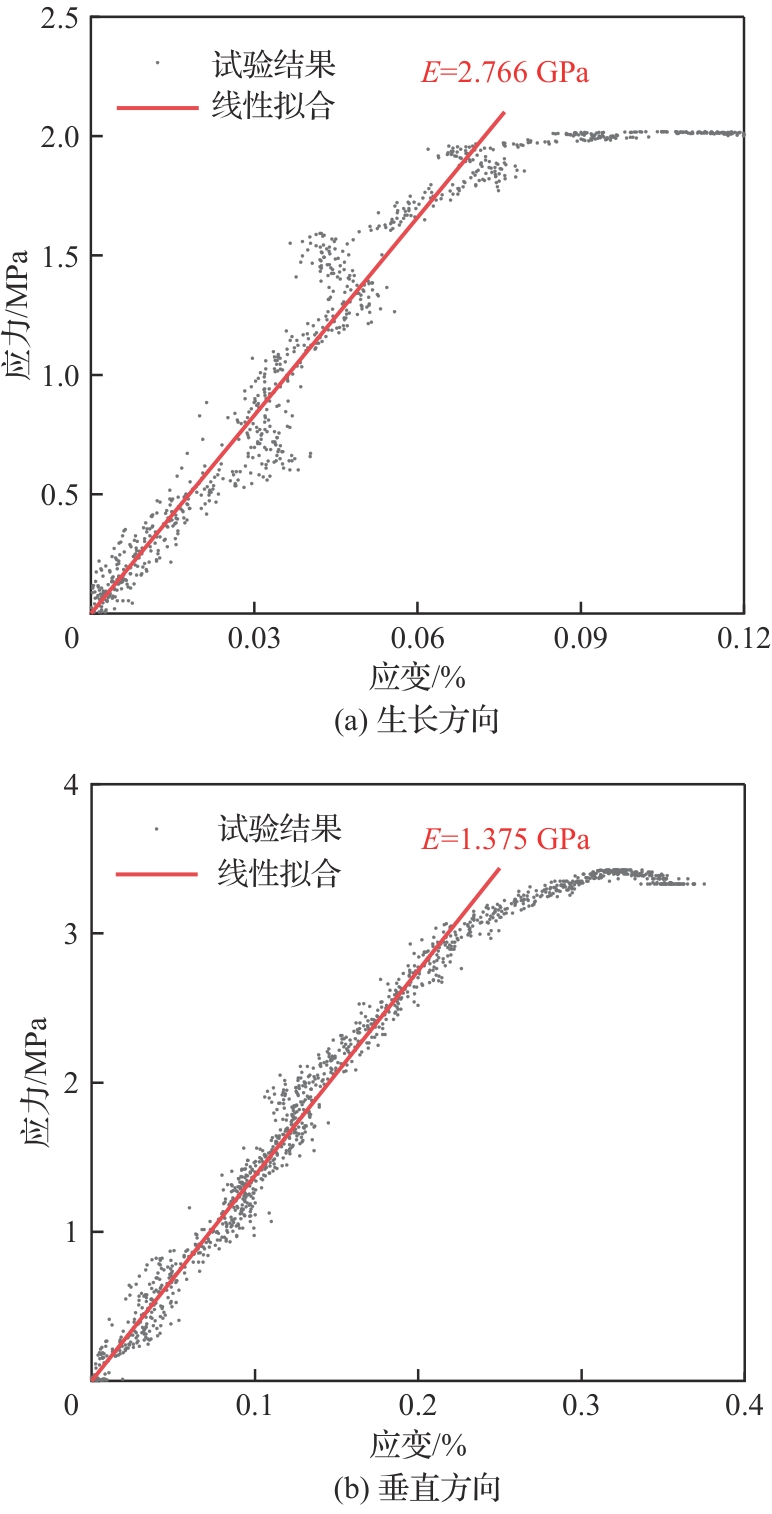
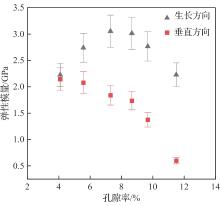
Fig.8
Measurement results of elastic modulus
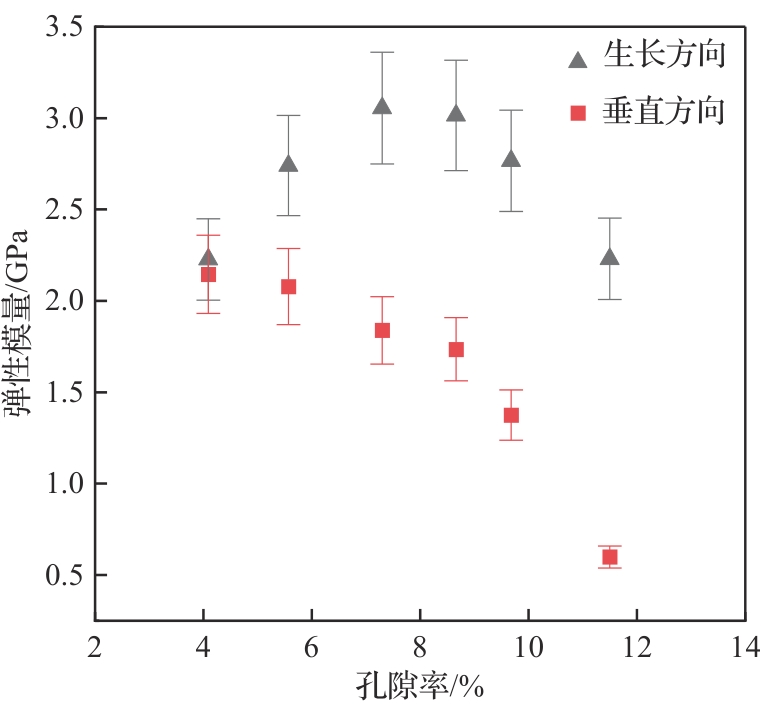
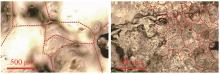
Fig.9
Typical images and contours of grain boundaries for wing ice at different icing environments[22]
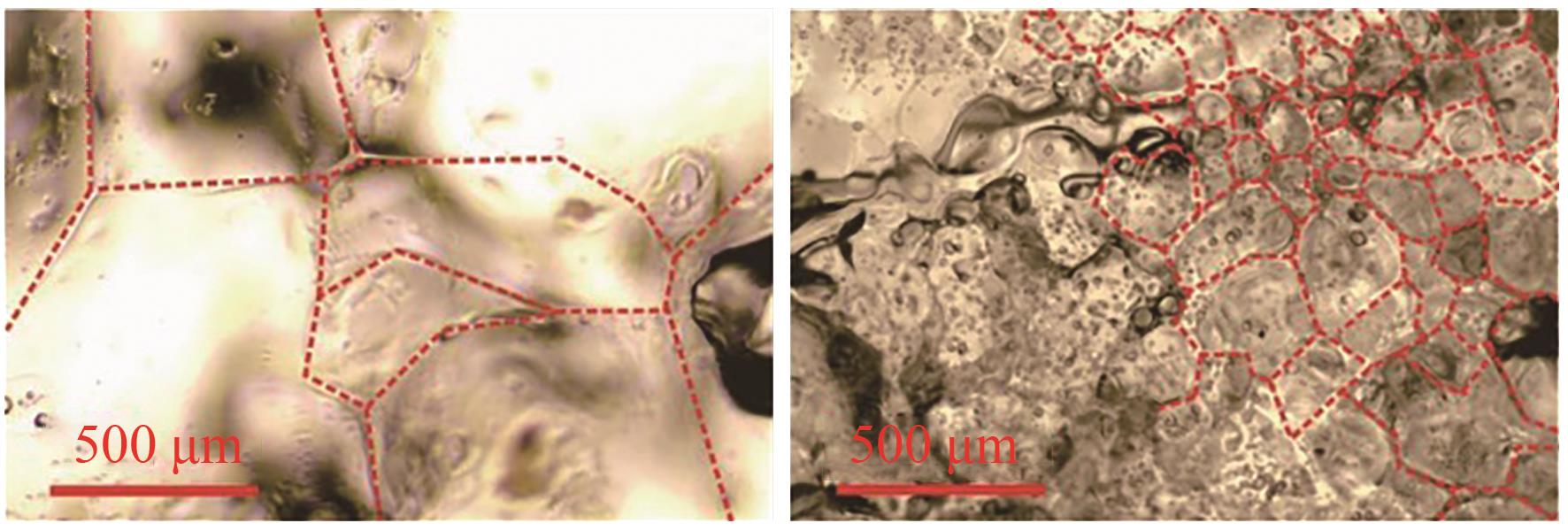
Table 3
Icing environment[22]
| 冰样本 | 风速/(m·s-1) | 温度/℃ | 水滴平均粒径/μm | 液态水含量/(g·m-3) | 结冰高度/m |
|---|---|---|---|---|---|
| a | 100 | -5.8 | 21.7 | 0.5 | 3 000 |
| b | 100 | -25.0 | 21.2 | 0.5 | 3 000 |
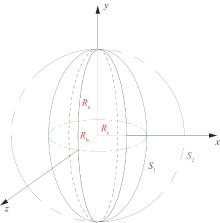
Fig.10
Diagram of sphericity
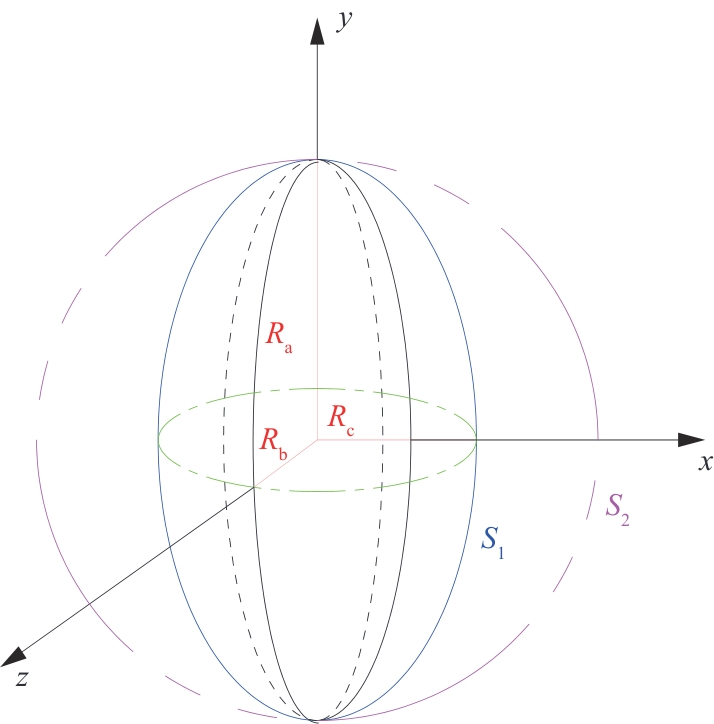
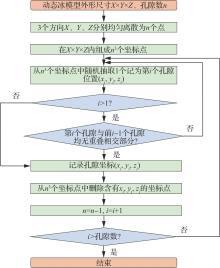
Fig.11
Pore location determination process
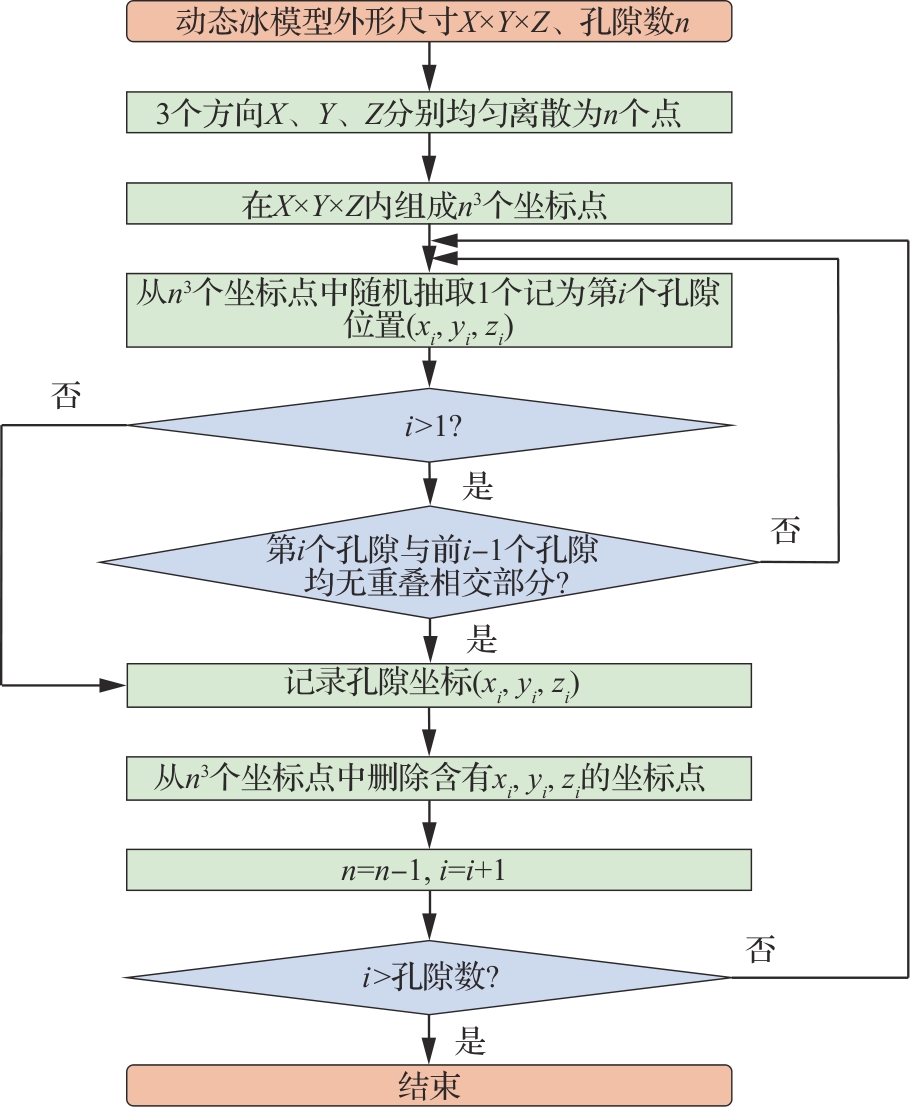
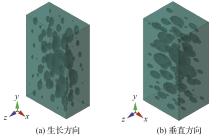
Fig.12
Finite element model of Sample c
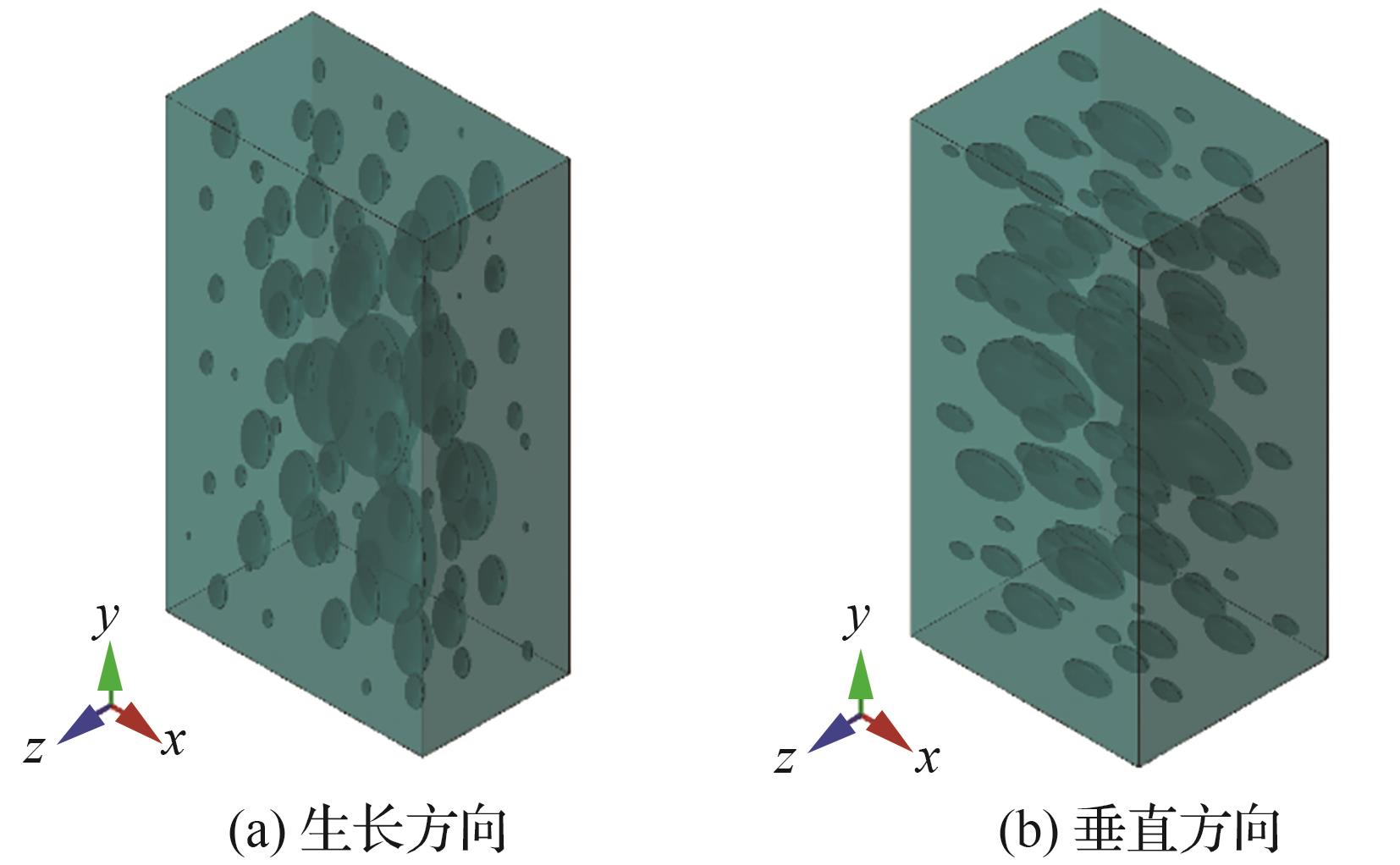
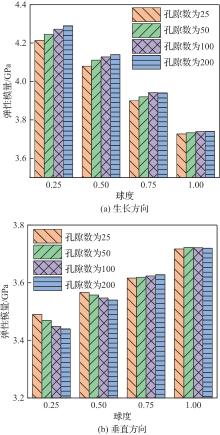
Fig.13
Effect of pore number and sphericity on elastic modulus
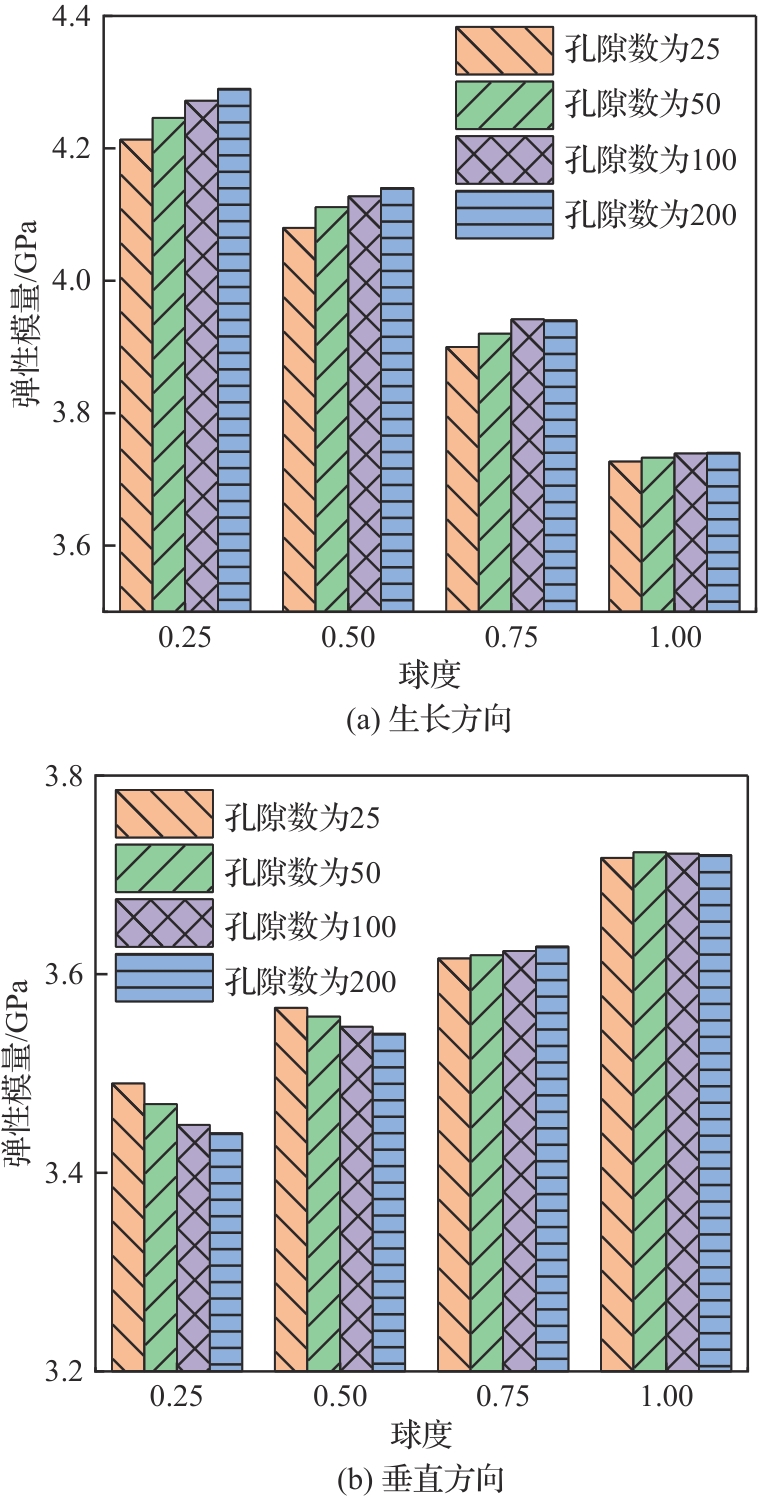
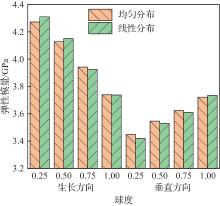
Fig.14
Effect of pore volume on elastic modulus
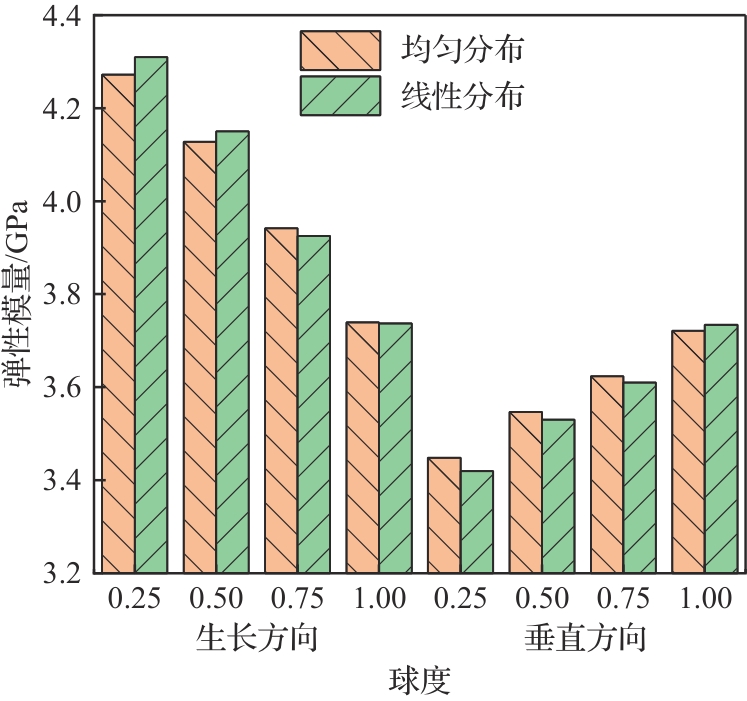
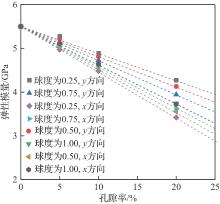
Fig.15
Effect of porosity on elastic modulus
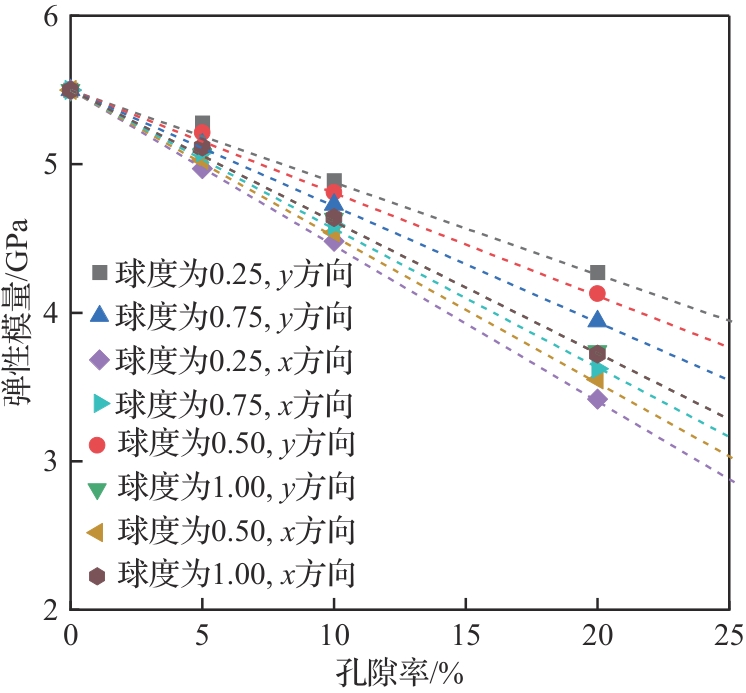
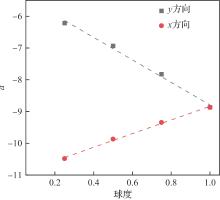
Fig.16
Relation between sphericity and coefficient a
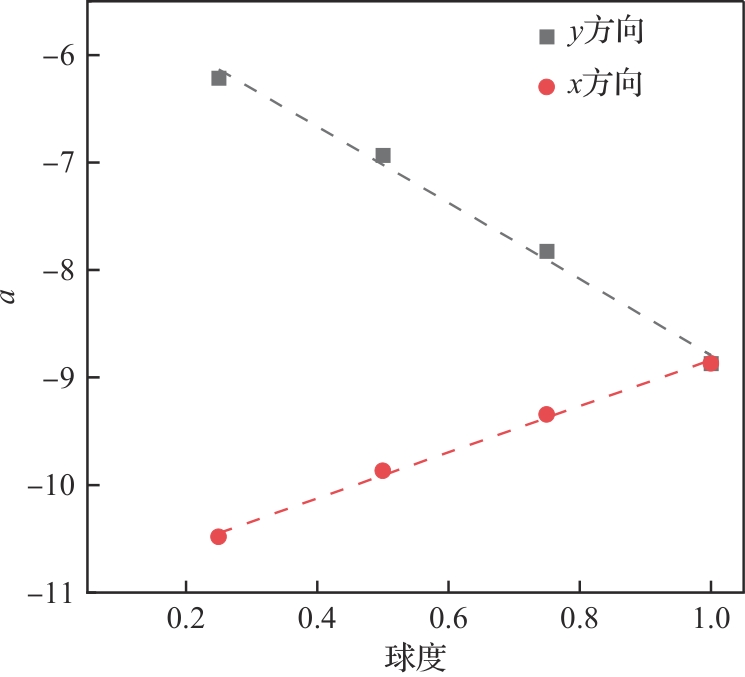
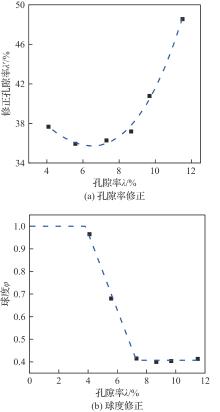
Fig.17
Pore structure modeling modification
| [1] | 李伟斌, 魏东, 杜雁霞, 等. 动态结冰微观孔隙结构定量分析[J]. 航空学报, 2018, 39(2): 121536. |
| LI W B, WEI D, DU Y X, et al. Quantitative analysis of micro porous structure of dynamic icing[J]. Acta Aeronautica et Astronautica Sinica, 2018, 39(2): 121536 (in Chinese). | |
| [2] | 李伟斌, 马洪林, 易贤, 等. 温度对动态结冰微观结构特性影响定量分析[J]. 空气动力学学报, 2019, 37(5): 748-753. |
| LI W B, MA H L, YI X, et al. Quantitative influence of temperature on micro-structure feature of dynamic ice[J]. Acta Aerodynamica Sinica, 2019, 37(5): 748-753 (in Chinese). | |
| [3] | 张晏鑫, 张鸿健, 熊建军, 等. 基于超声导波的积冰量辨识及定位方法[J]. 航空学报, 2024, 45(16): 129293. |
| ZHANG Y X, ZHANG H J, XIONG J J, et al. Ice accumulation identification and localization method based on ultrasonic guided waves[J]. Acta Aeronautica et Astronautica Sinica, 2024, 45(16): 129293 (in Chinese). | |
| [4] | 任靖豪, 王强, 陈宁立, 等. 多段翼构型结冰计算方法及结冰影响分析[J]. 航空学报, 2024, 45(14): 129328. |
| REN J H, WANG Q, CHEN N L, et al. Numerical simulation and aerodynamic performance effects of multi-element airfoil ice accretion[J]. Acta Aeronautica et Astronautica Sinica, 2024, 45(14): 129328 (in Chinese). | |
| [5] | SHEN X B, ZHAO J Y, YE Z K, et al. Influence of ice growth mode on the ice thickness and shape prediction of two-dimensional airfoil[J]. Aerospace, 2024, 11(12): 1010. |
| [6] | 程盼, 景向嵘, 罗振兵, 等. 等离子体合成射流激励器阵列破除翼前缘三维冰特性[J]. 航空学报, 2024, 45(12): 129137. |
| CHENG P, JING X R, LUO Z B, et al. Characteristics of 3D ice breaking on leading edge of wing by plasma synthetic jet actuator array[J]. Acta Aeronautica et Astronautica Sinica, 2024, 45(12): 129137 (in Chinese). | |
| [7] | REID T, BARUZZI G, ALIAGA C, et al. FENSAP-ICE: Application of unsteady CHT to de-icing simulations on a wing with inter-cycle ice formation[C]∥ AIAA Atmospheric and Space Environments Conference. Reston: AIAA, 2010. |
| [8] | ESKANDARIAN M. Ice shedding from overhead electrical lines by mechanical breaking: A ductile model for viscoplastic behaviour of atmospheric ice[D]. Chicoutimi: Universite du Quebec a Chicoutimi, 2005: 127-142. |
| [9] | SCHULSON E M, DUVAL P. Creep and fracture of ice[M]. Cambridge: Cambridge University Press, 2009:131-157. |
| [10] | PALANQUE V, VILLENEUVE E, BUDINGER M, et al. Cohesive strength and fracture toughness of atmospheric ice[J]. Cold Regions Science and Technology, 2022, 204: 103679. |
| [11] | PALANQUE V, VILLENEUVE E, BUDINGER M, et al. Experimental measurement and expression of atmospheric ice Young’s modulus according to its density[J]. Cold Regions Science and Technology, 2023, 212: 103890. |
| [12] | PALANQUE V, POTHIN J, POMMIER-BUDINGER V, et al. Piezoelectric resonant ice protection systems—Part 1/2: Prediction of power requirement for de-icing a NACA 0024 leading edge[J]. Chinese Journal of Aeronautics, 2024, 37(3): 92-103. |
| [13] | 李志军, 康建成. 北极生长的多年海冰晶体结构分析[J]. 冰川冻土, 2001, 23(4): 383-388. |
| LI Z J, KANG J C. Crystals and fabrics of an Arctic multi-year ice sample[J]. Journal of Glaciolgy and Geocryology, 2001, 23(4): 383-388 (in Chinese). | |
| [14] | MAUS S, BAHAFID S, HENDRIKS M, et al. X-ray micro-tomographic imaging and modelling of saline ice properties in concrete frost salt scaling experiments[J]. Cold Regions Science and Technology, 2023, 208: 103780. |
| [15] | FRANTZ C M, LIGHT B, FARLEY S M, et al. Physical and optical characteristics of heavily melted “rotten” Arctic sea ice[J]. The Cryosphere, 2019, 13(3): 775-793. |
| [16] | OGGIER M, EICKEN H. Seasonal evolution of granular and columnar sea ice pore microstructure and pore network connectivity[J]. Journal of Glaciology, 2022: 1-16. |
| [17] | MAUS S, SCHNEEBELI M, WIEGMANN A. An X-ray micro-tomographic study of the pore space, permeability and percolation threshold of young sea ice[J]. The Cryosphere, 2021, 15(8): 4047-4072. |
| [18] | SALOMON M L, MAUS S, PETRICH C. Microstructure evolution of young sea ice from a Svalbard fjord using micro-CT analysis[J]. Journal of Glaciology, 2022, 68(269): 571-590. |
| [19] | MAUS S. The plate spacing of sea ice[J]. Annals of Glaciology, 2020, 61(83): 408-425. |
| [20] | LI S D, LIU S W, YUAN S, et al. Reflection of acoustic wave through multilayered porous sea ice sandwiched between the water and air half-spaces[J]. Applied Sciences, 2021, 11(16): 7411. |
| [21] | ZONG Z. A Random pore model of sea ice for predicting its mechanical properties[J]. Cold Regions Science and Technology, 2022, 195: 103473. |
| [22] | LIU R D, LIU Y, WANG Q, et al. Investigation of microstructure and density of atmospheric ice formed by high-wind-speed in-cloud icing[J]. Crystals, 2023, 13(7): 1015. |
| [23] | 李伟斌, 宋超, 易贤, 等. 动态结冰孔隙结构三维建模方法[J]. 化工学报, 2020, 71(3): 1009-1017. |
| LI W B, SONG C, YI X, et al. 3-D modeling method of porous structure for dynamic icing[J]. CIESC Journal, 2020, 71(3): 1009-1017 (in Chinese). | |
| [24] | HUANG Y J, NI Z S, YI X, et al. A stochastic modeling method of non‑equal diameter pore with optimal distribution function for meso‑structure of atmospheric ice[J]. Transactions of Nanjing University of Aeronautics and Astronautics, 2023, 40(5): 555-565. |
| [25] | NIYOGI S, GUPTA B SEN. Mechanical properties and pore size distribution in athermal porous glasses[J]. Soft Matter, 2021, 17(42): 9716-9724. |
| [26] | SHIMAKI Y, ARAKAWA M. Experimental study on collisional disruption of highly porous icy bodies[J]. Icarus, 2012, 218(2): 737-750. |
| [27] | 国家质量监督检验检疫总局, 中国国家标准化管理委员会. 金属材料 延性试验 多孔状和蜂窝状金属压缩试验方法: [S]. 北京: 中国标准出版社, 2016: 5-10. |
| General Administration of Quality Supervision, Inspection and Quarantine of the People’s Republic of China, Standardization Administration of the People’s Republic of China. Metallic materials—Ductility testing—Compression test for porous and cellular metals: [S]. Beijing: Standards Press of China, 2016: 5-10 (in Chinese). | |
| [28] | 徐梓竣. 乌梁素海湖冰单轴压缩强度试验研究[D]. 大连: 大连理工大学, 2018: 46-66. |
| XU Z J. Experimental study on uniaxial compressive strength of ice in Wuliangsuhai Lake[D]. Dalian: Dalian University of Technology, 2018: 46-66 (in Chinese). | |
| [29] | BARRETTE P D, JORDAAN I J. Pressure-temperature effects on the compressive behavior of laboratory-grown and iceberg ice[J]. Cold Regions Science and Technology, 2003, 36(1-3): 25-36. |
| [30] | ZHANG Y J, QIAN Z Q, HUANG W L, et al. Effect of grain size on the uniaxial compressive strength of ice forming with different wind speeds in a cold laboratory[J]. Water, 2024, 16(14): 2049. |
| [31] | VAN SWYGENHOVEN H. Grain boundaries and dislocations[J]. Science, 2002, 296(5565): 66-67. |
| [32] | LIU Q, XIONG Z W, YANG J, et al. Deformation induced phase transition in brass under shock compression[J]. Materials Today Communications, 2023, 35: 106224. |
| [1] | Tianqi ZOU, Xiaopeng XUE, Dangjun ZHAO, Degui YANG, Buge LIANG. Influence of air permeability on inflation process and aerodynamic characteristics of disksail parachutes [J]. Acta Aeronautica et Astronautica Sinica, 2025, 46(1): 630373-630373. |
| [2] | Yunchao XIA, Jian DENG, Zengxian WANG, Qiang LIU, Tianjian LU. Mechanical behavior of aerostat envelope and constitutive modeling [J]. Acta Aeronautica et Astronautica Sinica, 2024, 45(13): 229588-229588. |
| [3] | Yu ZENG, Hongbo WANG, Mingbo SUN, Chao WANG, Xu LIU. SST turbulence model improvements: Review [J]. ACTA AERONAUTICAET ASTRONAUTICA SINICA, 2023, 44(9): 27411-027411. |
| [4] | Wenlong BAO, He JIA, Xiaopeng XUE, Xuejiao HUANG, Shuyi GAO, Wei RONG, Qi WANG, Zhuangzhi WU. Influence of ‘windows’ structure on inflation process of ringsail parachute [J]. ACTA AERONAUTICAET ASTRONAUTICA SINICA, 2023, 44(5): 226936-226936. |
| [5] | Feng ZHENG, Wei HUANG, Hongli JI, Jinhao QIU. Acoustic black hole effect of composite sheet structures [J]. ACTA AERONAUTICAET ASTRONAUTICA SINICA, 2023, 44(1): 426453-426453. |
| [6] | CHEN Haoran, LI Yong, HUAN Dajun, WANG Xin, CHU Qiyi. Quality control and mechanical properties of T700/PEEK thermoplastic prepreg for AFP [J]. ACTA AERONAUTICAET ASTRONAUTICA SINICA, 2018, 39(6): 421842-421842. |
| [7] | FAN Gang, WU Shaoqing, LI Yanbin, FEI Qingguo, HAN Xiaolin. Identification of spatial distribution of modulus field of composite material based on frequency response function [J]. ACTA AERONAUTICAET ASTRONAUTICA SINICA, 2017, 38(8): 221024-221024. |
| [8] | YANG Xin, HONG Jie, MA Yanhong, ZHANG Dayi. Test investigation on vibration control of intelligent beam with shape memory alloy [J]. ACTA AERONAUTICAET ASTRONAUTICA SINICA, 2015, 36(7): 2251-2259. |
| [9] | CHENG Wenjie, ZHOU Li, ZHANG Ping, QIU Tao. Design and analysis of a zero Poisson's ratio mixed cruciform honeycomb and its application in flexible skin [J]. ACTA AERONAUTICAET ASTRONAUTICA SINICA, 2015, 36(2): 680-690. |
| [10] | CHEN Lei, WEN Weidong, CUI Haitao. Measurement and Analysis of Yield Locus of Superalloy IC10 Under Biaxial Tension [J]. ACTA AERONAUTICAET ASTRONAUTICA SINICA, 2012, 33(1): 77-84. |
| [11] | CHANG Shinan;SU Xinming;QIU Yifen. Ice Accretion Simulation on Three Dimensional Wings [J]. ACTA AERONAUTICAET ASTRONAUTICA SINICA, 2011, 32(2): 212-222. |
| [12] | Lu Zixing;Huang Jixiang;Chen Xin. Elastic Properties of Anisotropic Kelvin Model for Open-cell Foams [J]. ACTA AERONAUTICAET ASTRONAUTICA SINICA, 2009, 30(6): 1017-1022. |
| [13] | An Yi;Xiong Ke;Gu Na. Experimental Research on IPMC Material Tensile Samples [J]. ACTA AERONAUTICAET ASTRONAUTICA SINICA, 2009, 30(5): 966-971. |
| [14] | Shen Yifu;Wu;Peng Gu;Dongdong;Li Yufang. Micropore Structures of Lotustype Porous 316 Stainless Steel Prepared by Laser Sintering [J]. ACTA AERONAUTICAET ASTRONAUTICA SINICA, 2007, 28(5): 1236-1241. |
| [15] | ZHENG Tian-liang;ZHANG hua;WANG Xuan;WANG Yue-hong;ZHANG Zhang. Research on the Photoaging of Acrylic Polyurethane Coatings Using Electrochemical Impedance Spectroscopy [J]. ACTA AERONAUTICAET ASTRONAUTICA SINICA, 2007, 28(3): 714-718. |
| Viewed | ||||||
|
Full text |
|
|||||
|
Abstract |
|
|||||
Address: No.238, Baiyan Buiding, Beisihuan Zhonglu Road, Haidian District, Beijing, China
Postal code : 100083
E-mail:hkxb@buaa.edu.cn
Total visits: 6658907 Today visits: 1341All copyright © editorial office of Chinese Journal of Aeronautics
All copyright © editorial office of Chinese Journal of Aeronautics
Total visits: 6658907 Today visits: 1341

 CJA
CJA
