Acta Aeronautica et Astronautica Sinica ›› 2025, Vol. 46 ›› Issue (14): 231473.doi: 10.7527/S1000-6893.2025.31473
• Solid Mechanics and Vehicle Conceptual Design • Previous Articles
Guohao SUI, Yahui ZHANG( )
)
Received:2024-10-31
Revised:2024-11-15
Accepted:2025-01-13
Online:2025-01-16
Published:2025-01-16
Contact:
Yahui ZHANG
E-mail:zhangyh@dlut.edu.cn
Supported by:CLC Number:
Guohao SUI, Yahui ZHANG. Response spectrum method for random fatigue assessment and its engineering applications[J]. Acta Aeronautica et Astronautica Sinica, 2025, 46(14): 231473.
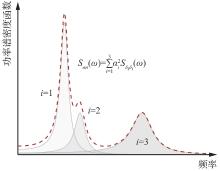
Fig.1
Schematic diagram of PSD decomposition based on modal response contribution
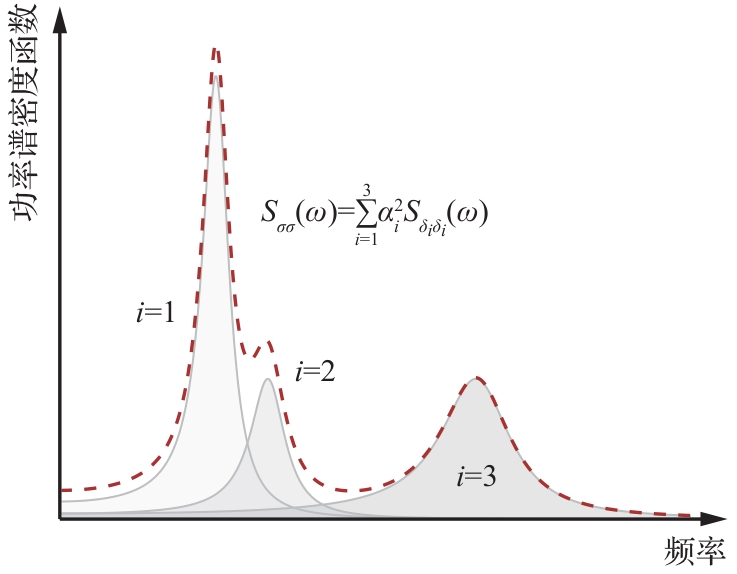
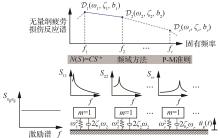
Fig.2
Establishment and physical explanation of dimensionless fatigue damage response spectrum
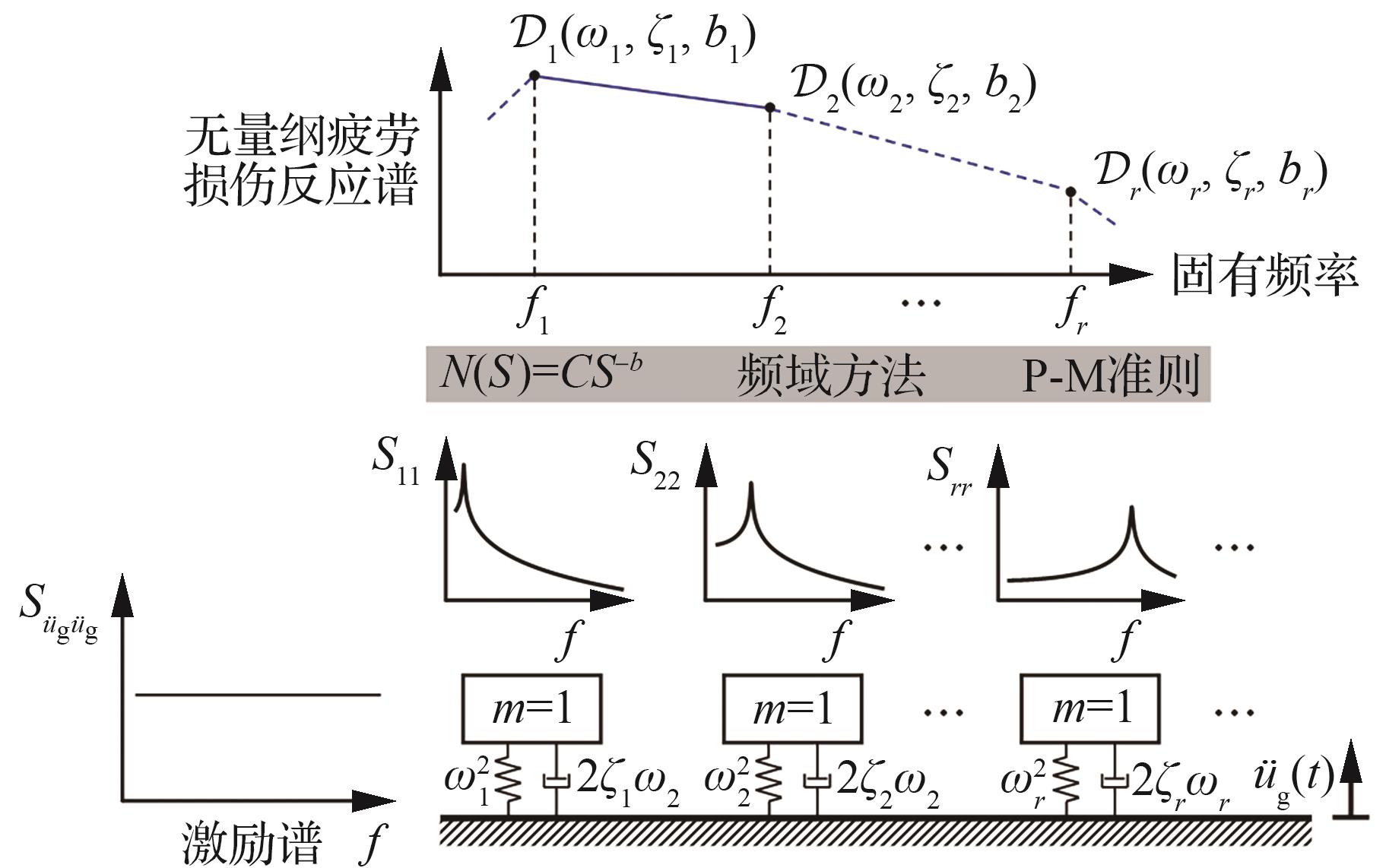
Fig.3
Flow chart of the fatigue response spectrum method
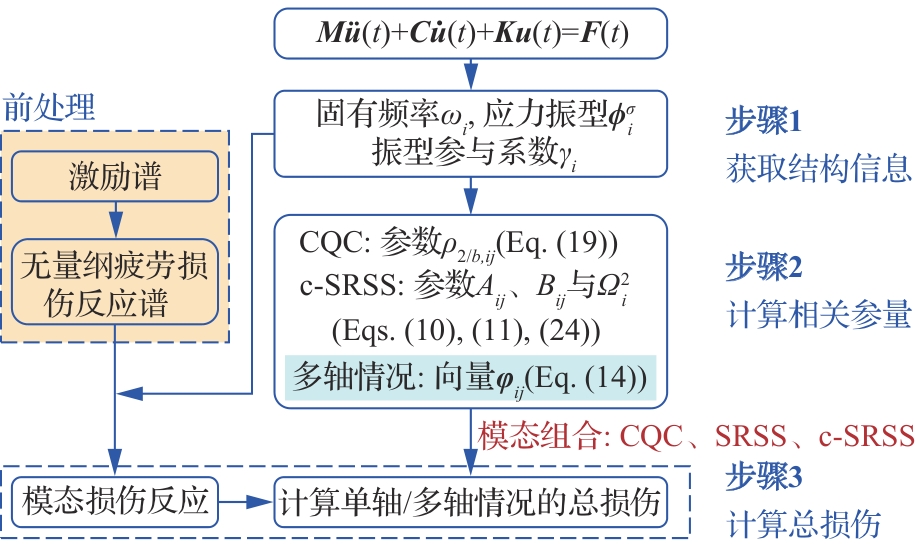
Fig.4
FE meshes of beam-like structure
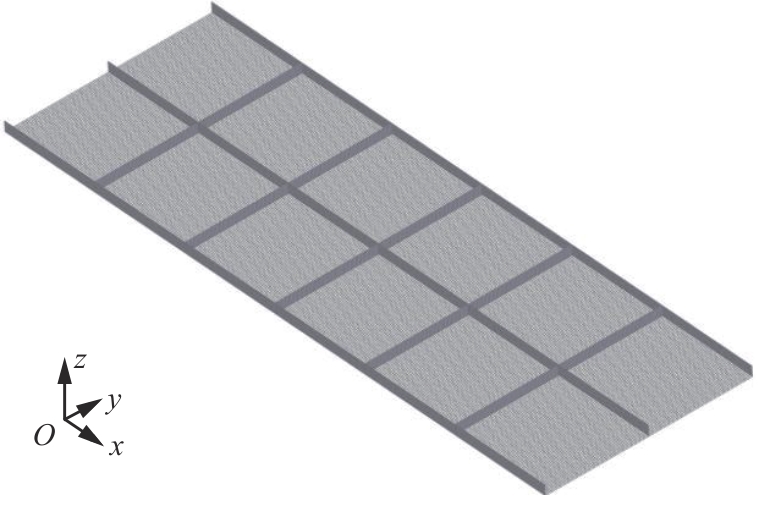
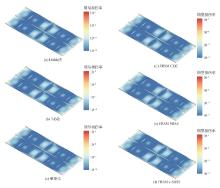
Fig.5
Expected damage rate contour of vibration fatigue
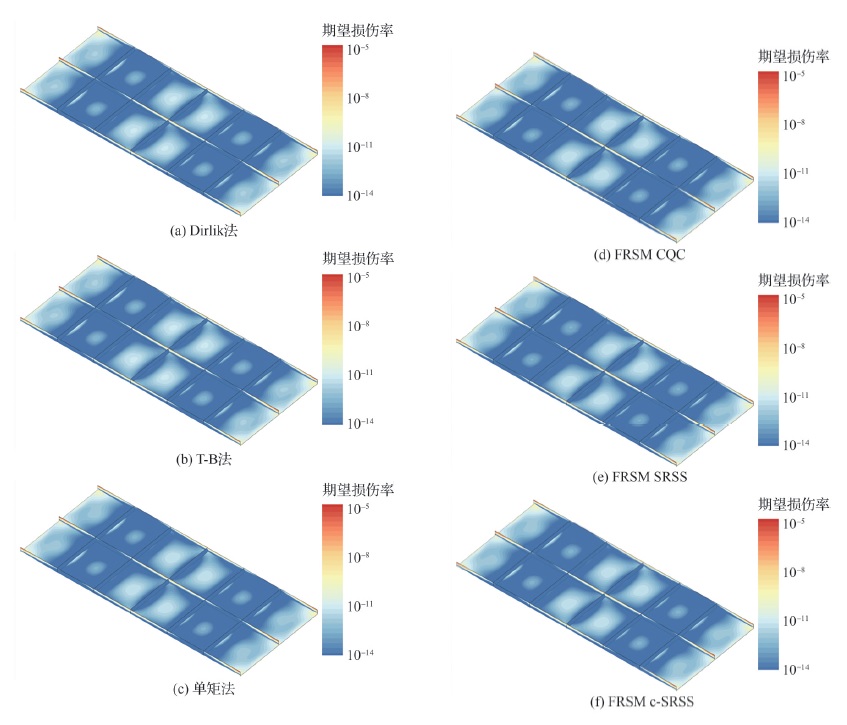
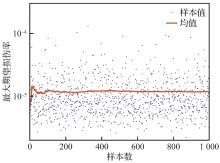
Fig.6
Convergence analysis of rainflow method with in vibration fatigue assessment
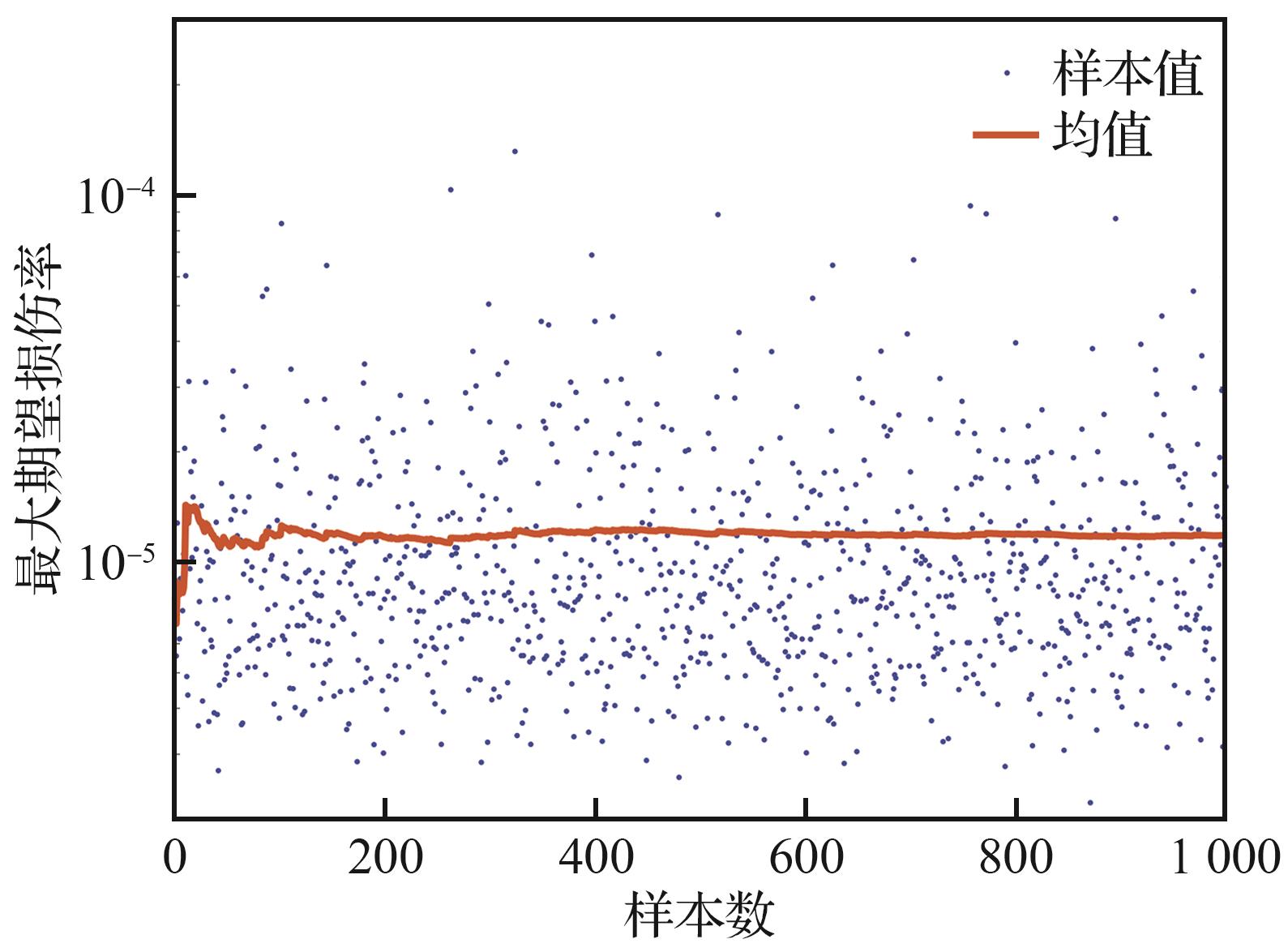

Table 1
Comparison of the maximum expected damage rates for vibration fatigue using different methods
| 方法 | 最大期望损伤率/10-5 | 相对误差/% |
|---|---|---|
| RFC法 | 1.198 | |
| Dirlik法 | 1.265 | 5.59 |
| T-B法 | 1.297 | 8.26 |
| 单矩法 | 1.198 | 0.00 |
| FRSM CQC | 1.198 | 0.00 |
| FRSM SRSS | 1.193 | -0.42 |
| FRSM c-SRSS | 1.198 | 0.00 |
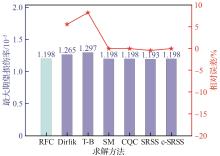
Fig.7
Comparison between frequency domain methods and rainflow method in vibration fatigue assessment
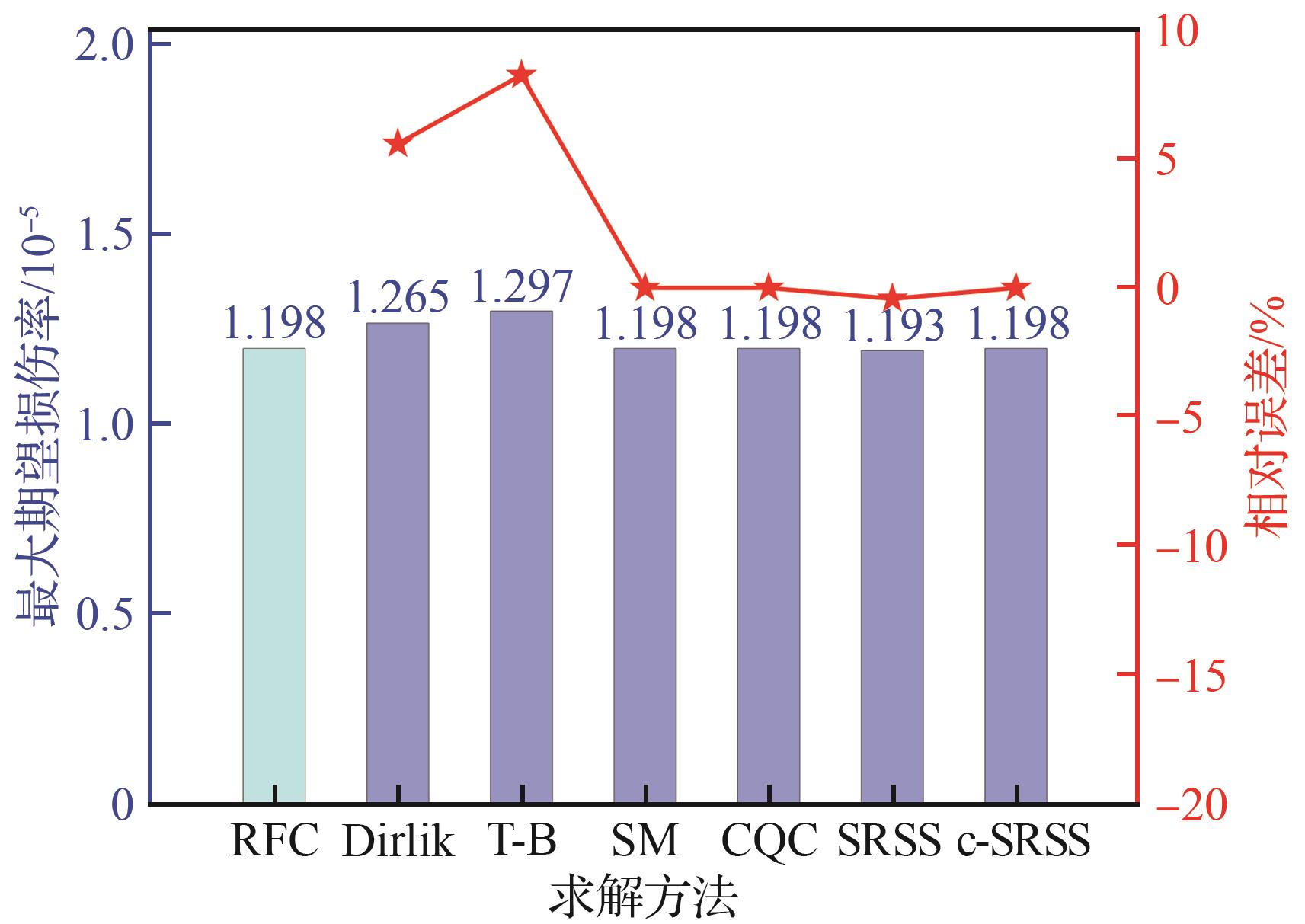
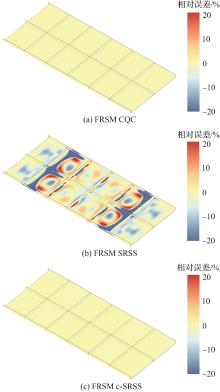
Fig.8
Relative error contour of three formats of fatigue response spectrum method
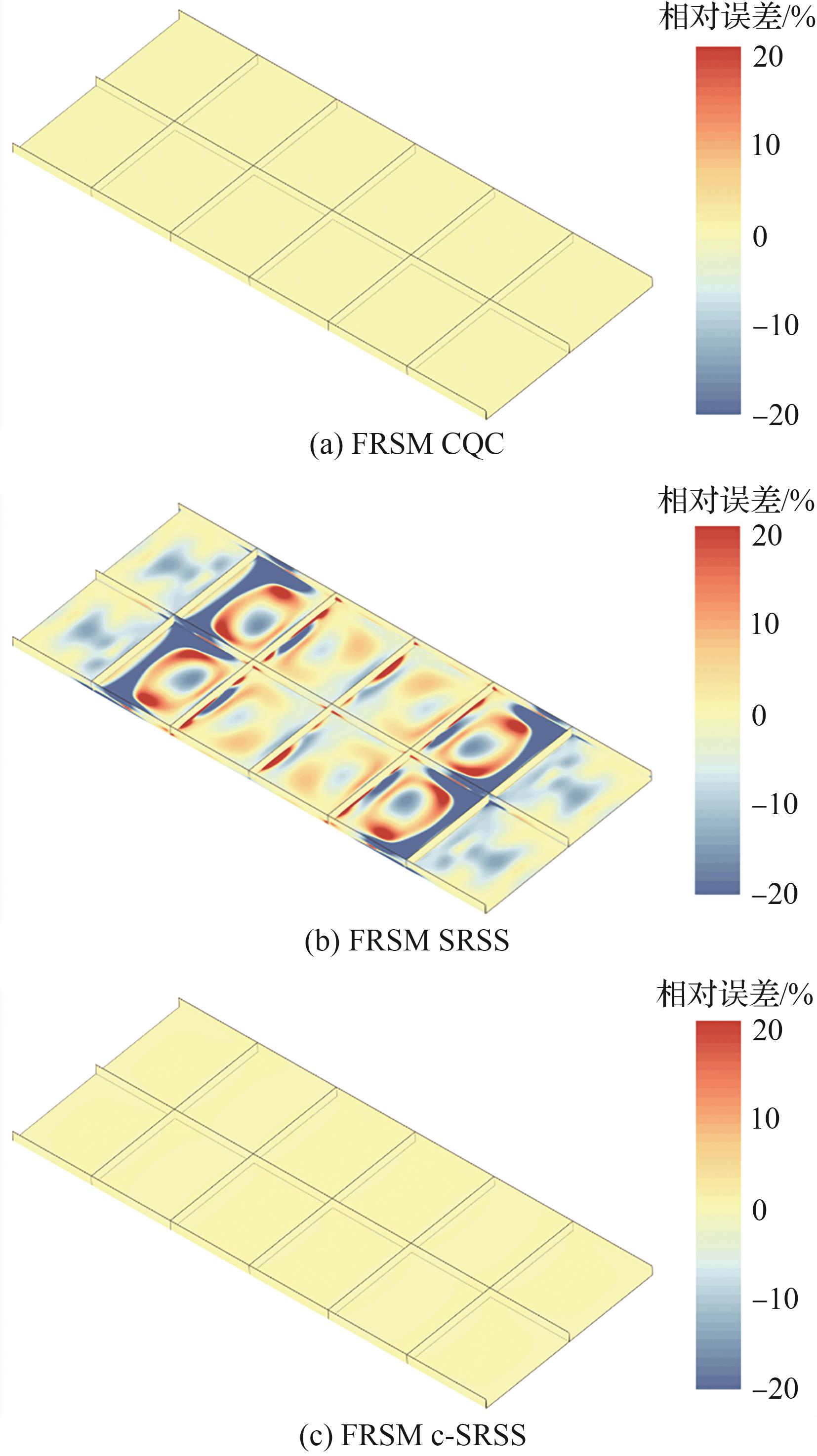
Table 2
Comparison of computational time using different methods
| 方法 | 计算耗时 /s |
|---|---|
| Dirlik法 | 3 307.19 |
| T-B法 | 3 243.98 |
| 单矩法 | 3 178.55 |
| FRSM CQC | 31.92 |
| FRSM SRSS | 0.06 |
| FRSM c-SRSS | 6.78 |
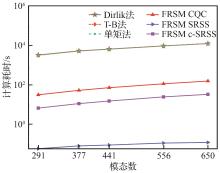
Fig.9
Variation of computation time with the number of mode truncation for each method
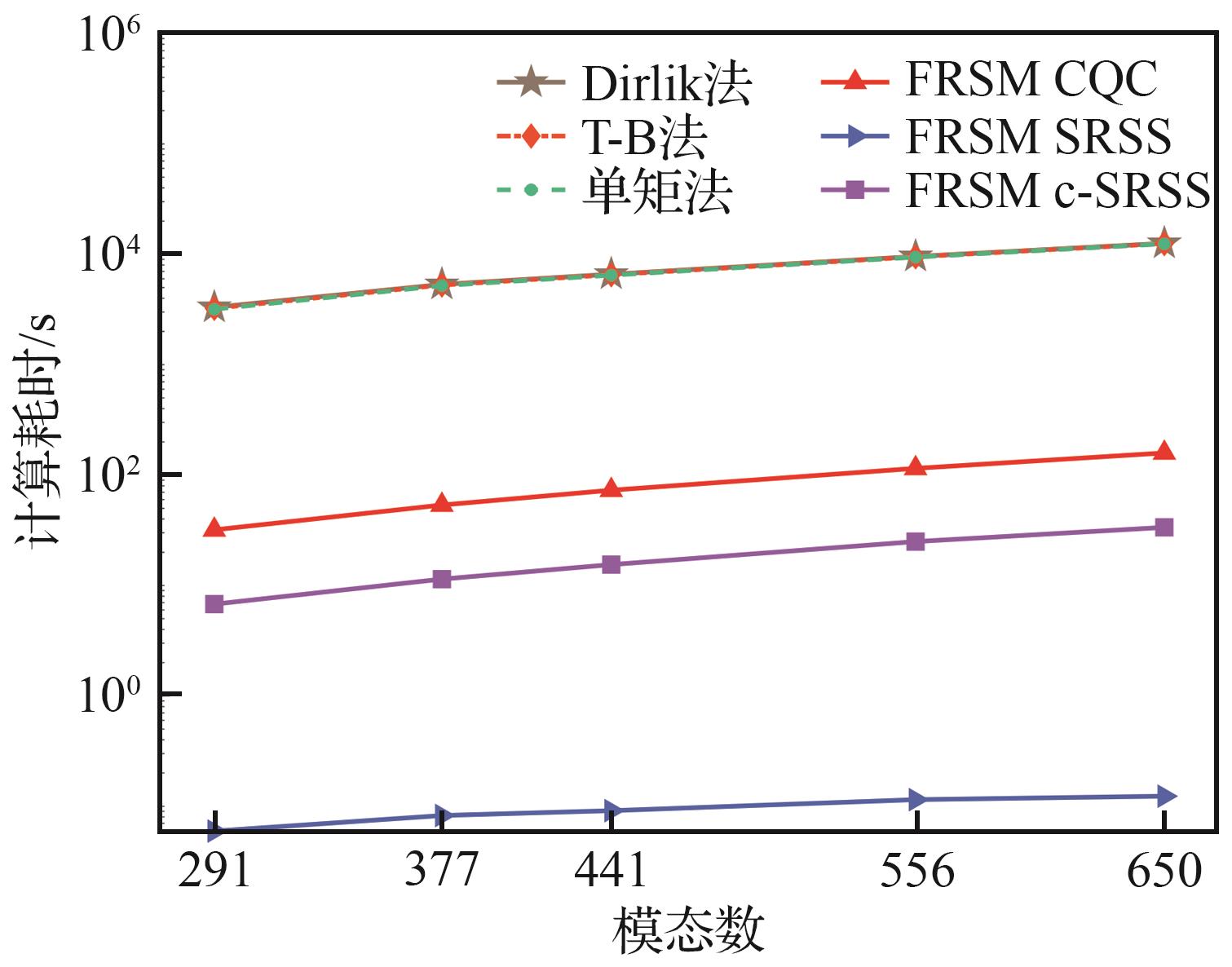
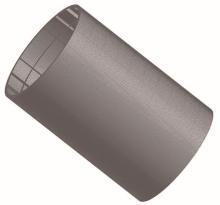
Fig.10
FE meshes of reinforced column shell
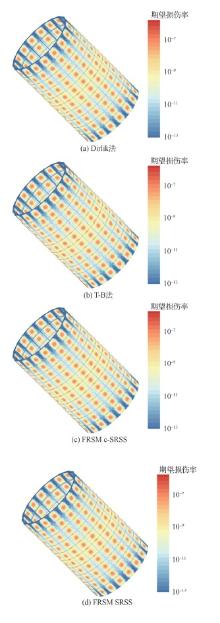
Fig.11
Expected damage rate contour of acoustic fatigue
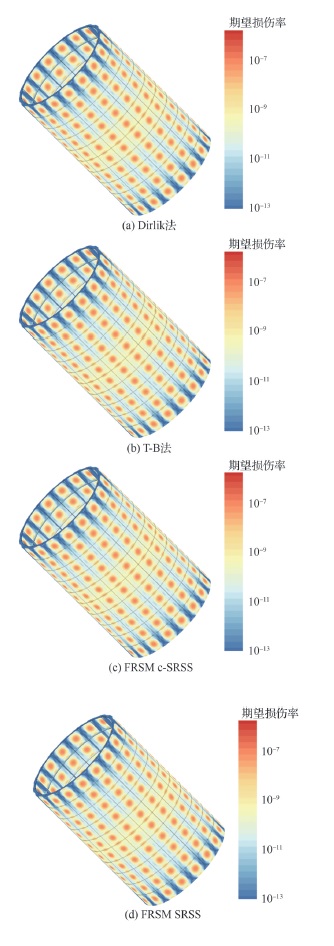
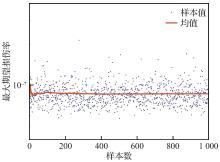
Fig.12
Convergence analysis of rainflow method with in acoustic fatigue assessment
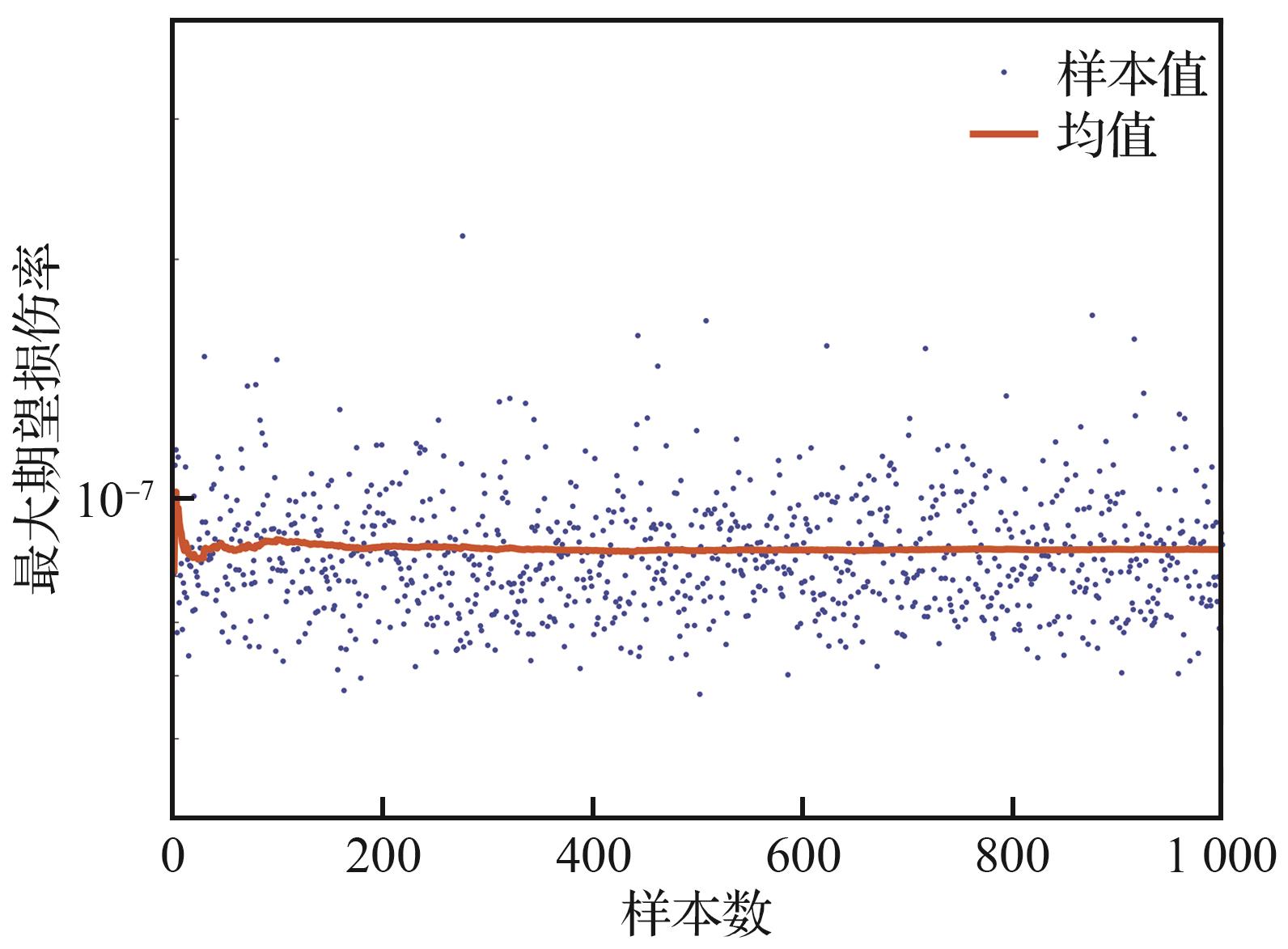
Table 3
Comparison of the maximum expected damage rate for acoustic fatigue using different methods
| 方法 | 最大期望损伤率/10-8 | 相对误差/% |
|---|---|---|
| RFC法 | 8.640 | |
| Dirlik法 | 9.030 | 4.51 |
| T-B法 | 9.022 | 4.42 |
| 单矩法 | 9.038 | 4.61 |
| FRSM CQC | 9.038 | 4.61 |
| FRSM SRSS | 9.085 | 5.15 |
| FRSM c-SRSS | 9.038 | 4.61 |
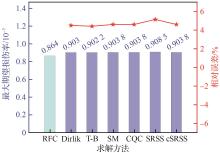
Fig.13
Comparison between frequency domain methods and rainflow method in acoustic fatigue assessment
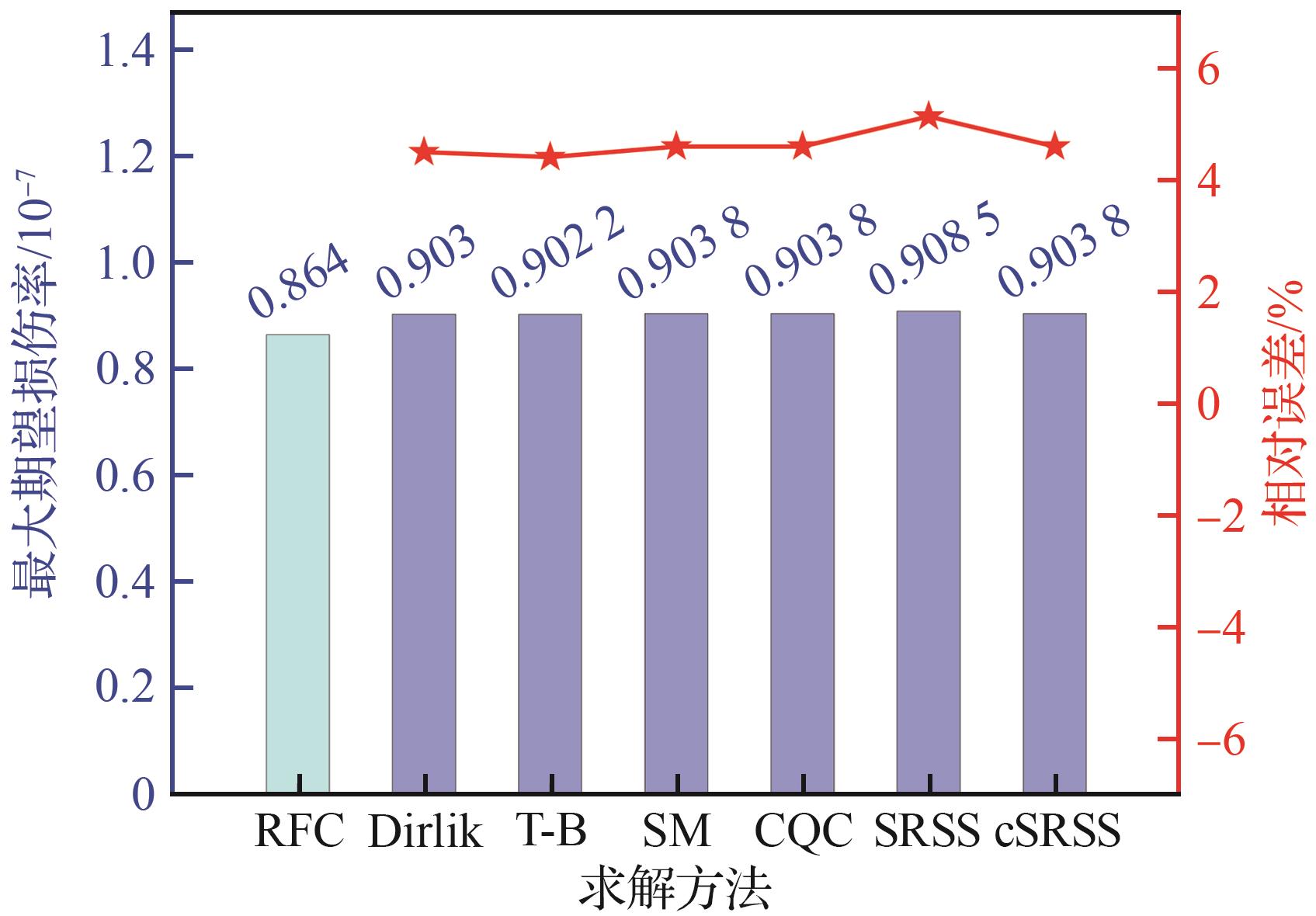
Table 4
Comparison of the computational time using different methods
| 方法 | 计算耗时 /s | ||
|---|---|---|---|
| 计算PSD | 疲劳寿命评估 | 总时间 | |
| Dirlik法 | 4 525.38 | 202.20 | 4 727.58 |
| T-B法 | 172.52 | 4 697.90 | |
| 单矩法 | 74.74 | 4 600.12 | |
| FRSM CQC | 126.36 | 126.36 | |
| FRSM SRSS | 1.32 | 1.32 | |
| FRSM c-SRSS | 45.45 | 45.45 | |
| [1] | 顾孟奇, 朱家才, 郭万林, 等. 可重复使用运载火箭结构疲劳耐久性与可靠性展望[J]. 航空学报, 2023, 44(23): 628299. |
| GU M Q, ZHU J C, GUO W L, et al. Prospects for fatigue durability and reliability of reusable launch vehicle structures[J]. Acta Aeronautica et Astronautica Sinica, 2023, 44(23): 628299 (in Chinese). | |
| [2] | ZHAO B F, XIE L Y, SONG J X, et al. Fatigue life prediction of aero-engine compressor disk based on a new stress field intensity approach[J]. International Journal of Mechanical Sciences, 2020, 165: 105190. |
| [3] | KIM H J, JANG B S, KIM J D. Fatigue-damage prediction for ship and offshore structures under wide-banded non-Gaussian random loadings partⅠ: Approximation of cycle distribution in wide-banded Gaussian random processes[J]. Applied Ocean Research, 2020, 101: 102294. |
| [4] | 姚卫星. 结构疲劳寿命分析[M]. 北京: 科学出版社, 2019. |
| YAO W X. Fatigue life estimation of structures[M]. Beijing: Science Press, 2019 (in Chinese). | |
| [5] | ZORMAN A, SLAVIČ J, BOLTEŽAR M. Vibration fatigue by spectral methods: A review with open-source support[J]. Mechanical Systems and Signal Processing, 2023, 190: 110149. |
| [6] | MINER M A. Cumulative damage in fatigue[J]. Journal of Applied Mechanics, 1945, 12(3): A159-A164. |
| [7] | BENDAT J S. Probability functions for random responses: Prediction of peaks, fatigue damage, and catastrophic failures: NASA-CR-33[R]. Washington, D.C.:NACA, 1964. |
| [8] | LUTES L D, LARSEN C E. Improved spectral method for variable amplitude fatigue prediction[J]. Journal of Structural Engineering, 1990, 116(4): 1149-1164. |
| [9] | LARSEN C E, LUTES L D. Predicting the fatigue life of offshore structures by the single-moment spectral method[J]. Probabilistic Engineering Mechanics, 1991, 6(2): 96-108. |
| [10] | DIRLIK T. Application of computers in fatigue analysis[D]. Coventry: University of Warwick, 1985. |
| [11] | TOVO R. Cycle distribution and fatigue damage under broad-band random loading[J]. International Journal of Fatigue, 2002, 24(11): 1137-1147. |
| [12] | BENASCIUTTI D, TOVO R. Spectral methods for lifetime prediction under wide-band stationary random processes[J]. International Journal of Fatigue, 2005, 27(8): 867-877. |
| [13] | 郑向远, 高山, 李炜. 一种新的高斯多模态随机疲劳损伤频域分析方法[J]. 哈尔滨工业大学学报, 2020, 52(10): 85-93. |
| ZHENG X Y, GAO S, LI W. A new frequency-domain method for analysis of Gaussian multi-modal random fatigue damage[J]. Journal of Harbin Institute of Technology, 2020, 52(10): 85-93 (in Chinese). | |
| [14] | 袁奎霖, 靳宏义. 一种新的高斯双模态随机疲劳损伤分析方法[J]. 哈尔滨工业大学学报, 2023, 55(8): 135-142. |
| YUAN K L, JIN H Y. Development of a new frequency-domain method for fatigue damage assessment in bimodal Gaussian random processes[J]. Journal of Harbin Institute of Technology, 2023, 55(8): 135-142 (in Chinese). | |
| [15] | 周敏亮, 陈忠明, 邓吉宏, 等. 飞机结构振动疲劳寿命频域预估方法研究[J]. 飞机设计, 2017, 37(3): 25-30. |
| ZHOU M L, CHEN Z M, DENG J H, et al. Research on vibration fatigue life frequency-domain estimation method of aircraft structure[J]. Aircraft Design, 2017, 37(3): 25-30 (in Chinese). | |
| [16] | MARTINEZ-PUENTE E, ZARKETA-ASTIGARRAGA A, MARTINEZ-AGIRRE M, et al. Benchmarking of spectral methods for fatigue assessment of mooring systems and dynamic cables in offshore renewable energy technologies[J]. Ocean Engineering, 2024, 308: 118311. |
| [17] | 许卓, 徐鹤松, 李晖, 等. 基础随机激励下纤维增强复合薄板振动疲劳寿命预报[J]. 航空动力学报, 2023, 38(1): 47-54. |
| XU Z, XU H S, LI H, et al. Vibration fatigue life prediction of fiber reinforced composite thin plate under basic random excitation[J]. Journal of Aerospace Power, 2023, 38(1): 47-54 (in Chinese). | |
| [18] | 赵旭升, 陈果, 张旭, 等. 装配应力对飞机管道随机疲劳寿命的影响分析与试验验证[J]. 机械强度, 2024, 46(1): 208-215. |
| ZHAO X S, CHEN G, ZHANG X, et al. Analysis and experimental verification of the effect of assembly stress on the random fatigue life of aircraft pipeline[J]. Journal of Mechanical Strength, 2024, 46(1): 208-215 (in Chinese). | |
| [19] | 李孔娟, 陈海波. 加筋板中频声振疲劳分析方法研究[J]. 空天技术, 2023, (2): 75-83+96. |
| LI K J, CHEN H B. A mid-frequency vibro-acoustic fatigue analysis method for stiffened panels[J]. Aerospace Technology, 2023, (2): 75-83+96 (in Chinese). | |
| [20] | 牟彬杰, 蒋劲松, 杨堃, 等. 战斗机进气道结构声疲劳设计方法[J]. 航空学报, 2024, 45(14): 229603. |
| MOU B J, JIANG J S, YANG K, et al. Acoustic fatigue design method for fighter inlet structure[J]. Acta Aeronautica et Astronautica Sinica, 2024, 45(14): 229603 (in Chinese). | |
| [21] | BRACCESI C, CIANETTI F, TOMASSINI L. An innovative modal approach for frequency domain stress recovery and fatigue damage evaluation[J]. International Journal of Fatigue, 2016, 91: 382-396. |
| [22] | BRACCESI C, CIANETTI F, TOMASSINI L. Fast evaluation of stress state spectral moments[J]. International Journal of Mechanical Sciences, 2017, 127: 4-9. |
| [23] | MRŠNIK M, SLAVIČ J, BOLTEŽAR M. Vibration fatigue using modal decomposition[J]. Mechanical Systems and Signal Processing, 2018, 98: 548-556. |
| [24] | DER KIUREGHIAN A. Structural response to stationary excitation[J]. Journal of the Engineering Mechanics Division, 1980, 106(6): 1195-1213. |
| [25] | DER KIUREGHIAN A, NAKAMURA Y. CQC modal combination rule for high-frequency modes[J]. Earthquake Engineering & Structural Dynamics, 1993, 22(11): 943-956. |
| [26] | SUI G H, ZHANG Y H. Response spectrum method for fatigue damage assessment of mechanical systems[J]. International Journal of Fatigue, 2023, 166: 107278. |
| [27] | SUI G H, JIN X Y, CUI H Y, et al. Improvement and test verification of the fatigue response spectrum method[J]. Mechanical Systems and Signal Processing, 2024, 217: 111519. |
| [28] | SUI G H, ZHANG Y H. A complete SRSS format for the response spectrum method of high-cycle fatigue life assessment considering modal truncation error correction[J]. International Journal of Fatigue, 2023, 175: 107834. |
| [29] | YANG Y B, SUI G H, ZHANG Y H. Response spectrum method for fatigue damage assessment of aero-hydraulic pipeline systems[J]. Computers & Structures, 2023, 287: 107119. |
| [30] | COOK R D, MALKUS D S, PLESHA M E, et al. Concepts and applications of finite element analysis (5th ed)[M]. New York: Wiley, 2002. |
| [31] | HEREDIA-ZAVONI E. The complete SRSS modal combination rule[J]. Earthquake Engineering & Structural Dynamics, 2011, 40(11): 1181-1196. |
| [32] | HEREDIA-ZAVONI E, SANTA-CRUZ S, SILVA-GONZÁLEZ F L. Modal response analysis of multi-support structures using a random vibration approach[J]. Earthquake Engineering & Structural Dynamics, 2015, 44(13): 2241-2260. |
| [33] | PREUMONT A, PIEFORT V. Predicting random high-cycle fatigue life with finite elements[J]. ASME Journal of Vibration Acoustics, 1994, 116(2): 245-248. |
| [34] | WIJKER J. Miles’equation in random vibrations[M]. Cham: Springer International Publishing, 2018. |
| [35] | BENASCIUTTI D, CRISTOFORI A, TOVO R. Analogies between spectral methods and multiaxial criteria in fatigue damage evaluation[J]. Probabilistic Engineering Mechanics, 2013, 31: 39-45. |
| [36] | CRISTOFORI A, BENASCIUTTI D, TOVO R. A stress invariant based spectral method to estimate fatigue life under multiaxial random loading[J]. International Journal of Fatigue, 2011, 33(7): 887-899. |
| [37] | BRACCESI C, CIANETTI F, TOMASSINI L. Random fatigue: A new frequency domain criterion for the damage evaluation of mechanical components[J]. International Journal of Fatigue, 2015, 70: 417-427. |
| [38] | BENASCIUTTI D, BRACCESI C, CIANETTI F, et al. Fatigue damage assessment in wide-band uniaxial random loadings by PSD decomposition: Outcomes from recent research[J]. International Journal of Fatigue, 2016, 91: 248-250. |
| [39] | Federal Aviation Administration. Metallic materials properties development and standardization [S]. Washington,D.C.: FAA, 2016. |
| [1] | Jinming LIU, Xing TAN, Weiting CHEN, Huan HE. Fast algorithm for non-Gaussian stochastic processes based on translation processes [J]. Acta Aeronautica et Astronautica Sinica, 2024, 45(18): 229923-229923. |
| [2] | Hui LI, Jianfei GU, Jinan LI, Zhanbin SUN, Kaihua SUN, Xiaochuan LIU, Xin WANG, Bingjie ZHANG, Xiangping WANG, Hui MA. Dynamics modeling and validation of L-shaped pipeline in aero-engine under multi-source excitations [J]. Acta Aeronautica et Astronautica Sinica, 2024, 45(12): 229375-229375. |
| [3] | Yi MA, Xudong HE, Huaihai CHEN, Ronghui ZHENG. Non-Gaussian random vibration testing of MIMO narrowband on broadband [J]. ACTA AERONAUTICAET ASTRONAUTICA SINICA, 2023, 44(8): 227475-227475. |
| [4] | QU Shaoqi, SUN Yingchao, WU Henggui, LI Yanping, ZHANG Wei. Analysis of vibration fracture of radial connection bolt of aircraft [J]. ACTA AERONAUTICAET ASTRONAUTICA SINICA, 2021, 42(5): 524431-524431. |
| [5] | MU Tong, MENG Ge, XIE Liyang, ZHANG Jianbo, SHI Chaocheng. Accelerated random fatigue test design based on stress distribution model [J]. ACTA AERONAUTICAET ASTRONAUTICA SINICA, 2020, 41(2): 223229-223229. |
| [6] | ZHENG Wei, CHEN Huaihai. Inverse multi-step prediction model method for MIMO random vibration test control [J]. ACTA AERONAUTICAET ASTRONAUTICA SINICA, 2020, 41(2): 223000-223000. |
| [7] | MENG Han, HUANG Hai, HUANG Zhou. Multi-degree-of-freedom non-Gaussian random vibration control [J]. ACTA AERONAUTICAET ASTRONAUTICA SINICA, 2017, 38(2): 220458-220465. |
| [8] | Lu Qifeng;Zhang Weihong;Zhang Qiao;Zhu Jihong. Layout Design Optimization of Component Structure with Random Vibration Response [J]. ACTA AERONAUTICAET ASTRONAUTICA SINICA, 2010, 31(9): 1769-1775. |
| [9] | He Ruijun;Wang Huaming. HCF Properties of Laser Deposited Ti-6Al-2Zr-Mo-V Alloy [J]. ACTA AERONAUTICAET ASTRONAUTICA SINICA, 2010, 31(7): 1488-1493. |
| [10] | Wang Mingzhu;Yao Weixing. Rainflow Amplitude Distribution of Bi-modal Stress Power Spectral Density [J]. ACTA AERONAUTICAET ASTRONAUTICA SINICA, 2009, 30(9): 1666-1671. |
| [11] | FENG Zhi-qiang;YAN Chu-liang;ZHANG Shu-ming. Data Processing and Compilation of Vibration Environmental Spectrum for Aircraft Airborne Equipment [J]. ACTA AERONAUTICAET ASTRONAUTICA SINICA, 2006, 27(2): 289-293. |
| [12] | HE Xu-dong;CHEN Huai-hai. Generating the Driving Signals for Random Vibration Test by FIR Filter [J]. ACTA AERONAUTICAET ASTRONAUTICA SINICA, 2003, 24(3): 220-222. |
| [13] | HAN Jun;CHEN Huai-hai;XU Feng;BAO Ming. Method Based on Genetic Algorithm for Multi-Shaker Random Vibration Control [J]. ACTA AERONAUTICAET ASTRONAUTICA SINICA, 2003, 24(1): 39-41. |
| Viewed | ||||||
|
Full text |
|
|||||
|
Abstract |
|
|||||
Address: No.238, Baiyan Buiding, Beisihuan Zhonglu Road, Haidian District, Beijing, China
Postal code : 100083
E-mail:hkxb@buaa.edu.cn
Total visits: 6658907 Today visits: 1341All copyright © editorial office of Chinese Journal of Aeronautics
All copyright © editorial office of Chinese Journal of Aeronautics
Total visits: 6658907 Today visits: 1341

 CJA
CJA
