Acta Aeronautica et Astronautica Sinica ›› 2026, Vol. 47 ›› Issue (17): 333200.doi: 10.7527/S1000-6893.2026.33200
• Electronics and Electrical Engineering and Control • Previous Articles
Jiang BIAN, Tianchang NIE( ), Yuhua LI, Zhenhua ZHANG, Chaomeng GUO
Received:2025-12-05
Revised:2026-01-05
Accepted:2026-03-03
Online:2026-03-24
Published:2026-03-23
Contact:
Tianchang NIE
E-mail:nie_tianchang@163.com
Supported by:CLC Number:
Jiang BIAN, Tianchang NIE, Yuhua LI, Zhenhua ZHANG, Chaomeng GUO. High-speed safe formation transformation of UAVs formation through narrow corridors[J]. Acta Aeronautica et Astronautica Sinica, 2026, 47(17): 333200.
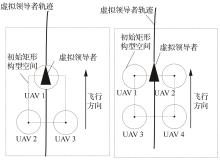
Fig.1
Schematic diagram of virtual leader and reference trajectory
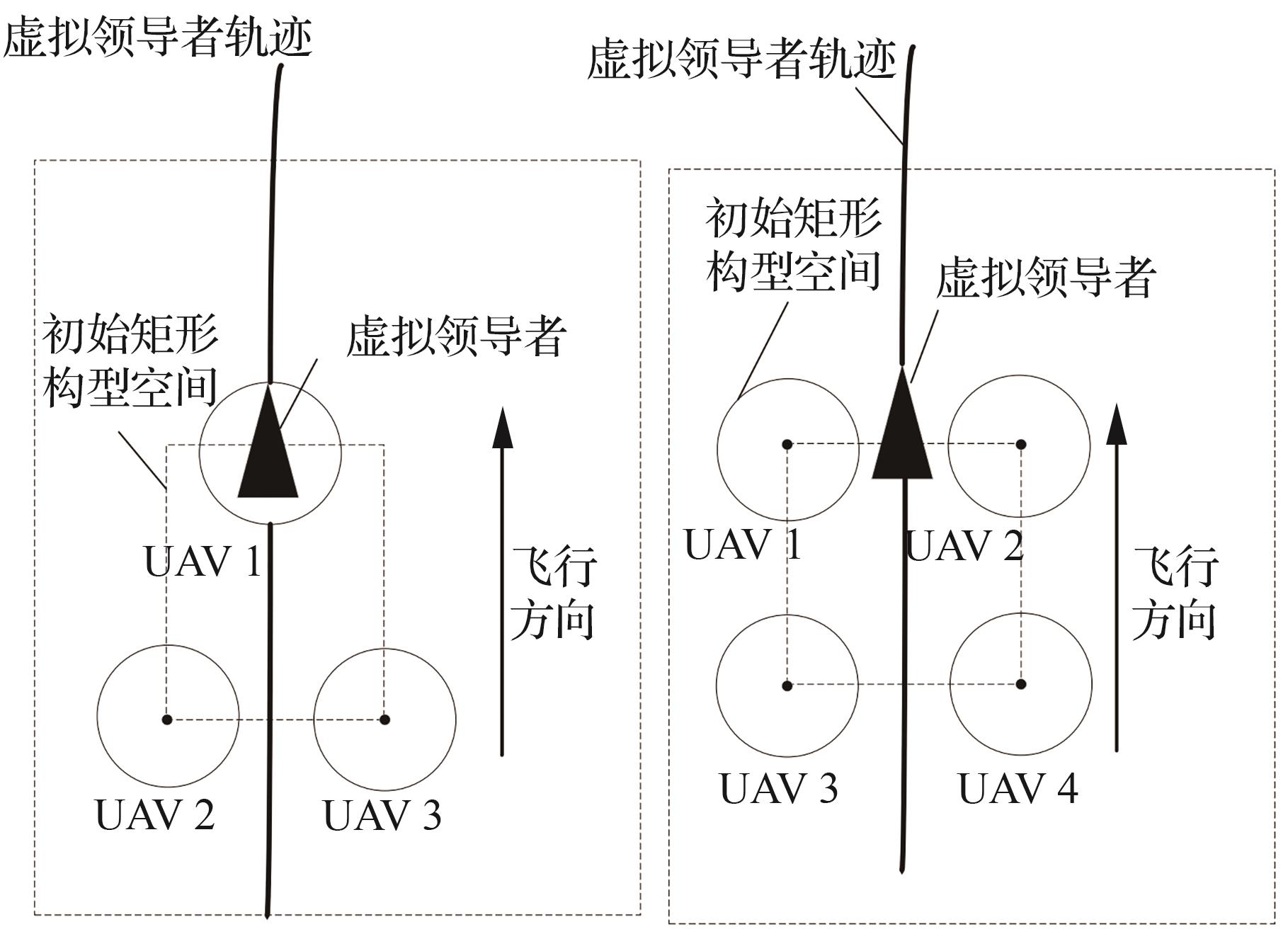
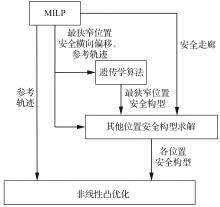
Fig.2
Schematic diagram of multi-stage safe formation transformation method for UAVs formation
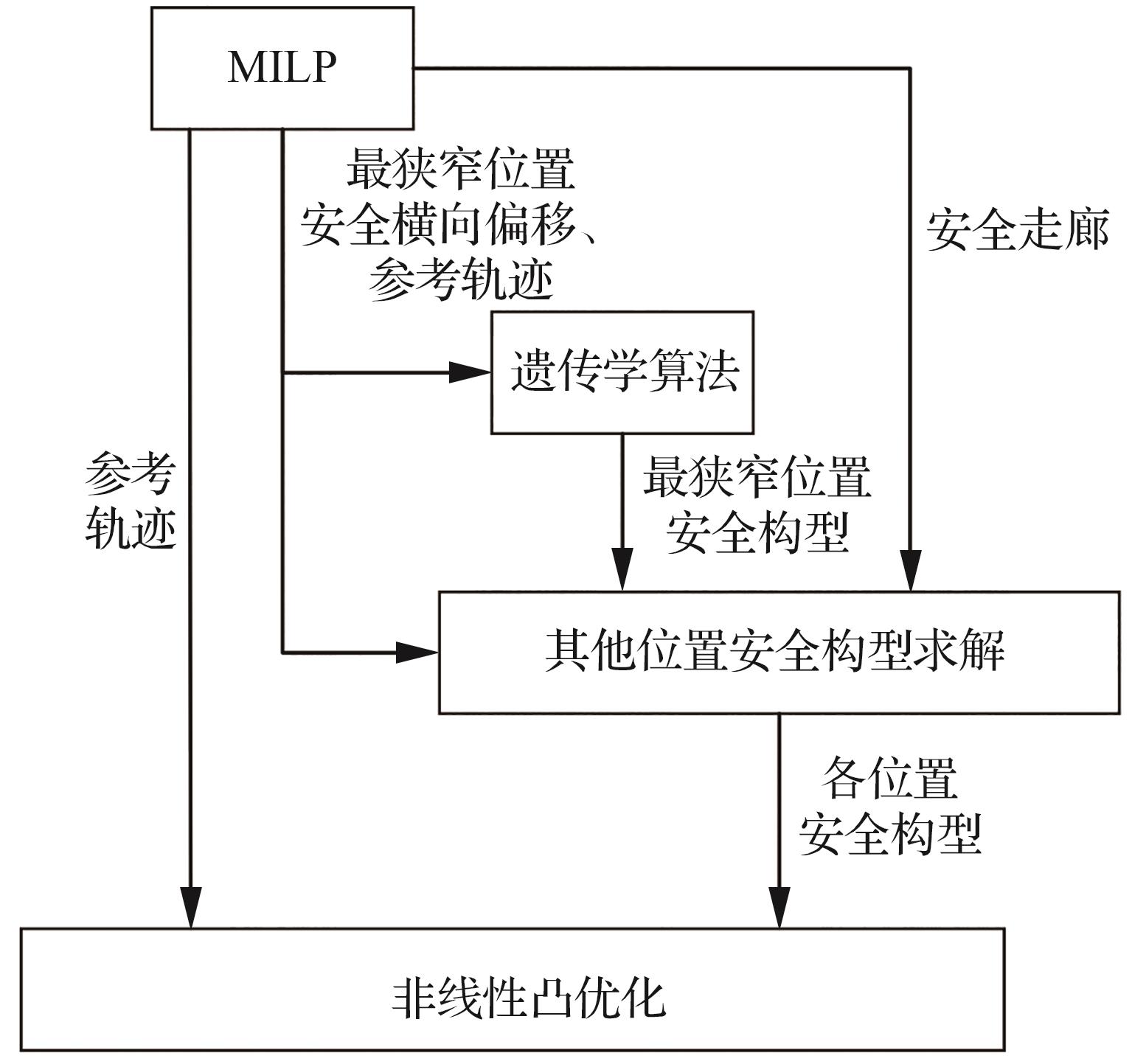
Table 1
Key symbols and meanings
| 符号 | 含义 |
|---|---|
| 虚拟领导者轨迹离散化点数 | |
| 路径点之间的时间步长 | |
| 第i个虚拟轨迹点的安全距离 | |
| 编队最狭窄位置安全横向偏移 | |
| 编队其他位置安全横向偏移 | |
| UAV数量 | |
| UAV k的初始构型位置 | |
| UAV k的最狭窄位置目标构型位置 | |
| UAV k的构型变换线段 | |
| UAV间安全距离 | |
| 笛卡尔坐标系到Frenet坐标系距离两点距离最小缩放比 | |
| Frenet坐标系点到直线距离到笛卡尔坐标系点到曲线距离最大缩放比 | |
| 第k个UAV在 | |
| 第k个UAV在笛卡尔坐标系下的位置向量 | |
| 速度松弛系数 | |
| 加速度松弛系数 | |
| 最大速度 | |
| 最大加速度 | |
| 平滑度惩罚项的权重系数 | |
| 安全距离项的权重系数 | |
| 到达终点时间惩罚项的权重系数 | |
| 轨迹跟踪项的权重系数 | |
| 平滑加速度项的权重系数 | |
| 速度松弛项的权重系数 | |
| 加速度松弛项的权重系数 | |
| 构型变化幅度项的权重系数 | |
| 内部安全距离项的权重系数 |
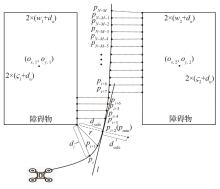
Fig.3
Schematic diagram of a virtual leader passing through a narrow corridor
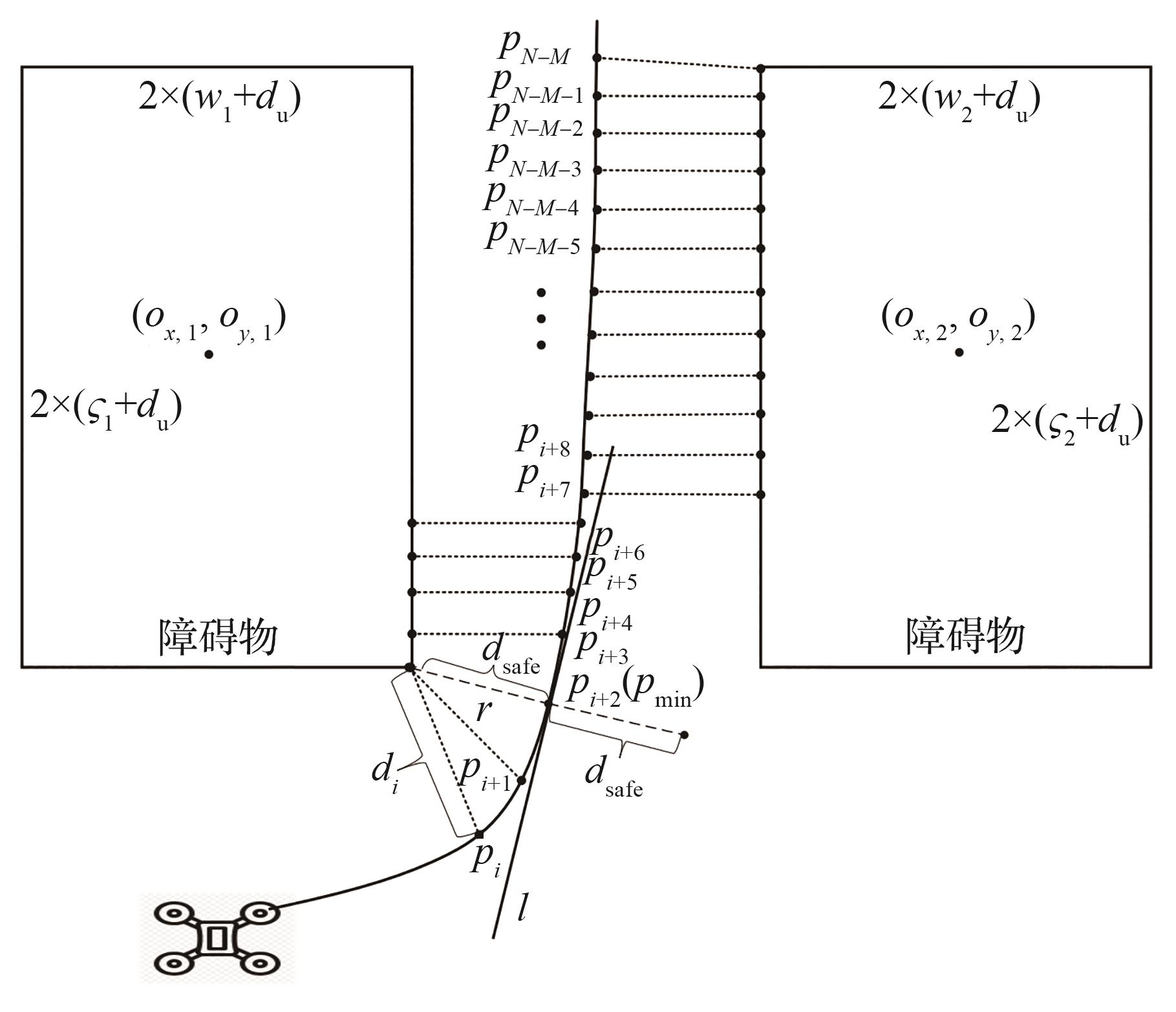
Fig.4
Schematic diagram of formation transformation for passing through a narrow corridor
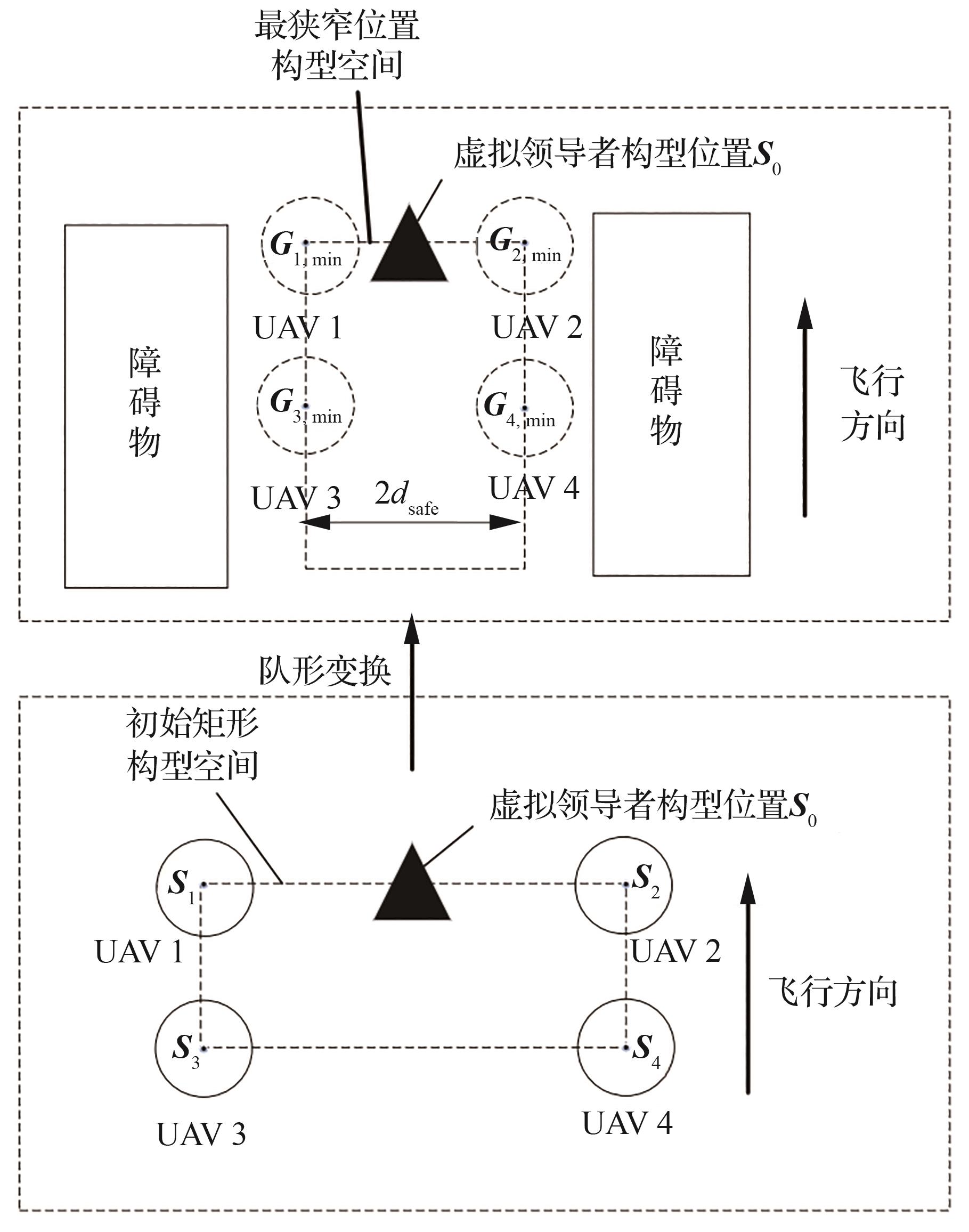
Fig.5
Schematic diagram of safe configuration solving for each trajectory point
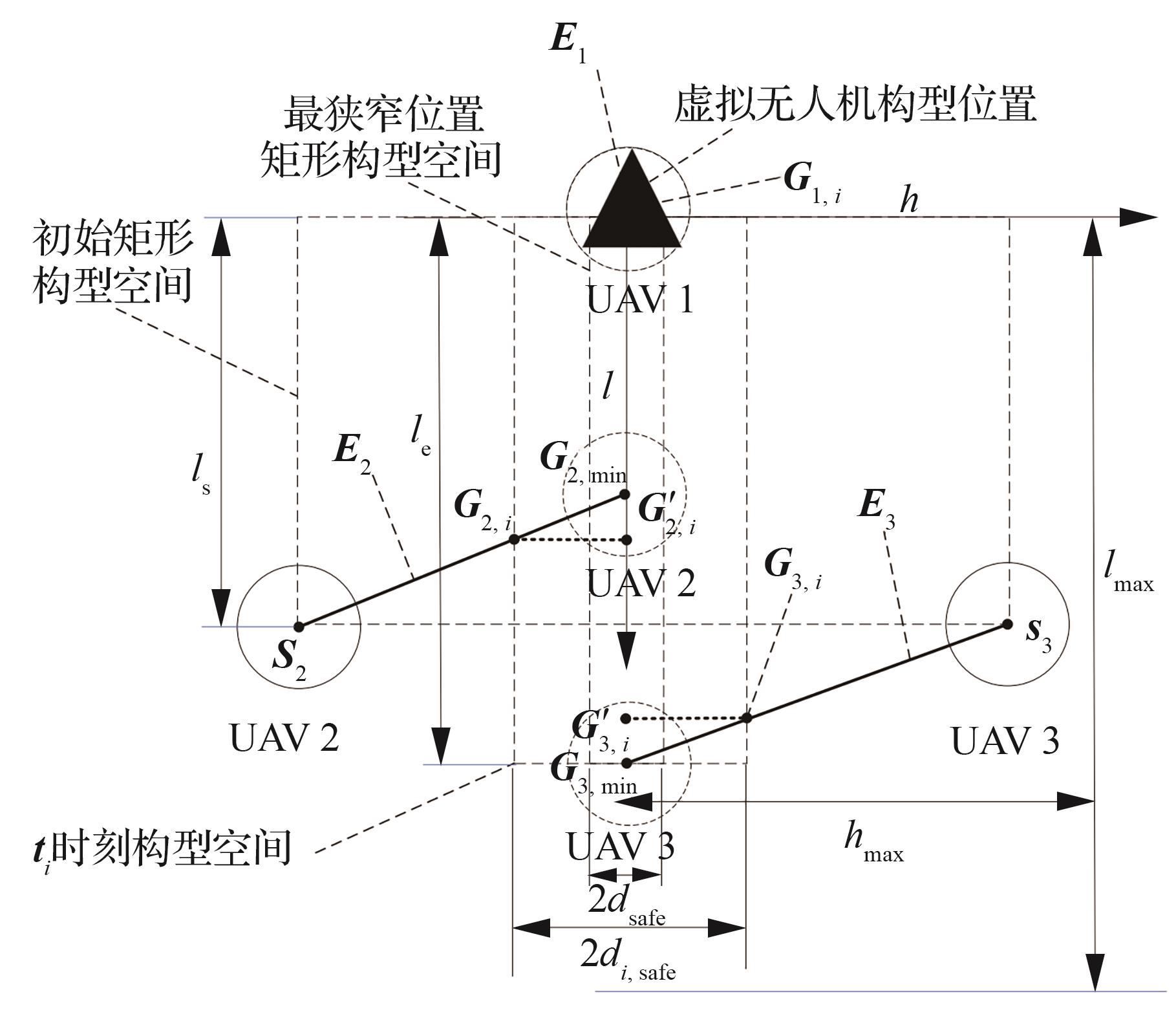
Fig.6
Schematic diagram of chromosome encoding method in genetic algorithm
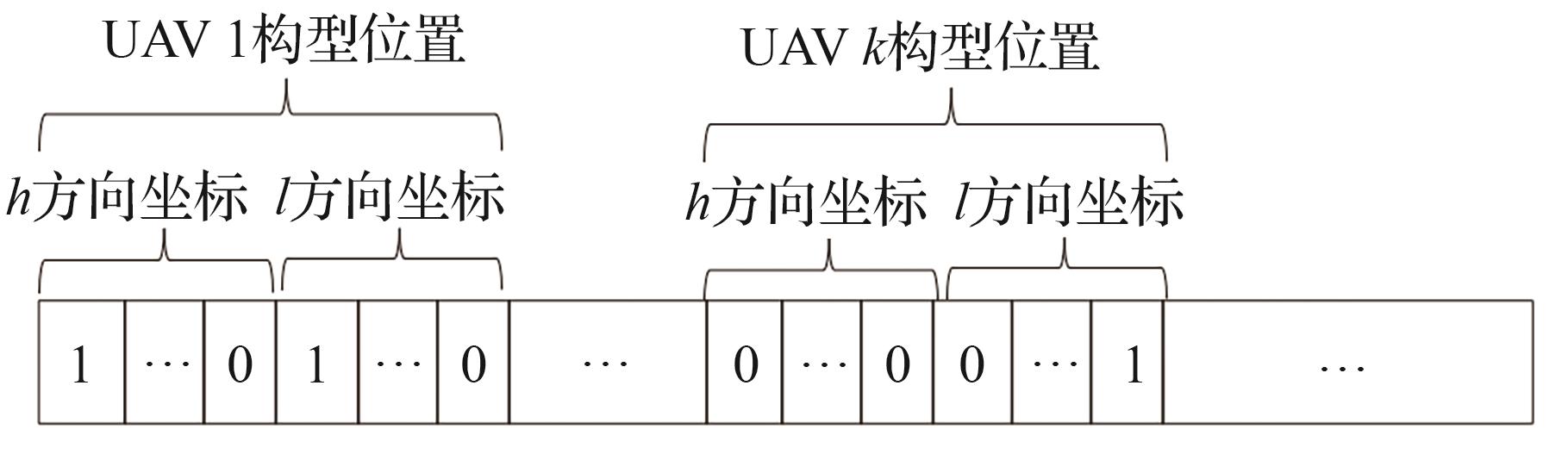
Fig.7
Schematic diagram for deriving relationship between two Euclidean distance multiples
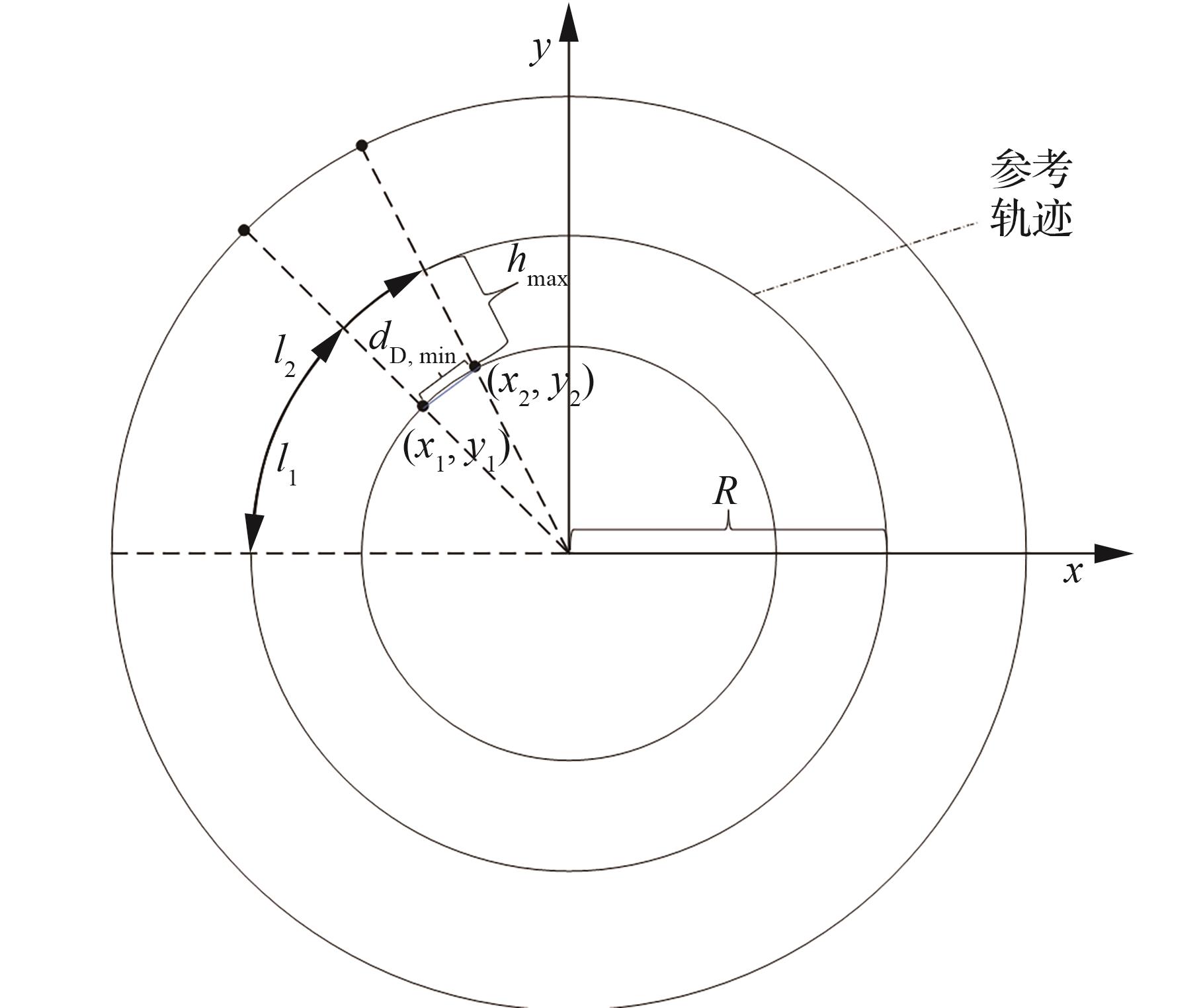
Fig.8
Schematic diagram of maximum multiple of distance change from a point to a distorted curve
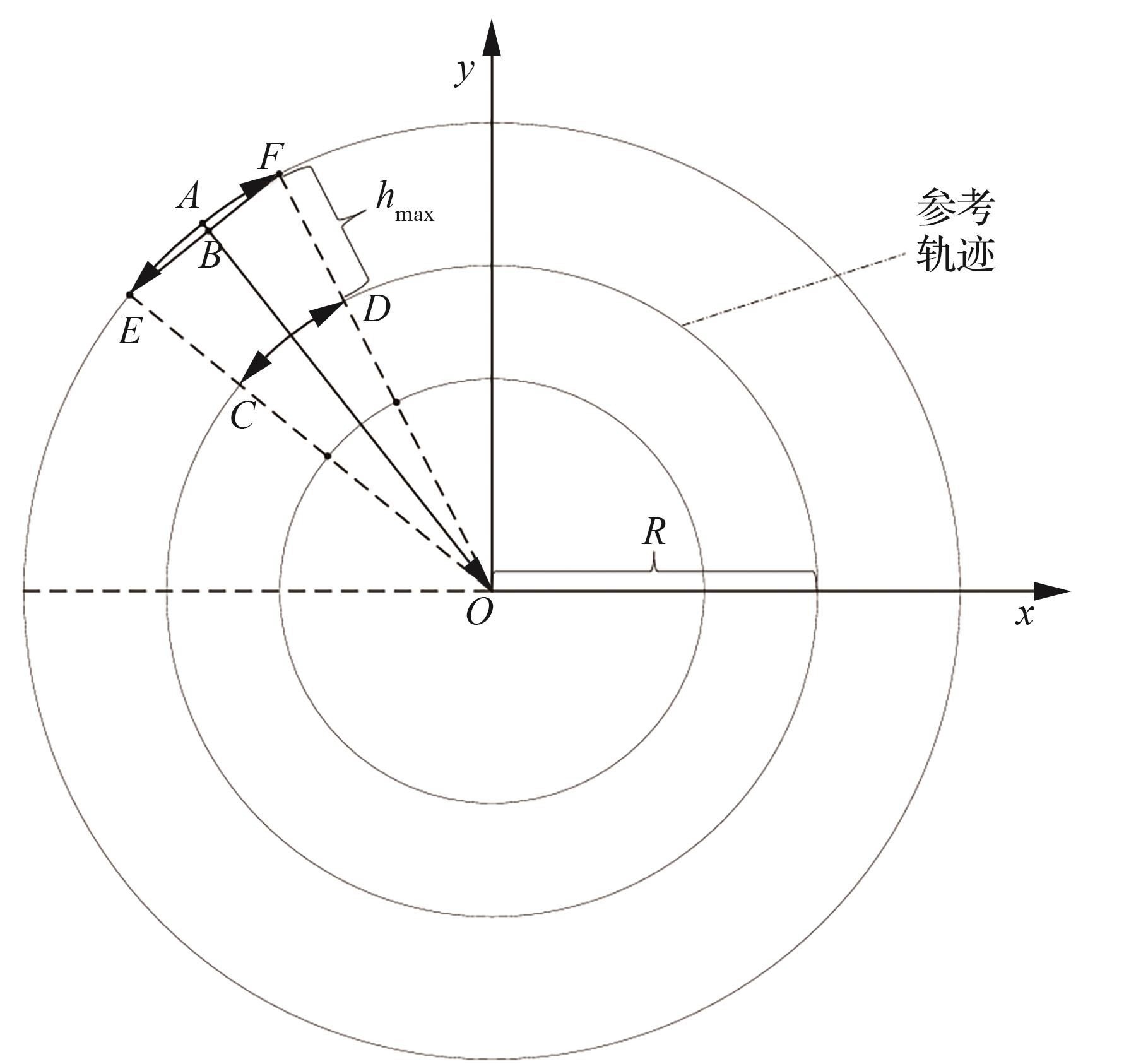
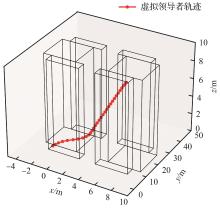
Fig.9
3D schematic diagram of virtual leader trajectory
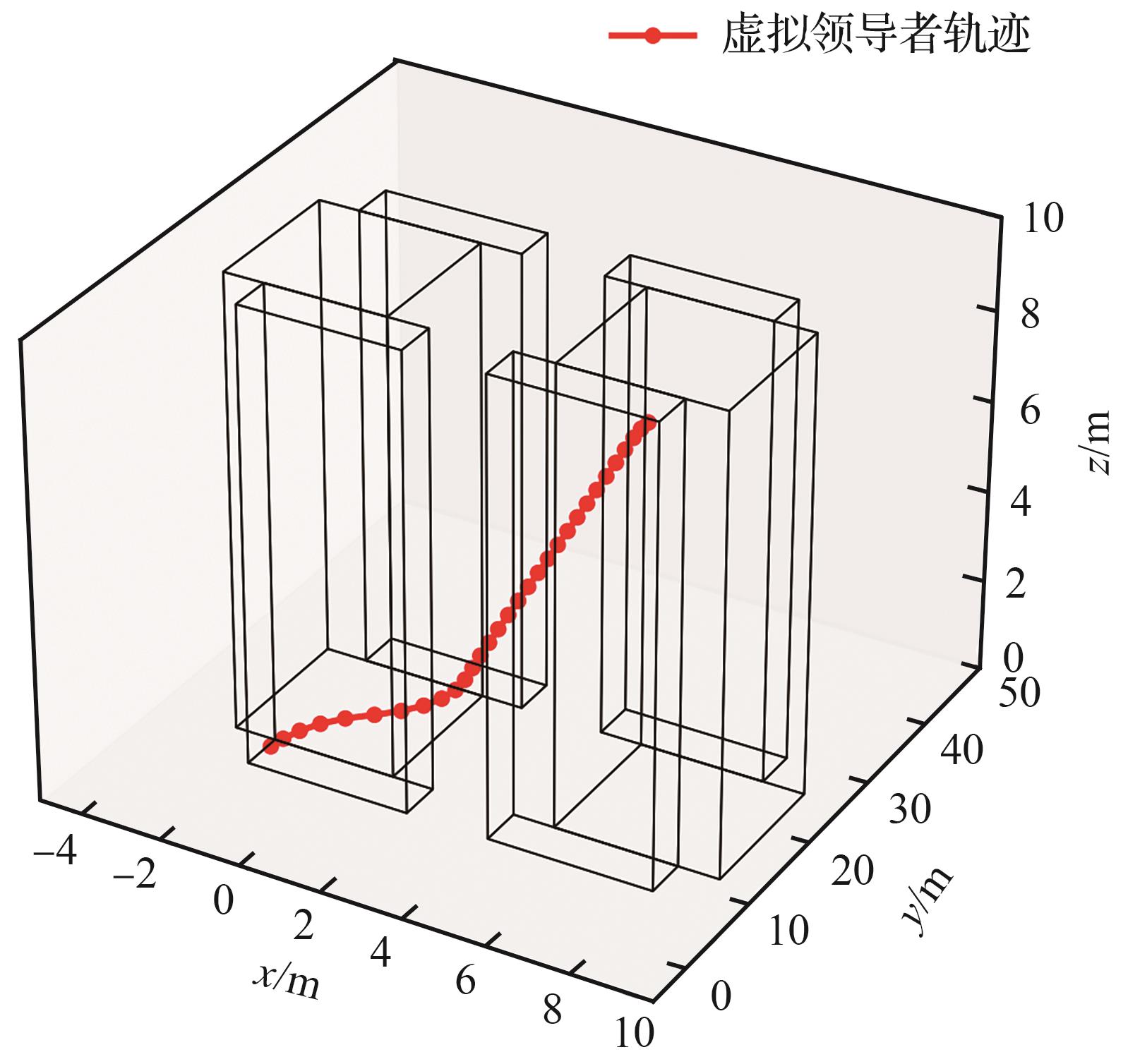
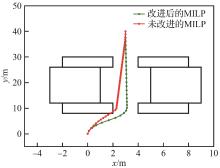
Fig.10
Comparison of trajectories projected onto xy-plane between unimproved MILP and improved MILP algorithms
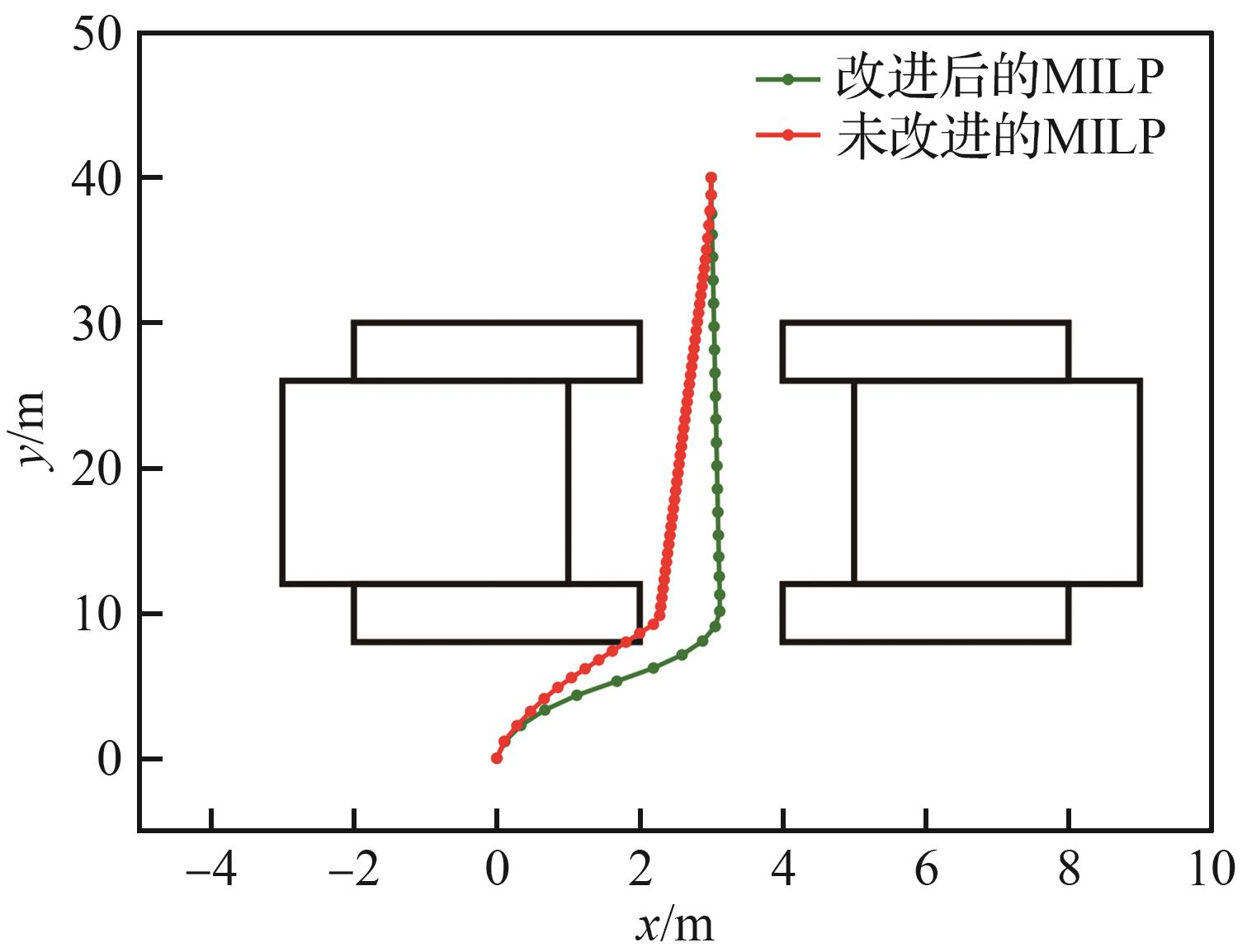
Fig.11
Velocity and acceleration magnitude curves of virtual leader trajectory generated by improved MILP
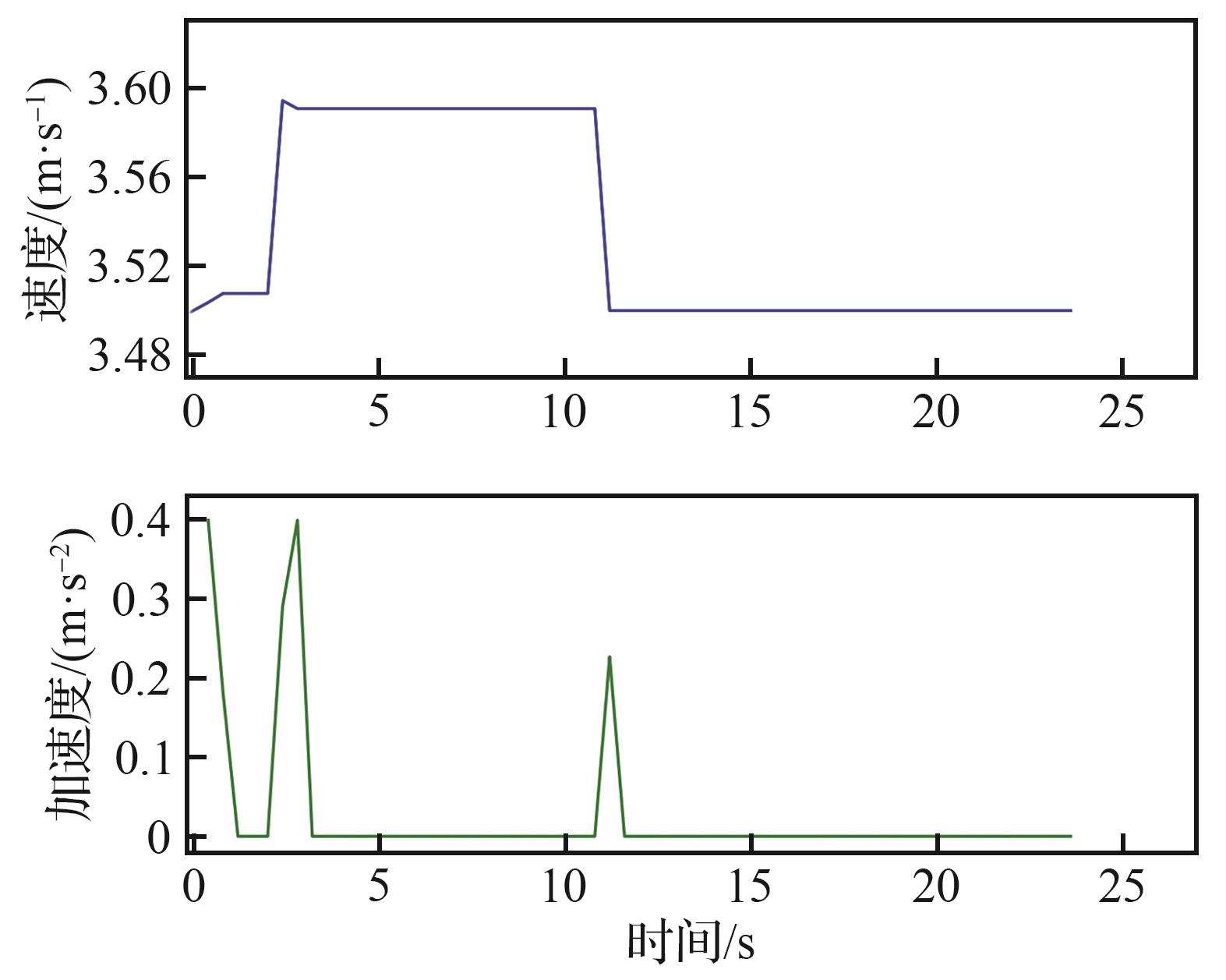
Fig.12
Velocity and acceleration magnitude curves of virtual leader trajectory generated by unimproved MILP
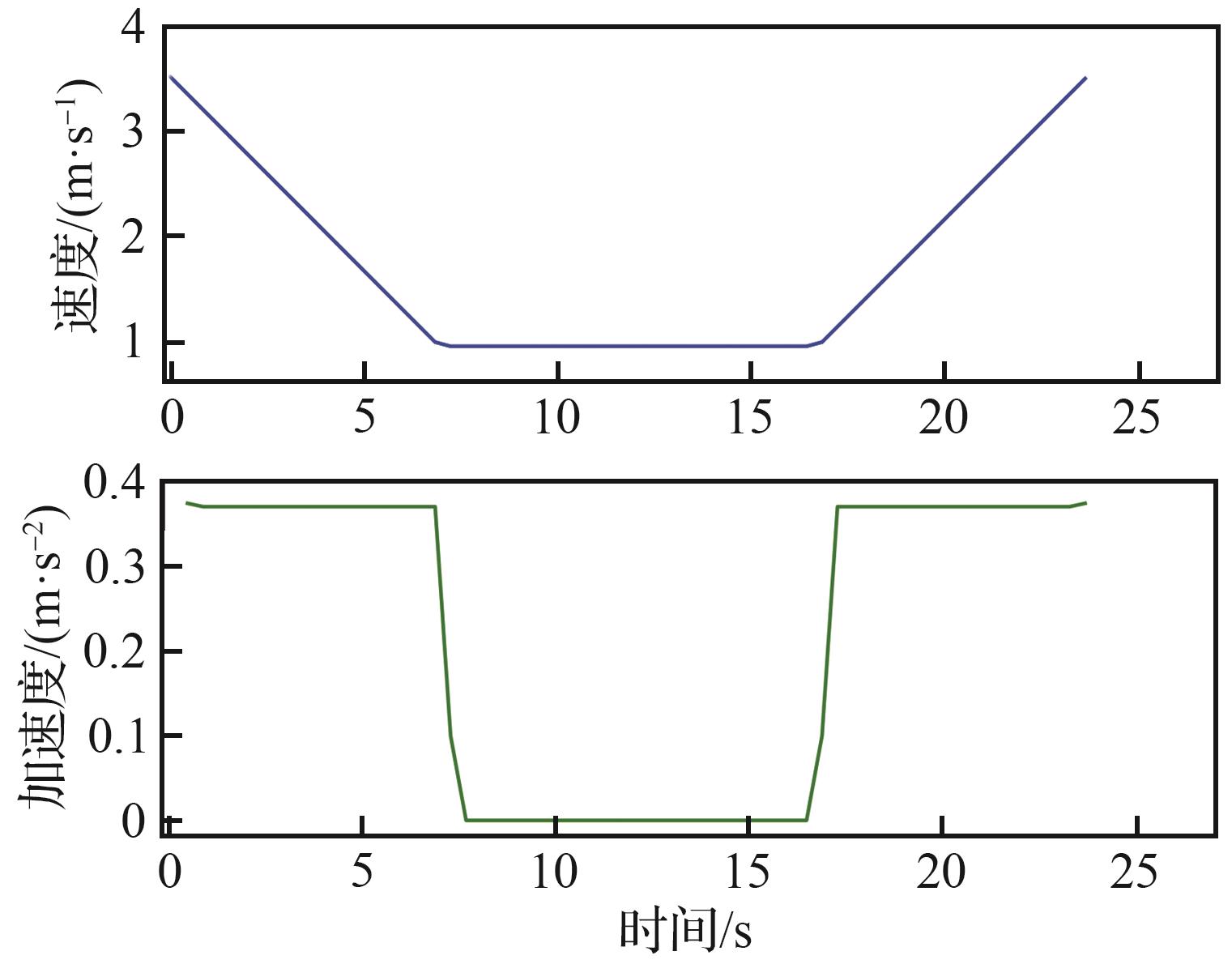
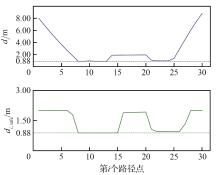
Fig.13
di and di,safe for each trajectory point
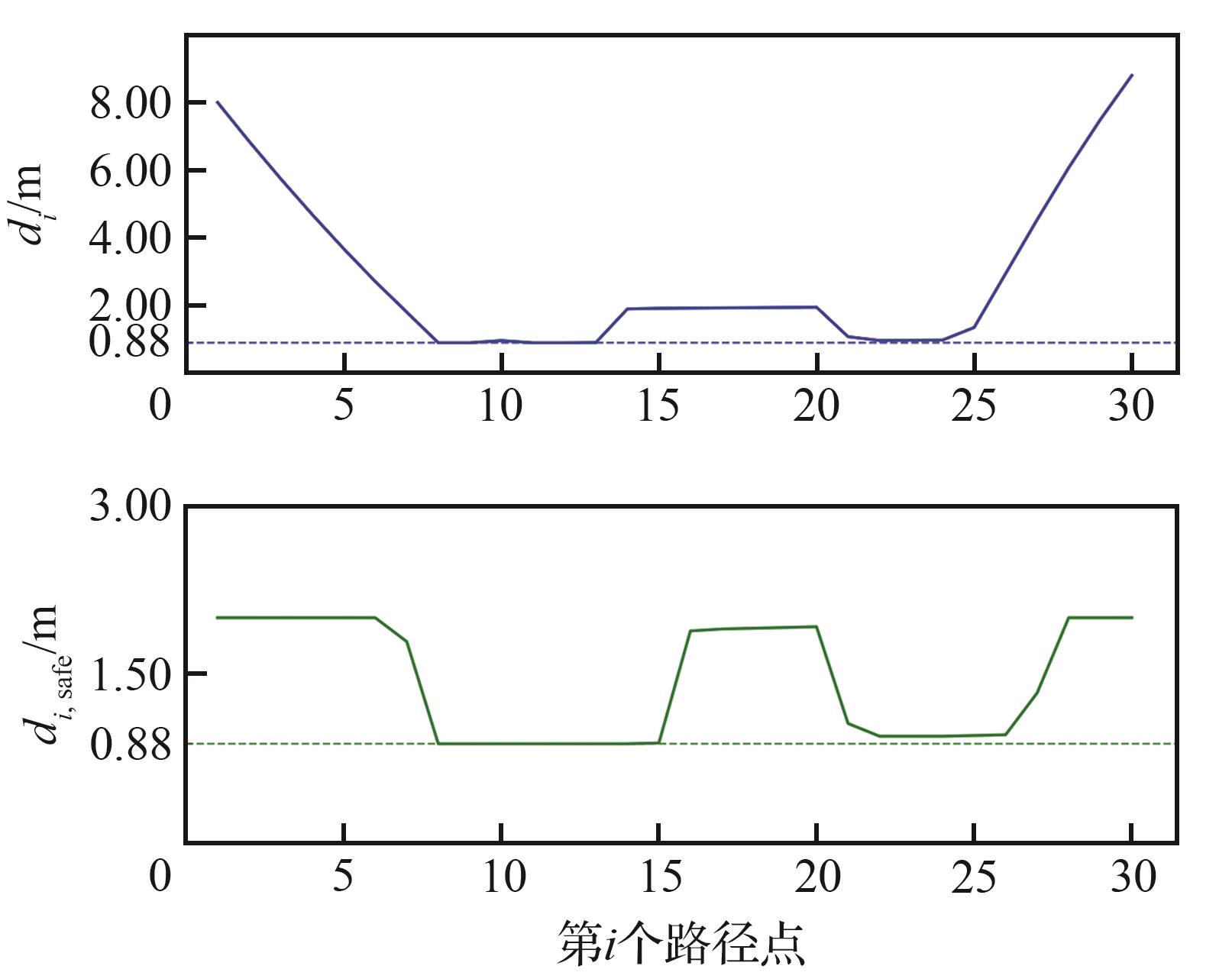
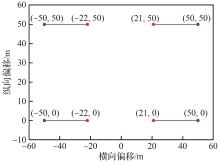
Fig.14
Schematic diagram of safe configuration at narrowest position solved by genetic algorithm
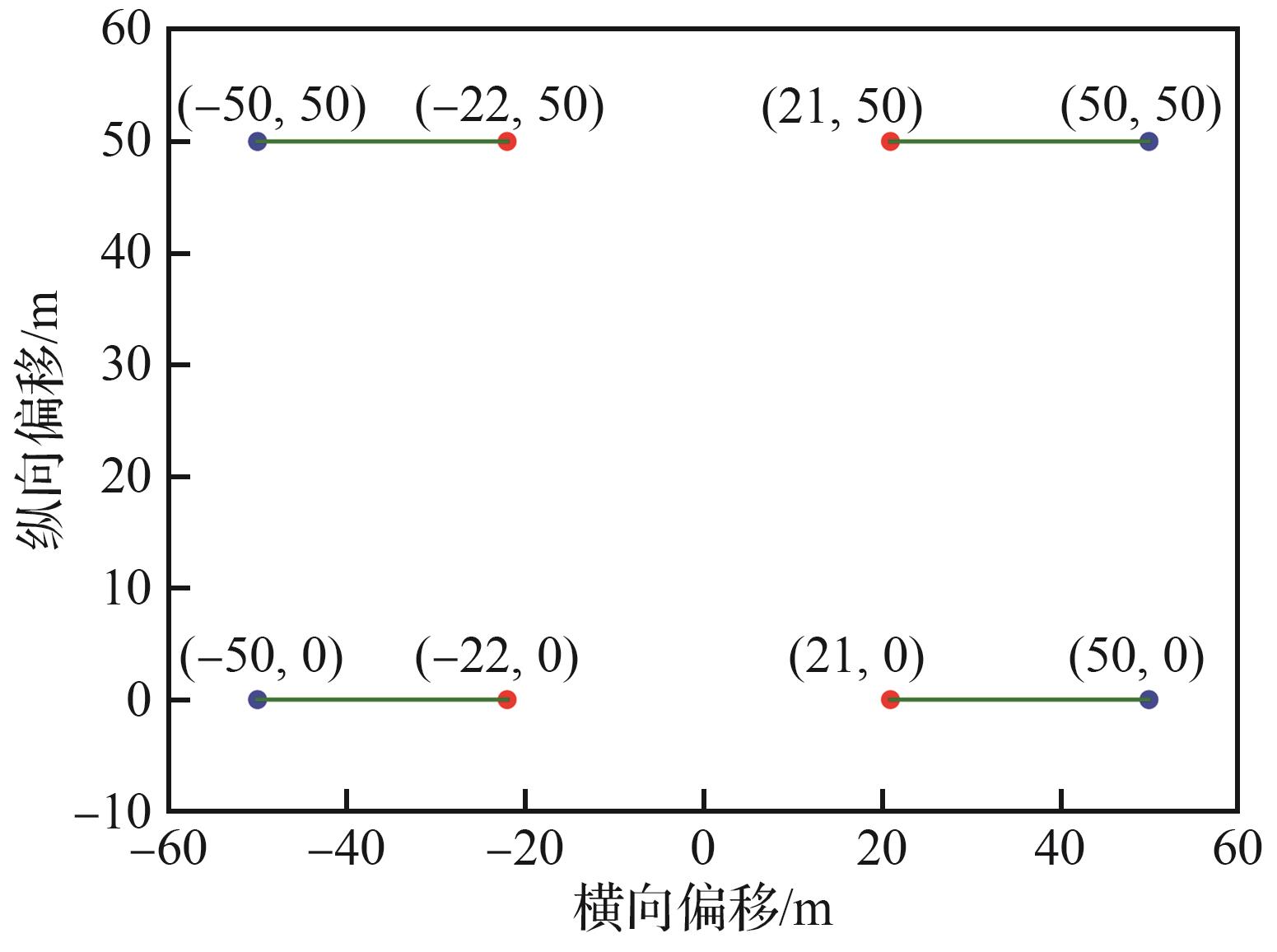
Table 2
Genetic algorithm parameters setting and experiment results
| 指标 | ||||||||||
|---|---|---|---|---|---|---|---|---|---|---|
| 求解时间/s | 0.961 | 2.196 | 1.075 | 2.040 | 1.675 | 1.477 | 1.562 | 1.690 | 2.980 | 5.269 |
| 构型距离/m | 0.062 | 0 | 0.010 | 0 | 0.020 | 0.010 | 0.010 | 0.042 | 0.013 | 0.010 |
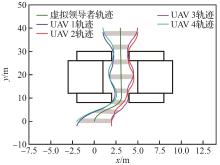
Fig.15
Computed trajectory results of UAVs
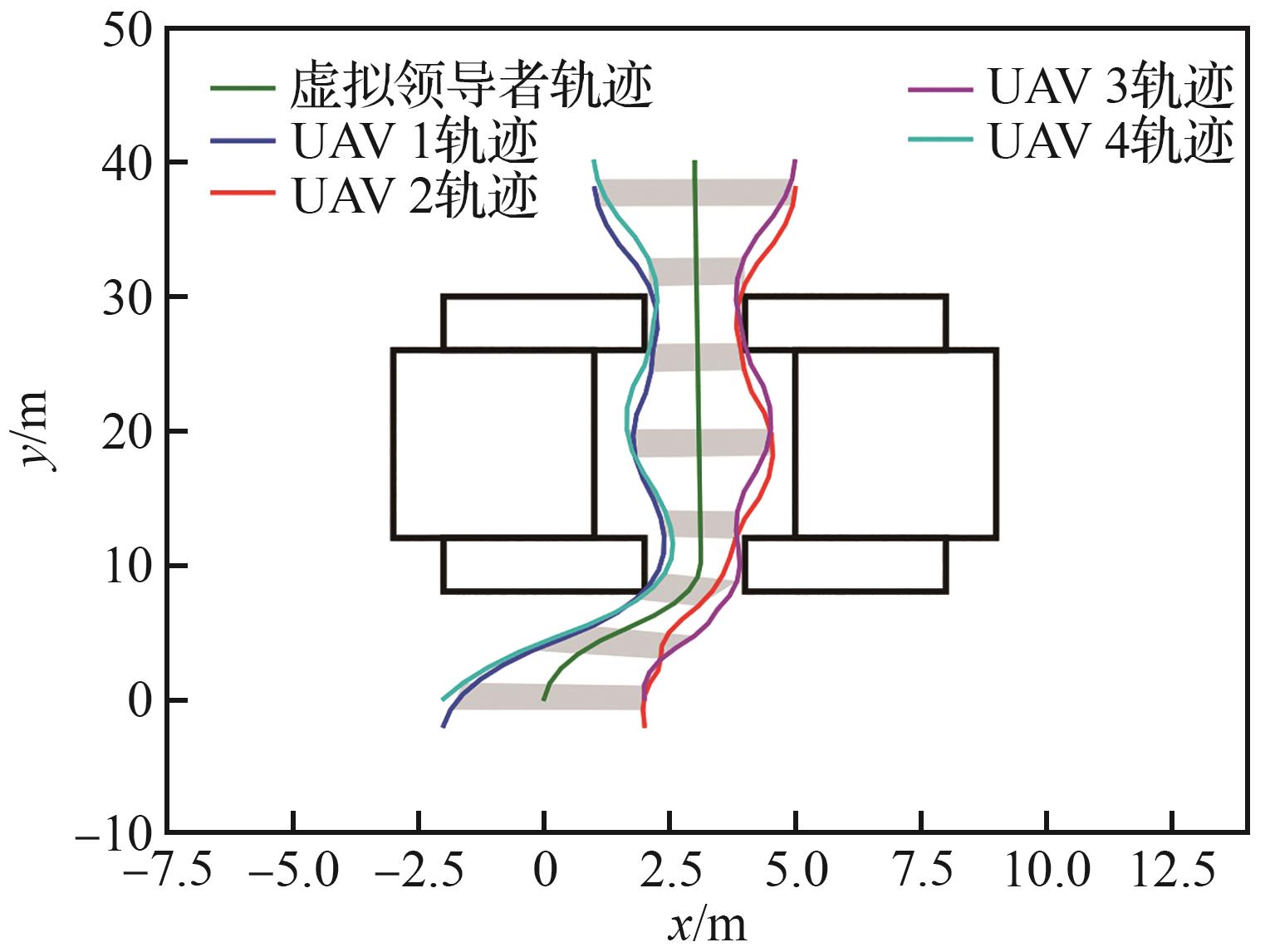
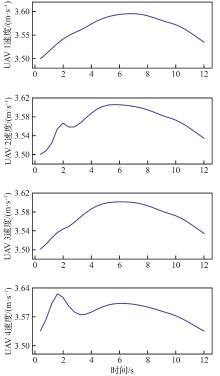
Fig.16
UAVs velocity optimization results
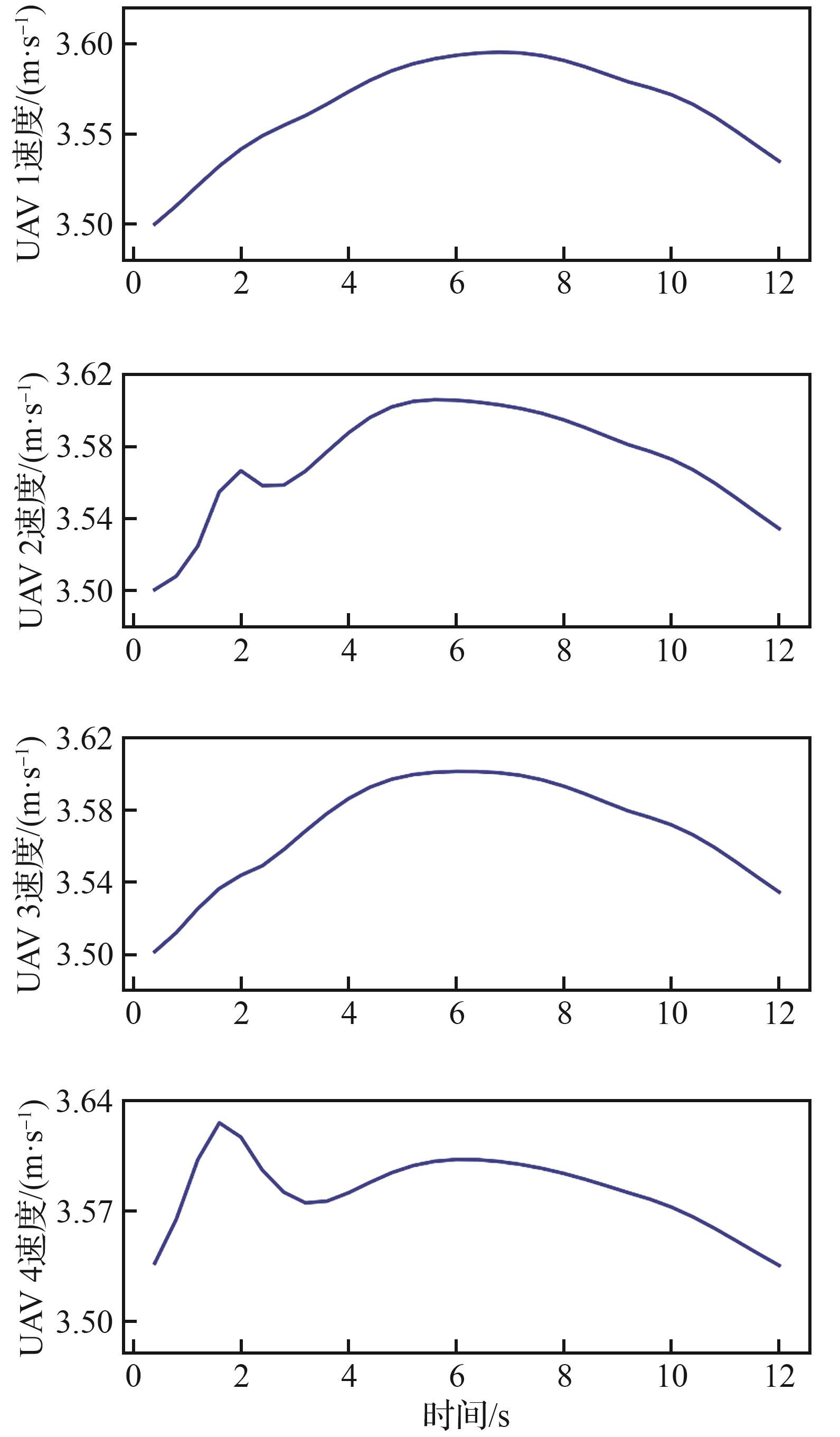
Fig.17
UAVs acceleration optimization results
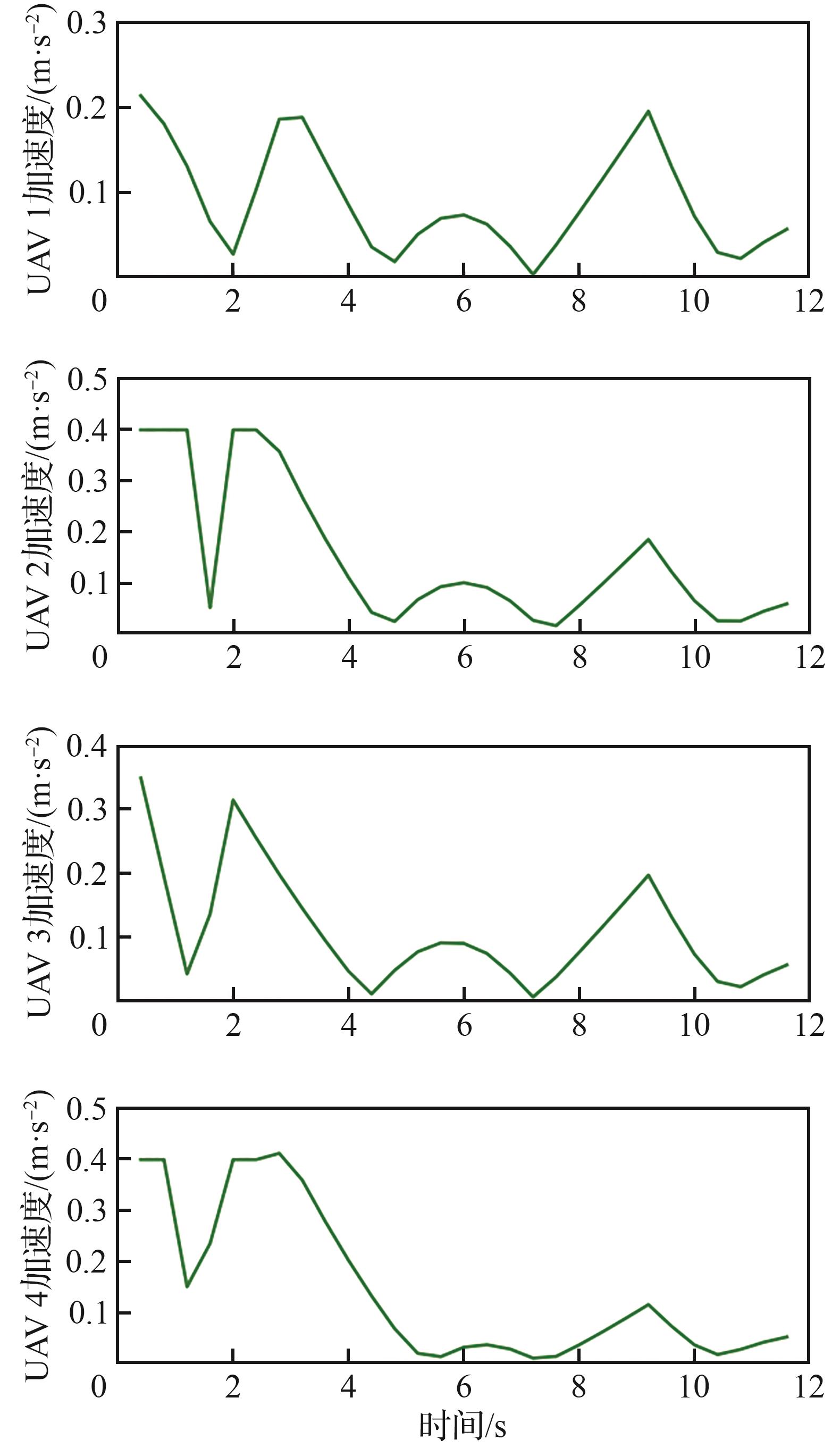
Table 3
Nonlinear optimization parameters setting and experiment results
| 指标 | ||||||||
|---|---|---|---|---|---|---|---|---|
| 轨迹跟踪项 | 8.209 | 8.207 | 8.207 | 8.208 | 8.208 | 8.208 | 8.203 | 8.210 |
| 平滑项 | 0.33 | 0.33 | 0.33 | 0.33 | 0.33 | 0.33 | 0.33 | 0.33 |
| 最大速度松弛项 | 30 | 30 | 30 | 30 | 30 | 30 | 30 | 30 |
| 最大加速度松弛项 | 30.130 | 30.133 | 30.134 | 30.132 | 30.132 | 30.132 | 30.136 | 30.130 |
Fig.18
Time reallocation results of UAVs velocities
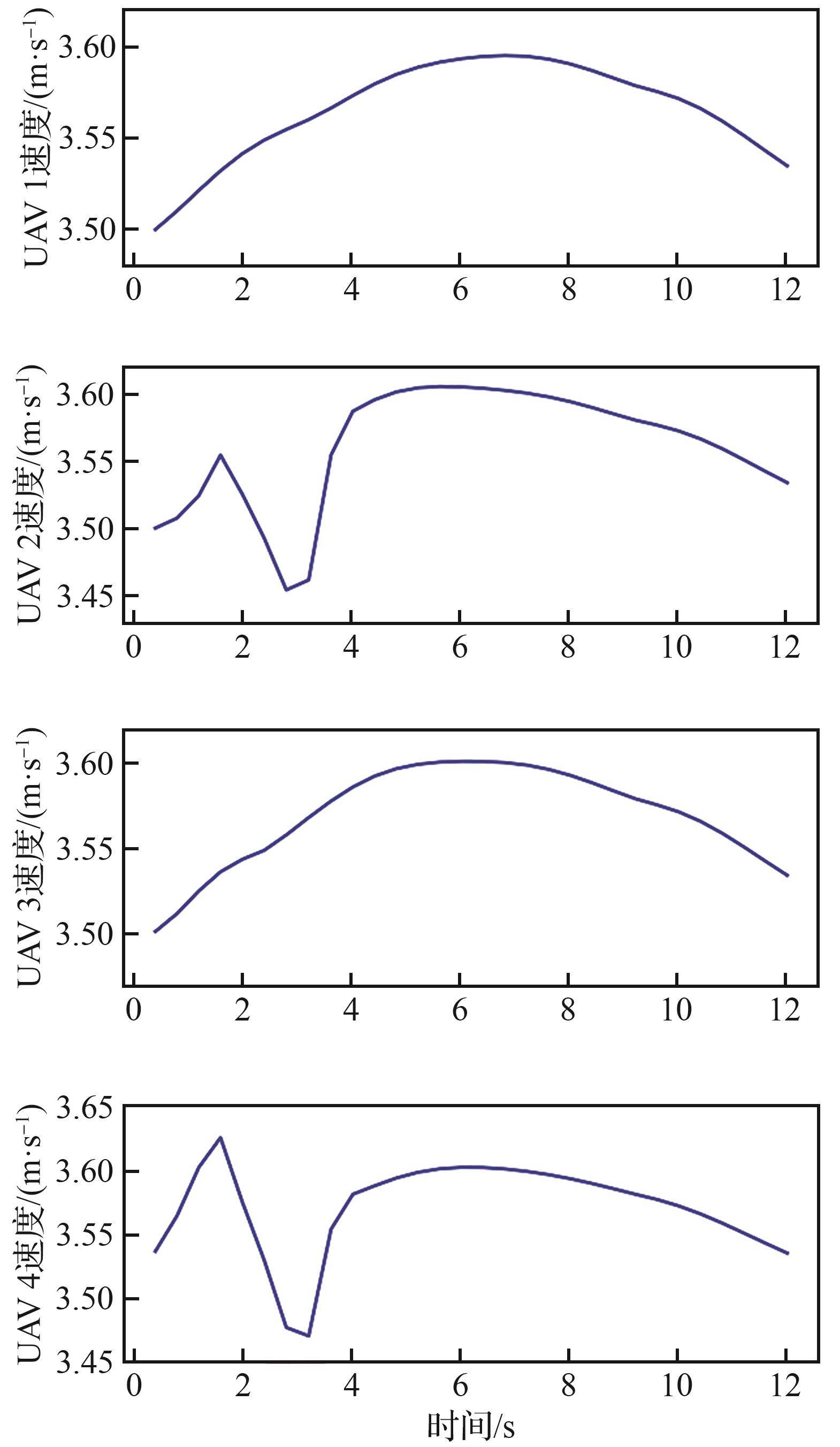
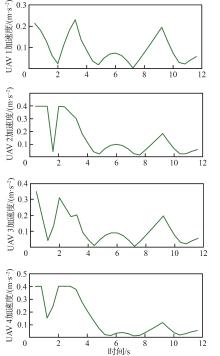
Fig.19
Time reallocation results of UAVs accelerations
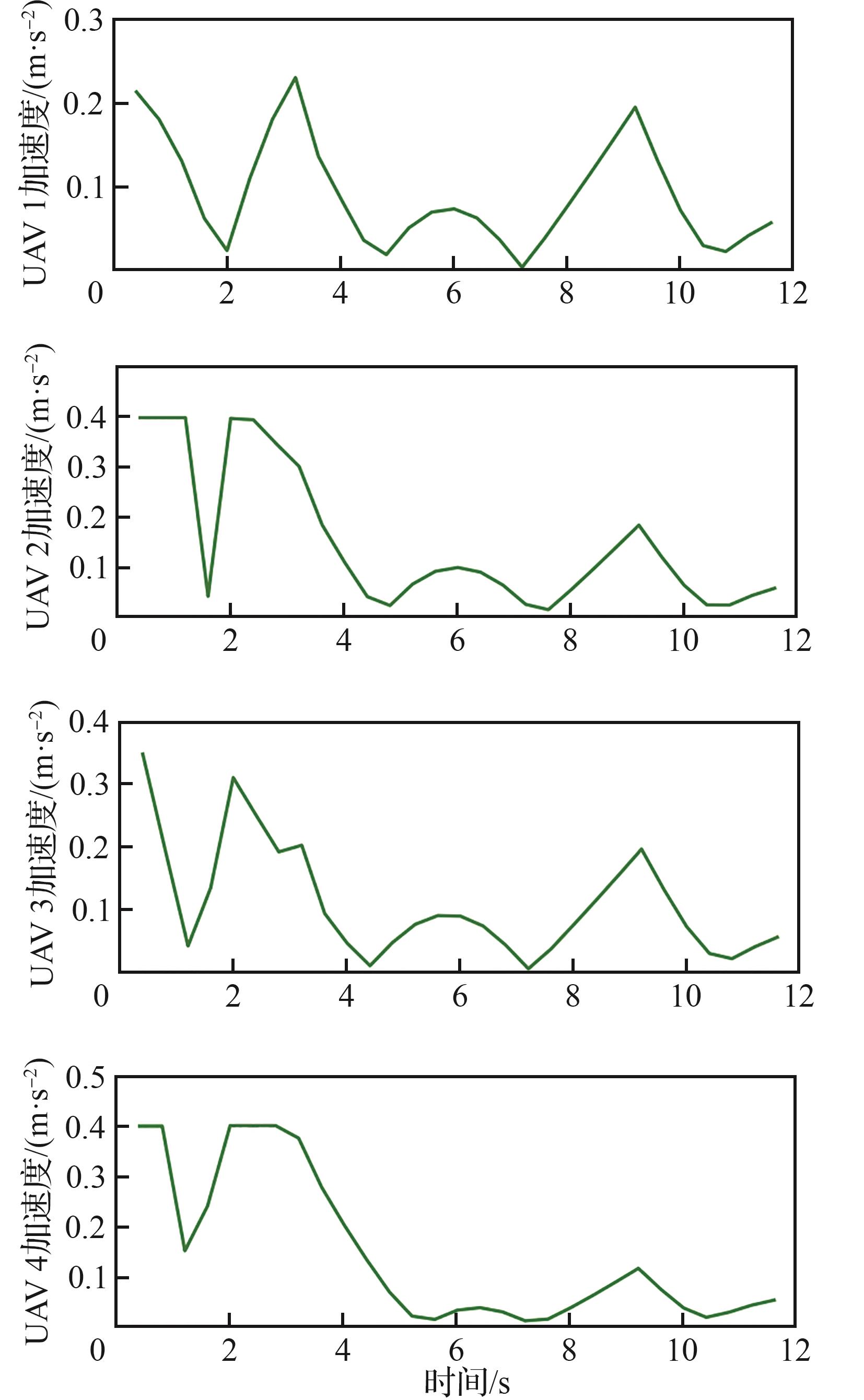
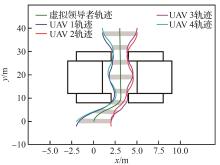
Fig.20
Trajectories of UAV swarm generated by vector potential field method
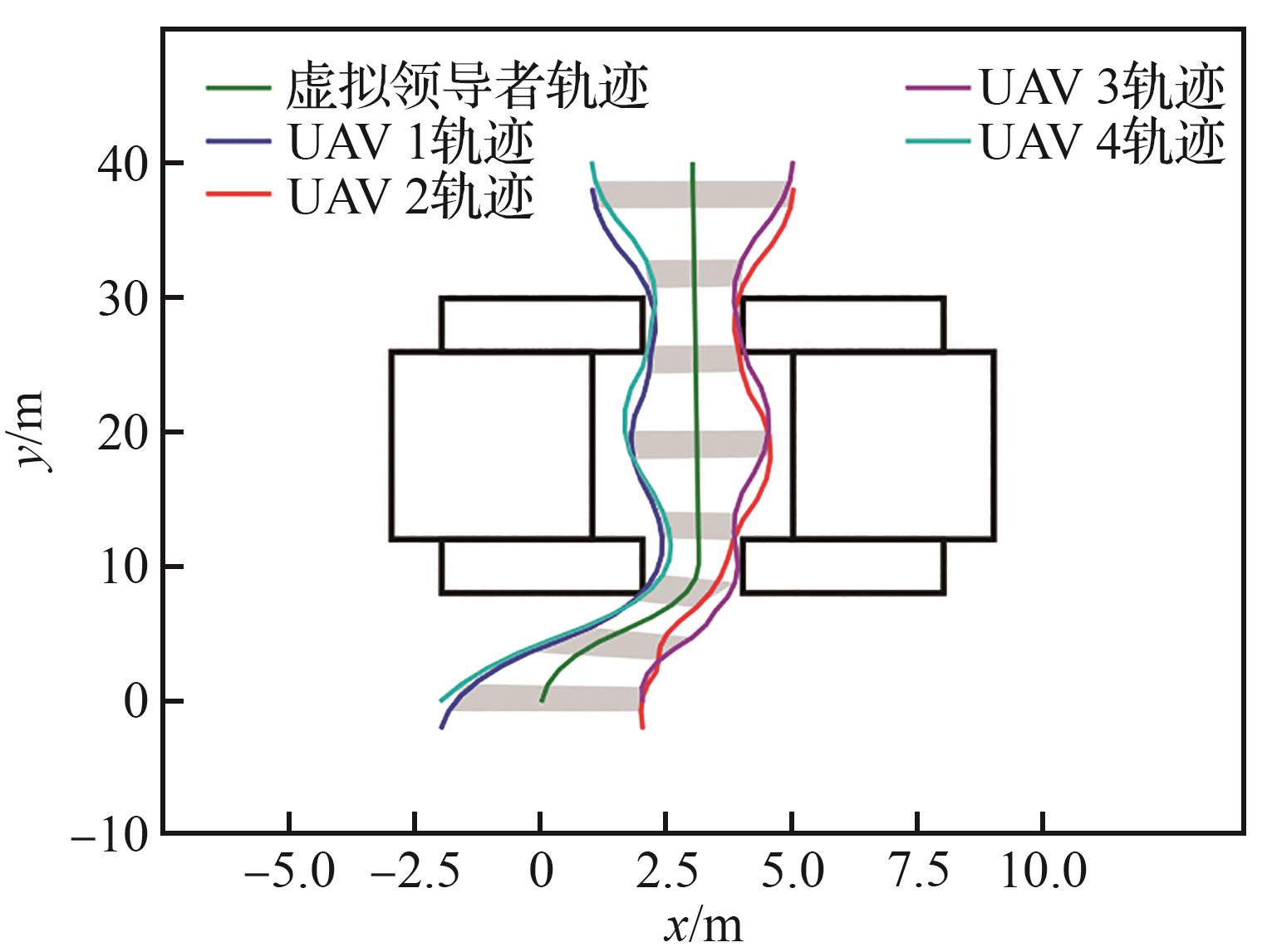
Fig.21
Relative initial configuration differences between vector potential field method and multi-stage safe formation transformation method for UAVs formation
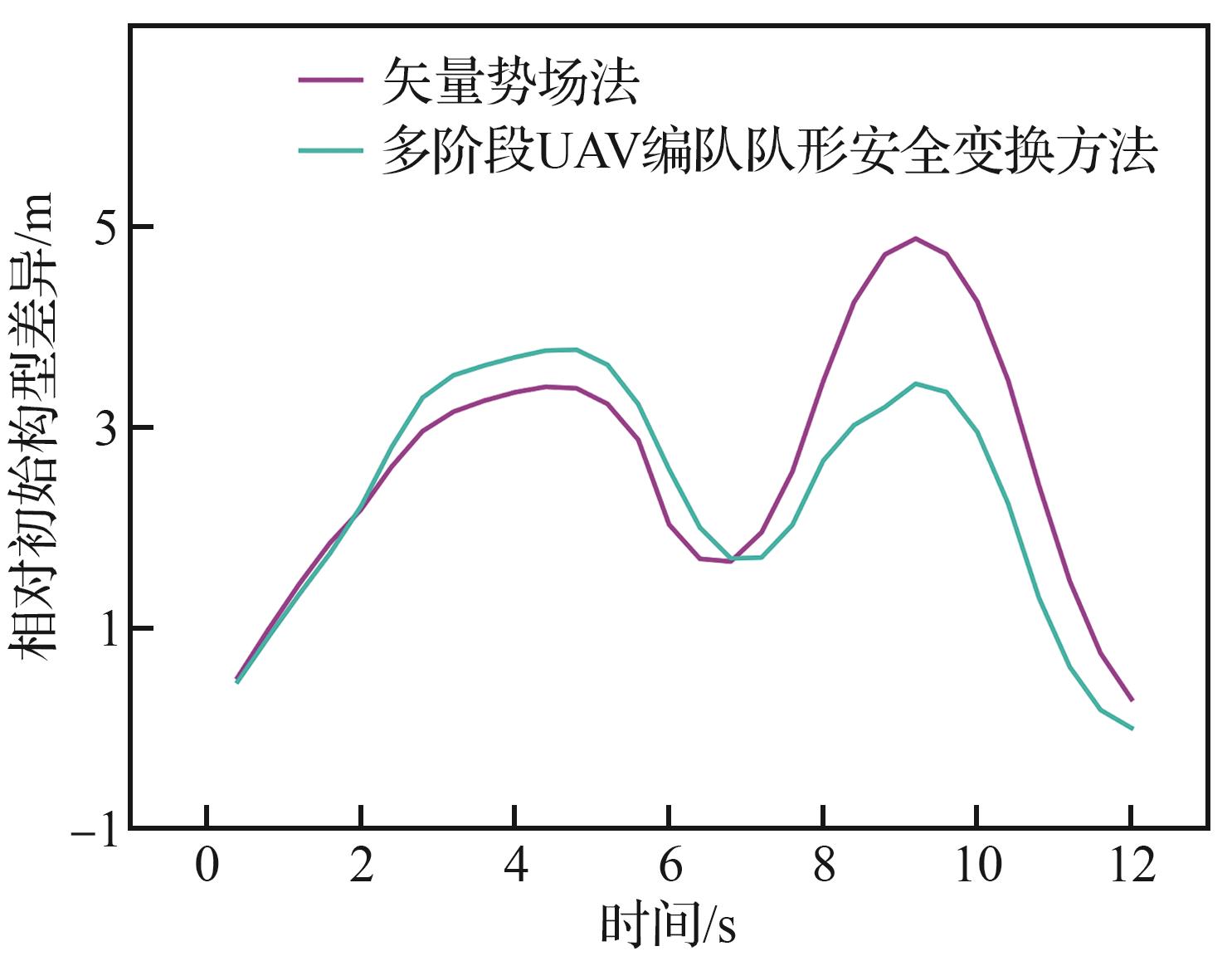
Table 4
Comparison of multi-stage safe formation transformation method for UAVs formation and distributed model predictive control method
| 指标 | 多阶段UAV编队队形安全变换方法 | 分布式模型预测控制方法 |
|---|---|---|
| 累积构型差异值/m | 70.943 | 79.402 |
| 到达时间/s | 12.0 | 24.0 |
| 实时性 | 需预规划 | 可在线计算 |
| [1] | 刘坤达, 刘雪明, 朱波, 等. 面向狭窄通道穿越的多机编队安全鲁棒控制[J]. 航空学报, 2023, 44(S2): 729768. |
| LIU K D, LIU X M, ZHU B, et al. Robust safe control for multi-UAV formation flight through narrow corridors[J]. Acta Aeronautica et Astronautica Sinica, 2023, 44(S2): 729768 (in Chinese). | |
| [2] | JI J L, PENG Y Y, ZHAO C C, et al. Safe corridor constrained trajectory planning for formation flight of fixed-wing unmanned aerial vehicles[C]∥ Proceedings of 2023 7th Chinese Conference on Swarm Intelligence and Cooperative Control. Singapore: Springer, 2024: 188-196. |
| [3] | WANG Z P, ZHOU X, XU C, et al. Geometrically constrained trajectory optimization for multicopters[J]. IEEE Transactions on Robotics, 2022, 38(5): 3259-3278. |
| [4] | 赵创新, 遆好建, 李照宏, 等. 多无人机协同编队控制及试飞验证[J]. 航空学报, 2024, 45(17): 530249. |
| ZHAO C X, TI H J, LI Z H, et al. Multi-UAV cooperative formation control and flight test verification[J]. Acta Aeronautica et Astronautica Sinica, 2024, 45(17): 530249 (in Chinese). | |
| [5] | 严超, 张泽旭, 崔祜涛, 等. 固定翼无人机集群预定时间仿射编队机动控制[J]. 航空学报, 2025, 46(22): 331824. |
| YAN C, ZHANG Z X, CUI H T, et al. Predefined-time affine formation maneuvering control for fixed-wing UAV swarm[J]. Acta Aeronautica et Astronautica Sinica, 2025, 46(22): 331824 (in Chinese). | |
| [6] | 王昱, 谢志鹏, 田永健, 等. 虚拟结构引领强化学习分布式无人机编队控制[J]. 航空学报, 2025, 46(15): 331354. |
| WANG Y, XIE Z P, TIAN Y J, et al. Distributed UAV formation control with virtual structure guided reinforcement learning[J]. Acta Aeronautica et Astronautica Sinica, 2025, 46(15): 331354 (in Chinese). | |
| [7] | GUO J D, LIU Z G, SONG Y G, et al. Research on multi-UAV formation and semi-physical simulation with virtual structure[J]. IEEE Access, 2023, 11: 126027-126039. |
| [8] | LEE G, CHWA D K. Decentralized behavior-based formation control of multiple robots considering obstacle avoidance[J]. Intelligent Service Robotics, 2018, 11(1): 127-138. |
| [9] | 徐博, 张大龙. 基于量子行为鸽群优化的无人机紧密编队控制[J]. 航空学报, 2020, 41(8): 323722. |
| XU B, ZHANG D L. Tight formation flight control of UAVs based on pigeon inspired algorithm optimization by quantum behavior[J]. Acta Aeronautica et Astronautica Sinica, 2020, 41(8): 323722 (in Chinese). | |
| [10] | KURIKI Y, NAMERIKAWA T. Formation control with collision avoidance for a multi-UAV system using decentralized MPC and consensus-based control[J]. SICE Journal of Control, Measurement, and System Integration, 2015, 8(4): 285-294. |
| [11] | 吴宇, 梁天骄. 基于改进一致性算法的无人机编队控制[J]. 航空学报, 2020, 41(9): 323848. |
| WU Y, LIANG T J. Improved consensus-based algorithm for unmanned aerial vehicle formation control[J]. Acta Aeronautica et Astronautica Sinica, 2020, 41(9): 323848 (in Chinese). | |
| [12] | WANG G J, SONG K P, ZHANG X L. The real-time trajectory planning of UAV formation transformation based on safety flight corridor[C]∥ Proceedings of 2021 Chinese Intelligent Systems Conference. Singapore: Springer, 2022: 481-491. |
| [13] | PENG P, DONG W, CHEN G, et al. Obstacle avoidance of resilient UAV swarm formation with active sensing system in the dense environment[C]∥ 2022 IEEE/RSJ International Conference on Intelligent Robots and Systems (IROS). Piscataway: IEEE Press, 2022: 10529-10535. |
| [14] | ALONSO-MORA J, MONTIJANO E, SCHWAGER M, et al. Distributed multi-robot formation control among obstacles: A geometric and optimization approach with consensus[C]∥ 2016 IEEE International Conference on Robotics and Automation (ICRA). Piscataway: IEEE Press, 2016: 5356-5363. |
| [15] | QUAN L, YIN L J, ZHANG T R, et al. Robust and efficient trajectory planning for formation flight in dense environments[J]. IEEE Transactions on Robotics, 2023, 39(6): 4785-4804. |
| [16] | 顾伟, 汤俊, 白亮, 等. 面向时间协同的多无人机队形变换最优效率模型[J]. 航空学报, 2019, 40(6): 322599. |
| GU W, TANG J, BAI L, et al. Time synergistic optimal efficiency model for formation transformation of multiple UAVs[J]. Acta Aeronautica et Astronautica Sinica, 2019, 40(6): 322599 (in Chinese). | |
| [17] | HAN Z M, WANG L L, LIN Z Y. Local formation control strategies with undetermined and determined formation scales for co-leader vehicle networks[C]∥ 52nd IEEE Conference on Decision and Control. Piscataway: IEEE Press, 2014: 7339-7344. |
| [18] | ZHAO S Y. Affine formation maneuver control of multiagent systems[J]. IEEE Transactions on Automatic Control, 2018, 63(12): 4140-4155. |
| [19] | LIN Z Y, WANG L L, CHEN Z Y, et al. Necessary and sufficient graphical conditions for affine formation control[J]. IEEE Transactions on Automatic Control, 2016, 61(10): 2877-2891. |
| [20] | DEITS R, TEDRAKE R. Efficient mixed-integer planning for UAVs in cluttered environments[C]∥ 2015 IEEE International Conference on Robotics and Automation (ICRA). Piscataway: IEEE Press, 2015: 42-49. |
| [21] | ZHOU B Y, GAO F, WANG L Q, et al. Robust and efficient quadrotor trajectory generation for fast autonomous flight[J]. IEEE Robotics and Automation Letters, 2019, 4(4): 3529-3536. |
| [22] | 陈丹, 汤程, 谢宇, 等. 面向城市低空物流配送的无人机实时航迹双层规划[J]. 航空学报, 2025, 46(16): 331621. |
| CHEN D, TANG C, XIE Y, et al. Real time dual layer path planning of unmanned aerial vehicles for urban low altitude logistics distribution[J]. Acta Aeronautica et Astronautica Sinica, 2025, 46(16): 331621 (in Chinese). | |
| [23] | GAO F, WANG L Q, ZHOU B Y, et al. Teach-repeat-replan: A complete and robust system for aggressive flight in complex environments[J]. IEEE Transactions on Robotics, 2020, 36(5): 1526-1545. |
| [24] | SUN W D, TANG G, HAUSER K. Fast UAV trajectory optimization using bilevel optimization with analytical gradients[J]. IEEE Transactions on Robotics, 2021, 37(6): 2010-2024. |
| [25] | CLELLAND J N. From Frenet to Cartan: the method of moving frames[M]. Rhode Island: American Mathematical Society, 2017. |
| [26] | 秦明星, 王忠, 李海龙, 等. 基于分布式模型预测的无人机编队避障控制[J]. 北京航空航天大学学报, 2024, 50(6): 1969-1981. |
| QIN M X, WANG Z, LI H L, et al. Obstacle avoidance control of UAV formation based on distributed model prediction[J]. Journal of Beijing University of Aeronautics and Astronautics, 2024, 50(6): 1969-1981 (in Chinese). |
| [1] | Xiaolong HE, Qifeng CHEN, Wenkang HAO. Distributed control of UAVs formation based on passivity-based sliding mode method [J]. Acta Aeronautica et Astronautica Sinica, 2026, 47(S1): 732965-732965. |
| [2] | Kaikai DONG, Jiale WANG, Pengjin SHANG, Maozhang ZHENG, Zhiyu NI. Trajectory planning and control for space rendezvous with non-cooperative targets in line-of-sight coordinate system [J]. Acta Aeronautica et Astronautica Sinica, 2026, 47(S1): 733005-733005. |
| [3] | Tianle TAN, Shufeng SHI. Optimization of model predictive and inversive guidance control with waypoint constraints [J]. Acta Aeronautica et Astronautica Sinica, 2026, 47(14): 145-154. |
| [4] | Bingbing XU, Kai HAN, Richang DONG, Wenbin GONG, Qianyi REN. A high-speed laser backbone node deployment approach for next-generation GNSS [J]. Acta Aeronautica et Astronautica Sinica, 2025, 46(9): 331124-331124. |
| [5] | Haipeng CHEN, Wenxing FU, Jie YAN. Fault diagnosis of thrust offset loss of launch vehicle based on AGABP neural network [J]. Acta Aeronautica et Astronautica Sinica, 2025, 46(8): 231148-231148. |
| [6] | Jun CHEN, Feng QU, Junjie FU. Design method of hypersonic inward turning inlet based on genetic and gradient hybrid optimization strategy [J]. Acta Aeronautica et Astronautica Sinica, 2025, 46(3): 130808-130808. |
| [7] | Erchao RONG, Yuying ZHANG, Junning LIANG, Ximin LYU. Neural-network aerodynamics-based NMPC trajectory tracking control for a tail-sitter VTOL UAV [J]. Acta Aeronautica et Astronautica Sinica, 2025, 46(24): 331995-331995. |
| [8] | Weining MA, Qiwei HU, Xisheng JIA. Selective maintenance decision for equipment under multi-mission setting considering multiple resource constraints [J]. Acta Aeronautica et Astronautica Sinica, 2025, 46(2): 227327-227327. |
| [9] | Yuxuan GU, Cong GUO, Lei HUANG, Yifei DONG, Hongda DONG, Zhilun DENG. Refined management of fleet life driven by digital twins [J]. Acta Aeronautica et Astronautica Sinica, 2025, 46(19): 531290-531290. |
| [10] | Zhuangzhuang CUI, Xin YUAN, Guoqing ZHAO, Simeng JING, Qijun ZHAO. Influence of control strategy on forward flight performance of coaxial rigid rotor high⁃speed helicopters [J]. Acta Aeronautica et Astronautica Sinica, 2024, 45(9): 529256-529256. |
| [11] | Luqiao WANG, Lu WANG, Huiying ZHUANG, Lei WU, Qingshan LI, Hengyu TIAN. A hierarchical constraint-based method for arranging aircraft mission instruction sequences [J]. Acta Aeronautica et Astronautica Sinica, 2024, 45(20): 630445-630445. |
| [12] | Wei WANG, Hao WANG, Ai ZHOU, He FENG. Stepwise optimal design for shape and topology of variable camber wing [J]. Acta Aeronautica et Astronautica Sinica, 2024, 45(18): 129990-129990. |
| [13] | Qian YANG, Haoran ZHENG, Xianda CHENG, Wei DONG. Optimization design method for hot air anti⁃icing system based on bleed air control [J]. Acta Aeronautica et Astronautica Sinica, 2023, 44(S2): 729285-729285. |
| [14] | Wenkang HAO, Suyan BAO, Qifeng CHEN. Distributed control of UAVs formation based on port⁃Hamiltonian system [J]. Acta Aeronautica et Astronautica Sinica, 2023, 44(S2): 729868-729868. |
| [15] | Wenjun DING, Yajun CHAI, Dongdong HOU, Chiyu WANG, Guozong ZHANG, Zhaoyong MAO. Path planning for AUV&UAV cross⁃domain collaborative search and tracking [J]. Acta Aeronautica et Astronautica Sinica, 2023, 44(21): 528471-528471. |
| Viewed | ||||||
|
Full text |
|
|||||
|
Abstract |
|
|||||
Address: No.238, Baiyan Buiding, Beisihuan Zhonglu Road, Haidian District, Beijing, China
Postal code : 100083
E-mail:hkxb@buaa.edu.cn
Total visits: 6658907 Today visits: 1341All copyright © editorial office of Chinese Journal of Aeronautics
All copyright © editorial office of Chinese Journal of Aeronautics
Total visits: 6658907 Today visits: 1341

 CJA

