Acta Aeronautica et Astronautica Sinica ›› 2026, Vol. 47 ›› Issue (17): 633343.doi: 10.7527/S1000-6893.2025.33343
• Special Topic: Metal Fuel Propellant Technology • Previous Articles
Yao SHU1, Yiming ZHANG2, Qiu WU2, Peijin LIU1, Wen AO1( )
Received:2026-01-07
Revised:2026-02-02
Accepted:2026-03-30
Online:2026-04-27
Published:2026-04-27
Contact:
Wen AO
E-mail:aw@nwpu.edu.cn
Supported by:CLC Number:
Yao SHU, Yiming ZHANG, Qiu WU, Peijin LIU, Wen AO. Effect of iron oxide/polytetrafluoroethylene on combustion performance of aluminum-water propellant[J]. Acta Aeronautica et Astronautica Sinica, 2026, 47(17): 633343.
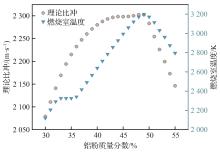
Fig.1
Theoretical specific impulse and combustion chamber temperature at different aluminum mass fractions
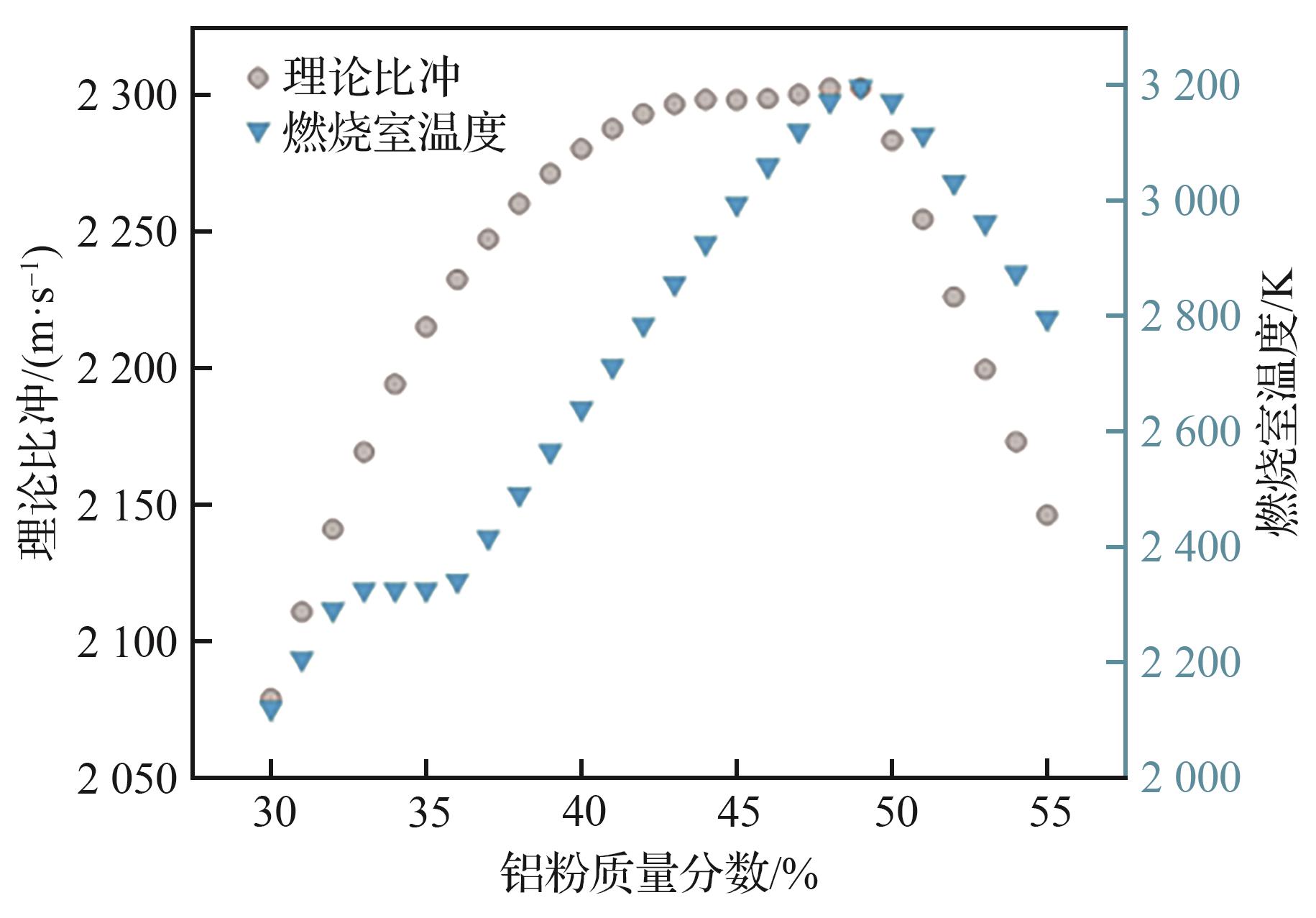
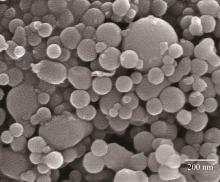
Fig.2
SEM photograph of raw materials
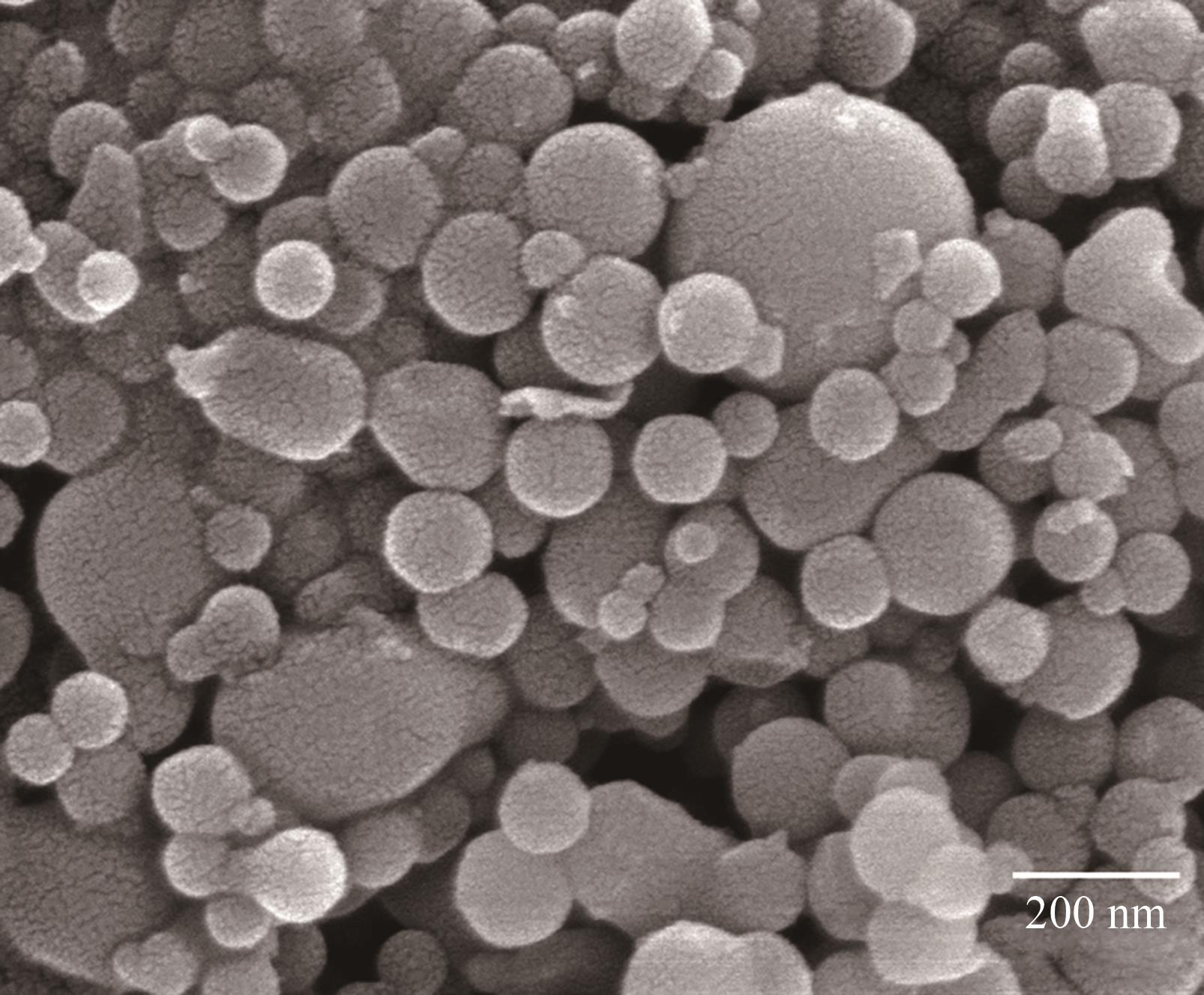
Table 1
Ignition sample composition
| 样品名称 | 铝粉质量分数/% | 添加物 | 添加物质量分数/% | 混合铝粉中添加物 质量分数/% | 水质量分数/% | AP质量分数/% |
|---|---|---|---|---|---|---|
| 对照组 | 45.000 0 | 无 | 0 | 0 | 50 | 5 |
| TFE 1.25 | 44.437 5 | Fe₂O₃ | 0.562 5 | 1.25 | 50 | 5 |
| TFE 2.5 | 43.875 0 | Fe₂O₃ | 1.125 0 | 2.50 | 50 | 5 |
| TFE 3.75 | 43.312 5 | Fe₂O₃ | 1.687 5 | 3.75 | 50 | 5 |
| TFE 5 | 42.750 0 | Fe₂O₃ | 3.750 0 | 5.00 | 50 | 5 |
| TPT 1.25 | 44.437 5 | PTFE | 0.562 5 | 1.25 | 50 | 5 |
| TPT 2.5 | 43.875 0 | PTFE | 1.125 0 | 2.50 | 50 | 5 |
| TPT 3.75 | 43.312 5 | PTFE | 1.687 5 | 3.75 | 50 | 5 |
| TPT 5 | 42.750 0 | PTFE | 3.750 0 | 5.00 | 50 | 5 |
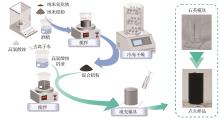
Fig.3
Preparation process of ignition samples for aluminum-water propellant
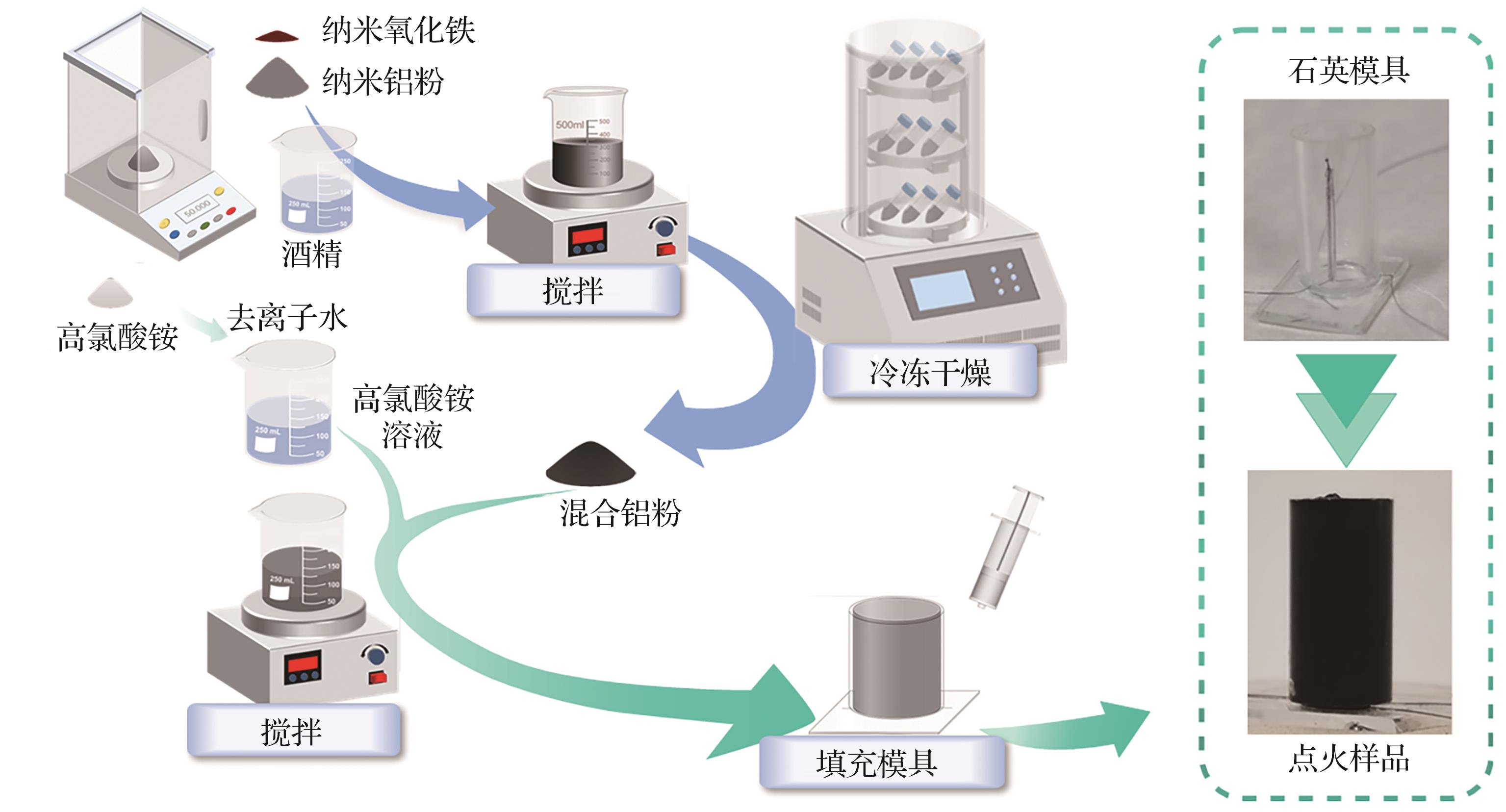
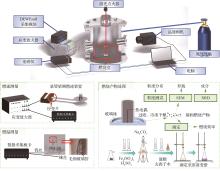
Fig.4
Combustion experiment process of aluminum water propellant
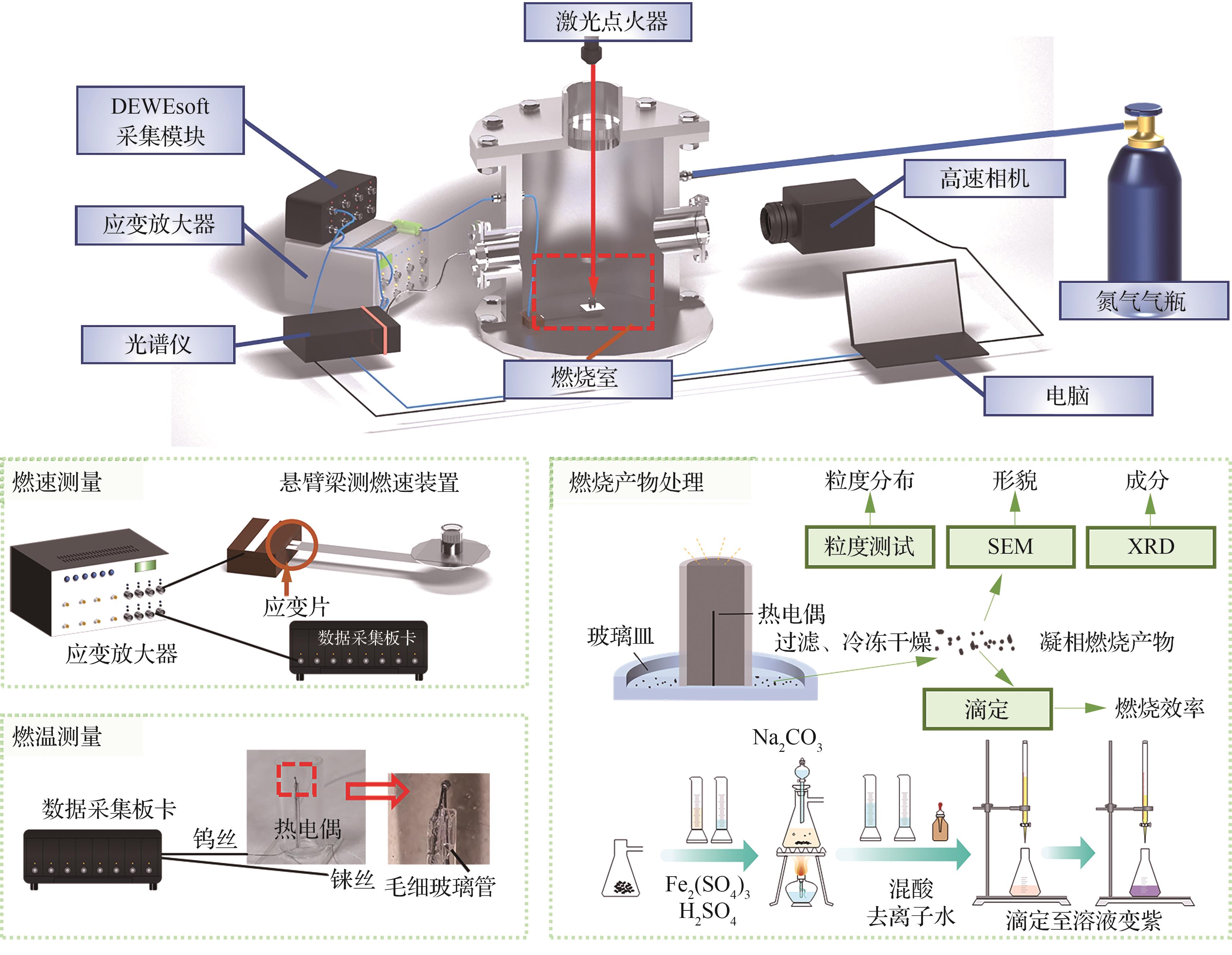
Fig.5
TG-DSC curves of nano aluminum powder
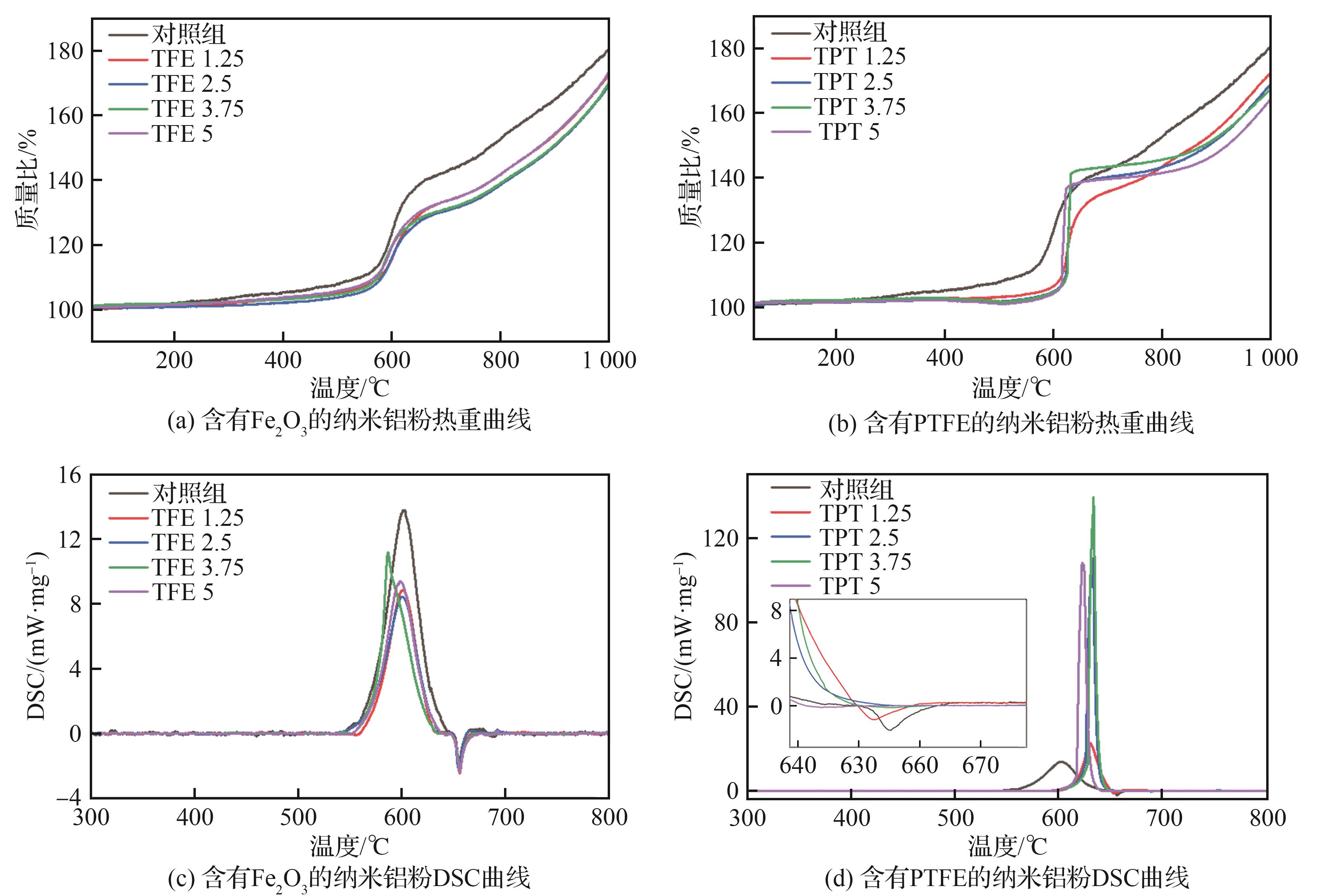
Table 2
Aluminum powder thermogravimetric data
| 样品 | 第1阶段 | 第2阶段 | ||
|---|---|---|---|---|
起始 温度/℃ | 增重率/% | 起始 温度/℃ | 总增 重率/% | |
| 对照组 | 500.00 | 32.56 | 712.92 | 80.44 |
| TFE 1.25 | 432.08 | 28.53 | 698.40 | 72.28 |
| TFE 2.5 | 430.51 | 26.77 | 697.57 | 68.08 |
| TFE 3.75 | 418.69 | 26.44 | 696.97 | 67.67 |
| TFE 5 | 429.16 | 27.79 | 697.69 | 70.87 |
| TPT 0 | 500.00 | 32.56 | 712.92 | 80.44 |
| TPT 1.25 | 500.00 | 38.46 | 706.87 | 72.34 |
| TPT 2.5 | 419.59 | 40.70 | 713.89 | 68.68 |
| TPT 3.75 | 489.62 | 43.45 | 774.28 | 67.33 |
| TPT 5 | 479.58 | 40.58 | 753.40 | 63.98 |
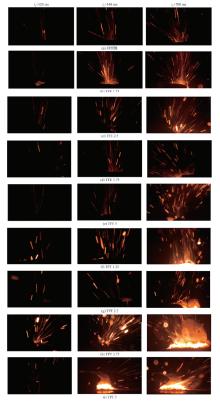
Fig.6
Combustion image of aluminum water propellant
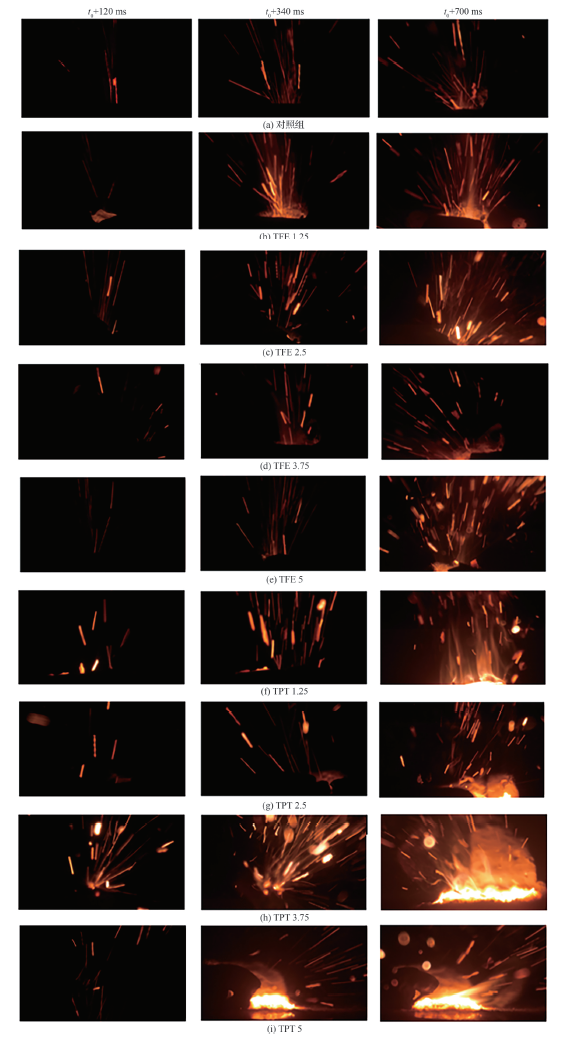
Fig.7
Agglomeration phenomenon in process of aluminum water propellant
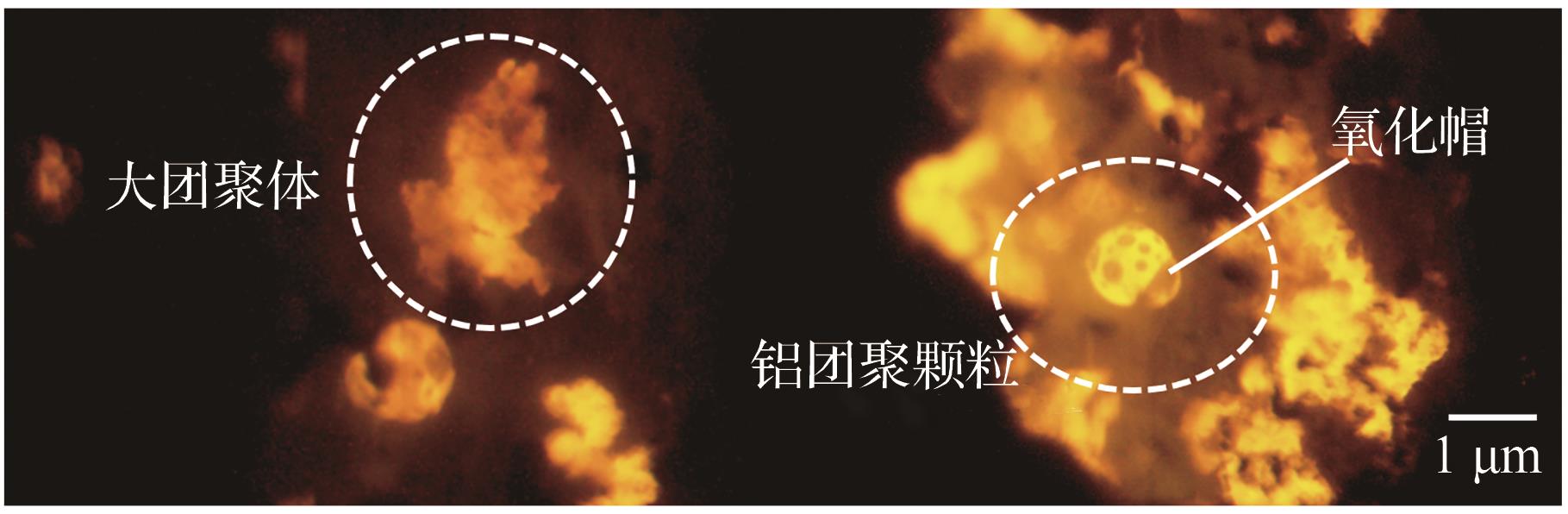
Fig.8
Spectra of aluminum water propellant
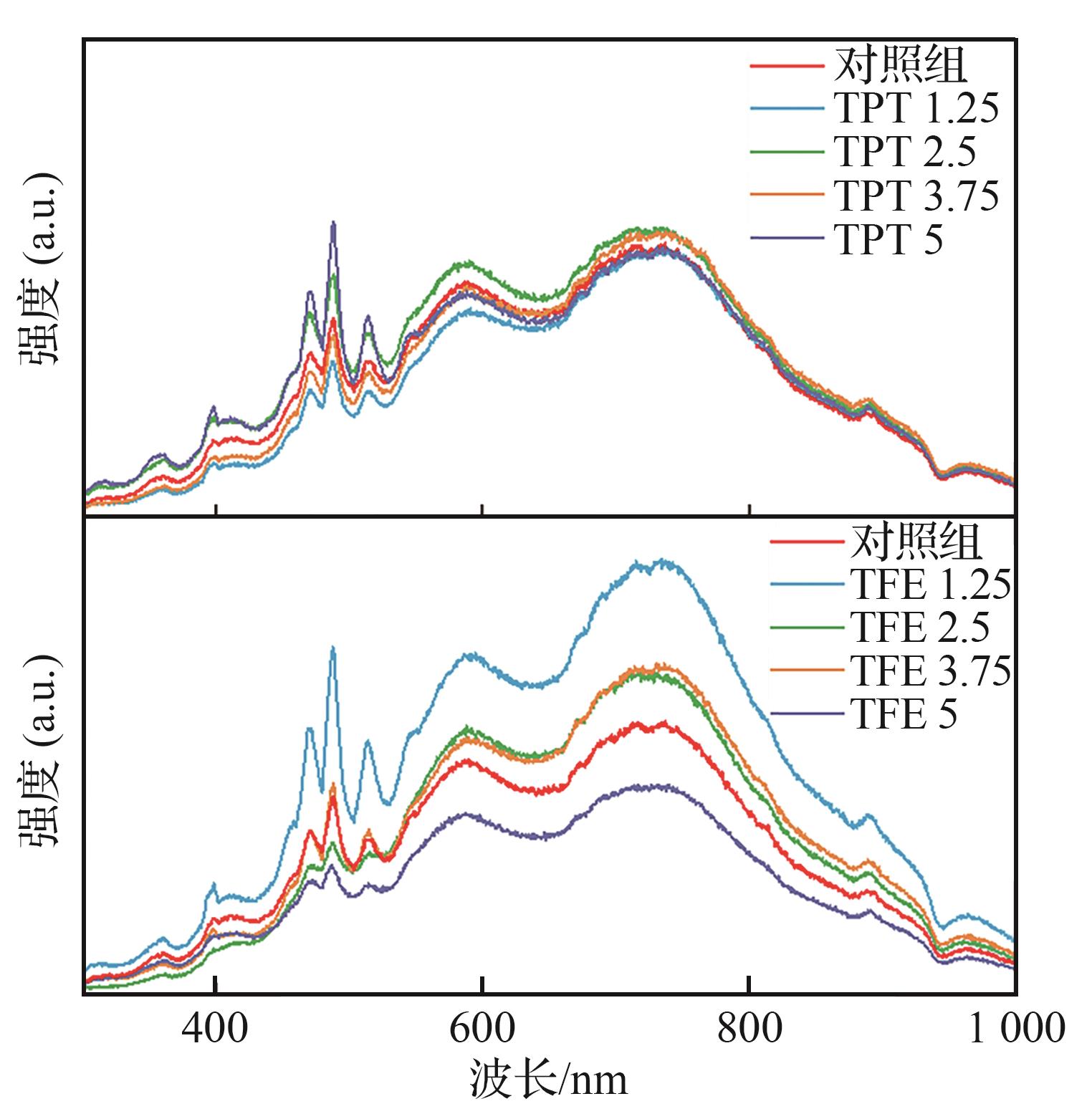
Fig.9
Load variation curve of cantilever beam device during the combustion process of aluminum water propellant
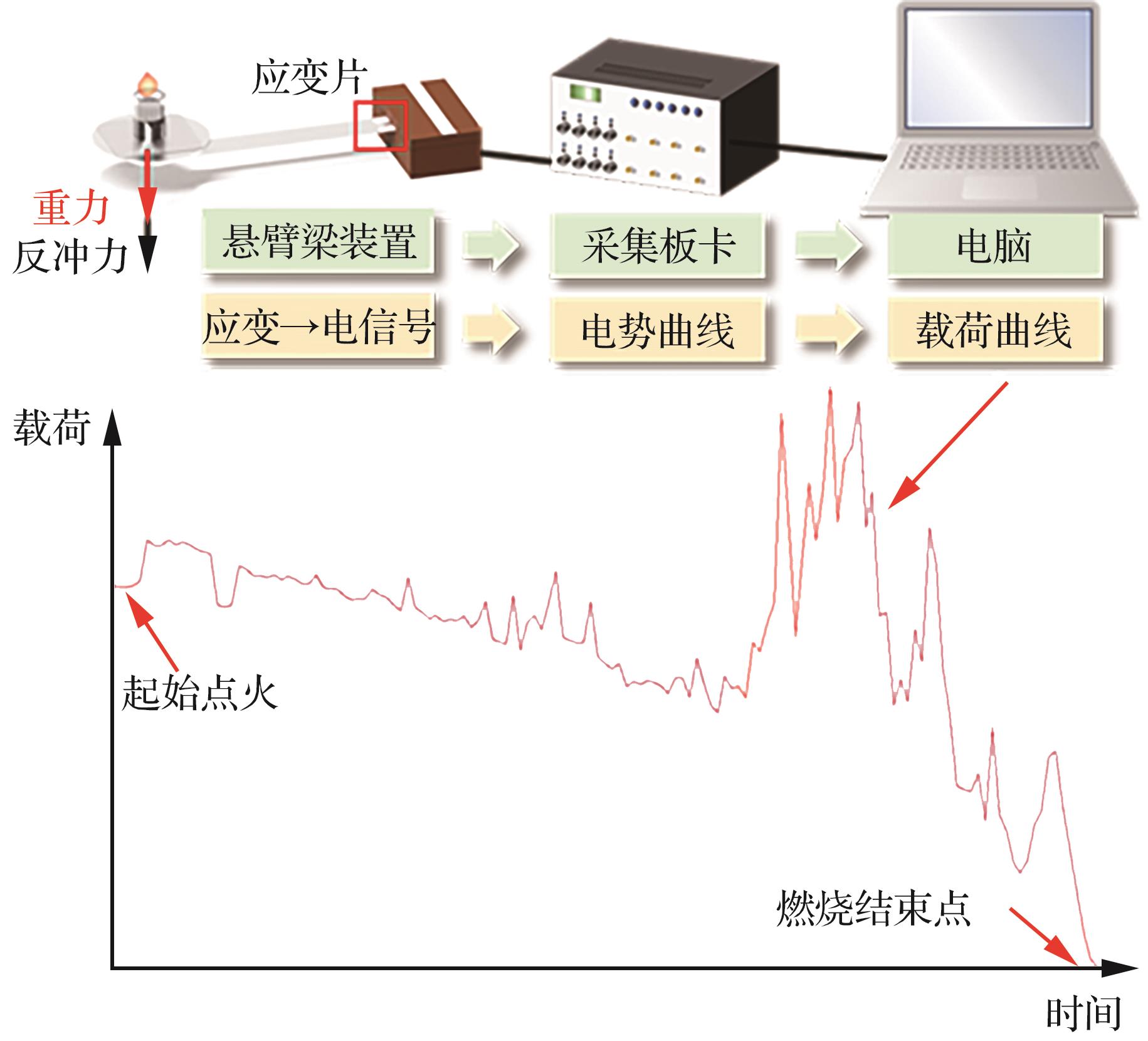
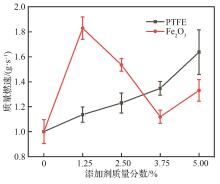
Fig.10
Burning rate of aluminum water propellants
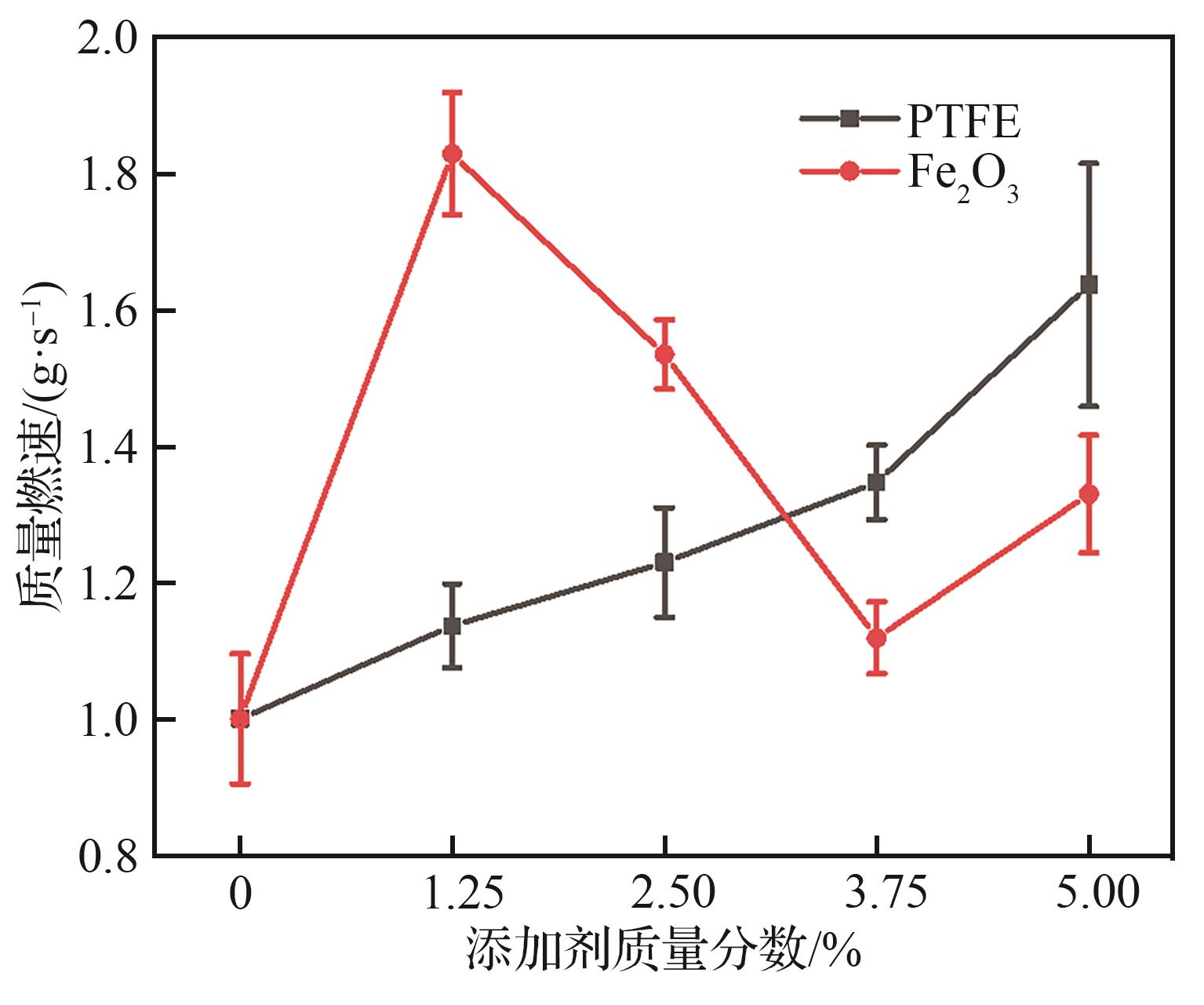
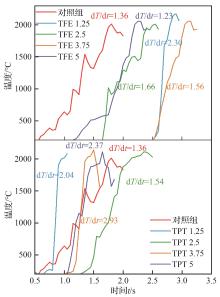
Fig.11
Temperature curves of aluminum water propellant
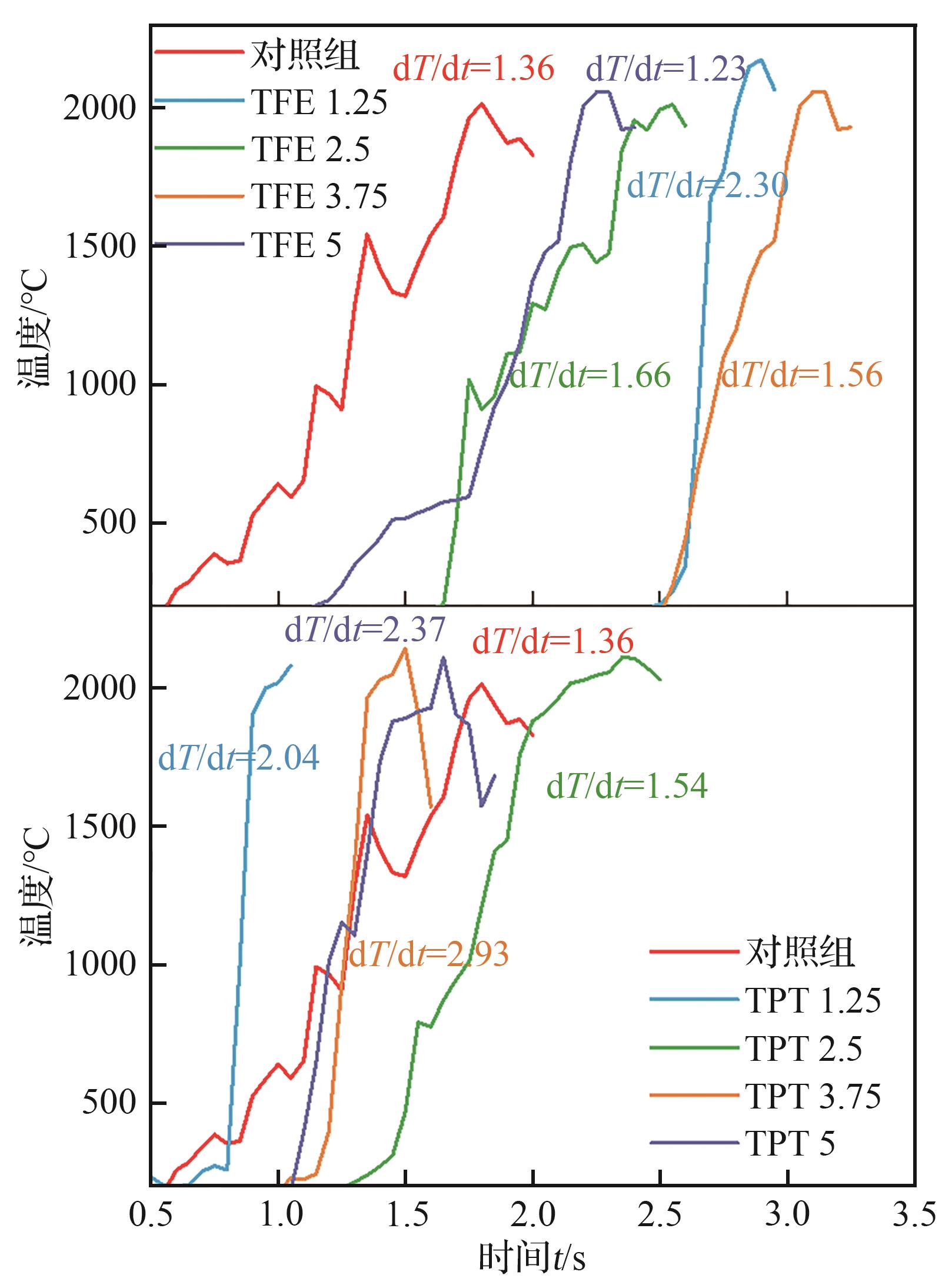
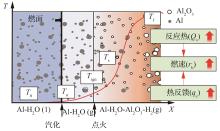
Fig.12
Combustion model of aluminum water propellant
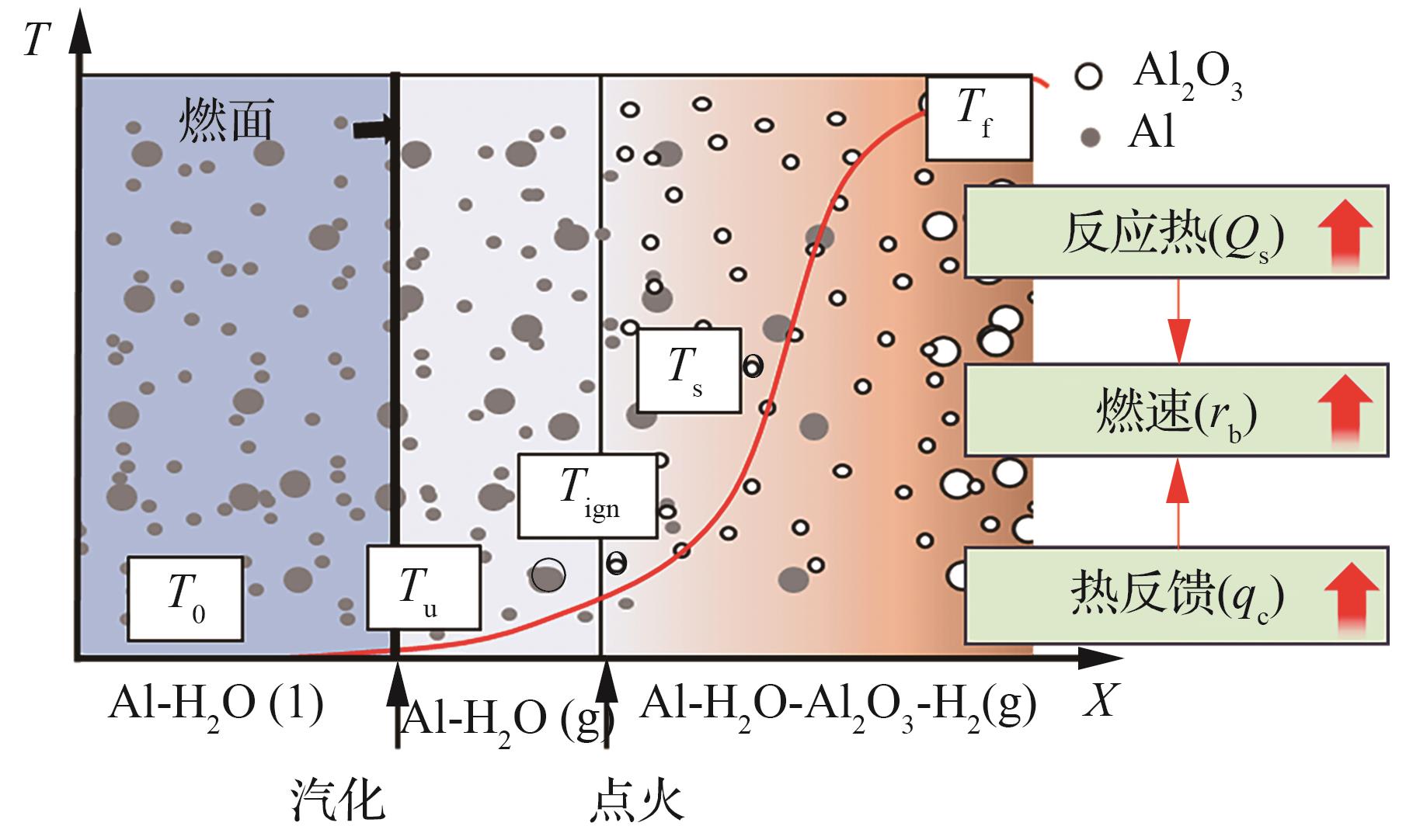
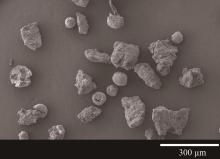
Fig.13
SEM photograph for condensed combustion products of control group
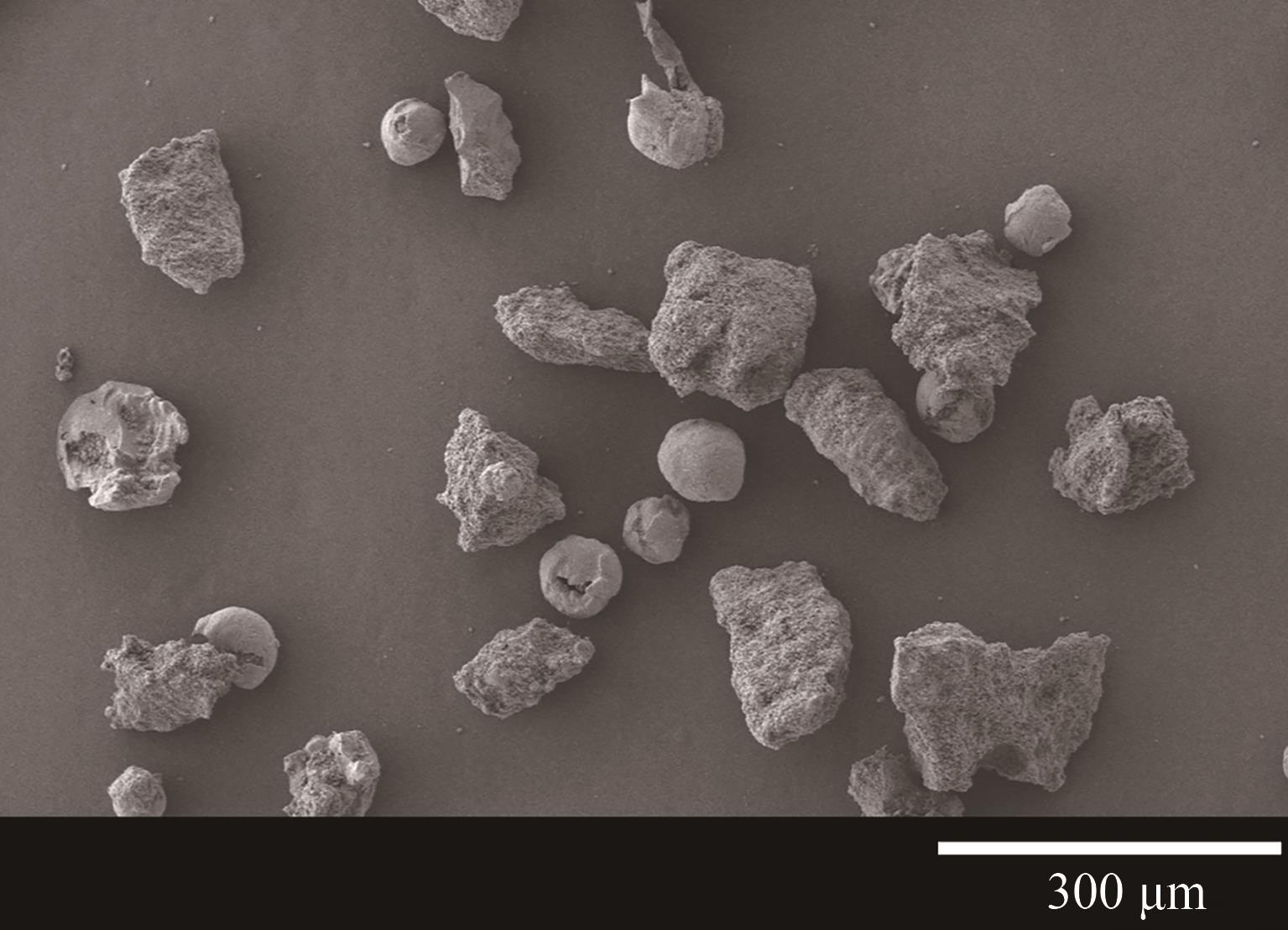
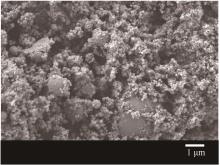
Fig.14
Aluminum particles on surface of condensed combustion products of control group
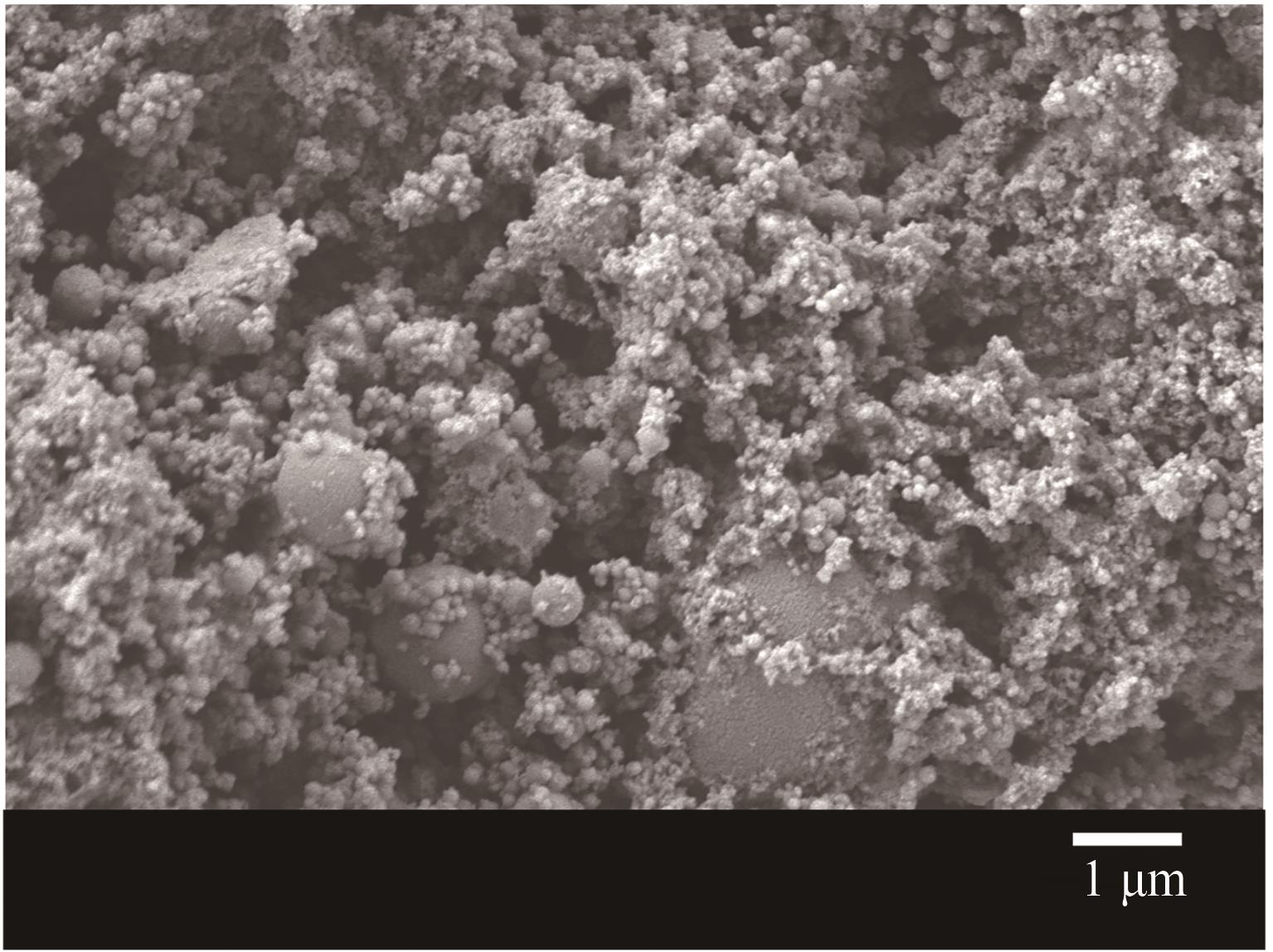
Fig.15
SEM photograph for condensed combustion products of experiment group
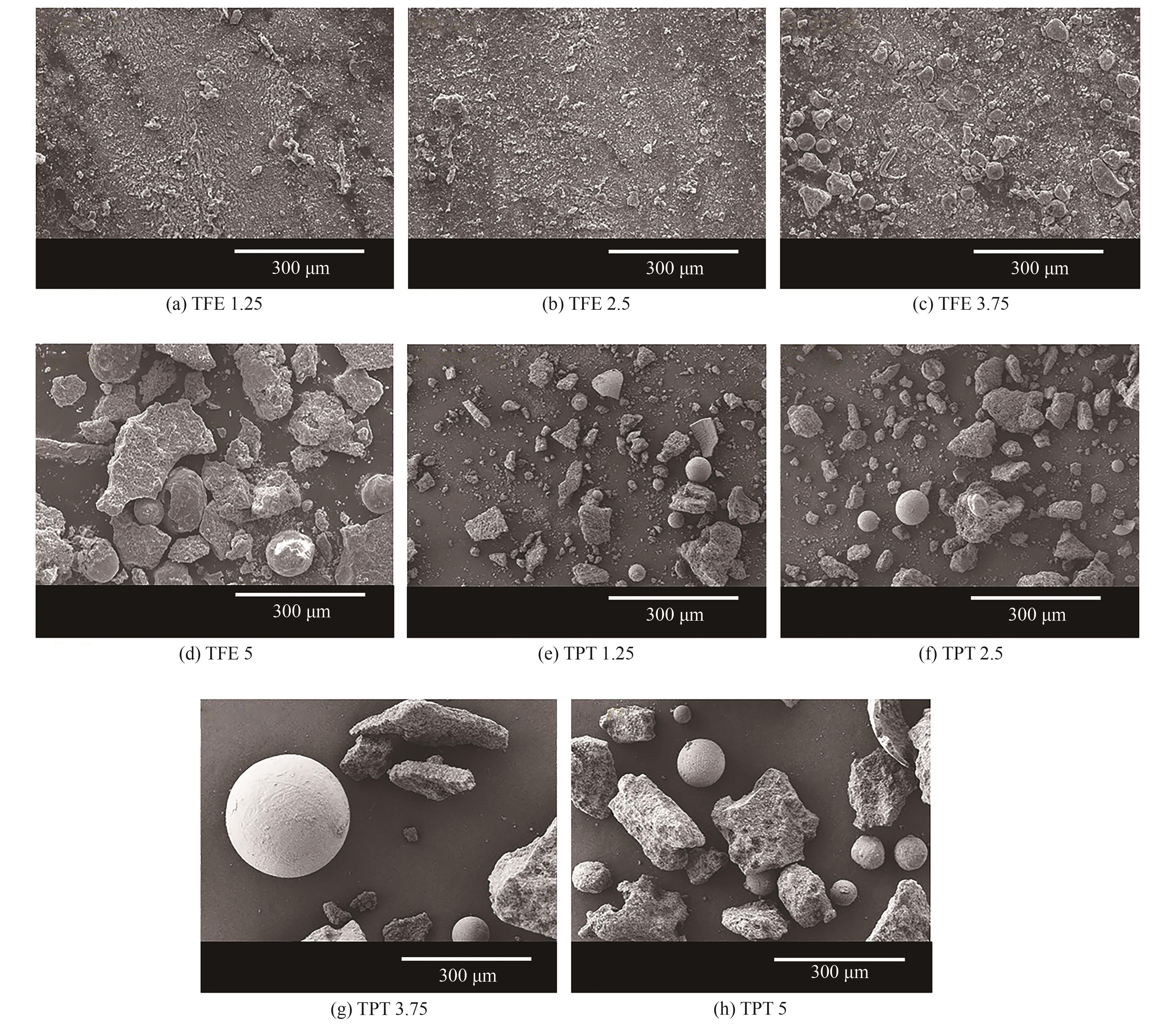
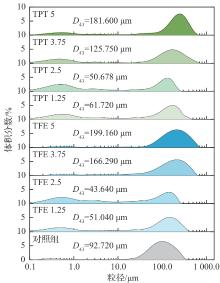
Fig.16
Particle size distributions of condense combustion product
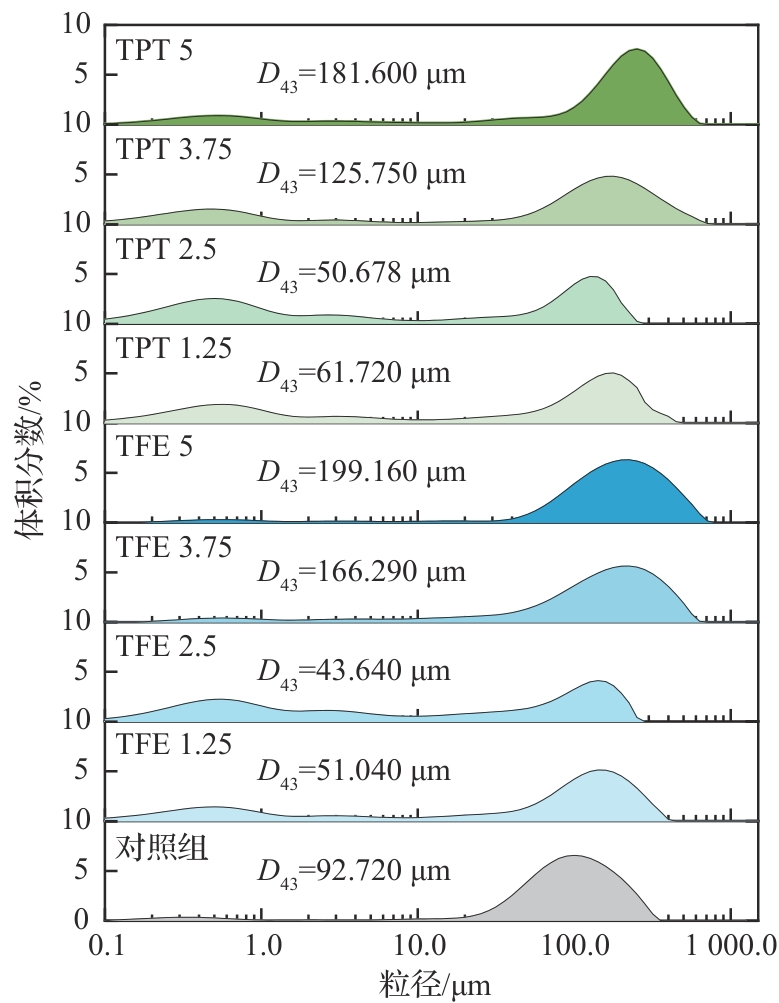
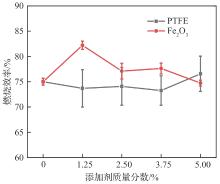
Fig.17
Combustion efficiency of aluminum water propellant
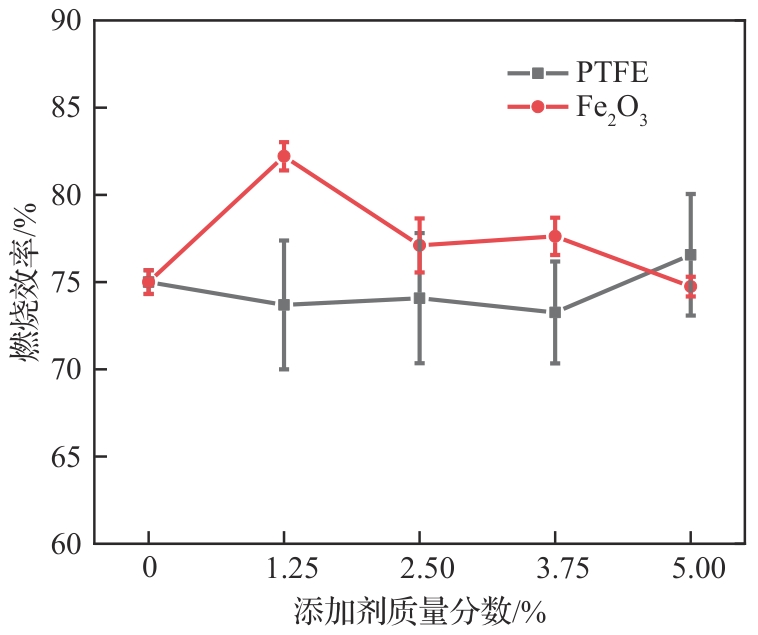
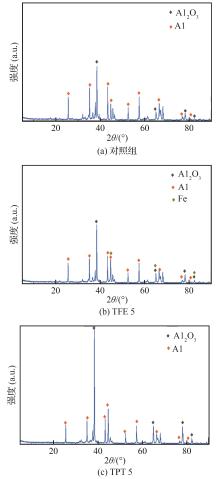
Fig.18
XRD of condensed-phase combustion products of control group and samples with additive content of 5%
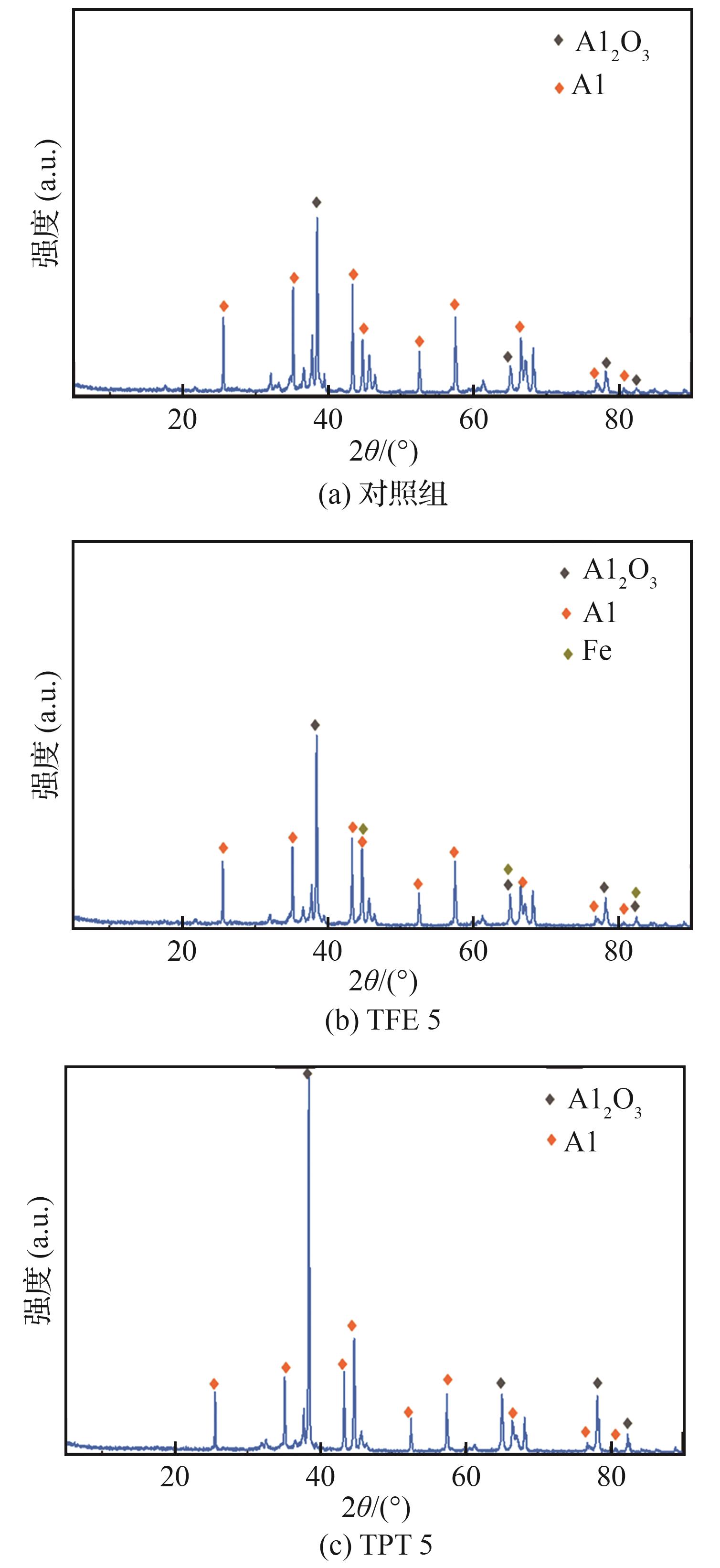
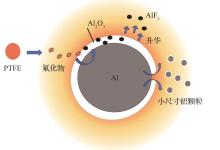
Fig.19
Effect of PTFE on agglomerated aluminum particles
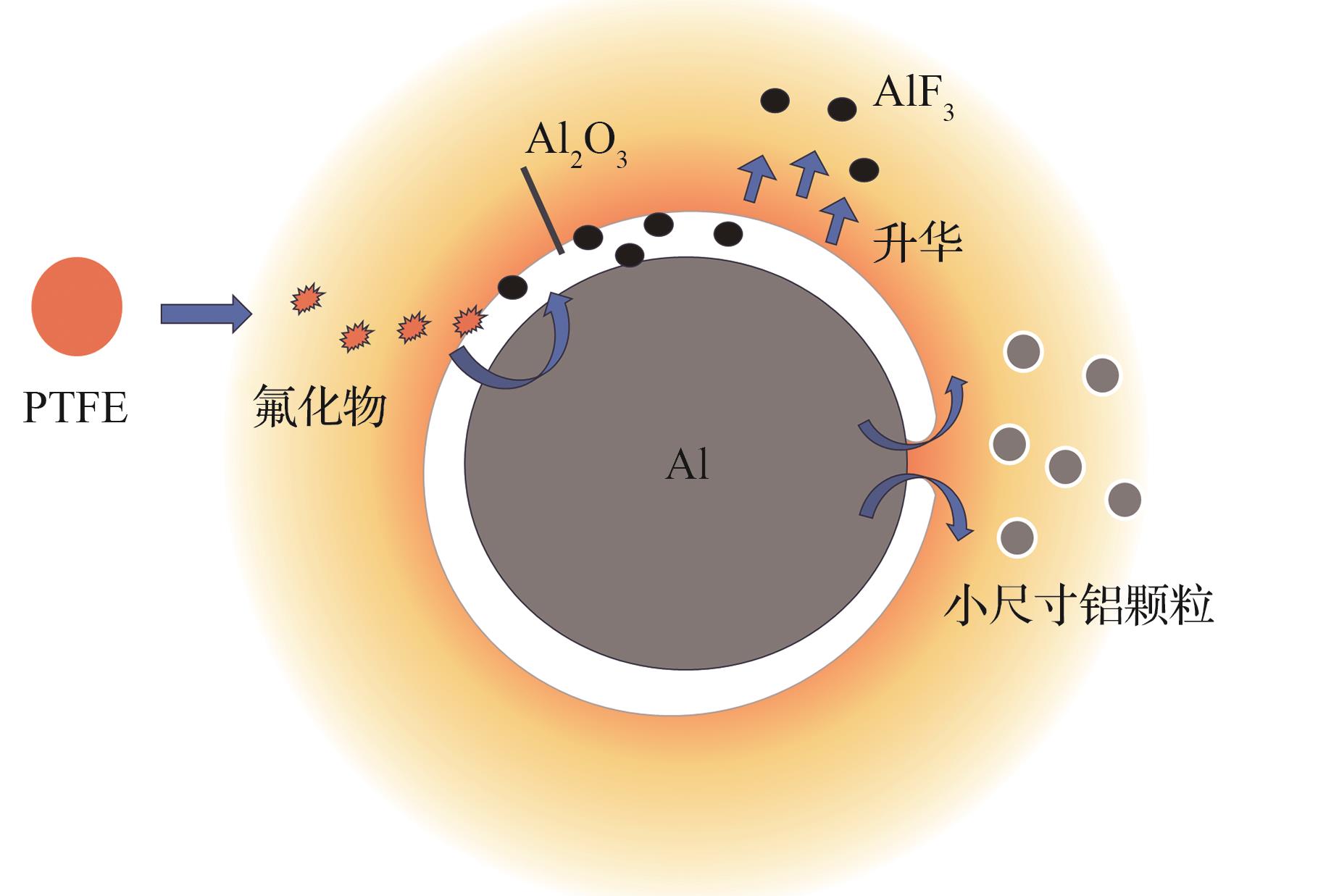
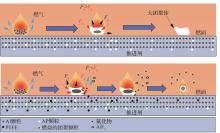
Fig.20
PTFE inhibits agglomeration mechanism
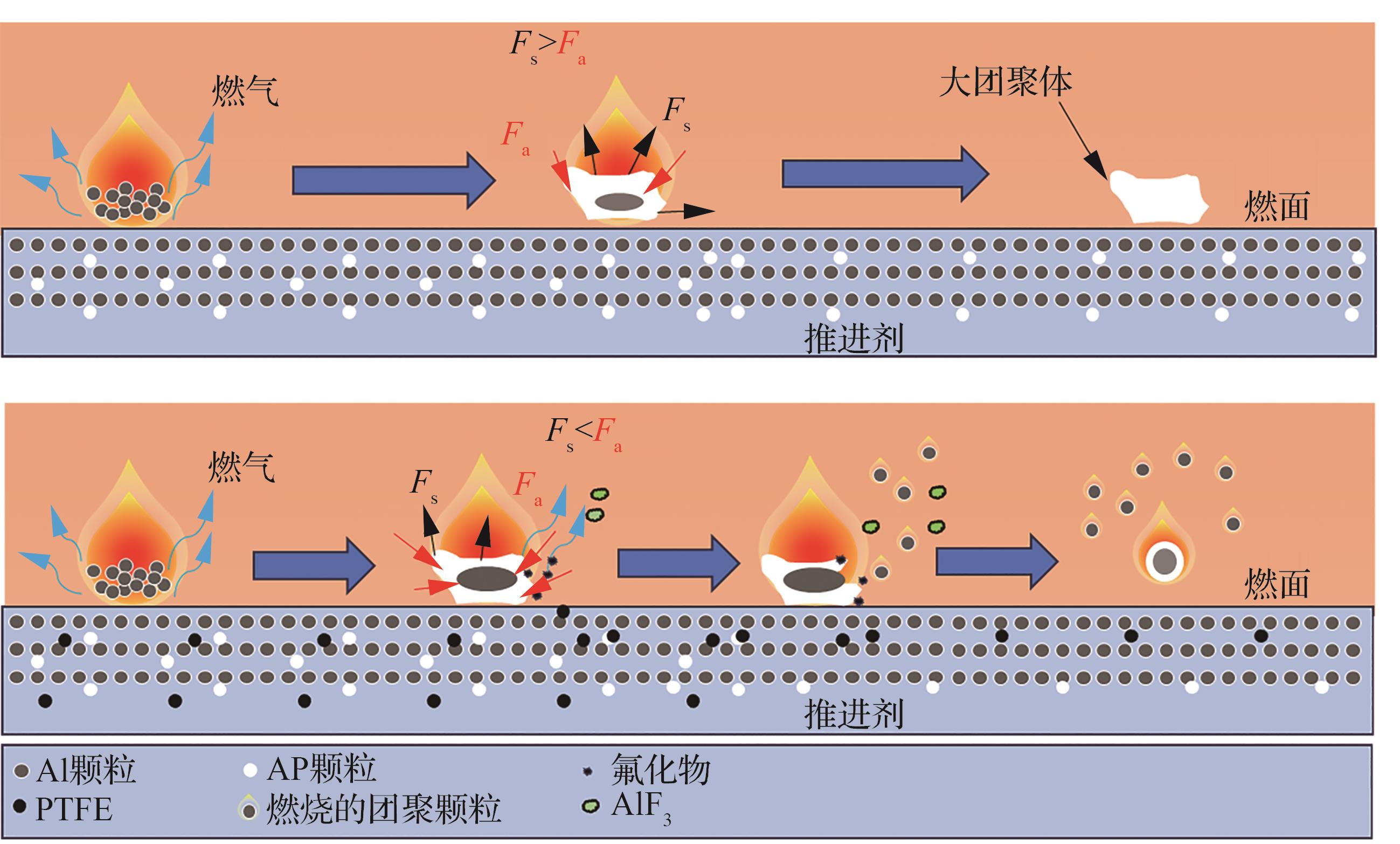
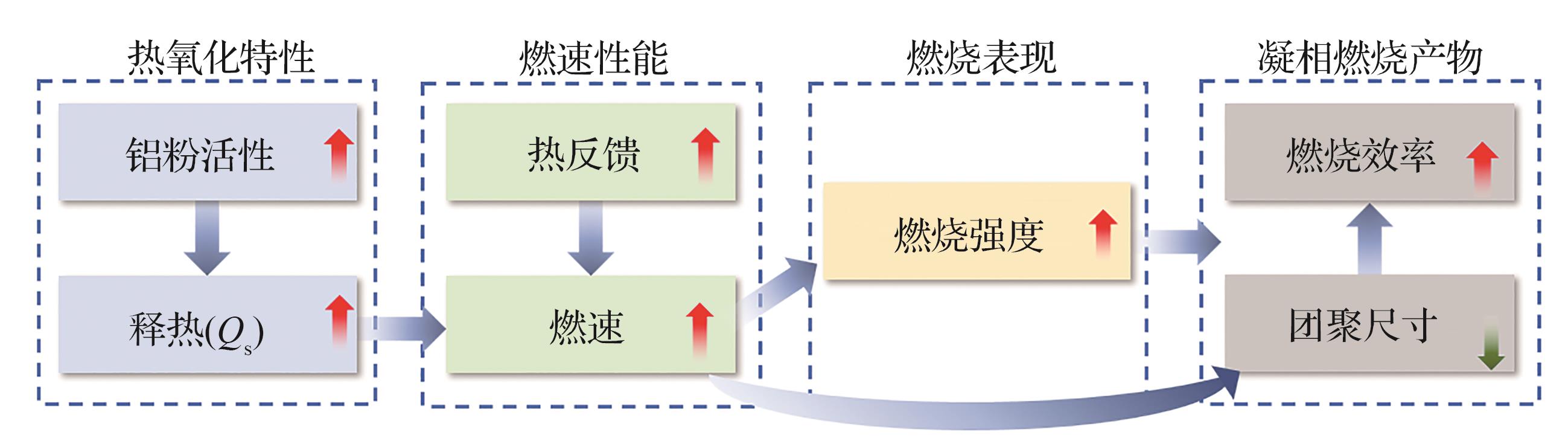
Fig.21
Combustion performance mechanism of aluminum water propellant
| [1] | 张保庆. 国外战术导弹固体动力发展动向[J]. 太空探索, 2017(2): 45-47. |
| ZHANG B Q. Development trend of solid power of tactical missiles abroad[J]. Space Exploration, 2017(2): 45-47 (in Chinese). | |
| [2] | 张箭, 徐德祝, 王晓东, 等. 国外绿色铝/冰推进剂研究进展[J]. 化学推进剂与高分子材料, 2016, 14(6): 7-11. |
| ZHANG J, XU D Z, WANG X D, et al. Research progress of green aluminum/ice propellant abroad[J]. Chemical Propellants & Polymeric Materials, 2016, 14(6): 7-11 (in Chinese). | |
| [3] | IVANOV V G, LEONOV S N, SAVINOV G L, et al. Combustion of mixtures of ultradisperse aluminum and gel-like water[J]. Combustion, Explosion and Shock Waves, 1994, 30(4): 569-570. |
| [4] | IVANOV V G, SAFRONOV M N, GAVRILYUK O V. Macrokinetics of oxidation of ultradisperse aluminum by water in the liquid phase[J]. Combustion, Explosion and Shock Waves, 2001, 37(2): 173-177. |
| [5] | INGENITO A, BRUNO C. Using aluminum for space propulsion[J]. Journal of Propulsion and Power, 2004, 20(6): 1056-1063. |
| [6] | STRELETSKII A N, KOLBANEV I V, BORUNOVA A B, et al. Mechanochemical activation of aluminum: 3. kinetics of interaction between aluminum and water[J]. Colloid Journal, 2005, 67(5): 631-637. |
| [7] | HUANG Y, RISHA G, YANG V, et al. Analysis of nano-aluminum particle dust cloud combustion in different oxidizer environments[C]∥43rd AIAA Aerospace Sciences Meeting and Exhibit. Reston: AIAA, 2005. |
| [8] | CLIFF M, TEPPER F, LISETSKY V. Ageing characteristics of Alexr nanosize aluminium[C]∥37th Joint Propulsion Conference and Exhibit. Reston: AIAA, 2001. |
| [9] | TROWELL K A, WANG J, WANG Y, et al. Effect of particle coating on the thermal response of mixtures of micro-and nano-aluminum particles with water[J]. Journal of Thermal Analysis and Calorimetry, 2017, 127(1): 1027-1036. |
| [10] | SIPPEL T R, SON S F, RISHA G A, et al. Combustion and characterization of nanoscale aluminum and ice propellants[C]∥44th AIAA/ASME/SAE/ASEE Joint Propulsion Conference & Exhibit. Reston: AIAA, 2008. |
| [11] | POURPOINT T L, WOOD T D, PFEIL M A, et al. Feasibility study and demonstration of an aluminum and ice solid propellant[J]. International Journal of Aerospace Engineering, 2012, 2012: 874076. |
| [12] | 邵昂, 朱韶华, 鄂秀天凤, 等. 含铝金属化浆体推进剂火箭发动机燃烧性能试验研究[J]. 推进技术, 2018, 39(7): 1650-1659. |
| SHAO A, ZHU S H, E X T F, et al. Experimental study on combustion characteristic of rocket engine based on slurry propellant containing aluminum particles[J]. Journal of Propulsion Technology, 2018, 39(7): 1650-1659 (in Chinese). | |
| [13] | YUE S C, ZHAO J G, SHU Y, et al. Enhancing combustion and injection performance of aluminum-water gelled propellants via bismuth oxide[J]. Fuel, 2025, 399: 135670. |
| [14] | 廖雪钦, 苑继飞, 刘建忠, 等. 含铝固体推进剂铝团聚抑制方法研究进展[J]. 推进技术, 2023, 44(3): 22-31. |
| LIAO X Q, YUAN J F, LIU J Z, et al. Research progress on aluminum agglomeration inhibition methods for aluminum-containing solid propellants[J]. Journal of Propulsion Technology, 2023, 44(3): 22-31 (in Chinese). | |
| [15] | RISHA G A, SON S F, YETTER R A, et al. Combustion of nano-aluminum and liquid water[J]. Proceedings of the Combustion Institute, 2007, 31(2): 2029-2036. |
| [16] | KITTELL D, POURPOINT T, GROVEN L, et al. Further development of an aluminum and water solid rocket propellant[C]∥47th AIAA/ASME/SAE/ASEE Joint Propulsion Conference & Exhibit. Reston: AIAA, 2011. |
| [17] | BORISOV A A, KOMISSAROV P V, SOKOLOV G N. Burning of aluminum particles in water[J]. Russian Journal of Physical Chemistry B, 2012, 6(2): 271-275. |
| [18] | GEORGES W, YAVOR Y, HIGGINS A J, et al. Burning rate of nano-aluminum-water propellant at high pressures[C]∥52nd Aerospace Sciences Meeting. Reston: AIAA, 2014. |
| [19] | SUNDARAM D S, YANG V. Effects of entrainment and agglomeration of particles on combustion of nano-aluminum and water mixtures[J]. Combustion and Flame, 2014, 161(8): 2215-2217. |
| [20] | SIPPEL T R, POURPOINT T L, SON S F. Combustion of nanoaluminum and water propellants: Effect of equivalence ratio and safety/aging characterization[J]. Propellants, Explosives, Pyrotechnics, 2013, 38(1): 56-66. |
| [21] | MA P, WANG S F, WANG X Z. Experimental study of combustion characteristics of micron-sized aluminum particles and liquid water[J]. Journal of Propulsion and Power, 2022, 38(3): 331-338. |
| [22] | ZASECK C R, SON S F, POURPOINT T L. Combustion of micron-aluminum and hydrogen peroxide propellants[J]. Combustion and Flame, 2013, 160(1): 184-190. |
| [23] | KITTELL D E, GROVEN L J, SIPPEL T R, et al. Dependence of nano-aluminum and water propellant combustion on pH and rheology[J]. Combustion Science and Technology, 2013, 185(5): 817-834. |
| [24] | GAUTHAM M G, RAMAKRISHNA P A. Combustion characteristics of aluminum-water gelled composite propellant[J]. Journal of Propulsion and Power, 2018, 34(5): 1345-1354. |
| [25] | RISHA G A, CONNELL T L Jr, YETTER R A, et al. Combustion of frozen nanoaluminum and water mixtures[J]. Journal of Propulsion and Power, 2014, 30(1): 133-142. |
| [26] | NARAYANA SWAMY A K, SHAFIROVICH E. Conversion of aluminum foil to powders that react and burn with water[J]. Combustion and Flame, 2014, 161(1): 322-331. |
| [27] | IVANOV V G, GAVRILYUK O V, GLAZKOV O V, et al. Specific features of the reaction between ultrafine aluminum and water in a combustion regime[J]. Combustion, Explosion and Shock Waves, 2000, 36(2): 213-219. |
| [28] | 王革, 何登军, 刘平安. 铝冰固体推进剂燃速特性研究[J]. 固体火箭技术, 2016, 39(3): 358-363. |
| WANG G, HE D J, LIU P A. Investigation of the combustion and characterization of aluminum ice solid propellant[J]. Journal of Solid Rocket Technology, 2016, 39(3): 358-363 (in Chinese). | |
| [29] | 刘平安, 王良, 王璐, 等. 铝冰发动机内流场的数值计算[J]. 固体火箭技术, 2017, 40(4): 425-431. |
| LIU P A, WANG L, WANG L, et al. Numerical simulation of aluminum-ice solid propellant motor[J]. Journal of Solid Rocket Technology, 2017, 40(4): 425-431 (in Chinese). | |
| [30] | WANG J L, WANG N F, ZOU X R, et al. Numerical study on combustion efficiency of aluminum particles in solid rocket motor[J]. Chinese Journal of Aeronautics, 2023, 36(5): 66-77. |
| [31] | ZHANG L C, BAI Z C, WANG R B, et al. Dynamic layer-by-layer surface self-assembly on aluminum fuel for improving the comprehensive performance of propellants[J]. Chemical Engineering Journal, 2024, 480: 147356. |
| [32] | WANG H Y, HAGEN E, SHI K R, et al. Carbon fibers as additives to engineer agglomeration and propagation of aluminized propellants[J]. Chemical Engineering Journal, 2023, 460: 141653. |
| [33] | PLANTIER K B, PANTOYA M L, GASH A E. Combustion wave speeds of nanocomposite Al/Fe2O3: The effects of Fe2O3 particle synthesis technique[J]. Combustion and Flame, 2005, 140(4): 299-309. |
| [34] | SHIN M S, KIM J K, KIM J W, et al. Reaction characteristics of Al/Fe2O3 nanocomposites[J]. Journal of Industrial and Engineering Chemistry, 2012, 18(5): 1768-1773. |
| [35] | ZHAO N N, HE C C, LIU J B, et al. Dependence of catalytic properties of Al/Fe2O3 tHermites on morphology of Fe2O3 particles in combustion reactions[J]. Journal of Solid State Chemistry, 2014, 219: 67-73. |
| [36] | SABOURIN J L, RISHA G A, YETTER R A, et al. Combustion characteristics of nanoaluminum, liquid water, and hydrogen peroxide mixtures[J]. Combustion and Flame, 2008, 154(3): 587-600. |
| [37] | HE W, LIU P J, GONG F Y, et al. Tuning the reactivity of metastable intermixed composite n-Al/PTFE by polydopamine interfacial control[J]. ACS Applied Materials & Interfaces, 2018, 10(38): 32849-32858. |
| [38] | TANG E L, LUO H W, HAN Y F, et al. Experimental study on burning of two Al/PTFE samples[J]. Applied Thermal Engineering, 2020, 180: 115857. |
| [39] | WANG T, HE Y, ZHANG Z, et al. Fundamentals and advances in aluminum/polytetrafluoroethylene reactive materials: Design, ignition, and response behaviors[J]. International Journal of Energy Research, 2026, 2026(1): 5853300. |
| [40] | TAO J, WANG X F. Experimental study and simulation of the reaction mechanism of Al-PTFE mechanically activated energetic composites[J]. RSC Advances, 2023, 13(30): 20457-20466. |
| [41] | RUBIO M A, GUNDUZ I E, GROVEN L J, et al. Microexplosions and ignition dynamics in engineered aluminum/polymer fuel particles[J]. Combustion and Flame, 2017, 176: 162-171. |
| [42] | SIPPEL T R. Composite propellant aluminum agglomeration reduction using tailored Al/PTFE particles[M]. West Lafayette: Purdue University, 2013. |
| [43] | ISERT S, LANE C D, GUNDUZ I E, et al. Tailoring burning rates using reactive wires in composite solid rocket propellants[J]. Proceedings of the Combustion Institute, 2017, 36(2): 2283-2290. |
| [44] | SUN S X, ZHAO B B, ZHANG G P, et al. Applying mechanically activated Al/PTFE in CMDB propellant[J]. Propellants, Explosives, Pyrotechnics, 2018, 43(11): 1105-1114. |
| [45] | SUN S X, ZHANG T F, ZHAO B B, et al. Influence of polytetrafluorethylene on the mechanical and safety properties of a composite modified double base propellant[J]. Central European Journal of Energetic Materials, 2018, 15(3): 468-484. |
| [46] | 毛亮, 叶胜, 胡万翔, 等. 聚四氟乙烯基铝活性材料的热化学反应特性[J]. 兵工学报, 2020, 41(10): 1962-1969. |
| MAO L, YE S, HU W X, et al. Thermochemical reaction characteristics of PTFE/Al reactive material[J]. Acta Armamentarii, 2020, 41(10): 1962-1969 (in Chinese). | |
| [47] | OSBORNE D T, PANTOYA M L. Effect of Al particle size on the thermal degradation of Al/Teflon mixtures[J]. Combustion Science and Technology, 2007, 179(8): 1467-1480. |
| [48] | HOBOSYAN M A, KIRAKOSYAN K G, KHARATYAN S L, et al. PTFE-Al2O3 reactive interaction at high heating rates[J]. Journal of Thermal Analysis and Calorimetry, 2015, 119(1): 245-251. |
| [49] | LIU J P, ZHANG H R, YAN Q L. Anti-sintering behavior and combustion process of aluminum nano particles coated with PTFE: A molecular dynamics study[J]. Defence Technology, 2023, 24: 46-57. |
| [50] | LEVITAS V I, ASAY B W, SON S F, et al. Mechanochemical mechanism for fast reaction of metastable intermolecular composites based on dispersion of liquid metal[J]. Journal of Applied Physics, 2007, 101(8): 083524. |
| [51] | GOU D, FAN Z, WU S, et al. The role of HMX particle size in the combustion and agglomeration of HTPB-based propellant[J]. Aerospace Science and Technology, 2023, 136: 108170. |
| [1] | Yang YU, Kai XIANG, Jiaxun LIU, Xu WANG, Qingchun YANG, Xu XU, Haiyun SUN, Lun PAN. Combustion performance of hydrocarbon fuel containing nanoparticles in rocket [J]. Acta Aeronautica et Astronautica Sinica, 2026, 47(17): 632844-632844. |
| [2] | LI Chaolong, XIA Zhixun, MA Likun, ZHAO Xiang, LUO Zhenbing, DUAN Yifan. Experiment on performance of solid rocket scramjet [J]. ACTA AERONAUTICAET ASTRONAUTICA SINICA, 2022, 43(12): 126075-126075. |
| Viewed | ||||||
|
Full text |
|
|||||
|
Abstract |
|
|||||
Address: No.238, Baiyan Buiding, Beisihuan Zhonglu Road, Haidian District, Beijing, China
Postal code : 100083
E-mail:hkxb@buaa.edu.cn
Total visits: 6658907 Today visits: 1341All copyright © editorial office of Chinese Journal of Aeronautics
All copyright © editorial office of Chinese Journal of Aeronautics
Total visits: 6658907 Today visits: 1341

 CJA

