张竞文, 欧吉辉, 陈杰( )
收稿日期:2025-11-03
修回日期:2025-12-03
接受日期:2025-12-25
出版日期:2026-01-13
发布日期:2026-01-09
通讯作者:
陈杰
E-mail:jie.chen@tju.edu.cn
基金资助:
Jingwen ZHANG, Jihui OU, Jie CHEN()
Received:2025-11-03
Revised:2025-12-03
Accepted:2025-12-25
Online:2026-01-13
Published:2026-01-09
Contact:
Jie CHEN
E-mail:jie.chen@tju.edu.cn
Supported by:摘要:
更泛空域、更宽速域的跨流域飞行器已成为当前研究的热点之一,乘波体因其高升阻比和简单外形受到了广泛关注和研究。目前鲜有高空稀薄气体条件下乘波体外形气动特性的研究,由于流场包含从连续到稀薄多个流域,其气动特性预测面临严峻挑战。针对法国MARHy稀薄风洞测试的乘波体模型,采用直接模拟Monte Carlo(DSMC)方法、传统Navier-Stokes(NS)方程和基于DSMC数据改进的NS(DiNS)模型进行模拟分析;通过与试验气动力测试结果对比,评估不同计算方法的计算精度,分析近连续流域条件下乘波体外形的气动力特点,研究流场局部稀薄气体效应以及对气动力的影响,并进一步分析马赫数和攻角对乘波体气动力的影响。结果表明:对于马赫数20、努森数0.01的乘波体试验工况,传统NS方程结合滑移边界预测的阻力与试验测量结果的相对误差高达39.19%,DiNS模型通过修正线性本构关系可将与试验的相对误差降低至3.95%;该乘波体外形摩擦阻力在阻力中的占比达到97.14%,而边界层中存在的显著剪切非平衡效应导致线性本构关系失效,使得NS方程预测的摩擦阻力过高。此外,攻角的增加使得升力系数显著增加,升阻比显著提高,同时稀薄气体效应更加显著;随着马赫数增加,该乘波体升力系数因偏离设计工况而大幅度减小,升阻比显著下降。
中图分类号:
张竞文, 欧吉辉, 陈杰. 稀薄气体效应对乘波体飞行器气动力的影响[J]. 航空学报, 2026, 47(19): 133039.
Jingwen ZHANG, Jihui OU, Jie CHEN. Rarefaction effect on aerodynamic characteristics of waverider vehicle[J]. Acta Aeronautica et Astronautica Sinica, 2026, 47(19): 133039.
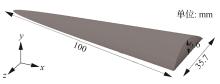
图 1
乘波体模型示意图
表1
氮气物理参数
| 参数 | m/(10-26 kg) | dVHS/(10-10 m) | Tref/K | μref/(10-5 Pa·s) | ω |
|---|---|---|---|---|---|
| 数值 | 4.65 | 4.17 | 273 | 1.656 | 0.74 |
表2
DSMC结果验证
| 工况 | 计算步数 | 时间步长Δt/s | 升力系数CL | 升力系数误差/% | 阻力系数CD | 阻力系数误差/% |
|---|---|---|---|---|---|---|
| A | 4×10⁴ | 1×10⁻⁷ | -0.329 | 2.269 | ||
| A1 | 5×10⁴ | 1×10⁻⁷ | -0.329 | 2.269 | ||
| A2 | 4×10⁴ | 2×10⁻⁷ | -0.321 | 2.43 | 2.237 | 1.40 |
| A3 | 4×10⁴ | 1×10⁻⁸ | -0.332 | 0.91 | 2.276 | 0.31 |
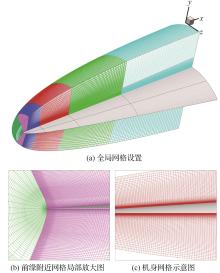
图 2
计算网格设置
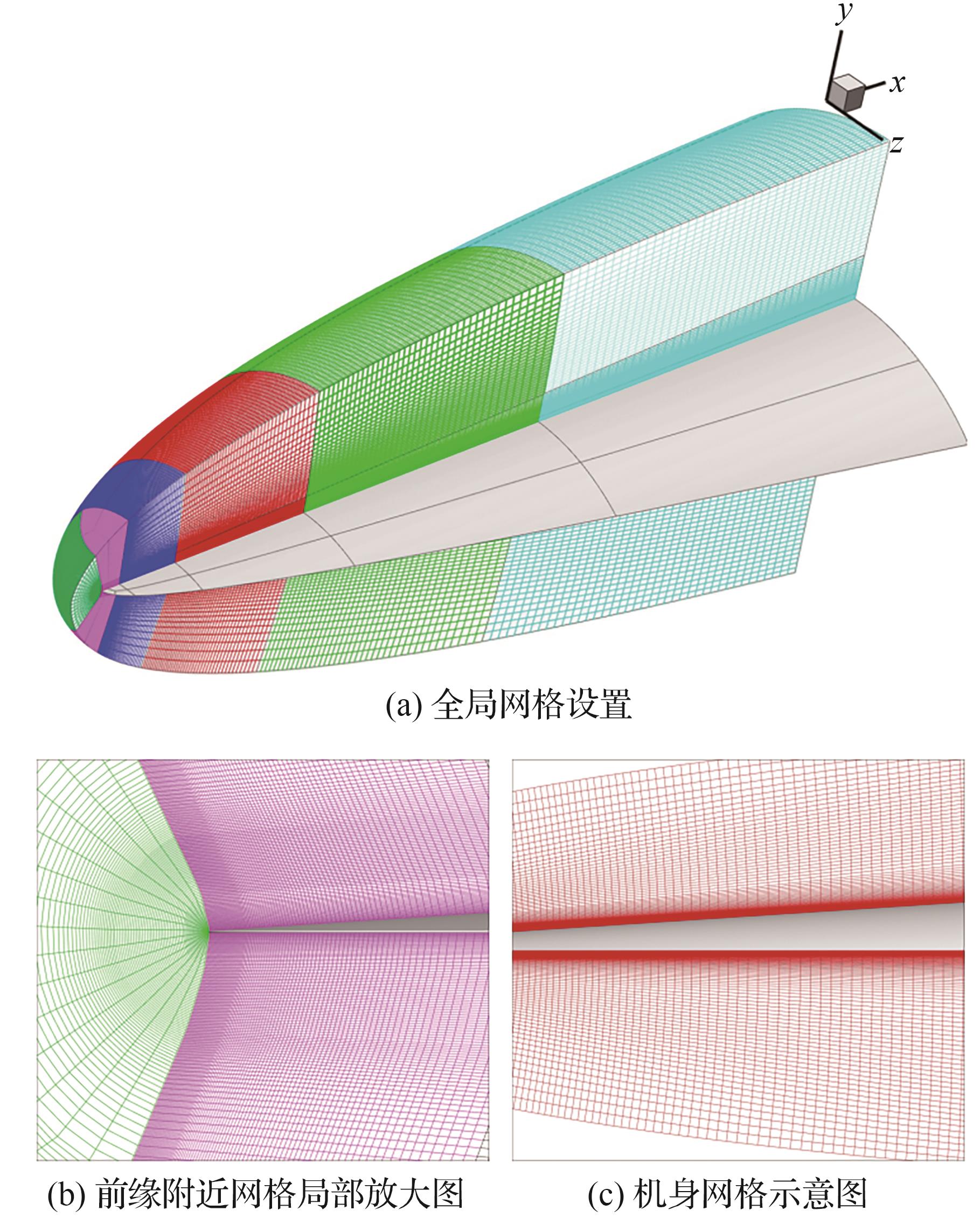
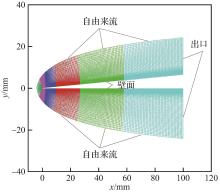
图 3
网格及边界设置
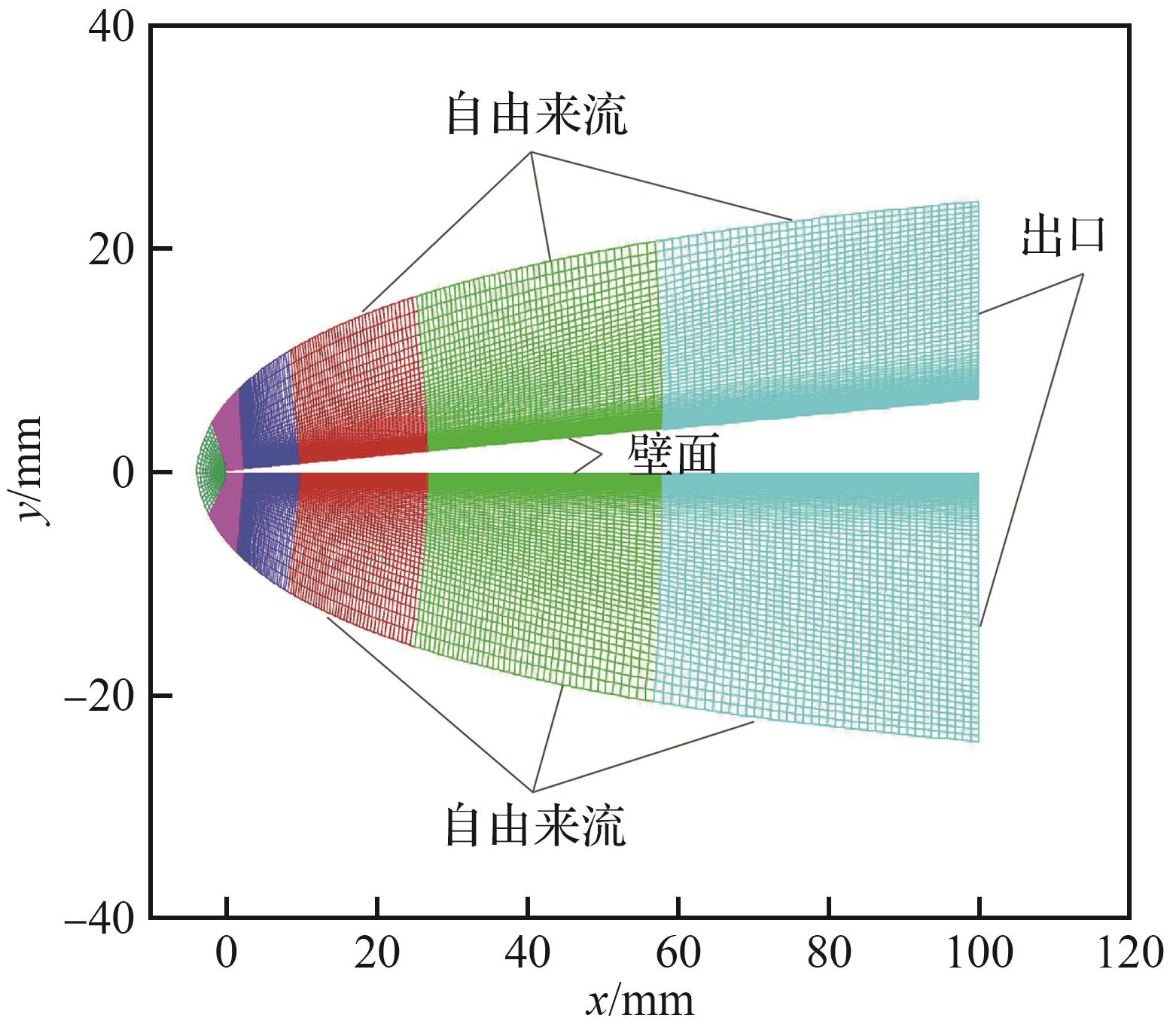
表3
CFD网格验证的参数设置
| 网格加密程度 | Nx×Ny×Nz | Δx/(10-5 m) | Δy/(10-5 m) |
|---|---|---|---|
| 粗网格 | 201×61×41 | 10 | 50.0 |
| 中等网格 | 241×91×61 | 2 | 1.0 |
| 细网格 | 261×121×81 | 1 | 0.5 |
表4
不同网格下升力与阻力系数对比
| 网格加密程度 | CL | CD |
|---|---|---|
| 粗网格 | -0.231 2 | 2.194 7 |
| 中等网格 | -0.241 9 | 2.286 7 |
| 细网格 | -0.242 8 | 2.306 7 |
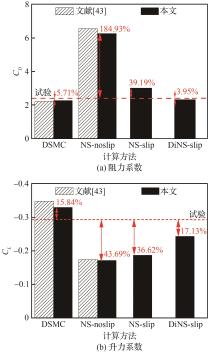
图 4
不同计算方法气动力系数结果与试验结果对比
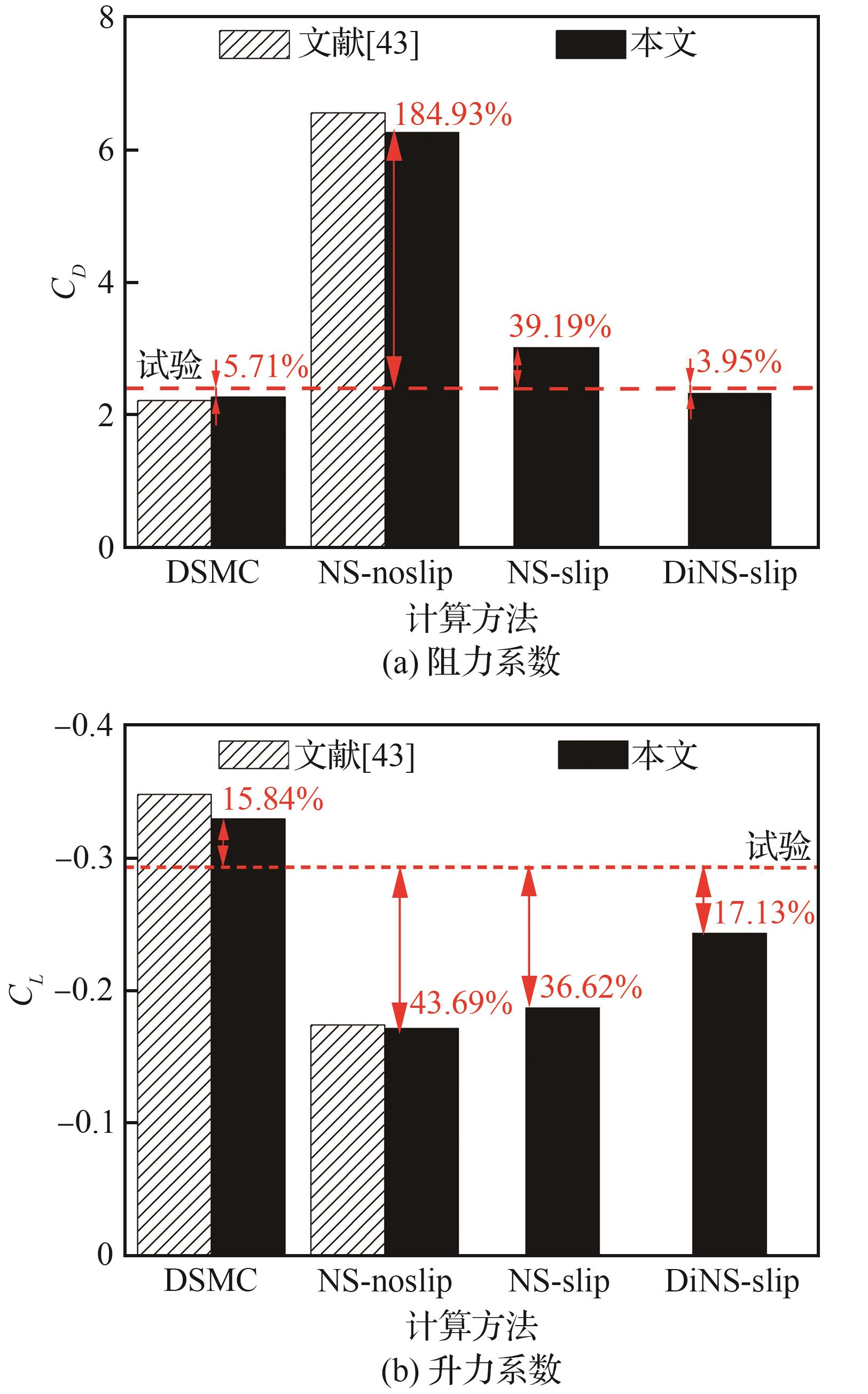
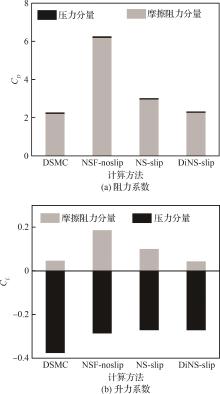
图 5
不同计算方法得到的升力系数和阻力系数中压力分量和摩擦力分量占比
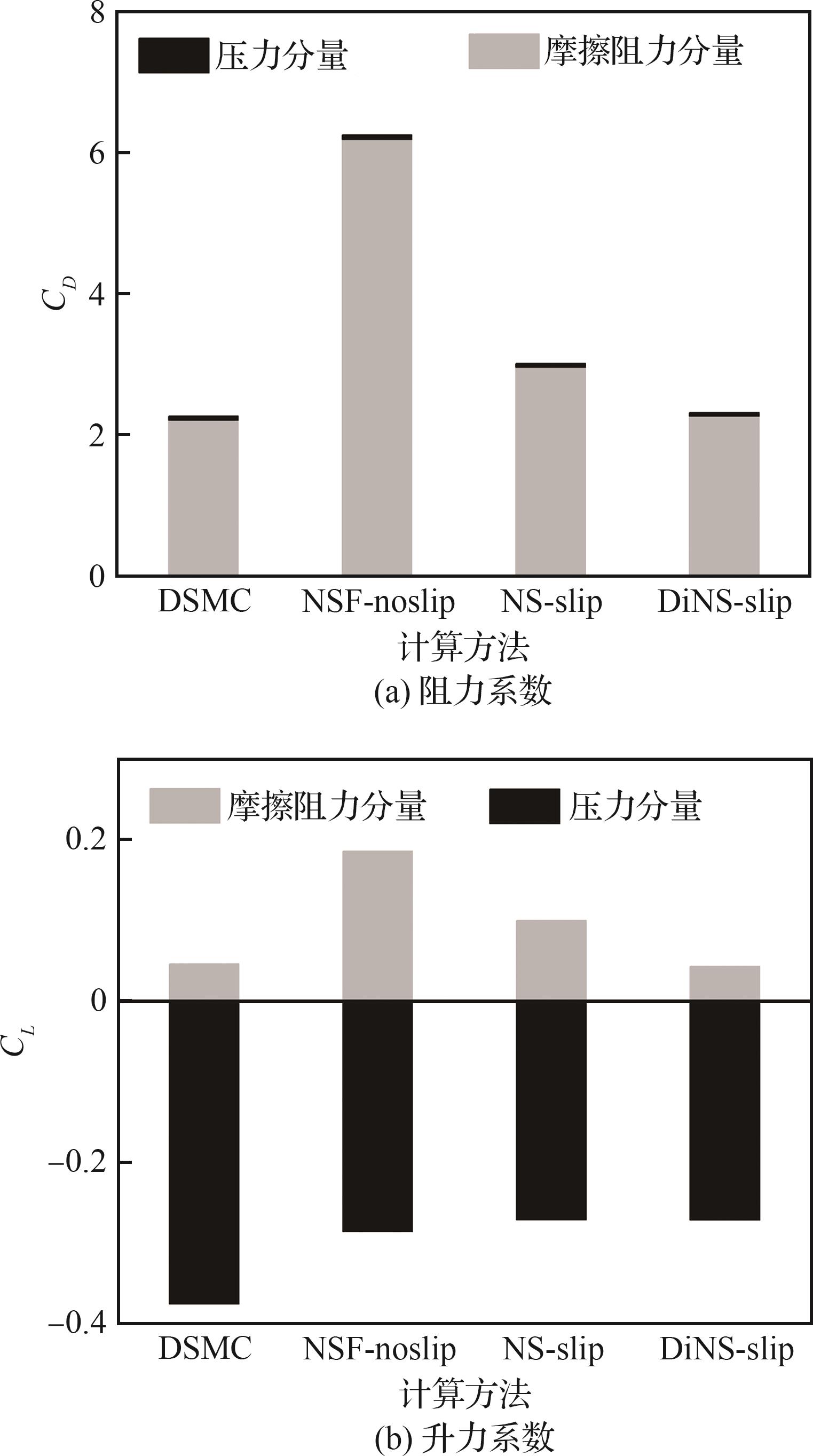
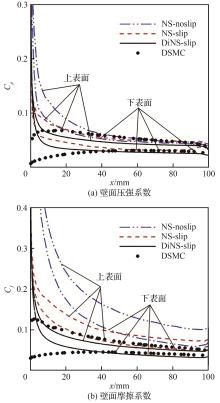
图 6
壁面压强系数和摩擦力系数分布(z=0 mm)
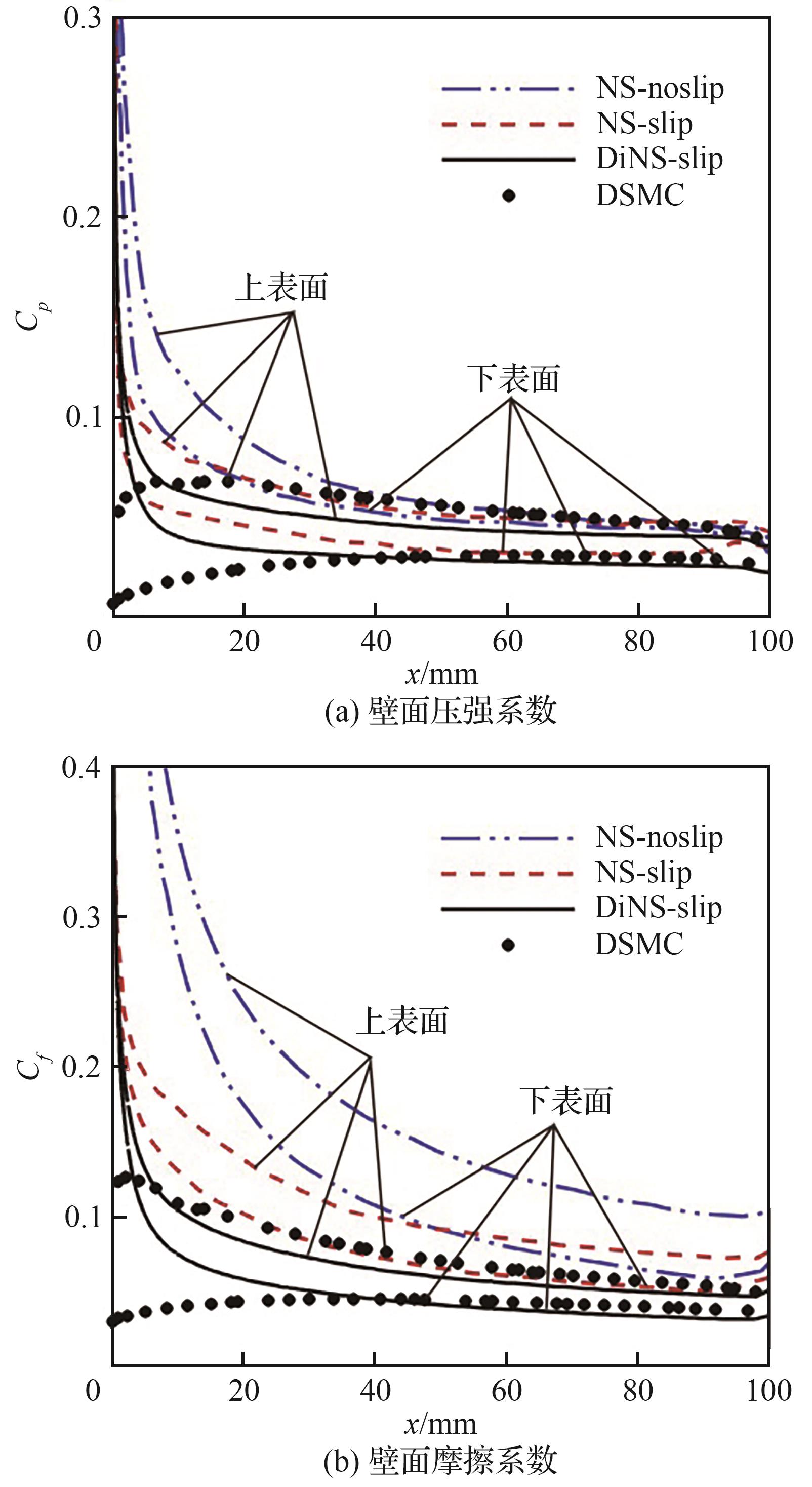
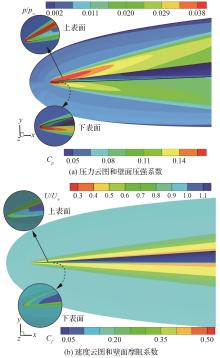
图 7
乘波体绕流流场
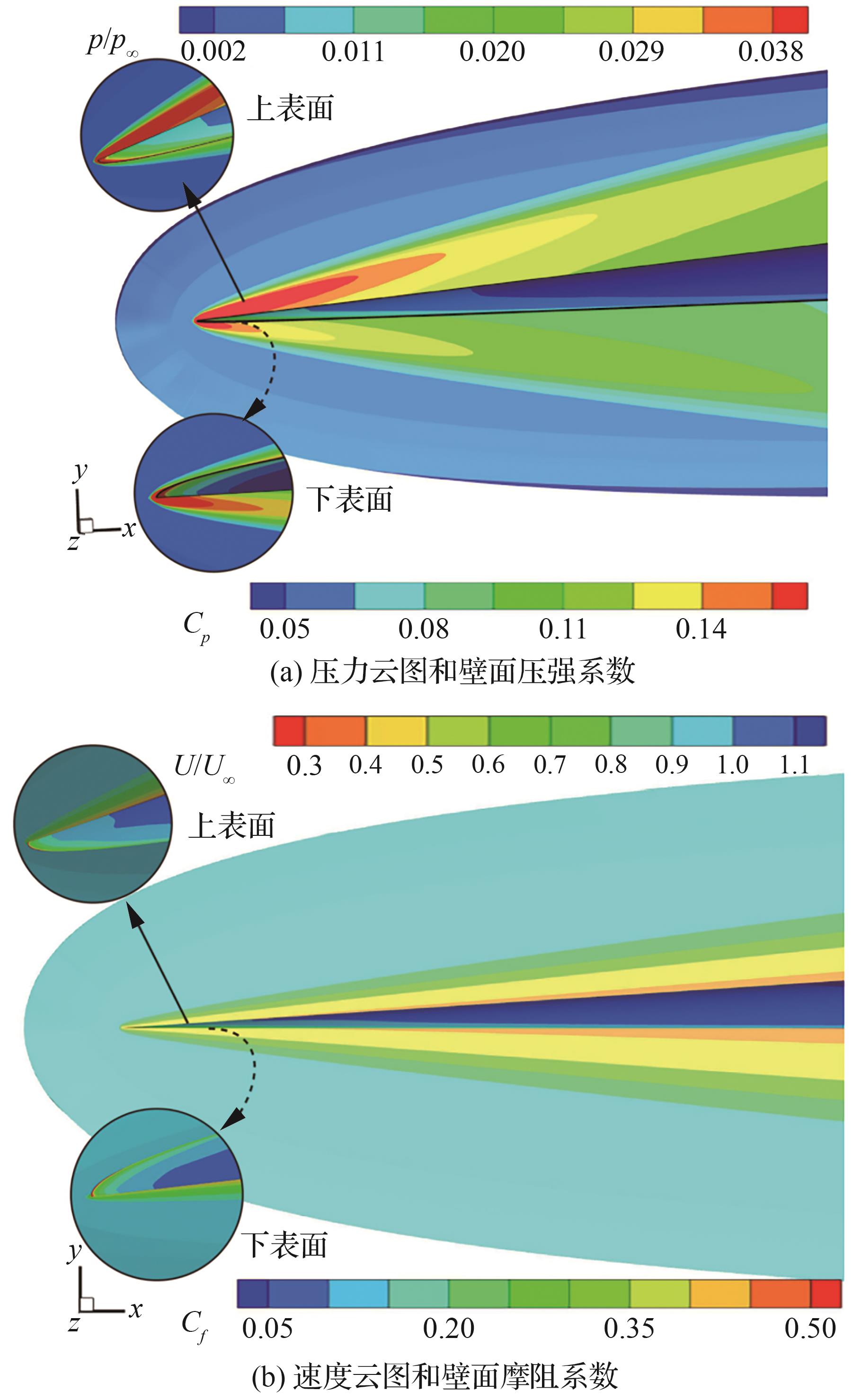
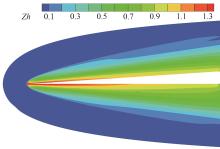
图 8
乘波体Zh分布云图
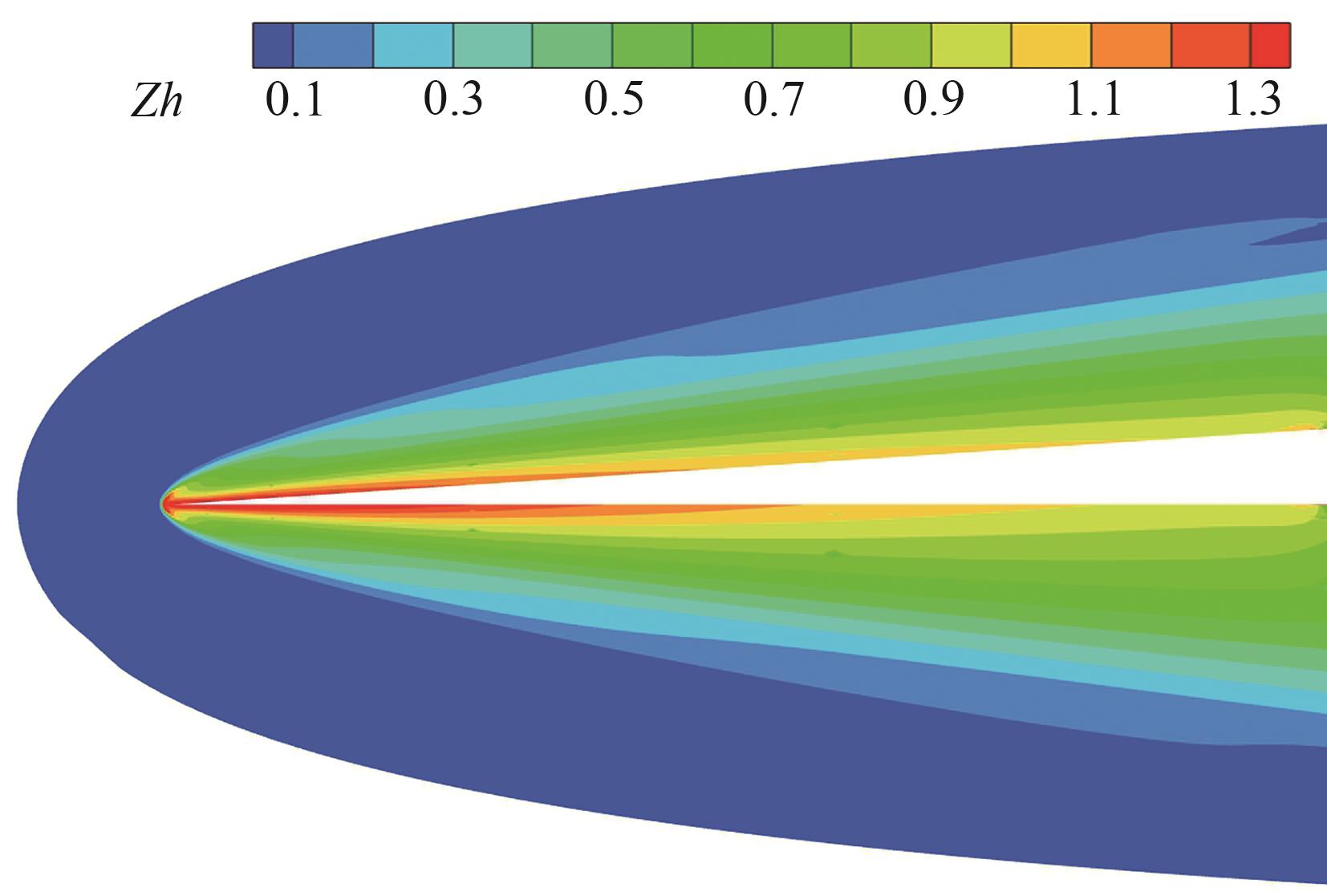
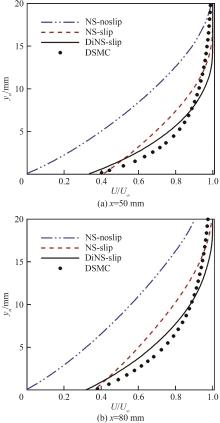
图 9
乘波体绕流速度剖面
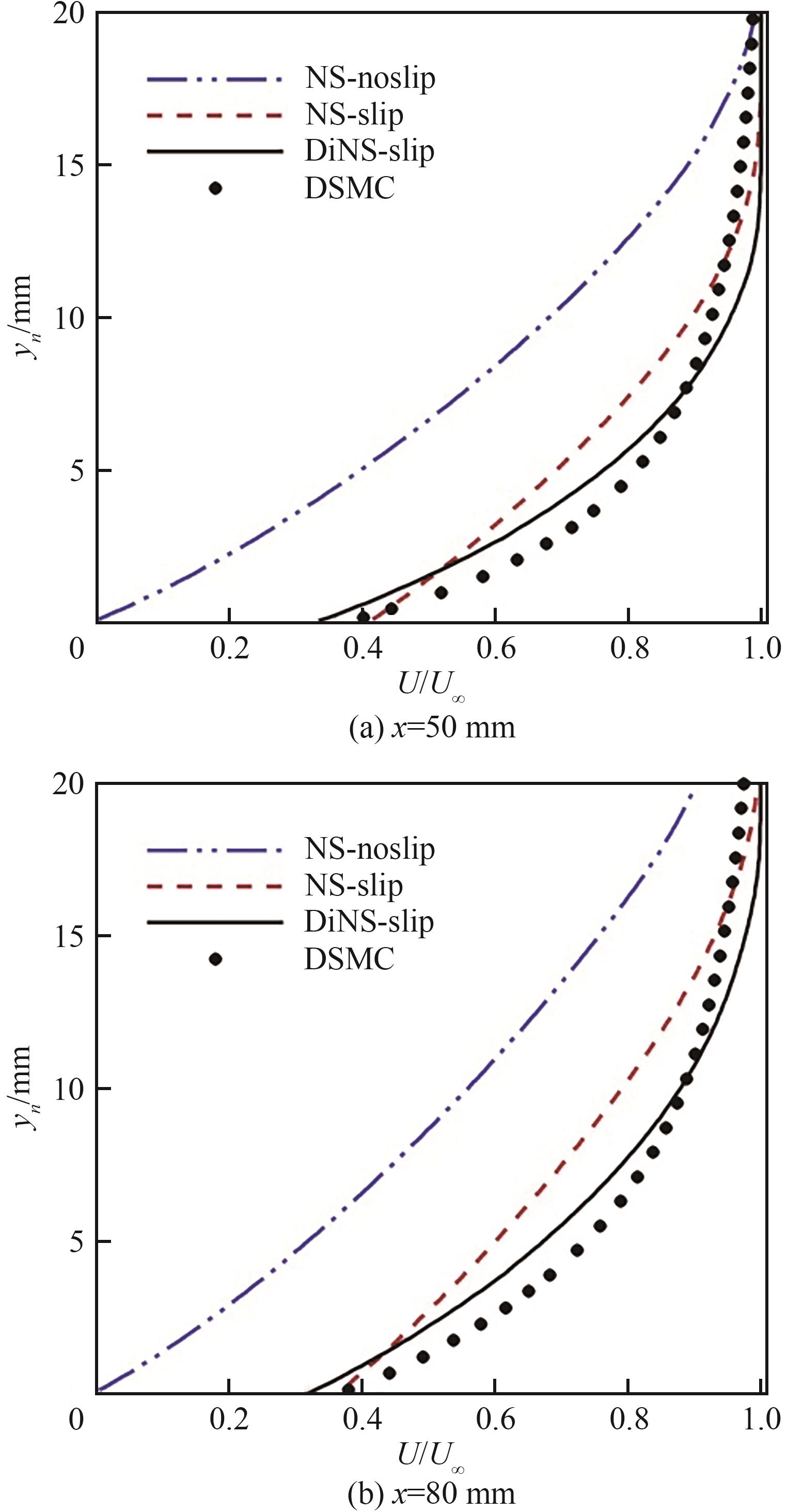
表5
NS、DiNS、DSMC方法计算效率对比
| 计算方法 | 网格数 | 总CPU时间/h |
|---|---|---|
| DSMC | 2 700 000 | 174.2 |
| NS-noslip | 1 337 791 | 35.4 |
| NS-slip | 1 337 791 | 37.8 |
| DiNS-slip | 1 337 791 | 41.8 |
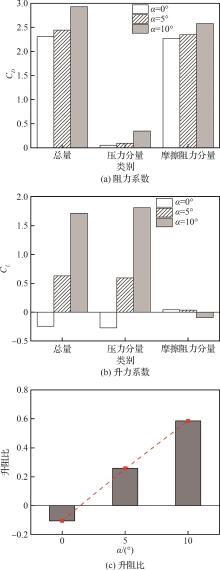
图 10
不同攻角下乘波体气动特性
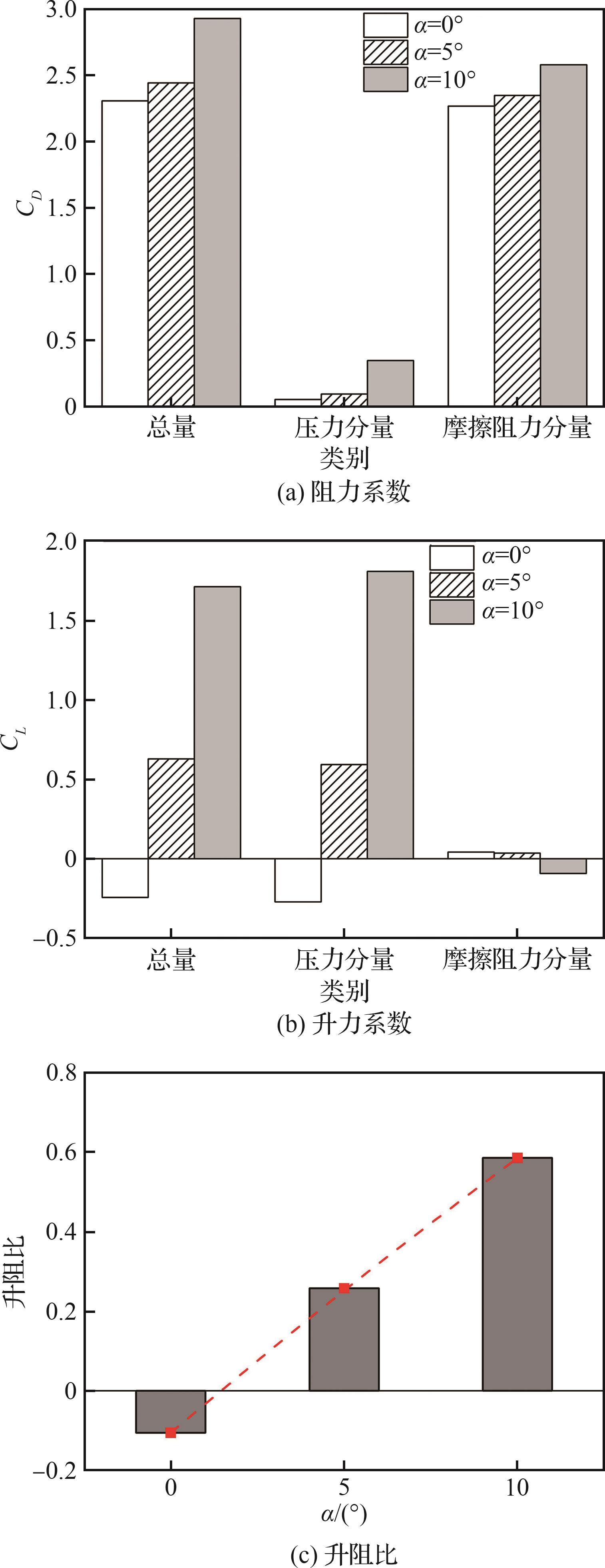
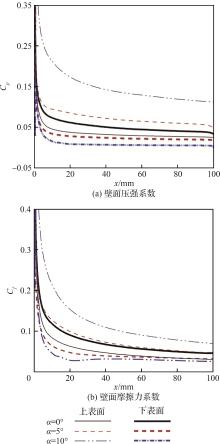
图 11
不同攻角下壁面压强系数和摩擦力系数分布
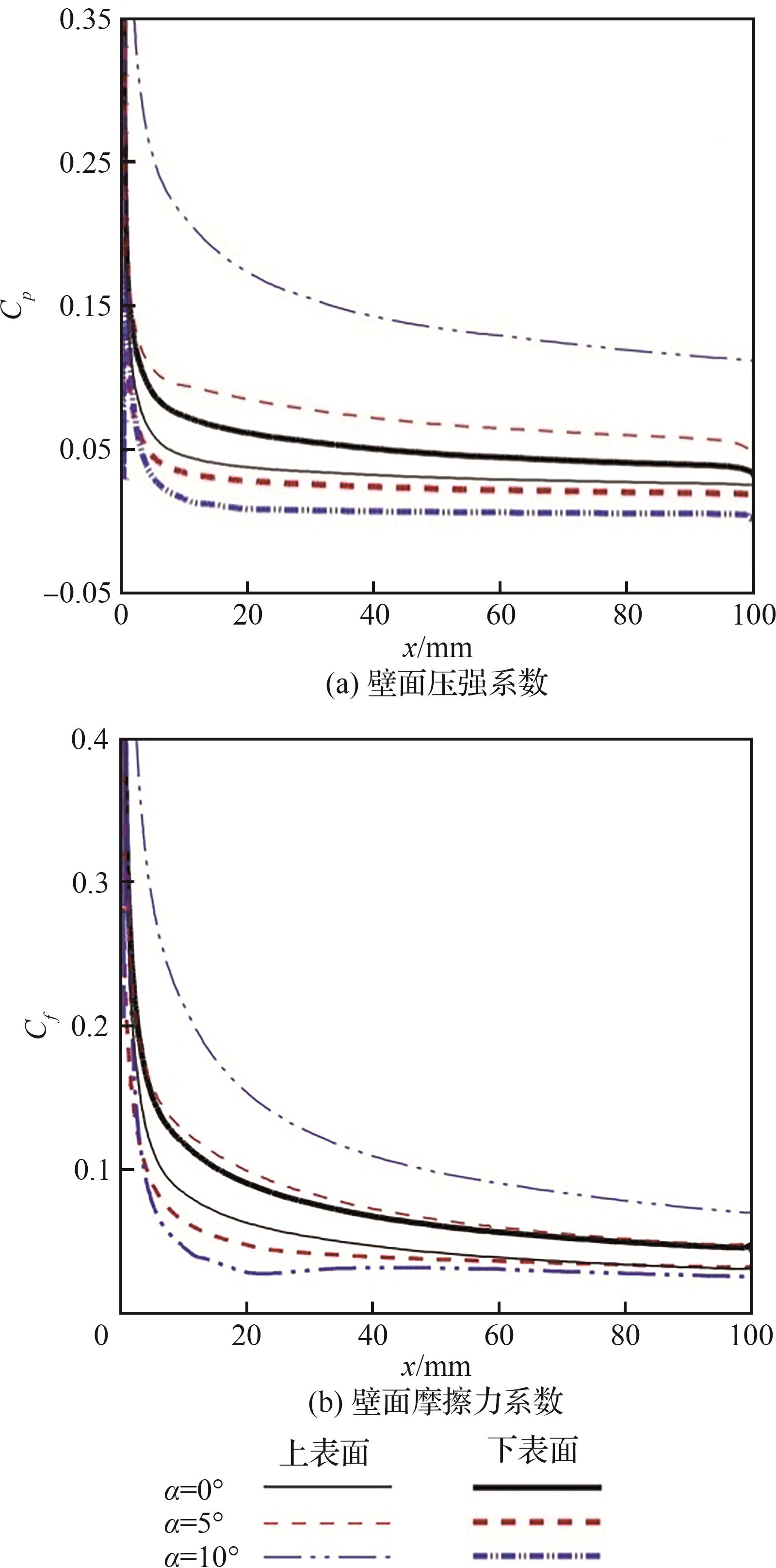
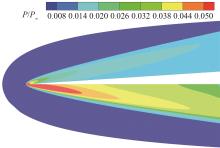
图 12
5°攻角下流场压力云图
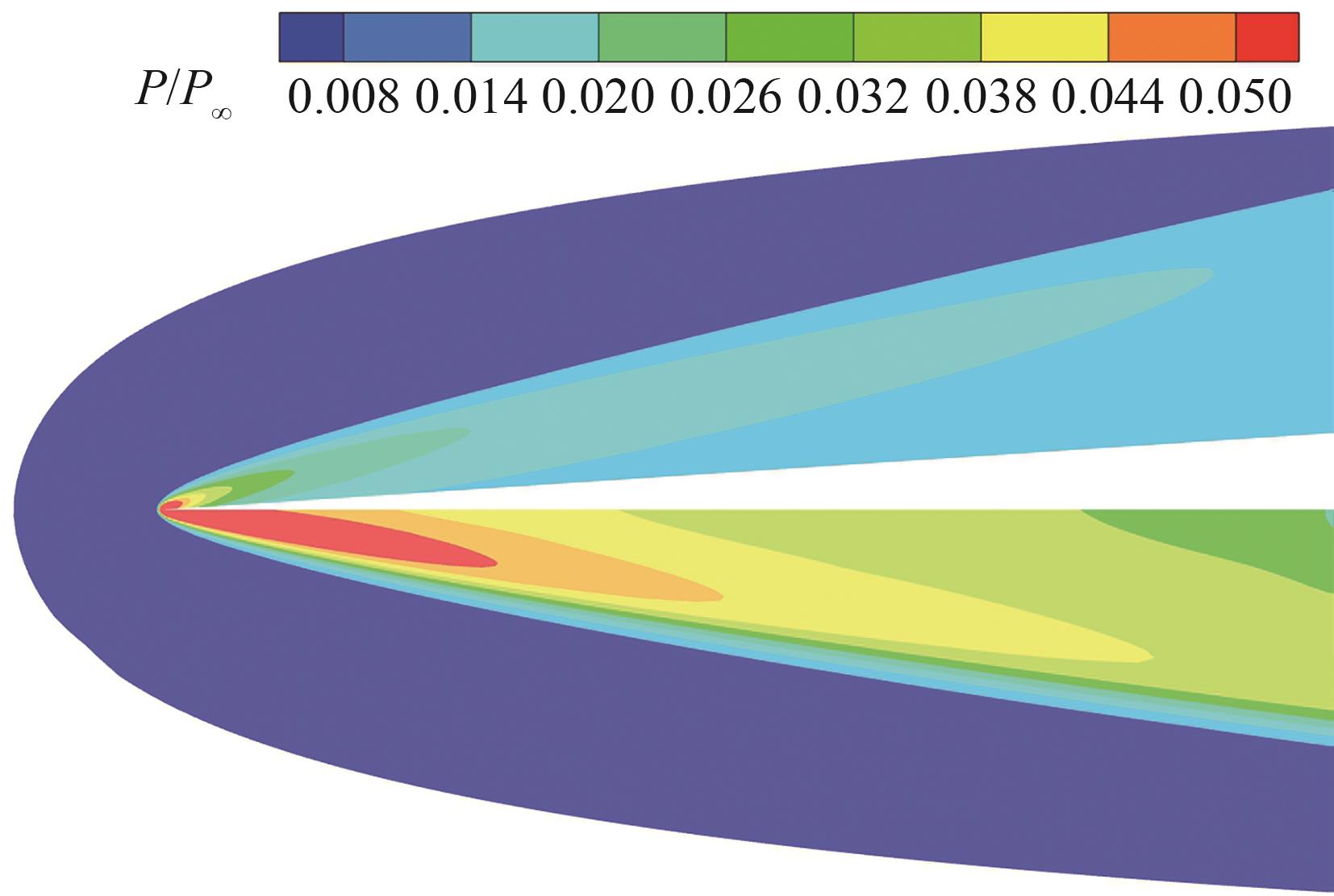
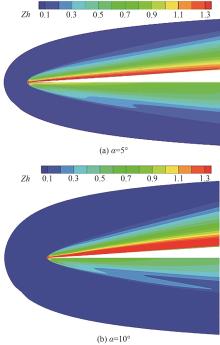
图 13
不同攻角下Zh分布
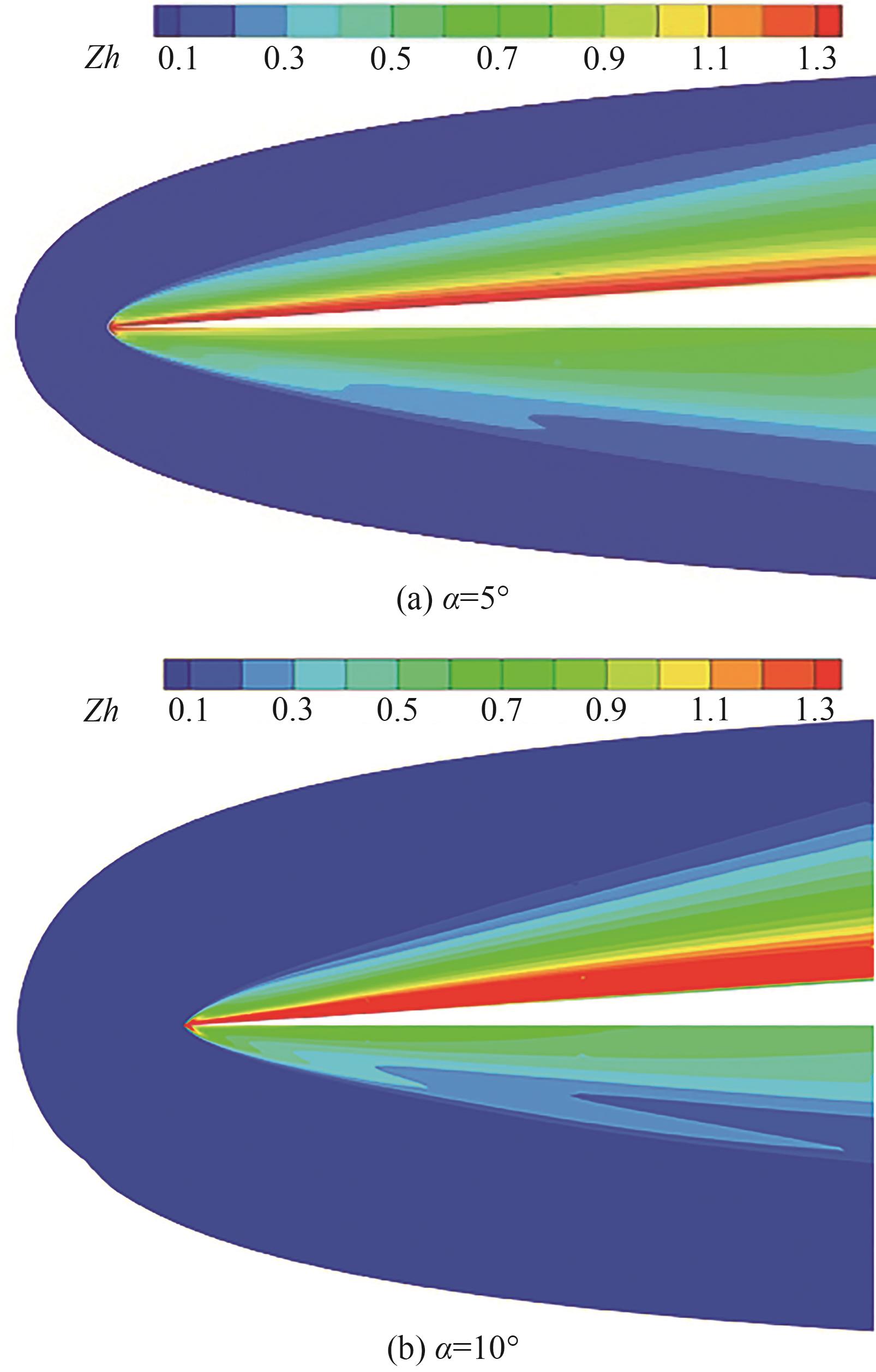
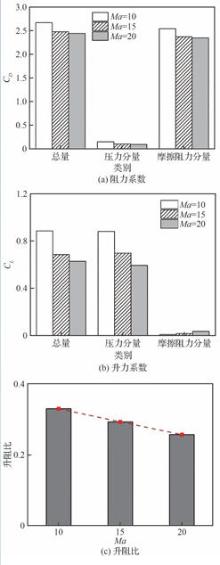
图 14
不同马赫数下乘波体气动特性
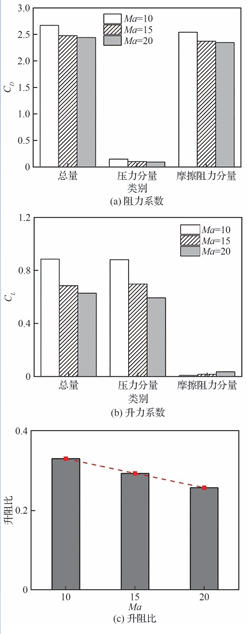
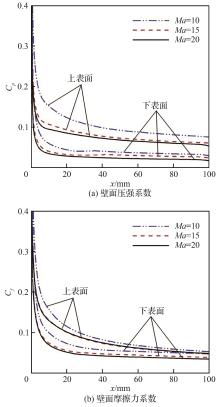
图 15
不同马赫数下壁面压强系数和摩擦力系数分布
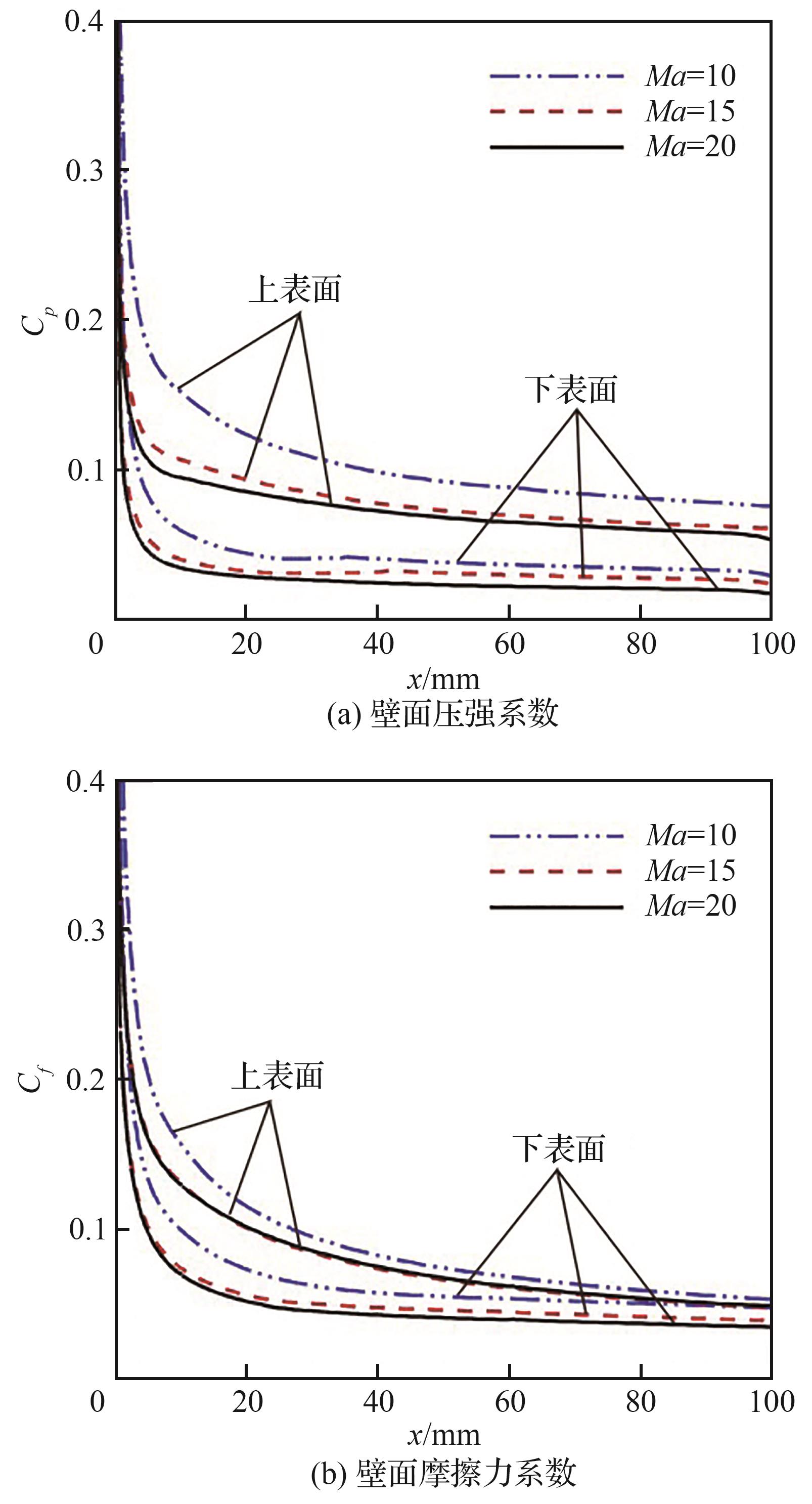
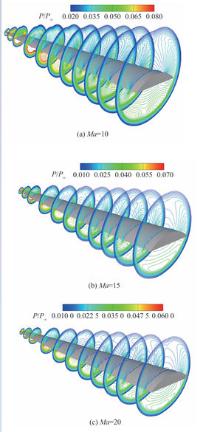
图 16
不同马赫数下的压力分布
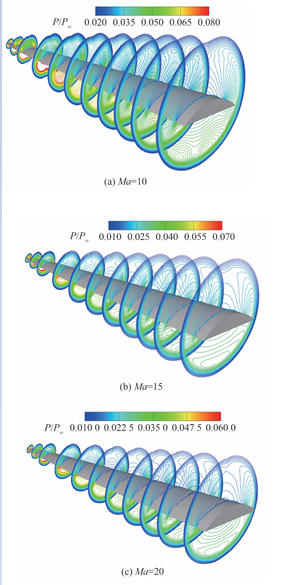
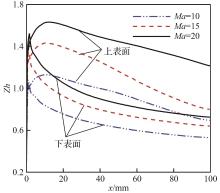
图 17
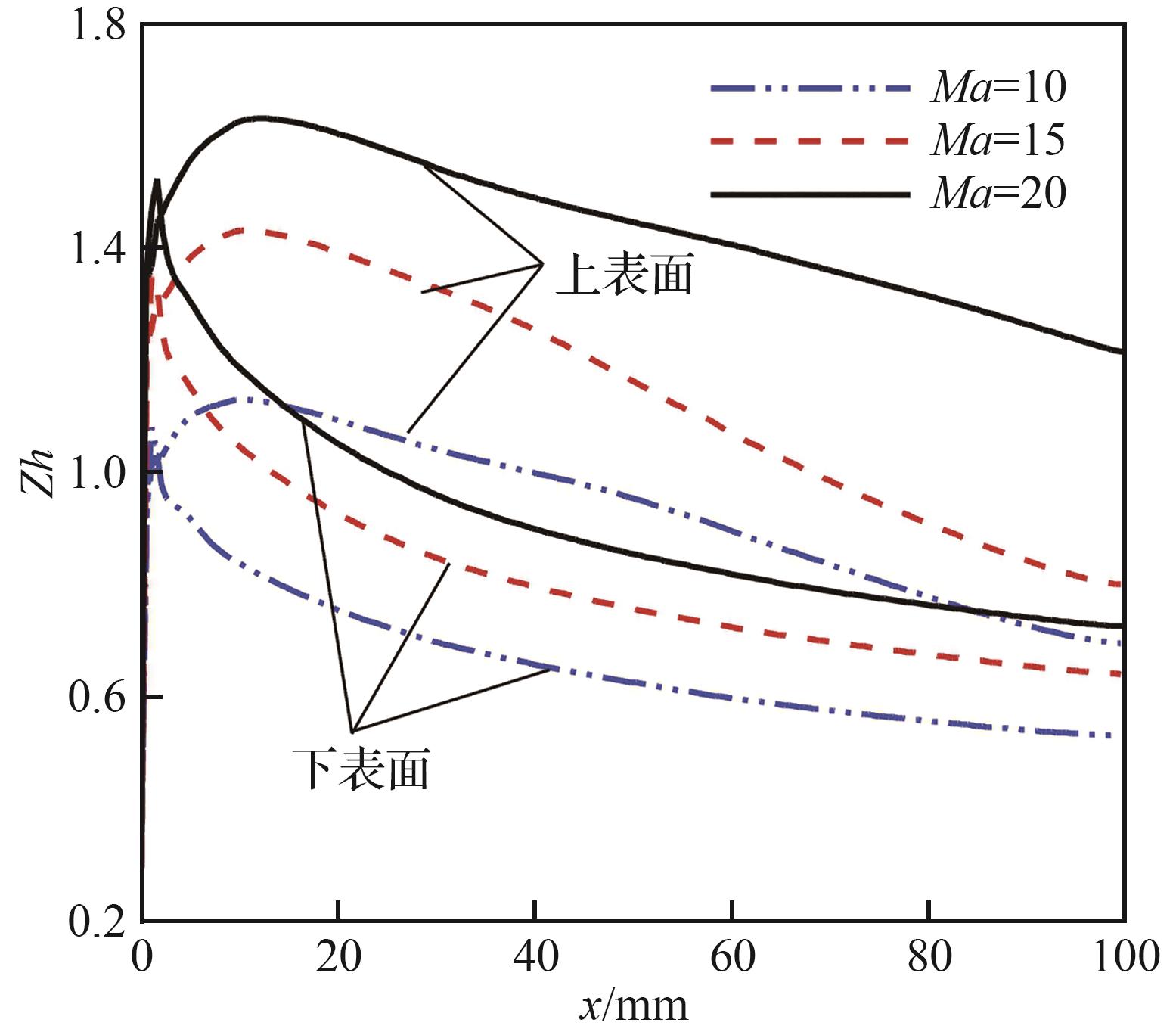
不同马赫数下乘波体表面Zh分布
| [1] | 朱广生, 段毅, 姚世勇, 等. 跨流域高速飞行器气动设计研究现状及思考[J]. 宇航学报, 2023, 44(3): 358-367. |
| ZHU G S, DUAN Y, YAO S Y, et al. Research status and consideration on aerodynamic design of hypersonic flight vehicle covering various flow regimes[J]. Journal of Astronautics, 2023, 44(3): 358-367 (in Chinese). | |
| [2] | 樊菁. 稀薄气体动力学: 进展与应用[J]. 力学进展, 2013(2): 185-201. |
| FAN J. Rarefied gas dynamics: Advances and applications[J]. Advances in Mechanics, 2013(2): 185-201 (in Chinese). | |
| [3] | 周恒, 张涵信. 空气动力学的新问题[J]. 中国科学: 物理学 力学 天文学, 2015, 45: 104709 |
| Zhou H, Zhang H X. New problems of aerodynamics[J]. Science China: Physics, Mechanics & Astronomy, 2015, 45: 104709 (in Chinese). | |
| [4] | DRIKAKIS D, KWAK D, KIRIS C C. Computational aerodynamics: Advances and challenges[J]. The Aeronautical Journal, 2016, 120: 13-36. |
| [5] | IVANOV M S, GIMELSHEIN S F. Computational hypersonic rarefied flows[J]. Annual Review of Fluid Mechanics, 1998, 30: 469-505. |
| [6] | 叶友达. 近空间高速飞行器气动特性研究与布局设计优化[J]. 力学进展, 2009, 39(6): 683-694. |
| YE Y D. Study on aerodynamic characteristics and design optimization for high speed near space vehicles[J]. Advances in Mechanics, 2009, 39(6): 683-694 (in Chinese). | |
| [7] | 段佳昕, 刘愿, 高亮杰, 等. 展向多参数可变的新型宽速域乘波体设计方法[J]. 航空学报, 2026, 47(1): 632109. |
| DUAN J X, LIU Y, GAO L J, et al. A novel wide-speed waverider design method with variable multi-parameter along spanwise direction[J]. Acta Aeronautica et Astronautica Sinica, 2026, 47(1): 632109 (in Chinese). | |
| [8] | 孟旭飞, 白鹏, 刘传振. 内锥流场参数对定平面形状乘波体性能的影响[J]. 航空学报, 2026, 47(1): 632041. |
| MENG X F, BAI P, LIU C Z. Influence of internal conical flow field parameters on performance of planform-customized waveriders[J]. Acta Aeronautica et Astronautica Sinica, 2026, 47(1): 632041 (in Chinese). | |
| [9] | 朱继宏, 韩嘉诚, 谷小军, 等. 跨域飞行器结构与变构型设计技术进展与挑战[J]. 航空学报, 2025, 46(18): 431686. |
| ZHU J H, HAN J C, GU X J, et al. Advances and challenges in cross-domain vehicle structures and morphing configuration design technologies[J]. Acta Aeronautica et Astronautica Sinica, 2025, 46(18): 431686 (in Chinese). | |
| [10] | 杨凯, 张勐飞, 施崇广, 等. 三维弯曲流面法及其在外流乘波体中的应用[J]. 航空学报, 2025, 46(2): 130492. |
| YANG K, ZHANG M F, SHI C G, et al. Method of three-dimensional curved stream-surface and its application in external waverider[J]. Acta Aeronautica et Astronautica Sinica, 2025, 46(2): 130492 (in Chinese). | |
| [11] | 薛有涛, 尧少波, 杨雨欣, 等. 基于生成式模型的三维飞行器外形泛化表征方法[J]. 航空学报, 2025, 46(10): 631511. |
| XUE Y T, YAO S B, YANG Y X, et al. Generalization of three-dimensional flight vehicle shape representation using generative models[J]. Acta Aeronautica et Astronautica Sinica, 2025, 46(10): 631511 (in Chinese). | |
| [12] | TAKASHIMA N, LEWIS M J. Navier-Stokes computation of a viscous optimized waverider[J]. Journal of Spacecraft and Rockets, 1994, 31(3): 383-391. |
| [13] | GUO S Q, LIU W, ZHANG C A, et al. Aerodynamic optimization of hypersonic blunted waveriders based on symbolic regression[J]. Aerospace Science and Technology, 2024, 144: 108801. |
| [14] | LIU J, LI K, LIU W Q. High-temperature gas effects on aerodynamic characteristics of waverider[J]. Chinese Journal of Aeronautics, 2015, 28(1): 57-65. |
| [15] | LAGO V, HUGO N. Experimental investigation of aerodynamic forces and shock waves for a waverider in supersonic and slip regime carried out in the MARHY facility[C]∥ 2nd International Conference on Flight Vehicles, Aerothermodynamics and Re-entry Missions & Engineering (FAR). Heilbronn: FAR, 2022: 03872057. |
| [16] | TSIEN H S. Superaerodynamics, mechanics of rarefied gases[J]. Journal of the Aeronautical Sciences, 1946, 13(12): 653-664. |
| [17] | BIRD G A. Molecular gas dynamics and the direct simulation of gas flows[M]. Oxford: Clarendon Press, 1994. |
| [18] | BIRD G A. Direct simulation and the Boltzmann equation[J]. The Physics of Fluids, 1970, 13(11): 2676-2681. |
| [19] | BHATNAGAR P L, GROSS E P, KROOK M. A model for collision processes in gases Ⅰ: Small amplitude processes in charged and neutral one-component systems[J]. Physical Review, 1954, 94(3): 511-525. |
| [20] | XU K, HUANG J C. A unified gas-kinetic scheme for continuum and rarefied flows[J]. Journal of Computational Physics, 2010, 229(20): 7747-7764. |
| [21] | LI Z H, ZHANG H X. Study on gas kinetic unified algorithm for flows from rarefied transition to continuum[J]. Journal of Computational Physics, 2004, 193(2): 708-738. |
| [22] | HO C M, TAI Y C. Micro-electro-mechanical-systems (MEMS) and fluid flows[J]. Annual Review of Fluid Mechanics, 1998, 30: 579-612. |
| [23] | MYONG R S. Thermodynamically consistent hydrodynamic computational models for high-Knudsen-number gas flows[J]. Physics of Fluids, 1999, 11(9): 2788-2802. |
| [24] | 江中正. 稀薄气体流动非线性耦合本构关系模型理论与数值研究[D]. 杭州: 浙江大学, 2019. |
| JIANG Z Z. Theoretical and numerical investigations of nonlinear coupled constitutive relation model in rarefied gas flows[D]. Hangzhou: Zhejiang University, 2019 (in Chinese). | |
| [25] | JIANG Z Z, ZHAO W W, YUAN Z Y, et al. Computation of hypersonic flows over flying configurations using a nonlinear constitutive model[J]. AIAA Journal, 2019, 57(12): 5252-5268. |
| [26] | JIANG Z Z, ZHAO W W, CHEN W F, et al. Eu’s generalized hydrodynamics with its derived constitutive model: Comparison to Grad’s method and linear stability analysis[J]. Physics of Fluids, 2021, 33(12): 127116. |
| [27] | CHEN J, ZHOU H. Rarefied gas effect in hypersonic shear flows[J]. Acta Mechanica Sinica, 2021, 37(1): 2-17. |
| [28] | OU J H, CHEN J. DSMC data-improved numerical simulation of hypersonic flow past a flat plate in near-continuum regime[J]. Computers & Fluids, 2019, 194: 104308. |
| [29] | OU J H, CHEN J. Hypersonic aerodynamics of blunt plates in near-continuum regime by improved navier-stokes model[J]. AIAA Journal, 2020, 58(9): 4037-4046. |
| [30] | ALLEGRE J, RAFFIN M, CHPOUN A, et al. Rarefied hypersonic flow over a flat plate with truncated leading edge[J]. Progress in Astronautics and Aeronautics, 1994, 160: 285-295. |
| [31] | LENGRAND J C, ALLEGRE J, CHPOUN A, et al. Rarefied hypersonic flow over a sharp flat plate: Numerical and experimental result[J]. Progress in Astronautics and Aeronautics, 1994, 160: 276-284. |
| [32] | SCHOULER M, PRÉVEREAUD Y, MIEUSSENS L. Survey of flight and numerical data of hypersonic rarefied flows encountered in earth orbit and atmospheric reentry[J]. Progress in Aerospace Sciences, 2020, 118: 100638. |
| [33] | 杨俊沅, 李旭东, 曾舒华, 等. 基于非线性耦合本构关系模型的尖化前缘气动加热影响研究[J]. 力学学报, 2023, 55(10): 2321-2330. |
| YANG J Y, LI X D, ZENG S H, et al. Research on the aero-heating at the sharpened leading edge based on nonlinear coupled constitutive relations[J]. Chinese Journal of Theoretical and Applied Mechanics, 2023, 55(10): 2321-2330 (in Chinese). | |
| [34] | 李志辉, 梁杰, 李中华, 等. 跨流域空气动力学模拟方法与返回舱再入气动研究[J]. 空气动力学学报, 2018, 36(5): 826-847. |
| LI Z H, LIANG J, LI Z H, et al. Simulation methods of aerodynamics covering various flow regimes and applications to aerodynamic characteristics of re-entry spacecraft module[J]. Acta Aerodynamica Sinica, 2018, 36(5): 826-847 (in Chinese). | |
| [35] | LAGO V, HUGO N. Experimental investigation of waverider aerodynamic forces and shock waves in hypersonic slip regime in the wind tunnel MARHy[C]∥ HiSST: 2nd International Conference on High-Speed Vehicle Science & Technology. Bruges: CEAS, 2022: 03872070. |
| [36] | 沈青. DSMC方法与稀薄气流计算的发展[J]. 力学进展, 1996(1): 1-13. |
| SHEN Q. DSMC method and the calculation of rarefied gas flow[J]. Advances in Mechanics, 1996(1): 1-13 (in Chinese). | |
| [37] | GALLIS M A, TORCZYNSKI J R, PLIMPTON S J, et al. Direct simulation Monte Carlo: The quest for speed[C]∥ 29th International Symposium on Rarefied Gas Dynamics. Xi’an: American Institute of Physics, 2014: 27-36. |
| [38] | KLOTHAKIS A G, NIKOLOS I K, KOEHLER T P, et al. Validation simulations of the DSMC code SPARTA[C]∥ 30th International Symposium on Rarefied Gas Dynamics. Victoria: American Institute of Physics, 2016: 050016. |
| [39] | MAXWELL J C. On stresses in rarefied gases arising from inequalities of temperature[J]. Proceedings of the Royal Society of London, 1878, 27: 304-308. |
| [40] | 傅德薰. 可压缩湍流直接数值模拟[M]. 北京: 科学出版社, 2010. |
| FU D X. Direct numerical simulation of compressible turbulence[M]. Beijing: Science Press, 2010 (in Chinese). | |
| [41] | LI X L, FU D X, MA Y W, et al. Direct numerical simulation of compressible turbulent flows[J]. Acta Mechanica Sinica, 2010, 26(6): 795-806. |
| [42] | BIRD G A. Monte-Carlo simulation in an engineering contex[J]. Progress in Astronautics and Aeronautics, 1981, 74: 239-255. |
| [43] | TOUSSAINT D, BRAEUNIG J P, BARANGER C, et al. Numerical investigation of the influence of the rarefaction degree on a waverider aerodynamic performances in super/hypersonic regimes[C]∥ AIAA Aviation 2023 Forum. Reston: AIAA, 2023. |
| [44] | KOURA K, MATSUMOTO H. Variable soft sphere molecular model for inverse-power-law or Lennard-Jones potential[J]. Physics of Fluids A: Fluid Dynamics, 1991, 3(10): 2459-2465. |
| [45] | ROLIM T C, DE PAULA TORO P G, MINUCCI M A S, et al. Experimental results of a Mach 10 conical-flow derived waverider to 14-X hypersonic airspace vehicle[J]. Journal of Aerospace Technology and Management, 2011, 3(2): 127-136. |
| [1] | 张旭, 瓮哲, 赵卓林, 陈佳宁, 赵梓斌, 孙岩. 基于分层插值的翼型CFD压力系数修正方法[J]. 航空学报, 2026, 47(8): 132788-132788. |
| [2] | 张悦, 杨刚, 谭慧俊, 张晗天, 庞明池, 张龙芝, 高夏豪. 外并联型进气道模态转换过程中低速通道再起动特性[J]. 航空学报, 2026, 47(6): 132842-132842. |
| [3] | 刘备, 达兴亚, 朱耀武, 易渊. 分布式推进飞行器纵向气动/推进耦合效应[J]. 航空学报, 2026, 47(4): 132280-132280. |
| [4] | 孙伟, 张羽霓, 刘婷, 史喆羽, 林永峰. 旋翼流动对桨-涡干扰噪声的影响机理试验[J]. 航空学报, 2026, 47(3): 132182-132182. |
| [5] | 杨一言, 傅岸祥, 王昱辉, 田照阳, 石磊. 高速火箭增强冲压发动机内转进气道气动设计与风洞试验[J]. 航空学报, 2026, 47(3): 132202-132202. |
| [6] | 徐博铭, 王科雷, 周洲, 孙蓬勃. 翼上涵道风扇布局升推耦合特性分析[J]. 航空学报, 2026, 47(16): 133029-133029. |
| [7] | 郭天豪, 张磊, 段雪峰, 刘志涛, 刘钒, 朱任宇. 基于风洞试验的一种杆件气动-飞控特性评估[J]. 航空学报, 2026, 47(16): 132934-132934. |
| [8] | 刘景飞, 黄龙太, 鞠安然, 徐传宝, 和润生, 王子卓. 水上飞机缩比模型带滑流影响的吹气控制试验[J]. 航空学报, 2026, 47(13): 133120-133120. |
| [9] | 杨天宇, 苏志, 梁华, 宗豪华, 吴云. 脉冲直流等离子体激励抑制流动分离试验[J]. 航空学报, 2026, 47(13): 533178-533178. |
| [10] | 富佳伟, 王辰, 马敏昂, 王宏, 赵彤, 刘锦通. 高机动飞机主动流动控制环量增升设计[J]. 航空学报, 2026, 47(13): 533440-533440. |
| [11] | 秦嘉琛, 周洲, 王睿, 王科雷. 分布式动力翼气动/推进耦合模型与试验验证[J]. 航空学报, 2026, 47(12): 132792-132792. |
| [12] | 罗飞, 蒋彪, 高怡宁, 胡志勇, 刘海良, 张军红, 苏子康. 加油装置空中对接先进控制器设计与风洞试验[J]. 航空学报, 2026, 47(11): 332793-332793. |
| [13] | 孟旭飞, 白鹏, 刘传振. 内锥流场参数对定平面形状乘波体性能的影响[J]. 航空学报, 2026, 47(1): 632041-632041. |
| [14] | 刘洋, 史勇杰, 徐国华. 低空复杂风场下旋翼气动干扰特性风洞试验[J]. 航空学报, 2026, 47(1): 632054-632054. |
| [15] | 段佳昕, 刘愿, 高亮杰, 钱战森. 展向多参数可变的新型宽速域乘波体设计方法[J]. 航空学报, 2026, 47(1): 632109-632109. |
| 阅读次数 | ||||||
|
全文 |
|
|||||
|
摘要 |
|
|||||
版权所有 © 航空学报编辑部
版权所有 © 2011航空学报杂志社
主管单位:中国科学技术协会 主办单位:中国航空学会 北京航空航天大学

 CJA