Acta Aeronautica et Astronautica Sinica ›› 2026, Vol. 47 ›› Issue (16): 133169.doi: 10.7527/S1000-6893.2026.33169
• Fluid Mechanics and Flight Mechanics • Previous Articles
Wentao LIN1, Jingwei SHI1,2,3( ), Zhonghao HUI1,4, Jie SHI1, Li ZHOU1,2,3, Zhanxue WANG1,2,3
Received:2025-12-01
Revised:2026-01-16
Accepted:2026-04-01
Online:2026-04-22
Published:2026-04-20
Contact:
Jingwei SHI
E-mail:shijw@nwpu.edu.cn
Supported by:CLC Number:
Wentao LIN, Jingwei SHI, Zhonghao HUI, Jie SHI, Li ZHOU, Zhanxue WANG. Infrared radiation characteristics of shock vectoring control serpentine nozzle[J]. Acta Aeronautica et Astronautica Sinica, 2026, 47(16): 133169.
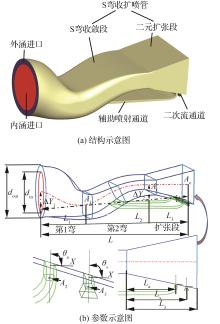
Fig.1
Model of shock vectoring control serpentine nozzle
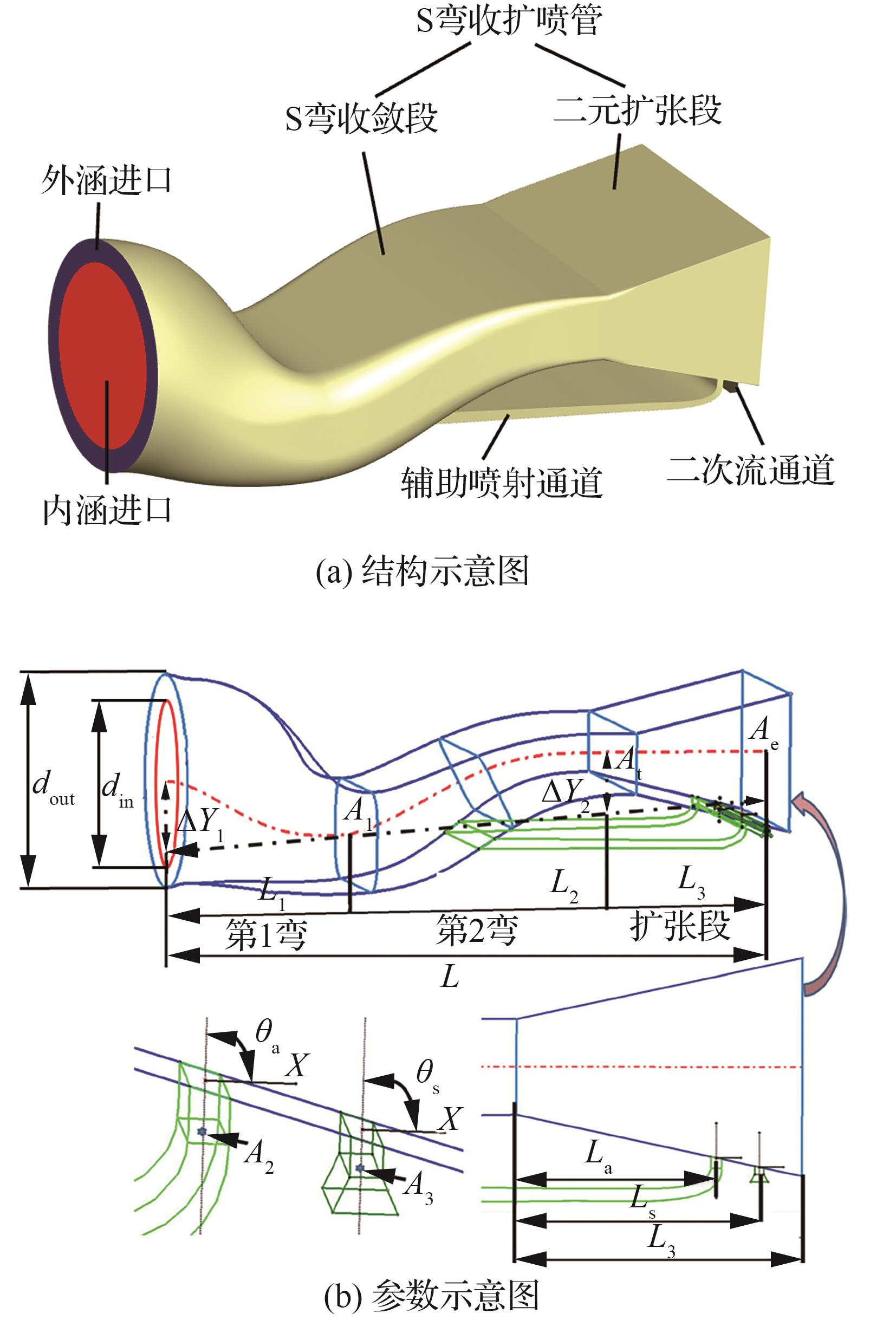

Table 1
Parameters of shock vectoring control serpentine nozzle
| S弯收敛段参数 | 数值 |
|---|---|
| 内涵直径din/mm | 640 |
| 外涵直径dout/mm | 800 |
| 第1弯出口面积A₁/m² | 0.285 |
| 第1弯偏距ΔY₁/mm | 210 |
| 第2弯偏距ΔY₂/mm | 302.5 |
| 第1弯轴向长度L₁/mm | 720.3 |
| 第2弯轴向长度L₂/mm | 973.3 |
| 扩张段轴向长度L3/mm | 581.1 |
| S弯收敛段出口面积Aₜ/m² | 0.207 |
| 喷管出口面积Ae/m² | 0.469 89 |
| 辅助喷射角度θa/(°) | 90 |
| 二次流喷射角度θs/(°) | 90 |
| 辅助喷射面积A2/m² | 0.021 12 |
| 二次流喷射面积A3/m² | 0.016 89 |
| 辅助喷射位置La/mm | 435.8 |
| 二次流喷射位置Ls/mm | 493.9 |
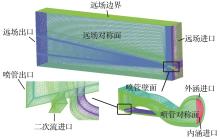
Fig.2
Computational domain grid of shock vectoring control serpentine nozzle
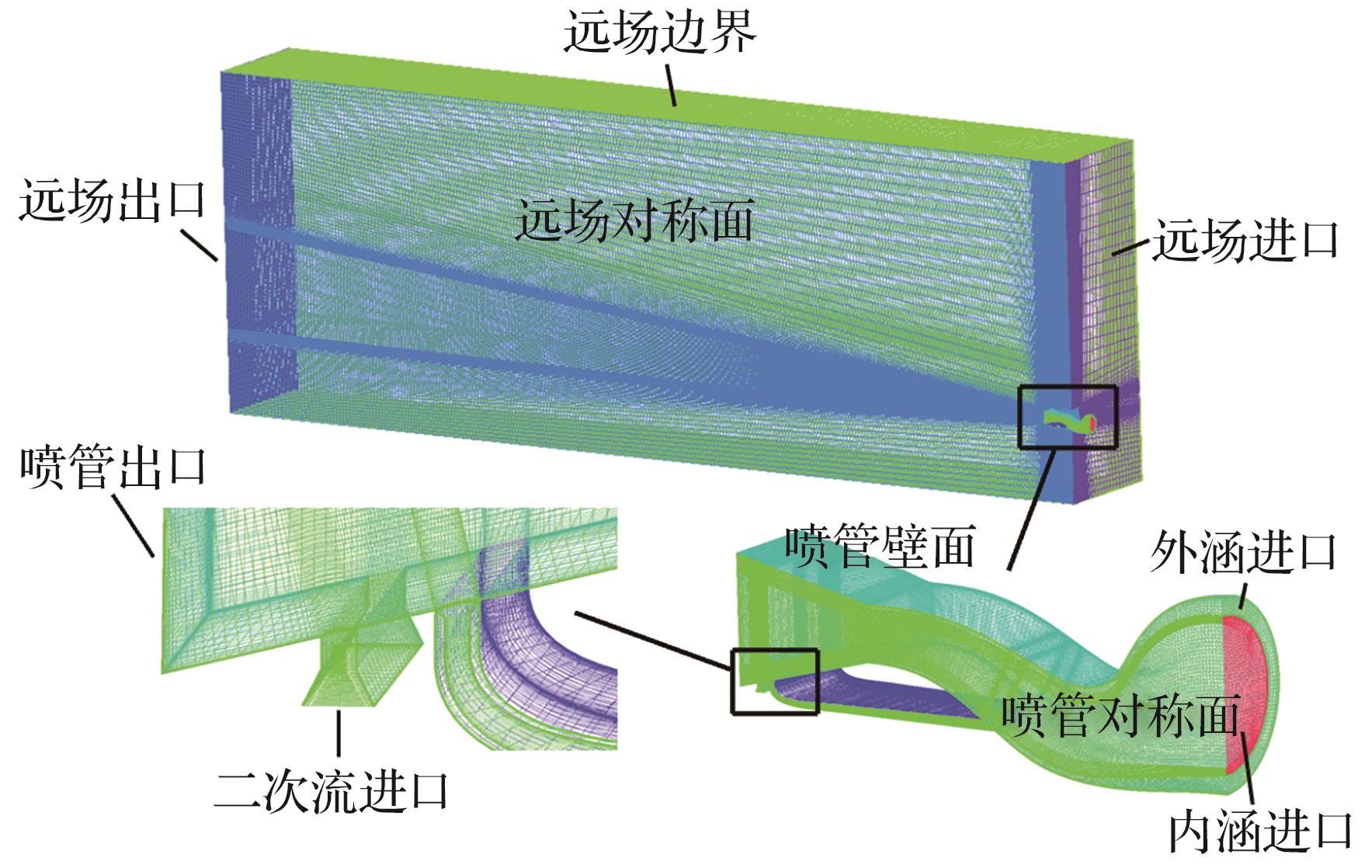
Table 2
Flow field boundary parameters
| 进口 | T* /K | p*/atm | |||
|---|---|---|---|---|---|
| 内涵进口 | 1 200 | 6 | 0.13 | 0.13 | 0 |
| 外涵进口 | 430 | 6 | 0 | 0 | 0.21 |
| 二次流进口 | 400 | 6 | 0 | 0 | 0.21 |
| 远场进口 | 300 | 1 | 0 | 0 | 0.21 |
Fig.3
Discrete transfer method schematic diagram
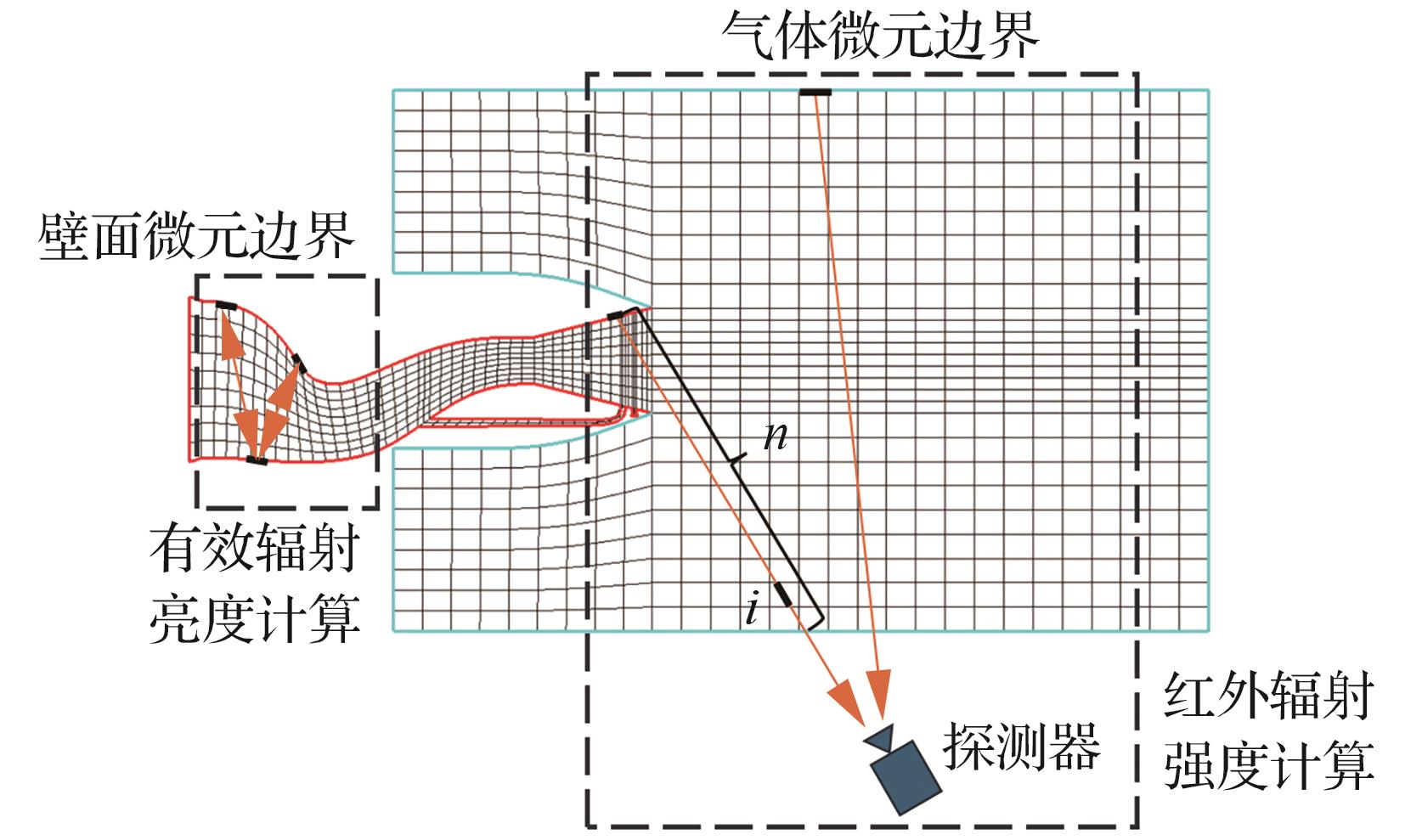
Fig.4
Location of detection points
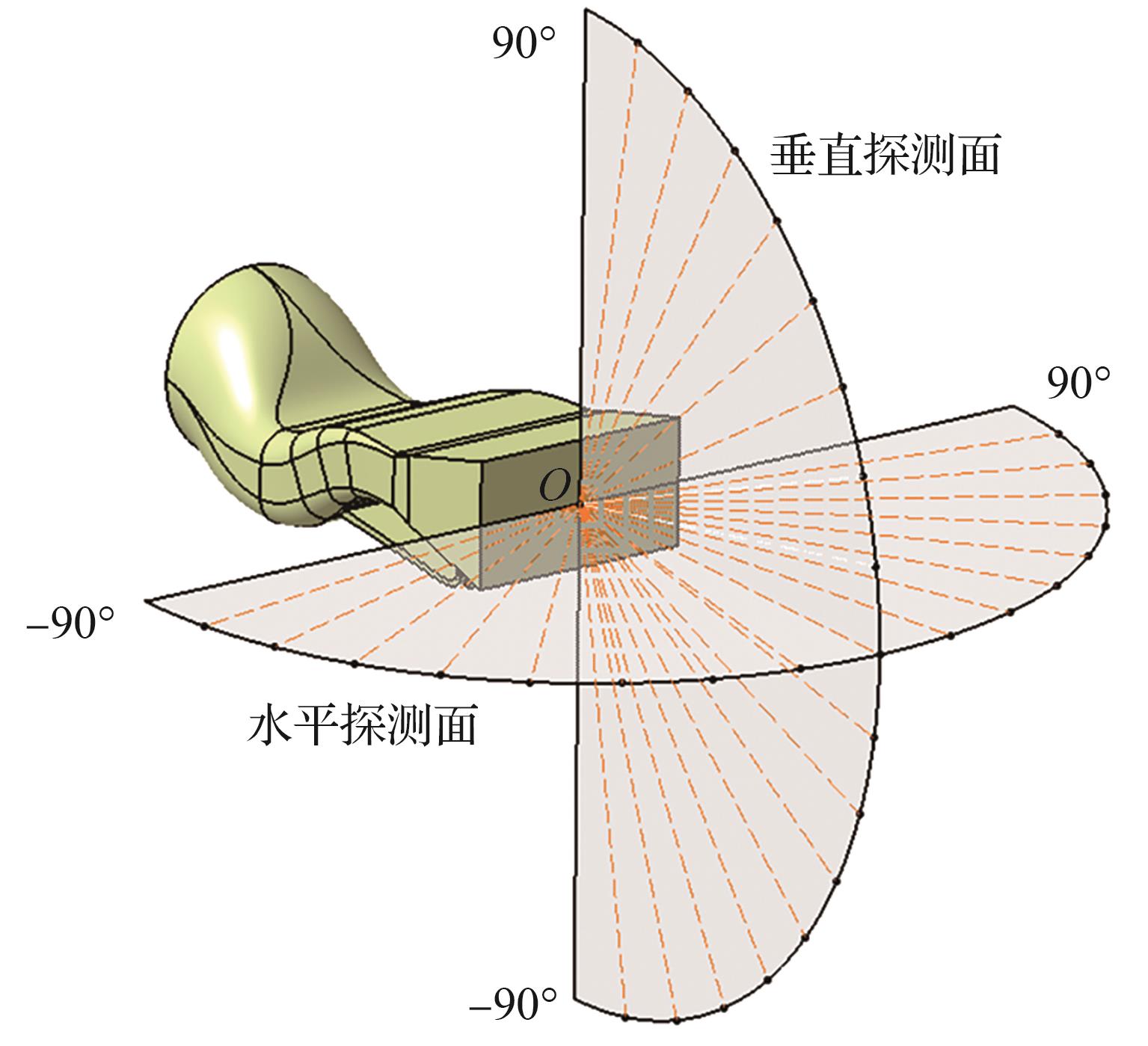
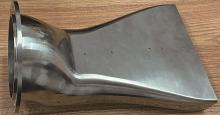
Fig.5
Model of serpentine nozzle for test
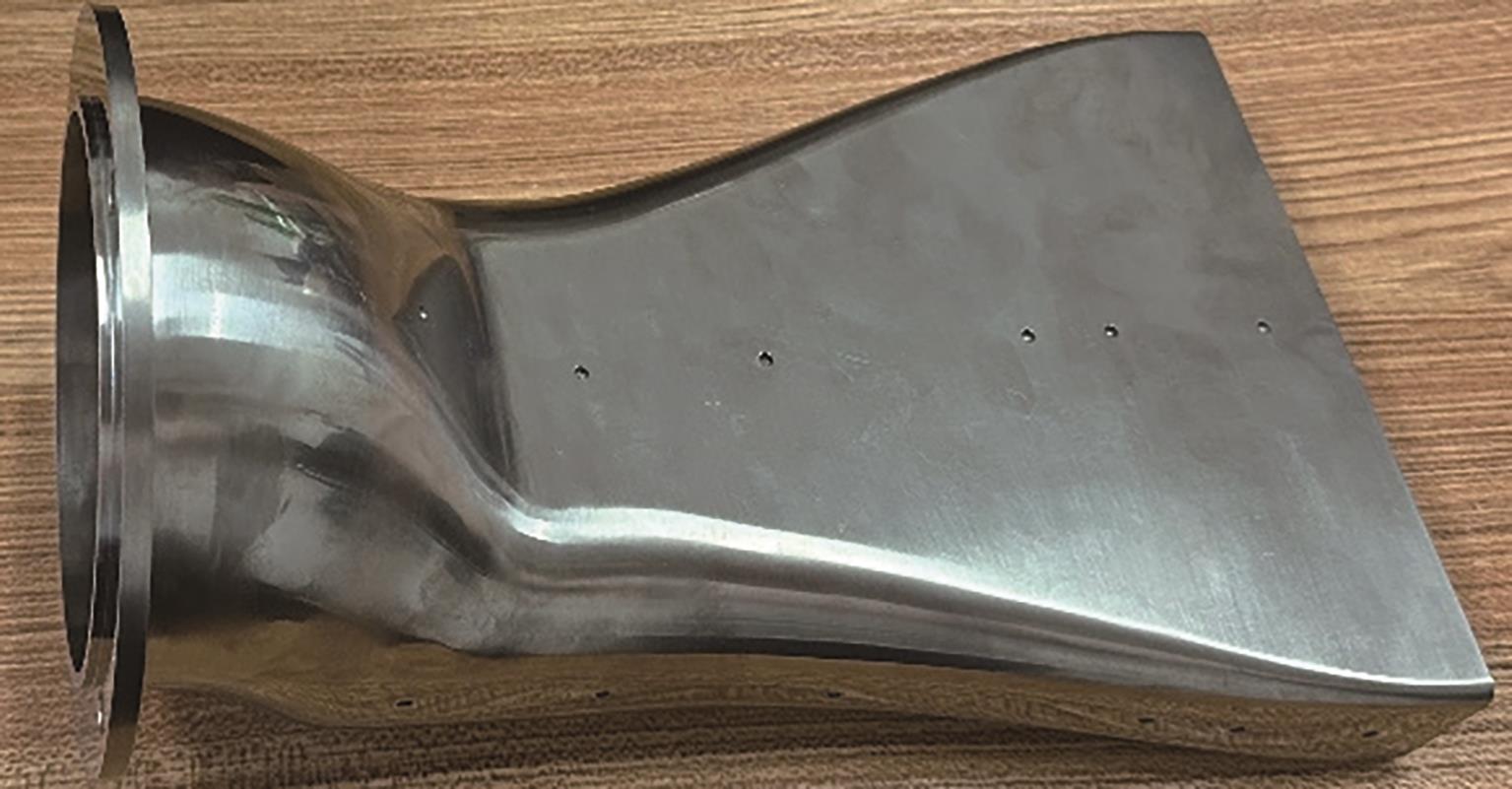
Fig.6
Nozzle infrared radiation characteristics test platform
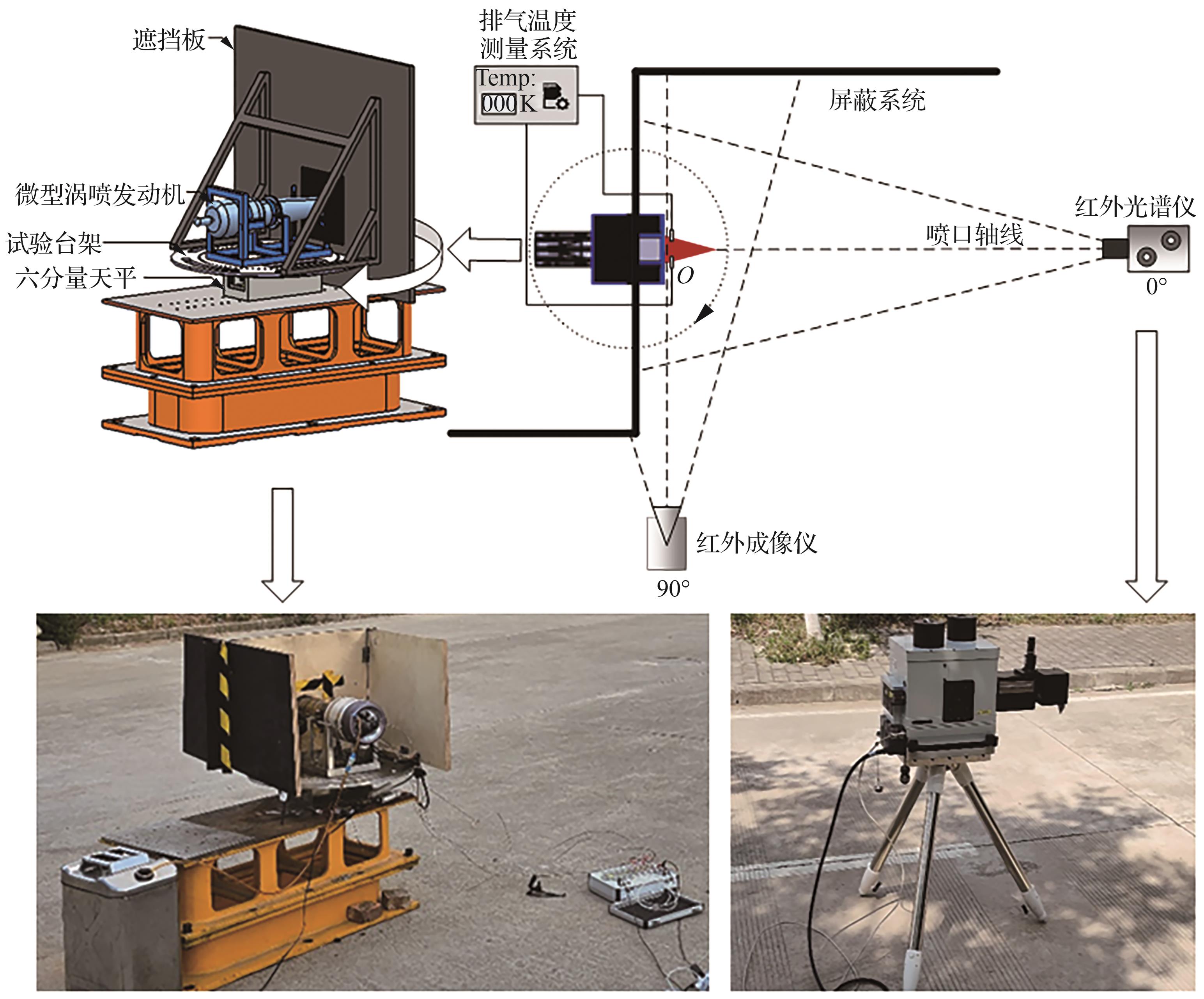
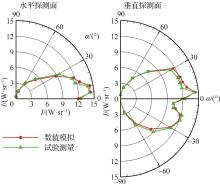
Fig.7
Comparison of numerical simulation and test results
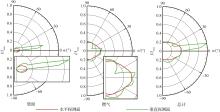
Fig.8
Infrared radiation intensity distribution of shock vectoring control serpentine nozzle
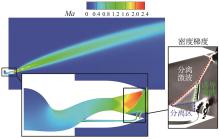
Fig.9
Mach number distribution on symmetry plane
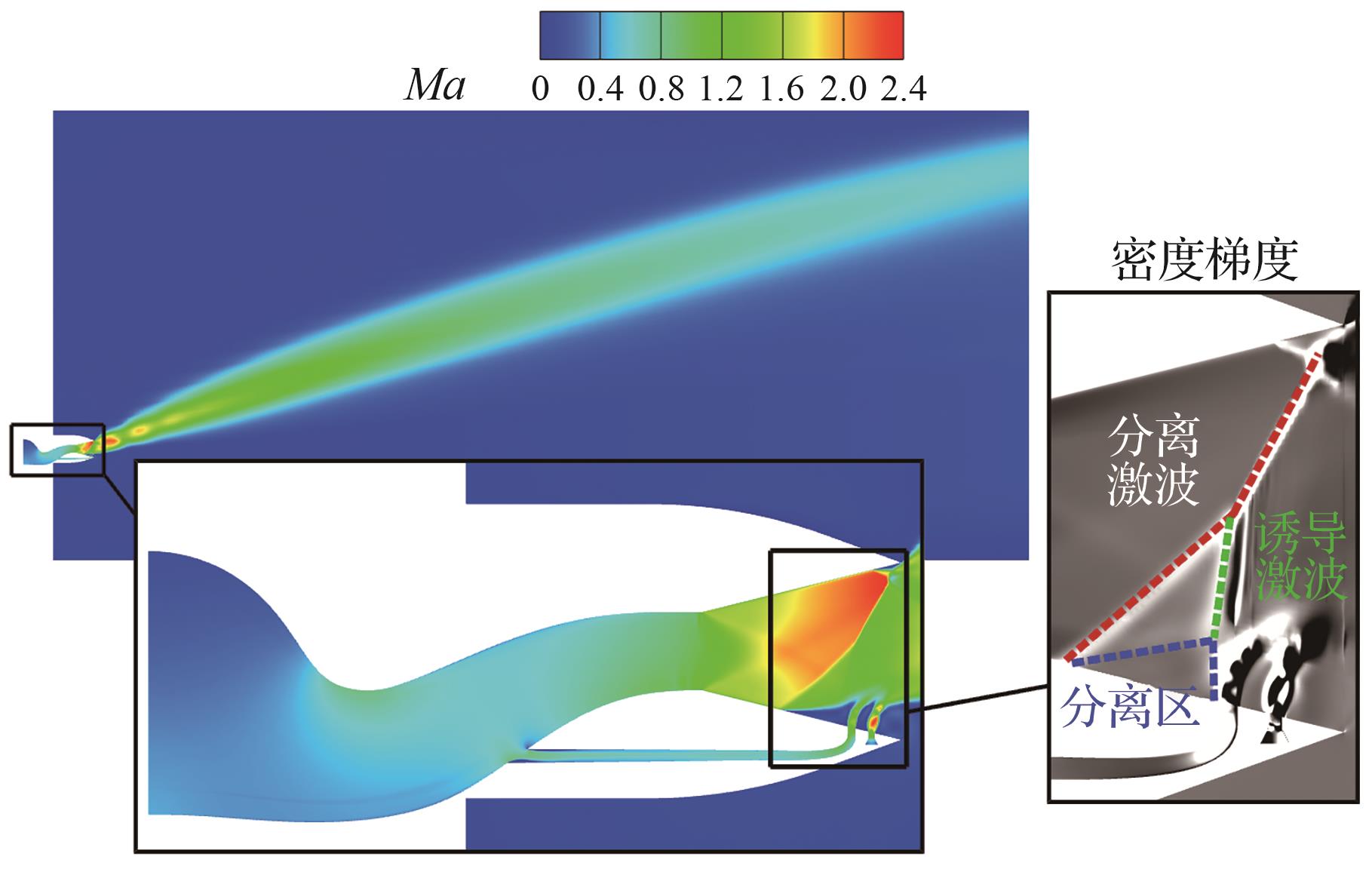
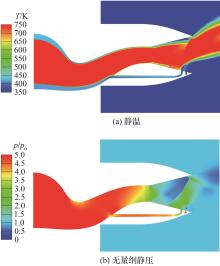
Fig.10
Static temperature and dimensionless static pressure distribution on symmetry plane
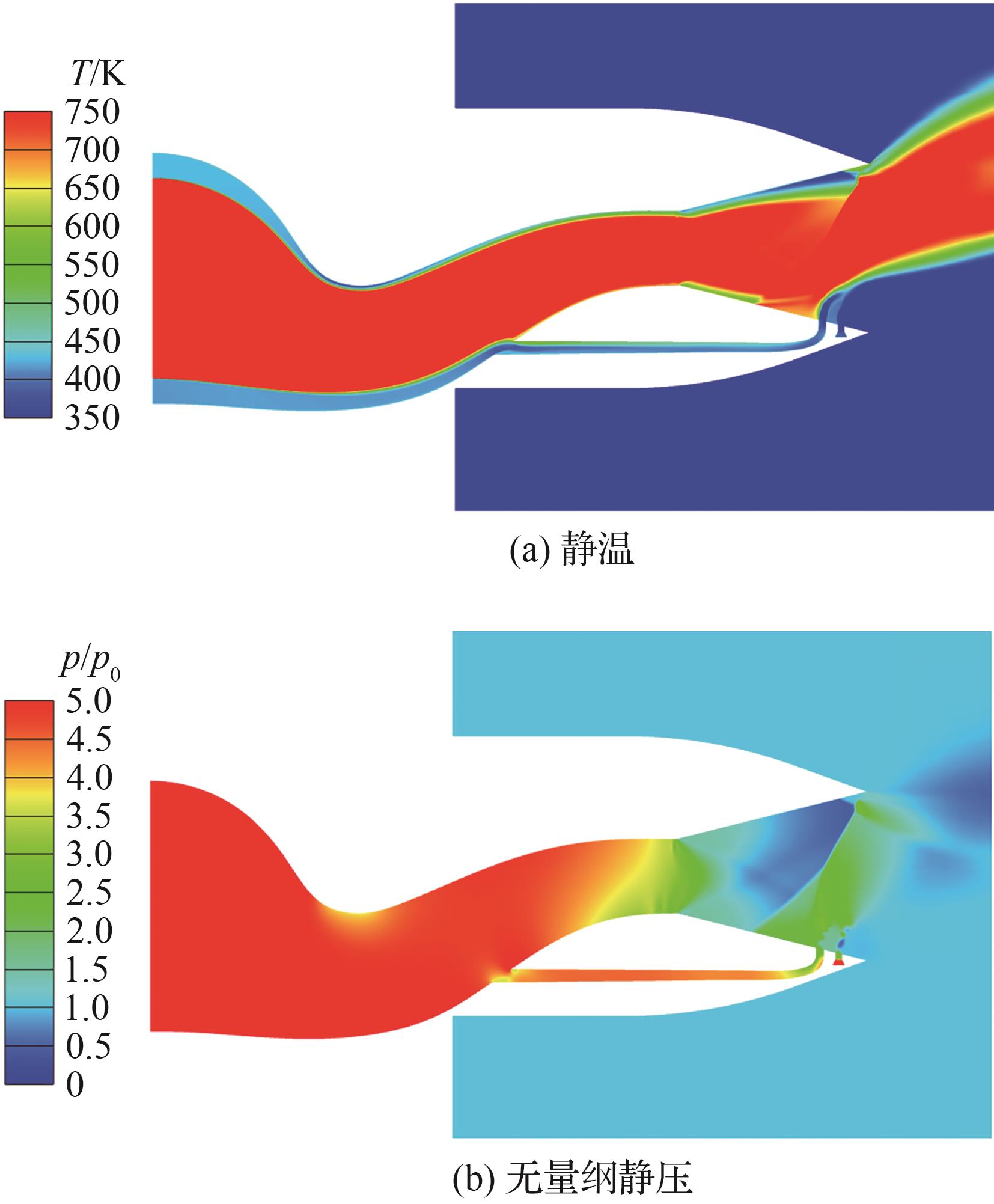
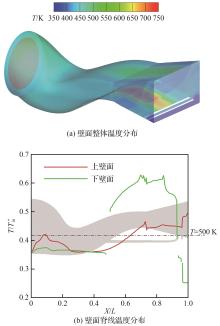
Fig.11
Temperature distribution of nozzle wall
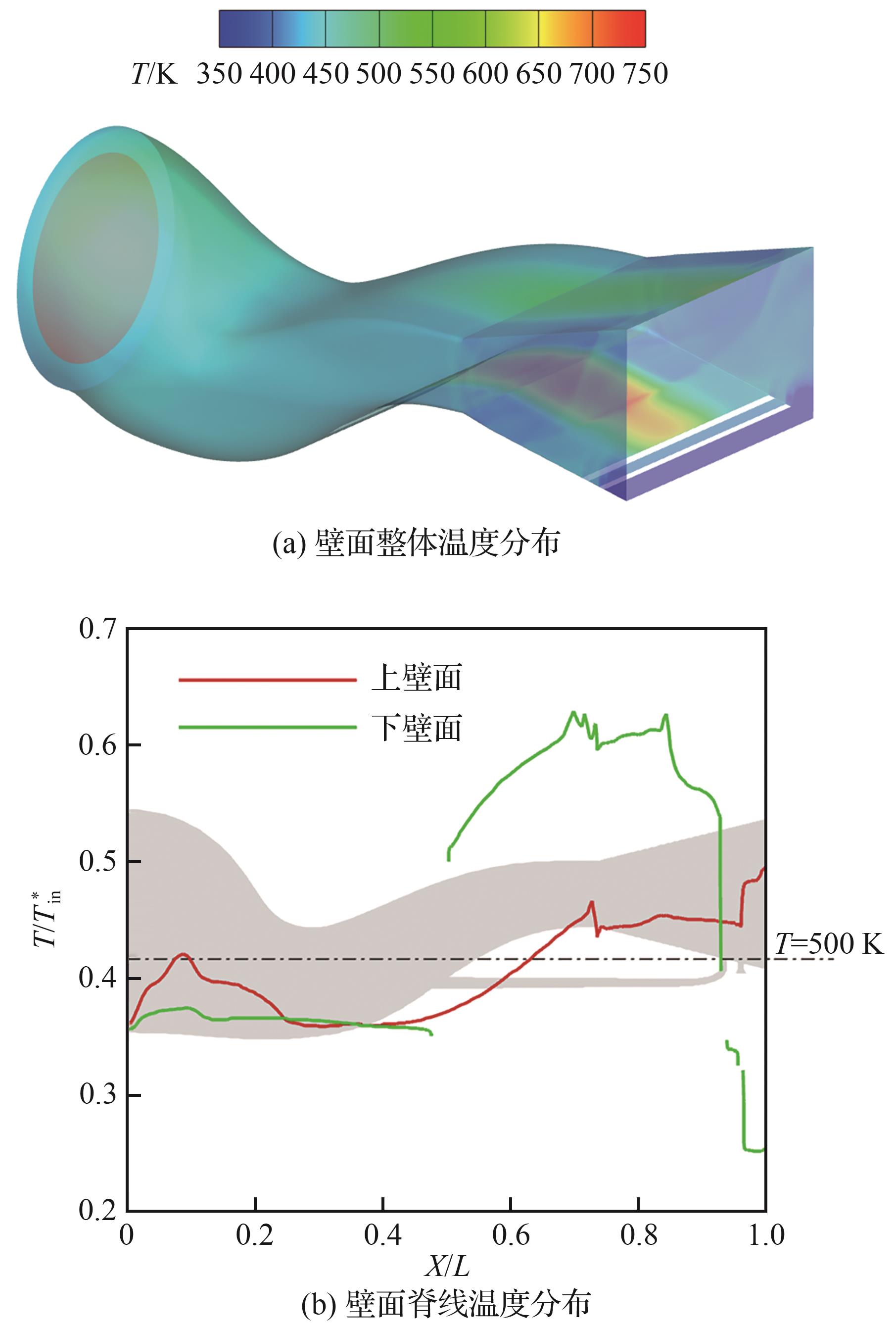
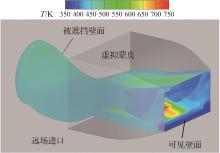
Fig.12
Visibility of nozzle wall from a specific perspective
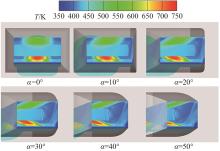
Fig.13
Visibility of nozzle wall at different detection angles on horizontal plane
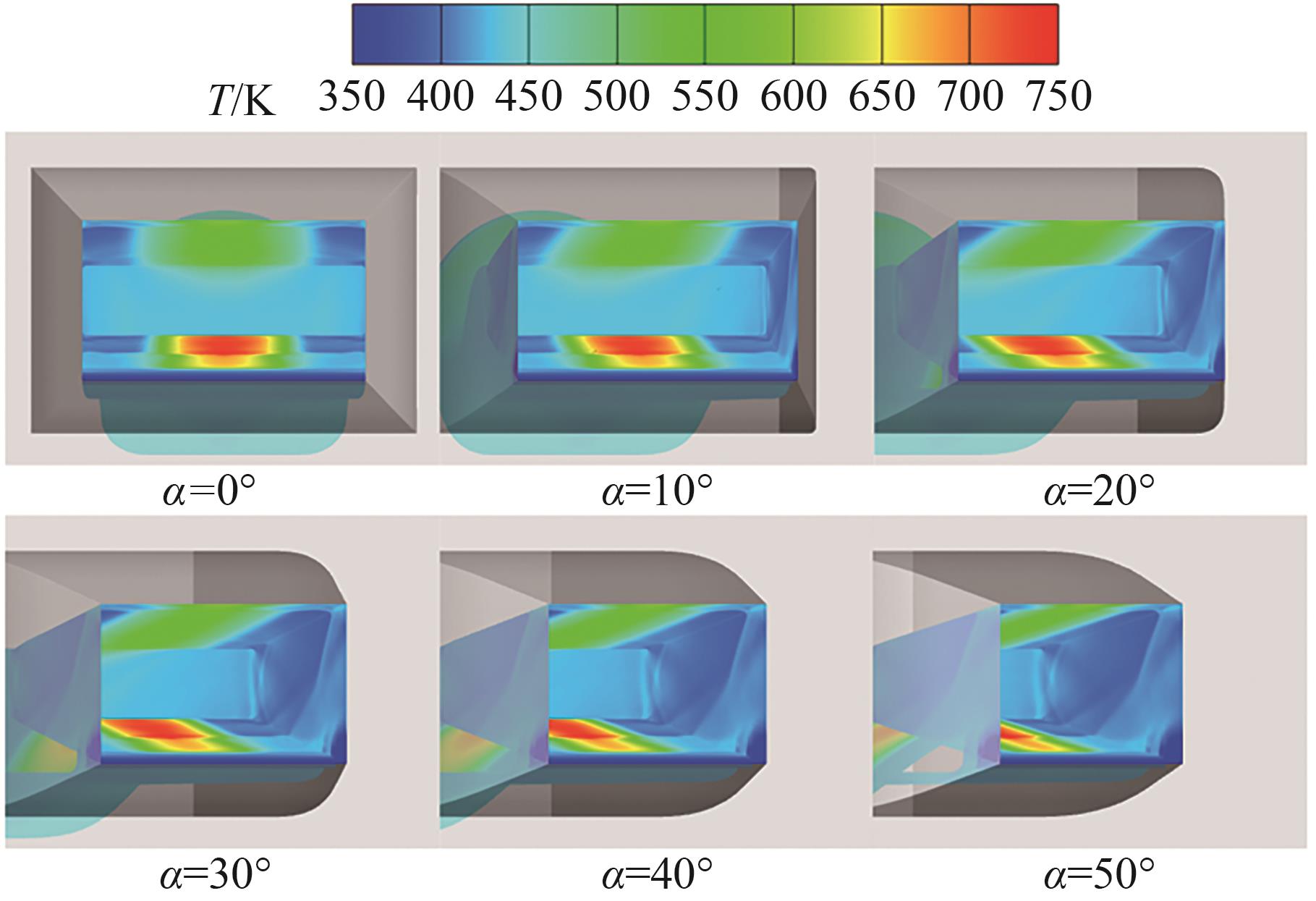
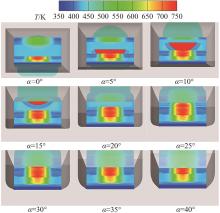
Fig.14
Visibility of nozzle wall at different detection angles on the upper half of vertical plane
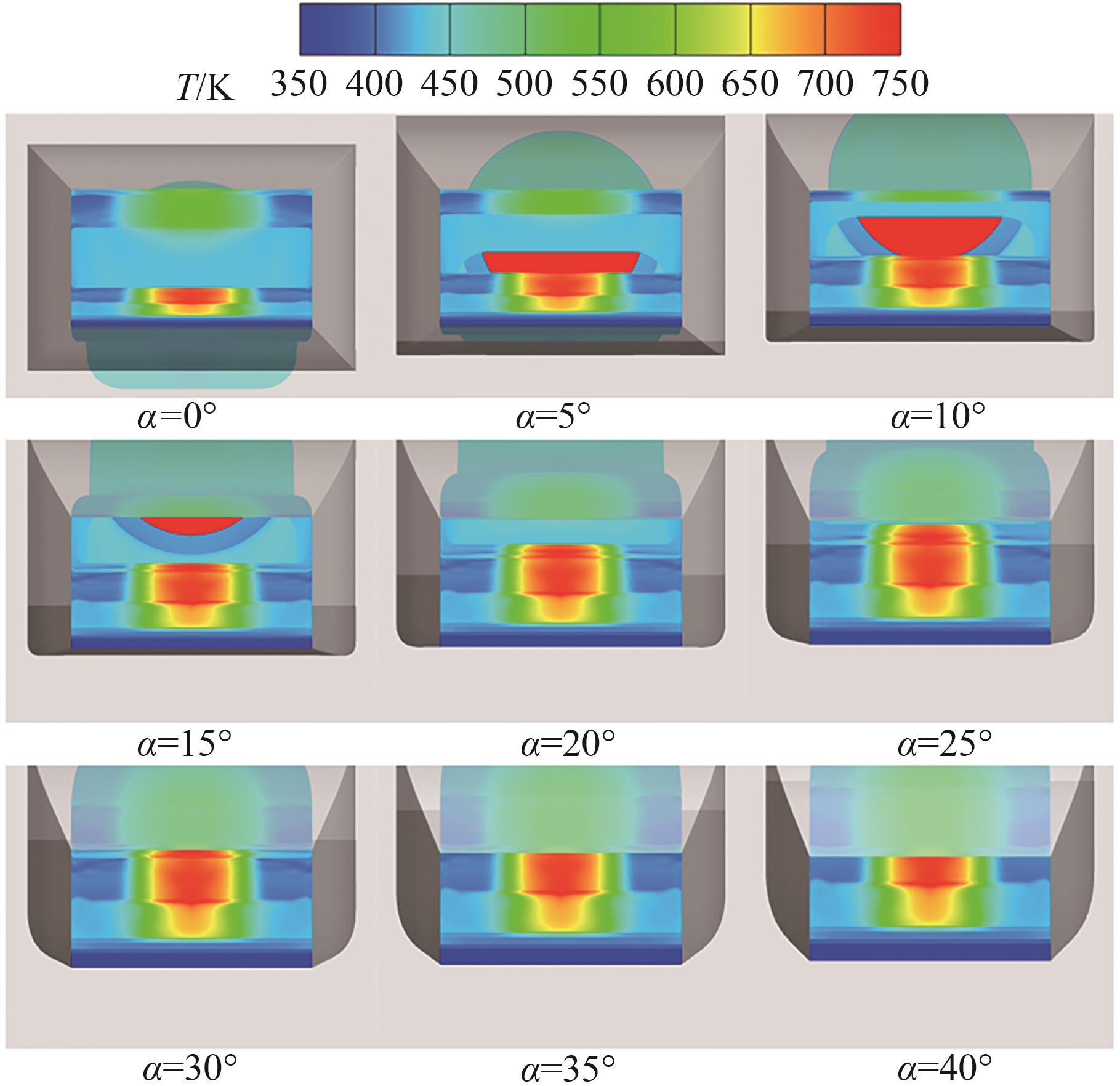
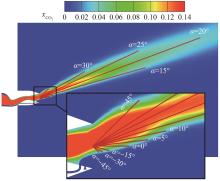
Fig.15
Gas path at different detection angles on vertical plane
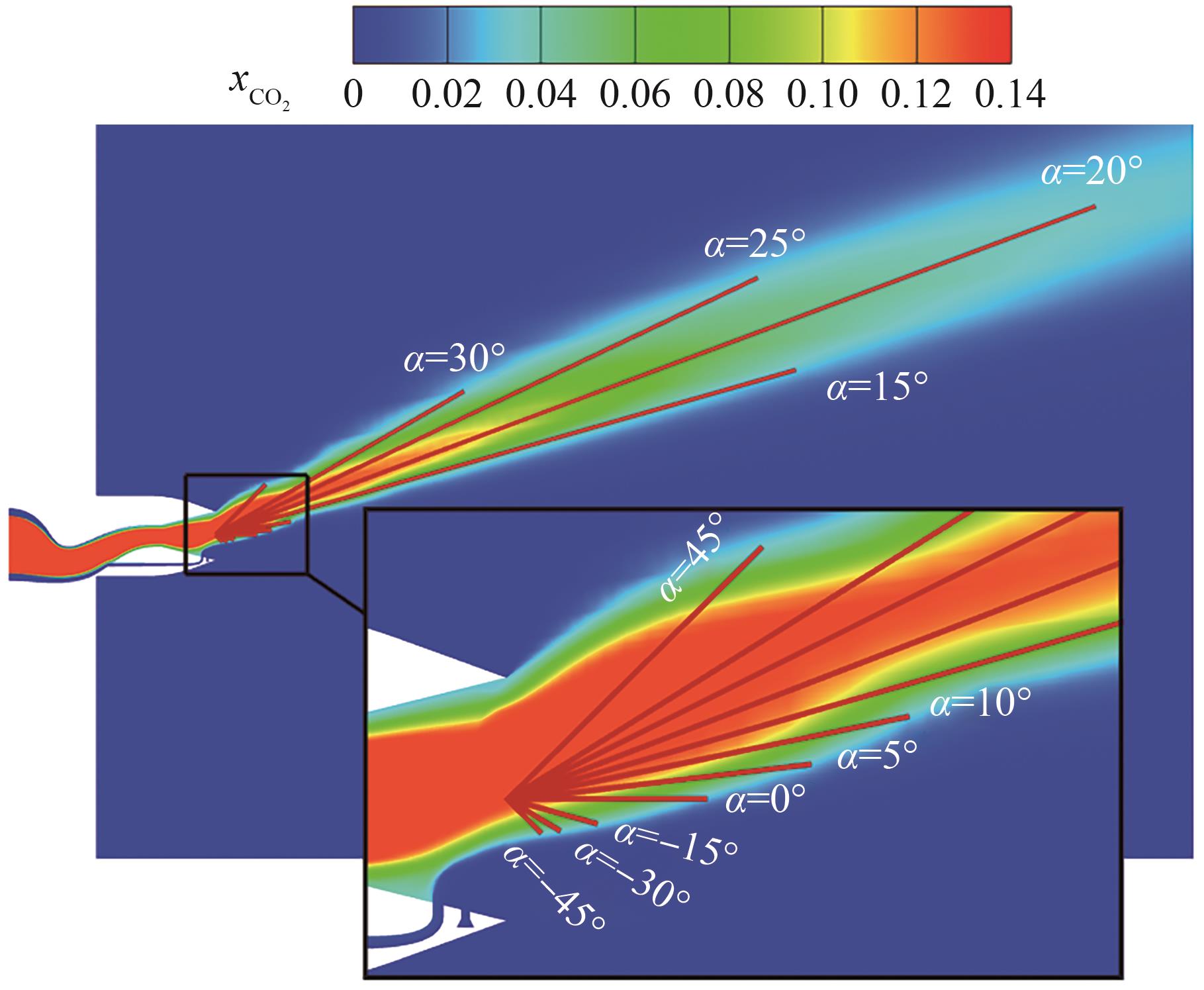
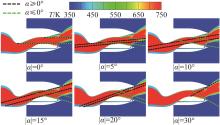
Fig.16
Visibility of gas inside nozzle at different detection angles on vertical plane
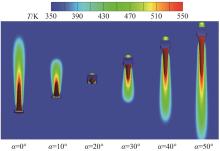
Fig.17
Projected area of 550 K isosurface in gas domain and plume cross-section on the upper half of vertical plane
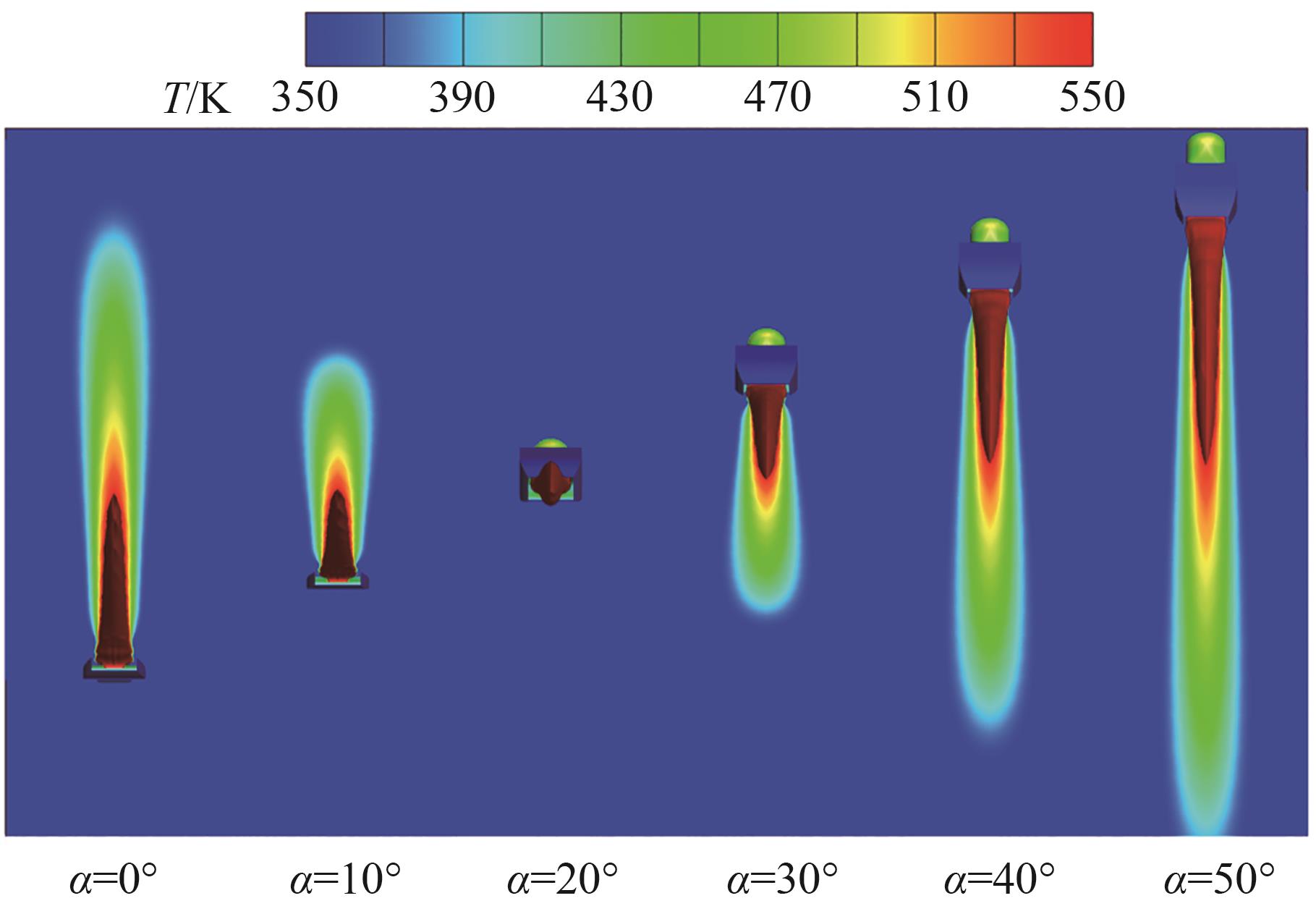
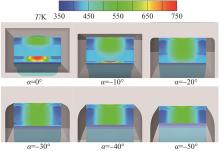
Fig.18
Visibility of nozzle wall at different detection angles on the lower half of vertical plane
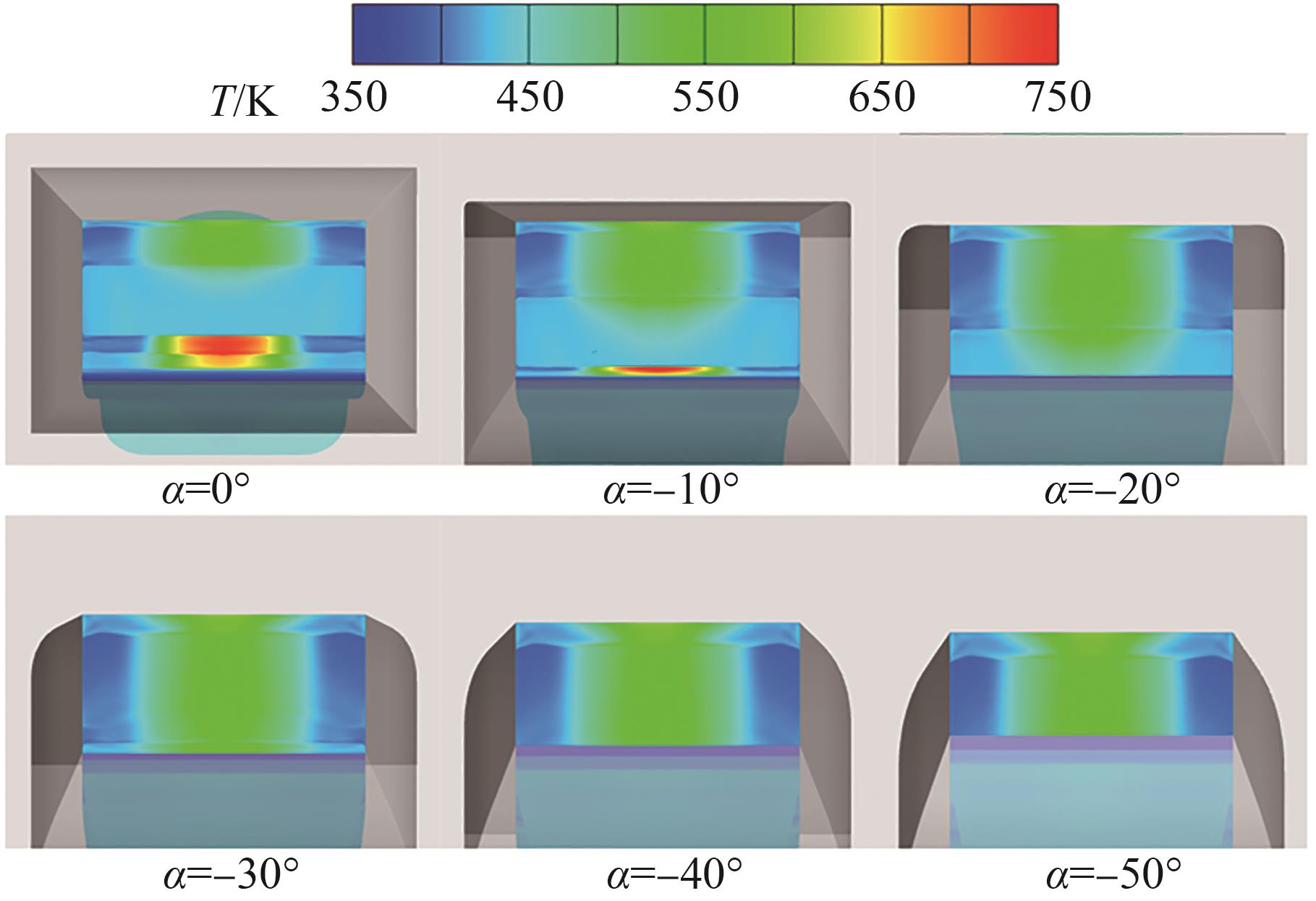
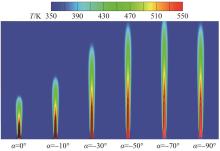
Fig.19
Projected area of 550 K isosurface in gas domain and plume cross-section on the lower half of vertical plane
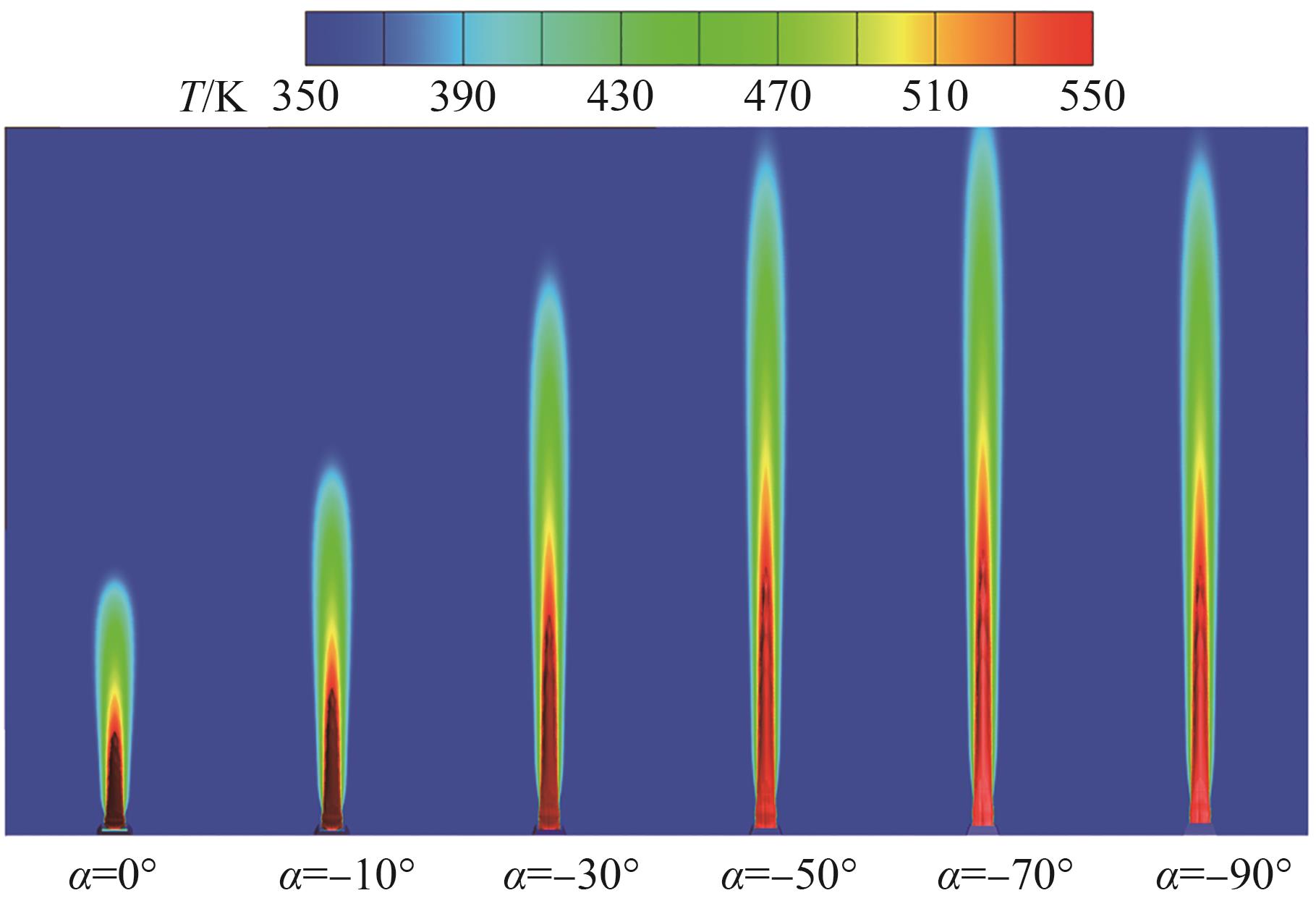
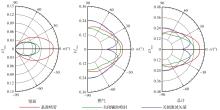
Fig.20
Infrared radiation intensity distribution on horizontal plane under different operating modes
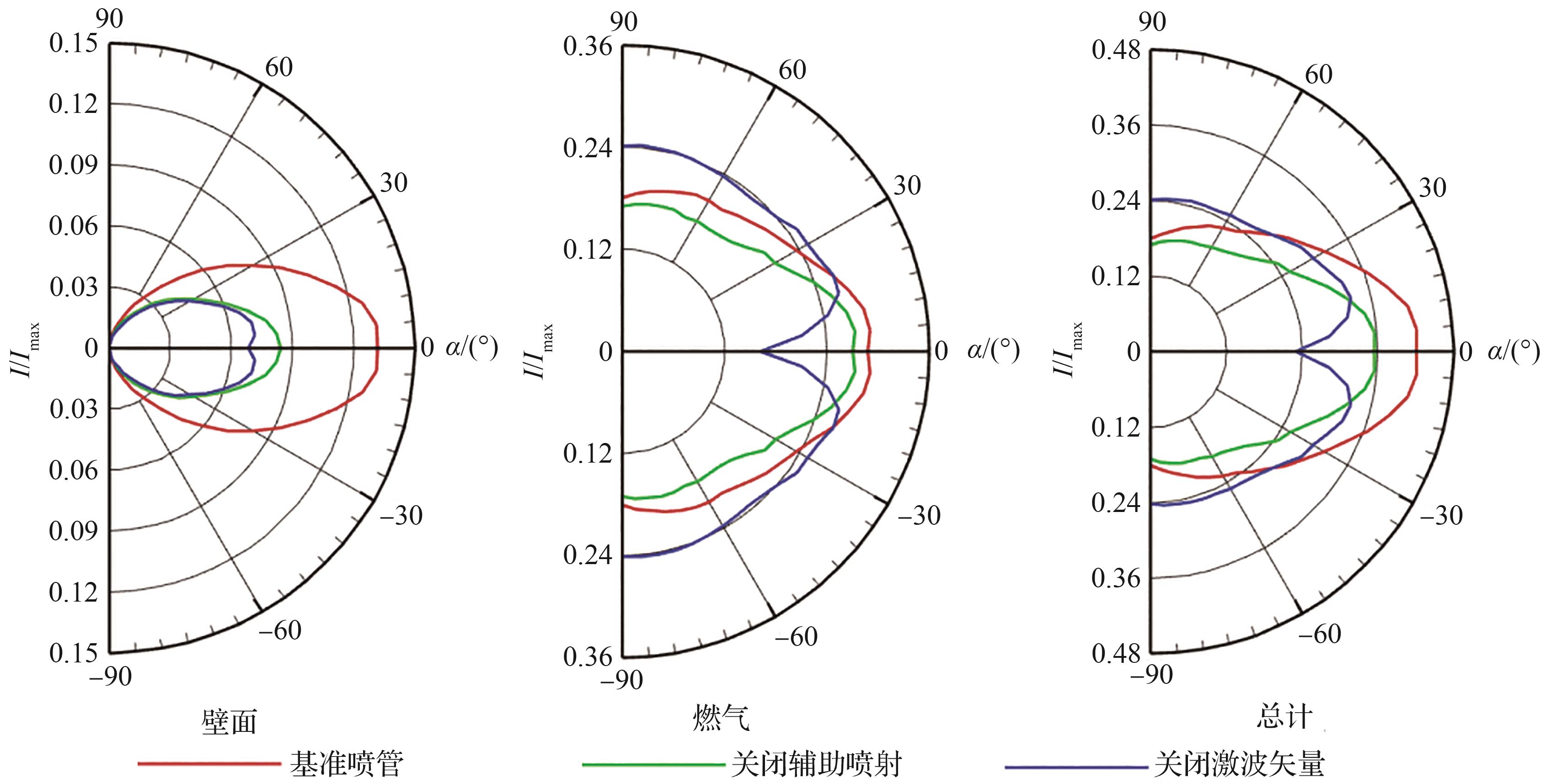
Fig.21
Infrared radiation intensity distribution on vertical plane under different operating modes
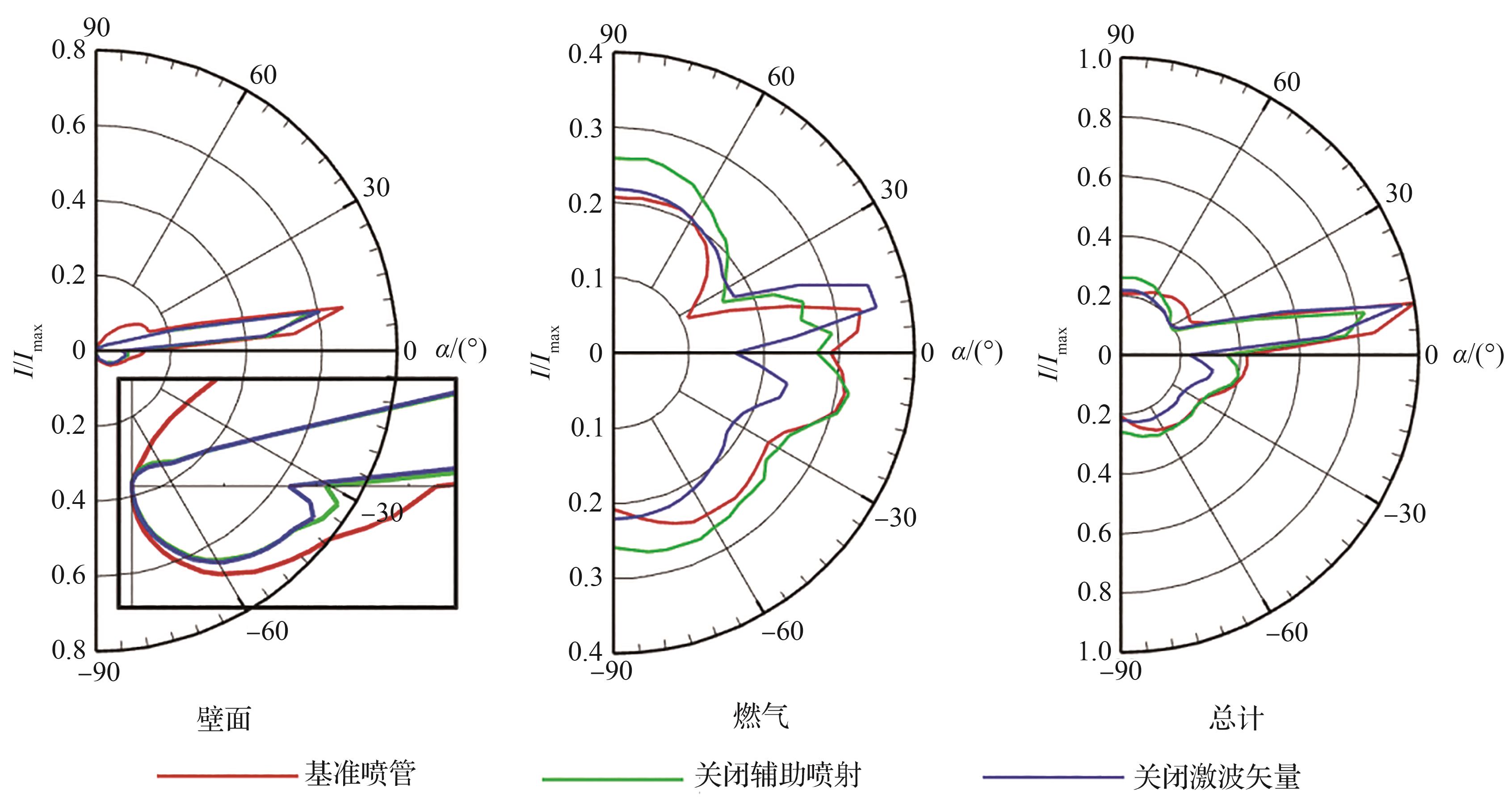
Fig.22
Static temperature distribution on symmetry plane and nozzle wall under different operating modes
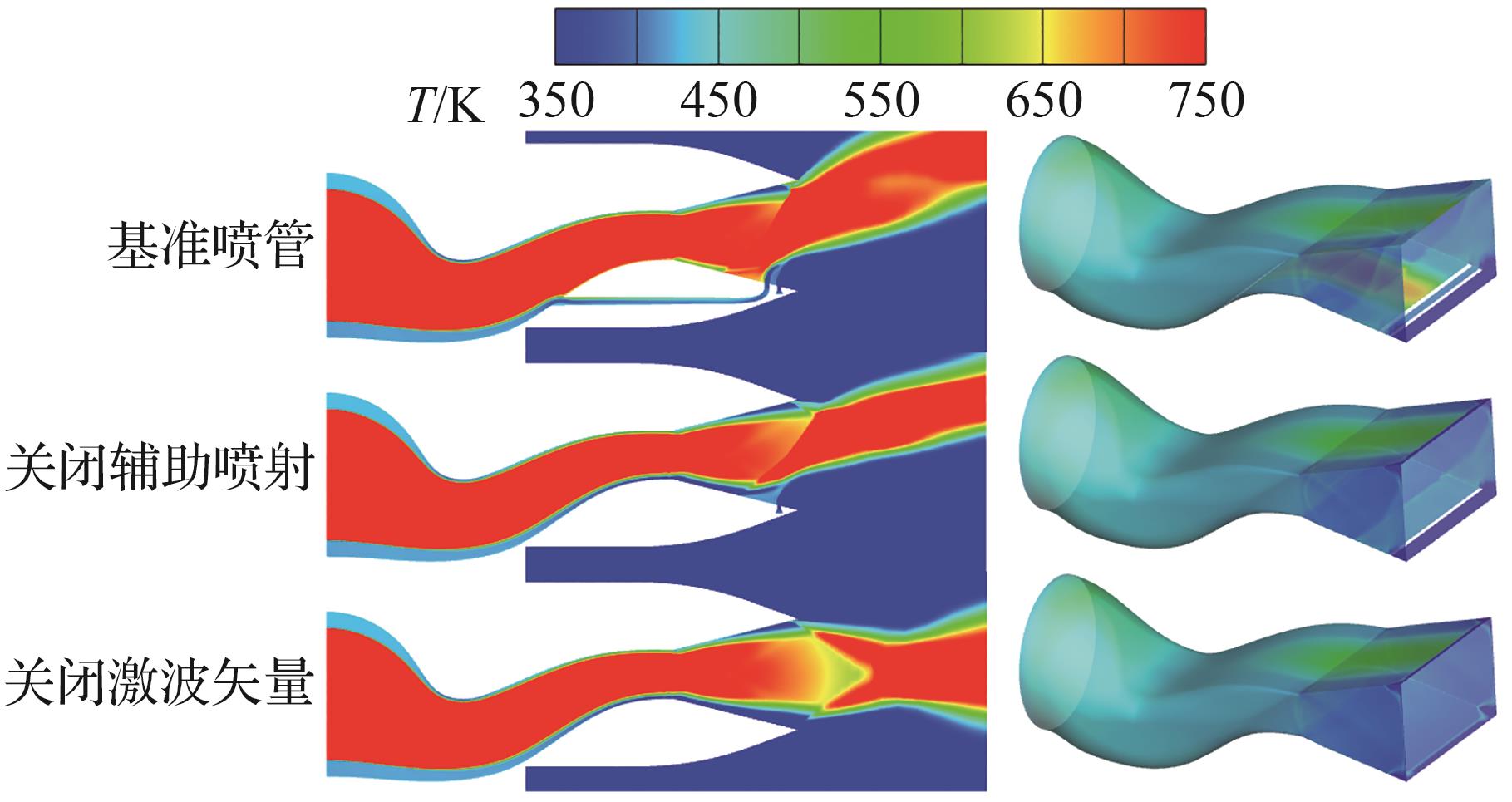
Fig.23
Static temperature and Mach number distributions of plume on symmetry plane under different operating modes
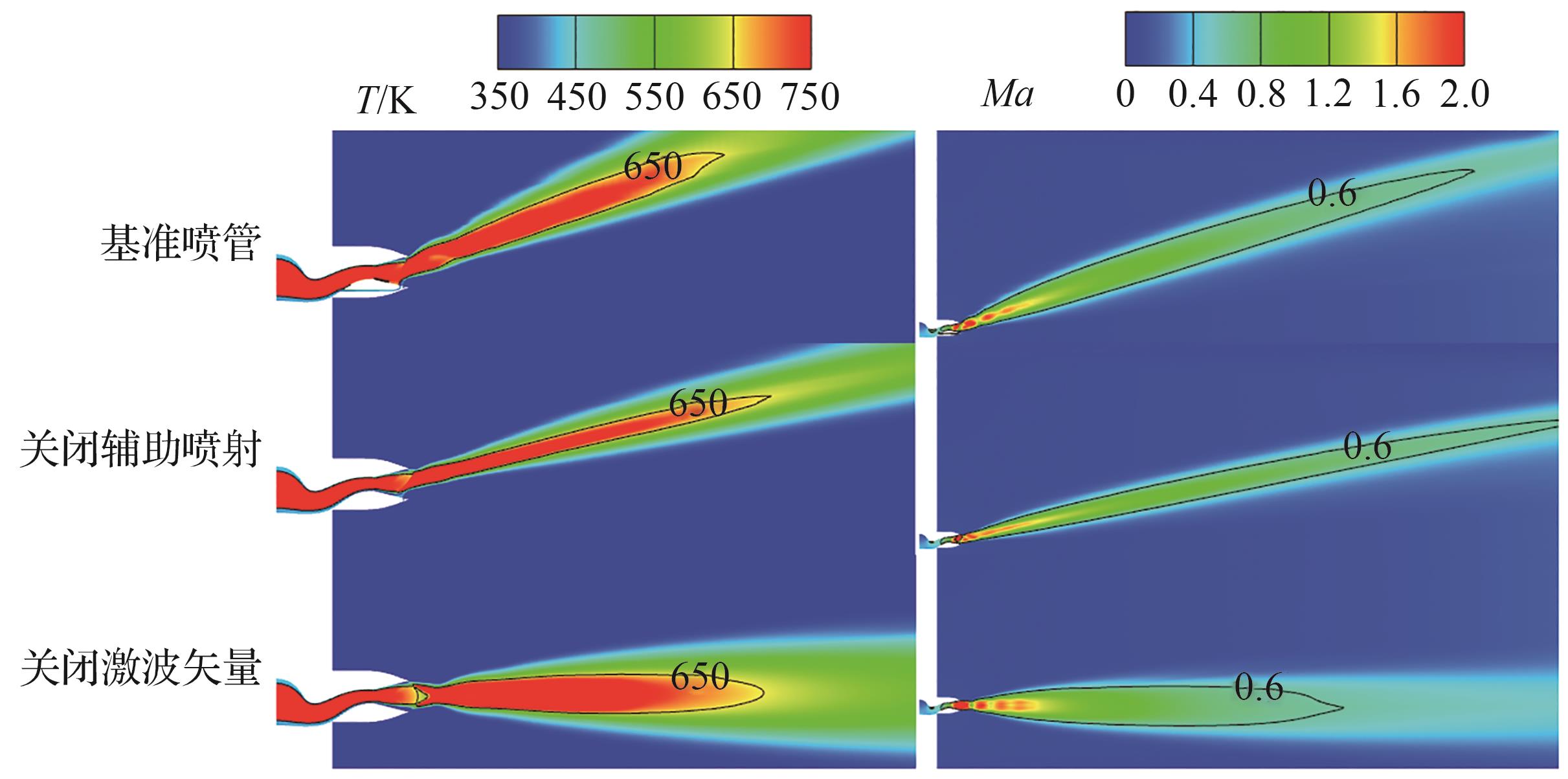
Fig.24
Infrared radiation intensity distribution on horizontal plane under different SPR
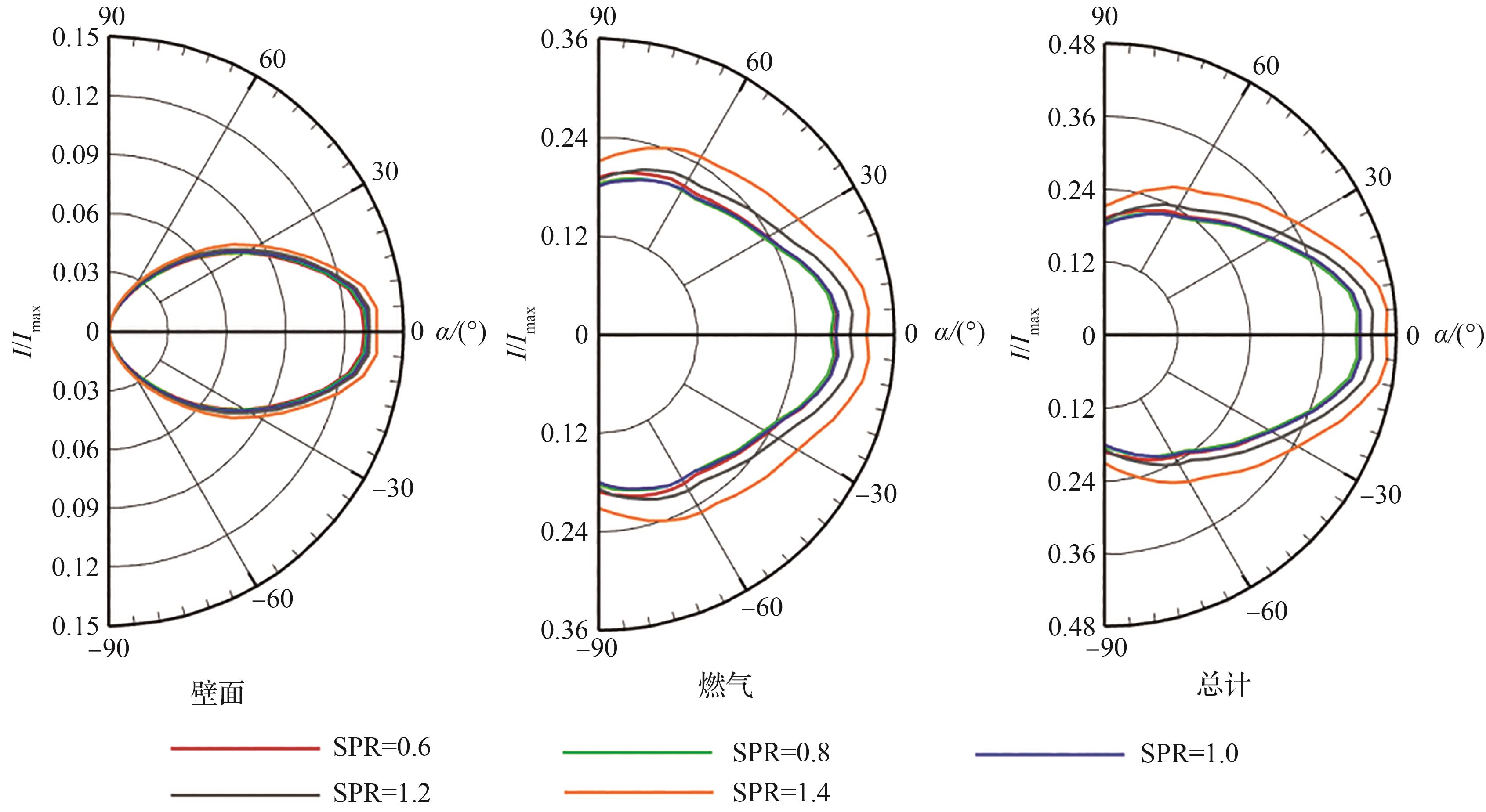
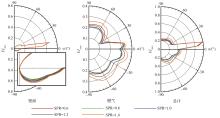
Fig.25
Infrared radiation intensity distribution on vertical plane under different SPR
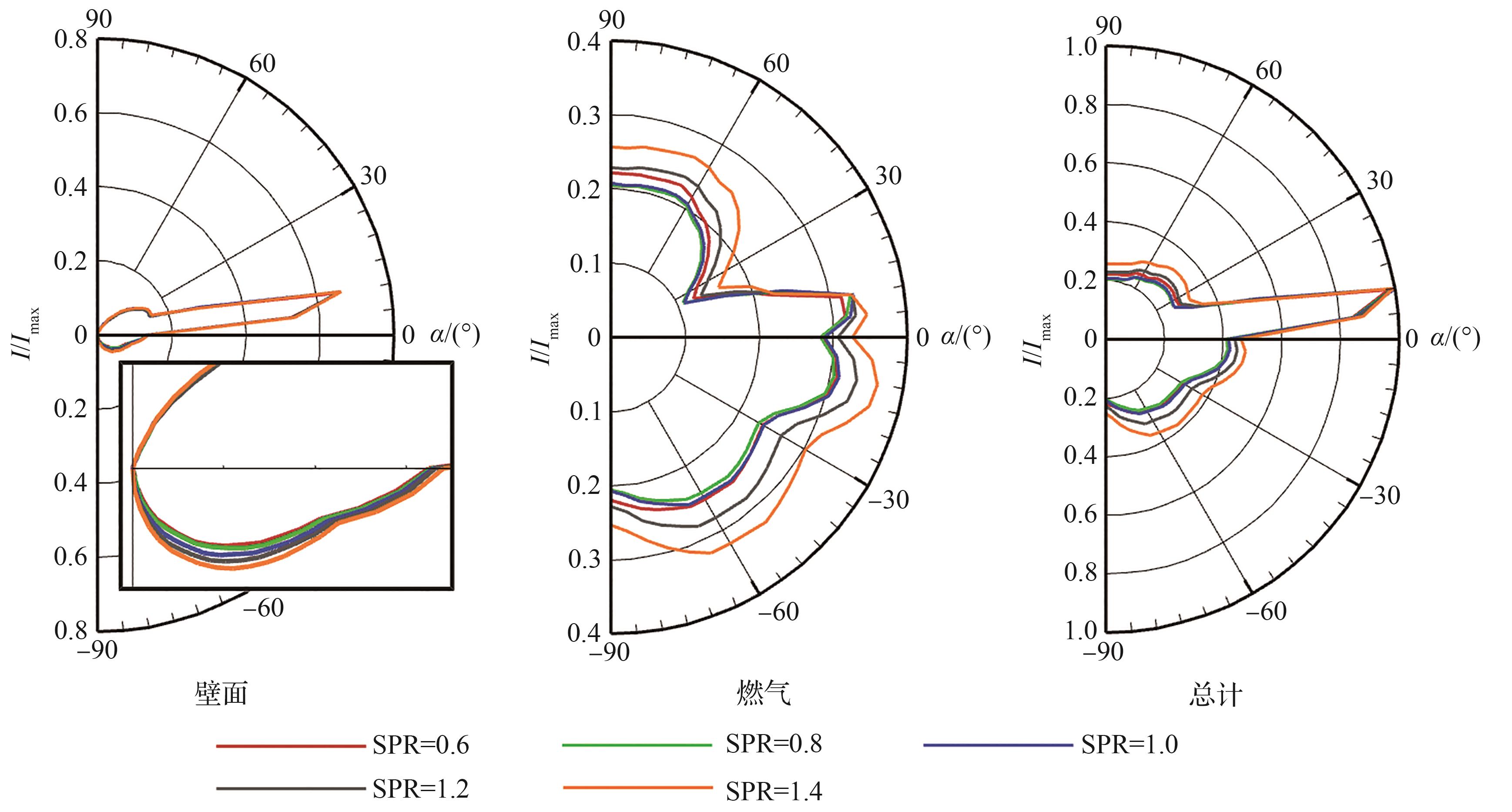
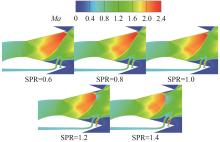
Fig.26
Mach number distribution on symmetry plane under different SPR
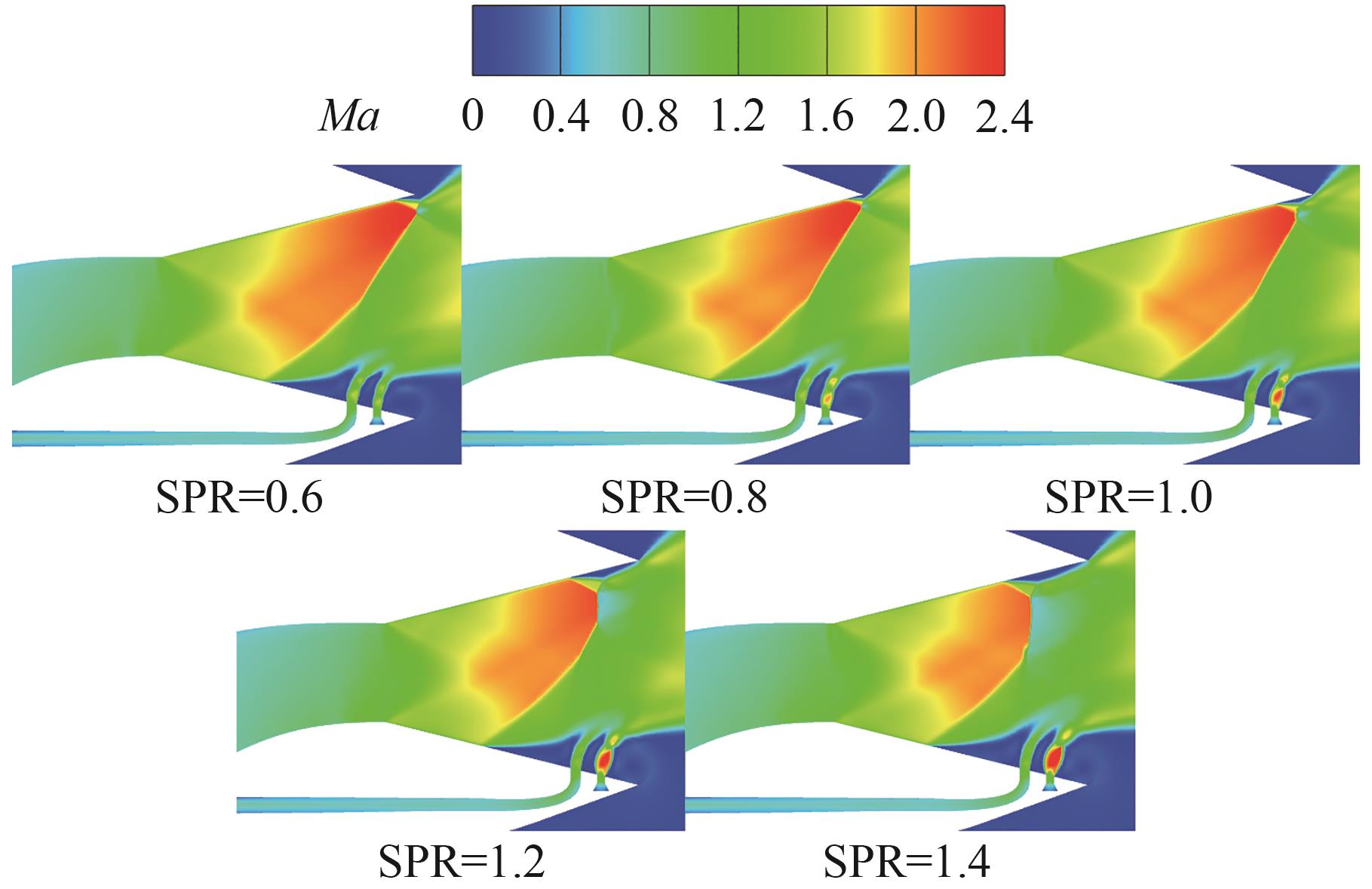
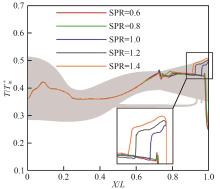
Fig.27
Temperature distribution of upper wall ridge line under different SPR
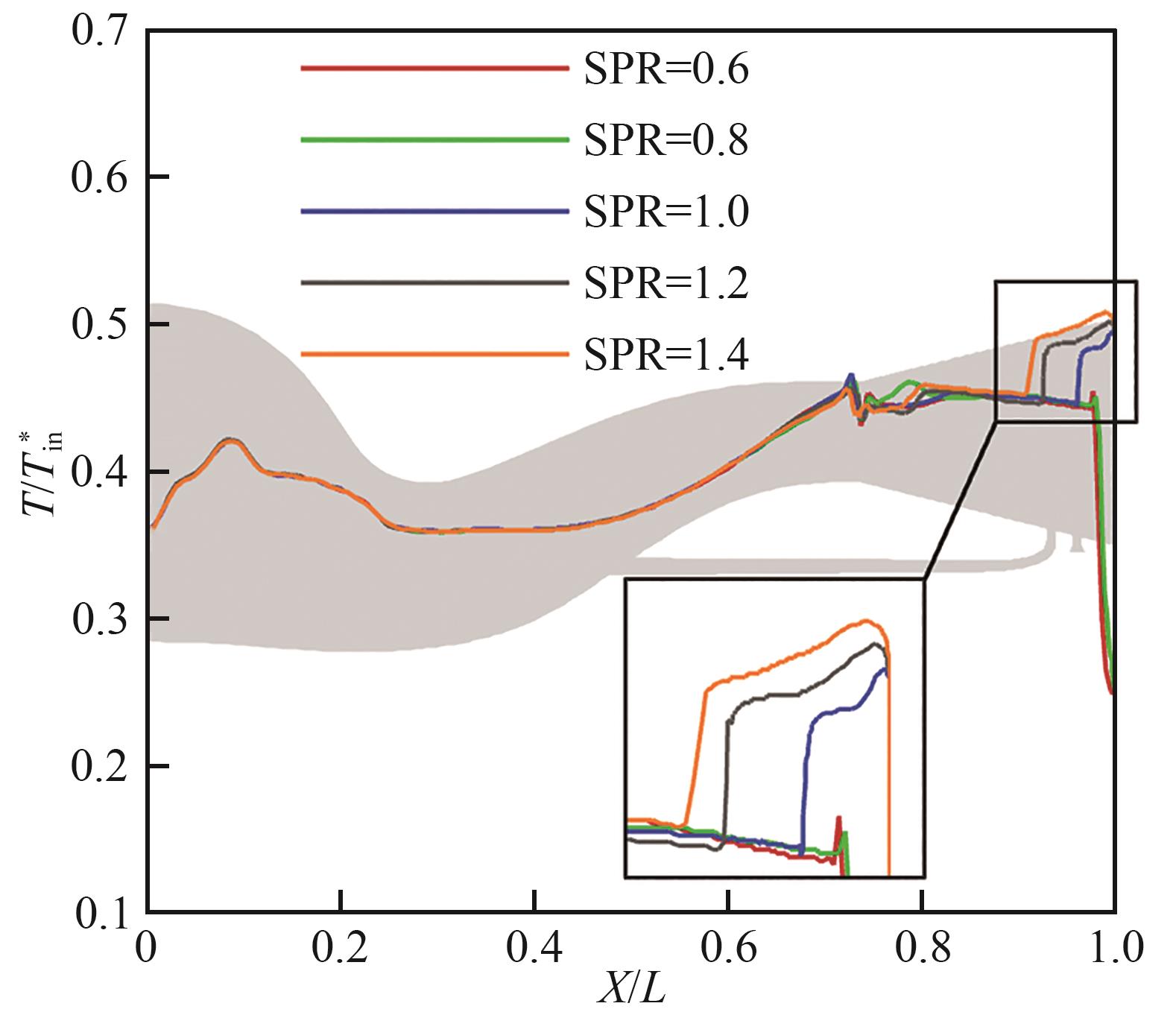
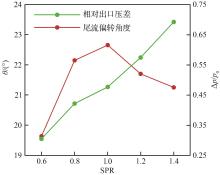
Fig.28
Deflection angle of plume and relative pressure difference at exit under different SPR
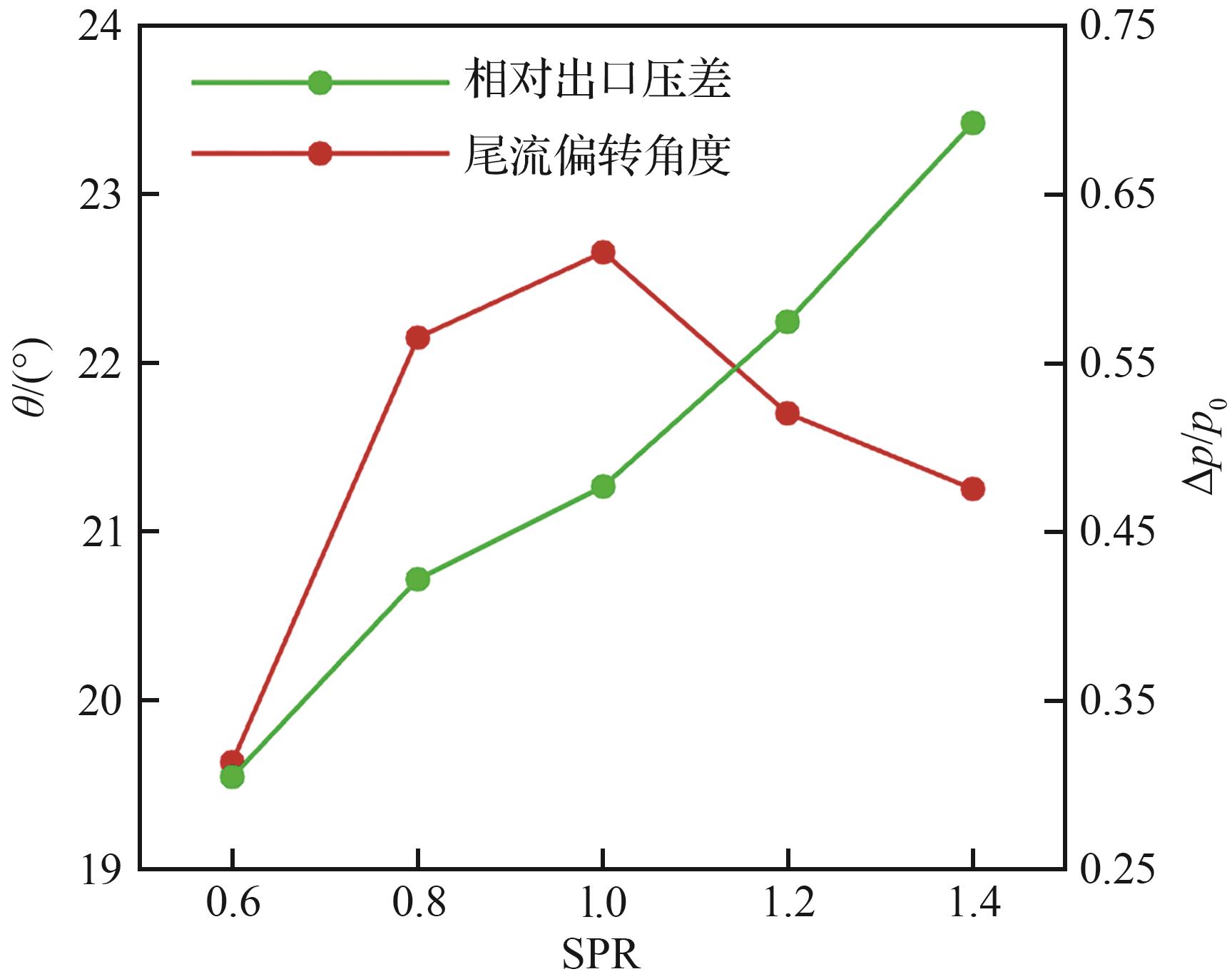
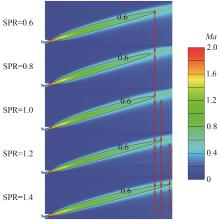
Fig.29
Mach number distribution and Ma=0.6 contour lines in farfield under different SPR
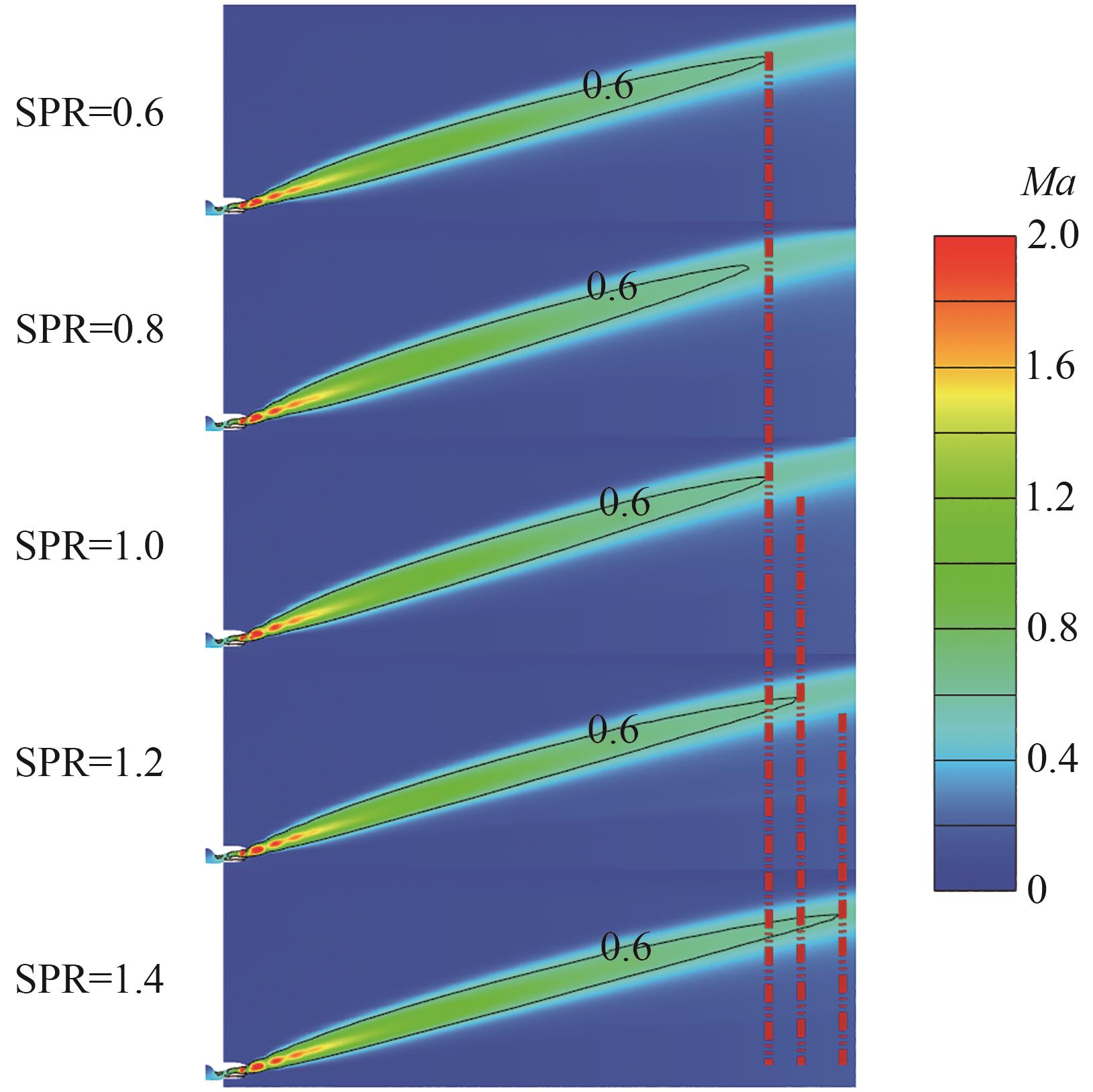
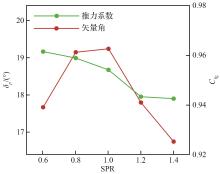
Fig.30
Thrust vector angle and thrust coefficient under different SPR
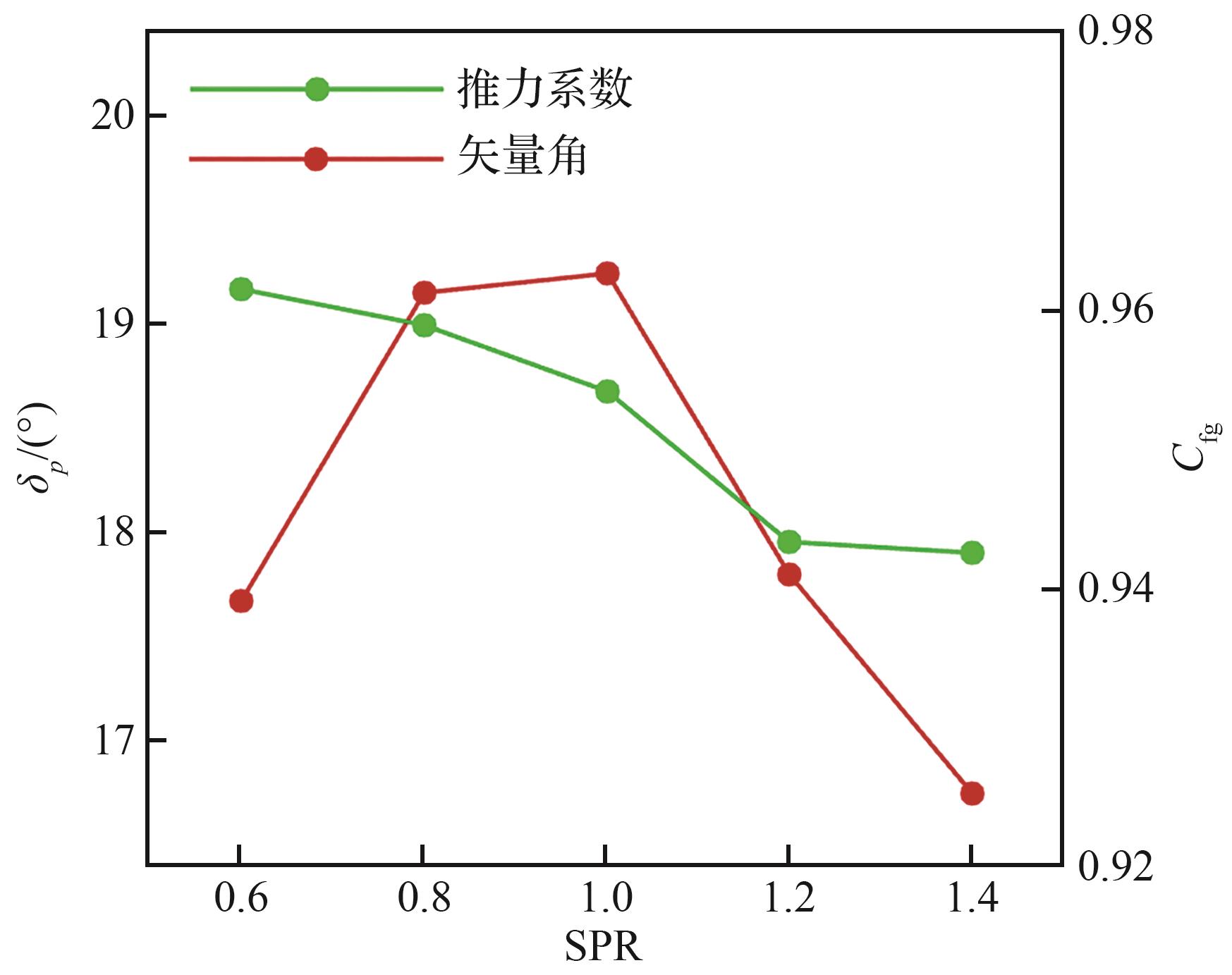
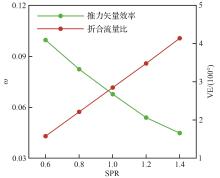
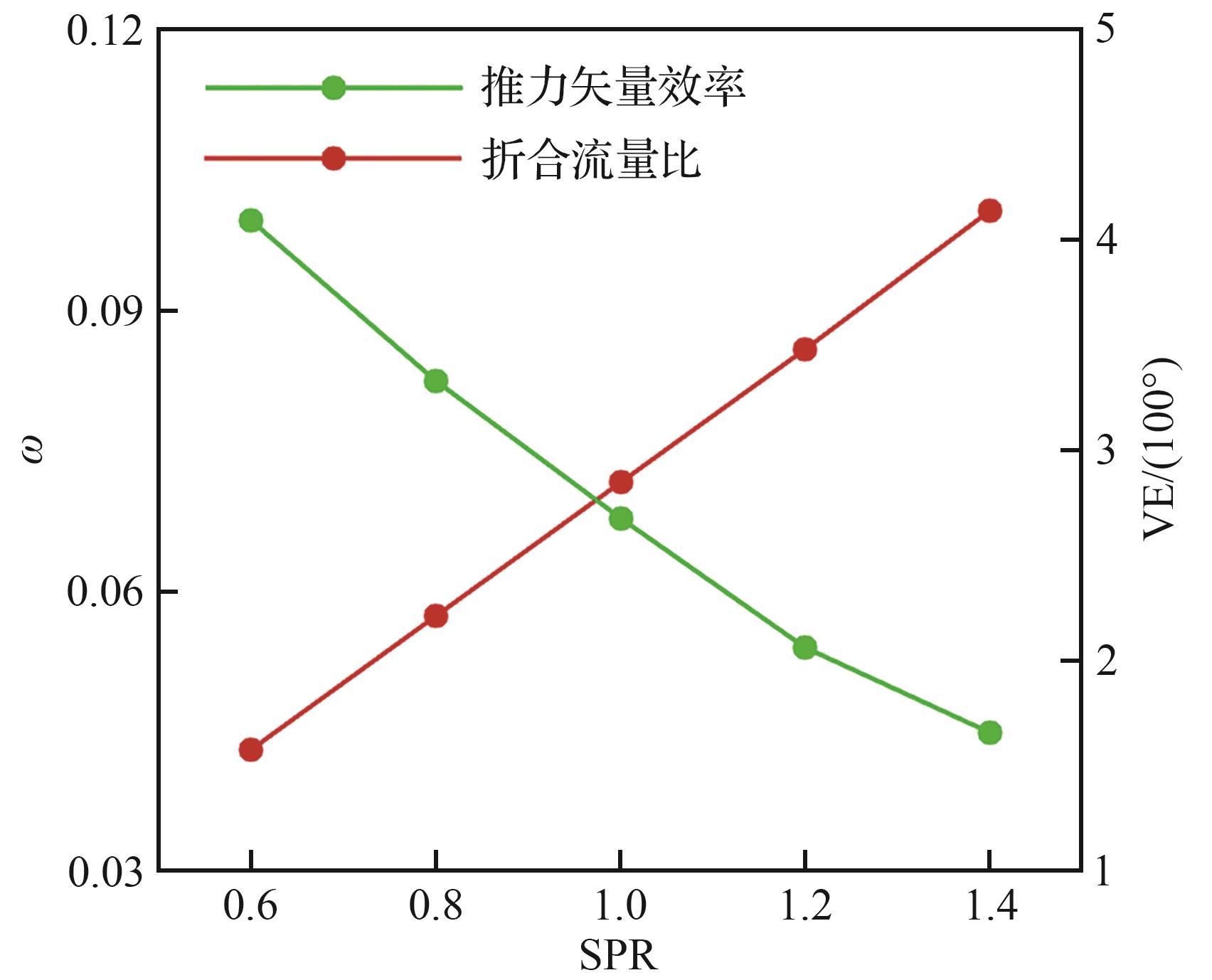
Fig.31
Reduced flow rate ratio of secondary flow and thrust vectoring efficiency under different SPR
| [1] | SEKAR T C, KUSHARI A, MODY B, et al. Fluidic thrust vectoring using transverse jet injection in a converging nozzle with aft-deck[J]. Experimental Thermal and Fluid Science, 2017, 86: 189-203. |
| [2] | KONG F S, JIN Y Z, KIM H D. Thrust vector control of supersonic nozzle flow using a moving plate[J]. Journal of Mechanical Science and Technology, 2016, 30(3): 1209-1216. |
| [3] | TRANCOSSI M, MADONIA M, DUMAS A, et al. A new aircraft architecture based on the ACHEON Coanda effect nozzle: Flight model and energy evaluation[J]. European Transport Research Review, 2016, 8(2): 11. |
| [4] | 王海峰. 战斗机推力矢量关键技术及应用展望[J]. 航空学报, 2020, 41(6): 524057. |
| WANG H F. Key technologies and future applications of thrust vectoring on fighter aircraft[J]. Acta Aeronautica et Astronautica Sinica, 2020, 41(6): 524057 (in Chinese). | |
| [5] | 徐惊雷, 黄帅, 潘睿丰, 等. 气动推力矢量喷管研究近况和发展趋势[J]. 航空学报, 2025, 46(8): 631216. |
| XU J L, HUANG S, PAN R F, et al. Research on fluidic thrust vectoring nozzle: Recent developments and future trends[J]. Acta Aeronautica et Astronautica Sinica, 2025, 46(8): 631216 (in Chinese). | |
| [6] | HUANG S, XU J L, YU K K, et al. Design and experimental study of a bypass dual throat nozzle with the ability of short/vertical takeoff and landing[J]. Aerospace Science and Technology, 2022, 121: 107301. |
| [7] | 王玉新. 喷气发动机轴对称推力矢量喷管[M]. 北京: 国防工业出版社, 2006:4, 5, 27, 48. |
| WANG Y X. Axisymmetric thrust vectoring nozzle for jet engines[M]. Beijing: National Defense Industry Press, 2006: 4, 5, 27, 48 (in Chinese). | |
| [8] | HUANG S, XU J L, YU K K, et al. Numerical study of a trapezoidal bypass dual throat nozzle[J]. Chinese Journal of Aeronautics, 2023, 36(3): 42-62. |
| [9] | XU B X, HU D P, FENG L H. Dynamic characteristics and application of dual throat fluidic thrust vectoring nozzle[J]. Chinese Journal of Aeronautics, 2024, 37(9): 85-99. |
| [10] | ZHANG Y Q, XU J L, CAO M L, et al. Numerical investigation of dynamic characteristics of dual throat nozzle and bypass dual throat nozzle in thrust vectoring starting process[J]. Chinese Journal of Aeronautics, 2024, 37(10): 184-206. |
| [11] | 史经纬, 王占学, 梁爽. 激波矢量控制喷管技术分析[J]. 航空动力, 2023(2): 71-74. |
| SHI J W, WANG Z X, LIANG S. Technical analysis of shock vector control nozzle[J]. Aerospace Power, 2023(2): 71-74 (in Chinese). | |
| [12] | 史经纬. 固定几何气动矢量喷管流动机理及性能评估技术研究[D]. 西安: 西北工业大学, 2015: 39-41. |
| SHI J W. Investigation on flow mechanism and performance estimation of fixed-geometric thrust vectoring nozzle[D]. Xi’an: Northwestern Polytechnical University, 2015: 39-41 (in Chinese). | |
| [13] | 是介, 周莉, 史经纬, 等. 复杂来流条件下设计参数对S弯喷管红外辐射特征影响[J]. 航空学报, 2024, 45(17): 530082. |
| SHI J, ZHOU L, SHI J W, et al. Influence of design parameters on infrared radiation characteristics of serpentine nozzles under complex flow conditions[J]. Acta Aeronautica et Astronautica Sinica, 2024, 45(17): 530082 (in Chinese). | |
| [14] | 邓洪伟, 尚守堂, 金海, 等. 航空发动机隐身技术分析与论述[J]. 航空科学技术, 2017, 28(10): 1-7. |
| DENG H W, SHANG S T, JIN H, et al. Analysis and discussion on stealth technology of aero engine[J]. Aeronautical Science & Technology, 2017, 28(10): 1-7 (in Chinese). | |
| [15] | 王海峰. 高性能战斗机与发动机协同设计关键技术[J]. 航空学报, 2024, 45(5): 529978. |
| WANG H F. Key technologies in collaborative airframe-engine design for high performance fighters[J]. Acta Aeronautica et Astronautica Sinica, 2024, 45(5): 529978 (in Chinese). | |
| [16] | ZMIJANOVIC V, LEGER L, LAGO V, et al. Experimental and numerical study of thrust-vectoring effects by transverse gas injection into a propulsive axisymmetric C-D nozzle[C]∥48th AIAA/ASME/SAE/ASEE Joint Propulsion Conference & Exhibit. Reston: AIAA, 2012. |
| [17] | ZMIJANOVIC V, LEGER L, DEPUSSAY E, et al. Experimental-numerical parametric investigation of a rocket nozzle secondary injection thrust vectoring[J]. Journal of Propulsion and Power, 2015, 32(1): 196-213. |
| [18] | ZMIJANOVIC V, LAGO V, SELLAM M, et al. Thrust shock vector control of an axisymmetric conical supersonic nozzle via secondary transverse gas injection[J]. Shock Waves, 2014, 24(1): 97-111. |
| [19] | 史经纬, 王占学, 刘增文, 等. 二次流喷口形状对激波矢量控制喷管推力矢量特性影响[J]. 航空动力学报, 2013, 28(12): 2678-2684. |
| SHI J W, WANG Z X, LIU Z W, et al. Effects of secondary injection forms on thrust vector performance of shock vector controlling nozzle[J]. Journal of Aerospace Power, 2013, 28(12): 2678-2684 (in Chinese). | |
| [20] | 史经纬, 王占学, 周莉, 等. 激波矢量喷管二次流喷口形态影响研究[J]. 工程热物理学报, 2014, 35(11): 2173-2177. |
| SHI J W, WANG Z X, ZHOU L, et al. Influence of secondary injection configuration on performance of shock vector nozzle[J]. Journal of Engineering Thermophysics, 2014, 35(11): 2173-2177 (in Chinese). | |
| [21] | JOHANSSON M, DALENBRING M. Calculation of IR signatures from airborne vehicles[C]∥Modeling and Simulation for Military Applications. Bellingham: Society of Photo-Optical Instrumentation Engineers, 2006: 369-380. |
| [22] | MAHESH B. Nozzle design for reducing infrared signature[R]. Kharagpur: Cyient, 2017. |
| [23] | RAO A N, BOOMADEVI S, KUSHARI A, et al. IR signature studies of Serpentine nozzle with elliptic exit[C]∥International Conference on Theoretical, Applied, Computational and Experimental Mechanics. Kharagpur: Indian Institute of Technology, 2017: 393-399. |
| [24] | LEE Y R, LEE J W, SHIN C M, et al. Characteristics of flow field and IR of double serpentine nozzle plume for varying cross sectional areas and flight conditions in UCAV[J]. Journal of the Korean Society for Aeronautical & Space Sciences, 2021, 49(8): 689-698. |
| [25] | SHAN Y, ZHOU X M, TAN X M, et al. Parametric design method and performance analysis of double S-shaped nozzles[J]. International Journal of Aerospace Engineering, 2019, 2019(1): 4694837. |
| [26] | 周孝明, 单勇, 宫禹, 等. 低可探测双S弯喷管红外辐射特征研究[J]. 重庆理工大学学报(自然科学版), 2018, 32(12): 54-61. |
| ZHOU X M, SHAN Y, GONG Y, et al. Numerical simulations on infrared radiation characteristics of low detectable double S-shaped nozzles[J]. Journal of Chongqing Institute of Technology, 2018, 32(12): 54-61 (in Chinese). | |
| [27] | 桑学仪, 吉洪湖, 王丁. 长径比和偏径比对双S形二元喷管性能的影响[J]. 红外技术, 2019, 41(5): 443-449. |
| SANG X Y, JI H H, WANG D. Influence of length-diameter ratio and offset-diameter ratio on performance of serpentine 2-D nozzle[J]. Infrared Technology, 2019, 41(5): 443-449 (in Chinese). | |
| [28] | 王宇恒, 吉洪湖, 程稳, 等. 收扩喷管设计对双S形二元排气系统气动与红外特征的影响[J]. 红外与激光工程, 2021, 50(11): 20210084. |
| WANG Y H, JI H H, CHENG W, et al. Influence of design of convergent-divergent nozzle on aerodynamic and infrared characteristics of serpentine 2-D exhaust system[J]. Infrared and Laser Engineering, 2021, 50(11): 20210084 (in Chinese). | |
| [29] | CHENG W, WANG Z X, ZHOU L, et al. Investigation of infrared signature of serpentine nozzle for turbofan[J]. Journal of Thermophysics and Heat Transfer, 2018, 33(1): 170-178. |
| [30] | 程稳, 周莉, 王占学, 等. 几何参数对S弯喷管红外辐射特性的影响[J]. 推进技术, 2018, 39(9): 1974-1985. |
| CHENG W, ZHOU L, WANG Z X, et al. Effects of geometric parameters on infrared signature of serpentine nozzle[J]. Journal of Propulsion Technology, 2018, 39(9): 1974-1985 (in Chinese). | |
| [31] | 程稳. S弯喷管红外辐射特性预测及优化设计方法[D]. 西安: 西北工业大学, 2019: 89-95. |
| CHENG W. Infrared signature prediction and optimization design method for serpentine nozzle[D]. Xi’an: Northwestern Polytechnical University, 2019: 89-95. (in Chinese) | |
| [32] | LIANG S, SHI J W, WANG Z X. Influence of aft deck on the flow characteristics of a serpentine shock vector control nozzle[J]. Transactions of Nanjing University of Aeronautics and Astronautics, 2023, 40(1): 13-24. |
| [33] | HUI Z H, SHI J W, LIN W T, et al. Experimental investigation and numerical analysis on high-efficiency shock vectoring control serpentine nozzles[J]. Chinese Journal of Aeronautics, 2024, 37(12): 296-324. |
| [34] | 孙啸林, 王占学, 周莉, 等. 基于多参数耦合的S弯隐身喷管设计方法研究[J]. 工程热物理学报, 2015, 36(11): 2371-2375. |
| SUN X L, WANG Z X, ZHOU L, et al. The design method of serpentine stealth nozzle based on coupled parameters[J]. Journal of Engineering Thermophysics, 2015, 36(11): 2371-2375 (in Chinese). | |
| [35] | 徐建宇, 周莉, 是介, 等. 多股流S弯喷管红外辐射特性研究[J]. 航空动力学报, 2025, 40(2): 20230148. |
| XU J Y, ZHOU L, SHI J, et al. Investigation on infrared radiation characteristics of multi-stream serpentine nozzle[J]. Journal of Aerospace Power, 2025, 40(2): 20230148 (in Chinese). | |
| [36] | MANNA P, DHARAVATH M, SINHA P K, et al. Optimization of a flight-worthy scramjet combustor through CFD[J]. Aerospace Science and Technology, 2013, 27(1): 138-146. |
| [37] | 是介, 周莉, 史经纬, 等. S弯喷管与飞机后机身一体化构型红外辐射特性研究[J]. 推进技术, 2024, 45(8): 80-93. |
| SHI J, ZHOU L, SHI J W, et al. Infrared radiation characteristics of serpentine nozzle integrated with aircraft rear fuselage configuration[J]. Journal of Propulsion Technology, 2024, 45(8): 80-93 (in Chinese). |
| [1] | Qingshan HUANG, Yunsong GU, Yuhang ZHOU, Yuheng FAN, Dongkai ZHAO. Wing yaw-control technology based on distributed jet rudders [J]. Acta Aeronautica et Astronautica Sinica, 2026, 47(13): 533214-533214. |
| [2] | Jinglei XU, Shuai HUANG, Ruifeng PAN, Yuqi ZHANG. Research on fluidic thrust vectoring nozzle: Recent developments and future trends [J]. Acta Aeronautica et Astronautica Sinica, 2025, 46(8): 631216-631216. |
| [3] | Lingling CHEN, Yang ZHANG, Yongqiang SHI, Qingzhen YANG. Film cooling performance/nozzle performance/infrared radiation characteristics of a vector nozzle [J]. Acta Aeronautica et Astronautica Sinica, 2025, 46(8): 631139-631139. |
| [4] | Chengke LI, Ge WANG, Zenan YANG, Yi LI. Specific impulse gain mechanism of micro-holes helium injected solid-gas hybrid rocket motor [J]. Acta Aeronautica et Astronautica Sinica, 2025, 46(16): 131693-131693. |
| [5] | Chengxi WANG, Li ZHOU, Xiaolin SUN, Xiaobo ZHANG, Zhanxue WANG. Multi-dimensional simulation between serpentine nozzle and turbofan based on neural network [J]. Acta Aeronautica et Astronautica Sinica, 2025, 46(15): 130791-130791. |
| [6] | Yubo MENG, Jingwei SHI, Li ZHOU, Yi ZHANG, Zhanxue WANG. Design method for multi-dimensional deflected serpentine nozzle with abnormal exit [J]. Acta Aeronautica et Astronautica Sinica, 2024, 45(8): 128930-128930. |
| [7] | Jie SHI, Li ZHOU, Jingwei SHI, Zhanxue WANG. Influence of design parameters on infrared radiation characteristics of serpentine nozzles under complex flow conditions [J]. Acta Aeronautica et Astronautica Sinica, 2024, 45(17): 530082-530082. |
| [8] | Jie SHI, Li ZHOU, Jingwei SHI, Zhanxue WANG. Rapid prediction model for tail infrared radiation characteristics of serpentine nozzles [J]. Acta Aeronautica et Astronautica Sinica, 2024, 45(14): 129639-129639. |
| [9] | Qiulin LI, Li ZHOU, Peng SUN, Jingwei SHI, Zhanxue WANG. Influence mechanism of aspect ratio on fluid-structure interaction characteristics of serpentine nozzle [J]. Acta Aeronautica et Astronautica Sinica, 2023, 44(14): 628204-628204. |
| [10] | LI Shu, WANG Li, WU Shuo, SHEN Dong, HUANG Rui, WANG Qiang. Analysis of high temperature nozzle exhaust flow towards aircraft-engine integrated design [J]. ACTA AERONAUTICAET ASTRONAUTICA SINICA, 2016, 37(1): 364-370. |
| [11] | CAO Yongfei, GU Yunsong, CHENG Keming, XIAO Zhongyun, CHEN Zuobin, HE Kaifeng. Proportional control of jet deflection with passive secondary flow [J]. ACTA AERONAUTICAET ASTRONAUTICA SINICA, 2015, 36(3): 757-763. |
| [12] | SHUAI Yong;DONG Shi-kui;TAN He-ping. Numerical Simulation for Infrared Radiation Characteristics of Exhaust Plume at 2.7μm [J]. ACTA AERONAUTICAET ASTRONAUTICA SINICA, 2005, 26(4): 402-405. |
| [13] | Yang Yihe;Bai Changcheng. THE PROBLEMS OF THE INFRARED STEALTH OF THE FLYING VEHICLES [J]. ACTA AERONAUTICAET ASTRONAUTICA SINICA, 1988, 10(12): 549-554. |
| Viewed | ||||||
|
Full text |
|
|||||
|
Abstract |
|
|||||
Address: No.238, Baiyan Buiding, Beisihuan Zhonglu Road, Haidian District, Beijing, China
Postal code : 100083
E-mail:hkxb@buaa.edu.cn
Total visits: 6658907 Today visits: 1341All copyright © editorial office of Chinese Journal of Aeronautics
All copyright © editorial office of Chinese Journal of Aeronautics
Total visits: 6658907 Today visits: 1341

 CJA
CJA
