Acta Aeronautica et Astronautica Sinica ›› 2026, Vol. 47 ›› Issue (5): 332402.doi: 10.7527/S1000-6893.2025.32402
• Electronics and Electrical Engineering and Control • Previous Articles
Hao XU1( ), Rongling LANG2, Ya FAN2
Received:2025-06-11
Revised:2025-07-01
Accepted:2025-09-15
Online:2025-10-20
Published:2025-10-17
Contact:
Hao XU
E-mail:xhqyw0712@163.com
Supported by:CLC Number:
Hao XU, Rongling LANG, Ya FAN. Robust SOP positioning algorithm based on tightly coupled TDOA/AOA[J]. Acta Aeronautica et Astronautica Sinica, 2026, 47(5): 332402.
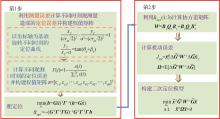
Fig.1
Flowchart of Ts-GBr
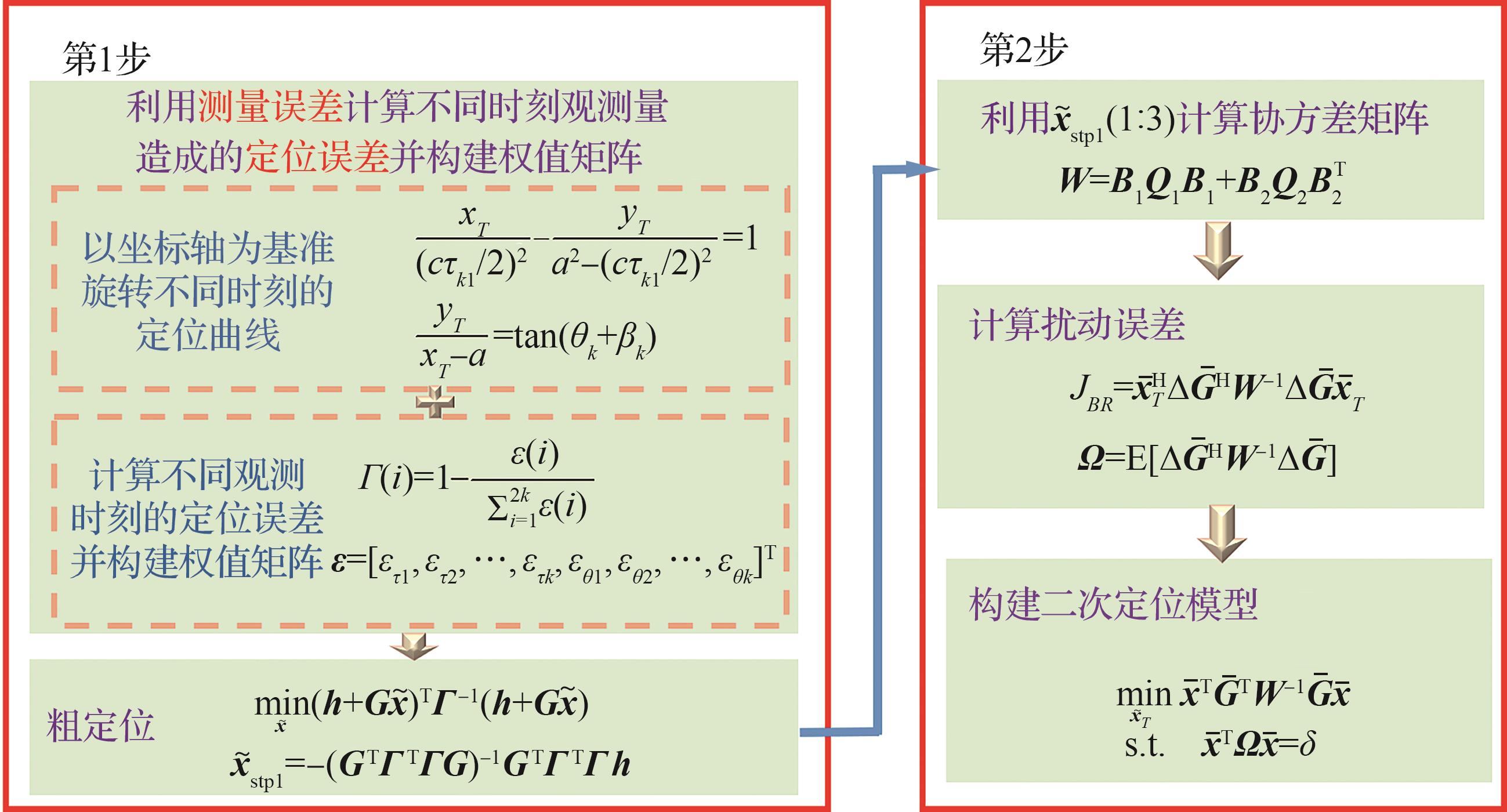
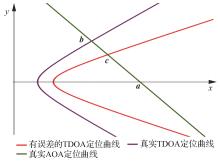
Fig.2
Localization curves in the presence of TDOA errors
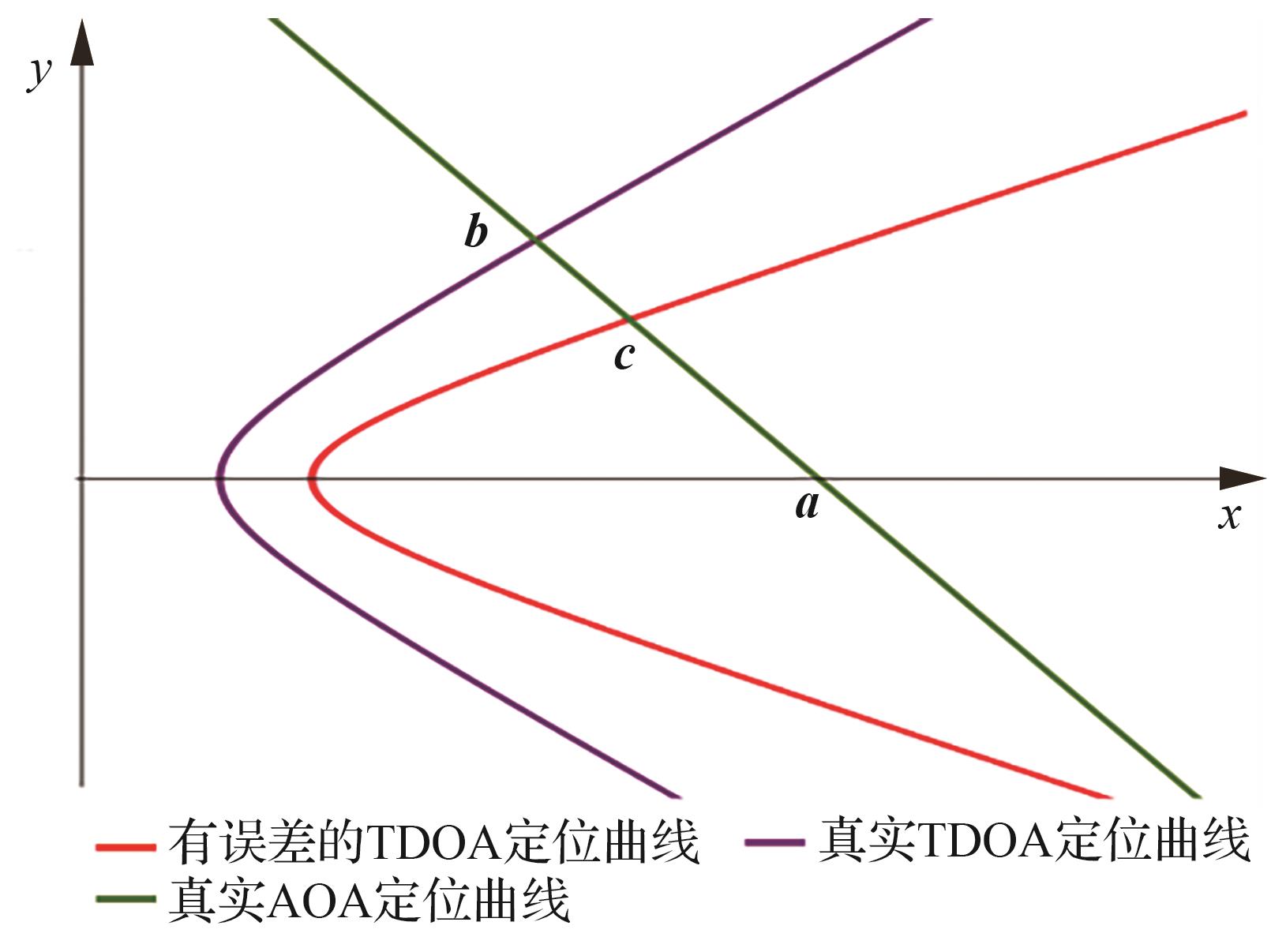
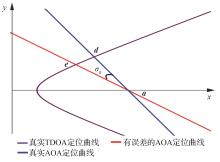
Fig.3
Localization curves in the presence of AOA errors
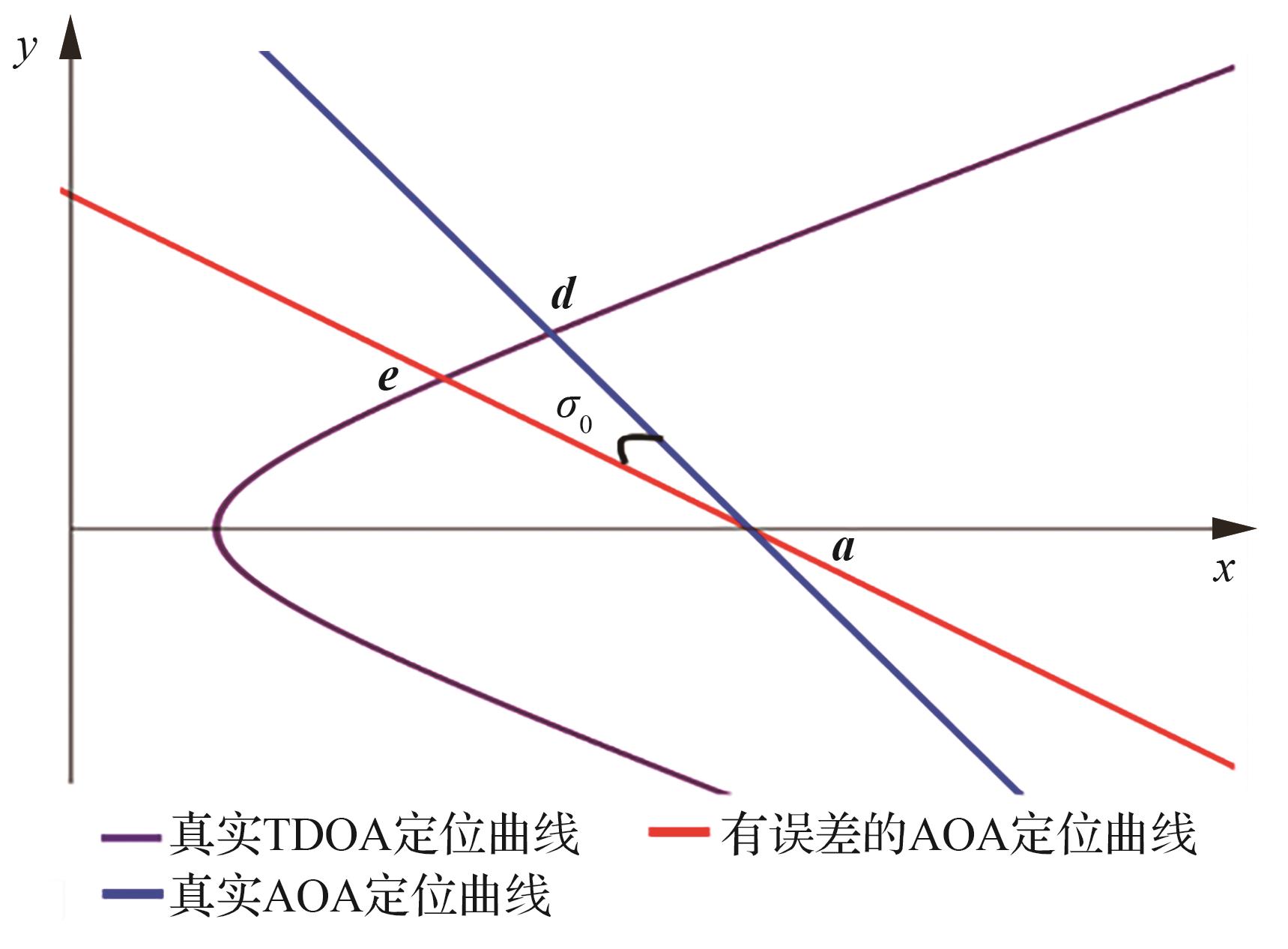
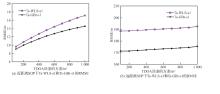
Fig.4
Impact of TDOA error on the performance of the first-step localization algorithm
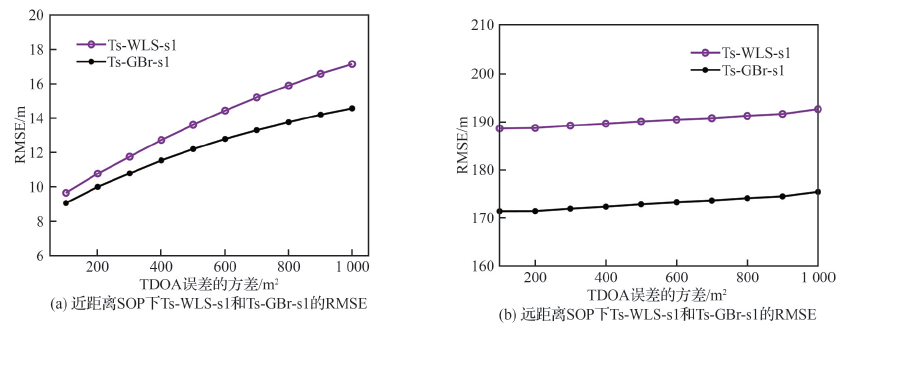
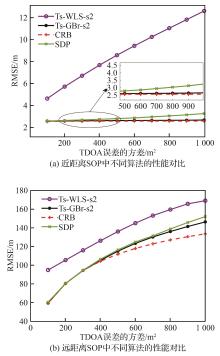
Fig.5
Impact of TDOA error on the performance of the second-step localization algorithm
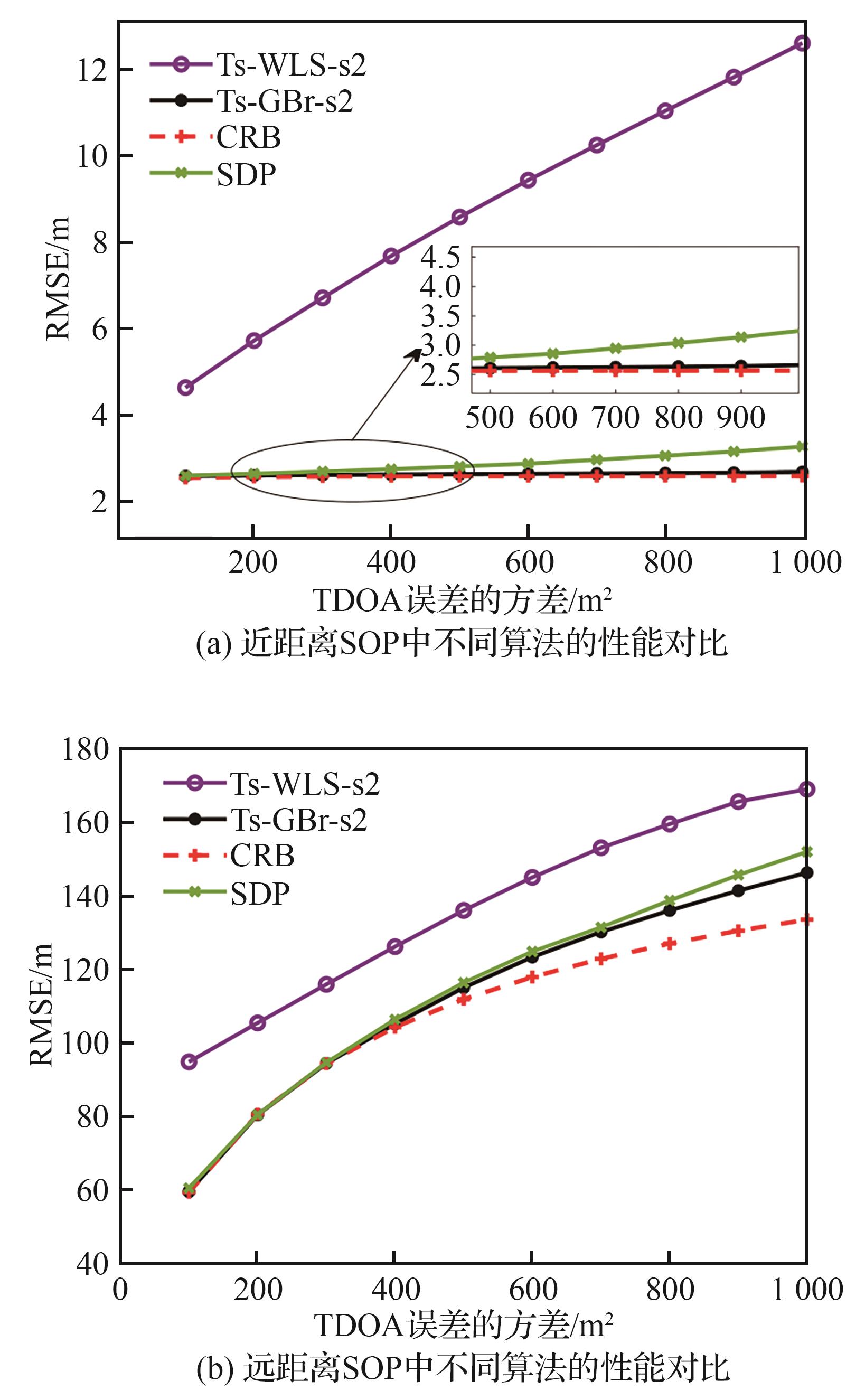
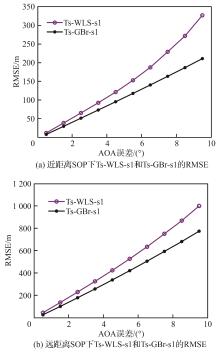
Fig.6
Impact of AOA error on the performance of the first-step localization algorithm
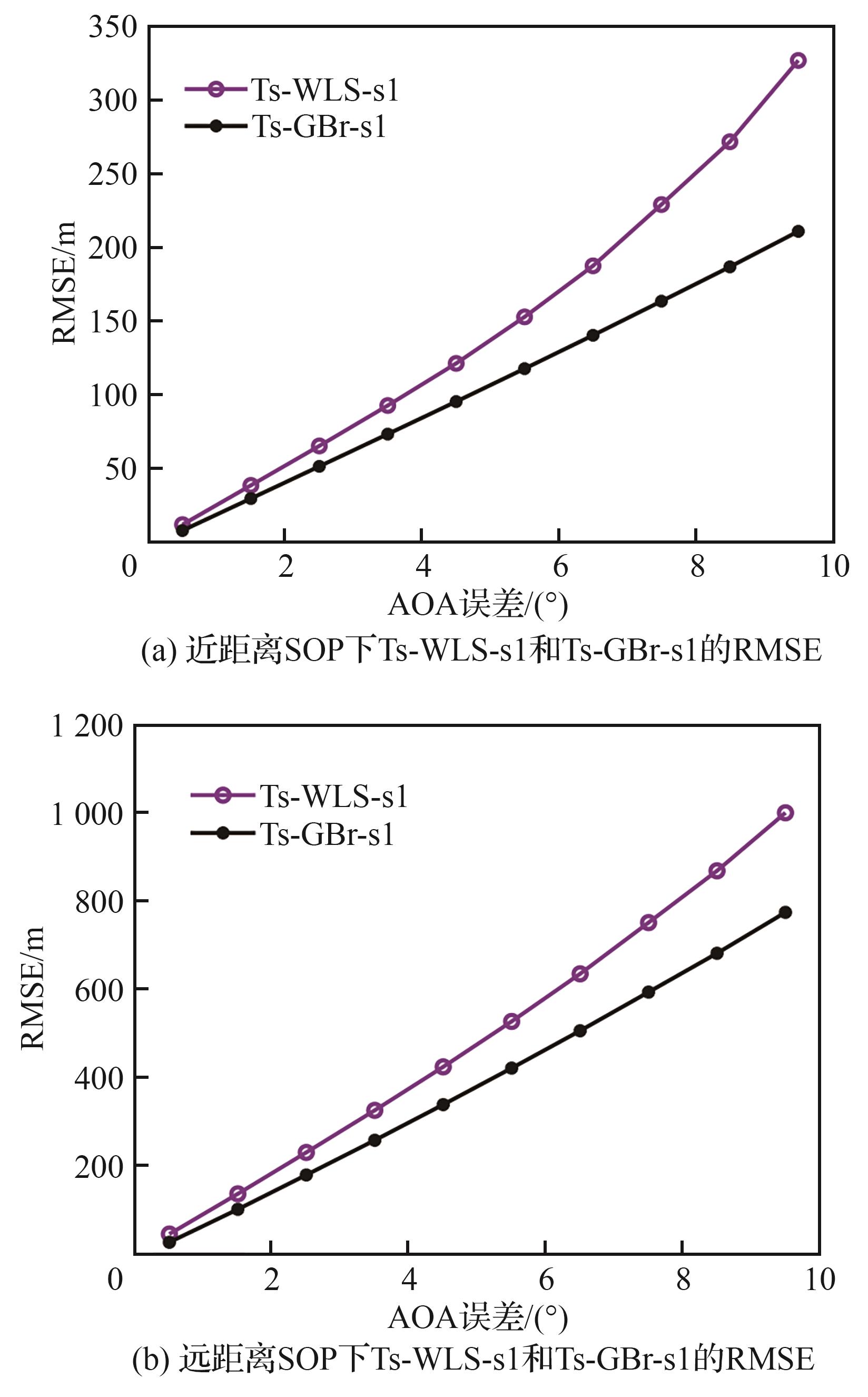
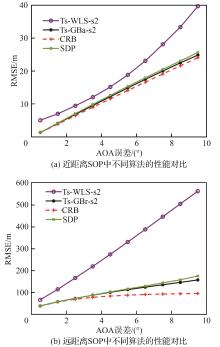
Fig.7
Impact of AOA error on the performance of the second-step localization algorithm
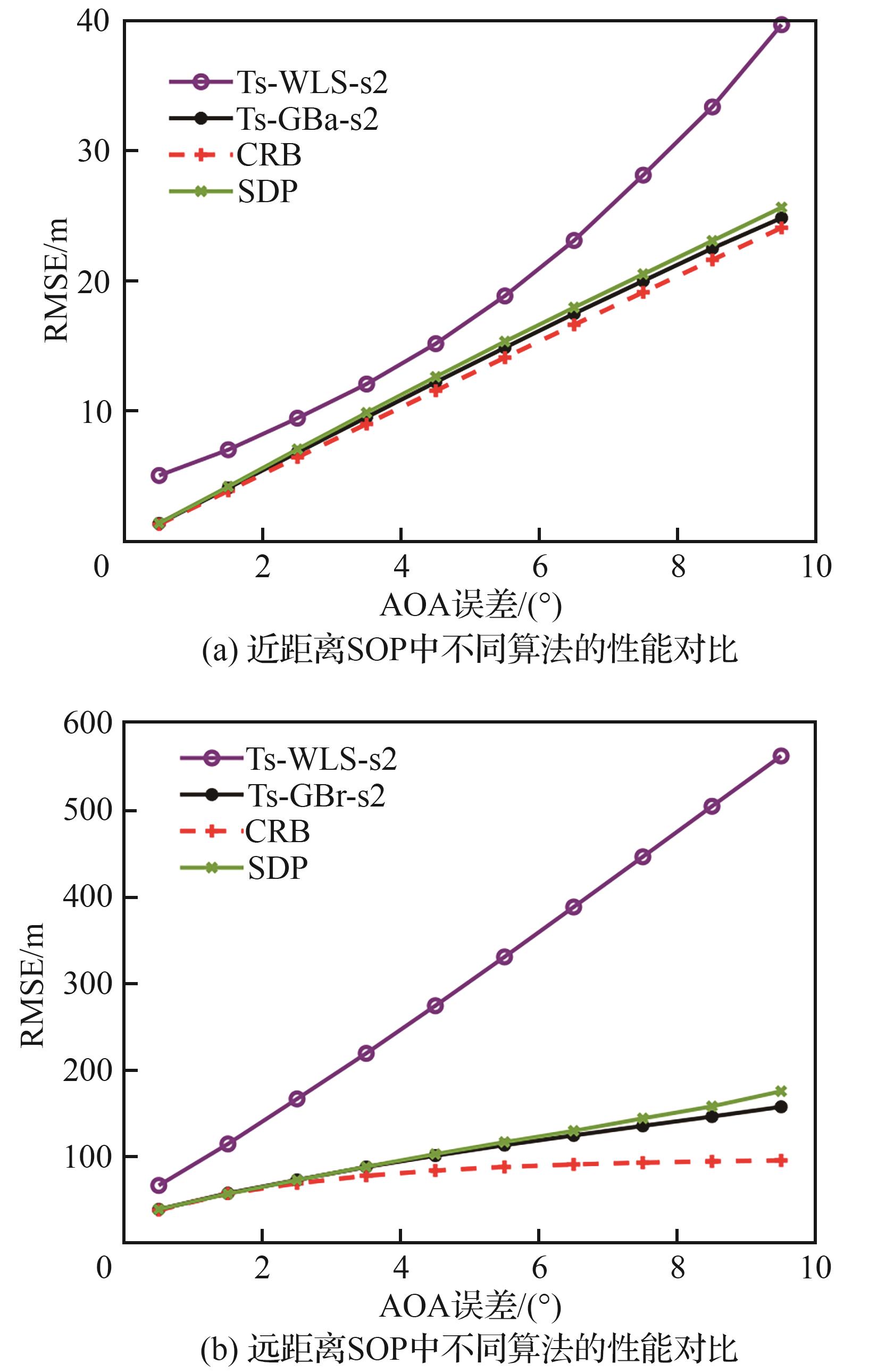
Table 1
Location performance of Ts-WLS and Ts-GBr for near-range SOP
| Ts-WLS算法RMSE,Ts-GBr算法RMSE/m | |||||
|---|---|---|---|---|---|
| 0.5 | 3.1,1.4 | 5.4,1.5 | 7.8,1.5 | 10.5,1.5 | 12.5,1.6 |
| 2.5 | 9.4,7.3 | 11.3,7.6 | 15.9,7.6 | 17.5,7.7 | 21.6,8.2 |
| 4.5 | 15.7,13.3 | 18.4,13.5 | 22.1,14.1 | 24.3,14.6 | 27.6,14.8 |
| 6.5 | 25.4,19.1 | 28.2,19.7 | 31.3,21.5 | 34.5,21.8 | 38.1,22.3 |
| 8.5 | 36.2,27.7 | 39.7,28.4 | 41.6,28.8 | 45.2,28.6 | 48.3,29.3 |
Table 2
Location performance of Ts-WLS and Ts-GBr for far-rang SOP
| Ts-WLS算法RMSE,Ts-GBr算法RMSE/m | |||||
|---|---|---|---|---|---|
| 0.5 | 88.3,52.5 | 94.1,61.2 | 117.6,79.1 | 136.8,99.3 | 151.3,110.5 |
| 2.5 | 165.9,58.4 | 172.7,73.4 | 186.1,88.7 | 199.4,107.8 | 207.8,121.6 |
| 4.5 | 284.3,69.5 | 287.5,88.2 | 292.3,102.7 | 308.9,112.2 | 319.2,148.4 |
| 6.5 | 495.2,87.7 | 510.4,106.2 | 536.9,114.3 | 550.7,127.1 | 558.7,145.6 |
| 8.5 | 615.4,123.7 | 627.6,138.5 | 643.5,203.2 | 676.1,218.9 | 702.4,245.3 |
Table 3
Location performance of Ts-WLS and Ts-GBr for near-range SOP based on different trajectory
| 参数 | 直线 | 圆形 | 半圆形 | 抛物线 |
|---|---|---|---|---|
| Ts-GBr的定位误差/m | 2.9 | 1.3 | 2.2 | 2.3 |
| Ts-WLS的定位误差/m | 6.5 | 3.2 | 3.7 | 4.5 |
Table 4
Location performance of Ts-WLS and Ts-GBr for far-range SOP based on different trajectory
| 参数 | 直线 | 圆形 | 半圆形 | 抛物线 |
|---|---|---|---|---|
| Ts-GBr的定位误差/m | 66.6 | 31.6 | 47.9 | 43.8 |
| Ts-WLS的定位误差/m | 110.8 | 44.2 | 60.8 | 57.5 |
| [1] | JADE MORTON Y T, VAN DIGGELEN F, SPILKER J J Jr, et al. Position, navigation, and timing technologies in the 21st century: Integrated satellite navigation, sensor systems, and civil applications[M]. New York: John Wiley & Sons, 2020: 1115-1120. |
| [2] | DU Y S, QIN H L, ZHAO C. LEO satellites/INS integrated positioning framework considering orbit errors based on FKF[J]. IEEE Transactions on Instrumentation and Measurement, 2024, 73: 5501714. |
| [3] | ZHANG X D, WANG F Z, LI H B. An efficient method for cooperative multi-target localization in automotive radar[J]. IEEE Signal Processing Letters, 2021, 29: 16-20. |
| [4] | PSIAKI M L, SLOSMAN B D. Tracking digital FM OFDM signals for the determination of navigation observables[J]. NAVIGATION: Journal of the Institute of Navigation, 2022, 69(2): navi.521. |
| [5] | YANG C, SOLOVIEV A. Mobile positioning with signals of opportunity in urban and urban canyon environments[C]∥2020 IEEE/ION Position, Location and Navigation Symposium (PLANS). Piscataway: IEEE Press, 2020: 1043-1059. |
| [6] | NEINAVAIE M, KHALIFE J, KASSAS Z M. Cognitive opportunistic navigation in private networks with 5G signals and beyond[J]. IEEE Journal of Selected Topics in Signal Processing, 2022, 16(1): 129-143. |
| [7] | ABDALLAH A A, KASSAS Z M. UAV navigation with 5G carrier phase measurements[J]. Proceedings of the 34th International Technical Meeting of the Satellite Division of the Institute of Navigation, 2021: 3294-3306. |
| [8] | NGUYEN A A, SHADRAM Z, KASSAS Z M. A lower bound for the error covariance of radio SLAM with terrestrial signals of opportunity[J]. Proceedings of the 34th International Technical Meeting of the Satellite Division of the Institute of Navigation, 2021: 2294-2306. |
| [9] | SHEN J Y, MOLISCH A F, SALMI J. Accurate passive location estimation using TOA measurements[J]. IEEE Transactions on Wireless Communications, 2012, 11(6): 2182-2192. |
| [10] | CAO S, CHEN X, ZHANG X, et al. Combined weighted method for TDOA-based localization[J]. IEEE Transactions on Instrumentation and Measurement, 2020, 69(5): 1962-1971. |
| [11] | YAMASAKI R, OGINO A, TAMAKI T, et al. TDOA location system for IEEE 802.11b WLAN[C]∥IEEE Wireless Communications and Networking Conference, 2005. Piscataway: IEEE Press, 2005: 2338-2343. |
| [12] | LANG R L, XU H, GAO F, et al. Improving DOA estimation of GNSS interference through sparse non-uniform array reconfiguration[J]. Chinese Journal of Aeronautics, 2025, 38(8): 103384. |
| [13] | ZHENG Y, SHENG M, LIU J Y, et al. Exploiting AoA estimation accuracy for indoor localization: A weighted AoA-based approach[J]. IEEE Wireless Communications Letters, 2019, 8(1): 65-68. |
| [14] | LANG R L, XU H, GAO F. Robust direction estimation of terrestrial signal via sparse non-uniform array reconfiguration under perturbations[J]. Remote Sensing, 2024, 16(18): 3482. |
| [15] | TANG Z W, LANG R L, XU H. Sparse DOA estimation method for unknown terrestrial signals of opportunity[J]. Journal of Shanghai Jiaotong University (Science), 2024: 1-11. |
| [16] | LI J Z, GUO F C, JIANG W L. A linear-correction least-squares approach for geolocation using FDOA measurements only[J]. Chinese Journal of Aeronautics, 2012, 25(5): 709-714. |
| [17] | XU H, CHANG Q, LANG R L. A two-step algorithm for locating the emitter by FDOA[C]∥2023 IEEE International Conference on Consumer Electronics (ICCE). Piscataway: IEEE Press, 2023. |
| [18] | TORRIERI D J. Statistical theory of passive location systems[J]. IEEE Transactions on Aerospace and Electronic Systems, 1984, AES-20(2): 183-198. |
| [19] | CHAN Y T, HO K C. A simple and efficient estimator for hyperbolic location[J]. IEEE Transactions on Signal Processing, 1994, 42(8): 1905-1915. |
| [20] | 张月霞, 段世茹. 智能反射面辅助NOMA系统AOA定位算法[J]. 半导体光电, 2024, 45(5): 823-829. |
| ZHANG Y X, DUAN S R. Reconfigurable intelligence surface assisted NOMA system for an angles of arrival localization algorithm[J]. Semiconductor Optoelectronics, 2024, 45(5): 823-829 (in Chinese). | |
| [21] | 李敬花, 李亚鹏, 宋得宁, 等. 船舶舱室环境双级多元感知机蓝牙AoA定位方法[J]. 制造业自动化, 2024, 46(6): 113-119. |
| LI J H, LI Y P, SONG D N, et al. A bluetooth AoA positioning method based on dual-level MLP for location in ship onboard environment[J]. Manufacturing Automation, 2024, 46(6): 113-119 (in Chinese). | |
| [22] | SAFAVI S, KHAN U A, KAR S, et al. Distributed localization: A linear theory[J]. Proceedings of the IEEE, 2018, 106(7): 1204-1223. |
| [23] | GHOLAMI M R, GEZICI S, STROM E G. A concave-convex procedure for TDOA based positioning[J]. IEEE Communications Letters, 2013, 17(4): 765-768. |
| [24] | BAYAT S, AMIRI R. Advances in UAV-assisted localization: Joint source and UAV parameter estimation[J]. IEEE Transactions on Vehicular Technology, 2023, 72(11): 14268-14278. |
| [25] | XIONG W X, MOHANTY S, SCHINDELHAUER C, et al. Convex relaxation approaches to robust RSS-TOA based source localization in NLOS environments[J]. IEEE Transactions on Vehicular Technology, 2023, 72(8): 11068-11073. |
| [26] | TOMIC S, BEKO M, TUBA M. A linear estimator for network localization using integrated RSS and AOA measurements[J]. IEEE Signal Processing Letters, 2019, 26(3): 405-409. |
| [27] | ZHENG Q F, LUO L G, SONG H, et al. A RSSI-AOA-based UHF partial discharge localization method using MUSIC algorithm[J]. IEEE Transactions on Instrumentation and Measurement, 2021, 70: 9002309. |
| [28] | 吴龙文, 王宝莹, 魏俊杰, 等. 基于AOA的双机无源定位模型及其解算方法[J]. 系统工程与电子技术, 2020, 42(5): 978-986. |
| WU L W, WANG B Y, WEI J J, et al. AOA based dual-aircraft passive positioning model and its location methods[J]. Systems Engineering and Electronics, 2020, 42(5): 978-986 (in Chinese). | |
| [29] | 李志刚, 吕杰, 董小飞, 等. TDOA、AOA算法在车辆出入管理中的应用研究[J]. 重庆交通大学学报(自然科学版), 2019, 38(7): 14-19. |
| LI Z G, LV J, DONG X F, et al. Application of TDOA and AOA algorithm in vehicle access management[J]. Journal of Chongqing Jiaotong University (Natural Science), 2019, 38(7): 14-19 (in Chinese). | |
| [30] | WU H, CHEN S X, ZHANG Y H, et al. Robust structured total least squares algorithm for passive location[J]. Journal of Systems Engineering and Electronics, 2015, 26(5): 946-953. |
| [31] | 闫雷兵, 陆音, 张业荣. 基于改进最小二乘算法的TDOA/AOA定位方法[J]. 电波科学学报, 2016, 31(2): 394-400. |
| YAN L B, LU Y, ZHANG Y R. Improved least-squares algorithm for TDOA/AOA-based localization[J]. Chinese Journal of Radio Science, 2016, 31(2): 394-400 (in Chinese). | |
| [32] | 张怡, 席彦彪, 李刚伟, 等. 基于卡尔曼滤波的TDOA/AOA混合定位算法[J]. 计算机工程与应用, 2015, 51(20): 62-66. |
| ZHANG Y, XI Y B, LI G W, et al. TDOA/AOA hybrid positioning algorithm based on Kalman filter in NLOS environment[J]. Computer Engineering and Applications, 2015, 51(20): 62-66 (in Chinese). | |
| [33] | JIANG H Y, ZHANG K, SHEN C, et al. Hybrid location algorithm of TDOA/AOA based on extended Kalman filter[C]∥2021 IEEE 21st International Conference on Communication Technology (ICCT). Piscataway: IEEE Press, 2021: 413-417. |
| [34] | 胡爱华. 基于灾后复杂环境的无线定位关键技术研究[D]. 北京: 北京邮电大学, 2022. |
| HU A H. Research on key technology of wireless location based on post-disaster complex environment[D]. Beijing: Beijing University of Posts and Telecommunications, 2022 (in Chinese). | |
| [35] | ZHANG X H, TAN SIHONG S, HONG T YEW. An integrated closed-form fusion algorithm for TDOA/AOA[C]∥2016 19th International Conference on Information Fusion (FUSION). Piscataway: IEEE Press, 2016: 1622-1629. |
| [36] | NUR-A-ALAM M, HAQUE M M. A least square approach for TDOA/AOA wireless location in WCDMA system[C]∥2008 11th International Conference on Computer and Information Technology. Piscataway: IEEE Press, 2008: 686-690. |
| [37] | MA C L, KLUKAS R, LACHAPELLE G. An enhanced two-step least squared approach for TDOA/AOA wireless location[C]∥IEEE International Conference on Communications, 2003. Piscataway: IEEE Press, 2003: 987-991. |
| [38] | CONG L, ZHUANG W H. Hybrid TDOA/AOA mobile user location for wideband CDMA cellular systems[J]. IEEE Transactions on Wireless Communications, 2002, 1(3): 439-447. |
| [39] | YI P, HOU F X, ZHAO J S. Distributed cooperative localization based on a mix of single-site AOA and multi-site TDOA with heterogeneous sensors[C]∥2024 IEEE International Conference on Unmanned Systems (ICUS). Piscataway: IEEE Press, 2024: 1191-1196. |
| [40] | LIU P H, WU Z, YAO Z, et al. Robust single-point localization technique using downlink TDOA-AOA fusion[C]∥2024 14th International Conference on Indoor Positioning and Indoor Navigation (IPIN). Piscataway: IEEE Press, 2024. |
| [41] | MAHBAS A, COSMAS J, MUEEN S, et al. LOS analysis for localization in high frequency systems[J]. IEEE Transactions on Wireless Communications, 2024, 23(6): 6425-6437. |
| [42] | 陈永光, 李昌锦, 李修和. 三站时差定位的精度分析与推算模型[J]. 电子学报, 2004, 32(9): 1452-1455. |
| CHEN Y G, LI C J, LI X H. A precision analyzing & reckoning model in tri-station TDOA location[J]. Acta Electronica Sinica, 2004, 32(9): 1452-1455 (in Chinese). |
| [1] | ZHANG Minghui, CHEN Zhenli, GU Wenting, LI Dong, ZHANG Shuai, YUAN Changsheng, WANG Long, ZHANG Binqian. Tradeoff design of high and low speed performance for blended-wing-body civil aircraft [J]. ACTA AERONAUTICAET ASTRONAUTICA SINICA, 2019, 40(9): 623052-623052. |
| [2] | WANG Ding, ZHANG Gang, SHEN Caiyao, ZHANG Jie. A direct position determination algorithm for constant modulus signals with single moving observer [J]. ACTA AERONAUTICAET ASTRONAUTICA SINICA, 2016, 37(5): 1622-1633. |
| [3] | XING Yalan, WANG Shengbin, ZHANG Shichao, WANG Wenxu. Research on New Three-dimensional Nanostructured Anode Materials for Lithium-ion Batteries [J]. ACTA AERONAUTICAET ASTRONAUTICA SINICA, 2014, 35(10): 2776-2783. |
| [4] | ZHONG Qunpeng, YOU Yiliang, ZHANG Zheng, WU Sujun, LUO Hongyun, ZHAO Zihua. Further Exploration on Philosophical Concepts and Analyzing Overlapping Technologies of Failure Study [J]. ACTA AERONAUTICAET ASTRONAUTICA SINICA, 2014, 35(10): 2683-2689. |
| [5] | LU Jin-hua;LI He-jun;LIU Hao;LI Ke-zhi;ZHANG Mei-zhong. Effect of Carbonization Pressure on Microstructure and Morphology of Pitch Derived Carbon [J]. ACTA AERONAUTICAET ASTRONAUTICA SINICA, 2006, 27(5): 969-972. |
| [6] | An Junping;Song Qingguo. A FRACTURE ANALYSIS USING EIGHT-NODE-ISOPARAMETRIC SINGULAR ELEMENTS AND ITS APPLICATION IN FUSELAGE PANELS [J]. ACTA AERONAUTICAET ASTRONAUTICA SINICA, 1990, 11(4): 151-156. |
| [7] | Xia Renwei;Yang Yuxing. OPTIMAL DESIGN OF FRAME STRUCTURES [J]. ACTA AERONAUTICAET ASTRONAUTICA SINICA, 1988, 10(12): 561-567. |
| Viewed | ||||||
|
Full text |
|
|||||
|
Abstract |
|
|||||
Address: No.238, Baiyan Buiding, Beisihuan Zhonglu Road, Haidian District, Beijing, China
Postal code : 100083
E-mail:hkxb@buaa.edu.cn
Total visits: 6658907 Today visits: 1341All copyright © editorial office of Chinese Journal of Aeronautics
All copyright © editorial office of Chinese Journal of Aeronautics
Total visits: 6658907 Today visits: 1341

 CJA
CJA
