Acta Aeronautica et Astronautica Sinica ›› 2025, Vol. 46 ›› Issue (21): 532249.doi: 10.7527/S1000-6893.2025.32249
• Special Issue: 60th Anniversary of Aircraft Strength Research Institute of China • Previous Articles
Yubin LU1, Xiaohua NIE2, Zhen WU1,3( )
)
Received:2025-05-16
Revised:2025-06-17
Accepted:2025-07-07
Online:2025-07-16
Published:2025-07-15
Contact:
Zhen WU
E-mail:wuzhenhk@nwpu.edu.cn
Supported by:CLC Number:
Yubin LU, Xiaohua NIE, Zhen WU. A residual stiffness prediction approach for carbon fiber reinforced composite materials based on interpretable machine learning algorithms[J]. Acta Aeronautica et Astronautica Sinica, 2025, 46(21): 532249.
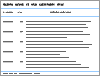
Table 1
Test matrix
| 静力 | 疲劳 | 应力水平S/% | 应力比R | 数量 |
|---|---|---|---|---|
| D0-T | D0-T-T | 80,75,70,65 | 0.1 | 11 |
| D0-C | D0-C-C | 75,70,65 | 10.0 | 7 |
| D45-T | D45-T-T | 60,55,50,45 | 0.1 | 10 |
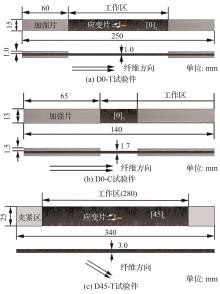
Fig.1
Schematic of experimental specimens
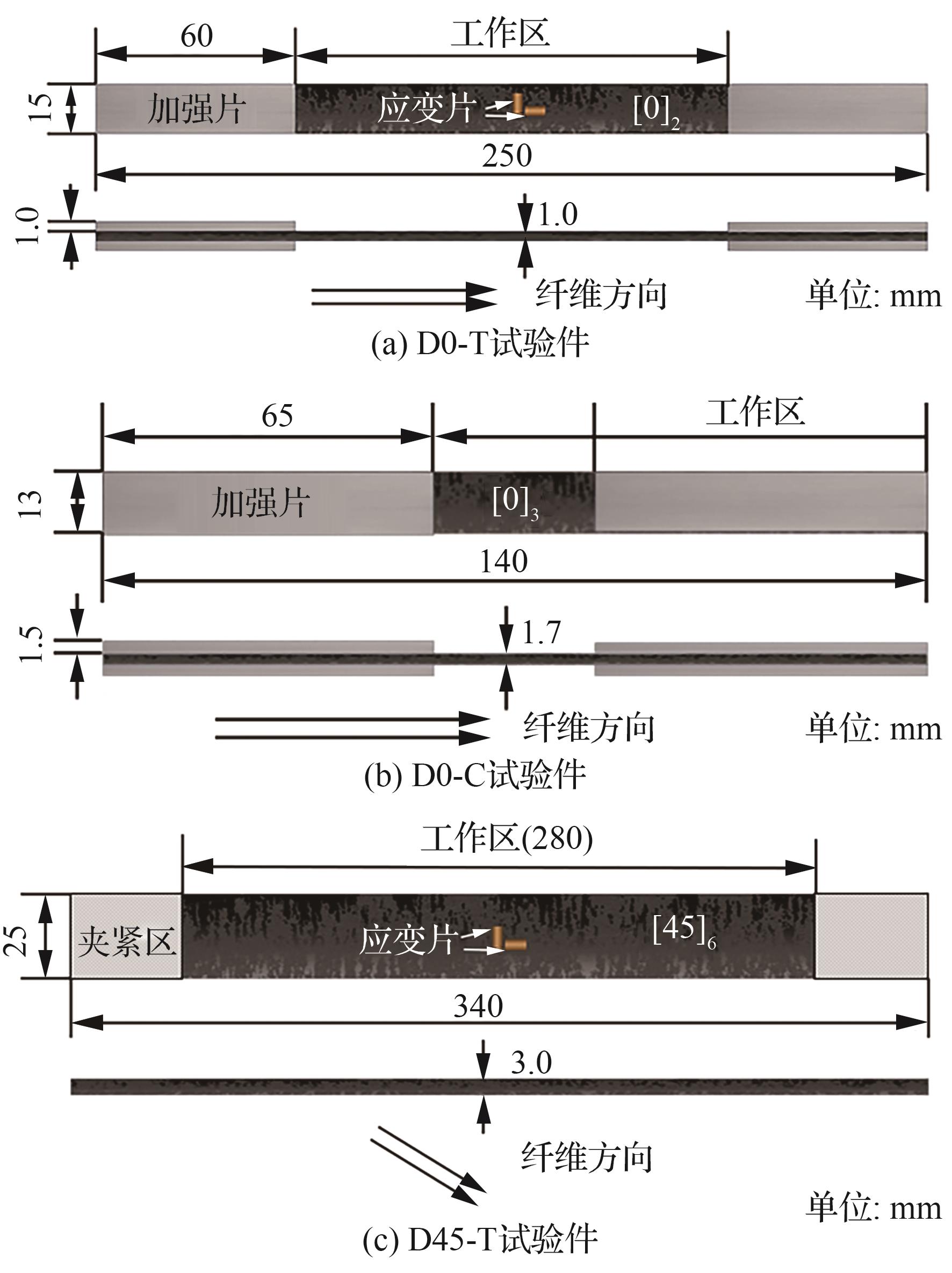
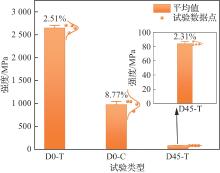
Fig.2
Analysis of static experimental data
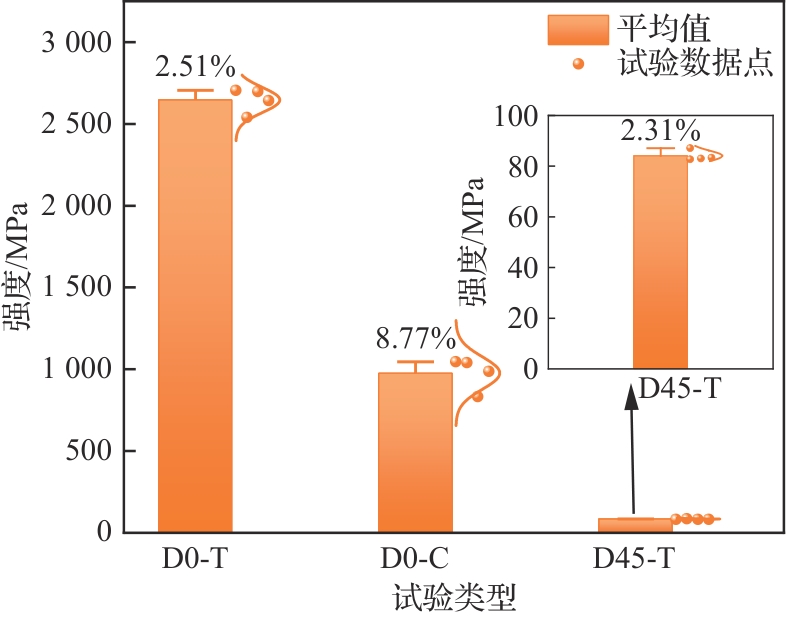
Fig.3
Fatigue failure modes of specimens
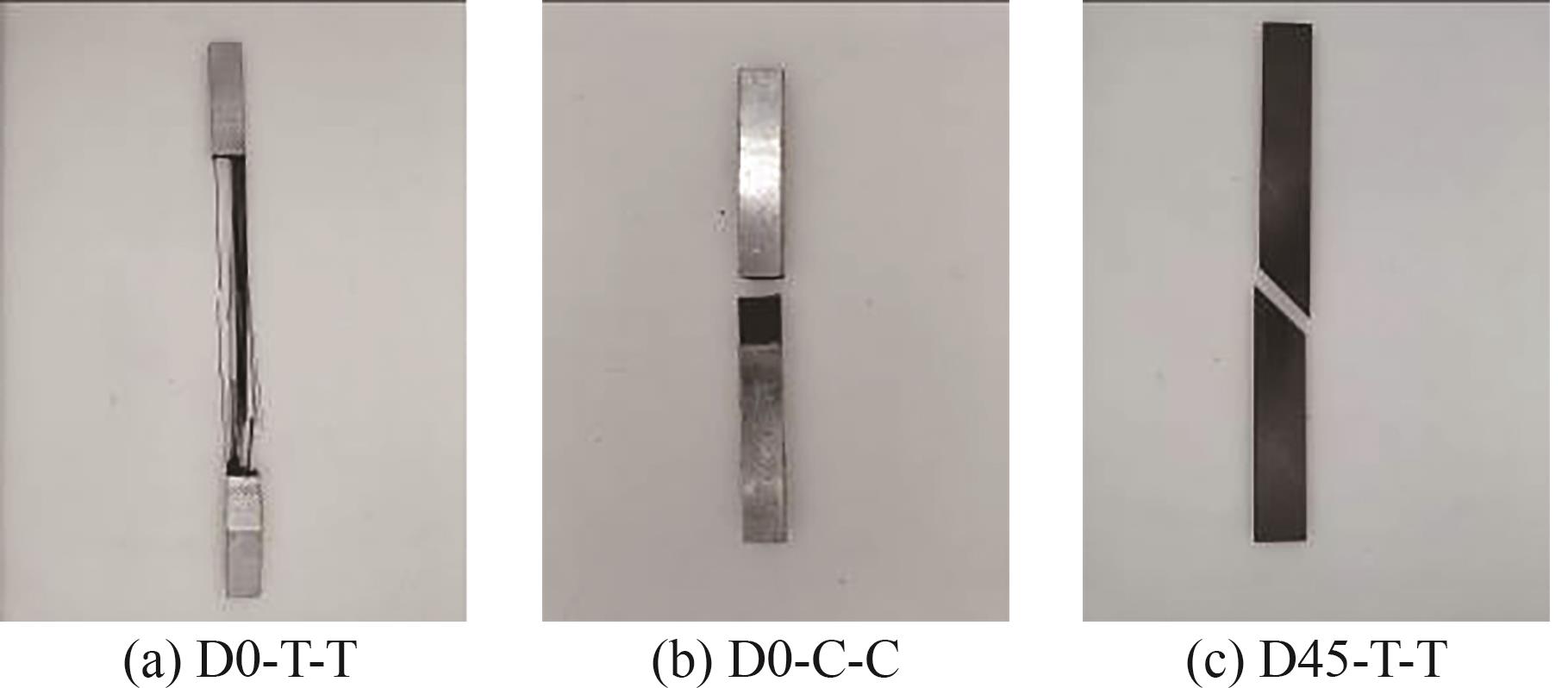
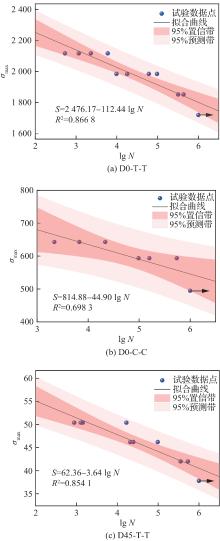
Fig.4
σmax-lg N curves
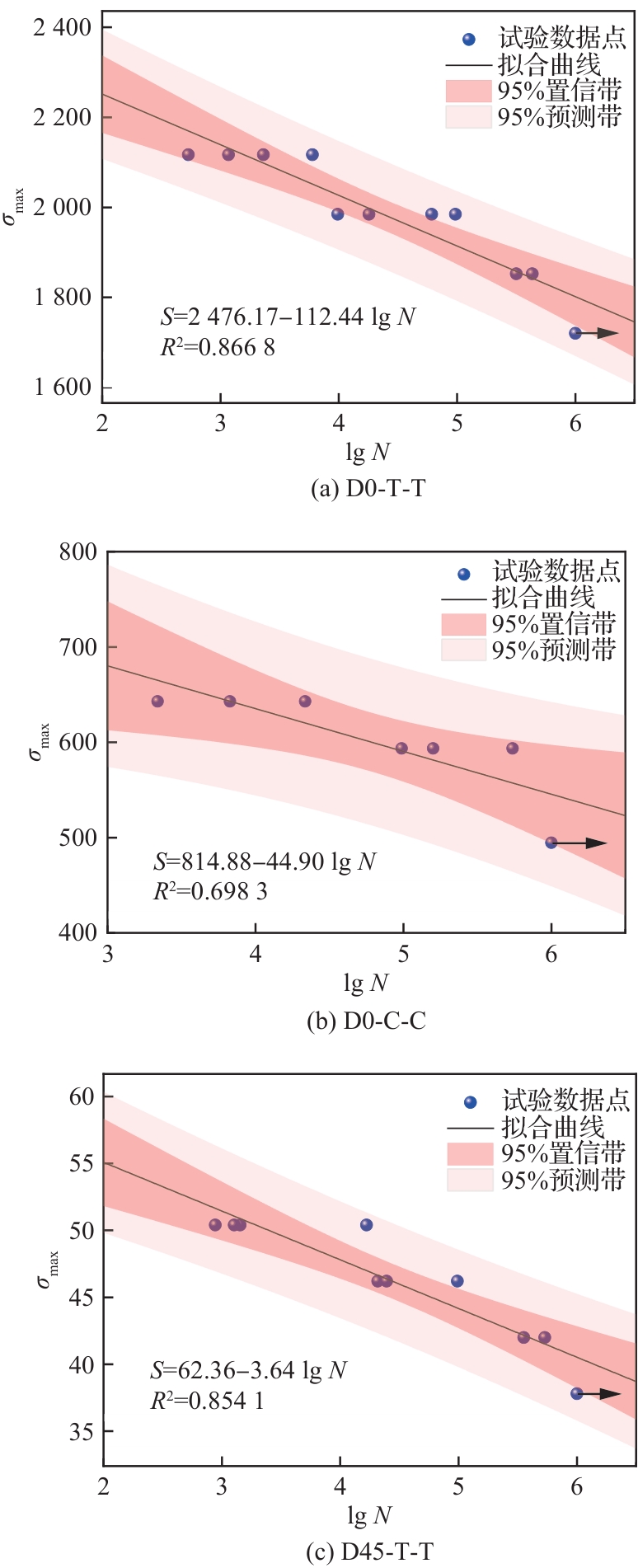
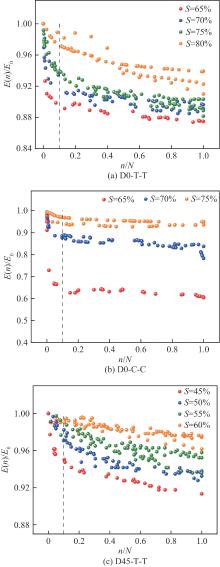
Fig.5
Normalized residual stiffness at different stress levels
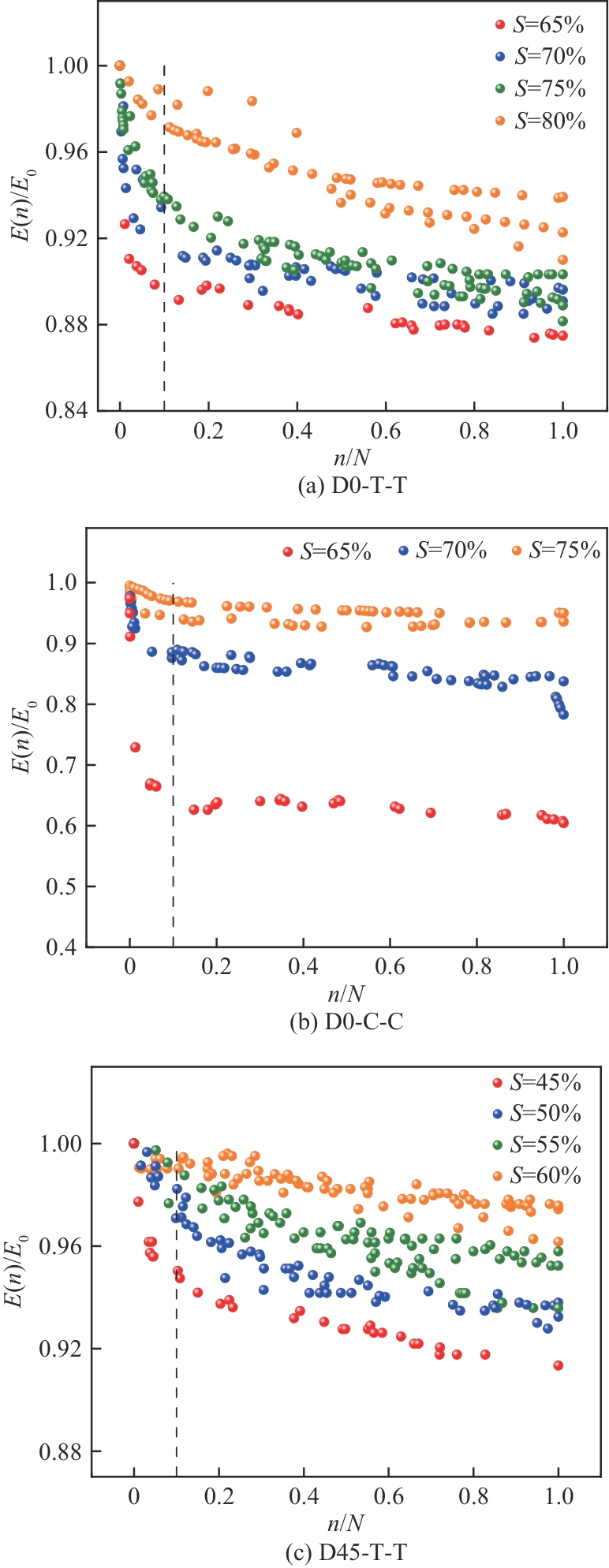
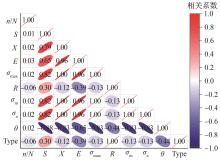
Fig.6
PCC matrix for input features
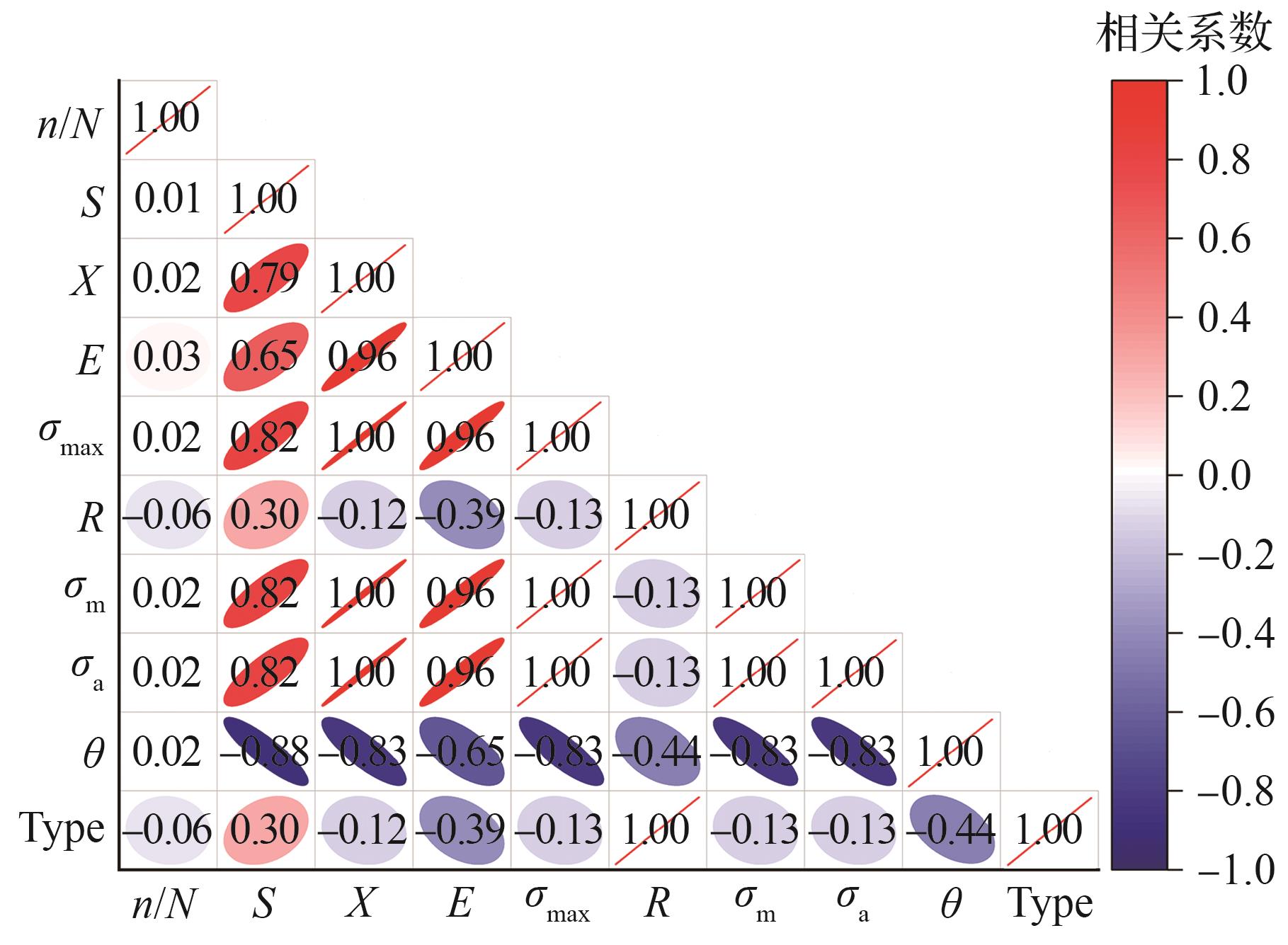
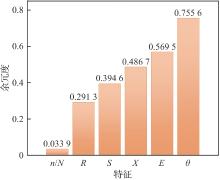
Fig.7
Redundancy among nonlinear features
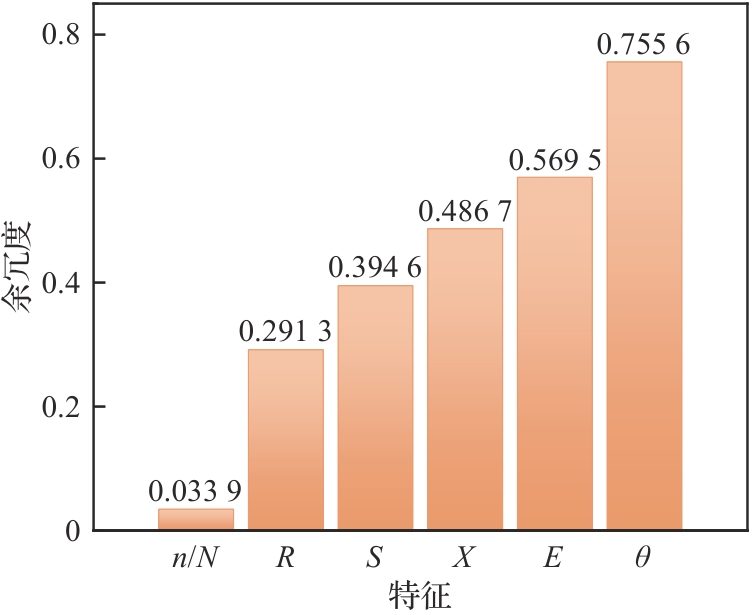
Table 2
Feature and parameter setting of XGBoost
| 参数 | 数值 |
|---|---|
| 输入 | {S,n/N,X,R} |
| 输出 | E(n)/E0 |
| 最大迭代次数 | 500 |
| 学习率 | 0.1 |
| 决策树的最大深度 | 5 |
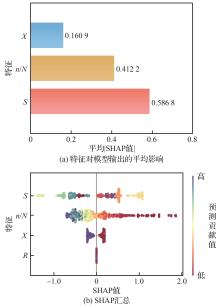
Fig.8
Feature analysis based on SHAP
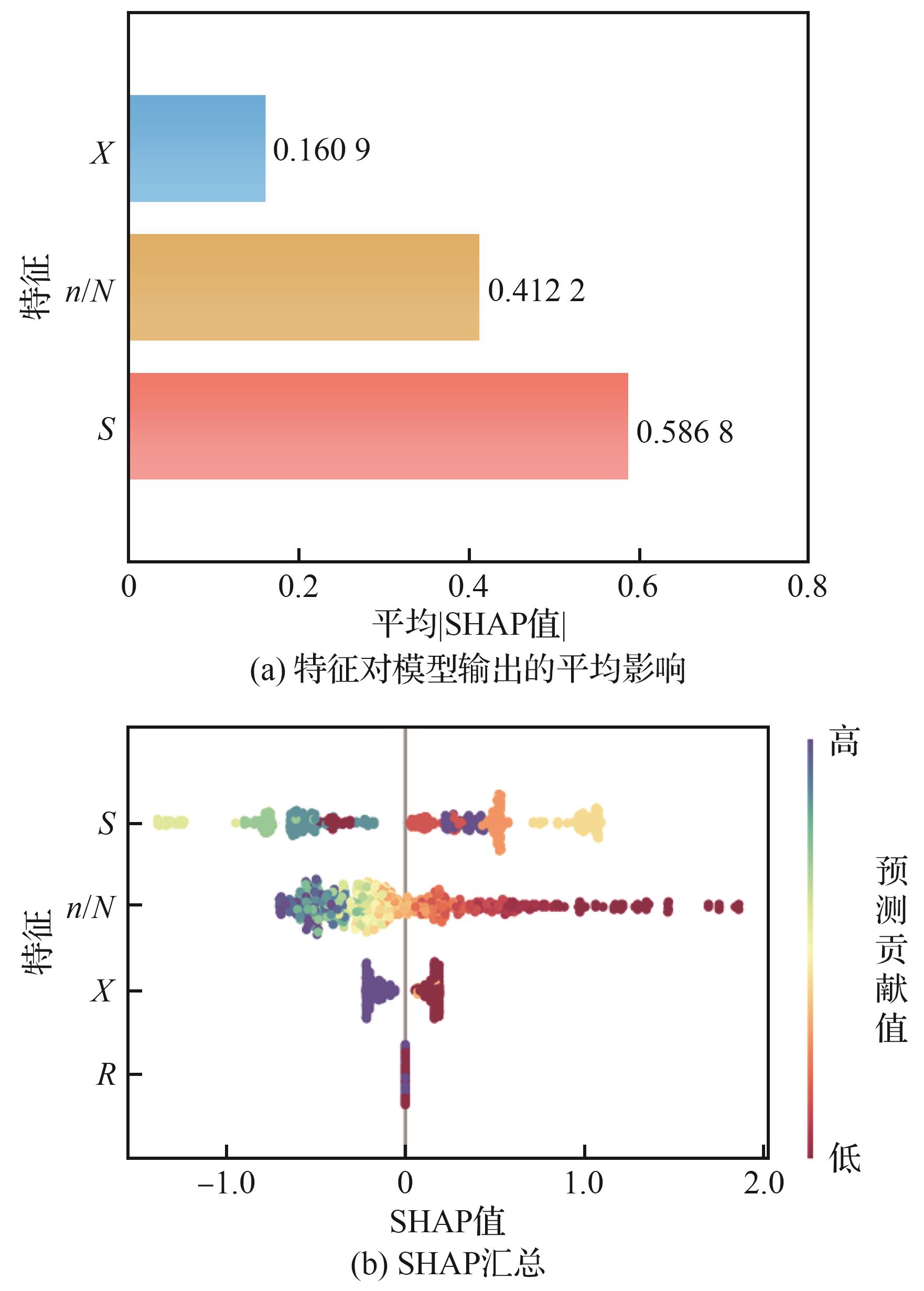
Table 3
Feature and parameter setting for SR
| 特征/参数 | 数值 |
|---|---|
| 输入 | n/N, S, X |
| 输出 | E(n)/E0 |
| 运算符 | |
| 约束 | |
| 嵌套约束 | |
| 迭代次数 | 500 |
| 复杂度 | 20,30 |
| 损失函数 | MSE |
| 选择标准 | Best |
Table 4
Equations obtained by SR for 20 maxsize
| 复杂度 | MSE | SCORE | E(n)/E0 |
|---|---|---|---|
| 1 | 0.026 5 | 1.594 0 | 0.910 9 |
| 4 | 0.020 2 | 0.898 5 0.212 7 | |
| 5 | 0.019 6 | 0.287 2 | |
| 6 | 0.019 4 | 0.092 1 | |
| 7 | 0.017 0 | 0.131 7 | |
| 8 | 0.013 1 | 0.261 7 | |
| 9 | 0.012 0 | 0.085 2 | |
| 10 | 0.009 1 | 0.276 7 | |
| 12 | 0.008 9 | 0.008 4 | |
| 13 | 0.008 6 | 0.041 1 | |
| 15 | 0.008 4 | 0.030 5 | |
| 19 | 0.008 3 | 0.001 2 | |
| 20 | 0.007 9 | 0.076 5 |
Table 5
Performance comparison of different models
| 模型 | MSE/10-3 | MAPE/% | R2 |
|---|---|---|---|
| 传统模型 | 5.048 | 1.78 | 0.531 8 |
| SR模型(复杂度为20) | 1.578 | 0.91 | 0.855 7 |
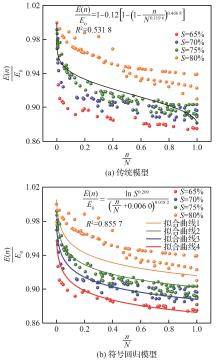
Fig.9
Comparison of model fitting effects
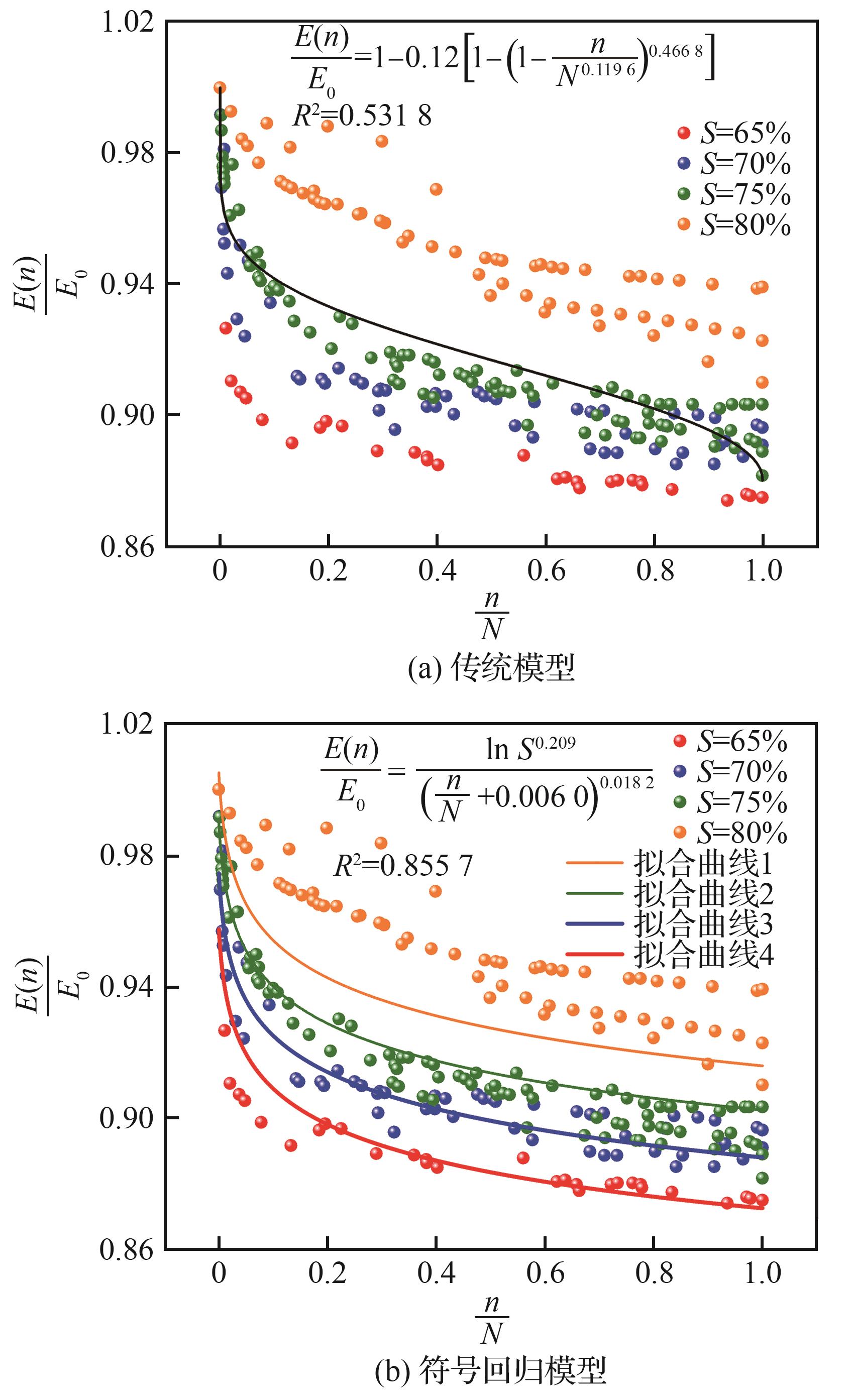
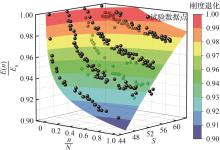
Fig.10
Stiffness degradation surface of D45-T-T obtained by SR
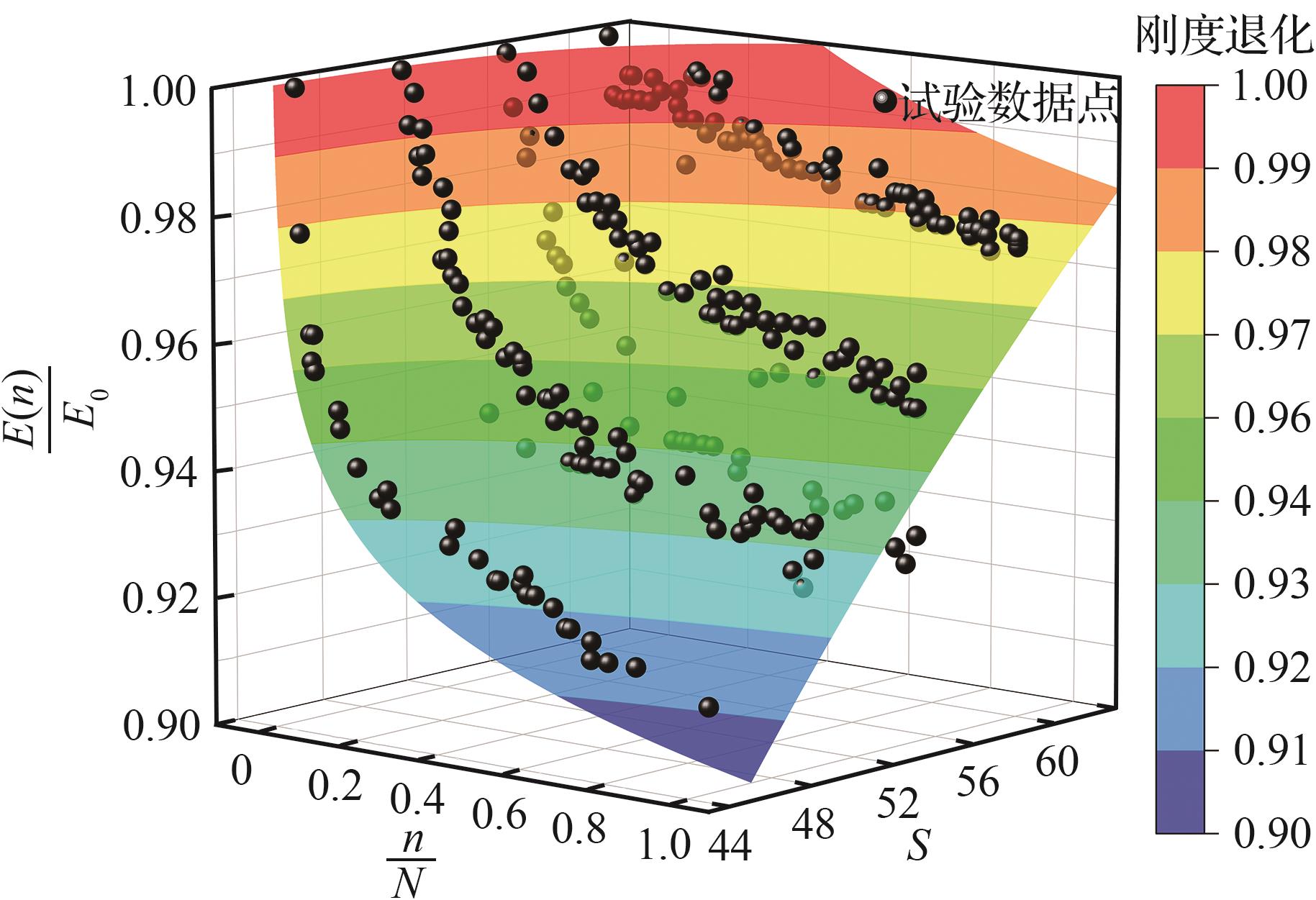
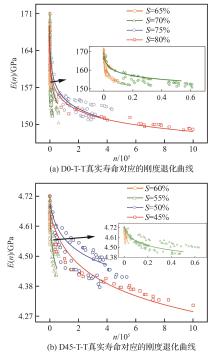
Fig.11
Stiffness degradation curves of actual service life
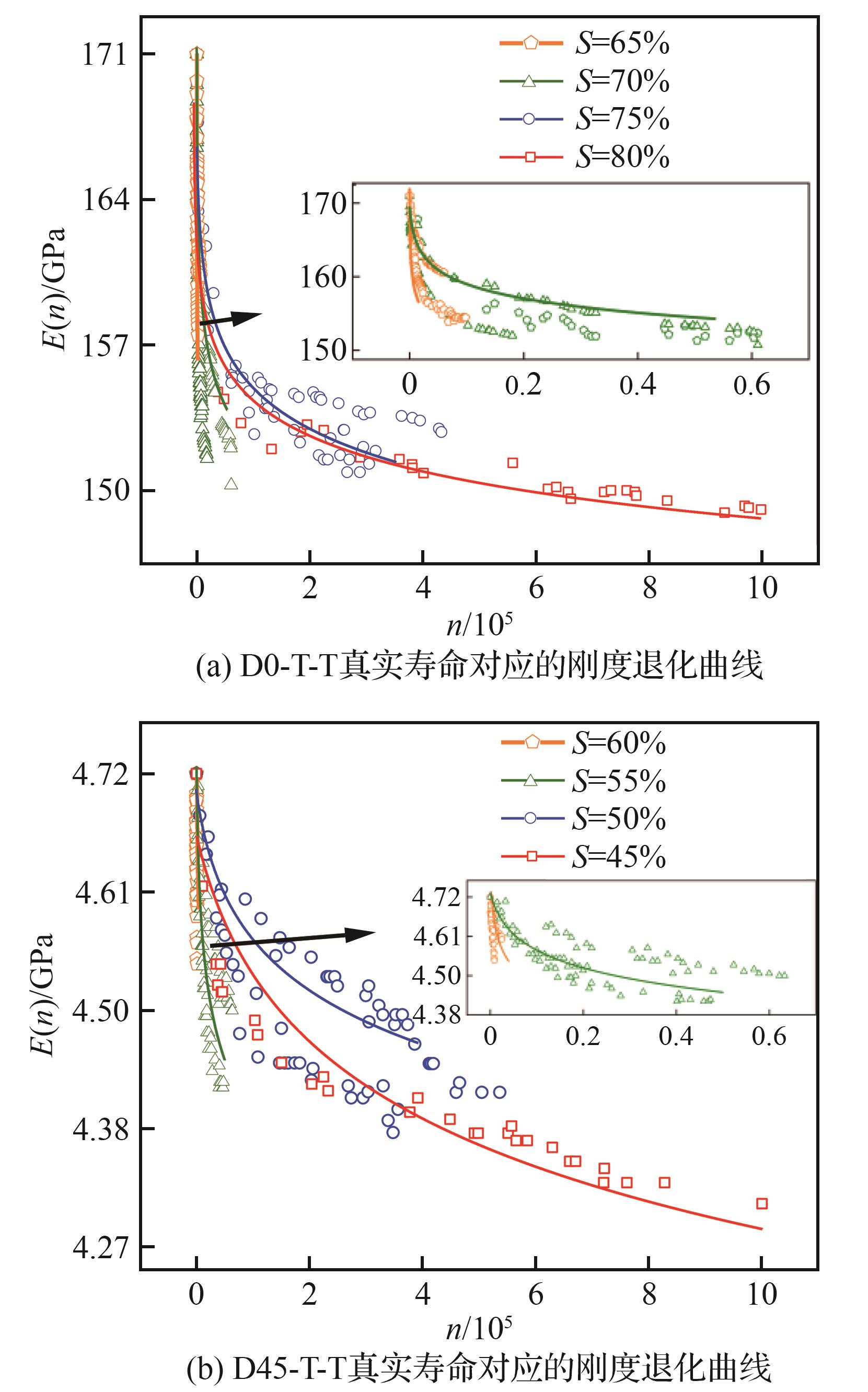
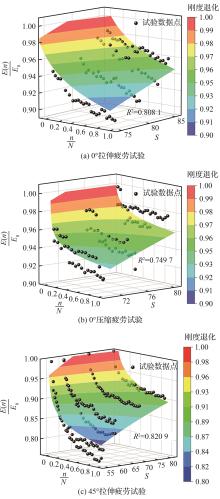
Fig.12
Validation of SR on external datasets for various loading types
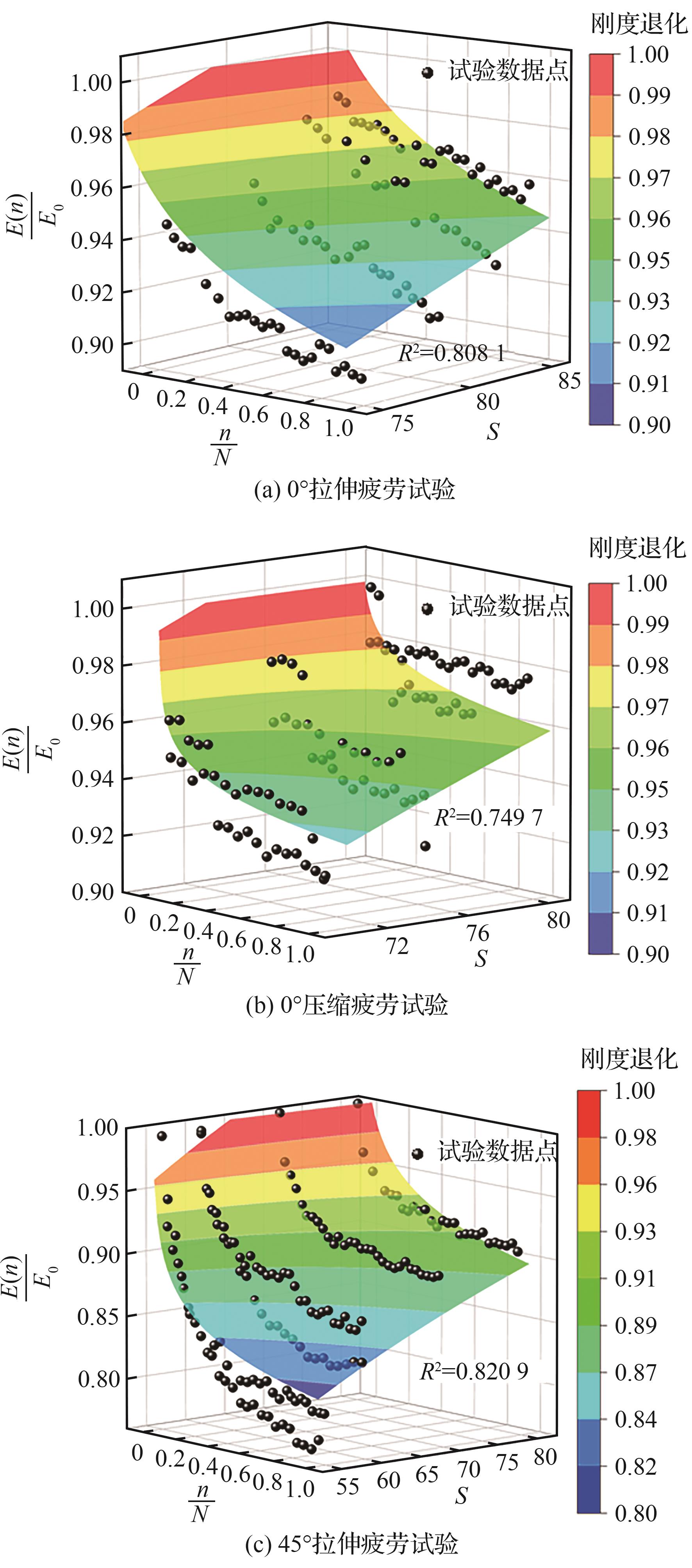
Table 6
Equations obtained by SR for 20 to 30 Maxsize
| 复杂度 | MSE | SCORE | 方程 |
|---|---|---|---|
| 22 | 0.015 2 | 0.023 7 | |
| 25 | 0.013 3 | 0.017 4 | |
| 27 | 0.012 9 | 0.003 9 | |
| 30 | 0.015 1 | 0.002 2 |
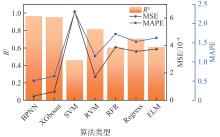
Fig.13
Performance comparison of seven algorithms
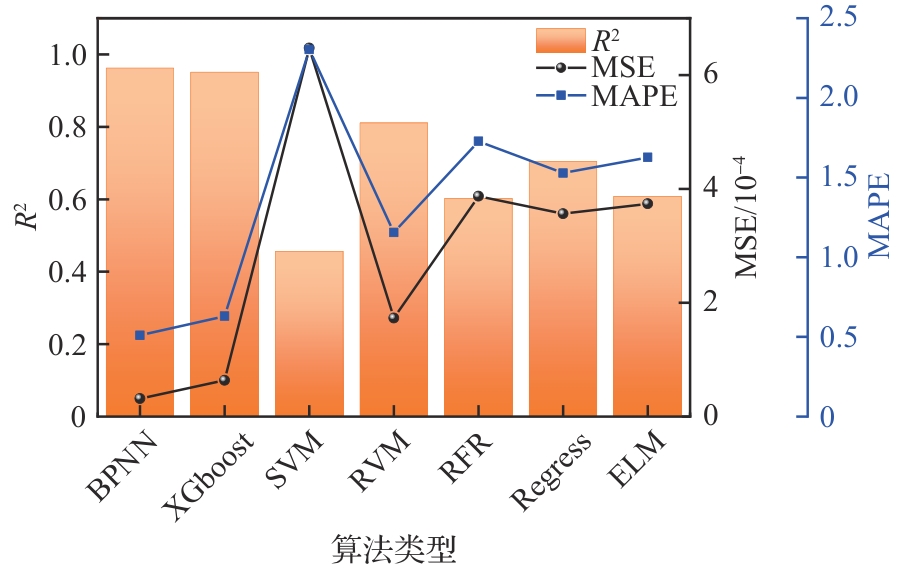
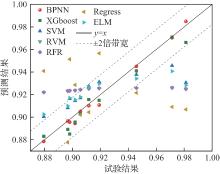
Fig.14
Comparison of prediction results from different ML algorithms
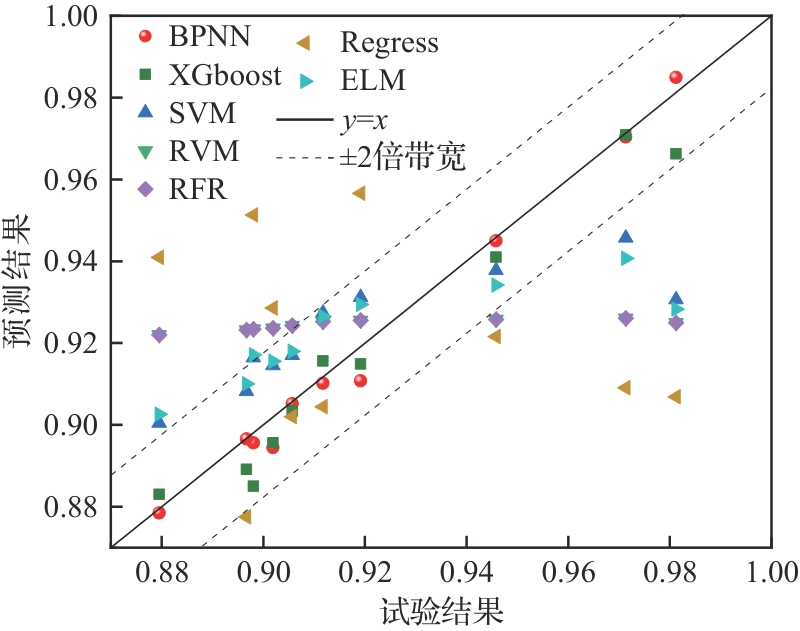
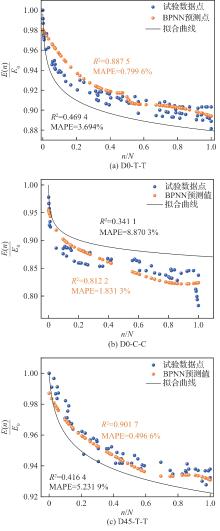
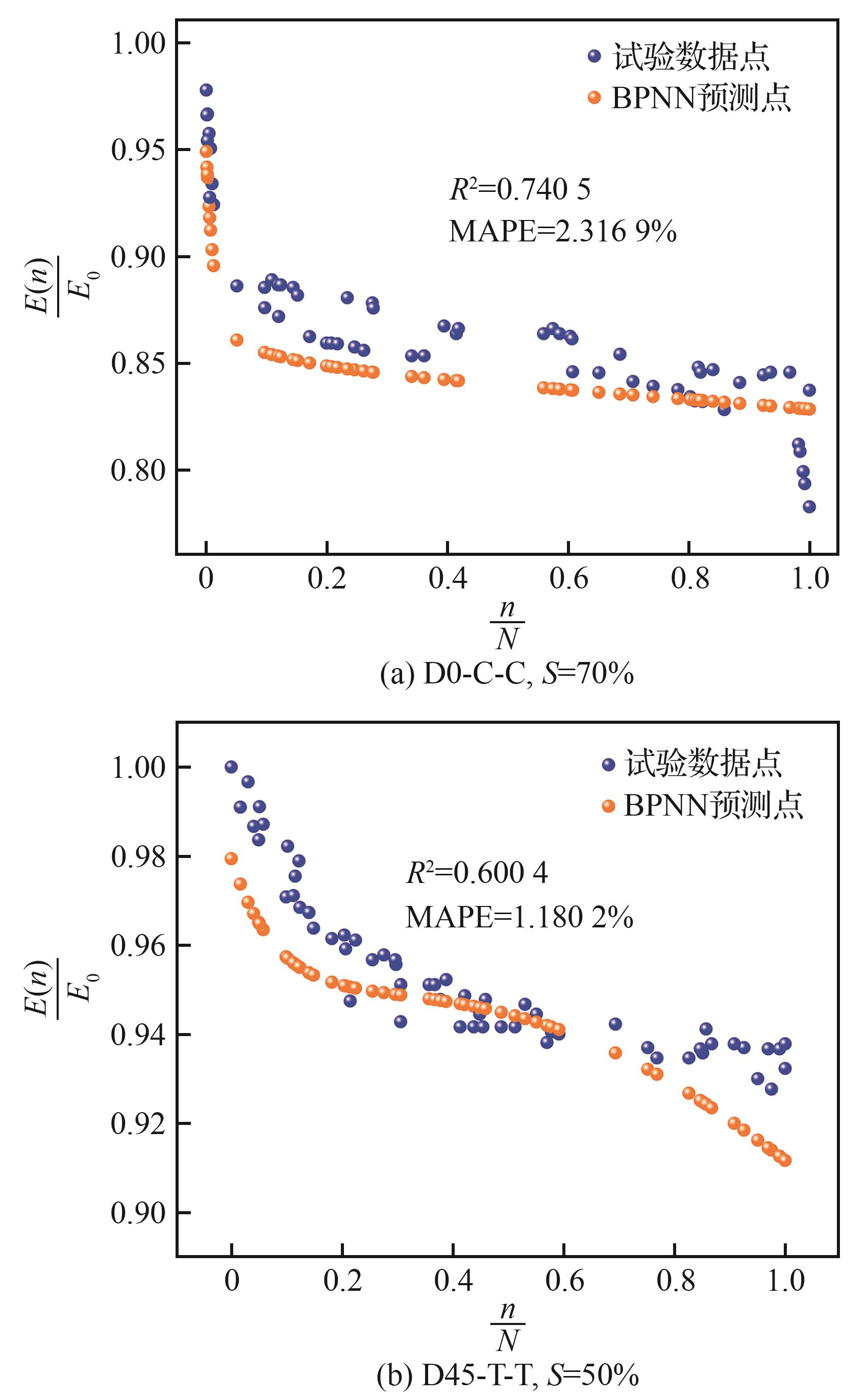
Fig.15
BPNN interpolation prediction effect
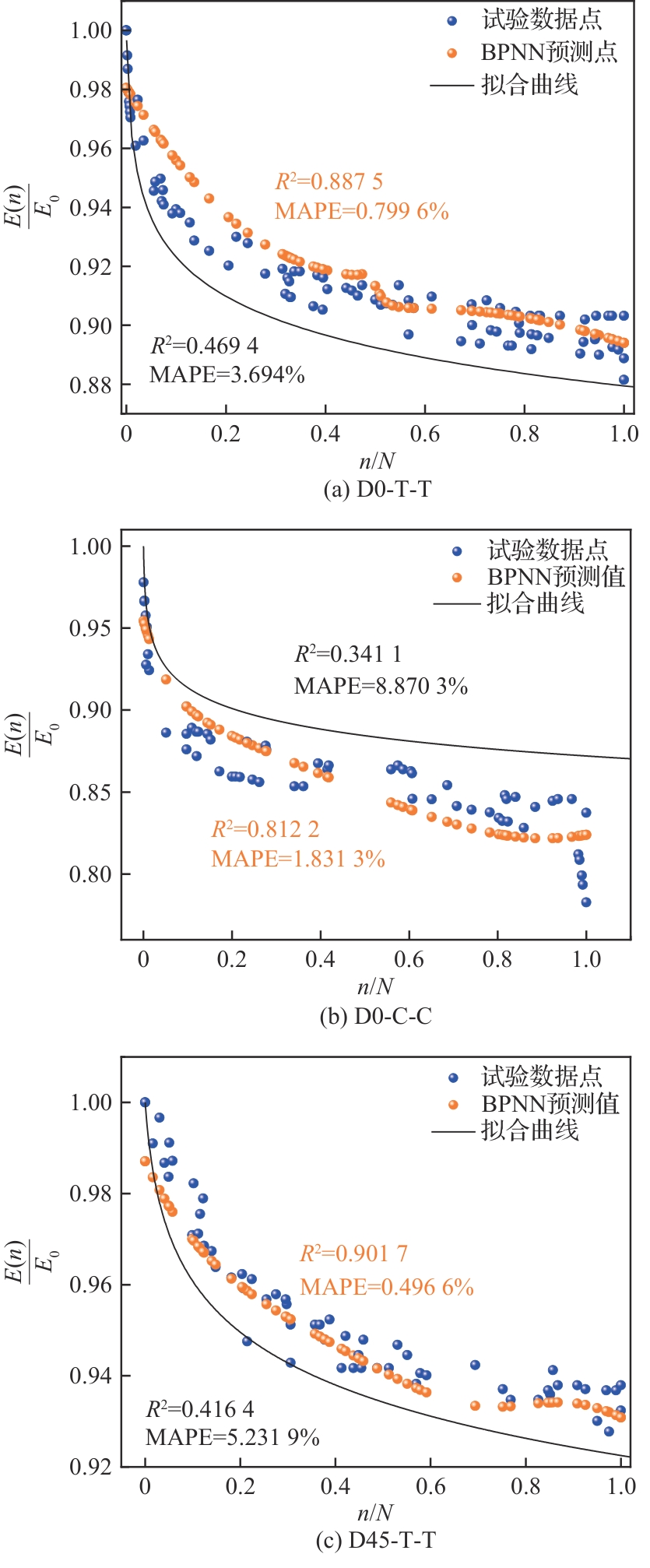
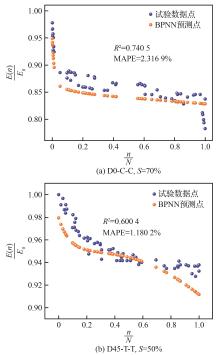
Fig.16
Cross-mechanism prediction performance of BPNN
| [1] | KUMAR C H, SWAMY R P. Fatigue life prediction of glass fiber reinforced epoxy composites using artificial neural networks[J]. Composites Communications, 2021, 26: 100812. |
| [2] | 马辉东, 连喆, 杨鑫源, 等. 变频加载纤维增强复合材料剩余强度预测[J]. 航空学报, 2025, 46(8): 231068. |
| MA H D, LIAN Z, YANG X Y, et al. Residual strength prediction for fiber-reinforced composites under variable frequency loading[J]. Acta Aeronautica et Astronautica Sinica, 2025, 46(8): 231068 (in Chinese). | |
| [3] | DEGRIECK AND J, VAN PAEPEGEM W. Fatigue damage modeling of fibre-reinforced composite materials: Review[J]. Applied Mechanics Reviews, 2001, 54(4): 279-300. |
| [4] | HWANG W, HAN K S. Fatigue of composites: Fatigue modulus concept and life prediction[J]. Journal of Composite Materials, 1986, 20(2): 154-165. |
| [5] | YANG J N, LEE L J, SHEU D Y. Modulus reduction and fatigue damage of matrix dominated composite laminates[J]. Composite Structures, 1992, 21(2): 91-100. |
| [6] | WU F Q, YAO W X. A fatigue damage model of composite materials[J]. International Journal of Fatigue, 2010, 32(1): 134-138. |
| [7] | SUZUKI T, MAHFUZ H, TAKANASHI M. A new stiffness degradation model for fatigue life prediction of GFRPs under random loading[J]. International Journal of Fatigue, 2019, 119: 220-228. |
| [8] | 闫海, 邓忠民. 基于深度学习的短纤维增强聚氨酯复合材料性能预测[J]. 复合材料学报, 2019, 36(6): 1413-1420. |
| YAN H, DENG Z M. Prediction of properties of short fiber reinforced urethane polymer composites based on deep learning[J]. Acta Materiae Compositae Sinica, 2019, 36(6): 1413-1420 (in Chinese). | |
| [9] | DING X X, HOU X N, XIA M, et al. Predictions of macroscopic mechanical properties and microscopic cracks of unidirectional fibre-reinforced polymer composites using deep neural network (DNN)[J]. Composite Structures, 2022, 302: 116248. |
| [10] | SHIROLKAR N, PATWARDHAN P, RAHMAN A, et al. Investigating the efficacy of machine learning tools in modeling the continuous stabilization and carbonization process and predicting carbon fiber properties[J]. Carbon, 2021, 174: 605-616. |
| [11] | MENTGES N, DASHTBOZORG B, MIRKHALAF S M. A micromechanics-based artificial neural networks model for elastic properties of short fiber composites[J]. Composites Part B: Engineering, 2021, 213: 108736. |
| [12] | ZHOU J, WU Z, LIU Z L, et al. A novel normalized fatigue progressive damage model for complete stress levels based on artificial neural network[J]. International Journal of Fatigue, 2024, 187: 108447. |
| [13] | ZHENG T, GUO L C, WANG Z X, et al. A reliable progressive fatigue damage model for life prediction of composite laminates incorporating an adaptive cyclic jump algorithm[J]. Composites Science and Technology, 2022, 227: 109587. |
| [14] | ASTM. Standard test method for tensile properties of polymer matrix composite materials: [S]. West Conshohocken: ASTM, 2014. |
| [15] | ASTM. Standard test method for determining the compressive properties of polymer matrix composite laminates using a Combined Loading Compression (CLC) test fixture: [S]. West Conshohocken: ASTM, 2009. |
| [16] | ASTM. Standard test method for in-plane shear response of polymer matrix composite materials by tensile test of a ±45° laminate: [S]. West Conshohocken: ASTM, 2013. |
| [17] | ASTM. Standard test method for tension-tension fatigue of polymer matrix composite materials: [S]. West Conshohocken: ASTM, 2019. |
| [18] | LUNDBERG S M, LEE S I. A unified approach to interpreting model predictions[C]∥Proceedings of the 31st International Conference on Neural Information Processing Systems. New York: ACM, 2017: 4768-4777. |
| [19] | BI Y, XIANG D X, GE Z Y, et al. An interpretable prediction model for identifying N7-methylguanosine sites based on XGBoost and SHAP[J]. Molecular Therapy Nucleic Acids, 2020, 22: 362-372. |
| [20] | YANG C, CHEN M Y, YUAN Q. The application of XGBoost and SHAP to examining the factors in freight truck-related crashes: An exploratory analysis[J]. Accident Analysis & Prevention, 2021, 158: 106153. |
| [21] | UDRESCU S M, TEGMARK M. AI Feynman: A physics-inspired method for symbolic regression[J]. Science Advances, 2020, 6(16): eaay2631. |
| [22] | 马菲, 张琼, 赖培军, 等. 基于BP神经网络的试飞训练安全性量化模型[J]. 航空学报, 2024, 45(5): 529957. |
| MA F, ZHANG Q, LAI P J, et al. BP neural network-based quantitative classification model for safety in experimental flight training[J]. Acta Aeronautica et Astronautica Sinica, 2024, 45(5): 529957 (in Chinese). | |
| [23] | 梁益铭, 李广宁, 徐敏. 基于机器学习的智能控制数值虚拟飞行方法[J]. 航空学报, 2023, 44(17): 128098. |
| LIANG Y M, LI G N, XU M. Method for numerical virtual flight with intelligent control based on machine learning[J]. Acta Aeronautica et Astronautica Sinica, 2023, 44(17): 128098 (in Chinese). | |
| [24] | HAN H Y, LI W D, ANTONOV S, et al. Mapping the creep life of nickel-based SX superalloys in a large compositional space by a two-model linkage machine learning method[J]. Computational Materials Science, 2022, 205: 111229. |
| [25] | ZHANG Y D, ZHENG T, LIU G, et al. Predicting the fatigue life of T800 carbon fiber composite structural component based on fatigue experiments of unidirectional laminates[J]. International Journal of Fatigue, 2025, 190: 108622. |
| [1] | Jiaxuan HAN, Fan CHEN, Xuguang YANG, Zhenyu WANG, Xiaoming YUE. Experimental study on EDM of CFRP in aerosol medium [J]. Acta Aeronautica et Astronautica Sinica, 2025, 46(4): 430886-430886. |
| [2] | Yu ZENG, Hongbo WANG, Chengyue LIAN, Yixin YANG, Dapeng XIONG, Mingbo SUN, Weidong LIU. Applicability analysis of two improved methods of SST turbulence model [J]. Acta Aeronautica et Astronautica Sinica, 2024, 45(S1): 730574-730574. |
| [3] | Fei MA, Qiong ZHANG, Peijun LAI, Yidi YUE. BP neural network⁃based quantitative classification model for safety in experimental flight training [J]. Acta Aeronautica et Astronautica Sinica, 2024, 45(5): 529957-529957. |
| [4] | Qinghua WANG, Runpeng LIU, Xiaojun YAN. Measurement of strain distribution in CFRP cross-ply laminate material based on sampling Moiré method [J]. Acta Aeronautica et Astronautica Sinica, 2024, 45(24): 430384-430384. |
| [5] | Yiming LIANG, Guangning LI, Min XU. Method for numerical virtual flight with intelligent control based on machine learning [J]. Acta Aeronautica et Astronautica Sinica, 2023, 44(17): 128098-81280986. |
| [6] | LYU Shuaishuai, YANG Yu, WANG Binwen, YIN Chenfei. A crack identification method of aircraft structure based on improved FaceNet [J]. ACTA AERONAUTICAET ASTRONAUTICA SINICA, 2022, 43(6): 525463-525463. |
| [7] | GUO Qiong, LIU Wei, PEI Lianjie, GUO Junhao. Static and fatigue test technology for full-scale composite fuselage barrels [J]. ACTA AERONAUTICAET ASTRONAUTICA SINICA, 2022, 43(6): 525816-525816. |
| [8] | YANG Yu, WANG Binwen, QI Xiaofeng. Acoustic emission monitoring technology for fatigue test of full-scale civil aircraft structure [J]. ACTA AERONAUTICAET ASTRONAUTICA SINICA, 2022, 43(6): 527044-527044. |
| [9] | WANG Yupeng, TIAN Wenpeng, SONG Pengfei, XIA Feng, FENG Jianmin. Research and verification of comprehensive acceleration technology for civil aircraft full-scale fatigue test [J]. ACTA AERONAUTICAET ASTRONAUTICA SINICA, 2022, 43(5): 224919-224919. |
| [10] | DONG Zhenyi, LIN Li, LEI Mingkai, MA Zhiyuan. Ultrasonic quantitative characterization of pore distribution uniformity of seal coating based on BPNN [J]. ACTA AERONAUTICAET ASTRONAUTICA SINICA, 2022, 43(5): 425294-425294. |
| [11] | XU Luopeng, HU Shi, LIU Qingsong, WANG Qingyuan. High-frequency fatigue infrared heat dissipation of new Al-Li alloy AA2198 [J]. ACTA AERONAUTICAET ASTRONAUTICA SINICA, 2021, 42(9): 224482-224482. |
| [12] | LI Yuhai, WANG Chengbo, CHEN Liang, DONG Hongda, GUAN Yu, DI Hongliang, GU Yuxuan. Overview on development of advanced fighter life design and extension technology [J]. ACTA AERONAUTICAET ASTRONAUTICA SINICA, 2021, 42(8): 525791-525791. |
| [13] | MA Zhanqi, SUN Xiuwen, WANG Lingqi. Temperature design and control of rotor drag-hinge self-lubrication bush fatigue test [J]. ACTA AERONAUTICAET ASTRONAUTICA SINICA, 2021, 42(5): 524217-524217. |
| [14] | YANG Zhengwei, ZHAO Zhibin, LI Yin, SONG Yuanjia, KOU Guangjie, LI Lei, CHENG Pengfei. Infrared radiation characteristics of CFRP laminate surface under compressive fatigue load [J]. ACTA AERONAUTICAET ASTRONAUTICA SINICA, 2021, 42(5): 524239-524239. |
| [15] | QI Xiaofeng, YANG Yu, KANG Weiping, WANG Qian. Fatigue damage monitoring of lug joints with random load spectrum based on acoustic emission [J]. ACTA AERONAUTICAET ASTRONAUTICA SINICA, 2021, 42(5): 524518-524518. |
| Viewed | ||||||
|
Full text |
|
|||||
|
Abstract |
|
|||||
Address: No.238, Baiyan Buiding, Beisihuan Zhonglu Road, Haidian District, Beijing, China
Postal code : 100083
E-mail:hkxb@buaa.edu.cn
Total visits: 6658907 Today visits: 1341All copyright © editorial office of Chinese Journal of Aeronautics
All copyright © editorial office of Chinese Journal of Aeronautics
Total visits: 6658907 Today visits: 1341

 CJA
CJA
