Acta Aeronautica et Astronautica Sinica ›› 2025, Vol. 46 ›› Issue (22): 131943.doi: 10.7527/S1000-6893.2025.31943
• Fluid Mechanics and Flight Mechanics • Previous Articles
Yusong BAI, Zhenyao LI( ), Ziyi FENG, Yue HUANG, Yancheng YOU
Received:2025-03-06
Revised:2025-05-06
Accepted:2025-06-17
Online:2025-06-30
Published:2025-06-27
Contact:
Zhenyao LI
E-mail:lizhenyaoxmu@xmu.edu.cn
Supported by:CLC Number:
Yusong BAI, Zhenyao LI, Ziyi FENG, Yue HUANG, Yancheng YOU. Fuel distribution characteristics of variable area injector with lobe structure[J]. Acta Aeronautica et Astronautica Sinica, 2025, 46(22): 131943.
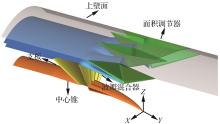
Fig.1
Schematic diagram of overall structure of afterburner of a variable cycle engine
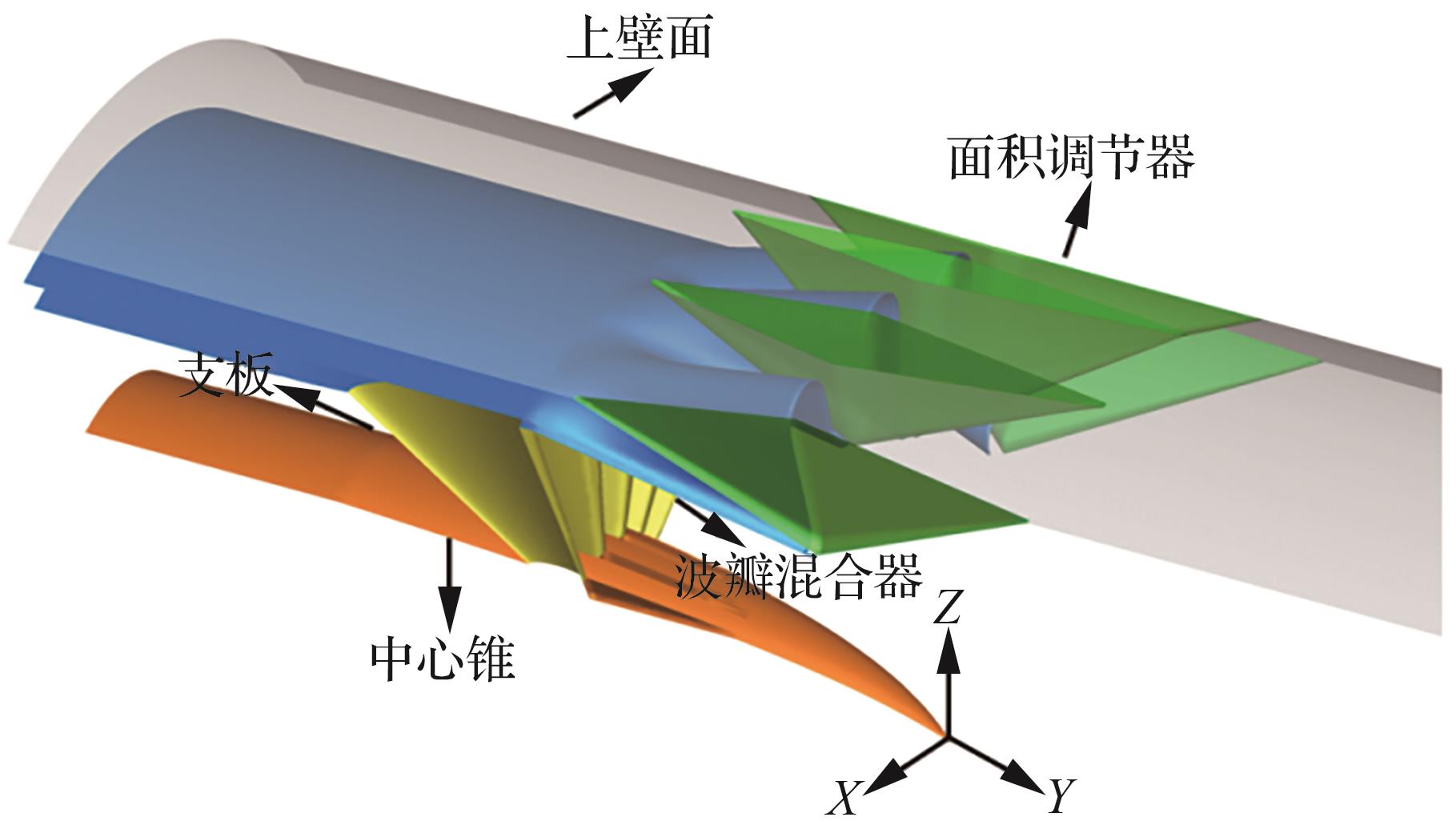
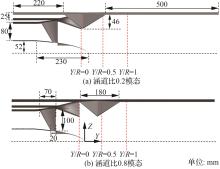
Fig.2
Schematic diagram of afterburner structure under different bypass ratio modes
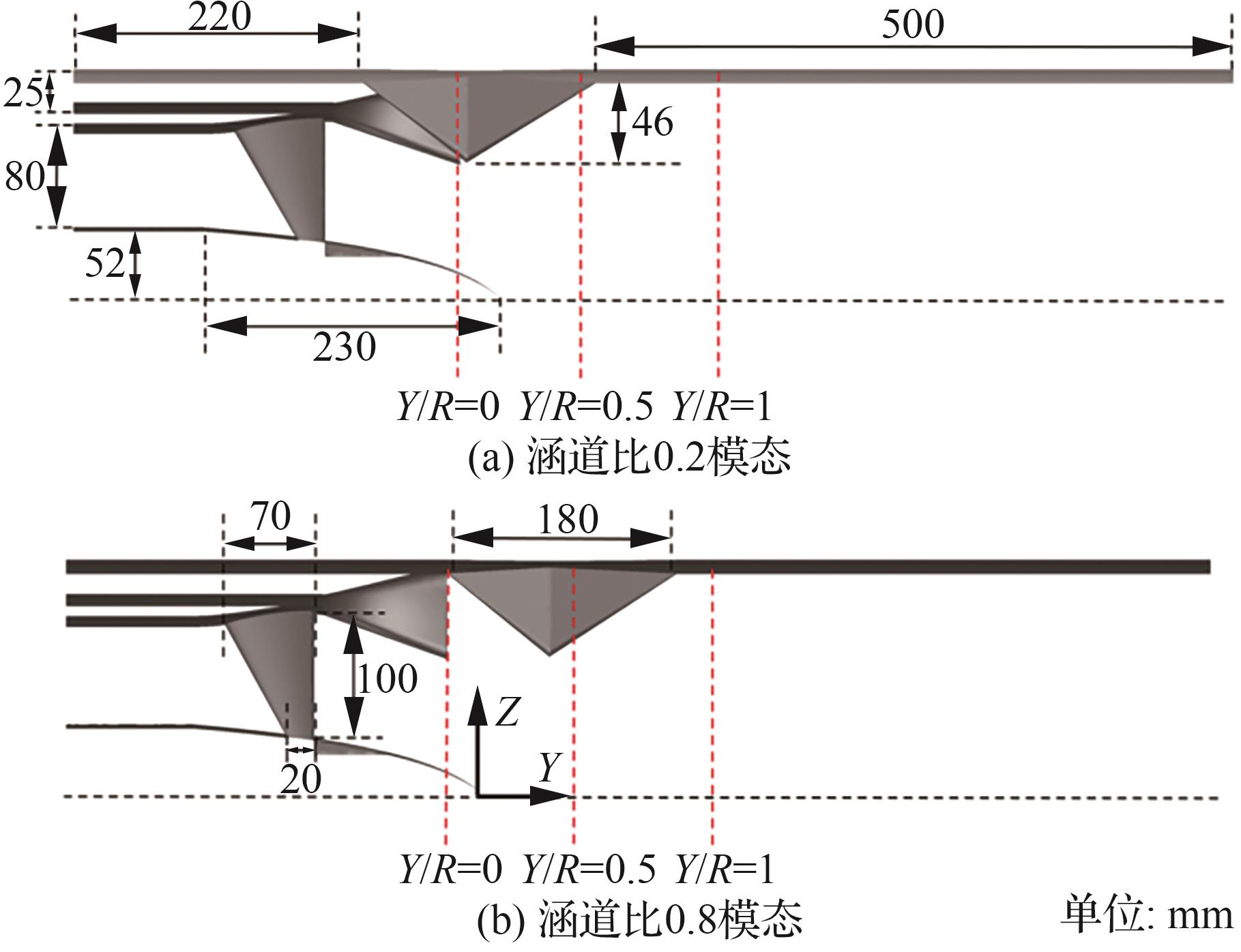
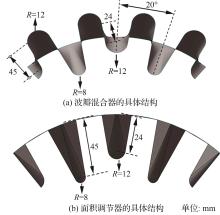
Fig.3
Schematic diagram of specific structure of lobe mixer and area regulator
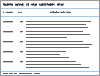
Table 1
Boundary conditions of numerical simulation
| 名称 | 涵道比 | 当量比 | 燃油流量/(g·s-1) | 内涵道马赫数 | 外涵道马赫数 |
|---|---|---|---|---|---|
| Case1 | 0.2 | 1.14 | 39.6 | 0.35 | 0.1 |
| Case2 | 0.8 | 0.75 | 39.6 | 0.35 | 0.3 |
| Case3 | 0.8 | 1.14 | 60.0 | 0.35 | 0.3 |
Fig.4
Schematic diagram of fuel injection point of afterburner
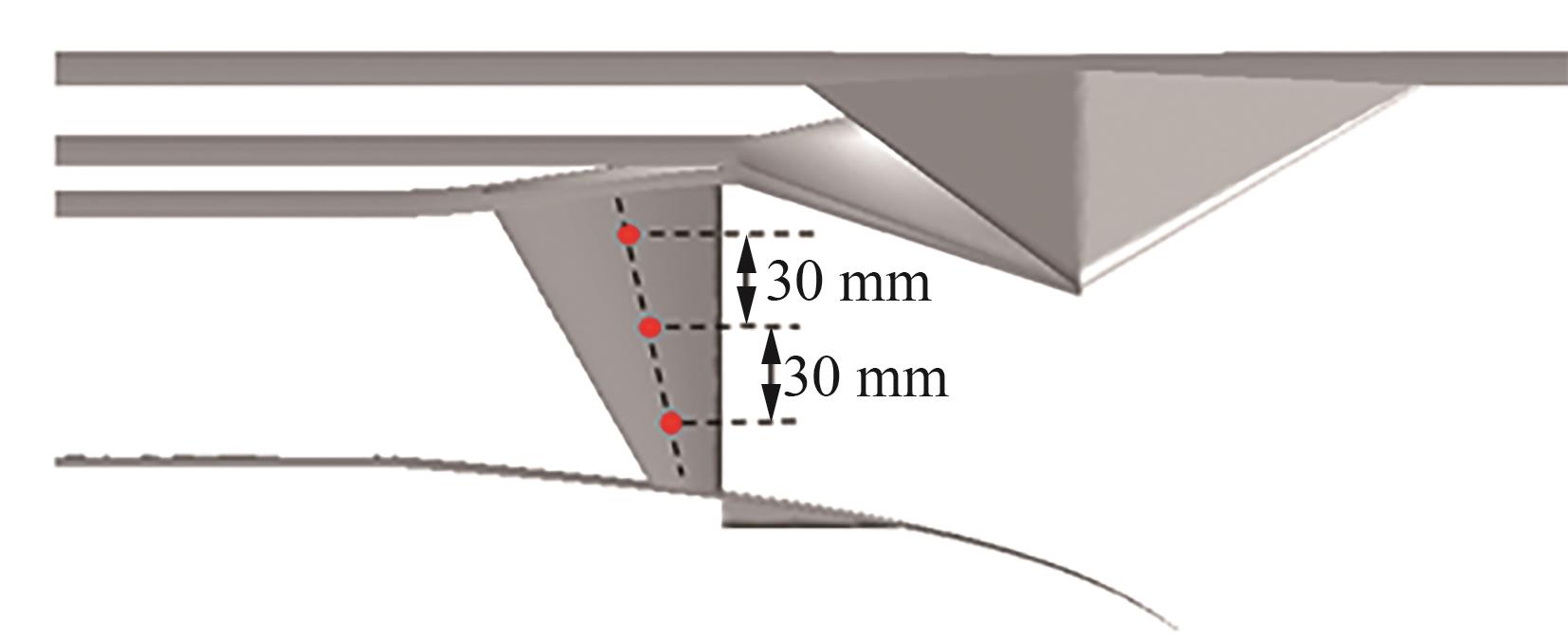
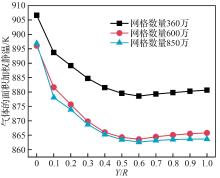
Fig.5
Mesh independence verification results
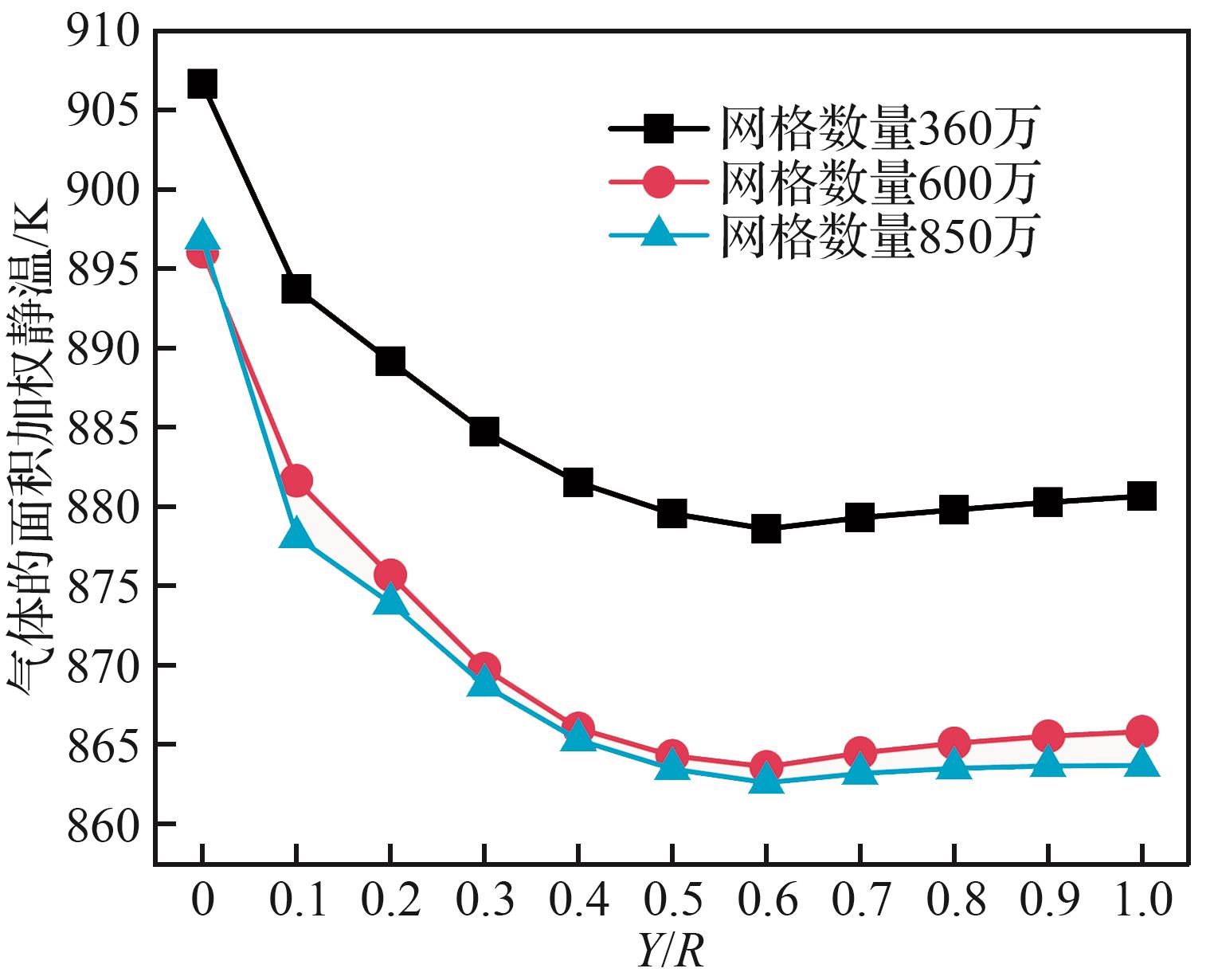
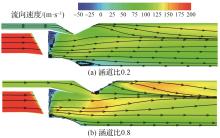
Fig.6
Velocity distribution of afterburner mixture gas in different bypass ratio modes
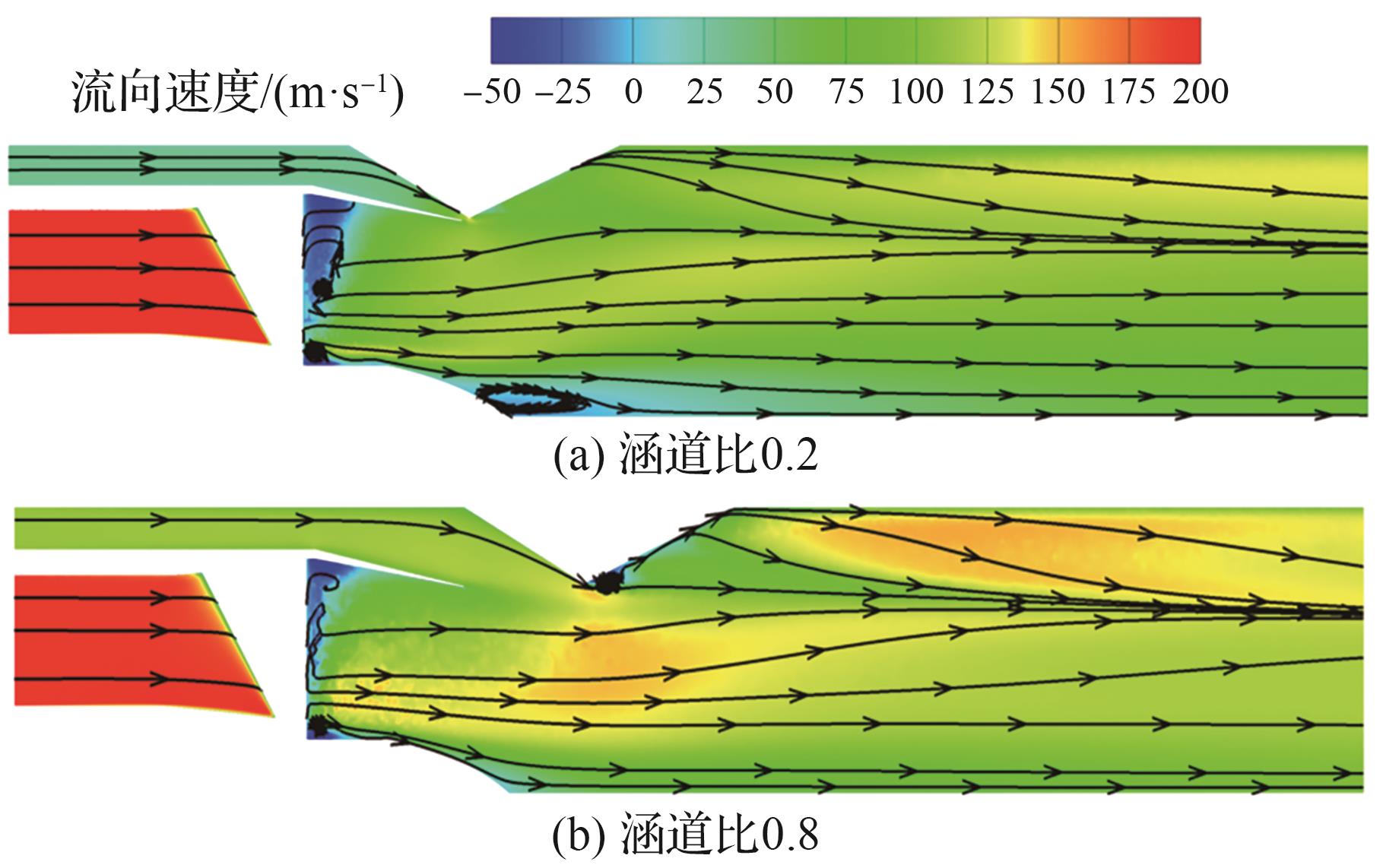
Fig.7
Afterburner gaseous fuel mass fraction contour under different bypass ratio modes
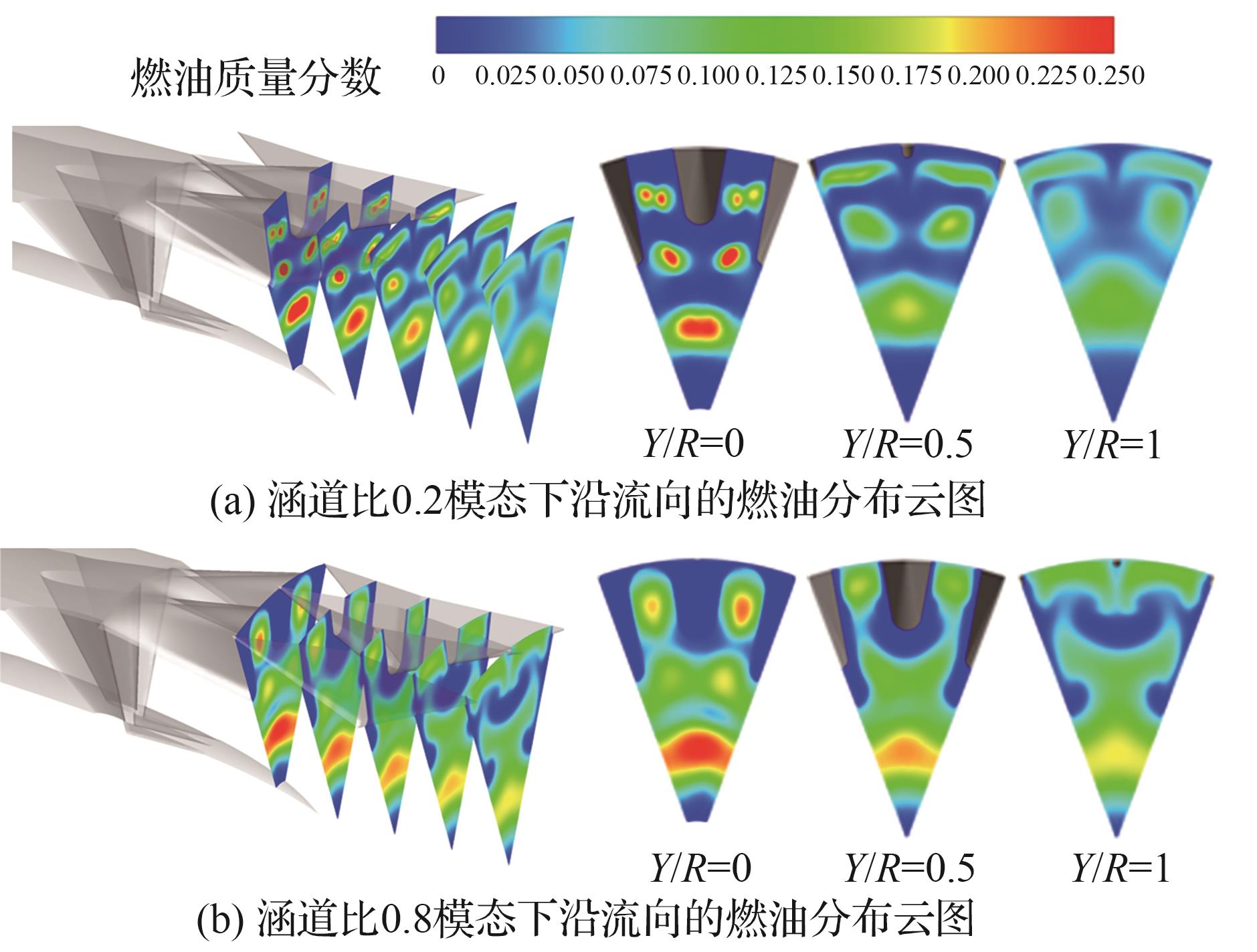
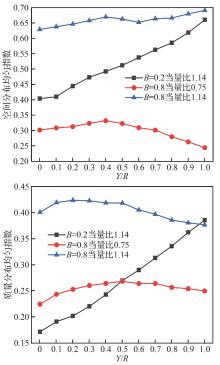
Fig.8
Uniform index of spatial distribution and mass distribution of fuel under different bypass ratio modes
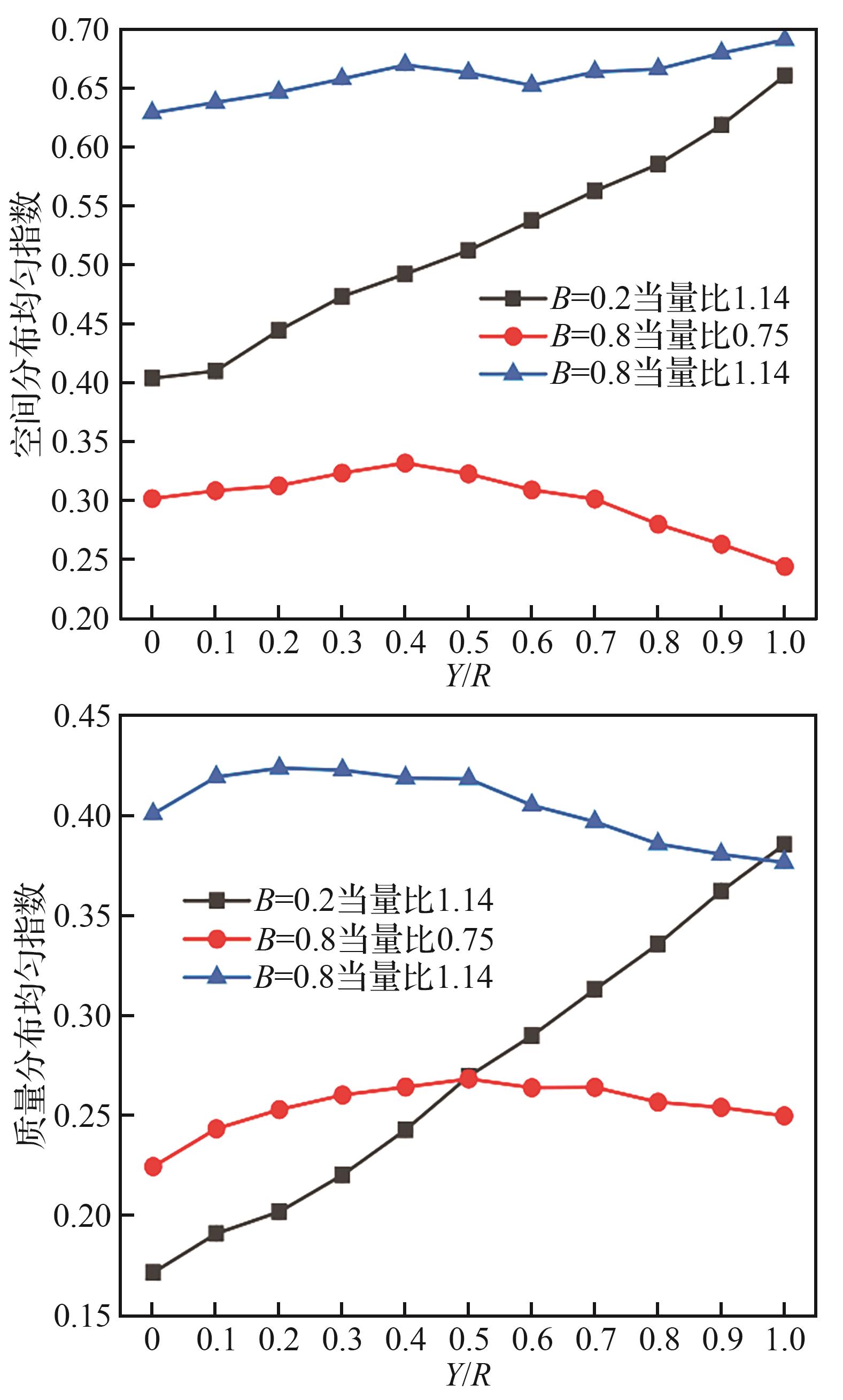
Fig.9
Influence of radial velocity of gas on fuel distribution in different bypass ratio modes(the contour lines represent the mass fraction of gaseous fuel)
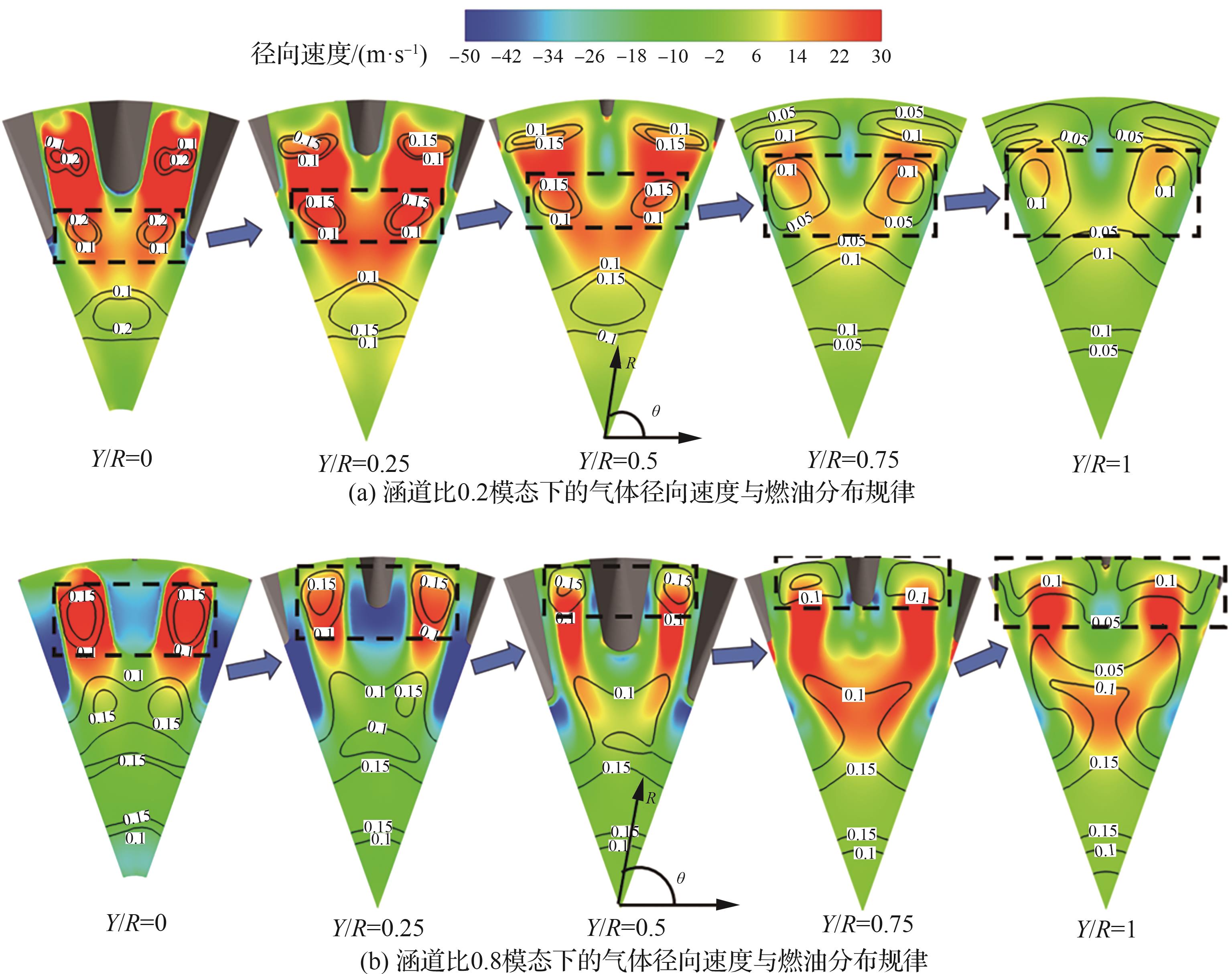
Fig.10
Influence of flow vortices on fuel distribution under different bypass ratio modes (the contour lines represent mass fraction of gaseous fuel)
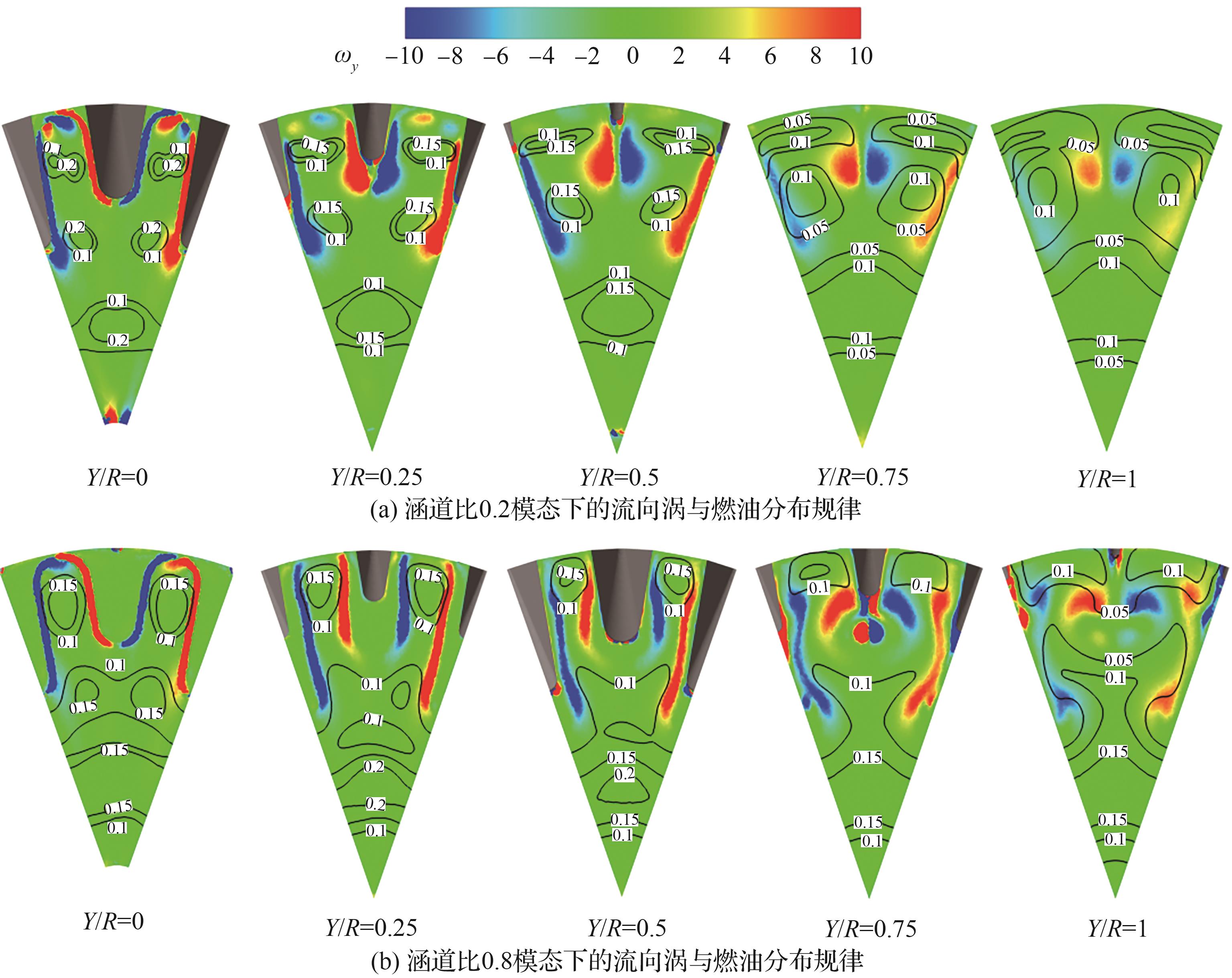
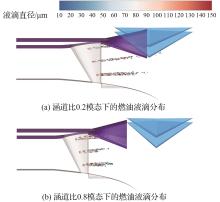
Fig.11
Distribution of fuel droplets under different bypass ratio modes
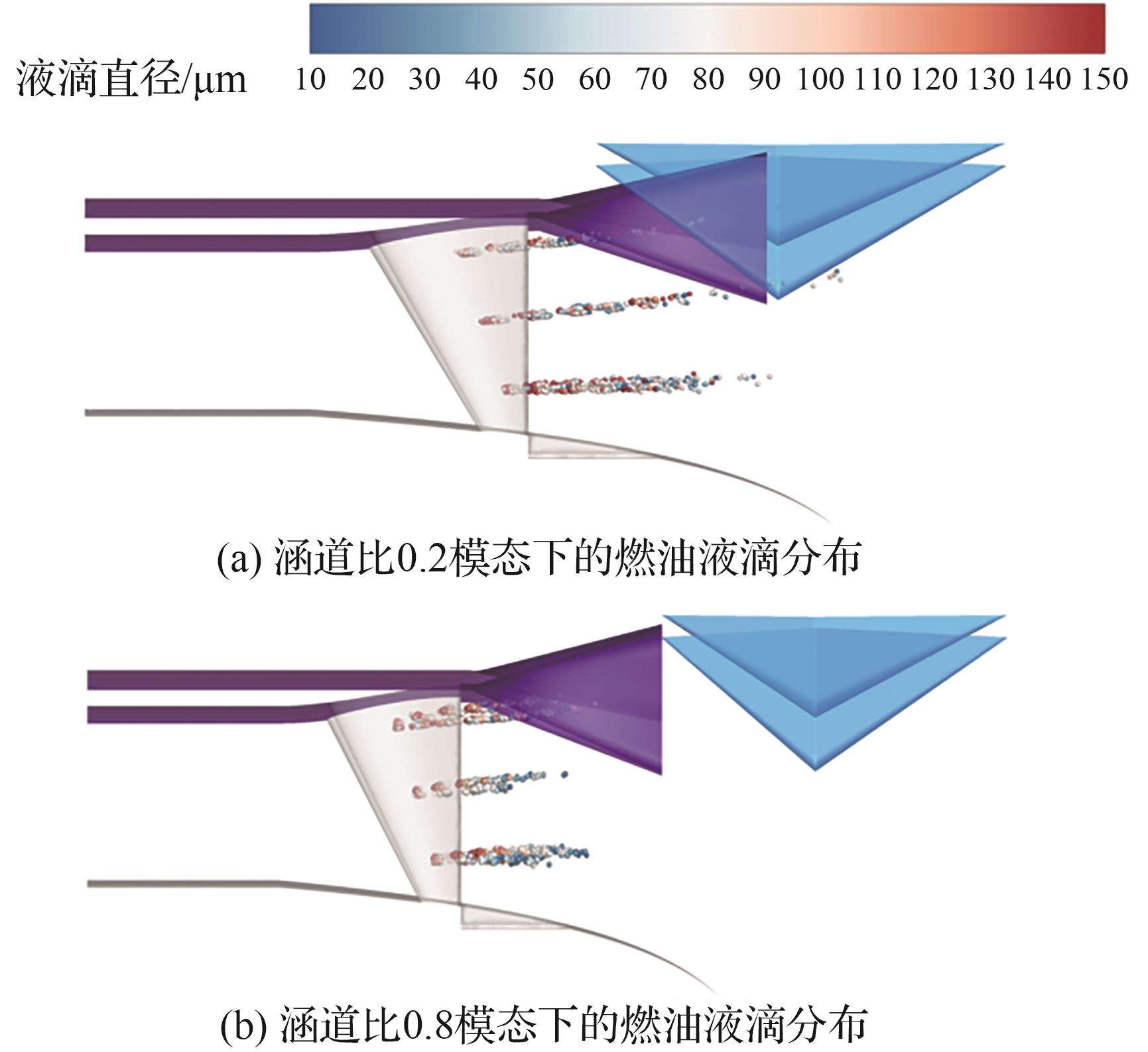
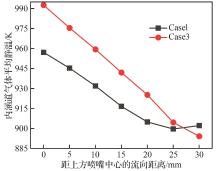
Fig.12
Distribution of gas static temperature in core duct region under different bypass ratio modes
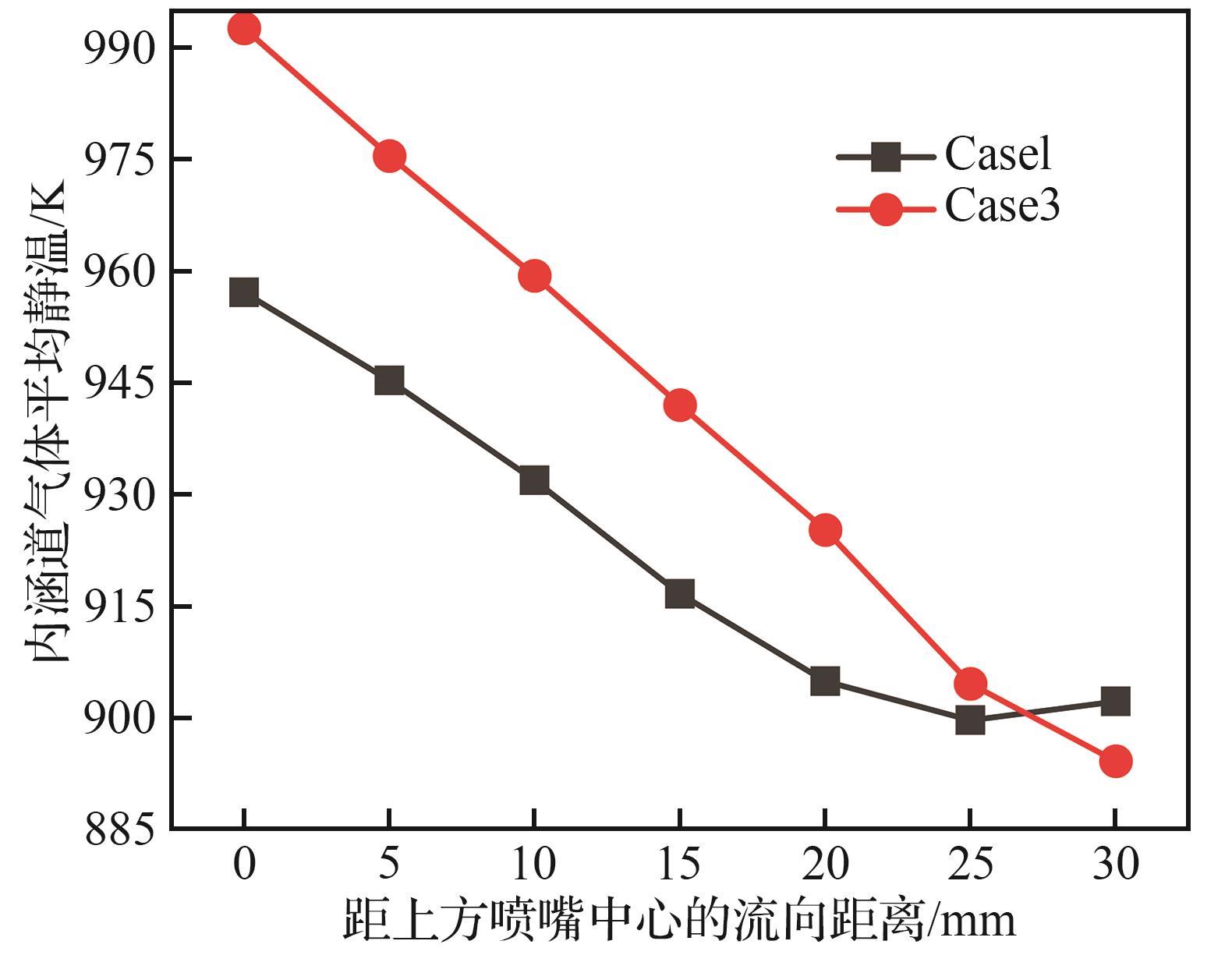
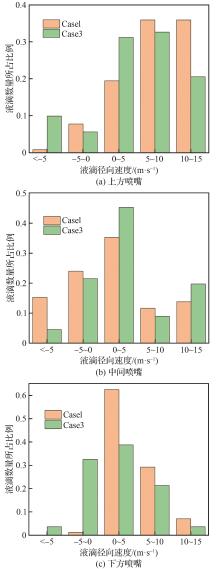
Fig.13
Radial velocity distribution of fuel droplets
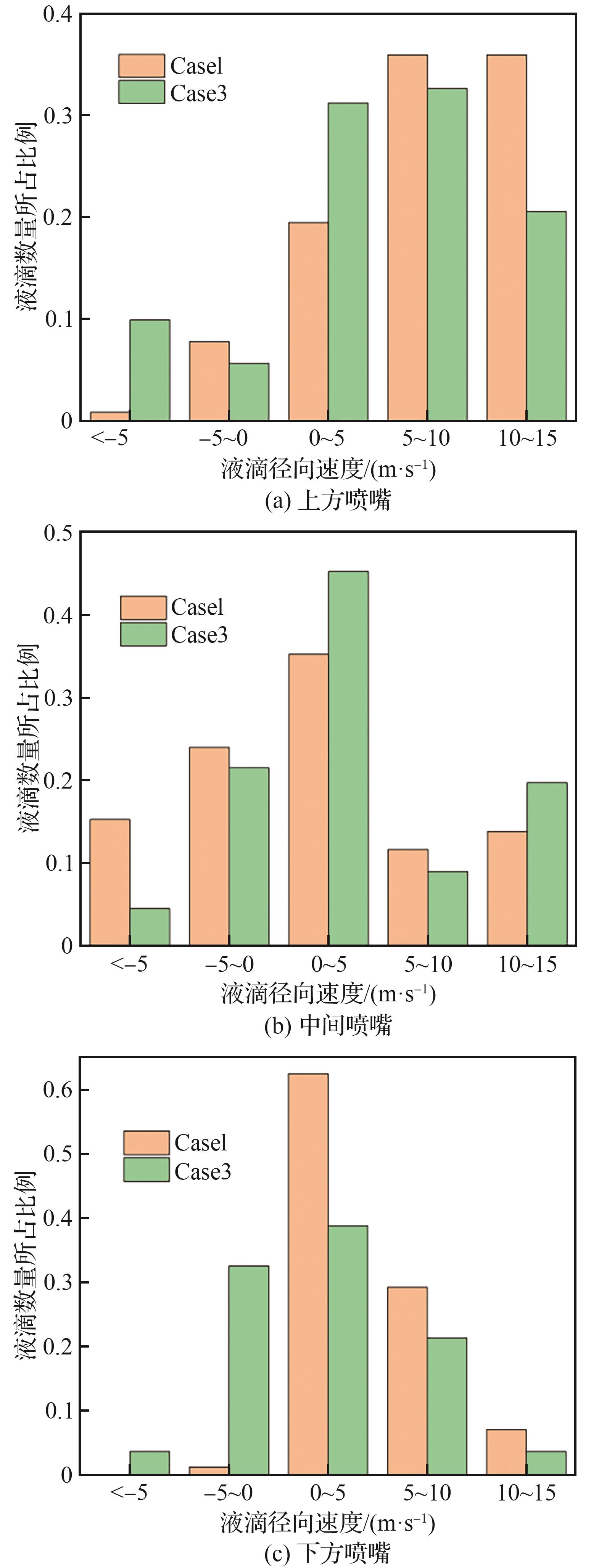
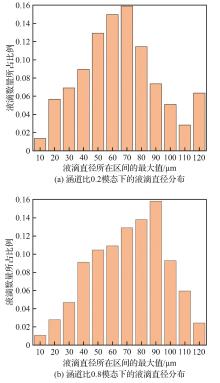
Fig.14
Distribution of fuel droplet diameter under different bypass ratio modes
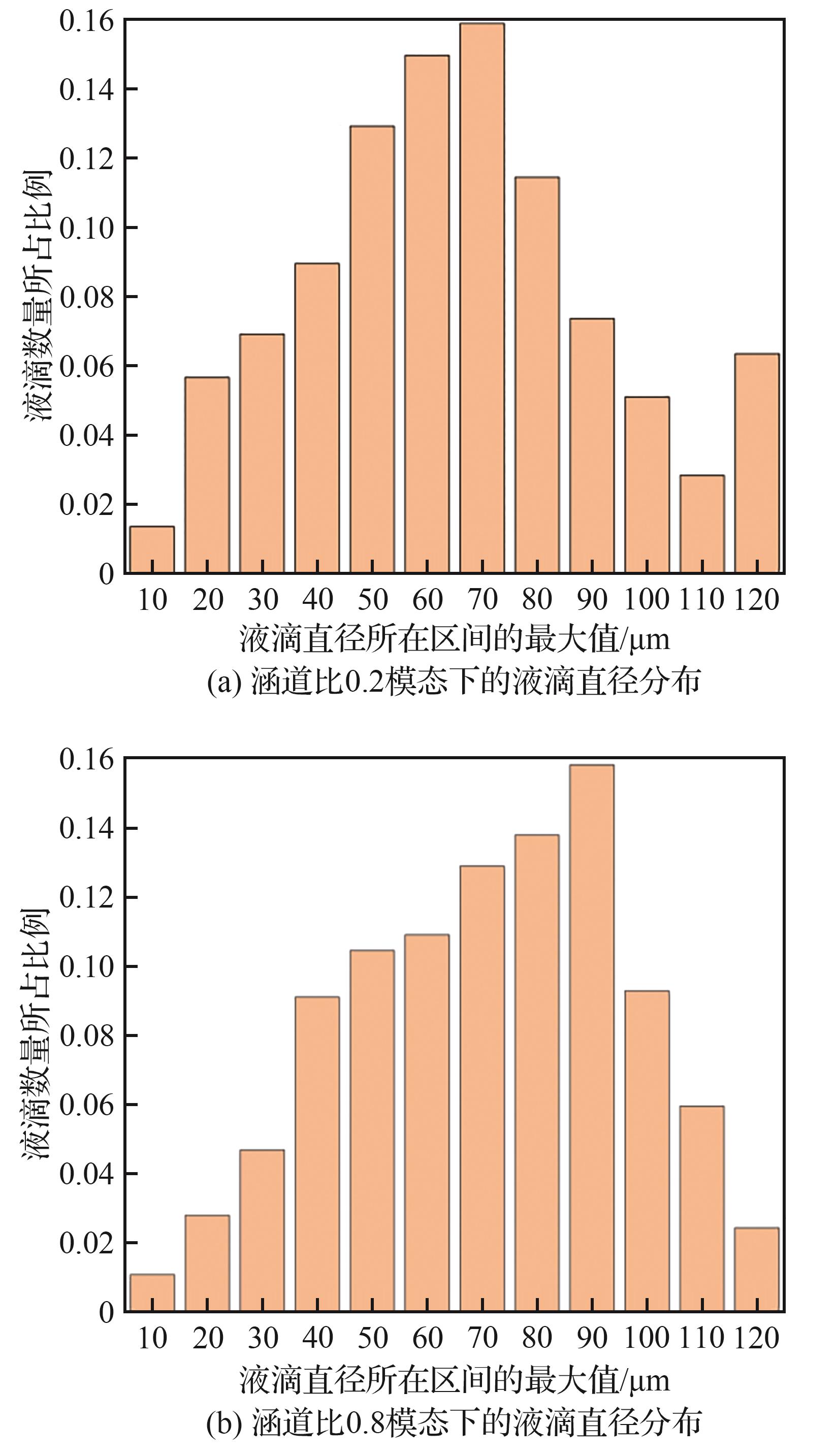
Table 2
Boundary conditions after changing fuel allocation ratio
| 算例名称 | 涵道比 | 上方喷嘴燃油流量/(g·s-1) | 中间喷嘴燃油流量/(g·s-1) | 下方喷嘴燃油流量/(g·s-1) | 三处喷嘴的燃油流量分配比例 |
|---|---|---|---|---|---|
| Case4 | 0.2 | 2.475 | 4.900 | 2.475 | 1∶2∶1 |
| Case5 | 0.2 | 1.980 | 5.940 | 1.980 | 1∶3∶1 |
| Case6 | 0.8 | 3.750 | 7.500 | 3.750 | 1∶2∶1 |
| Case7 | 0.8 | 3.000 | 9.000 | 3.000 | 1∶3∶1 |
Fig.15
Fuel distribution uniformity index under different allocation ratios
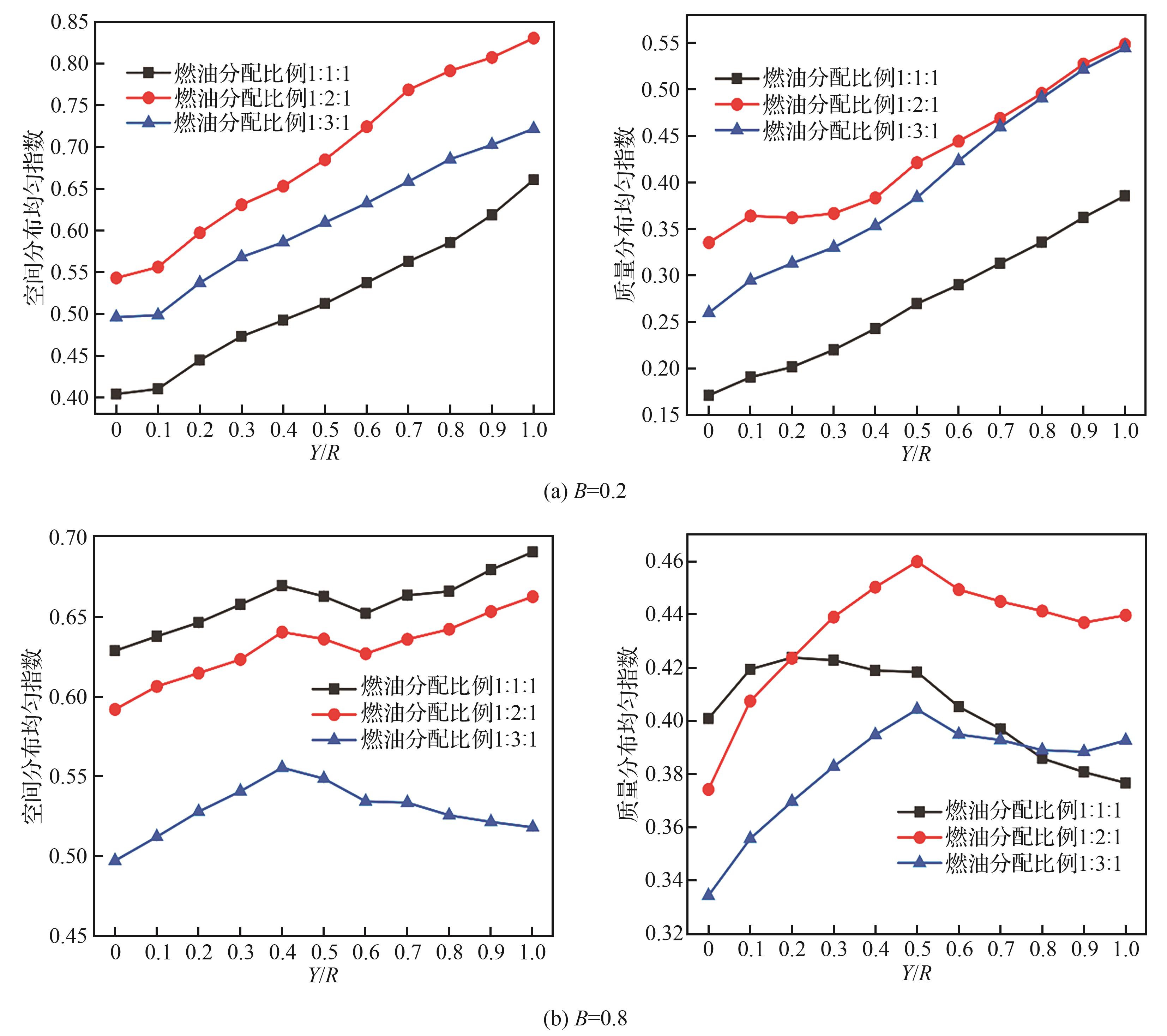
Fig.16
Effect of gas radial velocity on fuel distribution of the Y/R=0.25 cross-section under different fuel allocation ratios
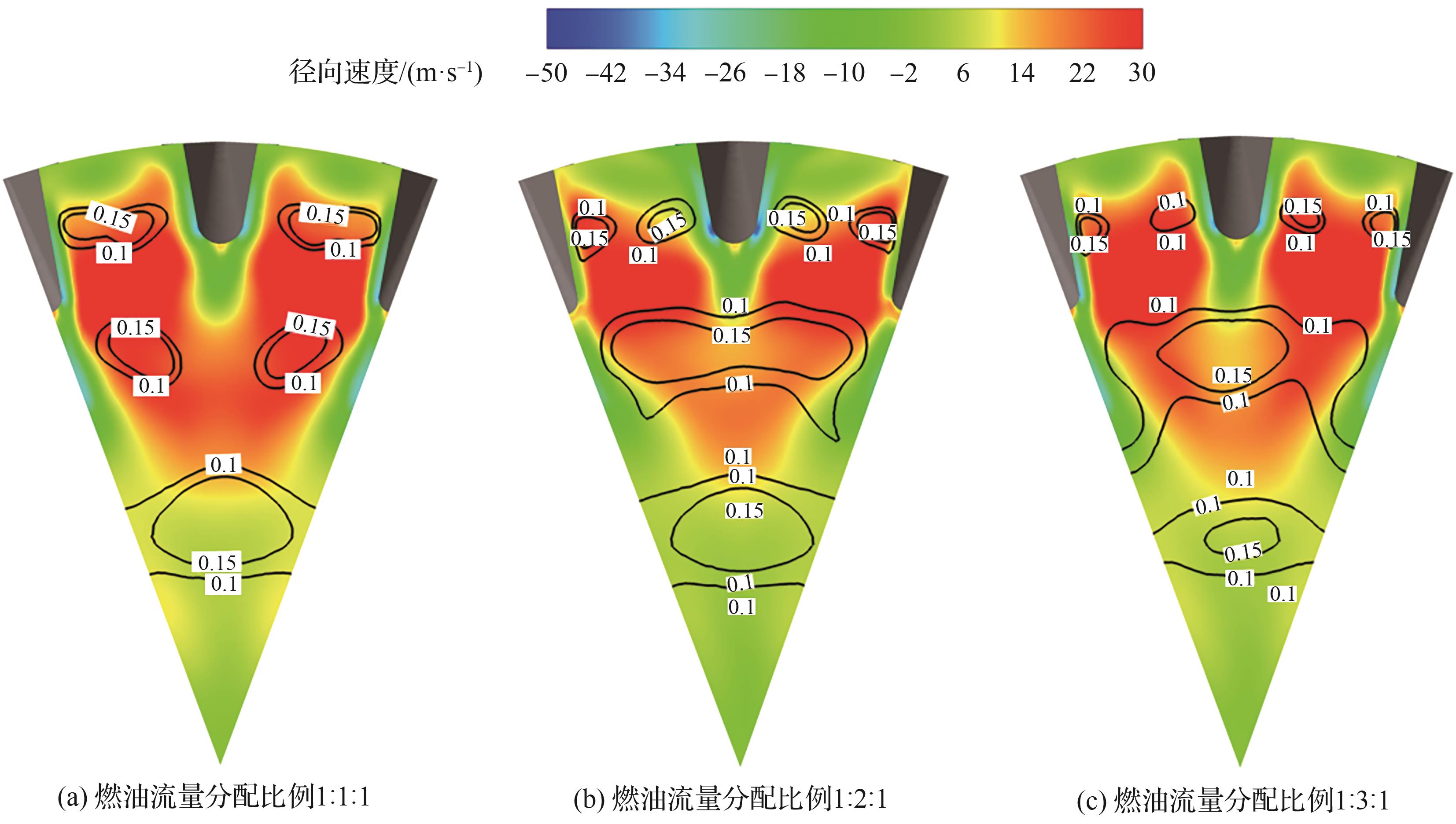
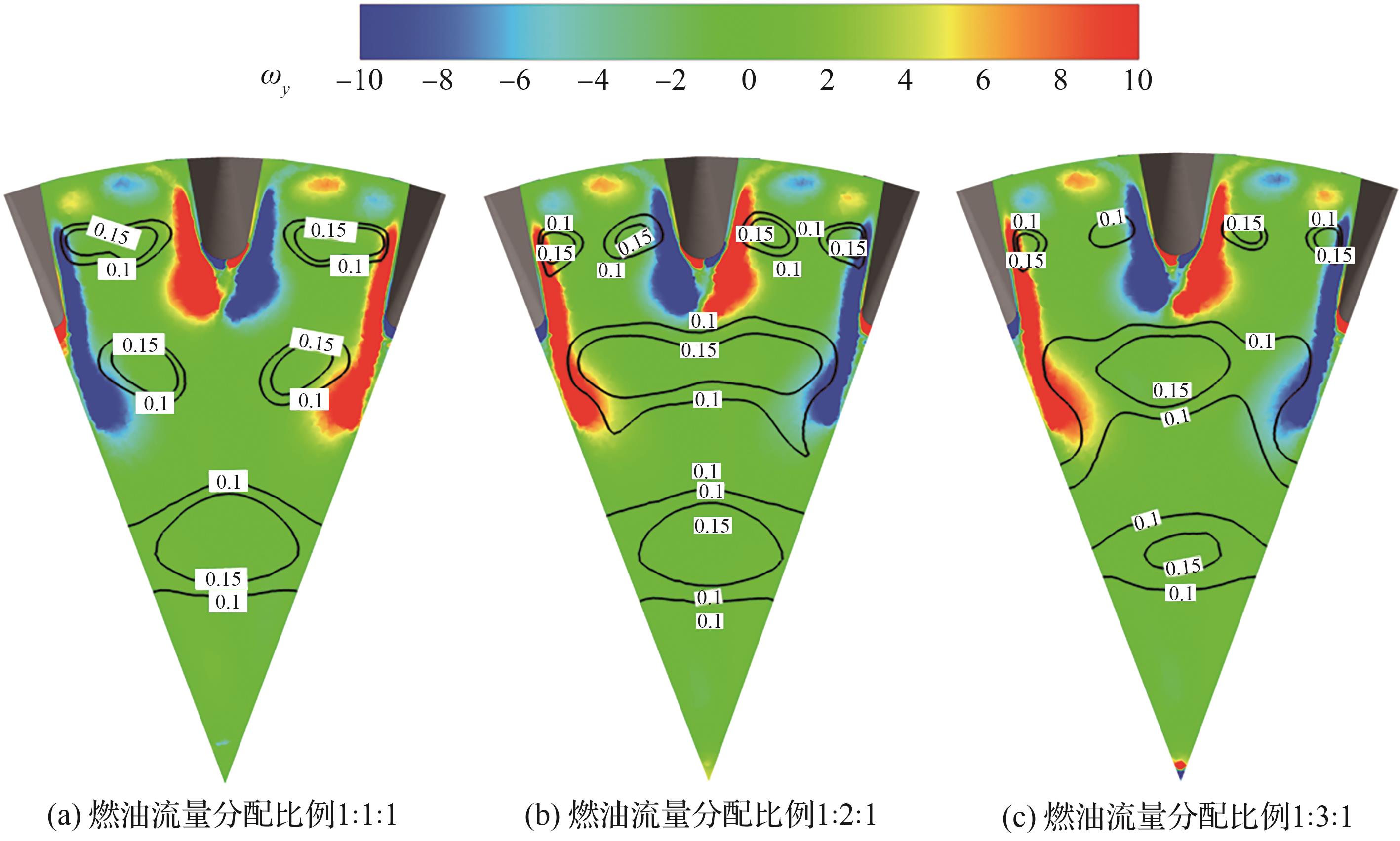
Fig.17
Effect of flow vortex on fuel distribution of Y/R=0.25 cross-section under different fuel allocation ratios
| [1] | 刘红霞. GE公司变循环发动机的发展[J]. 航空发动机, 2015, 41(2): 93-98. |
| LIU H X. Development of variable cycle engine in GE[J]. Aeroengine, 2015, 41(2): 93-98 (in Chinese). | |
| [2] | 郝旺, 刘永泉, 王占学, 等. 美国自适应循环发动机的发展历程[J]. 推进技术, 2024, 45(6): 6-25. |
| HAO W, LIU Y Q, WANG Z X, et al. Development process of adaptive cycle engine in the United States[J]. Journal of Propulsion Technology, 2024, 45(6): 6-25 (in Chinese). | |
| [3] | VDOVIAK J W, KNOTT P R. Aerodynamic/acoustic performance of YJ101/double bypass VCE with co-annular plug nozzle[R]. Washington, D.C.: NASA,1981. |
| [4] | 张淑荣. 气流式雾化喷嘴的特性研究[D]. 大连: 大连理工大学, 2006. |
| ZHANG S R. Study on characteristics of airflow atomizing nozzle[D]. Dalian: Dalian University of Technology, 2006 (in Chinese). | |
| [5] | ASSATO M, INCEER A A, MORAES L. Performance benefits of a fan on blade flade for a variable cycle engine[C]. The congress of the International council of the Aeronautical sciences, 2022. |
| [6] | XIAO H, ZHAO S L, LI Y F, et al. Influence of time-varying flow on dynamic flame characteristics in VCE: Numerical and experimental study[J]. Applied Thermal Engineering, 2024, 236: 121651. |
| [7] | 周红, 王占学, 刘增文, 等. 可变面积涵道引射器对变循环发动机性能影响[J]. 航空动力学报, 2016, 31(12): 2842-2850. |
| ZHOU H, WANG Z X, LIU Z W, et al. Impact of variable area bypass injector on variable cycle engine performance[J]. Journal of Aerospace Power, 2016, 31(12): 2842-2850 (in Chinese). | |
| [8] | KAMIN M N, KHARE P. Liquid jet in crossflow: Effect of momentum flux ratio on spray and vaporization characteristics[R]. New York: ASME, 2019. |
| [9] | 熊永恒. 钝体稳定器后直射式喷嘴油雾特性研究[D]. 南京: 南京航空航天大学, 2021. |
| XIONG Y H. Study on oil mist characteristics of direct nozzle after blunt body stabilizer[D]. Nanjing: Nanjing University of Aeronautics and Astronautics, 2021 (in Chinese). | |
| [10] | 刘涛. 航空煤油雾化特性实验研究[D]. 合肥: 中国科学技术大学, 2018. |
| LIU T. Experimental study on atomization characteristics of aviation kerosene[D]. Hefei: University of Science and Technology of China, 2018 (in Chinese). | |
| [11] | FEI L, ZHAO B B, HE L M, et al. Experimental study on spray characteristics of fan nozzle for integrated afterburner in lateral airflow[J]. Aerospace Science and Technology, 2022, 130: 107937. |
| [12] | MINIERO L, PANDEY K, FREDRICH D, et al. Air-blast atomization and ignition of a kerosene spray in hot vitiated crossflow[J]. Combustion and Flame, 2023, 256: 112915. |
| [13] | LI W, XU L C, YIN C D, et al. Experimental investigation of the characteristics of direct injection nozzle sprays in an afterburner environment[J]. Aerospace Science and Technology, 2025, 157: 109763. |
| [14] | 孔祥壮, 何悟, 郭志辉. 非均匀速度来流条件下液体射流喷雾特性[J]. 航空动力学报, 2022, 37(3): 534-544. |
| KONG X Z, HE W, GUO Z H. Spray characteristics of liquid jet in nonuniform crossflow[J]. Journal of Aerospace Power, 2022, 37(3): 534-544 (in Chinese). | |
| [15] | YANG X Y, FAN W J, ZHANG R C. Experimental study of the fuel spray and ignition characteristics in an aeroengine afterburner under sub-atmospheric pressure[J]. Aerospace Science and Technology, 2024, 144: 108793. |
| [16] | LIU R F, LI Z Y, ZHANG H L, et al. Numerical study of steady flow characteristics of a rear variable-area bypass injector with alternating area regulator[J]. Chinese Journal of Aeronautics, 2024, 37(5): 180-198. |
| [17] | 翟文辉. 多模态燃烧室一体化设计火焰稳定器燃油分布特性研究[D]. 南京: 南京航空航天大学, 2019. |
| ZHAI W H. Research on fuel distribution characteristics of flame stabilizer with integrated design of multi-modal combustion chamber[D]. Nanjing: Nanjing University of Aeronautics and Astronautics, 2019 (in Chinese). | |
| [18] | 李浪浪. 航空发动机加力燃烧室性能数值研究[D]. 哈尔滨: 哈尔滨工程大学, 2023. |
| LI L L. Numerical study of afterburner performance of aero engine[D]. Harbin: Harbin Engineering University, 2023 (in Chinese). | |
| [19] | 陈玉乾. 冷气射流对一体化火焰稳定器性能的影响研究[D]. 南京: 南京航空航天大学, 2022. |
| CHEN Y Q. Study on the effect of cold air jet on the performance of integrated flame stabilizer[D]. Nanjing: Nanjing University of Aeronautics and Astronautics, 2022 (in Chinese). | |
| [20] | 尚守堂, 何小民. 航空发动机加力燃烧室设计[M]. 北京: 科学出版社, 2022. |
| SHANG S T, HE X M. Design of afterburner for aero-engine[M]. Beijing: Science Press, 2022 (in Chinese). | |
| [21] | 刘润富, 黄玥, 李臻曜, 等. 波瓣结构后可变面积涵道引射器掺混特性[J]. 航空动力学报, 2024, 39(8): 20220594. |
| LIU R F, HUANG Y, LI Z Y, et al. Numerical simulation of mixing characteristic of rear variable area bypass injector with lobed structure[J]. Journal of Aerospace Power, 2024, 39(8): 20220594 (in Chinese). | |
| [22] | HUANG G P, LI C, XIA C, et al. Investigations of entrainment characteristics and shear-layer vortices evolution in an axisymmetric rear variable area bypass injector[J]. Chinese Journal of Aeronautics, 2022, 35(4): 230-244. |
| [23] | SHAW V G, ELLIOTT P, BOLLER M, et al. Droplet evaporation of water and fuel jets in low and high temperature subsonic crossflows[J]. Experimental Thermal and Fluid Science, 2022, 135: 110626. |
| [1] | Shiqi WANG, Qinglan WEN, Peng ZHAO, Yixin CHENG, Liang MA, Zhigang JIA, Quan WEN. Experiments on afterburner combustion performance with self-excited sweeping nozzle in high speed and medium temperature air flow [J]. Acta Aeronautica et Astronautica Sinica, 2025, 46(9): 131261-131261. |
| [2] | Shiqi WANG, Quan WEN, Zhigang JIA, Yixin CHENG, Lin LI, Chi ZHANG, Weiye HUO, Liang MA. Experiment on afterburner combustion efficiency based on self-excited sweeping nozzle [J]. Acta Aeronautica et Astronautica Sinica, 2025, 46(2): 130621-130621. |
| [3] | Fulin LI, Min CHEN, Hailong TANG, Jiyuan ZHANG, Yue ZHOU, Jing MA. Control law design for variable cycle engine considering environmental indicators [J]. Acta Aeronautica et Astronautica Sinica, 2025, 46(16): 231624-231624. |
| [4] | Han ZHOU, Qian CHEN, Hongyu WANG, Haolan SHI, Pengxuan WEI, Jiacheng LI, Tianhong ZHANG, Hanlin SHENG. A high flux dual variable cycle engine model coupled with instability simulation [J]. Acta Aeronautica et Astronautica Sinica, 2025, 46(14): 131436-131436. |
| [5] | Jie WU, Yushuai LIU, Yong MU, Qingchun LEI, Wei FAN. Spray distribution characteristics of integrated strut flameholder [J]. Acta Aeronautica et Astronautica Sinica, 2025, 46(12): 131429-131429. |
| [6] | Xiaofei YANG, Tailu SUN, Dejun MENG, Haibao YIN, Yongmei WANG. Aerodynamic design method for core⁃driven fan stage considering multiple modes [J]. Acta Aeronautica et Astronautica Sinica, 2024, 45(2): 128625-128625. |
| [7] | JIA Linyuan, CHEN Yuchun, CHENG Ronghui, SONG Keran, TAN Tian. Direct simulation method of transient-state performance of variable cycle engines [J]. ACTA AERONAUTICAET ASTRONAUTICA SINICA, 2020, 41(12): 123901-123901. |
| [8] | XIE Zhenwei, GUO Yingqing, JIANG Caihong, TIAN Feilong, LI Ruichao. Fully distributed control of variable cycle engine [J]. ACTA AERONAUTICAET ASTRONAUTICA SINICA, 2016, 37(6): 1809-1818. |
| [9] | ZHOU Hong, WANG Zhanxue, LIU Zengwen, ZHANG Xiaobo, GAO Xiang. Variable Geometry Characteristics Research of Double Bypass Variable Cycle Engine [J]. ACTA AERONAUTICAET ASTRONAUTICA SINICA, 2014, 35(8): 2126-2135. |
| [10] | Wan Jian;Gu Shanjian;Yang Maolin. Xiao Weihui. STUDY ON ATOMIZATION FEATURES OF A PLAIN INJECTOR IN HIGH SPEED TRANSVERSE AIR STREAM [J]. ACTA AERONAUTICAET ASTRONAUTICA SINICA, 1990, 11(4): 157-164. |
| [11] | Zhang Jian;Zhou Lixing. NUMERICAL MODELING OF TURBULENT TWO-PHASE FLOWS AND FUEL CONCENTRATION FIELD IN A DIFFUSER OF AFTERBURNER [J]. ACTA AERONAUTICAET ASTRONAUTICA SINICA, 1989, 10(11): 573-579. |
| Viewed | ||||||
|
Full text |
|
|||||
|
Abstract |
|
|||||
Address: No.238, Baiyan Buiding, Beisihuan Zhonglu Road, Haidian District, Beijing, China
Postal code : 100083
E-mail:hkxb@buaa.edu.cn
Total visits: 6658907 Today visits: 1341All copyright © editorial office of Chinese Journal of Aeronautics
All copyright © editorial office of Chinese Journal of Aeronautics
Total visits: 6658907 Today visits: 1341

 CJA
CJA
