Acta Aeronautica et Astronautica Sinica ›› 2026, Vol. 47 ›› Issue (14): 332713.doi: 10.7527/S1000-6893.2025.32713
• Electronics and Electrical Engineering and Control • Previous Articles
Guohua WU1, Xinyang ZHOU2, Yi GU2( ), Wei TANG3
Received:2025-08-27
Revised:2025-11-01
Accepted:2025-12-02
Online:2025-12-25
Published:2025-12-23
Contact:
Yi GU
E-mail:yi.gu@csu.edu.cn
Supported by:CLC Number:
Guohua WU, Xinyang ZHOU, Yi GU, Wei TANG. Grid subdivision-based agile satellite scheduling method for observing area targets[J]. Acta Aeronautica et Astronautica Sinica, 2026, 47(14): 332713.
Fig.1
Schematic diagram of CEOS and AEOS observation
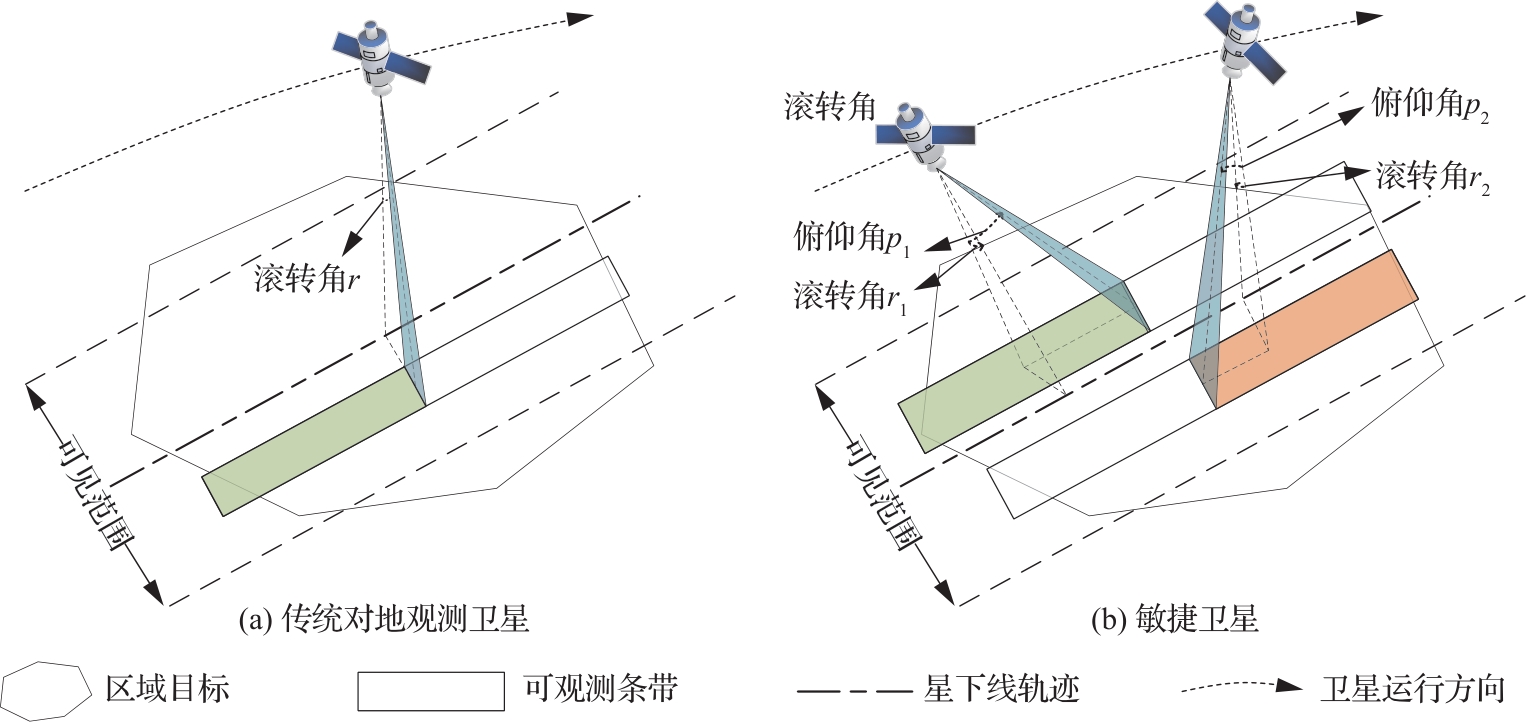
Fig.2
Two-dimensional diagram of double-layer mesh segmentation
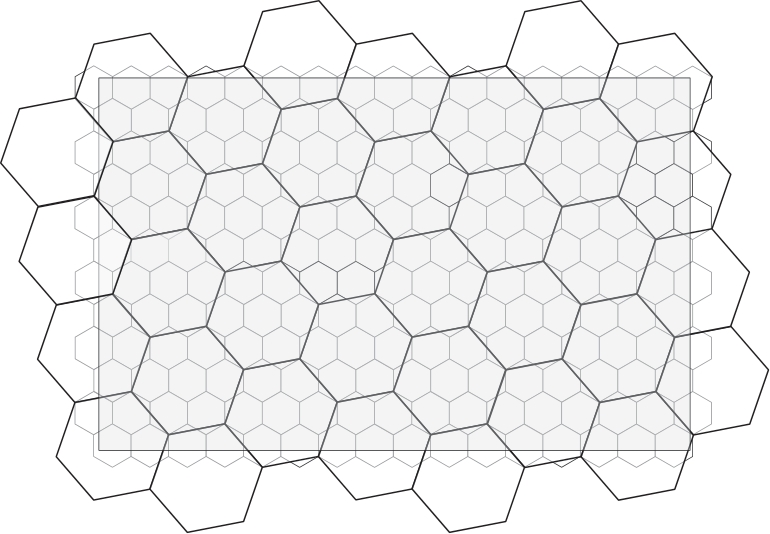
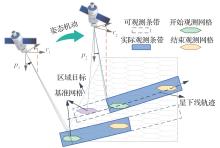
Fig.3
Schematic diagram of multiple-strip observation of agile satellites
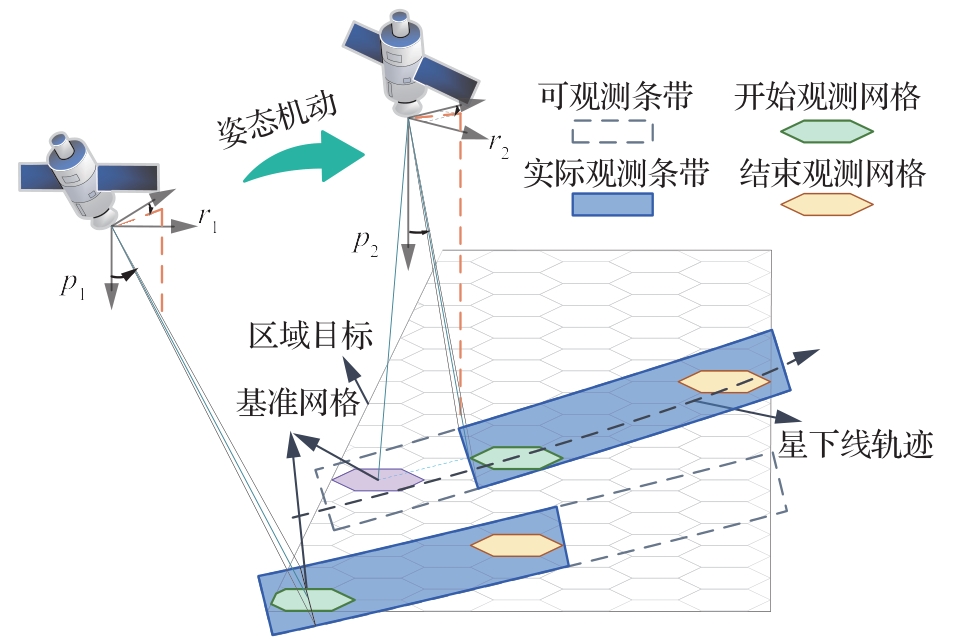
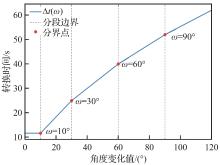
Fig.4
Attitude maneuver time curve
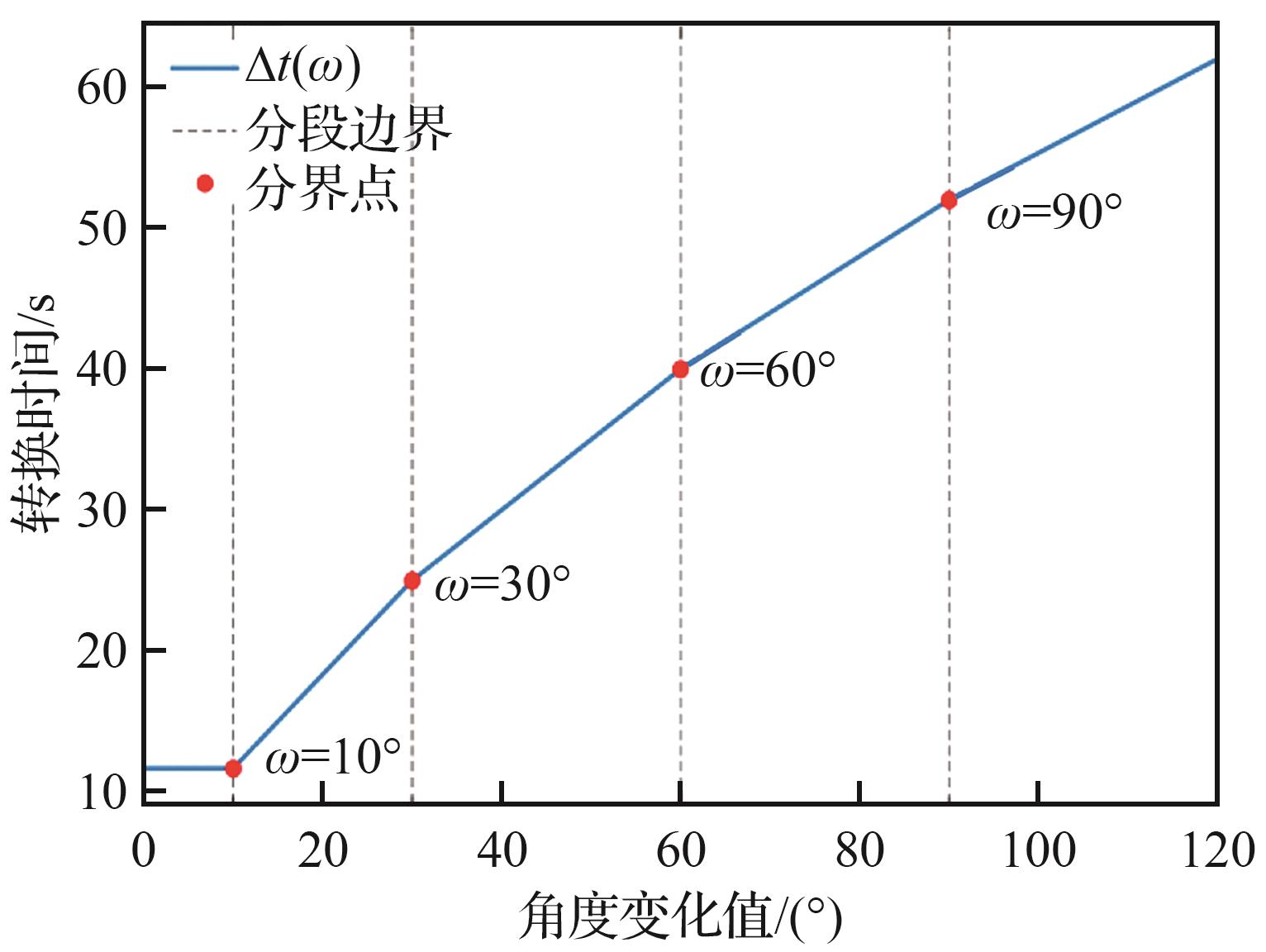
Fig.5
Flow chart of SACPG-DO algorithm
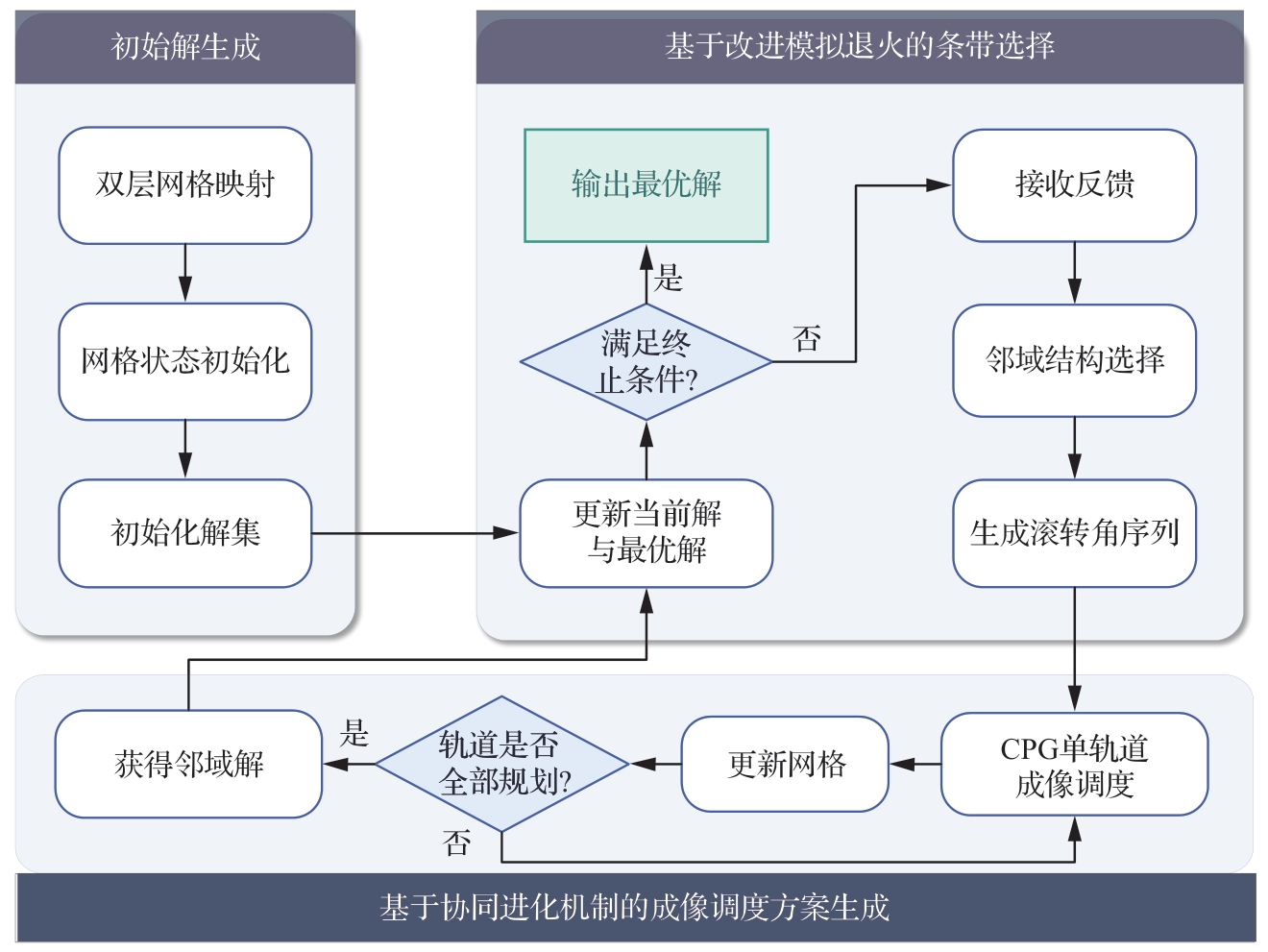
Fig.6
Schematic diagram of neighborhood operator
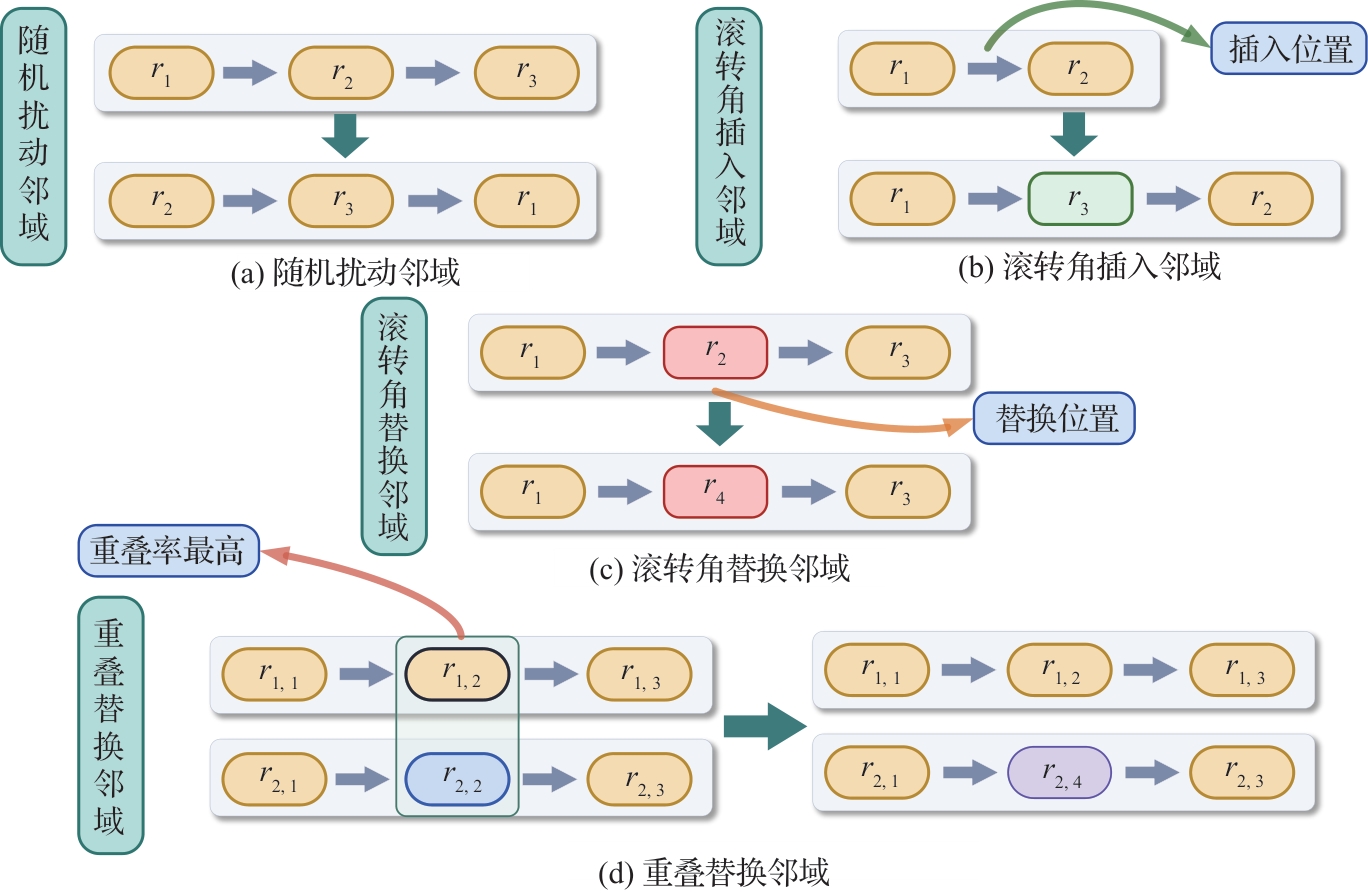
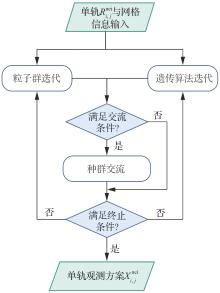
Fig.7
Flow chart of CPG algorithm
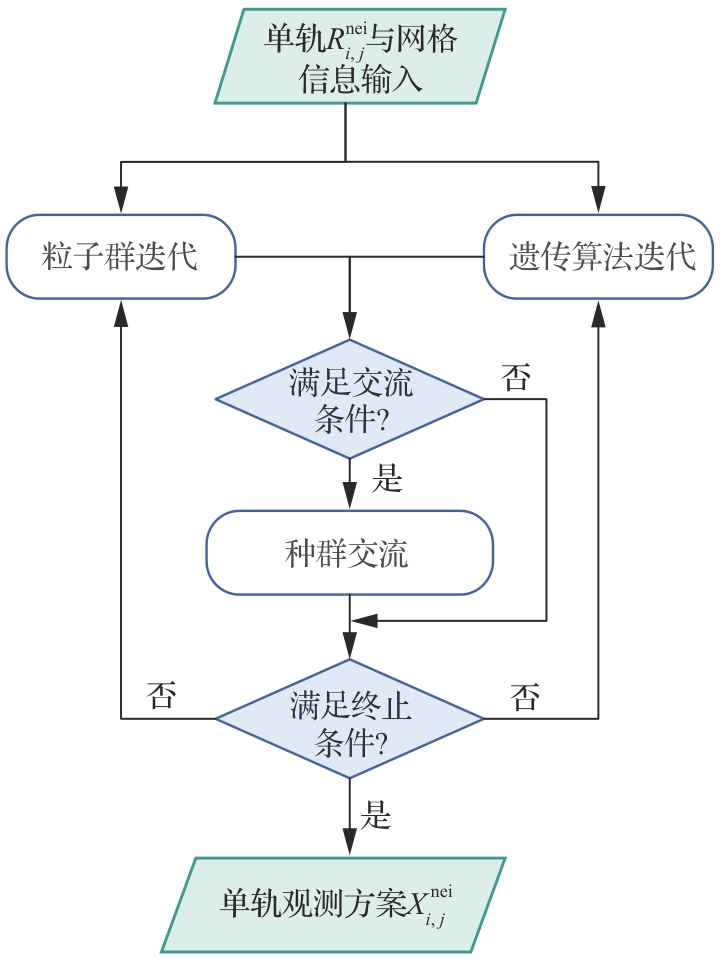
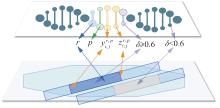
Fig.8
Schematic diagram of particle encoding
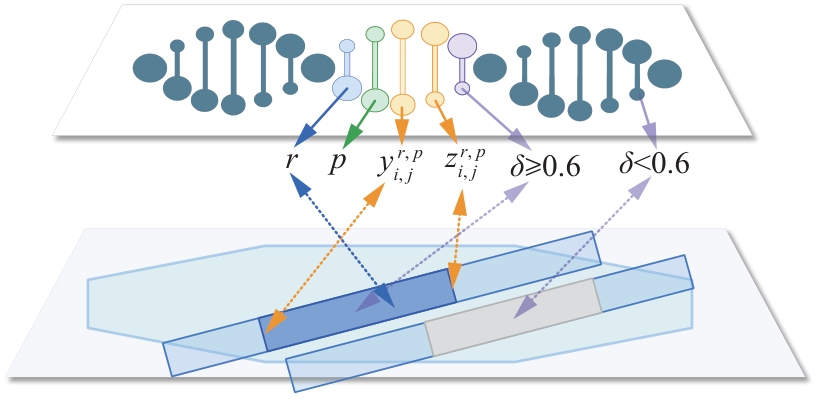
Fig.9
Schematic diagram of GA papulation encoding
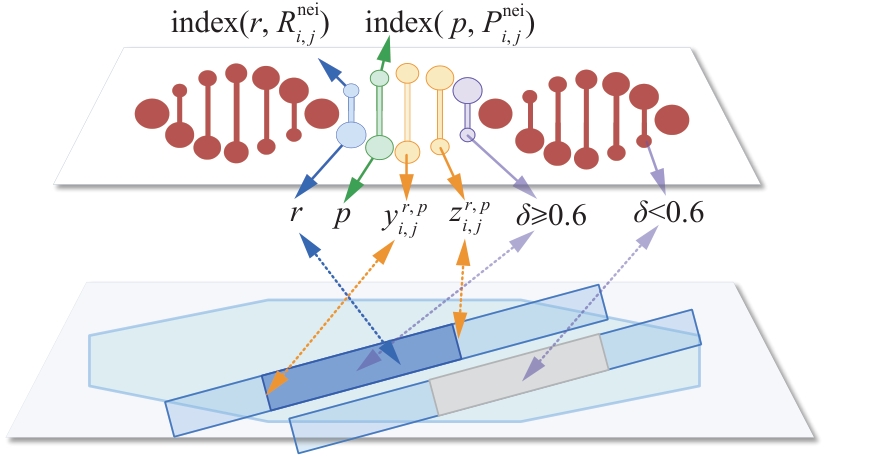
Fig.10
Schematic diagram of population exchange
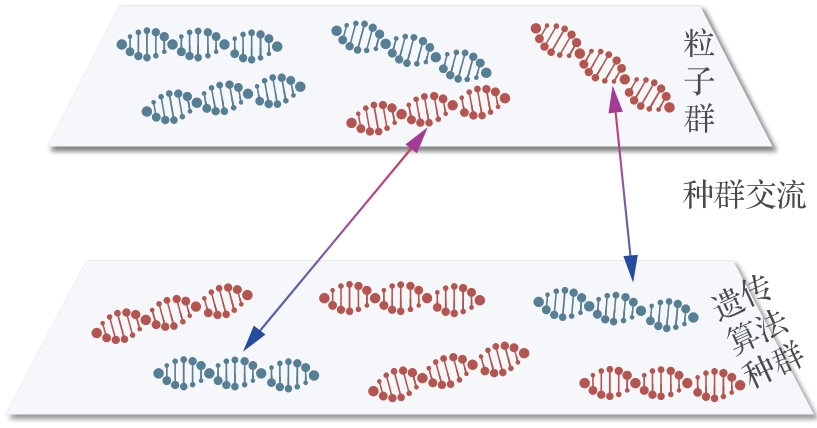

Table 1
Region target settings
| 区域编号 | 区域经纬度/(°) | 区域面积/km² | 生成网格数量 | 计算网格数量 |
|---|---|---|---|---|
| Area 1 | [10.8,-76.2;11.3,-74.0;12.5,-74.7;12.9,-76.3;12.1,-77.2;11.2,-76.9] | 52 965.89 | 257 | 1 653 |
| Area 2 | [25.0,109.7;24.2,113.9;23.6,112.8;23.3,110.8;23.7,109.1] | 54 351.81 | 254 | 1 604 |
| Area 3 | [-21.0,47.0;-21.3,49.2;-22.5,50.5;-23.2,49.1;-22.7,47.2] | 56 699.26 | 260 | 1 682 |
| Area 4 | [34.8,120.5;33.7,122.5;32.0,124.1;31.4,122.7;32.3,120.9;33.3,120.3] | 67 326.91 | 406 | 2 650 |
| Area 5 | [21.5,10;20,10;20,15;21.5,15] | 86 467.34 | 350 | 2 241 |
| Area 6 | [15.4,-11.8;15.1,-14.5;13.9,-15.7;12.0,-15.0;11.6,-13.0;12.7,-10.8;14.2,-10.6] | 170 621.85 | 786 | 5 278 |
Table 2
Experimental case settings
| 场景编号 | 区域编号 | 卫星数量 |
|---|---|---|
| C1 | Area 1 | 2 |
| C2 | Area 1 | 3 |
| C3 | Area 2 | 3 |
| C4 | Area 2 | 4 |
| C5 | Area 3 | 2 |
| C6 | Area 3 | 3 |
| C7 | Area 4 | 1 |
| C8 | Area 4 | 2 |
| C9 | Area 4 | 3 |
| C10 | Area 5 | 4 |
| C11 | Area 5 | 5 |
| C12 | Area 5 | 6 |
| C13 | Area 6 | 3 |
| C14 | Area 6 | 4 |
Table 3
Satellite orbit parameter value
| 参数 | 取值 |
|---|---|
| 轨道半长轴/km | 6 878.137 |
| 偏心率 | 0 |
| 倾角/(°) | (30,50) |
| 近地点幅角/(°) | (0,180) |
| 升交点赤经/(°) | (0,360) |
| 平近点角/(°) | (45,360) |
| 载荷半角/(°) | 1.6942 |
| 俯仰角/(°) | (-20,20) |
| 滚转角/(°) | (-30,30) |
| 30 000 | |
| 150 |
Table 4
Main parameters of SACPG-DO
| 参数 | 取值 |
|---|---|
| 初始温度 | 100 |
| 冷却率 | 0.99 |
| 最大迭代次数 | 200 |
| 历史得分权重系数 | 0.1 |
| 覆盖增益权重 | 1.8 |
| 衰减因子 | 0.8 |
| 禁忌表长度 | 10 |
| 下层最大迭代次数 | 100 |
| 粒子数量 | 40 |
| 种群数量 | 40 |
| 种群交流周期 | 20 |
| 连续无显著改进轮数 | 40 |
| 权重因子 | 0.7 |
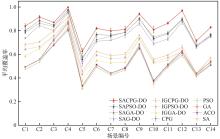
Fig.11
Average coverage rate of multiple algorithms in different cases
Table 5
Comparison of algorithm average coverage rate (N=2)
| 场景 | 性能指标 | 算法 | |||||||||||
|---|---|---|---|---|---|---|---|---|---|---|---|---|---|
| SACPG-DO | SAPSO-DO | SAGA-DO | SAG-DO | IGCPG-DO | IGPSO-DO | IGGA-DO | CPG | PSO | GA | ACO | SA | ||
| C1 | 覆盖率 | 0.840 0 | 0.800 9 | 0.787 0 | 0.736 5 | 0.682 1 | 0.642 5 | 0.584 3 | 0.493 6 | 0.472 3 | 0.493 5 | 0.492 8 | 0.487 4 |
| 耗时/s | 94.631 1 | 49.523 6 | 69.119 4 | 95.749 6 | 169.687 6 | 190.965 7 | 181.204 9 | 3.661 6 | 4.832 5 | 0.788 8 | 15.097 8 | 0.131 3 | |
| C2 | 覆盖率 | 0.915 8 | 0.885 4 | 0.863 2 | 0.843 5 | 0.704 9 | 0.664 9 | 0.647 9 | 0.557 8 | 0.534 2 | 0.554 9 | 0.553 9 | 0.554 0 |
| 耗时/s | 109.258 7 | 53.083 4 | 76.886 4 | 109.667 1 | 191.228 5 | 216.780 3 | 186.078 2 | 4.465 4 | 5.556 2 | 0.925 5 | 25.657 2 | 0.163 0 | |
| C3 | 覆盖率 | 0.870 3 | 0.848 0 | 0.834 9 | 0.800 4 | 0.802 1 | 0.756 2 | 0.753 7 | 0.727 6 | 0.684 6 | 0.718 8 | 0.678 6 | 0.688 9 |
| 耗时/s | 108.062 9 | 48.274 0 | 71.836 8 | 89.651 9 | 338.712 9 | 312.059 4 | 217.606 7 | 4.962 6 | 5.594 2 | 1.014 1 | 28.010 7 | 0.182 6 | |
| C4 | 覆盖率 | 0.998 5 | 0.975 6 | 0.960 3 | 0.953 0 | 0.912 5 | 0.877 9 | 0.890 4 | 0.868 6 | 0.817 7 | 0.859 2 | 0.806 2 | 0.829 7 |
| 耗时/s | 135.764 2 | 54.738 1 | 85.967 8 | 111.718 4 | 338.712 9 | 312.059 4 | 217.606 7 | 6.693 0 | 7.395 6 | 1.494 5 | 57.986 4 | 0.284 9 | |
| C5 | 覆盖率 | 0.626 6 | 0.558 0 | 0.576 4 | 0.522 2 | 0.457 0 | 0.430 3 | 0.376 9 | 0.334 3 | 0.323 6 | 0.332 7 | 0.334 3 | 0.308 3 |
| 耗时/s | 98.833 3 | 89.426 6 | 138.396 8 | 107.163 6 | 272.948 5 | 614.658 7 | 658.959 5 | 3.881 1 | 5.201 2 | 0.878 4 | 15.740 9 | 0.138 2 | |
| C6 | 覆盖率 | 0.819 7 | 0.766 7 | 0.724 6 | 0.710 8 | 0.624 5 | 0.593 6 | 0.549 3 | 0.513 1 | 0.489 8 | 0.510 9 | 0.513 1 | 0.495 4 |
| 耗时/s | 94.167 5 | 50.409 2 | 68.312 7 | 94.208 9 | 168.532 6 | 190.443 9 | 178.726 4 | 3.645 6 | 4.425 3 | 0.770 7 | 11.430 2 | 0.135 5 | |
| C7 | 覆盖率 | 0.797 7 | 0.761 8 | 0.752 5 | 0.719 4 | 0.588 7 | 0.562 1 | 0.526 9 | 0.440 0 | 0.421 0 | 0.439 1 | 0.440 0 | 0.432 8 |
| 耗时/s | 82.339 5 | 48.531 6 | 62.185 7 | 85.089 4 | 154.779 9 | 171.866 9 | 169.4154 | 3.039 1 | 4.033 6 | 0.666 5 | 9.218 6 | 0.118 0 | |
| C8 | 覆盖率 | 0.811 6 | 0.786 4 | 0.787 8 | 0.761 2 | 0.600 0 | 0.571 0 | 0.531 7 | 0.487 9 | 0.467 5 | 0.482 0 | 0.481 8 | 0.466 3 |
| 耗时/s | 119.526 5 | 66.201 7 | 88.177 7 | 125.892 2 | 460.377 1 | 402.760 1 | 835.096 5 | 5.648 7 | 6.136 6 | 1.332 8 | 27.192 6 | 0.198 3 | |
| C9 | 覆盖率 | 0.941 9 | 0.900 5 | 0.899 1 | 0.862 6 | 0.763 1 | 0.734 7 | 0.728 4 | 0.678 8 | 0.654 3 | 0.669 9 | 0.653 4 | 0.665 9 |
| 耗时/s | 176.982 3 | 85.181 2 | 124.107 1 | 181.562 7 | 342.526 0 | 251.042 4 | 952.930 2 | 9.215 4 | 10.169 6 | 2.170 6 | 91.424 8 | 0.352 5 | |
| C10 | 覆盖率 | 0.808 9 | 0.731 8 | 0.746 0 | 0.690 0 | 0.534 6 | 0.523 2 | 0.380 2 | 0.380 2 | 0.363 1 | 0.376 2 | 0.374 4 | 0.349 7 |
| 耗时/s | 282.986 3 | 79.508 6 | 108.006 9 | 171.306 6 | 212.188 8 | 253.129 7 | 6.315 6 | 6.315 6 | 8.120 7 | 1.245 1 | 34.509 5 | 0.252 0 | |
| C11 | 覆盖率 | 0.863 9 | 0.774 5 | 0.782 3 | 0.730 8 | 0.594 5 | 0.572 2 | 0.550 3 | 0.516 4 | 0.491 0 | 0.509 9 | 0.505 8 | 0.497 7 |
| 耗时/s | 402.767 7 | 83.405 3 | 119.252 7 | 179.189 3 | 363.163 6 | 230.446 0 | 265.808 0 | 8.257 8 | 10.135 2 | 1.594 8 | 56.215 0 | 0.358 3 | |
| C12 | 覆盖率 | 0.969 9 | 0.893 5 | 0.898 7 | 0.875 4 | 0.661 0 | 0.624 5 | 0.628 8 | 0.627 5 | 0.592 4 | 0.628 0 | 0.612 6 | 0.593 1 |
| 耗时/s | 414.780 6 | 95.263 7 | 147.107 0 | 284.925 2 | 277.076 2 | 340.357 0 | 294.984 3 | 10.416 9 | 13.327 4 | 2.174 9 | 88.250 7 | 0.453 9 | |
| C13 | 覆盖率 | 0.714 5 | 0.671 0 | 0.676 8 | 0.661 7 | 0.440 2 | 0.419 0 | 0.430 7 | 0.439 0 | 0.416 4 | 0.436 1 | 0.420 4 | 0.422 8 |
| 耗时/s | 675.038 7 | 221.388 1 | 172.209 0 | 418.650 2 | 1 169.808 5 | 1 293.959 3 | 1 325.862 0 | 10.156 1 | 11.437 8 | 2.548 3 | 105.063 7 | 0.458 0 | |
| C14 | 覆盖率 | 0.828 9 | 0.766 5 | 0.754 4 | 0.752 4 | 0.571 6 | 0.545 4 | 0.573 3 | 0.535 4 | 0.506 6 | 0.533 2 | 0.510 1 | 0.519 2 |
| 耗时/s | 264.672 0 | 160.650 6 | 199.940 2 | 317.924 2 | 436.331 3 | 519.649 3 | 467.543 2 | 13.127 8 | 14.947 7 | 3.405 1 | 173.029 5 | 0.674 9 | |
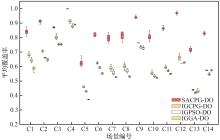
Fig.12
Average coverage rate box plot of SACPG-DO and each upper-level algorithm
Fig.13
Coverage rate improvement of SACPG-DO relative to different upper-level algorithms
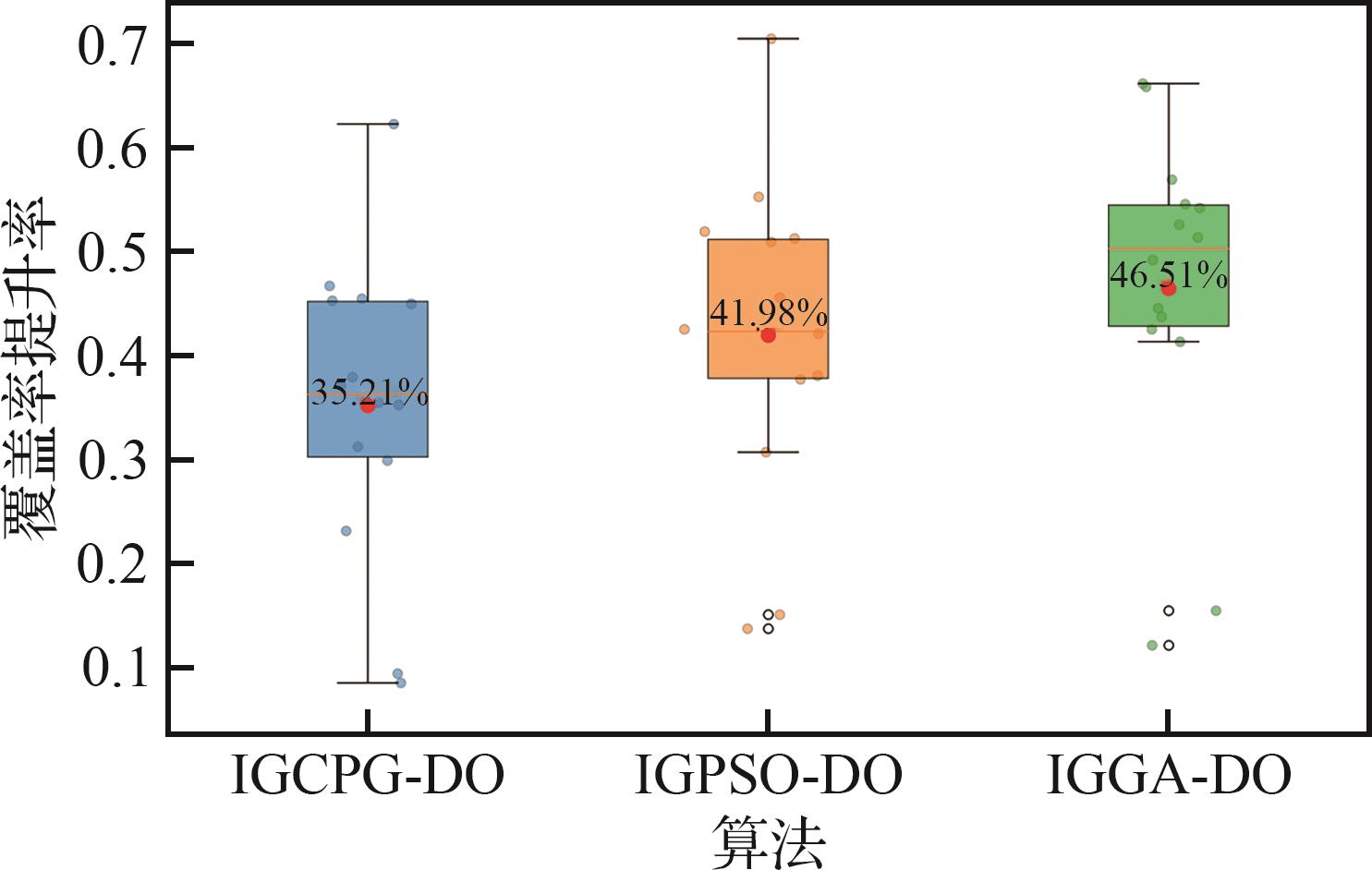
Fig.14
Average coverage rate box plot of SACPG-DO and each lower-level algorithm
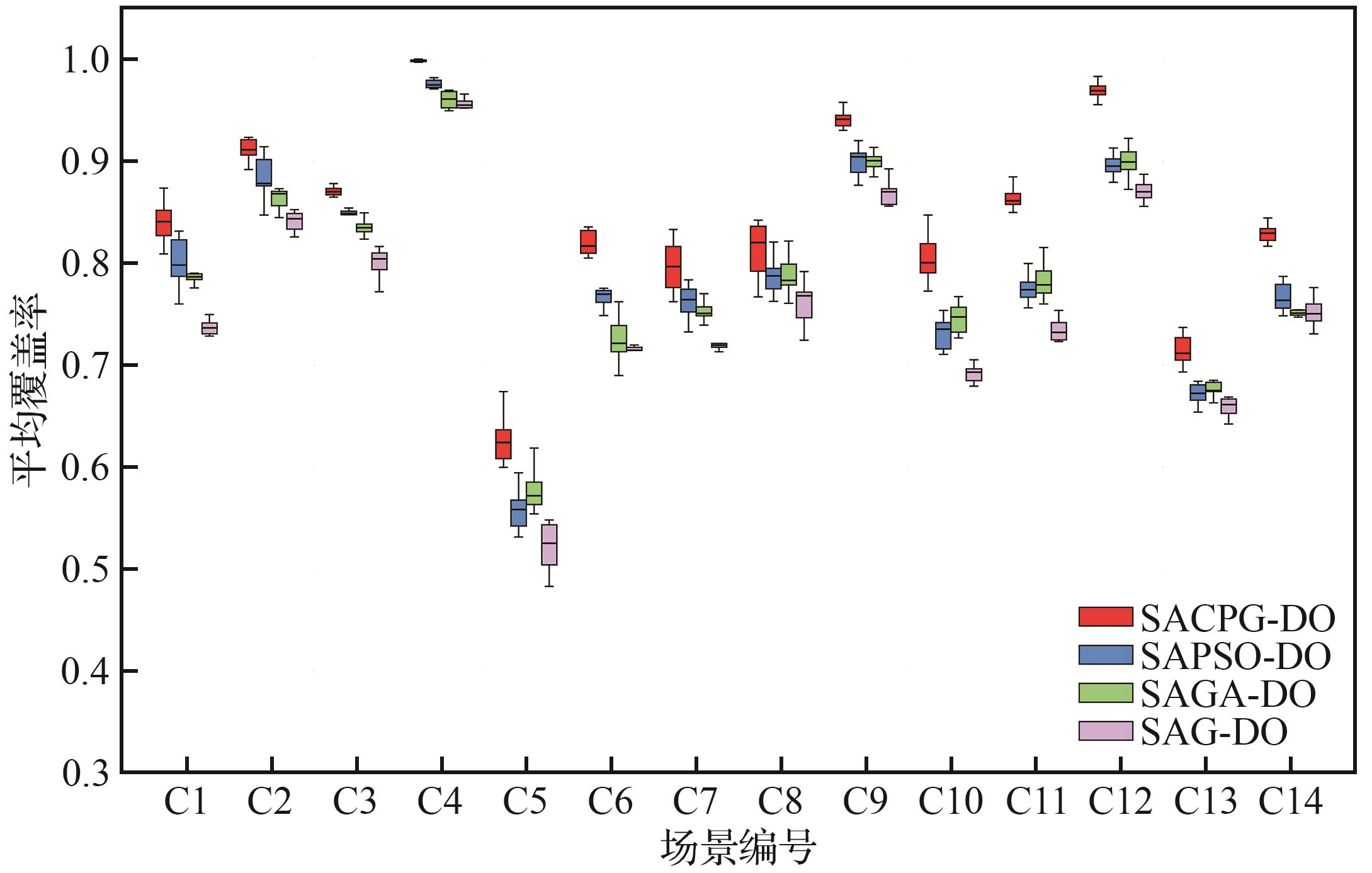
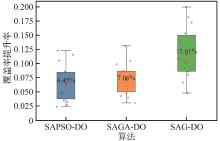
Fig.15
Coverage rate improvement of SACPG-DO relative to different lower-level algorithms
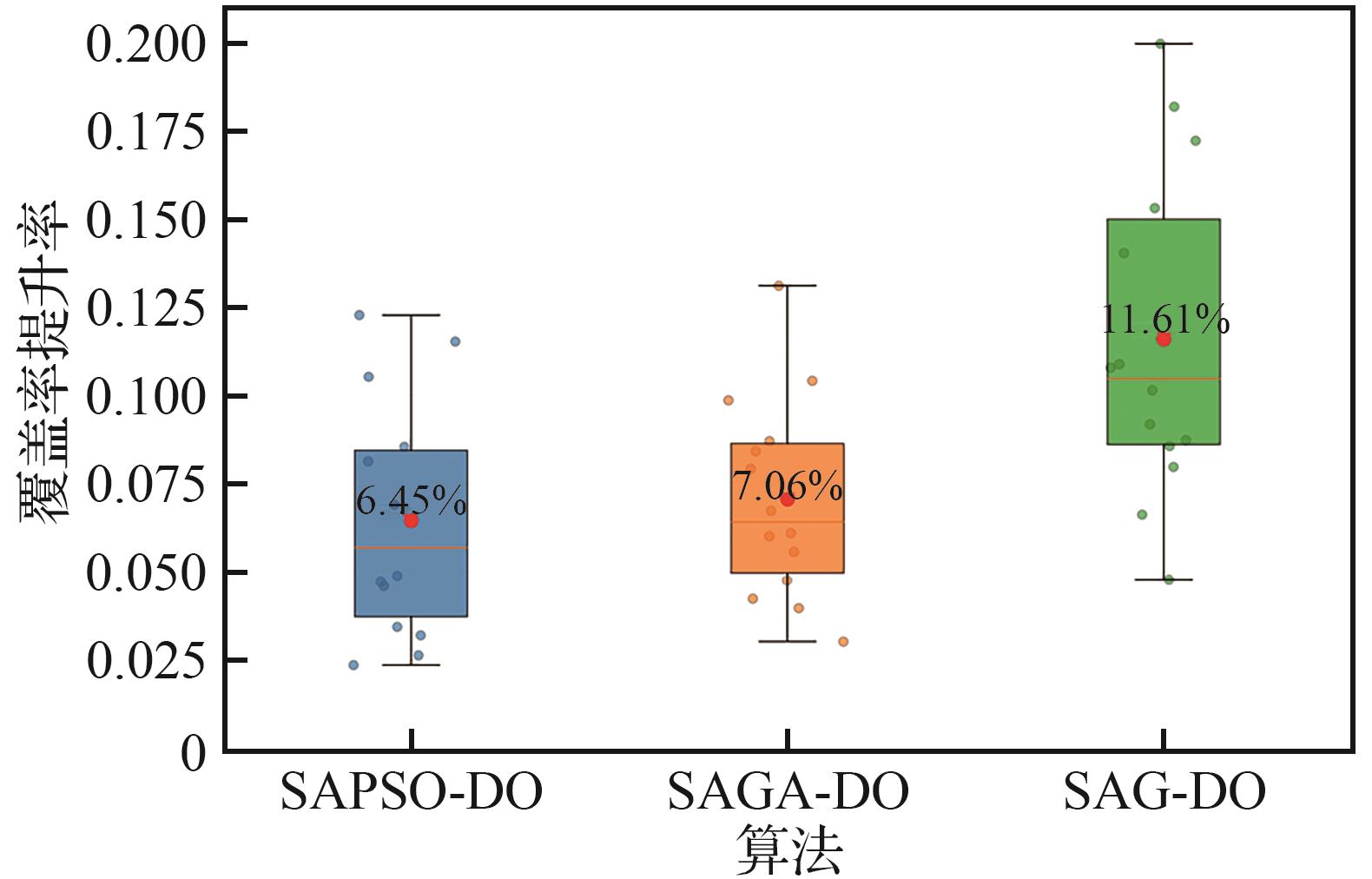
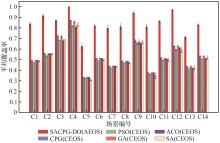
Fig.16
Comparison of performance of scheduling algorithms in SACPG-DO and CEOS scenarios
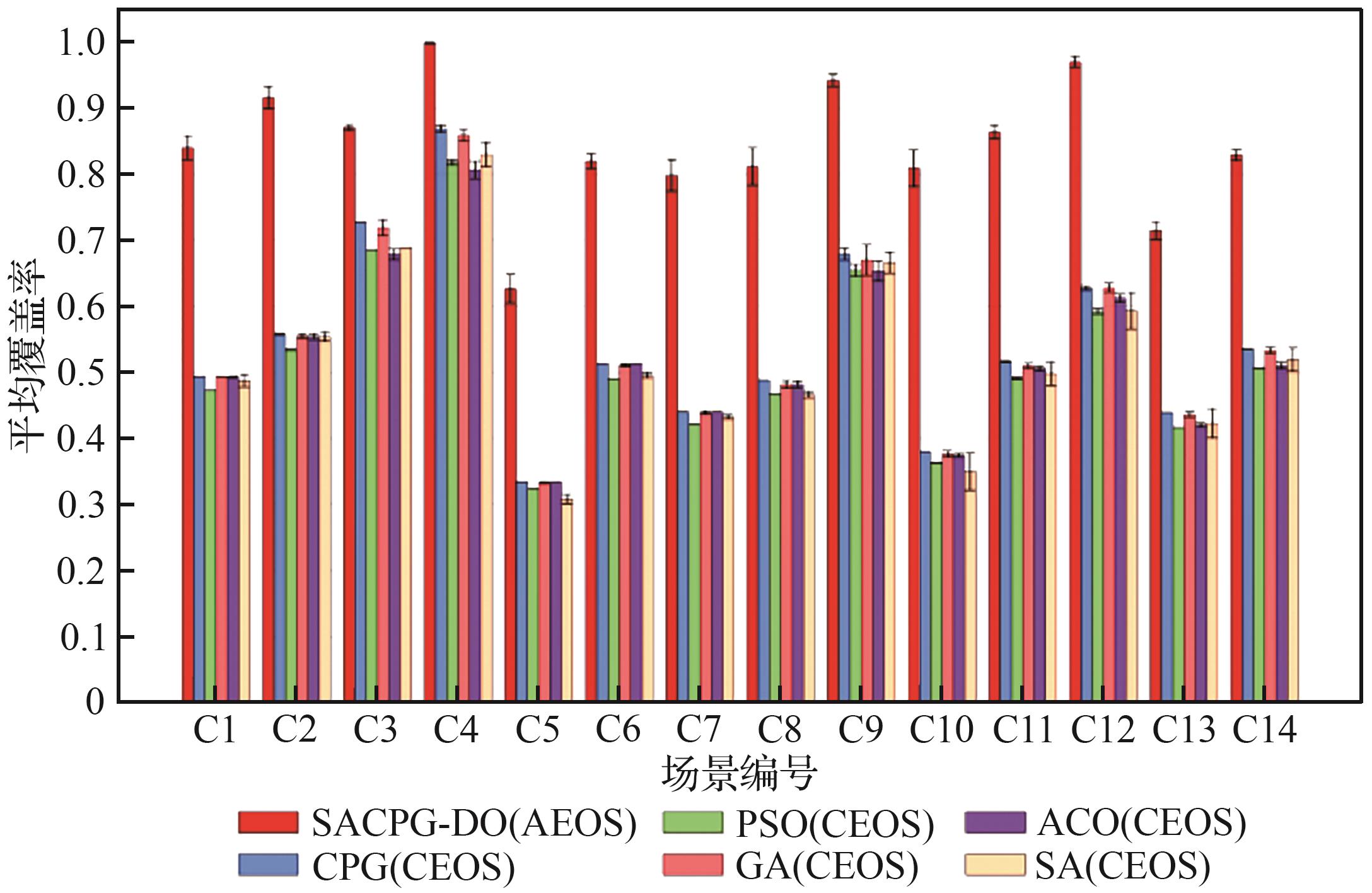
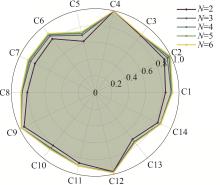
Fig.17
Radar diagram of influence of parameter N on coverage rate of SACPG-DO algorithm
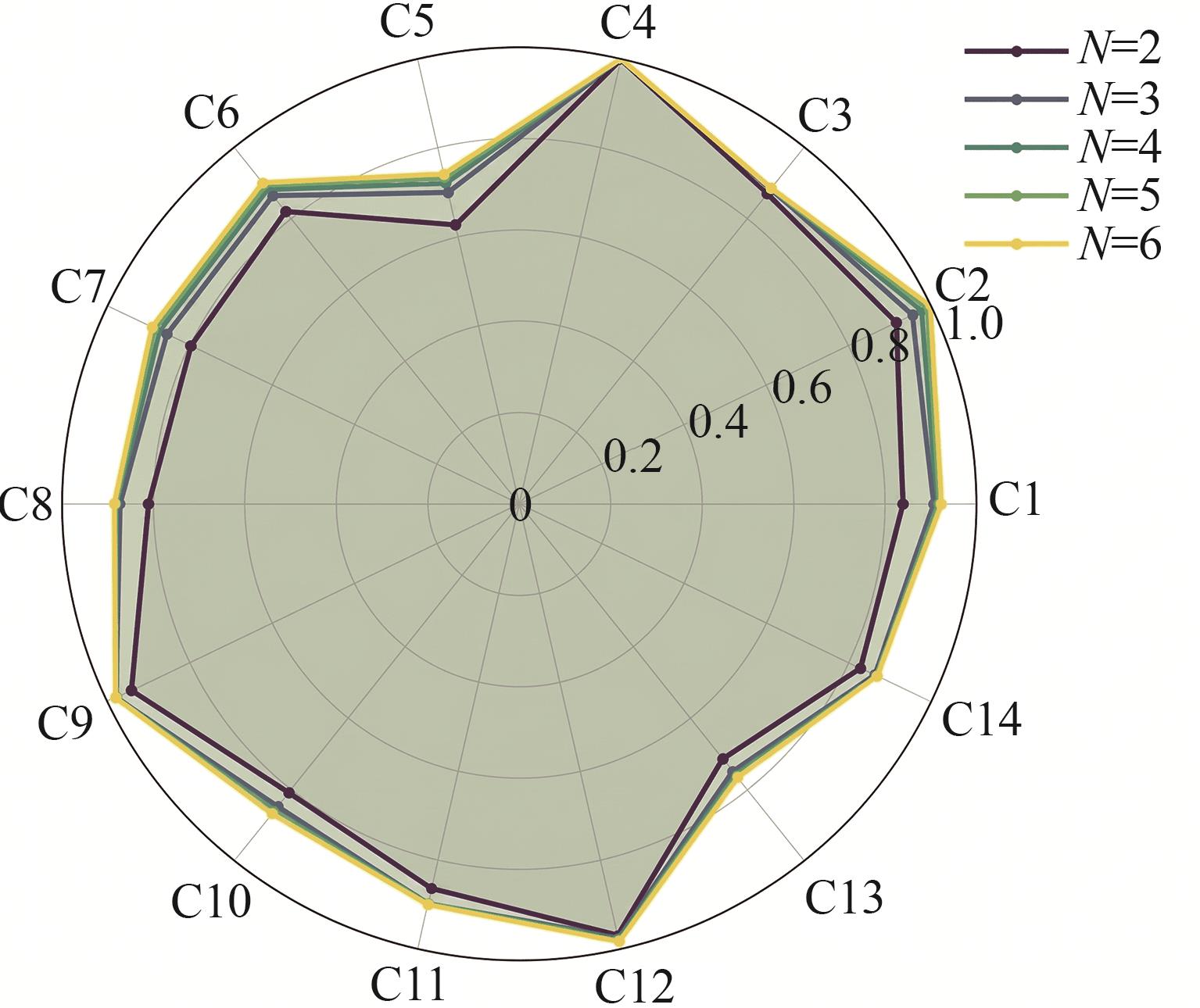
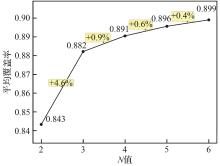
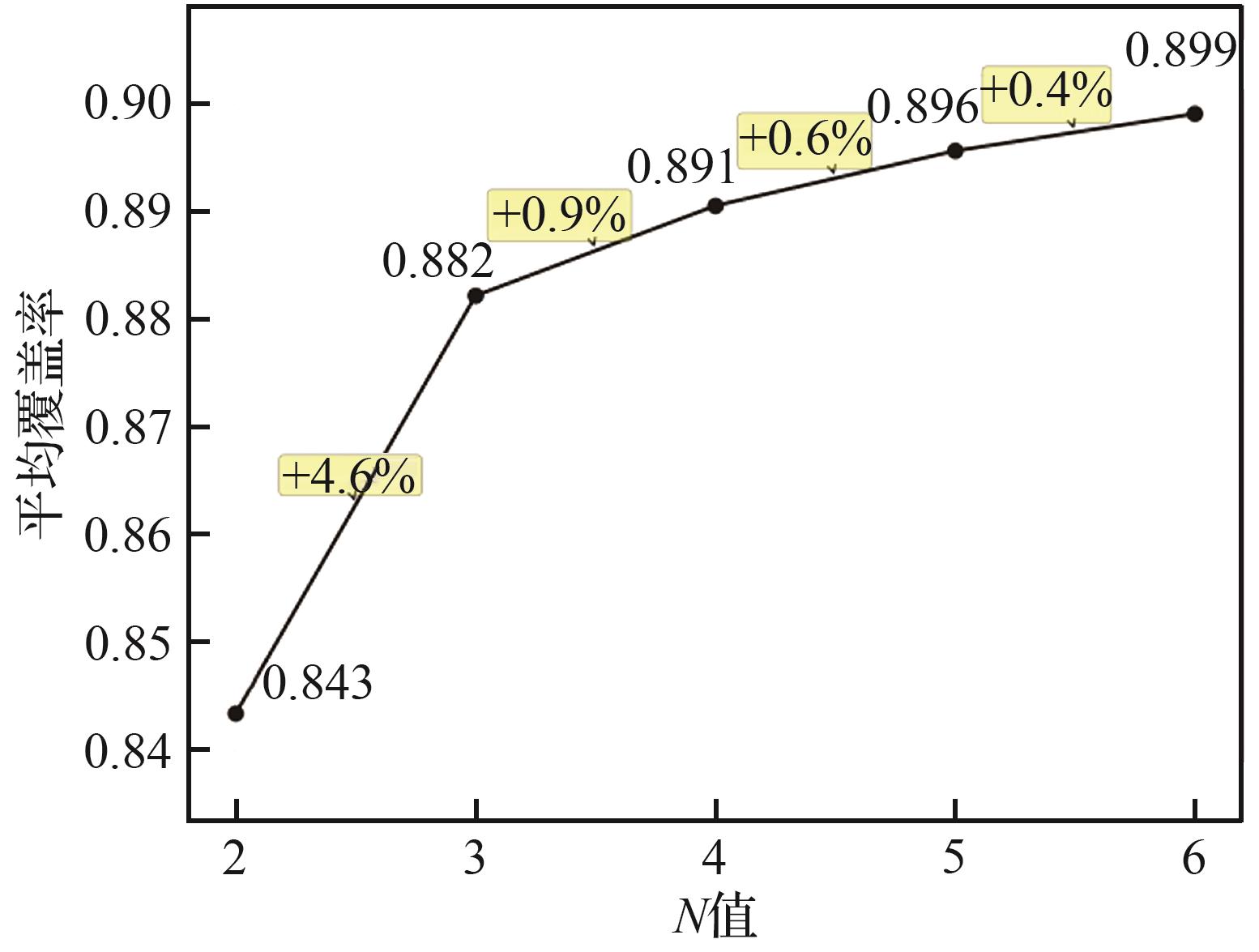
Fig.18
Ttrend of average coverage rate of SACPG-DO algorithm with parameter N value
| [1] | YIN Q, WU G H, SUN G, et al. Multi-objective orbital maneuver optimization of multi-satellite using an adaptive feedback learning NSGA-Ⅱ[J]. Swarm and Evolutionary Computation, 2025, 93: 101835. |
| [2] | WU G H, XIANG Z Q, WANG Y L, et al. Improved adaptive large neighborhood search algorithm based on the two-stage framework for scheduling multiple super-agile satellites[J]. IEEE Transactions on Aerospace and Electronic Systems, 2024, 60(5): 7185-7200. |
| [3] | GU Y, HAN C, CHEN Y H, et al. Large region targets observation scheduling by multiple satellites using resampling particle swarm optimization[J]. IEEE Transactions on Aerospace and Electronic Systems, 2023, 59(2): 1800-1815. |
| [4] | KANDEPI R, SAINI H, GEORGE R K, et al. Agile Earth observation satellite constellations scheduling for large area target imaging using heuristic search[J]. Acta Astronautica, 2024, 219: 670-677. |
| [5] | 伍国华, 王天宇. 基于自适应模拟退火的大规模星座测控资源调度算法[J]. 航空学报, 2023, 44(12): 327759. |
| WU G H, WANG T Y. Large-scale constellation TT&C resource scheduling algorithm based on adaptive simulated annealing[J]. Acta Aeronautica et Astronautica Sinica, 2023, 44(12): 327759 (in Chinese). | |
| [6] | EDDY D, KOCHENDERFER M. Markov decision processes for multi-objective satellite task planning[C]∥2020 IEEE Aerospace Conference. Piscataway: IEEE Press, 2020: 1-12. |
| [7] | WOLFE W J, SORENSEN S E. Three scheduling algorithms applied to the Earth observing systems domain[J]. Management Science, 2000, 46(1): 148-166. |
| [8] | WANG M C, PEI C, CHEN X Y, et al. A dynamic decomposition optimization framework for multi-satellite scheduling of area target observation[J]. Advances in Space Research, 2025, 75(6): 4664-4681. |
| [9] | CORDONE R, GANDELLINI F, RIGHINI G. Solving the swath segment selection problem through Lagrangean relaxation[J]. Computers & Operations Research, 2008, 35(3): 854-862. |
| [10] | HU X X, ZHU W M, MA H W, et al. Orientational variable-length strip covering problem: A branch-and-price-based algorithm[J]. European Journal of Operational Research, 2021, 289(1): 254-269. |
| [11] | WU G H, LIU J, MA M H, et al. A two-phase scheduling method with the consideration of task clustering for Earth observing satellites[J]. Computers and Operations Research, 2013, 40(7): 1884-1894. |
| [12] | WU X D, YANG Y H, XIE Y E, et al. Multiregion mission planning by satellite swarm using simulated annealing and neighborhood search[J]. IEEE Transactions on Aerospace and Electronic Systems, 2024, 60(2): 1416-1439. |
| [13] | LI F, WAN Q H, WEN F F, et al. Multi-satellite imaging task planning for large regional coverage: A heuristic algorithm based on triple grids method[J]. Remote Sensing, 2024, 16(1): 194. |
| [14] | WU X D, YANG Y H, SUN Y Q, et al. Dynamic regional splitting planning of remote sensing satellite swarm using parallel genetic PSO algorithm[J]. Acta Astronautica, 2023, 204: 531-551. |
| [15] | 顾轶, 王慧林, 郭鹤鹤, 等. 基于视场映射模型的GEO目标观测覆盖性分析[J]. 航空学报, 2025, 46(15): 331570. |
| GU Y, WANG H L, GUO H H, et al. Analysis of GEO target observation coverage based on field of view mapping model[J]. Acta Aeronautica et Astronautica Sinica, 2025, 46(15): 331570 (in Chinese). | |
| [16] | 顾轶, 孙秀聪, 范黎明, 等. 基于仰角视元模型的星地快速覆盖分析方法[J]. 航空学报, 2024, 45(23): 330372. |
| GU Y, SUN X C, FAN L M, et al. A rapid satellite-ground coverage analysis method based on elevation view element model[J]. Acta Aeronautica et Astronautica Sinica, 2024, 45(23): 330372 (in Chinese). | |
| [17] | 李恒伟, 罗启章, 顾轶, 等. 基于滚动时域策略的中继卫星多目标动态调度优化方法[J]. 航空学报, 2024, 45(16): 329706. |
| LI H W, LUO Q Z, GU Y, et al. Multi-objective dynamic scheduling optimization method for relay satellites based on rolling horizon strategy[J]. Acta Aeronautica et Astronautica Sinica, 2024, 45(16): 329706 (in Chinese). | |
| [18] | WANG X W, WU G H, XING L N, et al. Agile Earth observation satellite scheduling over 20 years: Formulations, methods, and future directions[J]. IEEE Systems Journal, 2021, 15(3): 3881-3892. |
| [19] | LEMAı̂ TRE M, VERFAILLIE G, JOUHAUD F, et al. Selecting and scheduling observations of agile satellites[J]. Aerospace Science and Technology, 2002, 6(5): 367-381. |
| [20] | 杜彬. 敏捷成像卫星任务规划方法研究[D]. 南京: 南京航空航天大学, 2019: 41-60. |
| DU B. Research on agile imaging satellite mission planning method[D]. Nanjing: Nanjing University of Aeronautics and Astronautics, 2019: 41-60 (in Chinese). | |
| [21] | 宋金运, 刘翔春, 冯宁, 等. 面向区域目标的敏捷成像卫星单轨调度方法[J]. 数字技术与应用, 2023, 41(9): 81-83. |
| SONG J Y, LIU X C, FENG N, et al. Single-track scheduling method of agile imaging satellite for regional target[J]. Digital Technology & Application, 2023, 41(9): 81-83 (in Chinese). | |
| [22] | 李宗凌, 龙腾, 赵保军, 等. 面向预警场景的大规模星座协同调度标准建模与求解方法[J]. 航空学报, 2024, 45(22): 330181. |
| LI Z L, LONG T, ZHAO B J, et al. Standard modeling and solving methods for large-scale constellation collaborative scheduling for early warning scenarios[J]. Acta Aeronautica et Astronautica Sinica, 2024, 45(22): 330181 (in Chinese). | |
| [23] | UBER TECHNOLOGIES, INC. H3: A hexagonal hierarchical geospatial indexing system[EB/OL]. (2018-01-01) [2025-08-27]. . |
| [24] | MA Y, LI G Q, ZHAO L, et al. Accuracy evaluation method for vector data based on hexagonal discrete global grid[J]. ISPRS International Journal of Geo-Information, 2025, 14(1): 5. |
| [25] | WAGNER S, STENZEL F, KRUEGER T, et al. Drivers of global irrigation expansion: The role of discrete global grid choice[J]. Hydrology and Earth System Sciences, 2024, 28(22): 5049-5068. |
| [26] | ZHIBO E, SHI R H, GAN L, et al. Multi-satellites imaging scheduling using individual reconfiguration based integer coding genetic algorithm[J]. Acta Astronautica, 2021, 178: 645-657. |
| [27] | XU Y, LIU X, HE R, et al. Multi-satellite scheduling framework and algorithm for very large area observation[C]∥2018 IEEE Congress on Evolutionary Computation (CEC). Piscataway: IEEE Press, 2018: 1-8. |
| [28] | LIU X L, LAPORTE G, CHEN Y W, et al. An adaptive large neighborhood search metaheuristic for agile satellite scheduling with time-dependent transition time[J]. Computers & Operations Research, 2017, 86: 41-53. |
| [29] | TALBI E G. Metaheuristics: From design to implementation[M]. Hoboken: Wiley, 2009: 513-520. |
| [30] | LÄSSIG J, SUDHOLT D. The benefit of migration in parallel evolutionary algorithms[C]∥Proceedings of the 12th Annual Conference on Genetic and Evolutionary Computation. New York: ACM, 2010: 1105-1112. |
| [1] | Hai LI, Yongjun LI, Yuanhao LIU, Weihu ZHAO, Xin LI, Shanghong ZHAO. ESWO⁃based task⁃scheduling algorithm for agile earth observation satellites [J]. Acta Aeronautica et Astronautica Sinica, 2024, 45(10): 329370-329370. |
| [2] | ZHAO Lin, WANG Shuo, HAO Yong, LIU Yuan, CHAI Yi. Mission planning for agile satellite based on the mapping relationship between ground missions and spatial attitudes [J]. ACTA AERONAUTICAET ASTRONAUTICA SINICA, 2018, 39(10): 322066-322066. |
| Viewed | ||||||
|
Full text |
|
|||||
|
Abstract |
|
|||||
Address: No.238, Baiyan Buiding, Beisihuan Zhonglu Road, Haidian District, Beijing, China
Postal code : 100083
E-mail:hkxb@buaa.edu.cn
Total visits: 6658907 Today visits: 1341All copyright © editorial office of Chinese Journal of Aeronautics
All copyright © editorial office of Chinese Journal of Aeronautics
Total visits: 6658907 Today visits: 1341

 CJA
CJA
