Acta Aeronautica et Astronautica Sinica ›› 2025, Vol. 46 ›› Issue (24): 632314.doi: 10.7527/S1000-6893.2025.32314
• special column • Previous Articles
Shanchao YANG, Hongyin LONG, Huacheng YUAN( )
)
Received:2025-05-28
Revised:2025-06-04
Accepted:2025-06-16
Online:2025-07-04
Published:2025-06-27
Contact:
Huacheng YUAN
E-mail:yuanhuacheng@nuaa.edu.cn
Supported by:CLC Number:
Shanchao YANG, Hongyin LONG, Huacheng YUAN. Typical aerodynamic characteristics and flow mechanisms of dorsal inlet[J]. Acta Aeronautica et Astronautica Sinica, 2025, 46(24): 632314.
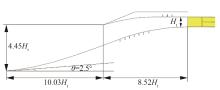
Fig.1
2D view of inlet
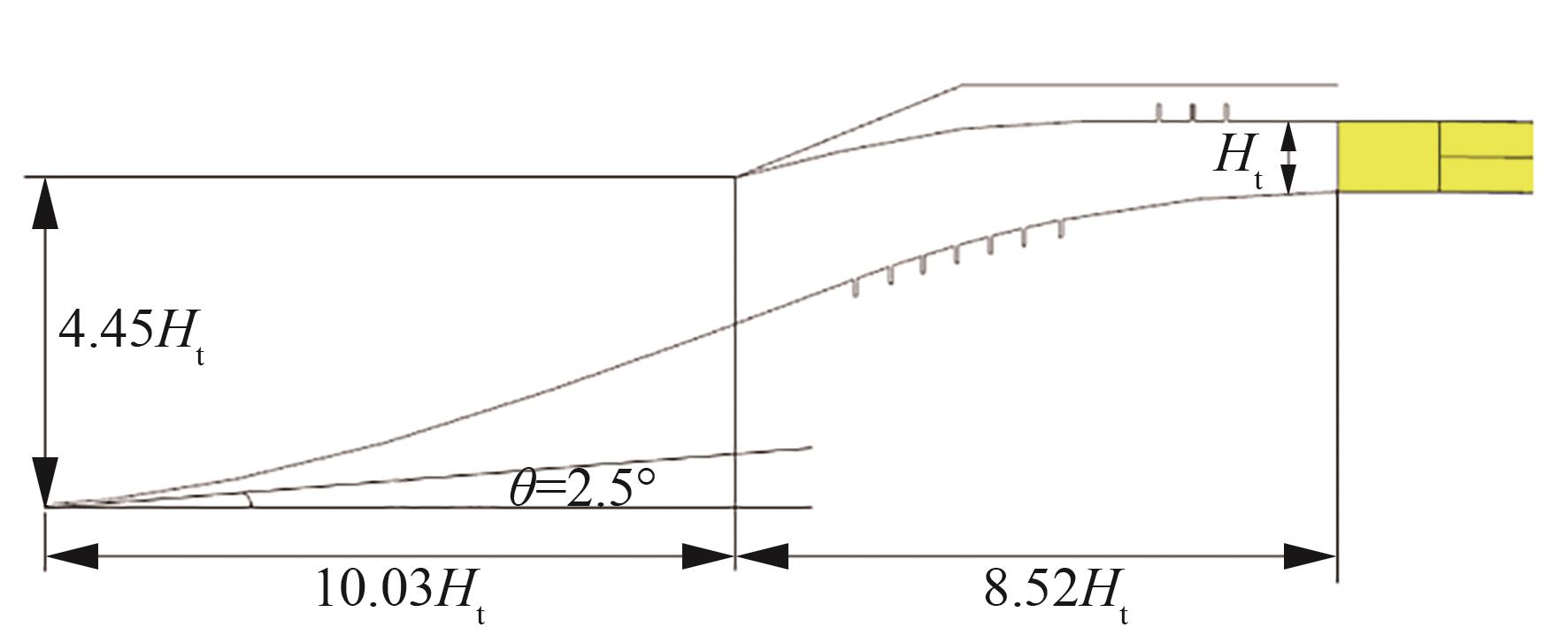
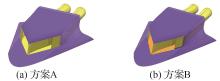
Fig.2
Schematic diagram of dorsal inlet layout scheme
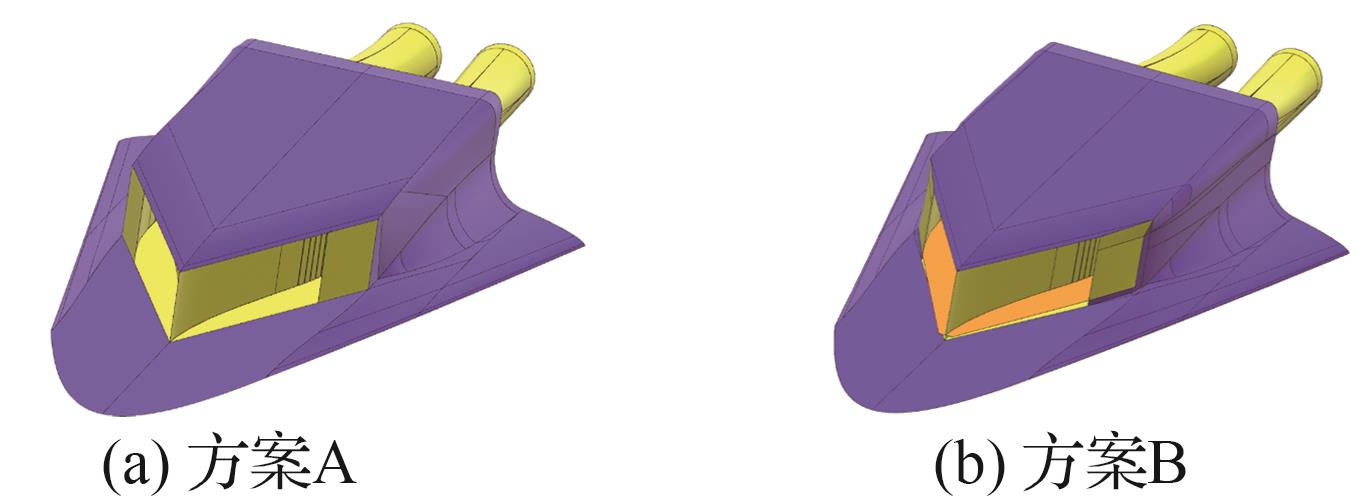
Fig.3
Typical binary hypersonic inlet/isolator standardized model[16]
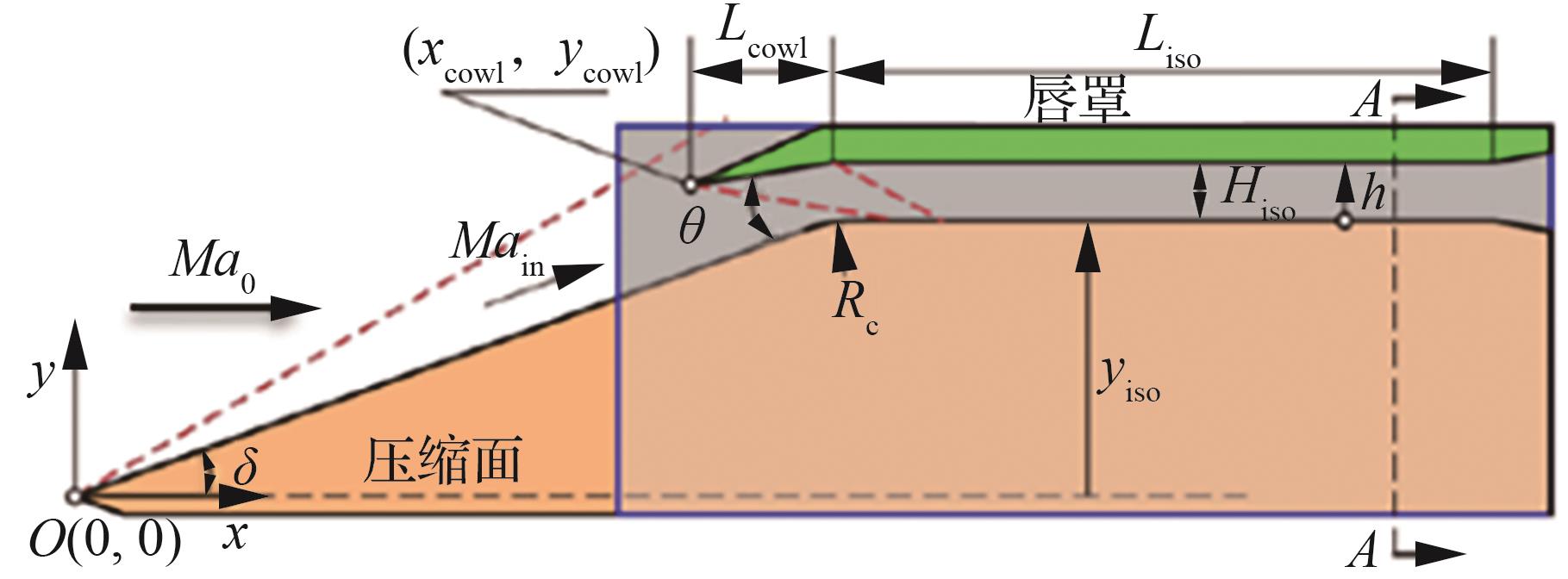
Fig.4
Comparison of flow structures in inlet/isolator
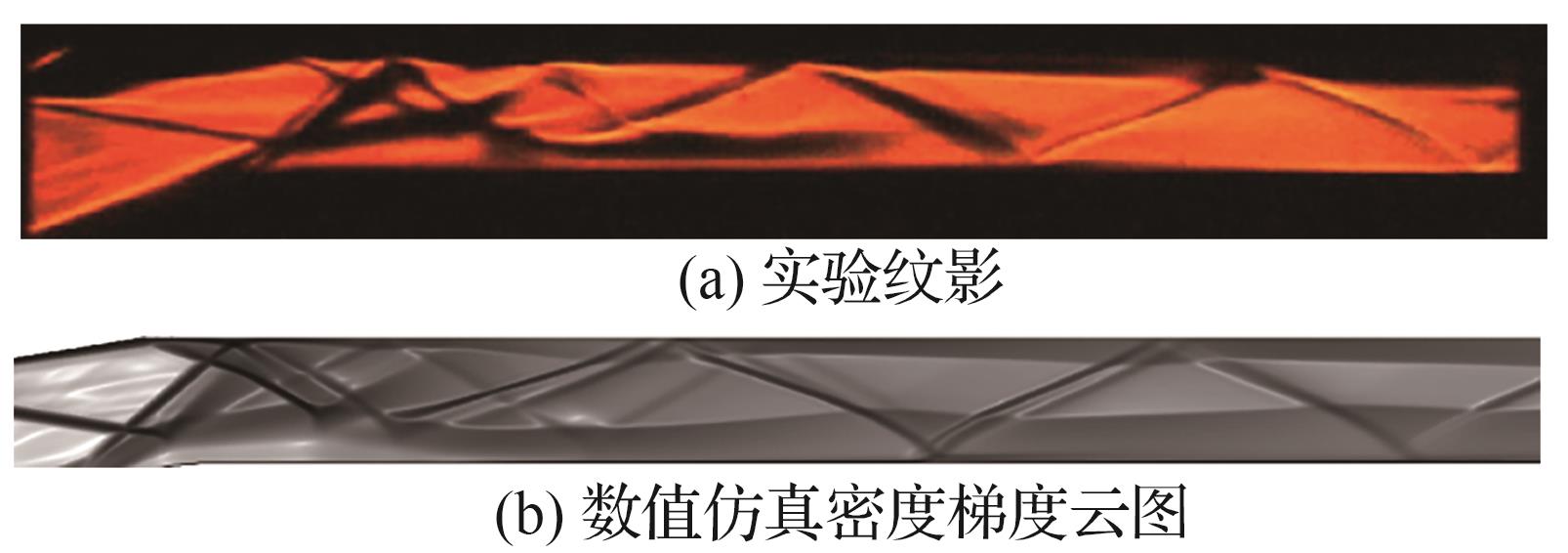
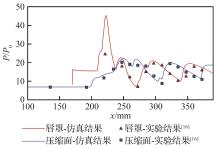
Fig.5
Wall surface pressure distribution
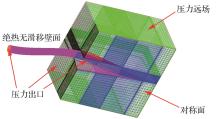
Fig.6
Setting for boundary conditions
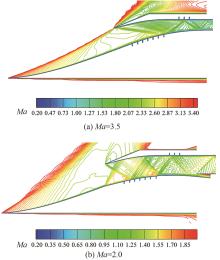
Fig.7
Mach number contour of independent inlet
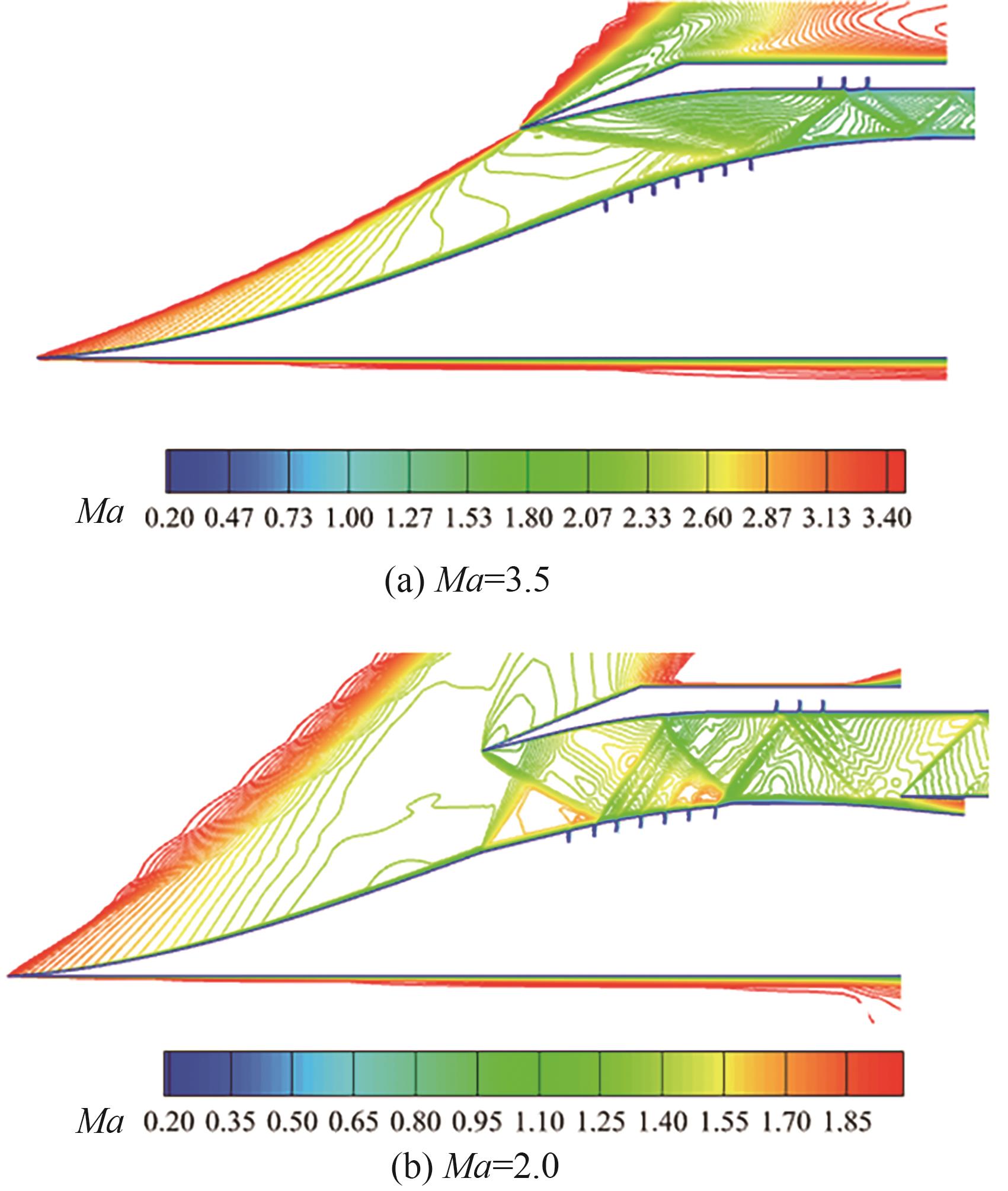
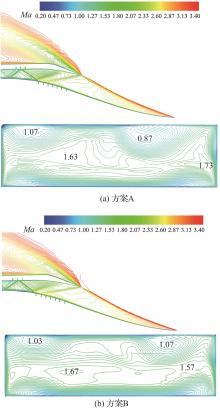
Fig.8
Mach number contour of dorsal inlet (Ma=3.5, α=5°)
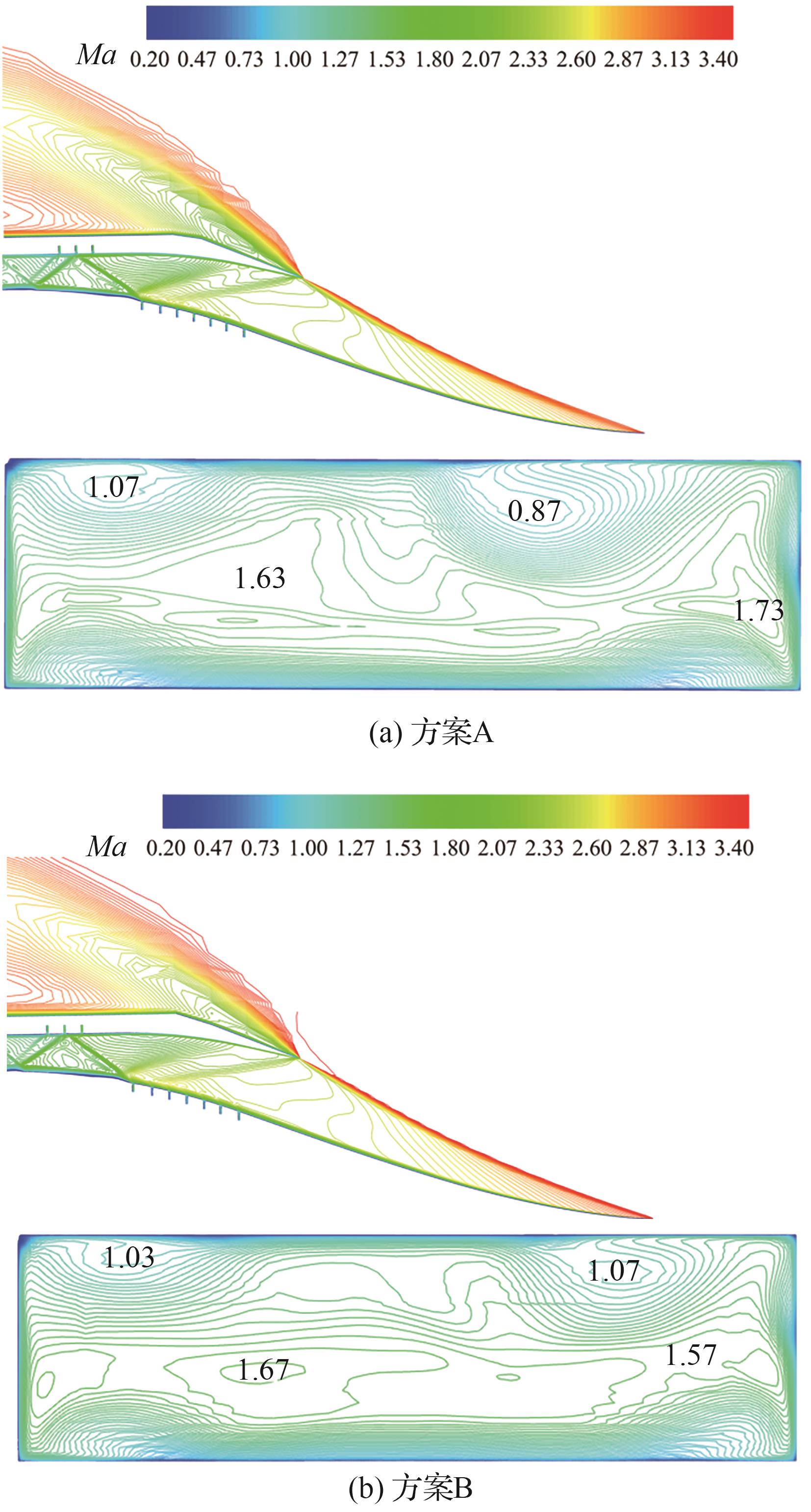
Fig.9
Slice position of contour
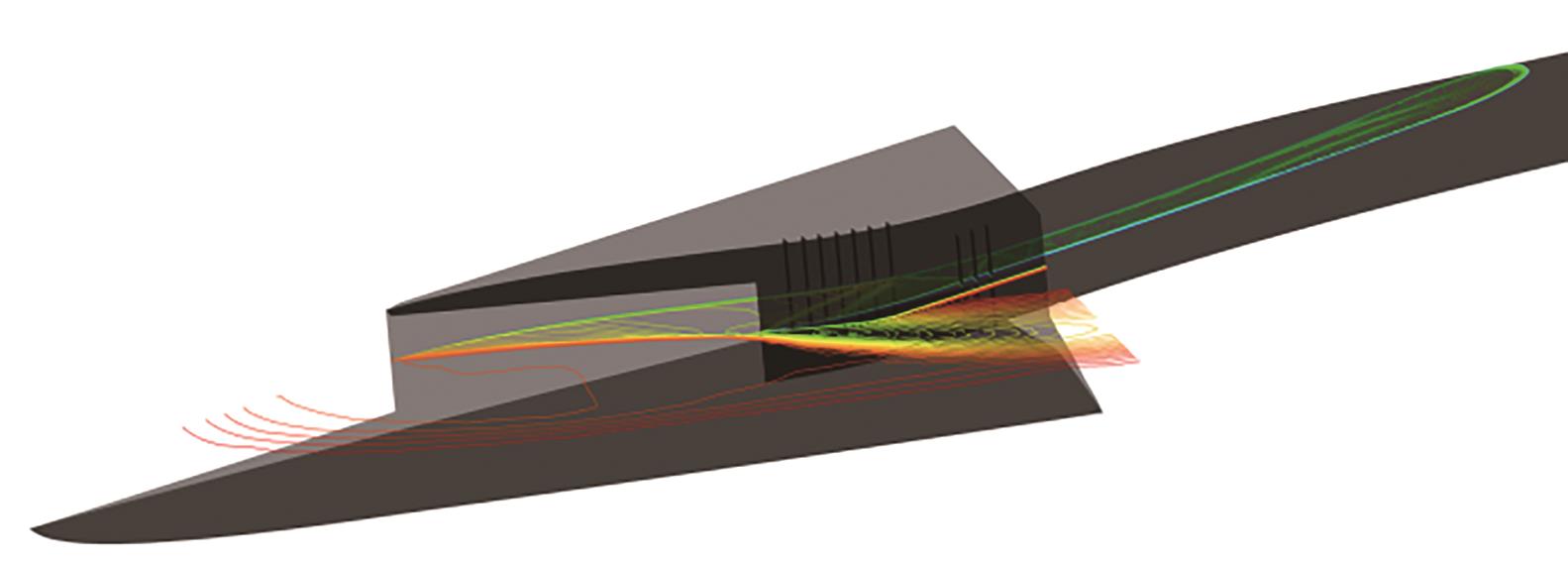
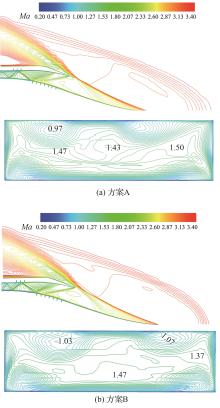
Fig.10
Mach number contour of dorsal inlet (Ma=3.5, α=0°)
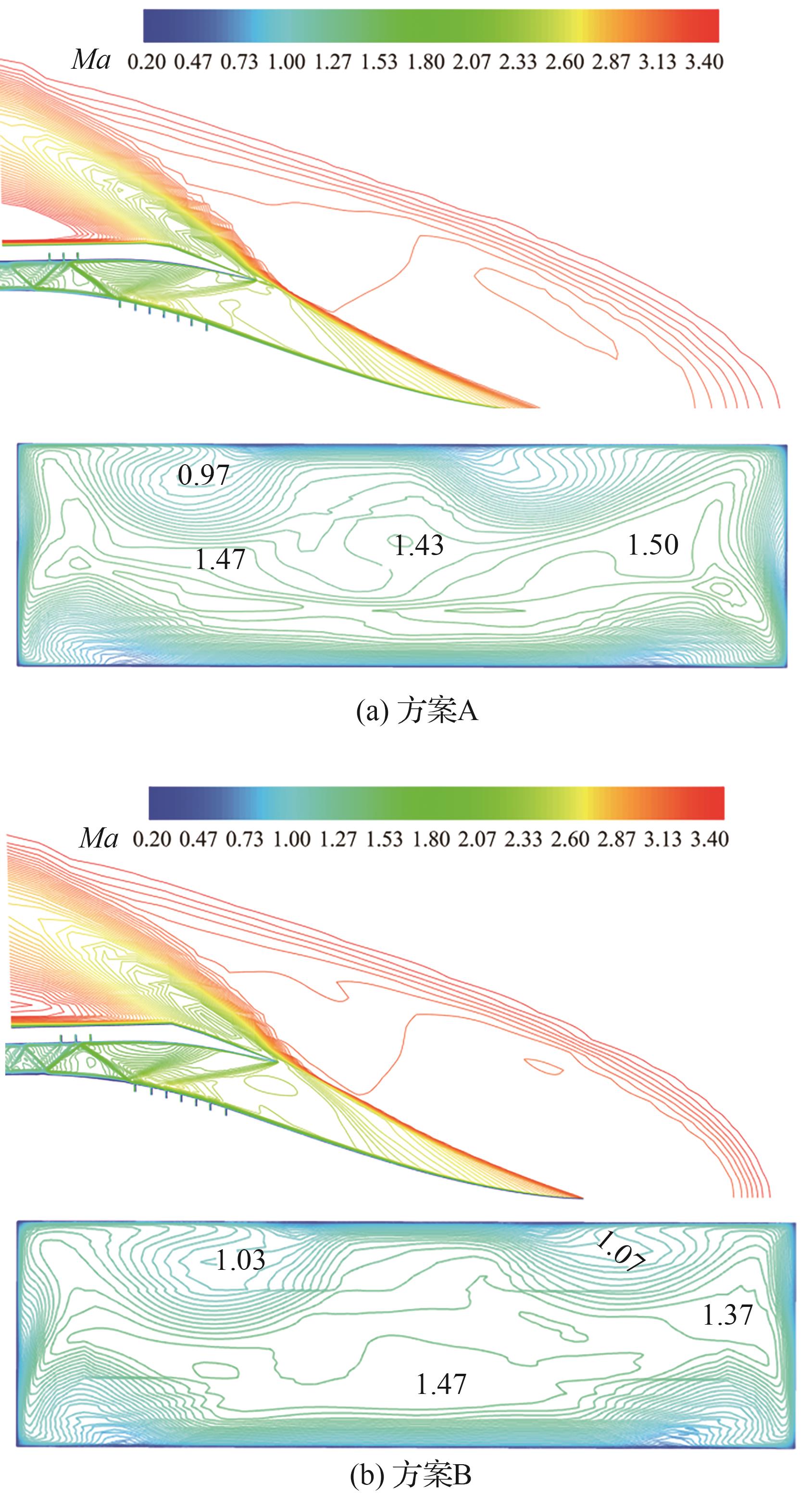
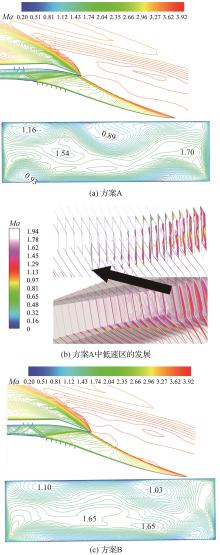
Fig.11
Mach number contour of dorsal inlet (Ma=3.5, α=10°)
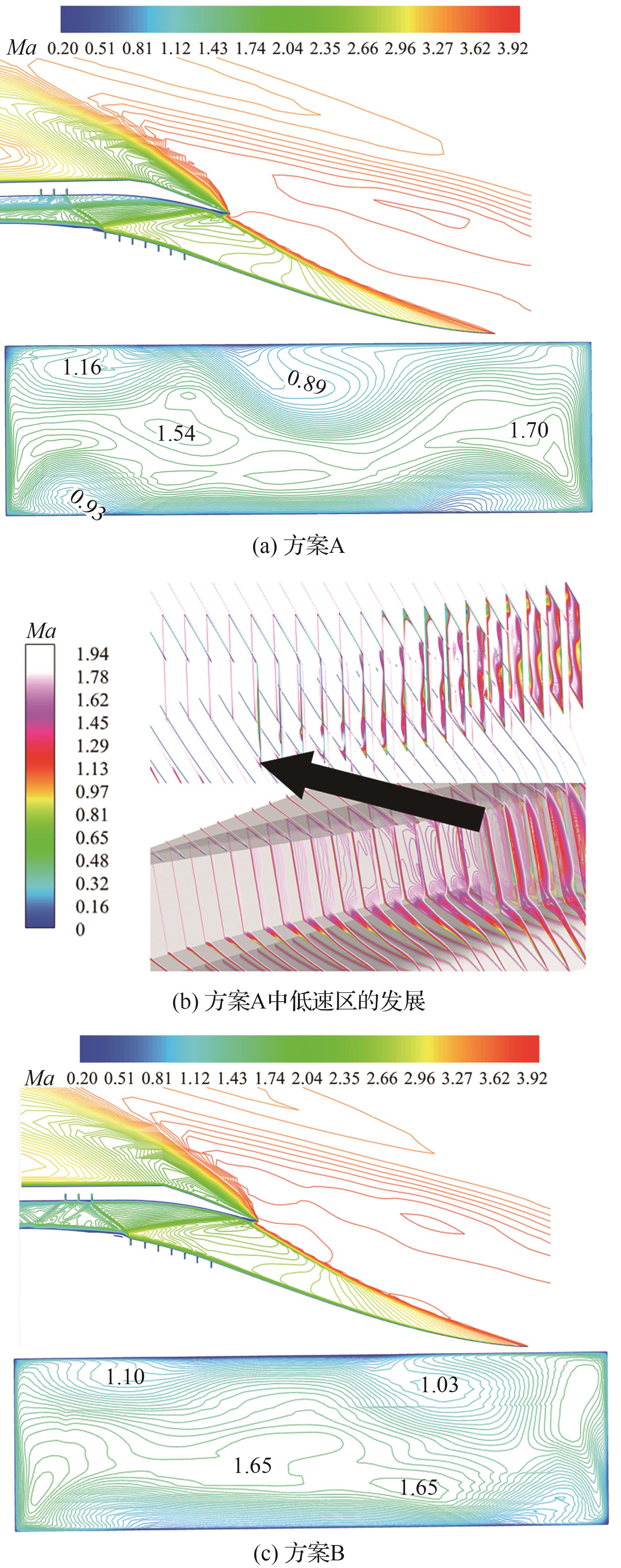
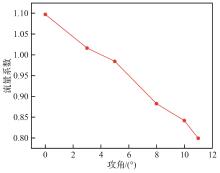
Fig.12
Variation of flow coefficient at different angles of attack in Scheme B
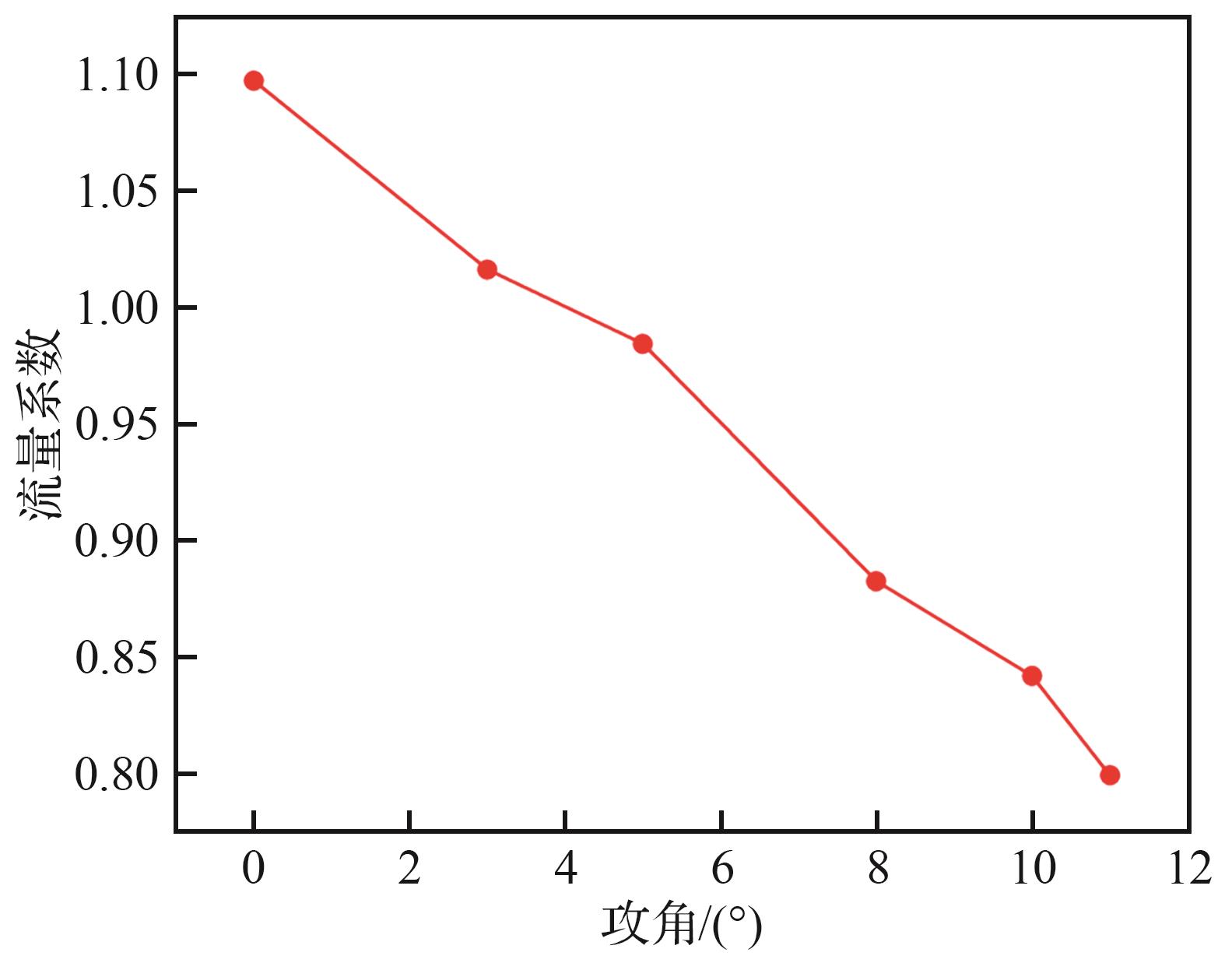
Fig.13
Comparison of throat performance parameters of two schemes at different angles of attack
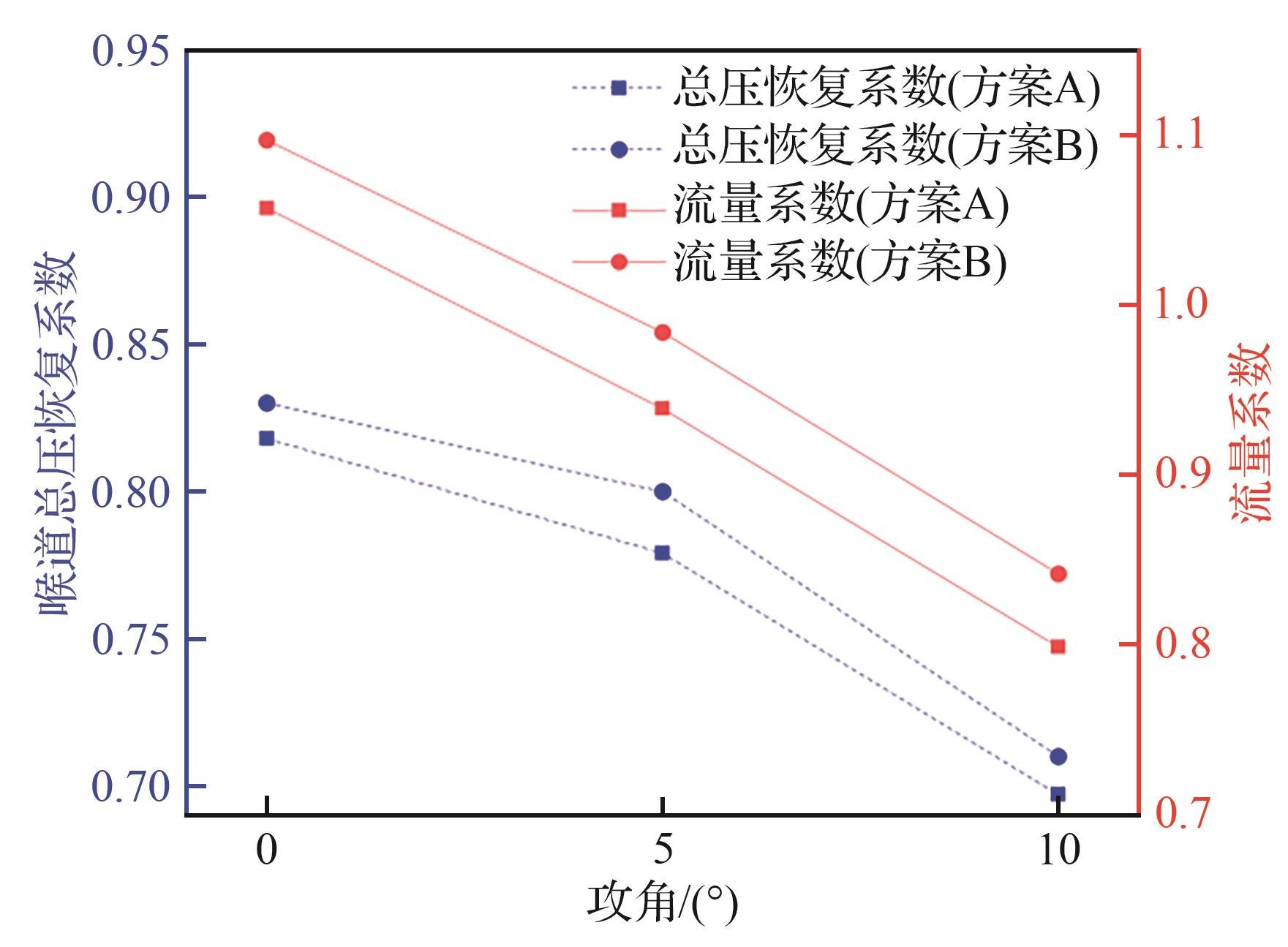
Fig.14
Mach number contour of dorsal inlet for Scheme B (Ma=3.5, α=3°)
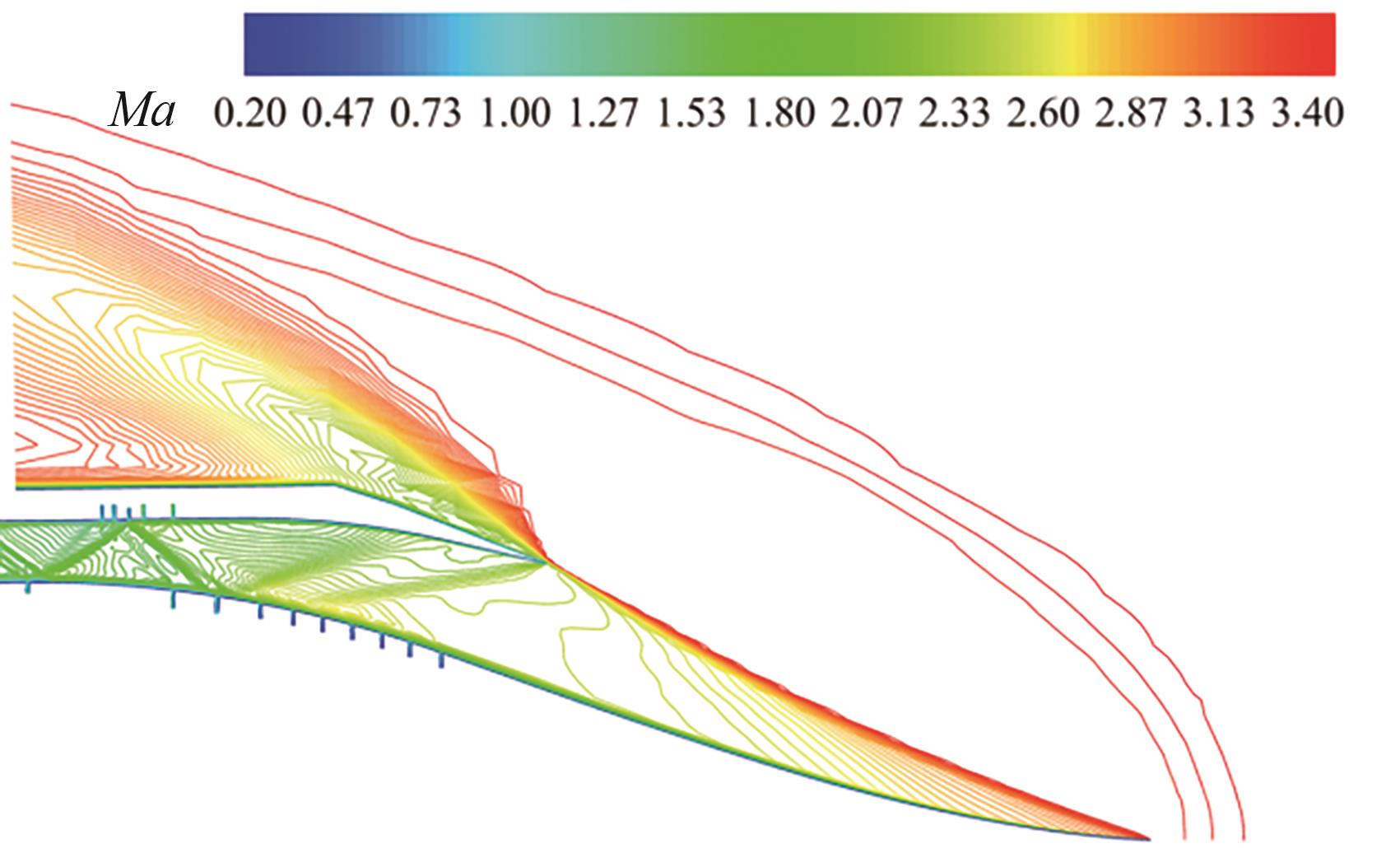
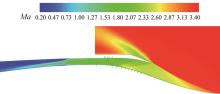
Fig.15
Mach number contour of dorsal inlet for Scheme B (Ma=3.5, α=3 °, Pb=42P0)
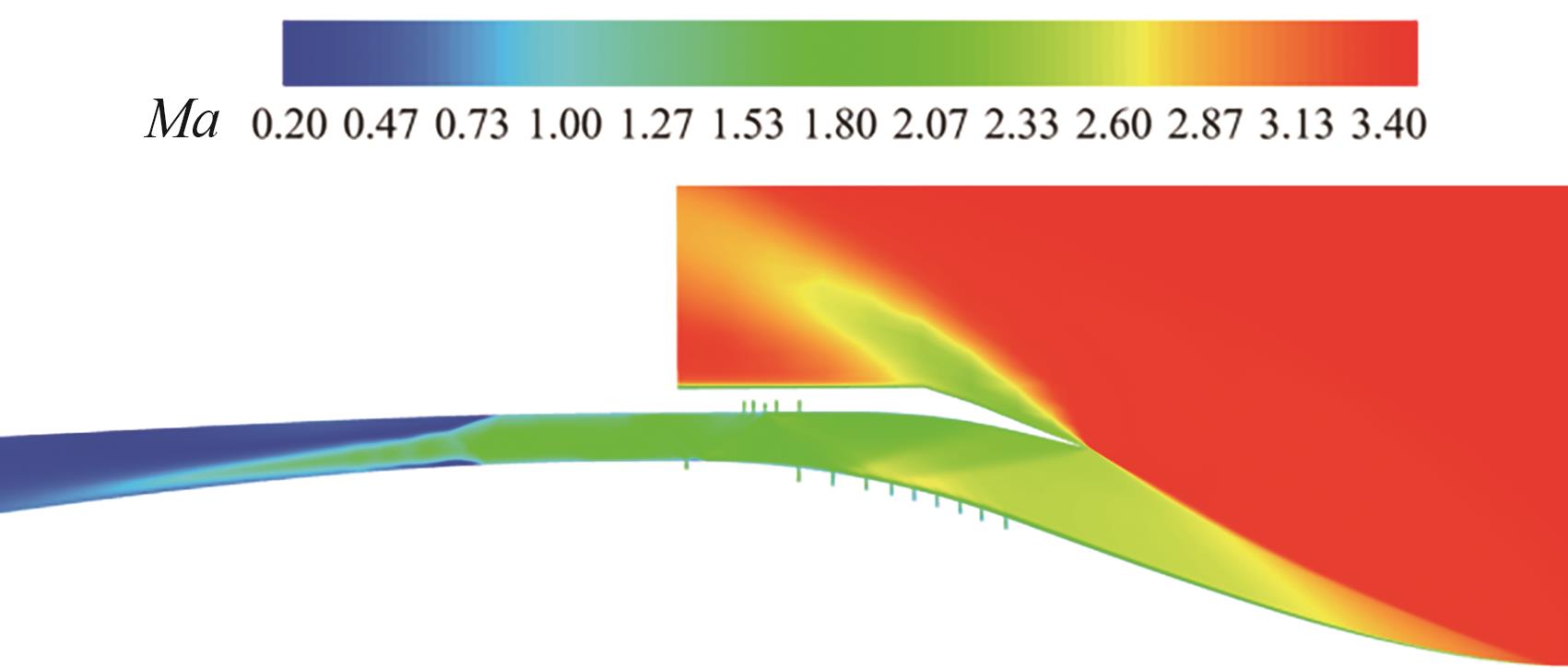
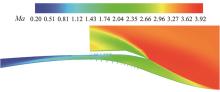
Fig.16
Mach number contour of dorsal inlet for Scheme B (Ma=3.5, α=11°, Pb=42P0)
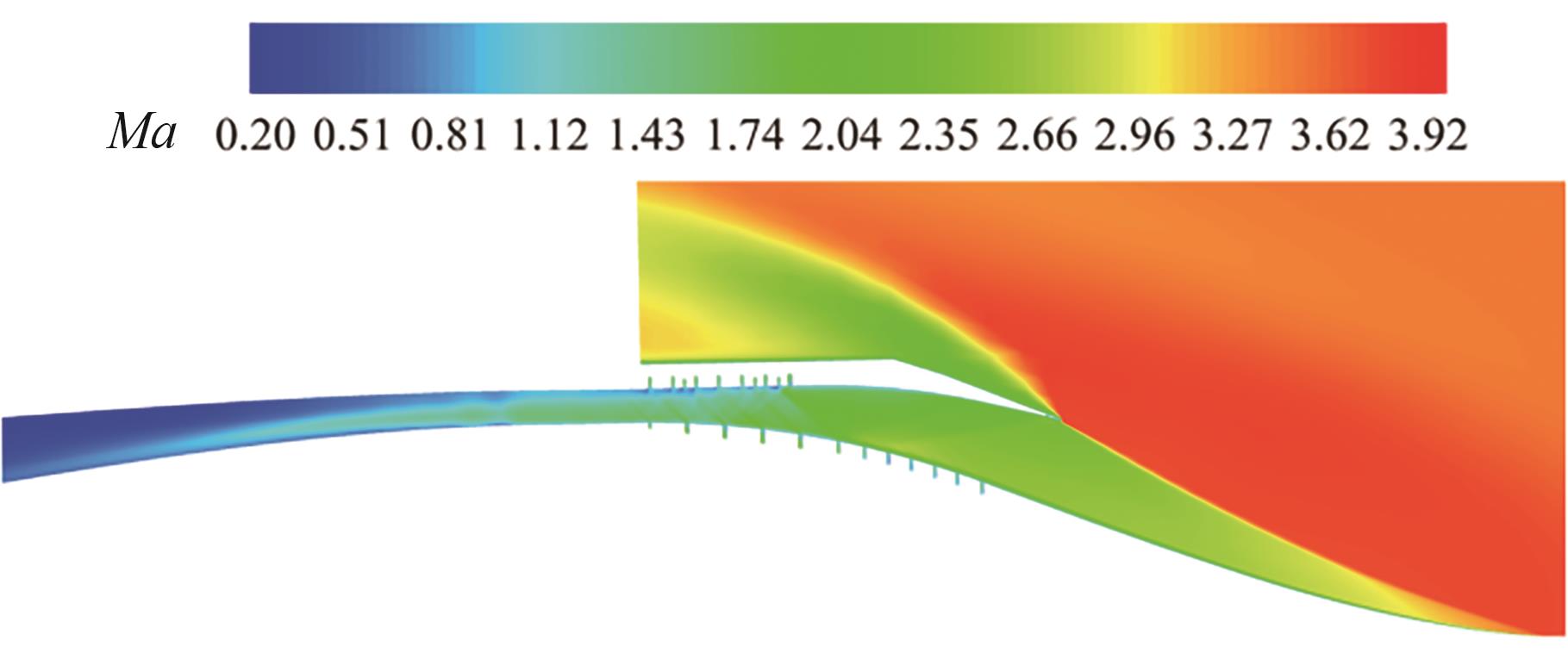
Fig.17
Schematic diagram of flow balance equation
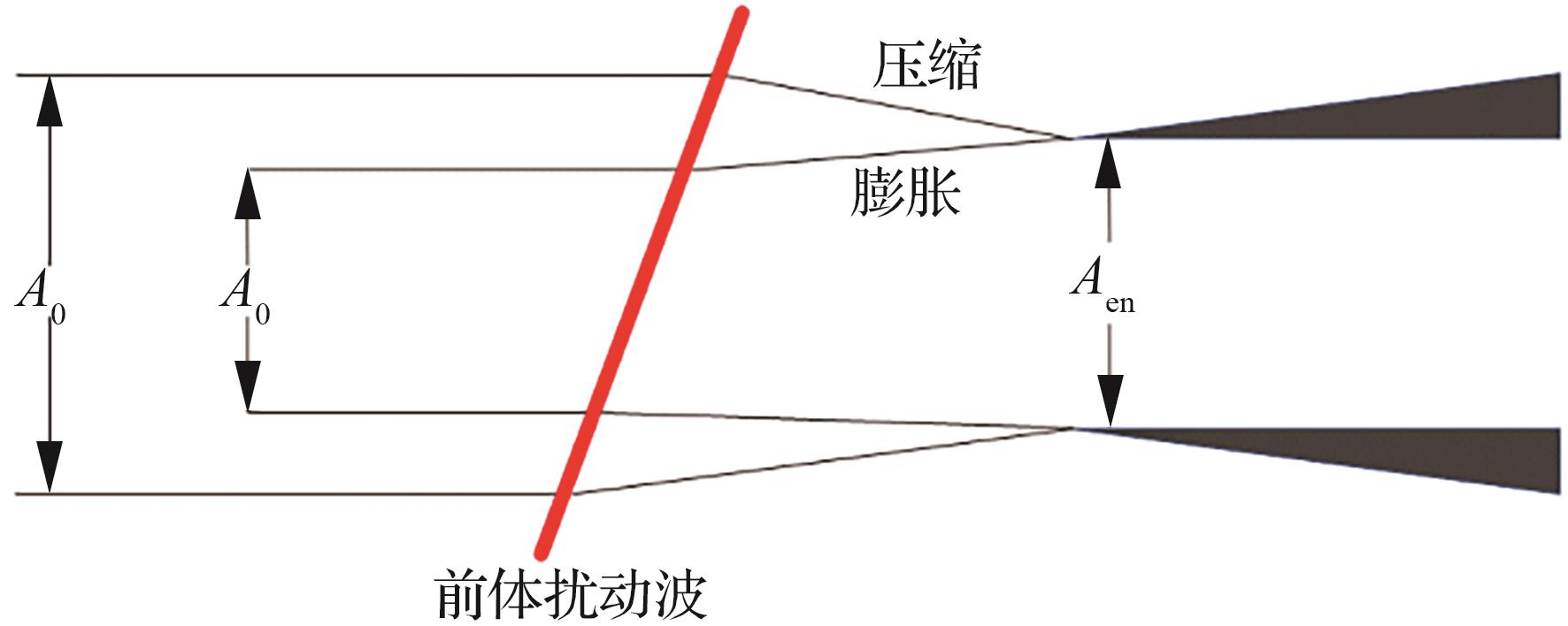
Fig.18
Schematic diagram of projection of inlet entrance
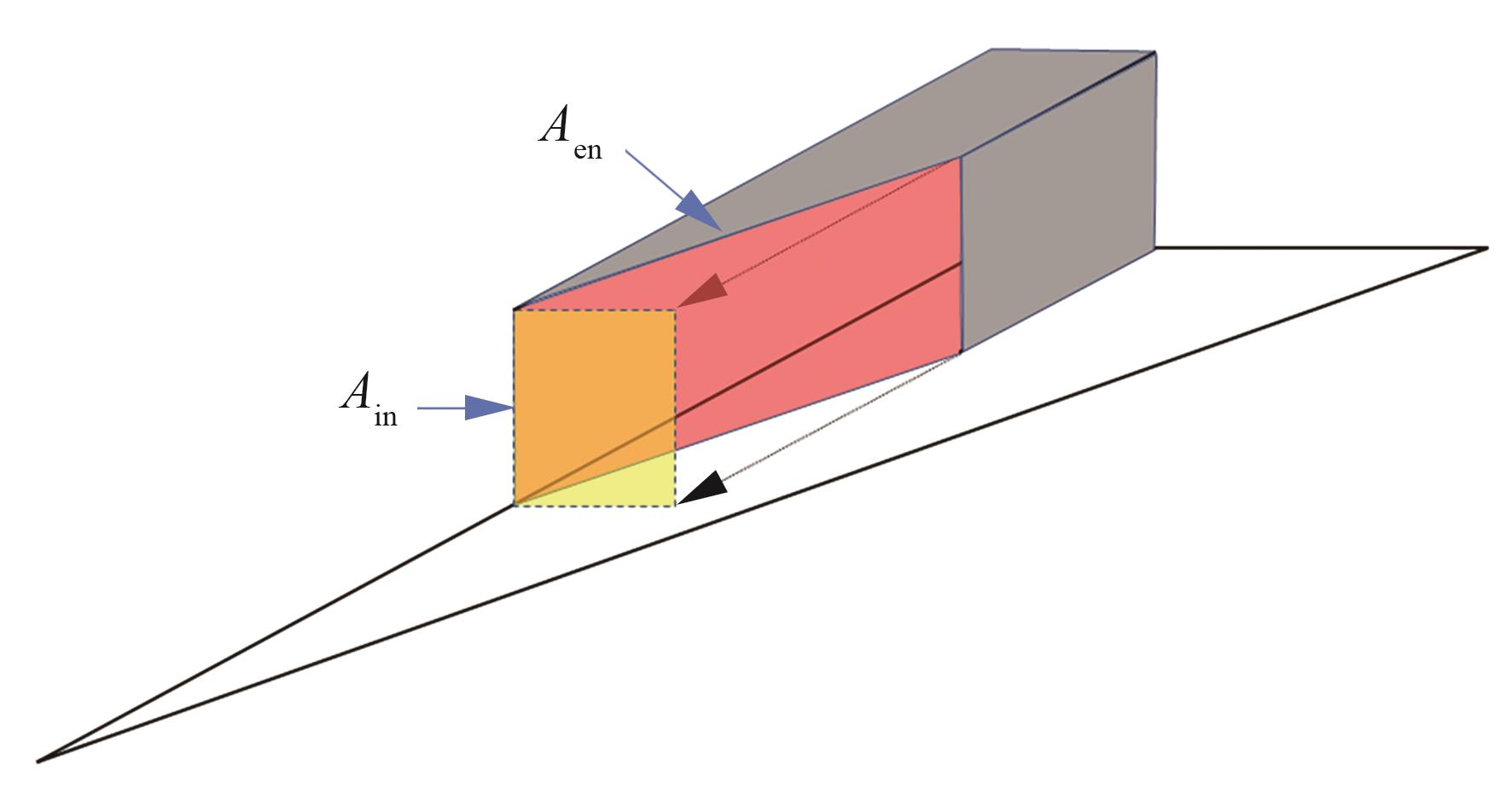
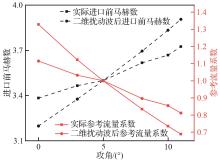
Fig.19
Comparison of 2D theoretical results and numerical simulation results
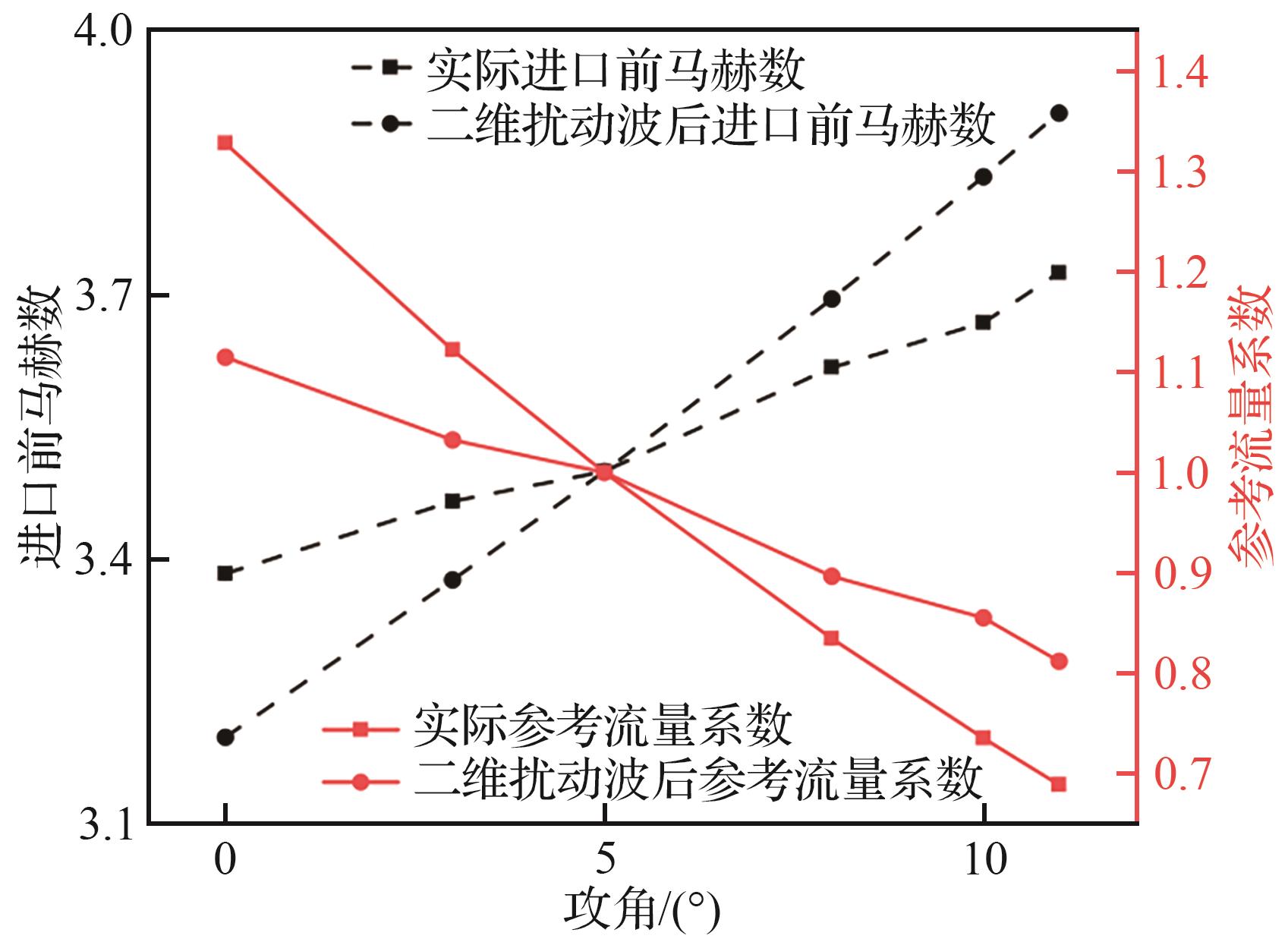
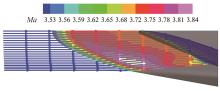
Fig.20
Scheme A: Front streamline deflection of inlet at 10° angle of attack
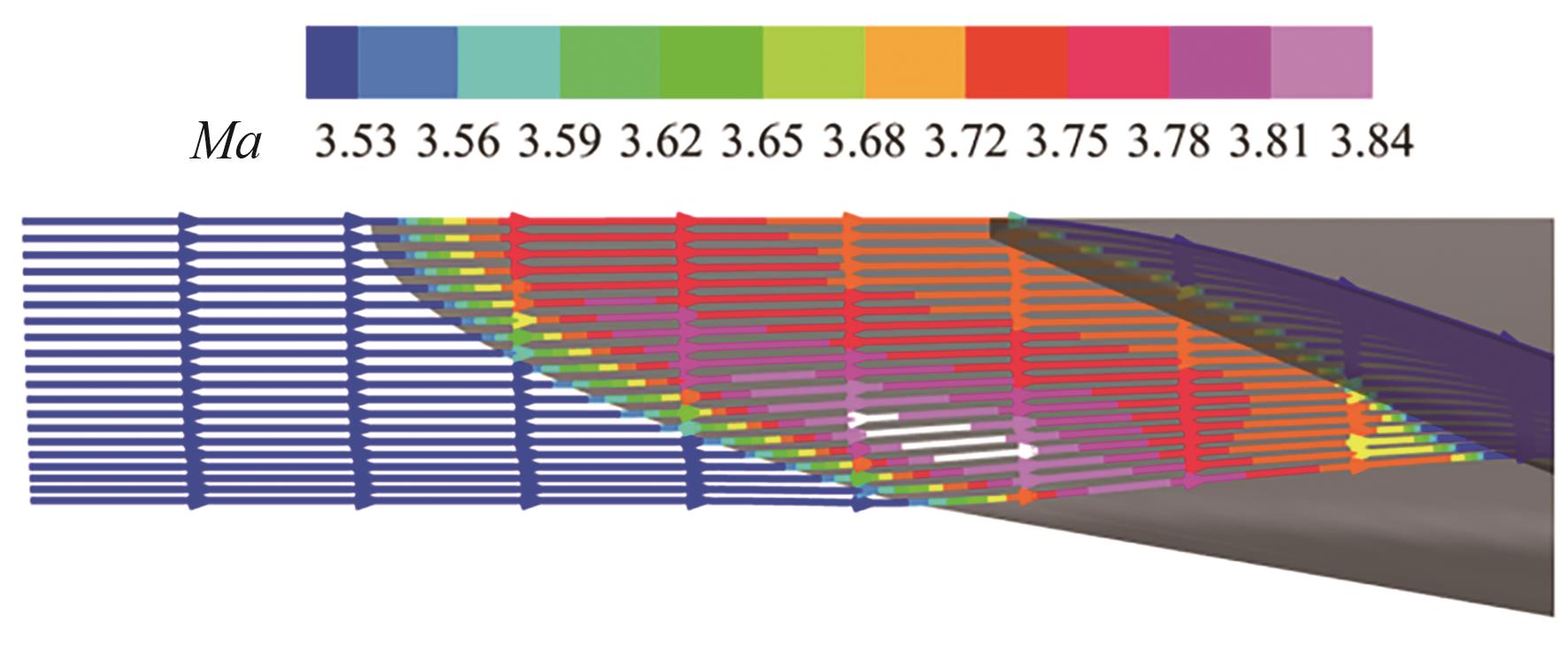
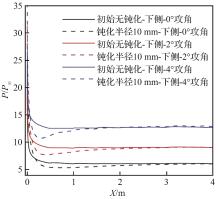
Fig.21
Distribution of centerline pressure at different angles of attack[18]
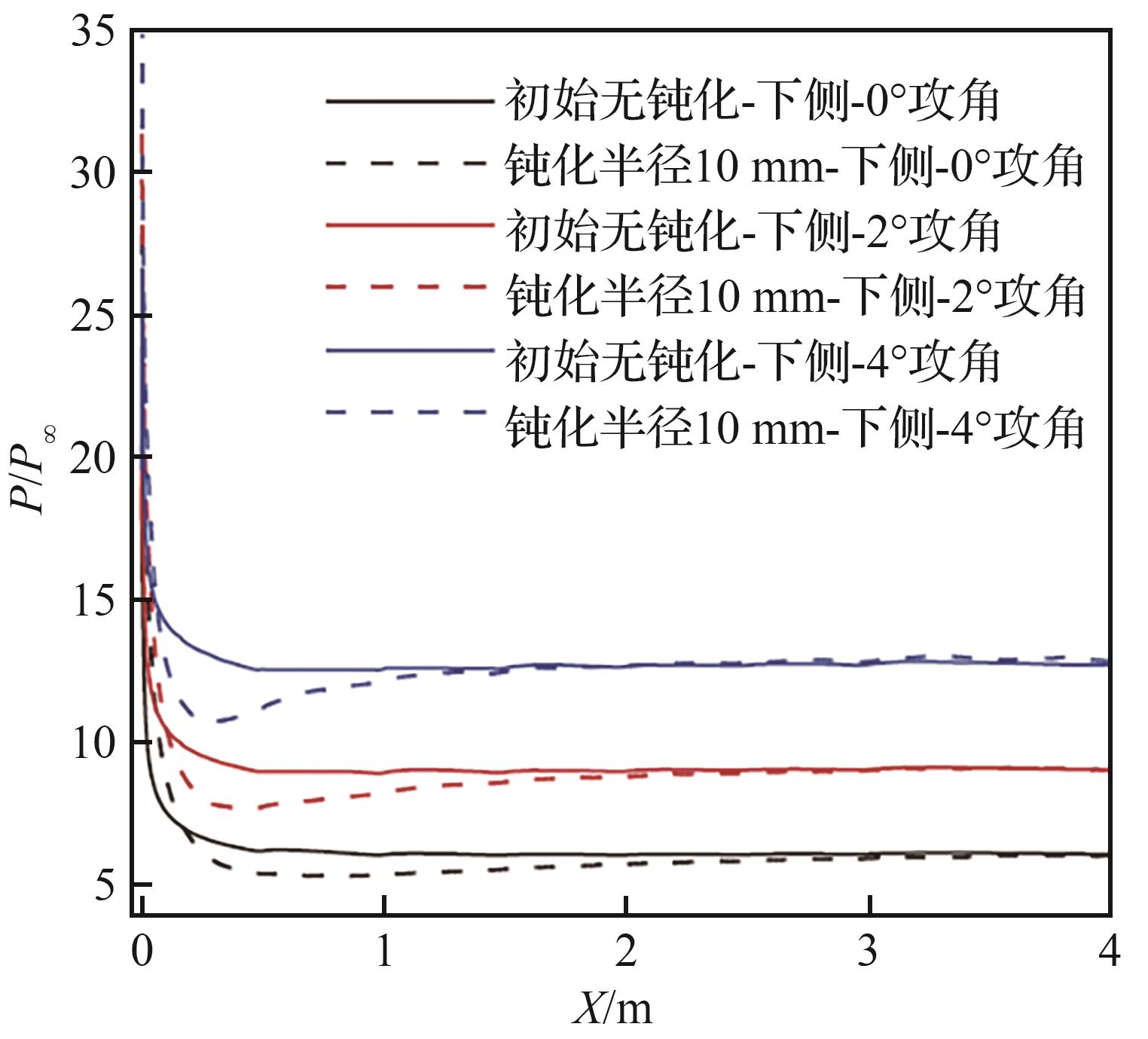
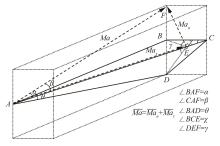
Fig.22
Geometric diagram of shock wave attachment
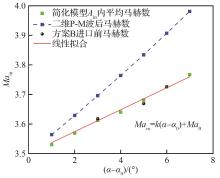
Fig.23
Comparison of Mach numbers in different states
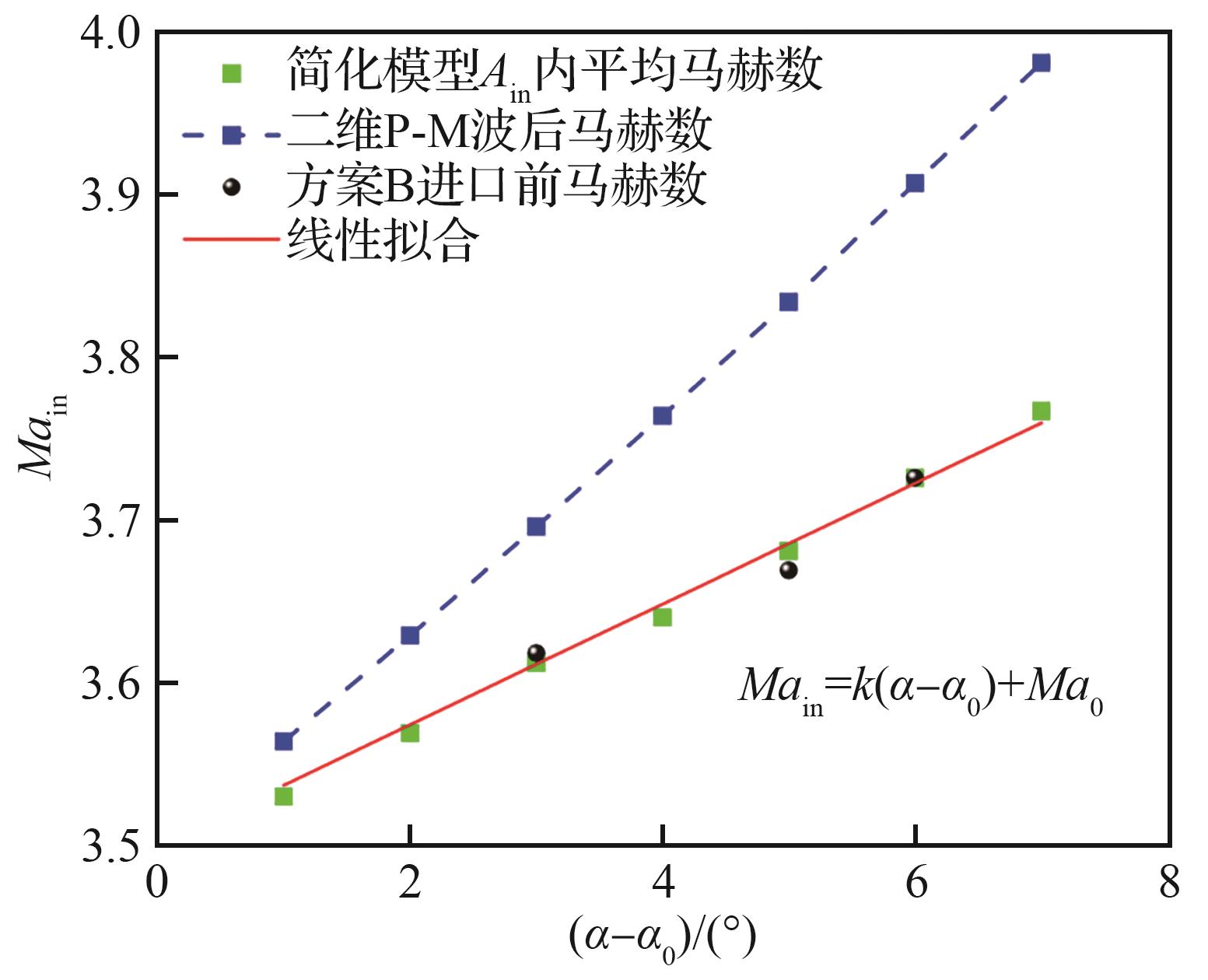
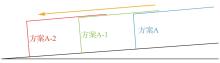
Fig.24
Schematic diagram of forward inlets
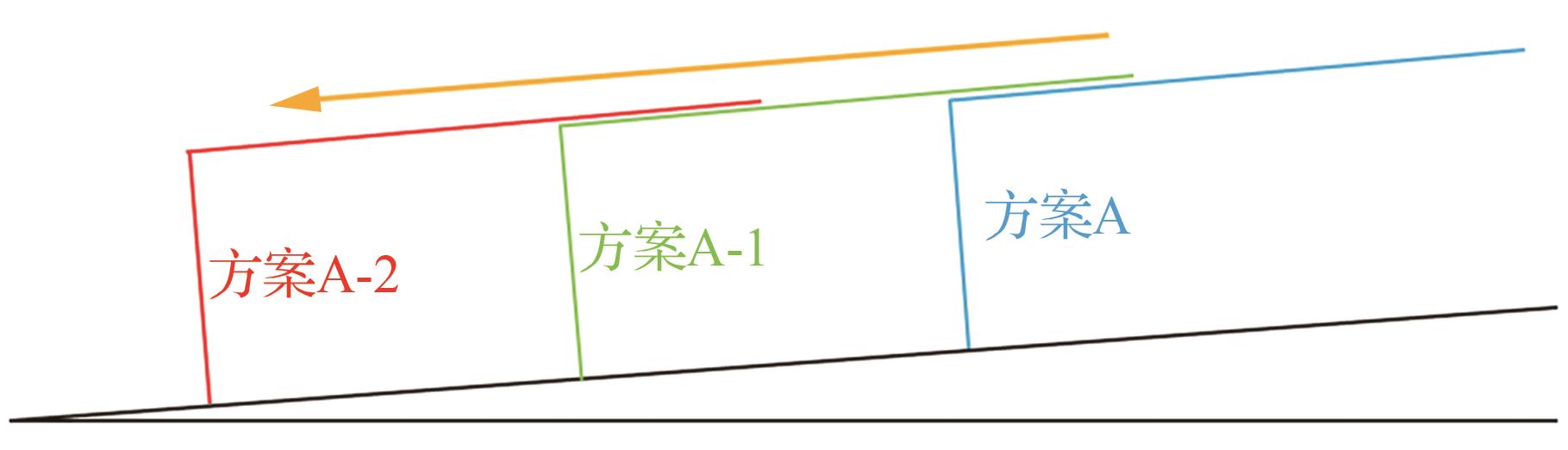
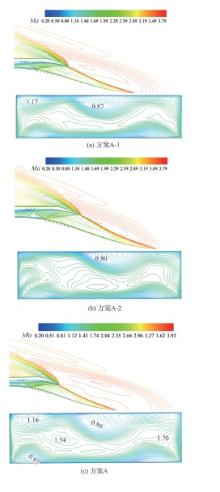
Fig.25
Influence of different forebody lengths on internal flow field (α=10°)
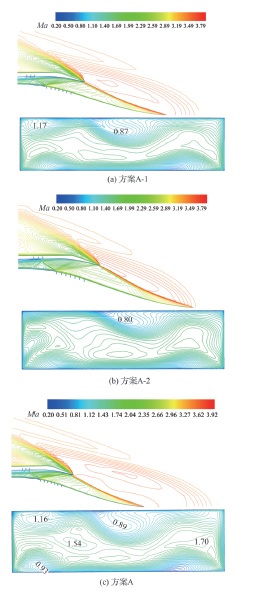
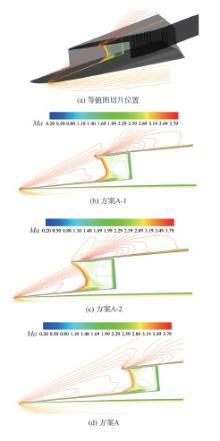
Fig.26
Influence of different forebody lengths on relative position of inlet entrance and forebody expansion wave (α=10°)
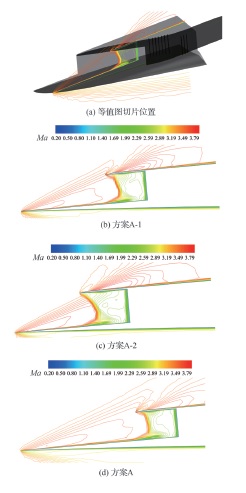
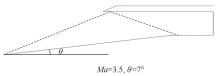
Fig.27
Schematic diagram of shock wave system for Scheme C
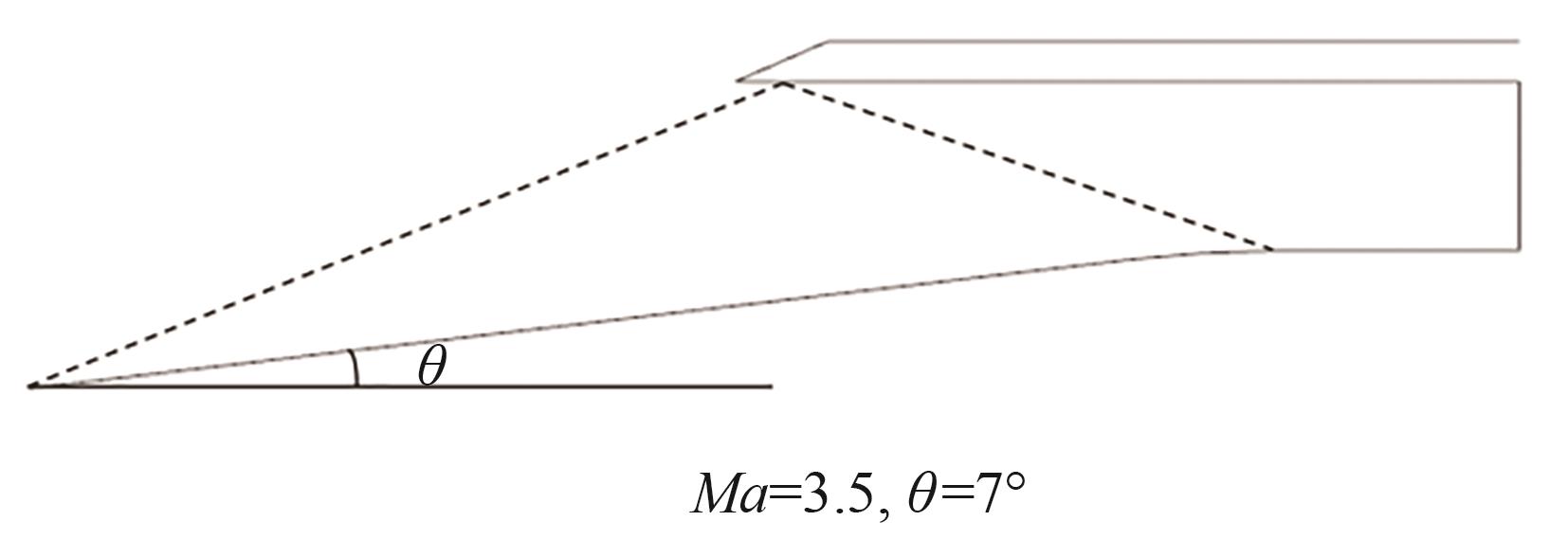
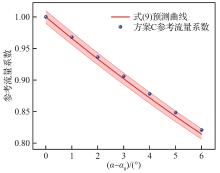
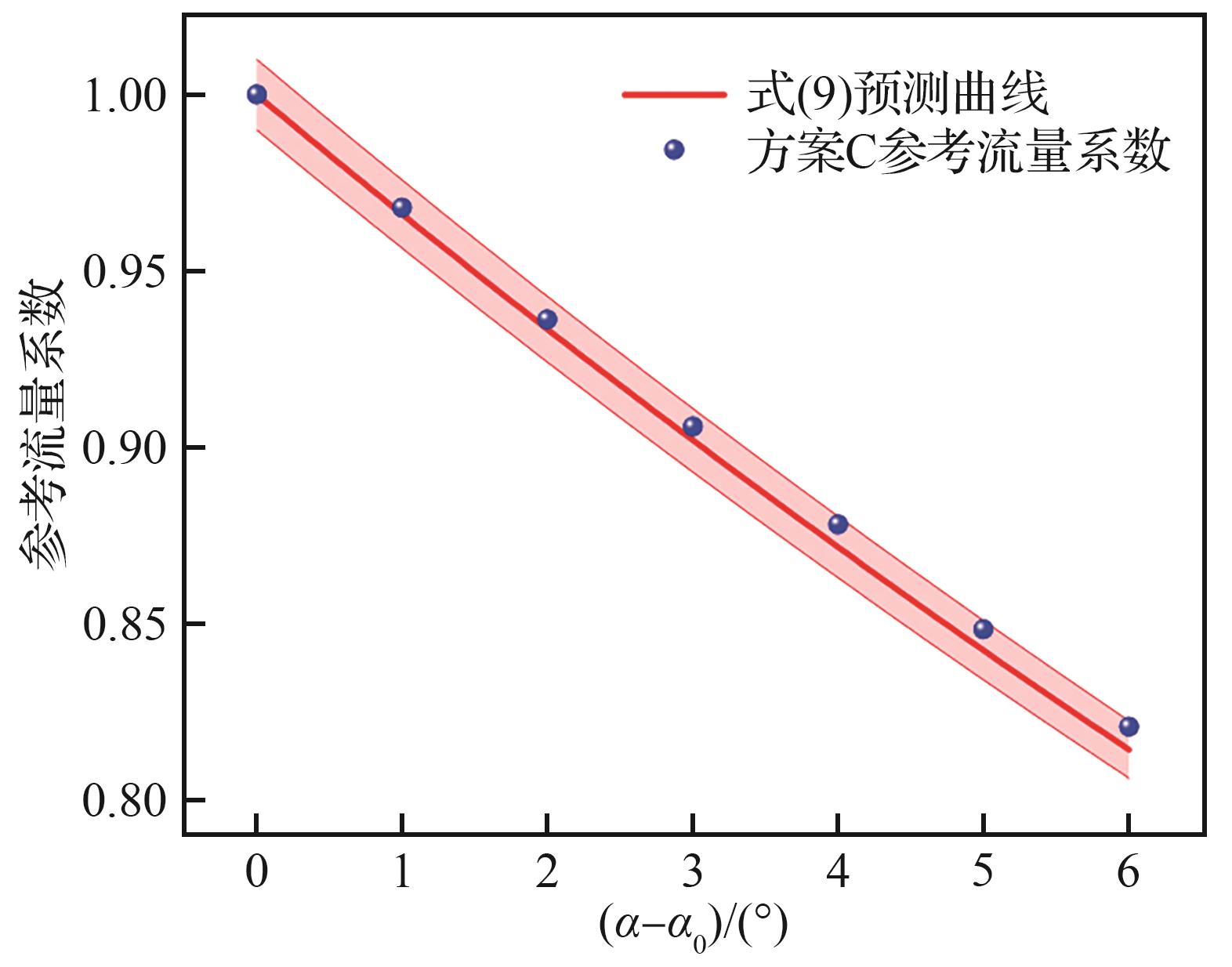
Fig.28
Verification of linear correlation between forward Mach number of inlet and angle of attack
| [1] | 向先宏, 钱战森. 吸气式高超声速飞行器机体/推进一体化设计技术研究进展及分类对比分析[J]. 推进技术, 2018, 39(10): 2207-2218. |
| XIANG X H, QIAN Z S. An overview and development analysis of air-breathing hypersonic airframe/propulsion integrative design technology[J]. Journal of Propulsion Technology, 2018, 39(10): 2207-2218 (in Chinese). | |
| [2] | 郑晓刚, 胡占仓, 蔡泽君, 等. 考虑巡航攻角的三维内转进气道设计[J]. 航空学报, 2025, 46(8): 168-182. |
| ZHENG X G, HU Z C, CAI Z J, et al. Design of 3D inward-turning inlet considering cruising angle of attack[J]. Acta Aeronautica et Astronautica Sinica, 2025, 46(8): 168-182 (in Chinese). | |
| [3] | 陈立立, 郭正, 侯中喜, 等. 高超声速飞行器气动布局研究综述[J]. 空天技术, 2022(3): 42-61. |
| CHEN L L, GUO Z, HOU Z X, et al. Overview on aerodynamic configuration study of hypersonic vehicles[J]. Aerospace Technology, 2022(3): 42-61 (in Chinese). | |
| [4] | 李雪平, 杨茂. 进气道布局对导弹气动性能影响的数值研究[J]. 科学技术与工程, 2010, 10(35): 8747-8751. |
| LI X P, YANG M. Numerical study of inlet configuration effects on aerodynamic performance for air-breathing missiles[J]. Science Technology and Engineering, 2010, 10(35): 8747-8751 (in Chinese). | |
| [5] | 郭宇辰. SR-72高超声速无人侦察机三维重建及其气动特性分析[D]. 南京: 南京航空航天大学, 2016. |
| GUO Y C. Three-dimensions reconstruction and analysis of aerodynamic of SR-72 hypersonic unmanned reconnaissance aircraft[D]. Nanjing: Nanjing University of Aeronautics and Astronautics, 2016 (in Chinese). | |
| [6] | 赵克云. 大攻角(大侧滑角)下超音速后置旁侧进气道试验研究[J]. 推进技术, 1992, 13(3): 35-40. |
| ZHAO K Y. An experimental investigation on aft bypass supersonic inlet performance at high angle of attack and yaw[J]. Journal of Propulsion Technology, 1992, 13(3): 35-40 (in Chinese). | |
| [7] | 吕骞. 典型布局高超声速飞行器性能及内转式进气道起动性能研究[D]. 长沙: 中南大学, 2023. |
| LYU Q. Research on the performance of typical configuration hypersonic vehicle and the starting performance of inward turning inlet[D]. Changsha: Central South University, 2023 (in Chinese). | |
| [8] | STEELANT J, VILLACE V, KALLENBACH A, et al. Flight testing designs in HEXAFLY-INT for high-speed transportation[C]∥ 1st International Conference on High-speed Vehicle Science and Technology. Moscow: CESA, 2018: 3101064. |
| [9] | 王海峰. 高性能战斗机与发动机协同设计关键技术[J]. 航空学报, 2024, 45(5): 529978. |
| WANG H F. Key technologies in collaborative airframe-engine design for high performance fighters[J]. Acta Aeronautica et Astronautica Sinica, 2024, 45(5): 529978 (in Chinese). | |
| [10] | 郁新华, 刘斌, 陶于金, 等. 背负式进气道设计及其气动性能研究[J]. 西北工业大学学报, 2007, 25(2): 270-273. |
| YU X H, LIU B, TAO Y J, et al. Top-mounted inlet design and its aerodynamic performance[J]. Journal of Northwestern Polytechnical University, 2007, 25(2): 270-273 (in Chinese). | |
| [11] | 谭慧俊, 郭荣伟. 一种背负式无附面层隔道进气道的数值模拟研究与实验验证[J]. 航空学报, 2004, 25(6): 540-545. |
| TAN H J, GUO R W. Numerical simulation investigation and experimental validation of a top-mounted diverterless inlet and its validation[J]. Acta Aeronautica et Astronautica Sinica, 2004, 25(6): 540-545 (in Chinese). | |
| [12] | MURRAY N, STEELANT J. Methodologies involved in the design of LAPCAT-MR1: a hypersonic cruise passenger vehicle[C]∥ 16th AIAA/DLR/DGLR International Space Planes and Hypersonic Systems and Technologies Conference. Reston: AIAA, 2009. |
| [13] | 石磊, 郭荣伟. 蛇形进气道的电磁散射特性[J]. 航空学报, 2007, 28(6): 1296-1301. |
| SHI L, GUO R W. Electromagnetic scattering characteristics of serpentine inlet[J]. Acta Aeronautica et Astronautica Sinica, 2007, 28(6): 1296-1301 (in Chinese). | |
| [14] | 刘甫州, 袁化成, 李东, 等. 基于膨胀波效应的高超声速进气道肩部流动分离控制研究[J]. 推进技术, 2024, 45(1): 68-80. |
| LIU F Z, YUAN H C, LI D, et al. Investigation of flow separation controlling in hypersonic inlet shoulder based on expansion wave effect[J]. Journal of Propulsion Technology, 2024, 45(1): 68-80 (in Chinese). | |
| [15] | 阳未. 与飞行器前体一体化的可调进气道研究[D]. 南京: 南京航空航天大学, 2020. |
| YANG W. Research on variable geometry inlet integrated with the forebody of aircraft[D]. Nanjing: Nanjing University of Aeronautics and Astronautics, 2020 (in Chinese). | |
| [16] | 黄河峡. 背景激波系干扰下隔离段内激波串特性及其控制研究[D]. 南京: 南京航空航天大学, 2018. |
| HUANG H X. Behaviors of shock train in isolator with background shocks and its control[D]. Nanjing: Nanjing University of Aeronautics and Astronautics, 2018 (in Chinese). | |
| [17] | TOWNSEND J C, VOLLMAR W R, VAS I E. The leading edge effect on the flow over a flat plate at M=10[R]. US: United States Air Force, 1966. |
| [18] | 郭帅旗, 刘文, 张陈安, 等. 高超声速钝前缘乘波构型优化设计研究[J]. 力学学报, 2022, 54(5): 1414-1428. |
| GUO S Q, LIU W, ZHANG C A, et al. Design and optimization for hypersonic cone-derived waverider with blunted leading-edge[J]. Chinese Journal of Theoretical and Applied Mechanics, 2022, 54(5): 1414-1428 (in Chinese). | |
| [19] | BERENS T M, BISSINGER N C. Forebody precompression effects and inlet entry conditions for hypersonic vehicles[J]. Journal of Spacecraft and Rockets, 1998, 35(1): 30-36. |
| [20] | 吕宇超, 胡姝瑶, 蒋崇文, 基于马赫线切割的楔形乘波前体改进设计研究 [J]. 推进技术, 2018, 39(8): 1696-1702. |
| LYU Y C, HU S Y, JIANG C W. Improved design of wedge-derived waverider forebode based on Mach line cutting of compression surfaces[J]. Journal of Propulsion Technology, 2018, 39(8): 1696-1702 (in Chinese). | |
| [21] | 贾洪印, 周桂宇, 唐静, 等. 带鼓包的背负式大S弯进气道流场特性及参数影响规律[J]. 西北工业大学学报, 2019, 37(3): 572-579. |
| JIA H Y, ZHOU G Y, TANG J, et al. Numerical investigation of dorsal S-shaped inlet flow characteristic and effects of related parameters[J]. Journal of Northwestern Polytechnical University, 2019, 37(3): 572-579 (in Chinese). |
| [1] | HUANG Zhenyu, ZHONG Jingjun, YANG Ling, HAN Ji'ang. Influence of tip clearance on flow characteristics of a supersonic expander [J]. ACTA AERONAUTICAET ASTRONAUTICA SINICA, 2016, 37(2): 555-567. |
| [2] | TIAN Simeng, WU Yun, ZHANG Haideng, LI Yinghong, LI Jun. Energy loss in a low-speed compressor cascade with dissipation function [J]. ACTA AERONAUTICAET ASTRONAUTICA SINICA, 2015, 36(10): 3249-3262. |
| [3] | Zhang Hang;Tan Huijun;Sun Shu. Characteristics of Shock-train in a Straight Isolator with Interference of Incident Shock Waves and Corner Expansion Waves [J]. ACTA AERONAUTICAET ASTRONAUTICA SINICA, 2010, 31(9): 1733-1739. |
| Viewed | ||||||
|
Full text |
|
|||||
|
Abstract |
|
|||||
Address: No.238, Baiyan Buiding, Beisihuan Zhonglu Road, Haidian District, Beijing, China
Postal code : 100083
E-mail:hkxb@buaa.edu.cn
Total visits: 6658907 Today visits: 1341All copyright © editorial office of Chinese Journal of Aeronautics
All copyright © editorial office of Chinese Journal of Aeronautics
Total visits: 6658907 Today visits: 1341

 CJA
CJA
