Acta Aeronautica et Astronautica Sinica ›› 2025, Vol. 46 ›› Issue (11): 531331.doi: 10.7527/S1000-6893.2025.31331
• Reviews • Previous Articles
Fan PU, Zhijie CHEN, Yang LIU, Xin GENG, Yongwen ZHU( ), Kejin REN
Received:2024-09-30
Revised:2024-10-21
Accepted:2025-04-16
Online:2025-05-14
Published:2025-05-06
Contact:
Yongwen ZHU
E-mail:tianyiliang_zyw@163.com
Supported by:CLC Number:
Fan PU, Zhijie CHEN, Yang LIU, Xin GENG, Yongwen ZHU, Kejin REN. Air traffic management technologies for digital low-altitude integrated operations[J]. Acta Aeronautica et Astronautica Sinica, 2025, 46(11): 531331.
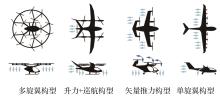
Fig.1
New intelligent aircraft configuration in low-altitude[9]
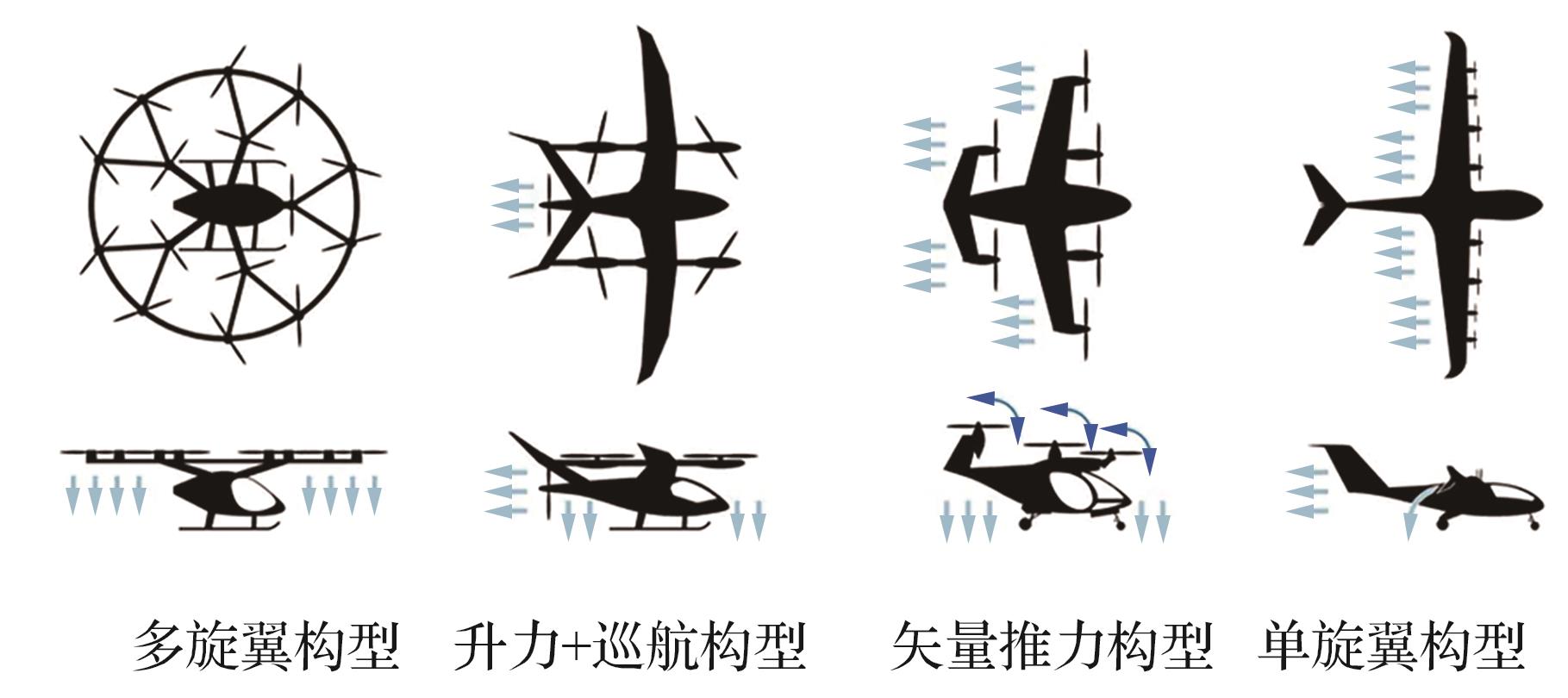
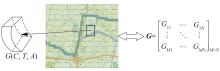
Fig.2
Digital model of low-altitude airspace
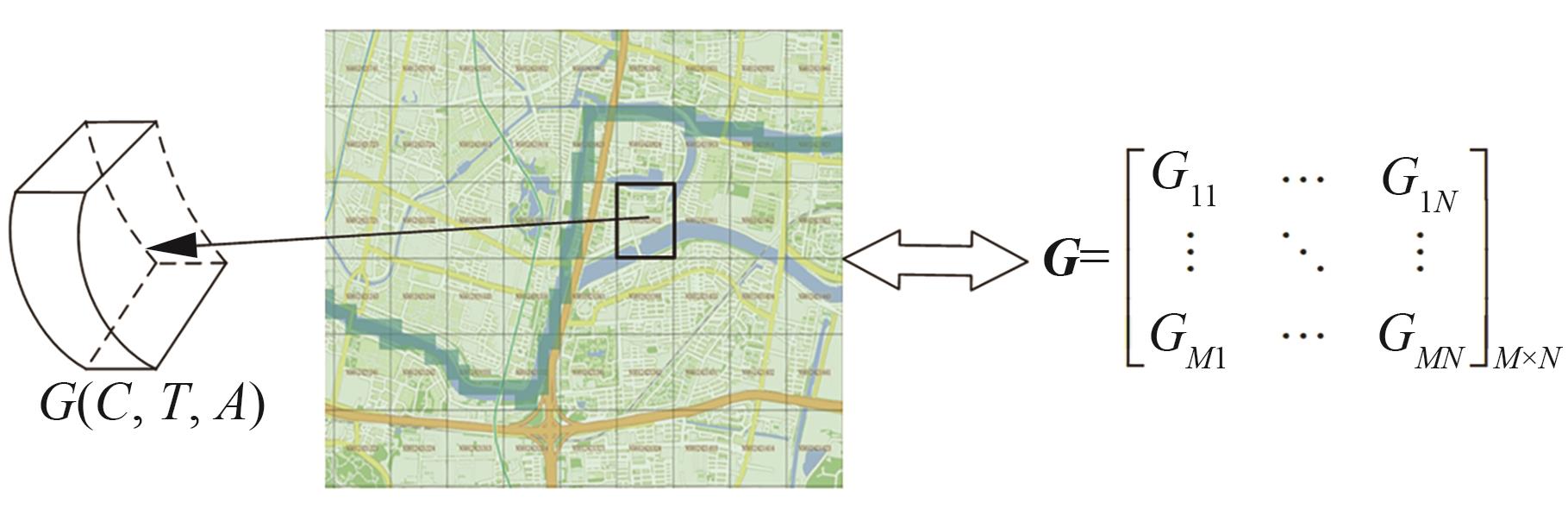
Fig.3
Mapping of track grid
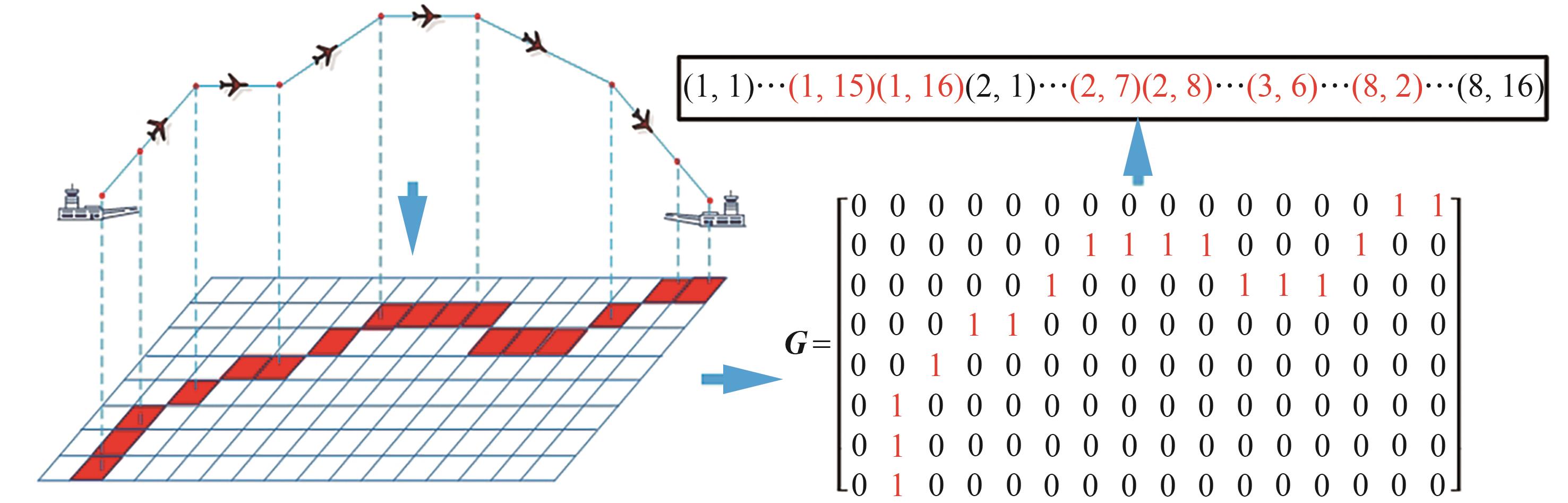
Fig.4
Visual monitoring of airspace usage
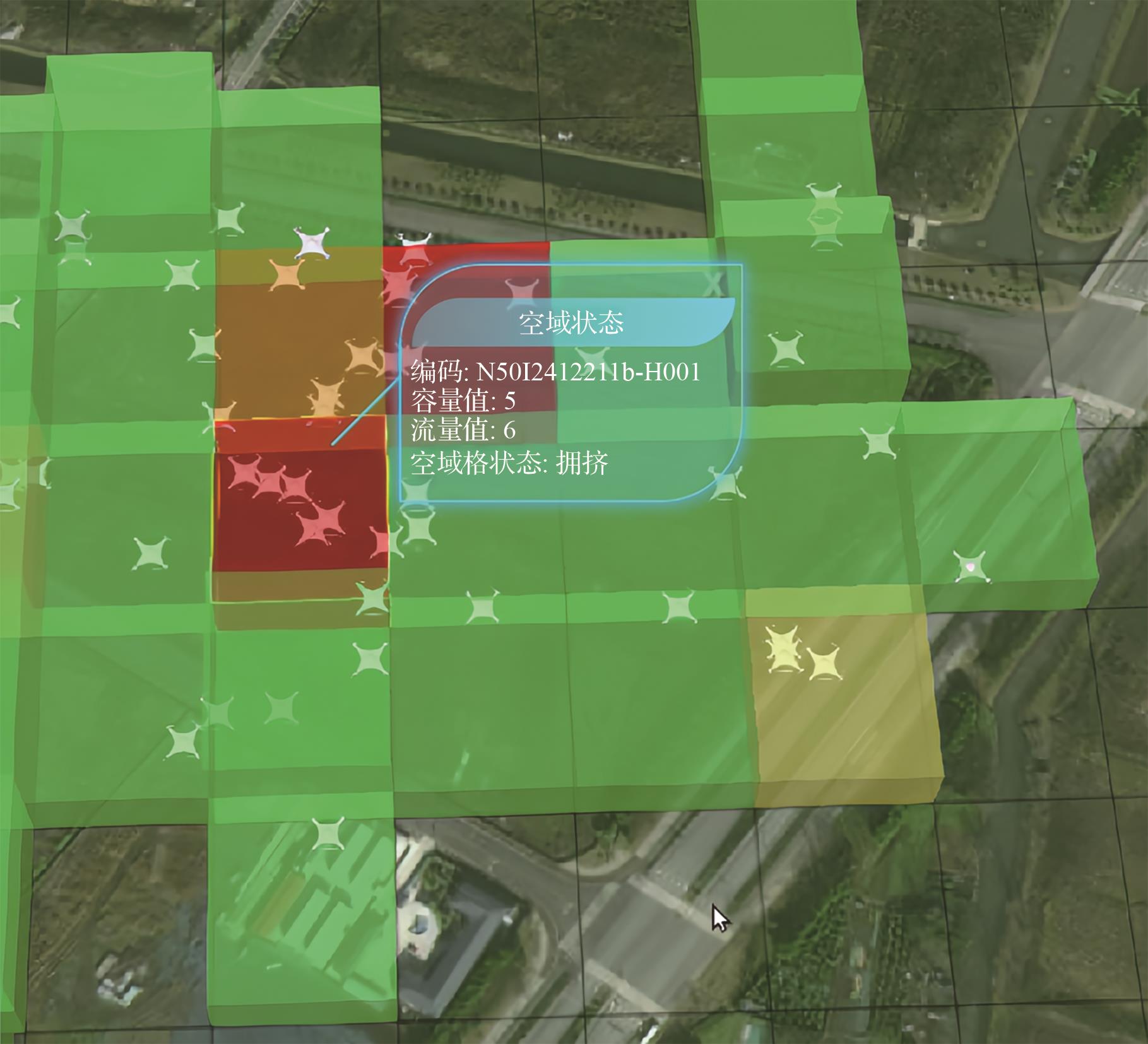
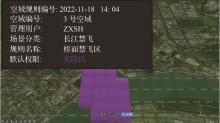
Fig.5
Dynamic management rule of low-altitude airspace
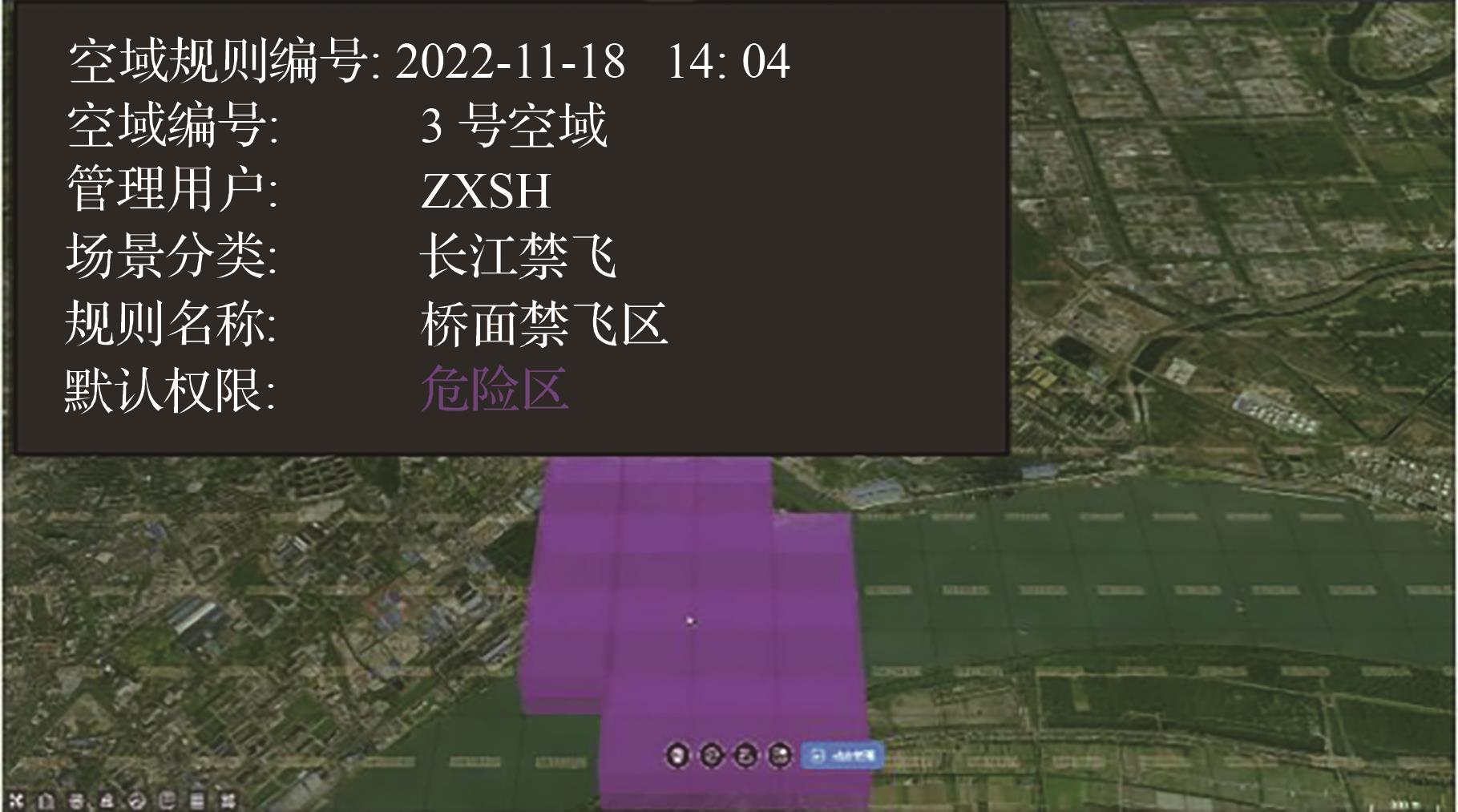
Fig.6
Resolution method of assignment matrix GA
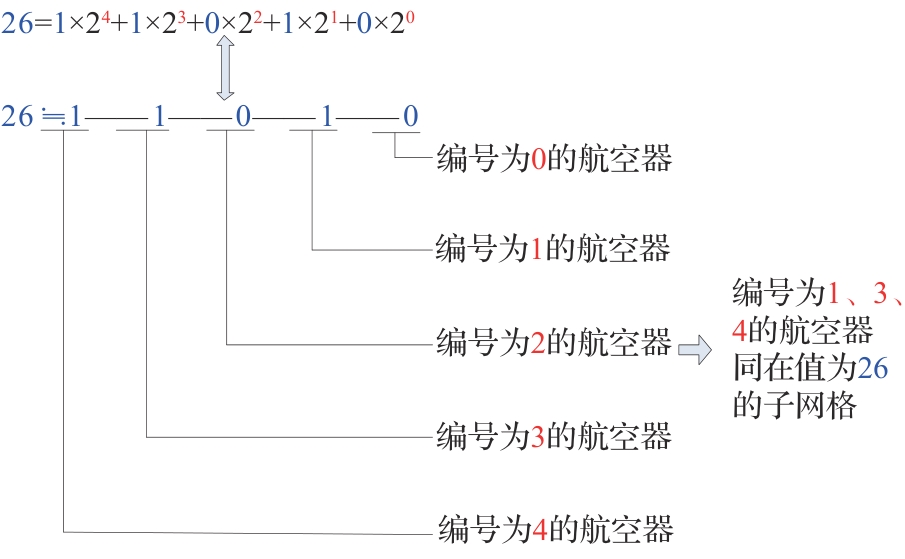
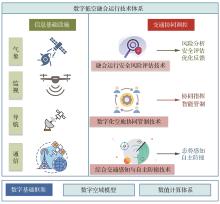
Fig.7
Technical solutions for low-altitude air traffic management
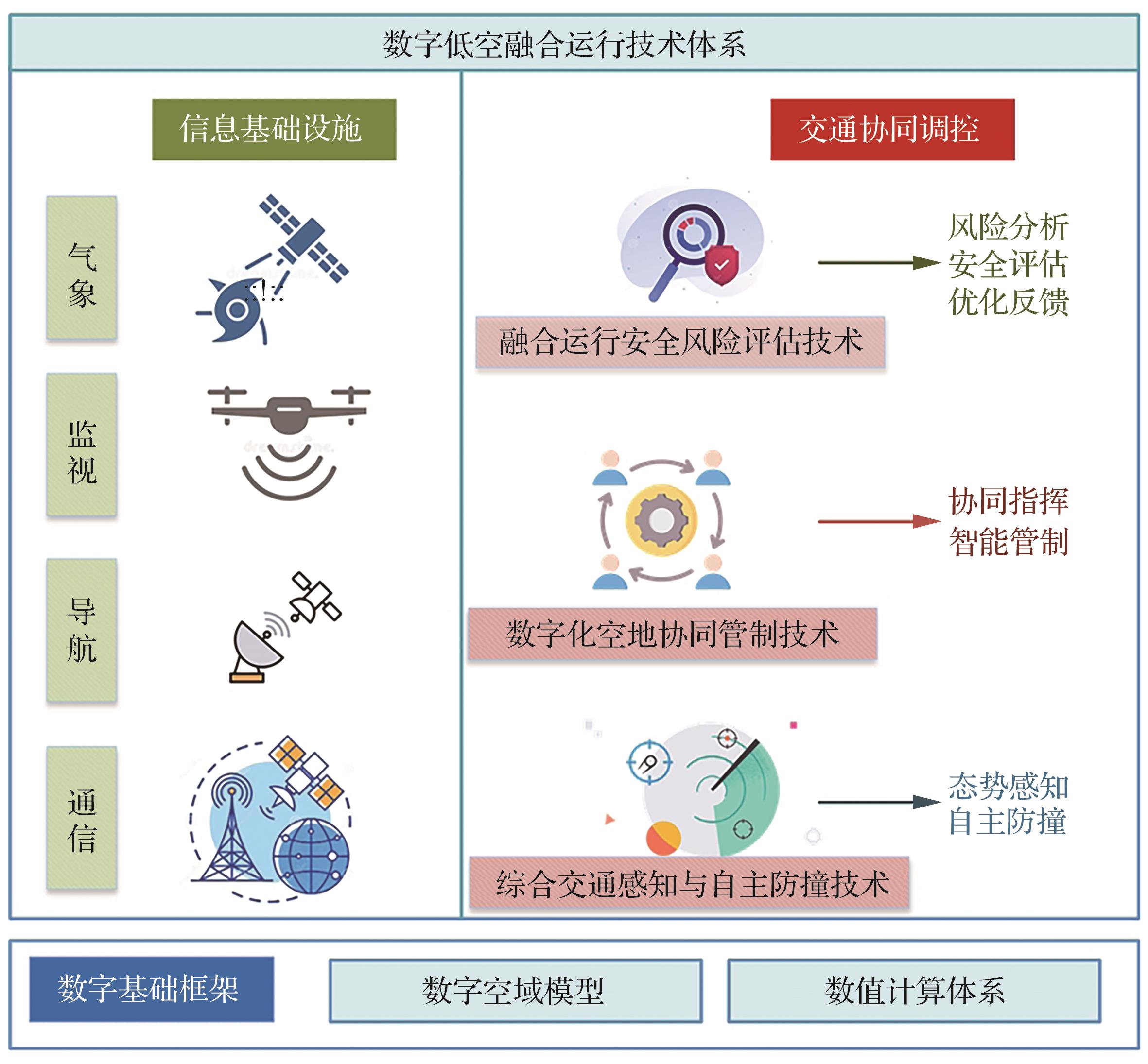

Table 1
Characteristics of various communication systems
| 通信系统 | 频率/MHz | 优点 | 缺点 | 适用性 |
|---|---|---|---|---|
| 甚高频通信 | 30~300 | 延时小、质量高、成本低 | 带宽小 | 有人机、无人机 |
| L波段数字航空通信 | 960~1 165 | 带宽高,通信距离远 | 频谱受限,网络容量小 | 有人机、大型无人机 |
| 蜂窝移动通信 | 900/1 800/3 500等 | 速率高、延迟低、网络容量大、 | 偏远地区基础设施覆盖少 | 有人机、无人机 |
| 蓝牙 | 2 500 | 成本低、体积小 | 传输距离短 | 小型无人机蜂群内 |
| 卫星通信 | C频段、Ku频段、 Ka频段 | 覆盖范围广 | 数据速率低,接收机重量大 | 有人机、管制空域中的大型无人机 |
| ZigBee | 900 | 成本低 | 版本繁多 | 近距离或超视距飞行小型无人机 |
| WIFI | 2 400 | 应用广泛、成本低 | 通信距离短 | 近距离飞行小型无人机 |
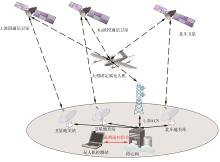
Fig.8
Multistandard link compatible with low-altitude communication
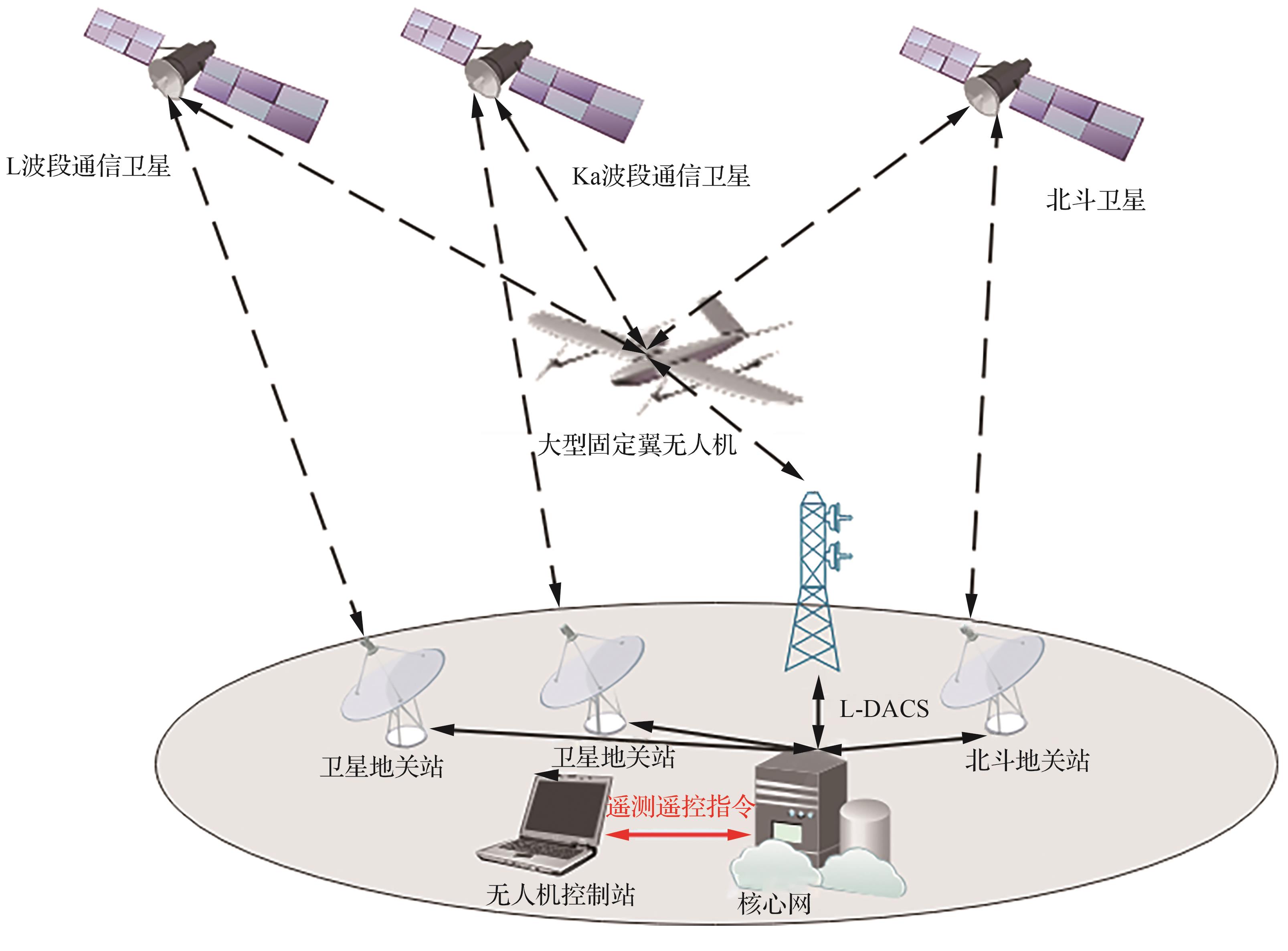
Table 2
Characteristics of traffic sensing systems
| 交通感知系统 | 优点 | 缺点 |
|---|---|---|
| 惯性导航 | 完全自主,隐蔽性好 | 累计误差 |
| 卫星导航 | 精度高 | 易受电磁干扰,更新频率低 |
| 多普勒导航 | 自主性好,抗干扰能力强、精度高 | 隐蔽性差,易受地形影响,累积误差 |
| 地形辅助导航 | 隐蔽性好,抗干扰能力强 | 计算量大,实时性差,受天气和地形影响 |
| 地磁导航 | 隐蔽性强、不受干扰、能耗低 | 存储地磁数据库,实时性差 |
Table 3
Characteristics of various onboard surveillance systems
| 机载监控 | 感知信息 | 视距气象条件 | 仪表气象条件 | SWAP | 成本 |
|---|---|---|---|---|---|
| TCAS | 距离、海拔 | √ | √ | × | 高 |
| ADS-B | 位置、速度、意图 | √ | √ | × | 高 |
| ACAS | √ | √ | × | 高 | |
| 距离、载荷 | √ | √ | × | 高 | |
| 激光雷达 | 距离 | √ | √ | × | 高 |
| 光电 | 高度、方位 | √ | × | √ | 低 |
| 红外 | 高度、方位 | √ | × | √ | 低 |
Table 4
Characteristics of various ground surveillance means[51]
| 地面监视 | 优点 | 缺点 | 适用性 |
|---|---|---|---|
| 低空空管雷达 | 成本低 | 不具备目标识别和跟踪的功能 | 弥补预警探测网的盲区,形成临时飞行安全管制平台 |
| 多点定位 | 定位精度高、更新率快、覆盖广、 成本低 | 信号传播误差大、地面基站授时易 产生误差 | 适用于运行环境复杂的机场,或由于地理和气候条件限制无法部署雷达的区域 |
| 空空雷达 | 高精度、高分辨率 | 频带宽、波长短 | 航空器周边非合作目标监视 |
| 蜂窝移动监视技术 | 低时延、高带宽、高安全性 | 对空中区域的覆盖能力差 | 低空或超低空无人机执行外场任务 |
| 无人机云监视 | 监控部门协同管理、飞行数据 实时上报、飞行数据云存储 | 仅针对轻型以下无人机,需要依靠 移动通信网络 | 建立由航空器所有者、飞行服务部门、空管三者相互协调运行的管理体制,规范无人机飞行 |
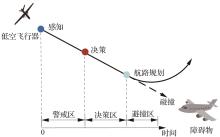
Fig.9
Process of low altitude traffic perception and autonomous collision avoidance
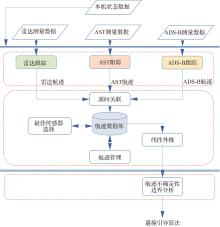
Fig.10
Situation detection based on multi-sensor information fusion
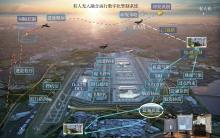
Fig.11
Air-ground digital collaborative control
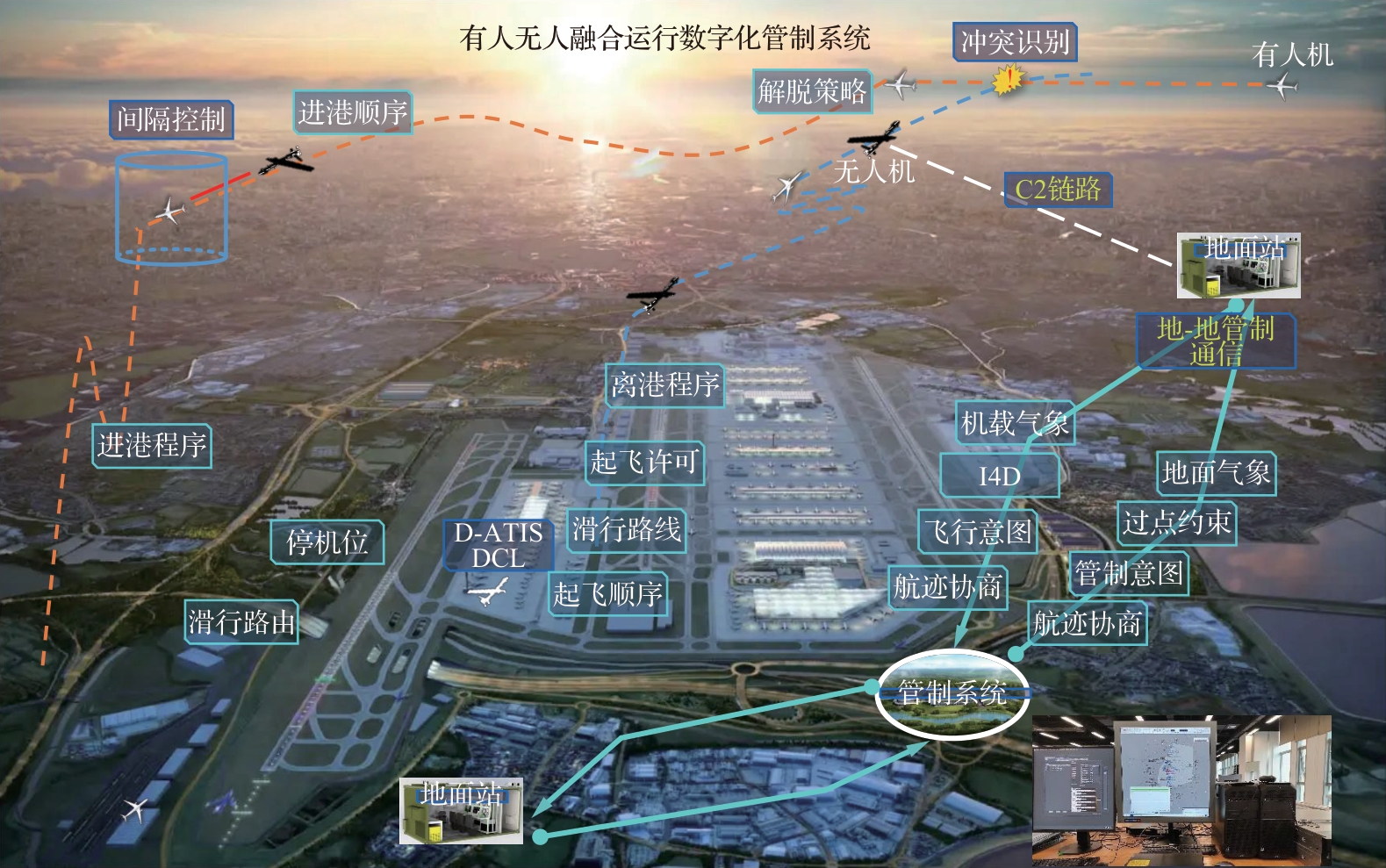
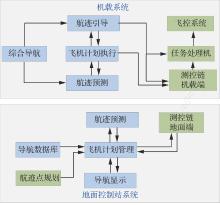
Fig.12
Air-ground cooperative trajectory based operation
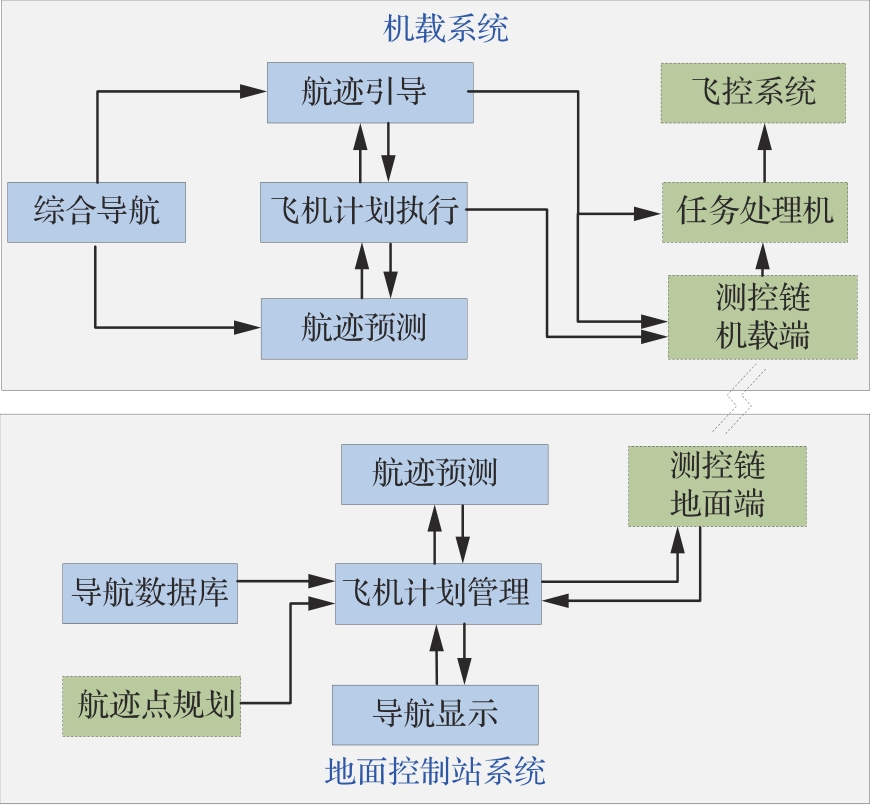
Table 5
Main components and function update of control workstation
| 模块 | 功能概述 |
|---|---|
| 多源监视数据处理 | 无人机/有人机多源异构监视数据的融合,无人机航迹动态跟踪、高度跟踪等 |
| 安全告警处理 | 无人机-有人机、无人机-无人机冲突告警,无人机限制区/危险区侵入告警,无人机最低安全高度告警等计算 |
| 飞行数据处理 | 无人机/有人机飞行计划管理、根据无人机飞行性能数据进行4D轨迹推算,无人机分配特定跑道和进离港程序 |
| 数据通信处理 | 外部数据引接,包含无人机平台等第三方数据、数字放行和数字化管制指令通信处理等 |
| 人机交互界面 | 无人机/有人机空中综合态势显示,支持划设无人机应急程序和区域 |
| 数字化指令交互 | 负责管制工作站与操控站/机载空管航电系统之间的数字化通信,主要包括据链管理、CPDLC应用和ADS-C应用 |
| [1] | 廖小罕, 徐晨晨, 叶虎平. 低空经济发展与低空路网基础设施建设的效益和挑战[J]. 中国科学院院刊, 2024, 39 (11): 1966-1981. |
| LIAO X H, XU C C, YE H P. Benefits and challenges of constructing low-altitude air route network infrastructure for developing low-altitude economy[J]. Bulletin of Chinese Academy of Sciences, 2024, 39(11): 1966-1981 (in Chinese). | |
| [2] | 陈义友, 张建平, 邹翔, 等. 民用无人机交通管理体系架构及关键技术[J]. 科学技术与工程, 2021, 21(31): 13221-13237. |
| CHEN Y Y, ZHANG J P, ZOU X, et al. System framework and key technologies of civil unmanned aircraft system traffic management[J]. Science Technology and Engineering, 2021, 21(31): 13221-13237 (in Chinese). | |
| [3] | 朱永文, 陈志杰, 蒲钒, 等. 数字化空域系统[J]. 中国工程科学, 2021, 23(3): 135-143. |
| ZHU Y W, CHEN Z J, PU F, et al. Development of digital airspace system[J]. Engineering, 2021, 23(3): 135-143 (in Chinese). | |
| [4] | 权在昕, 武丁杰, 高嘉静, 等. 城市低空空中交通及无人机路径规划研究综述[J]. 航空计算技术, 2024, 54(2): 121-126. |
| QUAN Z X, WU D J, GAO J J, et al. Overview of urban low altitude air mobility and UAV path planning[J]. Aeronautical Computing Technique, 2024, 54(2): 121-126 (in Chinese). | |
| [5] | STANLEY M. Flying cars: Investment implications of autonomous urban air mobility[R]. New York: Morgan Stanley Research, 2021. |
| [6] | HAMILTON B A. Final report urban air Mobility (UAM) market study[R]. McLean: National Aeronautics and Space Administration, 2018. |
| [7] | LEE C J, BAE B, LEE Y L, et al. Societal acceptance of urban air mobility based on the technology adoption framework[J]. Technological Forecasting and Social Change, 2023, 196: 122807. |
| [8] | SESAR Joint Undertaking. Air traffic management research & innovation 2020 highlights[R]. Luxembourg: Publications Office of the European Union, 2021. |
| [9] | CONSULTING LLC SMG. Advanced air mobility infrastructure readiness index[EB/OL]. 2024. . |
| [10] | 朱承杰. 低空空域开放对民航运输发展的影响[J]. 中国航务周刊, 2024(22): 69-71. |
| ZHU C J. The influence of low-altitude airspace opening on the development of civil aviation transportation[J]. China Shipping Gazette, 2024(22): 69-71 (in Chinese). | |
| [11] | 周昊. 中国民用无人与有人驾驶航空器融合运行的立法发展与规制挑战[C]∥《新兴权利》集刊2024年第2卷——人工智能背景下的新兴权利研究文集. 上海: 上海市法学会, 2024: 183-191. |
| ZHOU H. Legislative development and regulatory challenges of integrated operation of civil unmanned and manned aircraft in China[C]∥Emerging Rights Journal Vol. 2, 2024: Research Collection on Emerging Rights in the Context of Artificial Intelligence. Shanghai: Shanghai Law Society, 2024: 183-191. | |
| [12] | ICAO. Unmanned Aircraft Systems (UAS), circular: USA 328. Cir. 328 AN/190 [S]. Montreal: ICAO, 2016. |
| [13] | FAHEY H K M, MILLER M T. Unmanned systems integrated roadmap 2017-2042[R]. Defense Technical Information Center, 2018. |
| [14] | 张建平, 陈晓, 任家龙. 民用无人机交通管理策略综述[J]. 航空计算技术, 2017, 47(6): 122-128. |
| ZHANG J P, CHEN X, REN J L. Review on civil unmanned aircraft traffic management strategies[J]. Aeronautical Computing Technique, 2017, 47(6): 122-128 (in Chinese). | |
| [15] | 姜梁. 中国无人机行业军民融合深度发展研究[D]. 哈尔滨: 哈尔滨工业大学, 2018. |
| JIANG L. Research on the deep development of civil-military integration in UAV industry of China[D]. Harbin: Harbin Institute of Technology, 2018 (in Chinese). | |
| [16] | 四川省人民政府办公厅. 四川省民用无人驾驶航空器安全管理暂行规定 [EB/OL]. 2017. . |
| Sichuan Provincial People’s government Office. Interim regulations on the safety management of civil unmanned aircraft in Sichuan province [EB/OL]. 2017. (in Chinese). | |
| [17] | 深圳市人民政府办公厅. 深圳市民用微轻型无人机管理暂行办法 [EB/OL]. 2019.. |
| General Office of the Shenzhen Municipal People’s Government. Interim Measures for the Management of Civil Micro and Light Unmanned Aerial Vehicles in Shenzhen [EB/OL]. 2019. (in Chinese). | |
| [18] | 朱永文, 陈志杰, 蒲钒, 等. 空中交通智能化管理的科学与技术问题研究[J]. 中国工程科学, 2023, 25(5): 174-184. |
| ZHU Y W, CHEN Z J, PU F, et al. Scientific and technological issues for the intelligent management of air traffic[J]. Strategic Study of CAE, 2023, 25(5): 174-184 (in Chinese). | |
| [19] | 陈志杰. 未来空中交通管制系统发展面临的技术挑战[J]. 指挥信息系统与技术, 2016, 7(6): 1-5. |
| CHEN Z J. Technological challenges of future air traffic control system development[J]. Command Information System and Technology, 2016, 7(6): 1-5 (in Chinese). | |
| [20] | National Academies of Sciences, Engineering, and Medicine. Advancing aerial mobility: A national blueprint[R]. Washington, D.C.: National Academies Press, 2020. |
| [21] | 李力, 郝志鹏, 秦嘉徐, 等. 无人机特定运行风险评估方法的应用[J]. 民航学报, 2023, 7(1): 105-108, 24. |
| LI L, HAO Z P, QIN J X, et al. Application of specific operations risk assessment method for UAV[J]. Journal of Civil Aviation, 2023, 7(1): 105-108, 24 (in Chinese). | |
| [22] | 全权, 李刚, 柏艺琴, 等. 低空无人机交通管理概览与建议[J]. 航空学报, 2020, 41(1): 023238. |
| QUAN Q, LI G, BAI Y Q, et al. Low altitude UAV traffic management: An introductory overview and proposal[J]. Acta Aeronautica et Astronautica Sinica, 2020, 41(1): 023238 (in Chinese). | |
| [23] | 王翔宇. 城市空中交通市场发展前景分析[J]. 航空动力, 2019(4): 18-21. |
| WANG X Y. The future of urban air mobility market[J]. Aerospace Power, 2019(4): 18-21 (in Chinese). | |
| [24] | 谢智辉, 张宇. 航空器运行所需空间利用权概念的建立与应用[J]. 民航学报, 2021, 5(2): 45-48, 93. |
| XIE Z H, ZHANG Y. Establishment and application of required aircraft operation space utilization rights concept[J]. Journal of Civil Aviation, 2021, 5(2): 45-48, 93 (in Chinese). | |
| [25] | 李伟. 空域管理数字化转型思考[J]. 民航管理, 2023(9): 65-67. |
| LI W. Reflections on the digital transformation in airspace management[J]. Civil Aviation Management, 2023(9): 65-67 (in Chinese). | |
| [26] | 常卫乐, 丁海涛, 卢杨. 低空开放对空管的影响及对策分析[J]. 科技创新导报, 2019, 16(20): 244, 246. |
| CHANG W L, DING H T, LU Y. Influence of low-altitude opening on air traffic control and its countermeasures[J]. Science and Technology Innovation Herald, 2019, 16(20): 244, 246 (in Chinese). | |
| [27] | SMITH A, JOHNSON B. Integrating UAVs into the national airspace system: Challenges and opportunities[J]. Aerospace Science and Technology,2020,12(4):123-135. |
| [28] | DOE J. The role of digital technologies in low altitude airspace management[J]. Journal of Air Traffic Control, 2021,25(3): 45-58. |
| [29] | 章和盛. 着力推动低空空管平台构建与应用有效赋能城市全域低空安全管控[J]. 中国安防, 2024(6): 78-82. |
| ZHANG H S. Efforts will be made to promote the construction and application of low-altitude air traffic control platform and effectively empower the city’s low-altitude safety management and control[J]. China Security & Protection, 2024(6): 78-82 (in Chinese). | |
| [30] | 陈志杰, 汤锦辉, 王冲, 等. 人工智能赋能空域系统,提升空域分层治理能力[J]. 航空学报, 2021, 42(4): 525018. |
| CHEN Z J, TANG J H, WANG C, et al. Using artificial intelligence in airspace system to improve airspace hierarchical governance capability[J]. Acta Aeronautica et Astronautica Sinica, 2021, 42(4): 525018 (in Chinese). | |
| [31] | 沈映春, 张豪兴. 数字基础设施建设对低空经济高质量发展的影响研究[J]. 北京航空航天大学学报(社会科学版), 2024, 37(5): 96-108. |
| SHEN Y C, ZHANG H X. Impact of digital infrastructure construction on the high-quality development of low-altitude economy[J]. Journal of Beijing University of Aeronautics and Astronautics (Social Sciences Edition), 2024, 37(5): 96-108 (in Chinese). | |
| [32] | 张夏恒.新质生产力背景下低空经济高质量发展的机理与路径[J].苏州大学学报(哲学社会科学版),2025,46(1):112-122. |
| ZHANG X H. Low-altitude economy development under new quality productive forces: Mechanisms and pathways[J]. Journal of Soochow University(Philosophy & Social Science Edition), 2025, 46(1): 112-122 (in Chinese). | |
| [33] | RTCA. Minimum operational performance standards for un-manned aircraft systems: DO-365 [S]. Washington, D.C., RTCA, 2020. |
| [34] | 杨振宇, 朱小伟. 低空开放存在的问题及空管对策分析[J]. 黑龙江科学, 2021, 12(18): 138-139. |
| YANG Z Y, ZHU X W. Problems of low altitude open and countermeasure analysis of air traffic control[J]. Heilongjiang Science, 2021, 12(18): 138-139 (in Chinese). | |
| [35] | 朱晓辉, 朱永文, 王家隆. 低空空域管理与飞行服务保障[M]. 北京: 国防工业出版社, 2022. |
| ZHU X H, ZHU Y W, WANG J L. Low altitude airspace management and flight service support[M]. Beijing: National Defense Industry Press, 2022 (in Chinese). | |
| [36] | 廖小罕, 屈文秋, 徐晨晨, 等. 城市空中交通及其新型基础设施低空公共航路研究综述[J]. 航空学报, 2023, 44(24): 028521. |
| LIAO X H, QU W Q, XU C C, et al. A review of urban air mobility and its new infrastructure low-altitude public routes[J]. Acta Aeronautica et Astronautica Sinica, 2023, 44(24): 028521 (in Chinese). | |
| [37] | 夏泳, 田洛. 面向低空经济的空联网络组网关键技术研究综述[J]. 重庆邮电大学学报(自然科学版), 2024, 36(4): 619-632. |
| XIA Y, TIAN L. Survey of key technologies for networking in air-connected networks for the low-altitude economy[J]. Journal of Chongqing University of Posts and Telecommunications (Natural Science Edition), 2024, 36(4): 619-632 (in Chinese). | |
| [38] | 鞠宏浩, 程楷钧, 邓彩连, 等. 无人机空地网络研究综述[J]. 西南交通大学学报, 2024, 59(4): 877-889. |
| JU H H, CHENG K J, DENG C L, et al. A survey on air-ground networks of unmanned aerial vehicles[J]. Journal of Southwest Jiaotong University, 2024, 59(4): 877-889 (in Chinese). | |
| [39] | STOUFFER L V, COTTON W B, DEANGELIS R A. Reliable, secure, and scalable communications, navigation, and surveillance (CNS) options for urban air mobility (UAM): Glenn Research Center-20205006661[R]. Washington, D.C.: NASA Glenn Research Center, 2020. |
| [40] | 唐毅, 王征, 谢志明, 等. 基于现代通信网络的无人机空中管制技术[J]. 数字技术与应用, 2022, 40(2): 16-18, 35. |
| TANG Y, WANG Z, XIE Z M, et al. Air traffic control technology of UAV based on modern communication network[J]. Digital Technology & Application, 2022, 40(2): 16-18, 35 (in Chinese). | |
| [41] | SHENG Y Y, LIU H Y, LI J B, et al. UAV autonomous navigation based on deep reinforcement learning in highly dynamic and high-density environments[J]. Drones, 2024, 8(9): 516. |
| [42] | 李诚龙, 屈文秋, 李彦冬, 等. 面向eVTOL航空器的城市空中运输交通管理综述[J]. 交通运输工程学报, 2020, 20(4): 35-54. |
| LI C L, QU W Q, LI Y D, et al. Overview of traffic management of urban air mobility (UAM) with eVTOL aircraft[J]. Journal of Traffic and Transportation Engineering, 2020, 20(4): 35-54 (in Chinese). | |
| [43] | BUTT M Z, NASIR N A, RASHID R B. A review of perception sensors, techniques, and hardware architectures for autonomous low-altitude UAVs in non-cooperative local obstacle avoidance[J]. Robotics and Autonomous Systems, 2024, 173: 104629. |
| [44] | 许亚星, 覃莉茹, 陈海明, 等. 基于3D蒙特卡洛的TCAS告警下的碰撞风险评估[J]. 航空计算技术, 2024, 54(3): 71-75. |
| XU Y X, QIN L R, CHEN H M, et al. Collision risk assessment in TCAS warning situation based on 3D Monte-Carlo[J]. Aeronautical Computing Technique, 2024, 54(3): 71-75 (in Chinese). | |
| [45] | 刘辛果. 飞行中交通冲突避免系统(TCAS)的触发与操作分析[J]. 中国科技信息, 2023(22): 59-61. |
| LIU X G. Trigger and operation analysis of traffic collision avoidance system (TCAS) in flight[J]. China Science and Technology Information, 2023(22): 59-61 (in Chinese). | |
| [46] | NZAMIO M J A M. 基于ADS-B数据的飞机TCAS冲突检测和决议[D]. 哈尔滨: 哈尔滨工程大学,2023. NZAMIOMJ A M. TCAS conflict detection and resolution in aircraft based on ADS-B data[D]. Harbin: Harbin Engineering University, 2023 (in Chinese). |
| [47] | LIU Z X, CAI K Q, ZHU Y B. Civil unmanned aircraft system operation in national airspace: A survey from Air Navigation Service Provider perspective[J]. Chinese Journal of Aeronautics, 2021, 34(3): 200-224. |
| [48] | YU X, ZHANG Y M. Sense and avoid technologies with applications to unmanned aircraft systems: Review and prospects[J]. Progress in Aerospace Sciences, 2015, 74: 152-166. |
| [49] | LI X H, SAVKIN A V. Networked unmanned aerial vehicles for surveillance and monitoring: A survey[J]. Future Internet, 2021, 13(7): 174. |
| [50] | 边海龙, 高飞. 基于无线电信号监测的无人机管控技术分析[J]. 集成电路应用, 2024, 41(1): 324-325. |
| BIAN H L, GAO F. Analysis of unmanned aerial vehicle control technology based on radio signal monitoring[J]. Application of IC, 2024, 41(1): 324-325 (in Chinese). | |
| [51] | WANG X Q. Collision avoidance flight trajectory tracking method of UAV based on multi sensor fusion[J]. International Journal of Reasoning-Based Intelligent Systems, 2024, 16(2): 100-106. |
| [52] | FANG Z X, SAVKIN A V. Strategies for optimized UAV surveillance in various tasks and scenarios: A review[J]. Drones, 2024, 8(5): 193. |
| [53] | CAO Z Y, CHEN G. Research on collaborative multi-UAV localization method based on combination navigation information[J]. Proceedings of the Institution of Mechanical Engineers, Part C: Journal of Mechanical Engineering Science, 2024, 238(21): 10426-10438. |
| [54] | HU J W, WANG T, ZHANG H Z, et al. A review of rule-based collision avoidance technology for autonomous UAV[J]. Science China Technological Sciences, 2023, 66(9): 2481-2499. |
| [55] | ALTURBEH H, WHIDBORNE J F. Visual flight rules-based collision avoidance systems for UAV flying in civil aerospace[J]. Robotics, 2020, 9(1): 1-35. |
| [56] | CHANDRAN I, GOPIKA R, ANAGHA RAJENDRAN K P, et al. Heterogeneous multi-UAV ad-hoc networks for surveillance and wireless coverage in challenging terrain to enhance disaster missions[J]. SN Computer Science, 2024, 5(7): 814. |
| [57] | ZHANG J. Aeronautical mobile communication: The evolution from narrowband to broadband[J]. Engineering, 2021, 7(4): 431-434. |
| [58] | 季冠仲. 我国通用航空领域低空空中交通管理问题研究[D]. 济南: 山东财经大学, 2024: 5-26. |
| JI G Z. Research on low altitude air traffic management in China’s general aviation industry[D]. Jinan: Shandong University of Finance and Economics, 2024: 5-26 (in Chinese). | |
| [59] | 李庶中, 李越强, 李洁. 无人机感知与规避技术综述[J]. 现代导航, 2019, 10(6): 445-449. |
| LI S Z, LI Y Q, LI J. General overview of UAV sense and avoid technology[J]. Modern Navigation, 2019, 10(6): 445-449 (in Chinese). | |
| [60] | 陈志杰, 朱永文, 刘杨. 基于数字化空域系统的城市无人机管理对策研究[J]. 中国民航大学学报, 2023, 41(3): 8-12, 64. |
| CHEN Z J, ZHU Y W, LIU Y. Management strategy of the urban UAV based on digital airspace system[J]. Journal of Civil Aviation University of China, 2023, 41(3): 8-12, 64 (in Chinese). | |
| [61] | NOTH K R. Modeling and simulation of a ground based sense and avoid architecture for Unmanned Aircraft System operations[C]∥2011 Integrated Communications, Navigation, and Surveillance Conference Proceedings, 2011: 6-30. |
| [62] | 郭东岳. 面向管制指挥的空中交通智能态势感知关键技术研究[D]. 成都: 四川大学, 2023. |
| GUO D Y. Research on key technologies of intelligent situational awareness for air traffic control[D]. Chengdu: Sichuan University, 2023 (in Chinese). | |
| [63] | 童亮, 甘旭升, 张宏宏, 等. 考虑多因素影响的无人机碰撞风险评估[J]. 兵器装备工程学报, 2023, 44(4): 282-289. |
| TONG L, GAN X S, ZHANG H H, et al. Risk assessment of UAV collision considering multiple factors[J]. Journal of Ordnance Equipment Engineering, 2023, 44(4): 282-289 (in Chinese). | |
| [64] | KIM G S, LEE H, PARK S, et al. Joint frame rate adaptation and object recognition model selection for stabilized unmanned aerial vehicle surveillance[J]. ETRI Journal, 2023, 45(5): 811-821. |
| [65] | 白杨, 米禹丰, 刘云飞, 等. 基于多轨迹预测的飞机近地防撞技术研究[J]. 飞机设计, 2023, 43(4): 61-65. |
| BAI Y, MI Y F, LIU Y F, et al. Research on aircraft near-ground collision avoidance technology based on multi-trajectory prediction[J]. Aircraft Design, 2023, 43(4): 61-65 (in Chinese). | |
| [66] | 支叶, 丁泽宇, 朱雨婷. 非隔离空域无人机防撞需求初探[J]. 计算机科学与应用, 2017, 7(2): 117-123. |
| ZHI Y, DING Z Y, ZHU Y T. Preliminary study on anti-collision requirements of unmanned aerial vehicles in non-isolated airspace[J]. Computer Science and Application, 2017, 7(2): 117-123 (in Chinese). | |
| [67] | YEDILKHAN D, KYZYRKANOV A E, KUTPANOVA Z A, et al. Intelligent obstacle avoidance algorithm for safe urban monitoring with autonomous mobile drones[J]. Journal of Electronic Science and Technology, 2024, 22(4): 100277. |
| [68] | 胡莘婷, 吴宇. 面向城市飞行安全的无人机离散型多路径规划方法[J]. 航空学报, 2021, 42(6): 324383. |
| HU X T, WU Y. Risk-based discrete multi-path planning method for UAVs in urban environments[J]. Acta Aeronautica et Astronautica Sinica, 2021, 42(6): 324383 (in Chinese). | |
| [69] | 李丹. 有人机与无人机终端区空中碰撞风险评估方法研究[D]. 广汉: 中国民用航空飞行学院, 2024. |
| LI D. Research on the risk assessment method of aerial collision between manned aircraft and UAV in the terminal area[D]. Guanghan: Civil Aviation Flight University of China, 2024 (in Chinese). | |
| [70] | 赵向程. 基于多点定位技术的机场场面监视研究[D]. 石家庄: 河北科技大学, 2021. |
| ZHAO X C. Research on airport surface surveillance based on multipoint positioning technology[D]. Shijiazhuang: Hebei University of Science and Technology, 2021 (in Chinese). | |
| [71] | 胡坤. 无人机与有人机混合运行下基于CNS性能的最小安全间距研究[D]. 广汉: 中国民用航空飞行学院, 2023. |
| HU K. Research on the minimum safety distance based on CNS performance under the mixed operation of UAV and manned aircraft[D]. Guanghan: Civil Aviation Flight University of China, 2023 (in Chinese). | |
| [72] | 邹启杰, 蒋亚军, 高兵, 等. 协作多智能体深度强化学习研究综述[J]. 航空兵器, 2022, 29(6): 78-88. |
| ZOU Q J, JIANG Y J, GAO B, et al. An overview of cooperative multi-agent deep reinforcement learning[J]. Aero Weaponry, 2022, 29(6): 78-88 (in Chinese). | |
| [73] | 袁雷, 张子谦, 李立和, 等. 开放环境下的协作多智能体强化学习进展[J]. 中国科学: 信息科学, 2025, 55(2): 217-268. |
| YUAN L, ZHANG Z Q, LI L H, et al. Progress on cooperative multi-agent reinforcement learning in open environment[J]. Scientia Sinica (Informationis), 2025, 55(2): 217-268 (in Chinese). | |
| [74] | MA N, CAO Y F. Consensus-based distributed formation control for coordinated battle system of manned/unmanned aerial vehicles[J]. Transactions of the Institute of Measurement and Control, 2024, 46(1): 3-14. |
| [75] | LI Y, HAN W, WANG Y Q. Deep reinforcement learning with application to air confrontation intelligent decision-making of manned/unmanned aerial vehicle cooperative system[J]. IEEE Access, 2020, 8: 67887-67898. |
| [76] | XU L, PAN X H, WU M. Analysis on manned/unmanned aerial vehicle cooperative operation in antisubmarine warfare[J]. Chinese Journal of Ship Research, 2018, 13(6): 154-159. |
| [77] | LI B, WANG Y X, ZHANG Y B, et al. Cooperative task assignment algorithm of manned/unmanned aerial vehicle in uncertain environment[C]∥2017 IEEE 2nd Information Technology, Networking, Electronic and Automation Control Conference (ITNEC). Piscataway: IEEE Press, 2017: 1119-1123. |
| [78] | YASIN J N, MOHAMED S A S, HAGHBAYAN M H, et al. Unmanned aerial vehicles (UAVs): Collision avoidance systems and approaches[J]. IEEE Access, 2020, 8: 105139-105155. |
| [79] | 魏麟, 杨济睿, 李秀易, 等. 面向融合运行的飞行员在环建模技术综述[J]. 交通运输工程学报, 2024, 24(4): 208-227. |
| WEI L, YANG J R, LI X Y, et al. Review on pilot-in-the-loop modeling techniques facing integrated operation[J]. Journal of Traffic and Transportation Engineering, 2024, 24(4): 208-227 (in Chinese). | |
| [80] | 蔡开泉, 赵鹏. 空中交通自主间隔管控技术研究[J]. 南京航空航天大学学报, 2022, 54(4): 688-699. |
| CAI K Q, ZHAO P. Key technologies on air traffic self-separation management[J]. Journal of Nanjing University of Aeronautics & Astronautics, 2022, 54(4): 688-699 (in Chinese). | |
| [81] | MIN X. Urban air mobility conflict resolution: Centralized or decentralized[C]∥AIAA Aviation 2020 Forum. Reston: AIAA, 2020. |
| [82] | 刘一海. 基于空地协同的航空器典型特殊情况风险评估研究[D]. 广汉: 中国民用航空飞行学院, 2024. |
| LIU Y H. Research on risk assessment of aircraft typical special situations based on air-ground cooperation[D]. Guanghan: Civil Aviation Flight University of China, 2024 (in Chinese). | |
| [83] | 张阳, 程先峰, 刘岩. 空中交通基于四维轨迹运行概念及其应用[J]. 指挥信息系统与技术, 2020, 11(5): 5-10. |
| ZHANG Y, CHENG X F, LIU Y. Operational concept and application of four-dimensional trajectory based operation in air traffic[J]. Command Information System and Technology, 2020, 11(5): 5-10 (in Chinese). | |
| [84] | 丁强, 陶伟明. 多无人机协同四维航迹规划的改进的Tau-H策略[J]. 浙江大学学报(工学版), 2018, 52(7): 1398-1405, 1422. |
| DING Q, TAO W M. Improved Tau-H strategy for four-dimensional cooperative route planning of multi-UAVs[J]. Journal of Zhejiang University (Engineering Science), 2018, 52(7): 1398-1405, 1422 (in Chinese). | |
| [85] | 吕维克, 晏振祥, 马玉莲, 等. 推进我国民航基于航迹运行的分析[J]. 民航管理, 2024(1): 60-64. |
| LYU W K, YAN Z X, MA Y L, et al. An analysis of promoting TBO in Chinese civil aviation[J]. Civil Aviation Management, 2024(1): 60-64 (in Chinese). | |
| [86] | 褚鹏, 王军, 刘树光, 等. 基于人工智能技术的低空飞行器管控关键技术研究[J]. 航空兵器, 2023, 30(2): 120-124. |
| CHU P, WANG J, LIU S G, et al. Research on key technologies of low altitude vehicle management and control based on artificial intelligence technology[J]. Aero Weaponry, 2023, 30(2): 120-124 (in Chinese). | |
| [87] | 吴彦明. 数字孪生技术助力民航空中交通管理[J]. 通讯世界, 2024, 31(9): 148-150. |
| WU Y M. Digital twin technology helps civil aviation air traffic management[J]. Telecom World, 2024, 31(9): 148-150 (in Chinese). | |
| [88] | 罗涛. 全阶段数字化管制服务发展现状与展望[J]. 民航管理, 2023(10): 64-67. |
| LUO T. Current status and prospects of DATACOMM ATS[J]. Civil Aviation Management, 2023(10): 64-67 (in Chinese). | |
| [89] | 王艺霖. 数字孪生技术及其在空管领域的应用前景[J]. 民航学报, 2023, 7(1): 60-64. |
| WANG Y L. Digital twin and its application prospect in air traffic management[J]. Journal of Civil Aviation, 2023, 7(1): 60-64 (in Chinese). | |
| [90] | 苏维亚. 无人机辅助移动边缘计算中的计算卸载和资源调度[D]. 西安: 西安工业大学, 2024. |
| SU W Y. UAV-assisted mobile edge computing compute offloading and resource scheduling[D]. Xi’an: Xi’an Technological University, 2024 (in Chinese). | |
| [91] | 丁建立, 吴俣. 基于数字孪生的航班链延误动态预测模型[J]. 南京航空航天大学学报, 2023, 55(5): 859-867. |
| DING J L, WU Y. A dynamic prediction model of flight chain delay based on digital twin[J]. Journal of Nanjing University of Aeronautics & Astronautics, 2023, 55(5): 859-867 (in Chinese). | |
| [92] | 於志文, 孙卓, 程岳, 等. 智能无人机集群协同感知计算研究综述[J]. 航空学报, 2024, 45(20): 630912. |
| YU Z W, SUN Z, CHENG Y, et al. A review of intelligent UAV swarm collaborative perception and computation[J]. Acta Aeronautica et Astronautica Sinica, 2024, 45(20): 630912 (in Chinese). | |
| [93] | LI W G, SHI F M, ZHANG W Z, et al. A review of manned/unmanned aerial vehicle cooperative technology and application in U.S. military[J]. International Journal of Advanced Network, Monitoring and Controls, 2024, 9(2): 100-107. |
| [94] | DONG Z N, ZHANG M Y, LIU Y M. Control method of manned/unmanned aerial vehicle cooperative formation based on mission effectiveness[C]∥2016 IEEE Chinese Guidance, Navigation and Control Conference (CGNCC). Piscataway: IEEE Press, 2016: 881-888. |
| [95] | SEDOV L, POLISHCHUK V, THIBAULT M, et al. Qualitative and quantitative risk assessment of urban airspace operations[C]∥SESAR Innovation Days (SID 2021), 2021. |
| [96] | JARUS. JARUS guidelines on specific operations risk assessment (SORA)[R]. Joint Authorities for Rulemaking of Unmanned Systems, 2019. |
| [97] | 郝维骞. 基于风险的未来低空无人机安全监管研究[D]. 天津: 中国民航大学, 2023. |
| HAO W Q. A risk-based study on future safety supervision of low altitude UAVs[D]. Tianjin: Civil Aviation University of China, 2023 (in Chinese). | |
| [98] | LIN Y, DENG L J, CHEN Z M, et al. A real-time ATC safety monitoring framework using a deep learning approach[J]. IEEE Transactions on Intelligent Transportation Systems, 2020, 21(11): 4572-4581. |
| [99] | 韩鹏, 赵嶷飞, 刘宏. 无人机地面撞击风险评估体系构建及趋势展望[J]. 中国民航大学学报, 2021, 39(1): 40-47. |
| HAN P, ZHAO Y F, LIU H. Assessment system construction and trend foresight of UAV ground impact risk[J]. Journal of Civil Aviation University of China, 2021, 39(1): 40-47 (in Chinese). | |
| [100] | 陈艺君, 余莎莎, 张学军. 城市低空场景下无人机运行对地风险量化评估[J]. 北京航空航天大学学报, 2025, 51(3): 806-815. |
| CHEN Y J, YU S S, ZHANG X J. Ground risk quantitative assessment for UAV operations in urban low-altitude scenarios[J]. Journal of Beijing University of Aeronautics and Astronautics, 2025, 51(3): 806-815 (in Chinese). | |
| [101] | BARRADO C, BOYERO M, BRUCCULERI L, et al. U-space concept of operations: A key enabler for opening airspace to emerging low-altitude operations[J]. Aerospace, 2020, 7(3): 24. |
| [102] | 韩磊. 有人机和无人机混合运行安全评估方法研究[D]. 天津: 中国民航大学, 2023. |
| HAN L. Research on safety assessment method of mixed operation of manned aircraft and UAV[D]. Tianjin: Civil Aviation University of China, 2023 (in Chinese). | |
| [103] | WASHINGTON A, CLOTHIER R A, WILLIAMS B P. A Bayesian approach to system safety assessment and compliance assessment for Unmanned Aircraft Systems[J]. Journal of Air Transport Management, 2017, 62: 18-33. |
| [104] | ALLOUCH A, KOUBÂA A, KHALGUI M, et al. Qualitative and quantitative risk analysis and safety assessment of unmanned aerial vehicles missions over the Internet[J]. IEEE Access, 2019, 7: 53392-53410. |
| [105] | 羊钊, 李娜, 毛亿, 等. 低空空域无人机运行安全保障技术研究综述[J]. 西华大学学报(自然科学版), 2024, 43(1): 41-47. |
| YANG Z, LI N, MAO Y, et al. A review of research on safety assurance technology for UAV operation in low-altitude airspace[J]. Journal of Xihua University (Natural Science Edition), 2024, 43(1): 41-47 (in Chinese). | |
| [106] | 沈映春. 低空经济的内涵、特征和运行模式[J]. 新疆师范大学学报(哲学社会科学版), 2025, 46(1): 108-117. |
| SHEN Y C. Low-altitude economy: Definition, characteristics and operation modes[J]. Journal of Xinjiang Normal University (Philosophy and Social Sciences), 2025, 46(1): 108-117 (in Chinese). |
| [1] | Jin YANG, Xu HANG, Yanjun WANG. Safety risk assessment of UAVs operations in airport controlled airspace [J]. Acta Aeronautica et Astronautica Sinica, 2025, 46(11): 531276-531276. |
| [2] | ZHANG Yuan;DENG Zhi-quan. Design and Realization of Bearingless Switched Reluctance Motor Control System [J]. ACTA AERONAUTICAET ASTRONAUTICA SINICA, 2006, 27(1): 77-81. |
| [3] | Jia Guorong;Ma yuwen;Zhang Xizhen. A FULL-SCALE FATIGUE TEST AND FAILURE ANALYSES RESEARCH OF F-X FIGHTERS [J]. ACTA AERONAUTICAET ASTRONAUTICA SINICA, 1991, 12(8): 364-368. |
| [4] | Ma Rei;Jiang Dazhong;Li Yuanye;Le Huacong. DIGITAL CONTROL EXPERIMENT RESEARCH ON THE ENGINE JT15D-4 [J]. ACTA AERONAUTICAET ASTRONAUTICA SINICA, 1989, 10(6): 272-279. |
| [5] | Li Xingshan. A MOTOR DRIVE CONTROL SYSTEM WITH TWO MICROCOMPUTERS [J]. ACTA AERONAUTICAET ASTRONAUTICA SINICA, 1988, 9(9): 490-494. |
| Viewed | ||||||
|
Full text |
|
|||||
|
Abstract |
|
|||||
Address: No.238, Baiyan Buiding, Beisihuan Zhonglu Road, Haidian District, Beijing, China
Postal code : 100083
E-mail:hkxb@buaa.edu.cn
Total visits: 6658907 Today visits: 1341All copyright © editorial office of Chinese Journal of Aeronautics
All copyright © editorial office of Chinese Journal of Aeronautics
Total visits: 6658907 Today visits: 1341

 CJA
CJA
