Acta Aeronautica et Astronautica Sinica ›› 2026, Vol. 47 ›› Issue (3): 632537.doi: 10.7527/S1000-6893.2025.32537
• Target State Collaboration and Intelligent Perception • Previous Articles
Yaxing YUE1,2, Sining LIU1,2, Dong ZHAO1,2, Fuquan NIE3, Zhiguo SHI4, Guisheng LIAO1,2( )
)
Received:2025-07-08
Revised:2025-08-11
Accepted:2025-09-17
Online:2025-10-10
Published:2025-10-09
Contact:
Guisheng LIAO
E-mail:liaogs@xidian.edu.cn
Supported by:CLC Number:
Yaxing YUE, Sining LIU, Dong ZHAO, Fuquan NIE, Zhiguo SHI, Guisheng LIAO. Overview of array direction finding under resource constraints and its applications in passive localization[J]. Acta Aeronautica et Astronautica Sinica, 2026, 47(3): 632537.
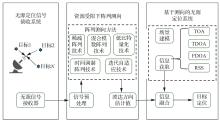
Fig.1
Signal processing flow of a passive direction finding and positioning system
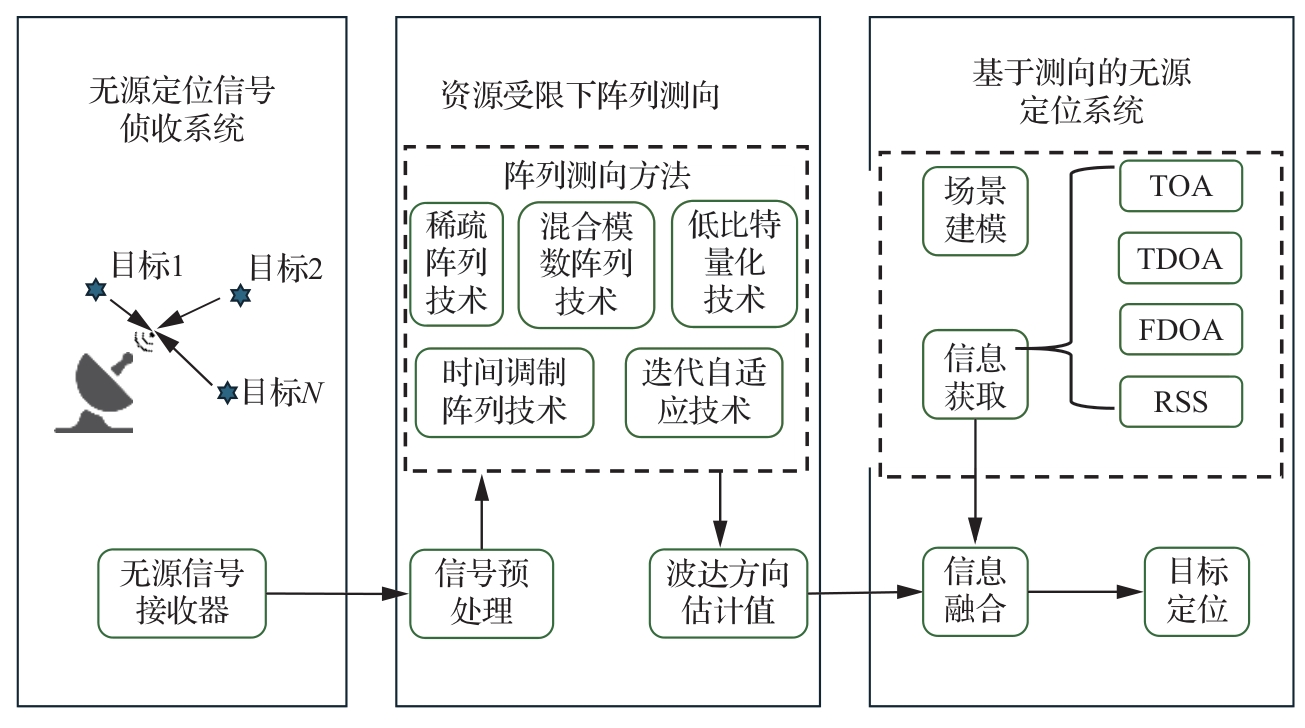
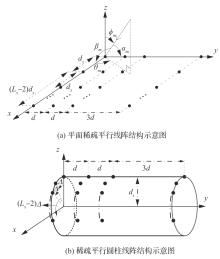
Fig.2
Schematic diagram of multiple parallel sparse linear array structure[31]
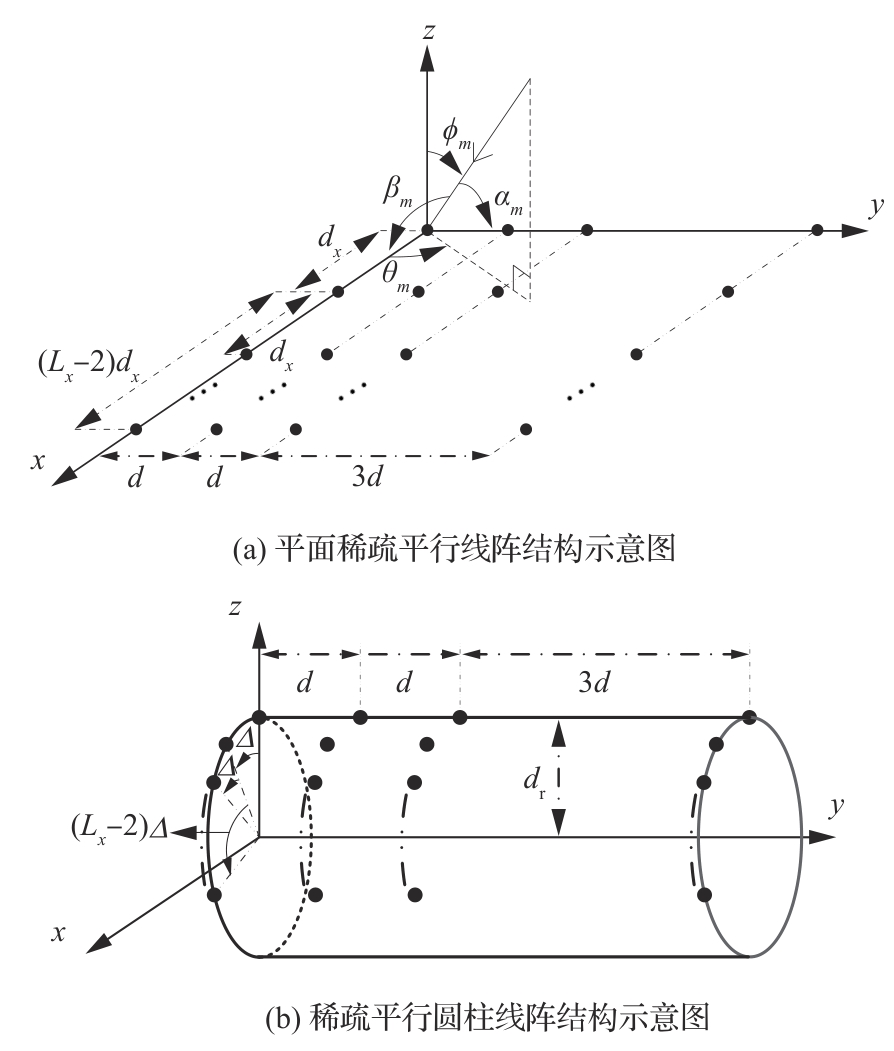
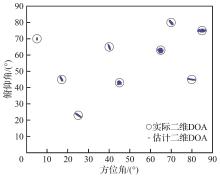
Fig.3
2D DOA estimation scatter
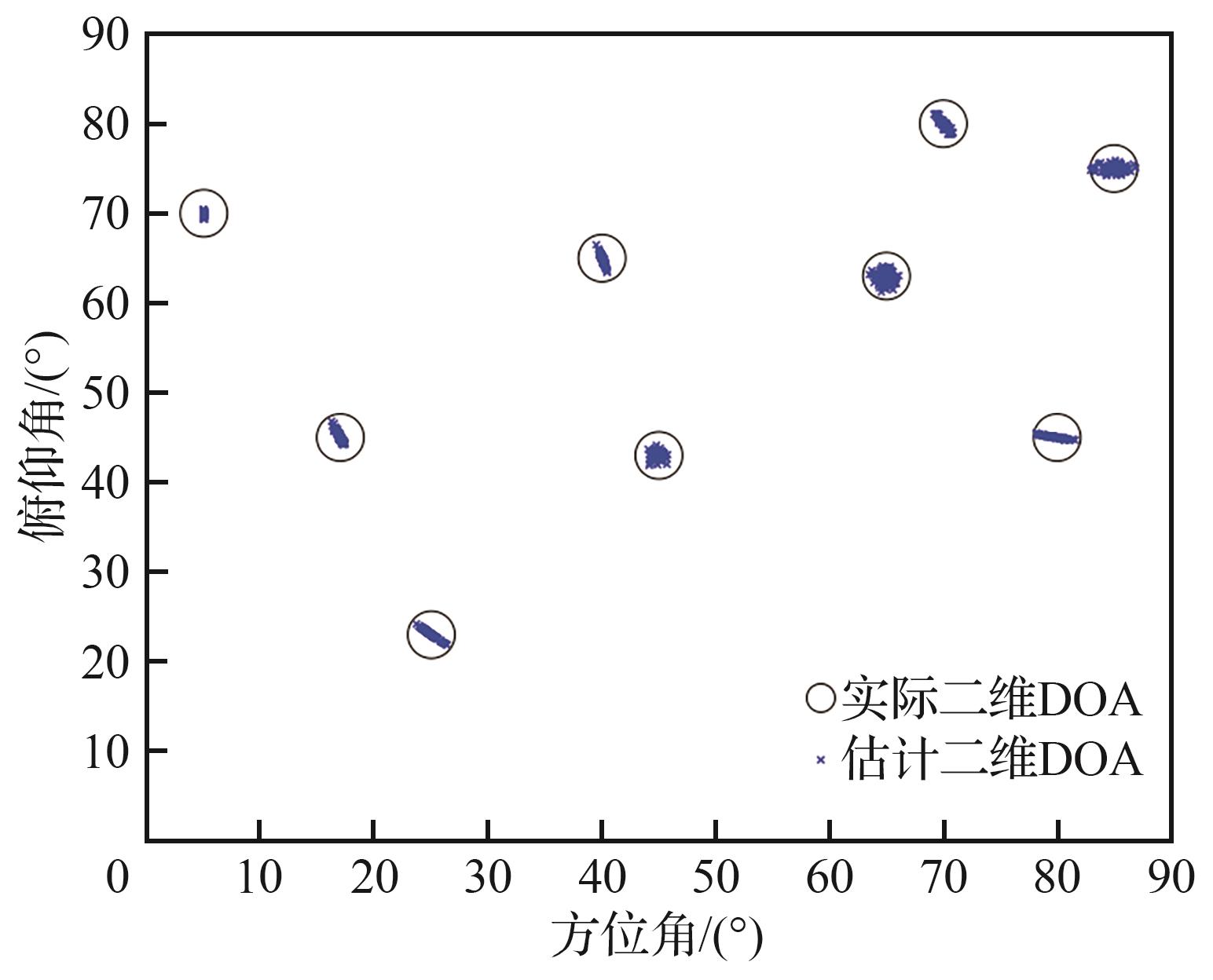
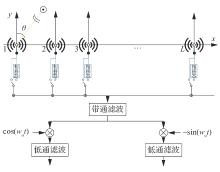
Fig.4
Time modulated array structure model[41]
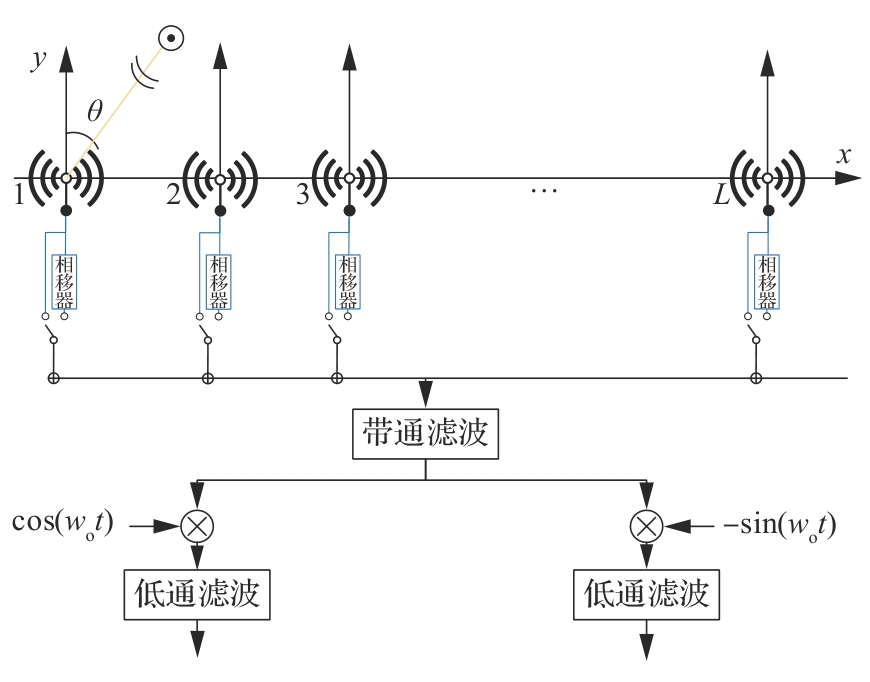
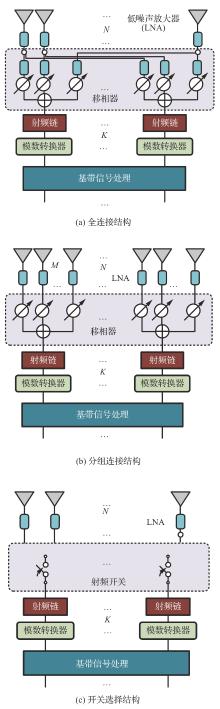
Fig.5
System model of hybrid analog and digital structure[50]
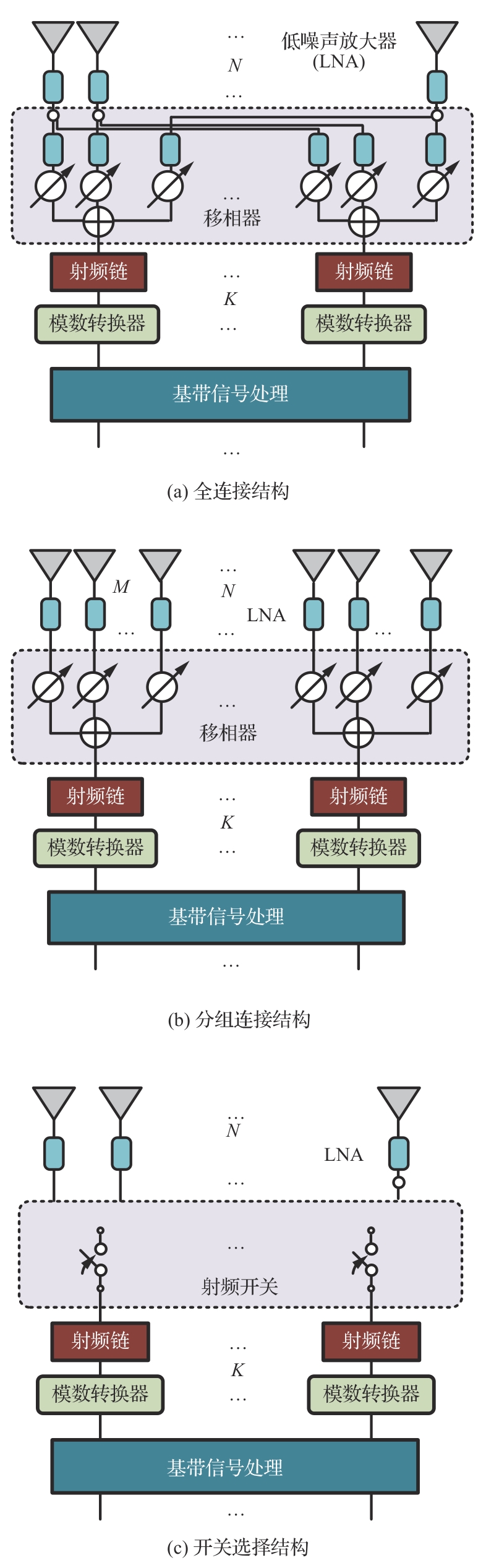

Table 1
Measurement methods for key parameters[63]
| 参数 | 常用方法 |
|---|---|
| 信号角度 | 干涉仪法、自适应波束形成、多重信号分类、 振幅法 |
| 到达时间差 | 最小二乘时延估计、最小均方估计、广义互相关、互相关 |
| 信号强度 | 均值滤波、小波变换、高斯滤波、动态区间 粒子滤波 |
| 多普勒频率 | 瞬时测频技术、相位差分法、线性预测、约束优化 |
Fig.6
Schematic diagram of classical passive positioning classification
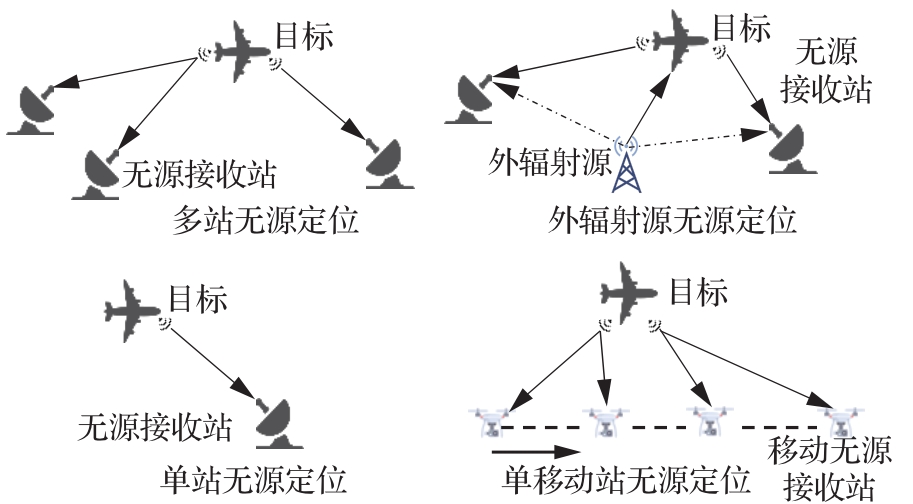
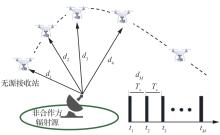
Fig.7
Passive location scenario[24]
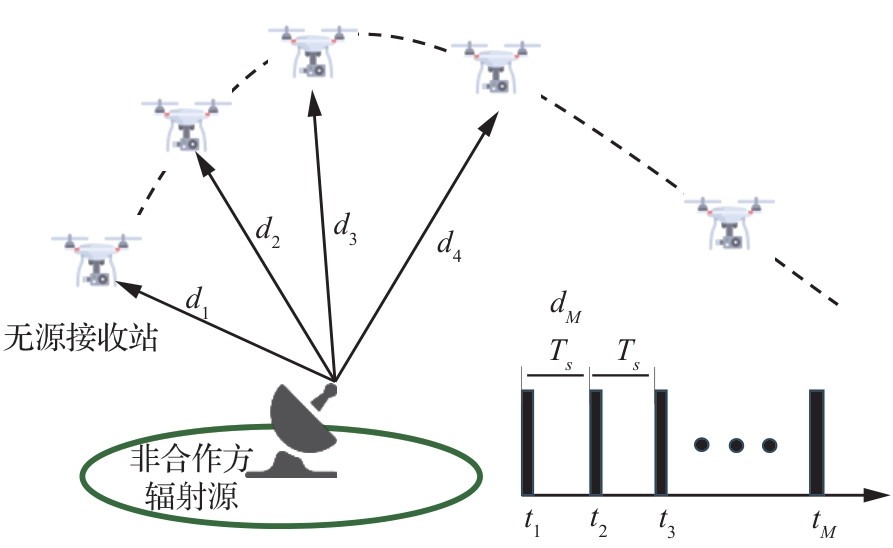
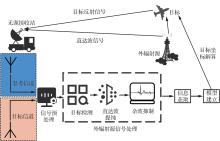
Fig.8
Signal processing flow for passive positioning of external radiation sources
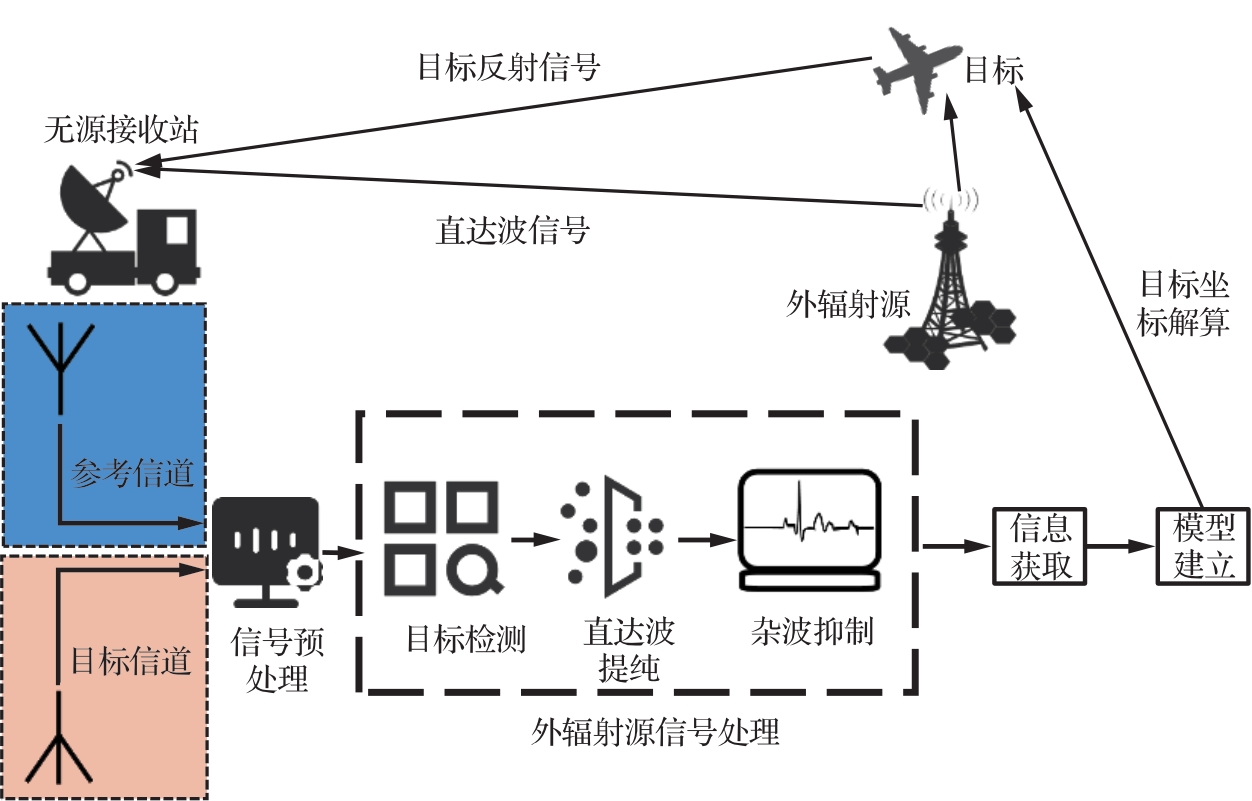
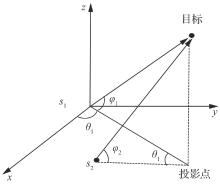
Fig.9
Pure azimuth positioning scenario[78]
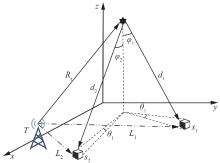
Fig.10
Source localization scenario based on external radiation source
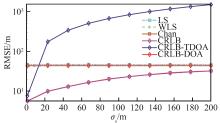
Fig.11
Comparison of positioning accuracy between two systems[92]
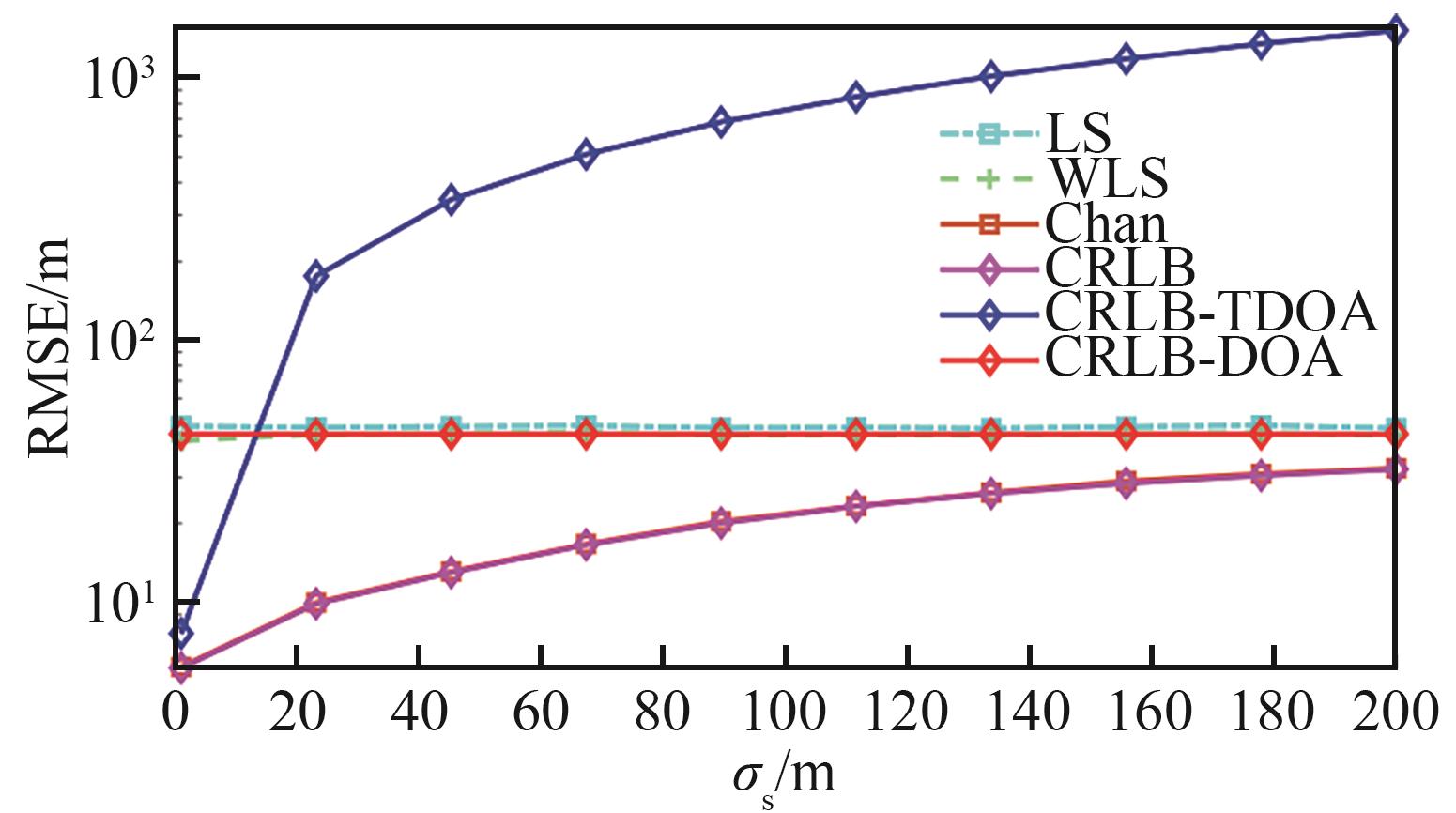
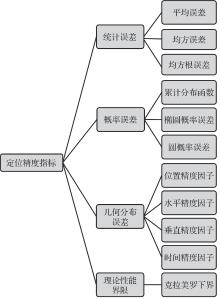
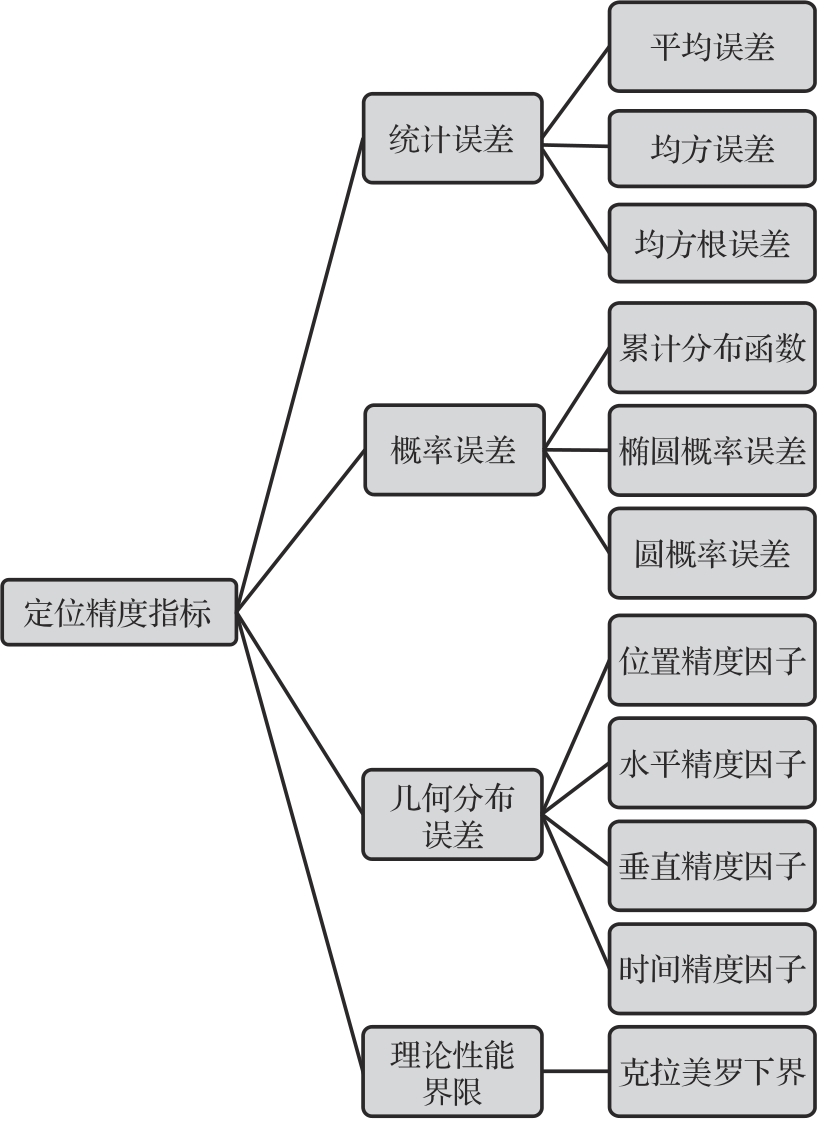
Fig.12
Classification of positioning accuracy metrics[22,95]
| [1] | YUE Y X, LIAO G S, WANG D, et al. Four-stage reconstruction-based direction finding for sparse bistatic MIMO radar[J]. IEEE Transactions on Aerospace and Electronic Systems, 2025, 61(5): 15077-15086. |
| [2] | CHEN H, LIN H G, LIU W, et al. Augmented multi-subarray dilated nested array with enhanced degrees of freedom and reduced mutual coupling[J]. IEEE Transactions on Signal Processing, 2024, 72: 1387-1399. |
| [3] | YUE Y X, ZHANG Z Y, SHI Z G. Generalized widely linear robust adaptive beamforming: A sparse reconstruction perspective[J]. IEEE Transactions on Aerospace and Electronic Systems, 2024, 60(5): 5663-5673. |
| [4] | SHEN Q, LIU W, CUI W, et al. Simplified and enhanced multiple level nested arrays exploiting high-order difference co-arrays[J]. IEEE Transactions on Signal Processing, 2019, 67(13): 3502-3515. |
| [5] | YUE Y X, XU Y G, LIU Z W. Root high-order cumulant MUSIC[J]. Digital Signal Processing, 2022, 122: 103328. |
| [6] | 王鼎, 李长胜, 张瑞杰. 基于无源定位观测方程的一类伪线性加权最小二乘定位闭式解及其理论性能分析[J]. 中国科学: 信息科学, 2015, 45(9): 1197-1217. |
| WANG D, LI C S, ZHANG R J. A pseudo-linear weighted least-squares solution and performance analysis based on passive location measurement equations[J]. Scientia Sinica (Informationis), 2015, 45(9): 1197-1217 (in Chinese). | |
| [7] | 王鼎, 吴瑛, 张莉, 等. 无线电测向与定位理论及方法[M]. 北京: 国防工业出版社, 2016: 1-3. |
| WANG D, WU Y, ZHANG L, et al. Radio direction finding and positioning theory and methods[M]. Beijing: National Defense Industry Press, 2016: 1-3 (in Chinese). | |
| [8] | GAO D W, GUO Q H, JIN M, et al. NN-assisted message-passing-based Bayesian joint DOA estimation and signal detection for ISAC systems with hardware imperfections[J]. IEEE Internet of Things Journal, 2025, 12(23): 50247-50261. |
| [9] | PAN J, YUE Y X, ZHOU C W, et al. 2D DOA and polarization estimation for parallel non-collocated sparse COLD array based on submatrix fitting[J]. Circuits, Systems, and Signal Processing, 2025, 44(7): 4890-4914. |
| [10] | 林昱龙, 王无忌, 武军伟, 等. 基于复合基线时间调制阵列的单通道高精度测向系统[J]. 电子与信息学报, 2024, 46(5): 2028-2035. |
| LIN Y L, WANG W J, WU J W, et al. High-precision direction finding based on time modulation array with single radio frequency channel and composite baselines[J]. Journal of Electronics & Information Technology, 2024, 46(5): 2028-2035 (in Chinese). | |
| [11] | YUE Y X, ZHANG Z Y, ZHOU C W, et al. Closed-form robust adaptive beamforming for sparse diversely polarized antenna array[C]∥2023 IEEE 34th Annual International Symposium on Personal, Indoor and Mobile Radio Communications (PIMRC). Piscataway: IEEE Press, 2023: 1-6. |
| [12] | CHEN H, GUO H D, LIU W, et al. Fourth-order sparse array design from a sum-difference co-array perspective[J]. IEEE Transactions on Signal Processing, 2025, 73: 2243-2254. |
| [13] | YUE Y X, ZHOU C W, XING F Y, et al. Adaptive beamforming for cascaded sparse diversely polarized planar array[J]. IEEE Transactions on Vehicular Technology, 2023, 72(12): 15648-15664. |
| [14] | YUE Y X, ZHENG H, SHI Z G, et al. Two-stage reconstruction for co-array 2D DOA estimation of mixed circular and noncircular signals[J]. IEEE Transactions on Vehicular Technology, 2025, 74(7): 10407-10421. |
| [15] | YIN Y T, WANG Y X, DAI T T, et al. DOA estimation based on smoothed sparse reconstruction with time-modulated linear arrays[J]. Signal Processing, 2024, 214: 109229. |
| [16] | SHU F, QIN Y L, LIU T T, et al. Low-complexity and high-resolution DOA estimation for hybrid analog and digital massive MIMO receive array[J]. IEEE Transactions on Communications, 2018, 66(6): 2487-2501. |
| [17] | LI X P, SHI Z L, HUANG L, et al. ROCS: Robust one-bit compressed sensing with application to direction of arrival[J]. IEEE Transactions on Signal Processing, 2024, 72: 2407-2420. |
| [18] | YARDIBI T, LI J, STOICA P, et al. Source localization and sensing: A nonparametric iterative adaptive approach based on weighted least squares[J]. IEEE Transactions on Aerospace and Electronic Systems, 2010, 46(1): 425-443. |
| [19] | YUE Y X, LIAO G S, YUAN X, et al. Sparse polarimetric array for MIMO system[M]. London: IntechOpen,2024:1-28. |
| [20] | ZHOU H, YUE Y X, CHEN H, et al. Joint DOD, DOA, and polarization estimation for sparse polarimetric MIMO radar[C]∥IEEE Vehicular Technology Conference. Piscataway: IEEE Press, 2025. |
| [21] | 悦亚星, 贺雄鹏, 周杭, 等. 基于平行四阶稀疏线阵的二维波达方向求根闭式估计[J/OL]. 航空学报, (2025-07-21)[2025-11-21]. . |
| YUE Y X, HE X P, ZHOU H, et al. Closed-form root-finding-based two-dimensional direction-of-arrival estimation using a parallel fourth-order sparse linear array[J/OL]. Acta Aeronautica et Astronautica Sinica, (2025-07-21)[2025-11-21]. (in Chinese). | |
| [22] | 李康, 丁国如, 李京华, 等. 无源定位技术发展动态及其应用分析[J]. 航空兵器, 2021, 28(2): 104-112. |
| LI K, DING G R, LI J H, et al. Development and application analysis of passive localization[J]. Aero Weaponry, 2021, 28(2): 104-112 (in Chinese). | |
| [23] | HO K C, CHAN Y T. Solution and performance analysis of geolocation by TDOA[J]. IEEE Transactions on Aerospace and Electronic Systems, 1993, 29(4): 1311-1322. |
| [24] | LIU S N, YUE Y X, ZHAO J Y, et al. Improved SOCP relaxation for SRI-unknown emitter localization using a moving receiver[J]. IEEE Signal Processing Letters, 2025, 32: 2199-2203. |
| [25] | ZHAO J Y, YUE Y X, ZHANG X P, et al. A joint framework of wavelet filtering and fast GSVT-LRSD algorithm for SAR narrowband pulsed RFI suppression[J]. IEEE Transactions on Geoscience and Remote Sensing, 2025, 63: 5216316. |
| [26] | 李俊霞, 王欣, 黄高见, 等. 无源定位技术发展及其展望[J]. 无线电工程, 2024, 54(8): 1825-1846. |
| LI J X, WANG X, HUANG G J, et al. Development and prospects of passive positioning technology[J]. Radio Engineering, 2024, 54(8): 1825-1846 (in Chinese). | |
| [27] | YUE Y X, XU Y G, ZHUANG J P, et al. Mutual coupling self-calibration for parameter estimation with vector antennas[C]∥2019 IEEE International Conference on Signal, Information and Data Processing (ICSIDP). Piscataway: IEEE Press, 2019. |
| [28] | YUE Y X, XU Y G, LIU Z W. Manifold separation based DOA estimation using fourth-order cumulant[C]∥Proceedings of the 2020 4th International Conference on Digital Signal Processing. New York: ACM, 2020: 218-222. |
| [29] | LIU C L, VAIDYANATHAN P P. Hourglass arrays and other novel 2-D sparse arrays with reduced mutual coupling[J]. IEEE Transactions on Signal Processing, 2017, 65(13): 3369-3383. |
| [30] | PAN J, YUE Y X, TIAN M, et al. Enhanced 2D DOA and polarization estimation for sparse distributed orthogonal loop and dipole planar array based on fourth-order cumulant[J]. Digital Signal Processing, 2026, 168: 105607. |
| [31] | YUE Y X, ZHOU C W, LIU Y, et al. 2D DOA estimation for multiple parallel sparse linear arrays via recursive roots finding[J]. IEEE Transactions on Vehicular Technology, 2025, 74(11): 18226-18231. |
| [32] | YUE Y X, XU Y G, SHEN L, et al. Parameter estimation of coexisted circular and strictly non-circular signals[J]. Electronics Letters, 2017, 53(13): 864-866. |
| [33] | YUE Y X, ZHANG Z Y, ZHOU C W, et al. Closed-form two-dimensional DOA and polarization joint estimation using parallel non-collocated sparse COLD arrays[C]∥2022 IEEE 12th Sensor Array and Multichannel Signal Processing Workshop (SAM). Piscataway: IEEE Press, 2022: 16-20. |
| [34] | ZHENG H, SHI Z G, ZHOU C W, et al. Coupled coarray tensor CPD for DOA estimation with coprime L-shaped array[J]. IEEE Signal Processing Letters, 2021, 28: 1545-1549. |
| [35] | WEN F Q, SHI J P, ZHANG Z J. Joint 2D-DOD, 2D-DOA, and polarization angles estimation for bistatic EMVS-MIMO radar via PARAFAC analysis[J]. IEEE Transactions on Vehicular Technology, 2020, 69(2): 1626-1638. |
| [36] | YUE Y X, XU Y G, LIU Z W. Two-dimensional direction-of-arrival estimation in monostatic MIMO radar[C]∥2021 4th International Conference on Information Communication and Signal Processing (ICICSP). Piscataway: IEEE Press, 2021: 60-64. |
| [37] | LIU D H, ZHAO Y B. Two-dimensional DOA estimation via matrix completion and sparse matrix recovery for coprime planar array[J]. IEEE Transactions on Vehicular Technology, 2023, 72(11): 14127-14140. |
| [38] | ZHOU C W, GU Y J, SHI Z G, et al. Structured nyquist correlation reconstruction for DOA estimation with sparse arrays[J]. IEEE Transactions on Signal Processing, 2023, 71: 1849-1862. |
| [39] | YUE Y X, WANG Y, XING F Y, et al. Polynomial rooting-based parameter estimation for polarimetric monostatic MIMO radar[J]. Signal Processing, 2023, 212: 109172. |
| [40] | HE C, JIN R H, LIANG X L, et al. Direction finding and calibration method based on time modulated array[C]∥2015 International Symposium on Antennas and Propagation (ISAP). Piscataway: IEEE Press, 2015: 1-4. |
| [41] | Li H, Liu Z, Xu Y. Aperiodic vector antenna switching based direction of arrival estimation for noncircular signals[C]∥2021 4th International Conference on Information Communication and Signal Processing (ICICSP). Piscataway: IEEE Press, 2021: 50-54. |
| [42] | LI S Y, YAN B J, ZHAN Q K, et al. Antiambiguity direction finding by harmonics’ amplitudes with two-element time-modulated array[J]. IEEE Antennas and Wireless Propagation Letters, 2024, 24(1): 53-57. |
| [43] | NI G, HE C. Direction of arrival with coherent sources in time modulated arrays[C]∥2019 International Symposium on Antennas and Propagation (ISAP). Piscataway: IEEE Press, 2019: 1-3. |
| [44] | NI G, HE C, LIU Y Q, et al. Direction-finding based on time-modulated array without sampling synchronization[J]. IEEE Antennas and Wireless Propagation Letters, 2020, 19(12): 2149-2153. |
| [45] | YANG L, CHEN J F, LIANG X L, et al. Broadband direction finding based on a three-element time-modulated array[J]. IEEE Antennas and Wireless Propagation Letters, 2024, 23(2): 853-857. |
| [46] | 悦亚星, 李天宇, 周成伟, 等. 稀疏多极化阵列设计研究进展与展望[J]. 雷达学报, 2023, 12(2): 312-331. |
| YUE Y X, LI T Y, ZHOU C W, et al. Research progress and prospect of sparse diversely polarized array design[J]. Journal of Radars, 2023, 12(2): 312-331 (in Chinese). | |
| [47] | NI G, HE C, GAO Y C, et al. High-efficiency modulation and harmonic beam scanning in time-modulated array[J]. IEEE Transactions on Antennas and Propagation, 2023, 71(1): 368-380. |
| [48] | NI G, HE C, JIN R H. An improved modulation module in time-modulated array[J]. IEEE Antennas and Wireless Propagation Letters, 2021, 21(3): 561-565. |
| [49] | KONG L, LI S Y, YAN B J, et al. Enhancing dynamic range of complex-ratio estimation between two RF signals with time modulation[J]. IEEE Microwave and Wireless Technology Letters, 2025, 35(9): 1436-1439. |
| [50] | ZHANG R Y, SHIM B, WU W. Direction-of-arrival estimation for large antenna arrays with hybrid analog and digital architectures[J]. IEEE Transactions on Signal Processing, 2022, 70: 72-88. |
| [51] | ZHOU Y, LIU G H, LI J, et al. A high-efficiency beam sweeping algorithm for DOA estimation in the hybrid analog-digital structure[J]. IEEE Wireless Communications Letters, 2021, 10(10): 2323-2327. |
| [52] | WANG S X, SUN J, WU X H. A DOA estimation method based on low-complexity hybrid analog and digital architecture design[C]∥2023 IEEE 23rd International Conference on Communication Technology (ICCT). Piscataway: IEEE Press, 2023: 1348-1352. |
| [53] | TIAN Y, ZHAO H Y, WU T, et al. Efficient DOA estimation in hybrid analog-digital structures: Mitigating the impact of mutual coupling[J]. IEEE Transactions on Vehicular Technology, 2025, PP(99): 1-6. |
| [54] | LI X K, XIAO Y H, HUANG L. One-bit DOA estimation of coherent signals[C]∥2023 6th International Conference on Information Communication and Signal Processing (ICICSP). Piscataway: IEEE Press, 2023: 229-233. |
| [55] | CHEN M Y, LI Q, HUANG L, et al. One-bit DOA estimation using robust sparse covariance fitting in non-uniform noise[C]∥2022 IEEE 12th Sensor Array and Multichannel Signal Processing Workshop (SAM). Piscataway: IEEE Press, 2022: 11-15. |
| [56] | CHEN M Y, LI Q, HUANG L, et al. One-bit cramér–Rao bound of direction of arrival estimation for deterministic signals[J]. IEEE Transactions on Circuits and Systems II: Express Briefs, 2024, 71(2): 957-961. |
| [57] | CHEN L, SUN W Z, CHEN G T, et al. Low-cost one-bit non-synchronous measurements for sound source localization[C]∥2022 5th International Conference on Information Communication and Signal Processing (ICICSP). Piscataway: IEEE Press, 2022: 641-645. |
| [58] | LIU C L, VAIDYANATHAN P P. One-bit sparse array DOA estimation[C]∥2017 IEEE International Conference on Acoustics, Speech and Signal Processing (ICASSP). Piscataway: IEEE Press, 2017: 3126-3130. |
| [59] | BAI L, CAO H L, BAI T, et al. 1-bit programmable metasurface-based 2-D direction finding[J]. IEEE Antennas and Wireless Propagation Letters, 2023, 22(9): 2160-2164. |
| [60] | BAO M, HUANG R, CHEN R, et al. Fast two-dimensional high-resolution DoA estimation for millimeter-wave radar systems based on iterative adaptive approach[J]. IEEE Transactions on Aerospace and Electronic Systems, 2025, 61(5): 12839-12851. |
| [61] | CHEN Y, HUANG L T, SO H C. Selective range iterative adaptive approach for high-resolution DOA estimation[J]. IEEE Access, 2019, 7: 15634-15640. |
| [62] | AGARWAL A, KUMAR A, AGRAWAL M. Iterative adaptive approach to DOA estimation with acoustic vector sensors[C]∥OCEANS 2015-Genova. Piscataway: IEEE Press, 2015: 1-8. |
| [63] | ZEKAVAT S, BUEHRER R M, DURGIN G D, et al. An overview on position location: Past, present, future[J]. International Journal of Wireless Information Networks, 2021, 28(1): 45-76. |
| [64] | 吴癸周, 郭福成, 张敏. 信号直接定位技术综述[J]. 雷达学报, 2020, 9(6): 998-1013. |
| WU G Z, GUO F C, ZHANG M. Direct position determination: An overview[J]. Journal of Radars, 2020, 9(6): 998-1013 (in Chinese). | |
| [65] | OLSEN K E, ASEN W. Bridging the gap between civilian and military passive radar[J]. IEEE Aerospace and Electronic Systems Magazine, 2017, 32(2): 4-12. |
| [66] | 郁春来, 张元发, 万方. 无源定位技术体制及装备的现状与发展趋势[J]. 空军雷达学院学报, 2012, 26(2): 79-85. |
| YU C L, ZHANG Y F, WAN F. Actuality and development trend of passive location technical system and equipment[J]. Journal of Air Force Radar Academy, 2012, 26(2): 79-85 (in Chinese). | |
| [67] | 杨建华. 雷达无源定位技术的发展与战术应用[J]. 中国电子科学研究院学报, 2009, 4(6): 601-605. |
| YANG J H. The latest development of radar passive localization technology and its applications[J]. Journal of China Academy of Electronics and Information Technology, 2009, 4(6): 601-605 (in Chinese). | |
| [68] | 衣晓, 杜金鹏. 雷达与电子支援措施异步抗差航迹关联算法[J]. 电子与信息学报, 2021, 43(7): 1947-1953. |
| YI X, DU J P. Asynchronous anti-bias track association algorithm of radar and electronic support measurements[J]. Journal of Electronics & Information Technology, 2021, 43(7): 1947-1953 (in Chinese). | |
| [69] | GUVENC I, CHONG C C. A survey on TOA based wireless localization and NLOS mitigation techniques[J]. IEEE Communications Surveys & Tutorials, 2009, 11(3): 107-124. |
| [70] | HO K C, XU W W. An accurate algebraic solution for moving source location using TDOA and FDOA measurements[J]. IEEE Transactions on Signal Processing, 2004, 52(9): 2453-2463. |
| [71] | CATOVIC A, SAHINOGLU Z. The Cramer-Rao bounds of hybrid TOA/RSS and TDOA/RSS location estimation schemes[J]. IEEE Communications Letters, 2004, 8(10): 626-628. |
| [72] | LAARAIEDH M, AVRILLON S, UGUEN B. Cramer-Rao lower bounds for nonhybrid and hybrid localisation techniques in wireless networks[J]. Transactions on Emerging Telecommunications Technologies, 2012, 23(3): 268-280. |
| [73] | GRIFFITHS H D, BAKER C J. Passive coherent location radar systems. Part 1: Performance prediction[J]. IEE Proceedings-Radar, Sonar and Navigation, 2005, 152(3): 153. |
| [74] | BAKER C J, GRIFFITHS H D, PAPOUTSIS I. Passive coherent location radar systems. Part 2: Waveform properties[J]. IEE Proceedings-Radar, Sonar and Navigation, 2005, 152(3): 160. |
| [75] | 应涛, 黄高明, 左炜, 等. 非合作无源探测技术研究进展与发展趋势[J]. 高技术通讯, 2015, 25(5): 481-492. |
| YING T, HUANG G M, ZUO W, et al. Development and prospect of passive detection technology based on non-cooperative illuminators[J]. Chinese High Technology Letters, 2015, 25(5): 481-492 (in Chinese). | |
| [76] | 宋杰, 何友, 蔡复青, 等. 基于非合作雷达辐射源的无源雷达技术综述[J]. 系统工程与电子技术, 2009, 31(9): 2151-2156, 2180. |
| SONG J, HE Y, CAI F Q, et al. Overview of passive radar technology based on non-cooperative radar illuminator[J]. Systems Engineering and Electronics, 2009, 31(9): 2151-2156, 2180 (in Chinese). | |
| [77] | 李红伟. 外辐射源雷达目标定位与跟踪方法研究[D]. 西安: 西安电子科技大学, 2012. |
| LI H W. Studies on target localization and tracking in passive coherent location radar[D]. Xi’an: Xidian University, 2012 (in Chinese). | |
| [78] | 吴龙文, 王宝莹, 魏俊杰, 等. 基于AOA的双机无源定位模型及其解算方法[J]. 系统工程与电子技术, 2020, 42(5): 978-986. |
| WU L W, WANG B Y, WEI J J, et al. AOA based dual-aircraft passive positioning model and its location methods[J]. Systems Engineering and Electronics, 2020, 42(5): 978-986 (in Chinese). | |
| [79] | WANG J G, HUA X L, ZHU Y Q, et al. Passive location to moving emitter using DOA and its rate of change[C]∥Proceedings of the 2008 Congress on Image and Signal Processing. New York: ACM, 2008: 229-233. |
| [80] | WANG Y, HO K C. Unified near-field and far-field localization for AOA and hybrid AOA-TDOA positionings[J]. IEEE Transactions on Wireless Communications, 2017, 17(2): 1242-1254. |
| [81] | HEJAZI F, NOROUZI Y, NAYEBI M M. Lower bound of error in AOA based passive source localization using single moving platform[C]∥East-West Design & Test Symposium (EWDTS 2013). Piscataway: IEEE Press, 2013: 1-4. |
| [82] | YANG Z W, ZHU S Y, CHEN C L, et al. Distributed path optimisation of mobile sensor networks for AOA target localisation[J]. IET Control Theory & Applications, 2019, 13(17): 2817-2827. |
| [83] | HAMDOLLAHZADEH M, AMIRI R, BEHNIA F. Optimal sensor placement for multi-source AOA localisation with distance-dependent noise model[J]. IET Radar, Sonar & Navigation, 2019, 13(6): 881-891. |
| [84] | AUBRY A, CAROTENUTO V, DE MAIO A, et al. Joint exploitation of TDOA and PCL techniques for two-dimensional target localization[J]. IEEE Transactions on Aerospace and Electronic Systems, 2020, 56(1): 597-609. |
| [85] | LI J, ZHAO Y J, LI D H. Accurate single-observer passive coherent location estimation based on TDOA and DOA[J]. Chinese Journal of Aeronautics, 2014, 27(4): 913-923. |
| [86] | ZHANG Y, HO K C. Localization by signals of opportunity in the absence of transmitter position[J]. IEEE Transactions on Signal Processing, 2022, 70: 4602-4617. |
| [87] | MAO Z, SU H T, SONG J K, et al. Joint target and transmitter localization with AOA and DTD using passive sensors[J]. IEEE Signal Processing Letters, 2024, 31: 1570-1574. |
| [88] | YIN J H, WAN Q, YANG S W, et al. A simple and accurate TDOA-AOA localization method using two stations[J]. IEEE Signal Processing Letters, 2016, 23(1): 144-148. |
| [89] | ZHAO Y, LI Z, HAO B J, et al. Bias reduced method for TDOA and AOA localization in the presence of sensor errors[C]∥2017 IEEE International Conference on Communications (ICC). Piscataway: IEEE Press, 2017: 1-6. |
| [90] | JIA T Y, WANG H Y, SHEN X H, et al. An accurate TDOA-AOA localization method using structured total least squares[C]∥OCEANS 2017-Aberdeen. Piscataway: IEEE Press, 2017: 1-6. |
| [91] | 熊杰, 陈俊, 宁静, 等. 移动辐射源AOA-TDOA-FDOA联合定位闭合解算法[J]. 电子科技大学学报, 2020, 49(2): 219-227. |
| XIONG J, CHEN J, NING J, et al. Closed-form AOA-TDOA-FDOA solution for moving source location[J]. Journal of University of Electronic Science and Technology of China, 2020, 49(2): 219-227 (in Chinese). | |
| [92] | CONG L, ZHUANG W H. Hybrid TDOA/AOA mobile user location for wideband CDMA cellular systems[J]. IEEE Transactions on Wireless Communications, 2002, 1(3): 439-447. |
| [93] | GORJI A A, ANDERSON B D O. Emitter localization using received-strength-signal data[J]. Signal Processing, 2013, 93(5): 996-1012. |
| [94] | 邢翠柳, 陈建民. 多站无源时差定位精度分析[J]. 无线电工程, 2012, 42(2): 32-34, 48. |
| XING C L, CHEN J M. Analysis on positioning accuracy of TDOA passive location by multi-station[J]. Radio Engineering, 2012, 42(2): 32-34, 48 (in Chinese). | |
| [95] | SIRISH KUMAR P, SRILATHA INDIRA DUTT V B S. The global positioning system: Popular accuracy measures[J]. Materials Today: Proceedings, 2020, 33: 4797-4801. |
| [96] | 郭立民, 于致博. 一种基于动态门限与LMS算法相结合的多径干扰抑制算法[J]. 舰船电子对抗, 2024, 47(2): 52-56, 92. |
| GUO L M, YU Z B. A multipath interference suppression algorithm based on dynamic threshold combined with LMS algorithm[J]. Shipboard Electronic Countermeasure, 2024, 47(2): 52-56, 92 (in Chinese). | |
| [97] | QIN Y G, TANG J, TANG F X, et al. Multi-agent reinforcement learning in adversarial game environments: Personalized anti-interference strategies for heterogeneous UAV communication[J]. IEEE Transactions on Mobile Computing, 2025, 24(9): 8886-8898. |
| [98] | DUAN M, LI X P, HUA M, et al. Intelligent reflecting surface aided 2D-DOA estimation for NLOS target[C]∥2024 7th International Conference on Information Communication and Signal Processing (ICICSP). Piscataway: IEEE Press, 2024: 1073-1078. |
| [99] | YAN Q, JIANG L, KIA S S. Measurement scheduling for cooperative localization in resource-constrained conditions[J]. IEEE Robotics and Automation Letters, 2020, 5(2): 1991-1998. |
| [100] | YUE Y X, XU Y G, LIU Z W. Manifold separation and polarimetric element space based parameter estimation for polarimetric monostatic MIMO radar[C]∥2021 CIE International Conference on Radar (Radar). Piscataway: IEEE Press, 2021: 573-577. |
| [101] | YUE Y X, XU Y G, LIU Z W. Closed-form two-dimensional DOA and polarization estimation of coexisted circular and noncircular signals[C]∥2021 CIE International Conference on Radar (Radar). Piscataway: IEEE Press, 2021: 1556-1560. |
| [102] | YUE Y X, XU Y G, LIU Z W, et al. Parameter estimation of coexisted circular and strictly noncircular sources using diversely polarized antennas[J]. IEEE Communications Letters, 2018, 22(9): 1822-1825. |
| [103] | DOAN V S, LE H K, HOANG V P. Multi-in-multi-out neural network for joint DOA estimation and automatic modulation classification[J]. IEEE Communications Letters, 2025, 29(8): 1993-1997. |
| [104] | MCPARTLIN B, WAGIH M. Sub-1 GHz indoor RSSI-based localization: An experimental evaluation of trilateration, multilateration, and machine learning fingerprinting methods[J]. IEEE Journal of Selected Areas in Sensors, 2025, 2: 121-135. |
| [105] | FAN R, SI C K, YI W C, et al. YOLO-DoA: A new data-driven method of DoA estimation based on YOLO neural network framework[J]. IEEE Sensors Letters, 2023, 7(2): 7000604. |
| [106] | 梅灏. 通信信号的智能测向与识别研究[D]. 成都: 电子科技大学, 2025. |
| MEI H. 通信信号的智能测向与识别研究[D]. Chengdu: University of Electronic Science and Technology of China, 2025 (in Chinese). | |
| [107] | MERKOFER J P, REVACH G, SHLEZINGER N, et al. Deep augmented music algorithm for data-driven doa estimation[C]∥ICASSP 2022-2022 IEEE International Conference on Acoustics, Speech and Signal Processing (ICASSP). Piscataway: IEEE Press, 2022: 3598-3602. |
| [108] | 王华飞. 非理想条件下基于机器学习的阵列信号测向方法研究[D]. 海口: 海南大学, 2024. |
| WANG H F. Research on array signal direction finding method based on machine learning under non-ideal conditions[D].Haikou: Hainan University, 2024 (in Chinese). | |
| [109] | FORNASIER M, RAUHUT H. Compressive sensing[M]∥Handbook of Mathematical Methods in Imaging. Berlin, Heidelberg: Springer, 2014: 1-48. |
| [110] | CANDES E J, WAKIN M B. An introduction to compressive sampling[J]. IEEE Signal Processing Magazine, 2008, 25(2): 21-30. |
| [111] | ZHANG H W. Robust divide-and-conquer multiple importance Kalman filtering via fuzzy measure for multipassive-sensor target tracking[J]. IEEE Transactions on Fuzzy Systems, 2025, 33(6): 1864-1875. |
| [112] | 冯奇, 曲长文, 李廷军. 基于约束加权最小二乘的无源定位闭式解算方法[J]. 系统工程与电子技术, 2017, 39(2): 263-268. |
| FENG Q, QU C W, LI T J. Closed-form solution for passive localization based on constrained weighted least squares[J]. Systems Engineering and Electronics, 2017, 39(2): 263-268 (in Chinese). | |
| [113] | FANG Z X, HAN B, SCHOTTEN H D. Trustworthy UAV cooperative localization: Information analysis of performance and security[J]. IEEE Transactions on Vehicular Technology, 2025, 74(8): 12997-13012. |
| [114] | GOEL S, KEALY A, GIKAS V, et al. Cooperative localization of unmanned aerial vehicles using GNSS, MEMS inertial, and UWB sensors[J]. Journal of Surveying Engineering, 2017, 143(4): 04017007. |
| [115] | NAIK G R, WANG W. Blind source separation[M]. Berlin: Springer, 2014. |
| [116] | GONOG L, ZHOU Y M. A review: Generative adversarial networks[C]∥2019 14th IEEE Conference on Industrial Electronics and Applications (ICIEA). Piscataway: IEEE Press, 2019. |
| [117] | ZHANG D S. Wavelet transform[M]∥Fundamentals of Image Data Mining. Cham: Springer International Publishing, 2019: 35-44. |
| [118] | REN J C, HAN J W, DALLA MURA M. Special issue on multimodal data fusion for multidimensional signal processing[J]. Multidimensional Systems and Signal Processing, 2016, 27(4): 801-805. |
| [1] | Yizhe LUO, Hui ZHANG, Xinde YU, Zhao JIN, Shuo FENG, Yucheng SHI, Mingling XU. Hierarchical dynamic scheduling for multi-wave carrier-based aircraft ammunition support missions [J]. Acta Aeronautica et Astronautica Sinica, 2025, 46(18): 331945-331945. |
| [2] | JIAO Jingpin, LI Haiping, ZHAI Shuncheng, HE Cunfu, WU Bin. Lamb waves health monitoring technology for metal stiffened plate based on compressive sensing [J]. ACTA AERONAUTICAET ASTRONAUTICA SINICA, 2019, 40(7): 422695-422695. |
| [3] | ZENG Wenhao, ZHU Xiaohua, LI Hongtao, MA Yigeng, CHEN Cheng. A 2D DOA estimation method for sparse array [J]. ACTA AERONAUTICAET ASTRONAUTICA SINICA, 2016, 37(7): 2269-2275. |
| [4] | SHEN Haiou, WANG Buhong. Extended unitary matrix pencil algorithm for optimal design of sparse reconfigurable antenna arrays [J]. ACTA AERONAUTICAET ASTRONAUTICA SINICA, 2016, 37(12): 3811-3820. |
| [5] | WANG Quanxi, HUANG Liang, WANG Yang. A Heading Correction Method for Airborne Navigation Equipment [J]. ACTA AERONAUTICAET ASTRONAUTICA SINICA, 2014, 35(9): 2568-2573. |
| [6] | SUN Guo-liang;SHEN Shi-tuan;DING Zi-ming;ZHENG Yu-gui;LI Rui. An Integration Method for Passive RDSS and DNS [J]. ACTA AERONAUTICAET ASTRONAUTICA SINICA, 2006, 27(4): 682-686. |
| Viewed | ||||||
|
Full text |
|
|||||
|
Abstract |
|
|||||
Address: No.238, Baiyan Buiding, Beisihuan Zhonglu Road, Haidian District, Beijing, China
Postal code : 100083
E-mail:hkxb@buaa.edu.cn
Total visits: 6658907 Today visits: 1341All copyright © editorial office of Chinese Journal of Aeronautics
All copyright © editorial office of Chinese Journal of Aeronautics
Total visits: 6658907 Today visits: 1341

 CJA
CJA
