

 CJA
CJA
作为下一代飞行器的革命性设计方向,变体飞行器通过动态调整机翼气动外形,可有效突破传统固定机翼飞行器在单一工况下的气动效率限制和多任务适应性不足的两大核心局限,为飞行器跨域性能提升开辟了新维度[1-2]。在军用领域,变体飞行器可在侦察、打击、巡航等多种任务之间实现快速切换,进而拓展远程飞机的航程,提升作战效能与隐身能力[3-4];在民用领域,可变体结构能够消除前、后缘缝翼,降低起飞着陆噪声,实现绿色飞行的目标。综上所述,光滑连续的分布式变形机翼对于提升未来飞行器的气动性能具有至关重要的作用[5-6]。
因其巨大的优势与发展潜力,国内外针对变体机翼开展大量的研究,并取得了一些积极进展。早期的变体机翼研究主要集中在刚性变体机翼或刚柔耦合机翼上[7-10],刚性变形机翼主要通过刚性结构的相对旋转或滑动实现;其特点是变形准确,承载能力强,但结构复杂带来的重量问题无法避免。刚柔耦合型结构则通过内部刚性机构配合柔性蒙皮变形;该结构虽然能较好的解决结构的重量与变形问题,但其变形精度仍有待提高。以典型应用为例,通过刚性铰链机构实现后掠角调节(20°~68°),但复杂的机械系统导致重量代价过高,且无法实现翼面连续曲率变化[11]。柔性系统公司主研开展的全尺寸柔性无缝变弯度后缘实现了在630 km时速下-2°到+30°的变弯度能力,但仍无法实现展向的分布式大变形能力。欧洲Clean Sky计划发展的刚柔耦合机翼虽通过分段式柔性蒙皮提升前缘弯度调节能力,但受限于驱动能量密度与疲劳寿命,难以支撑大展向变形需求[12]。国内研究进展同样面临类似挑战,中国飞机强度研究所已研制的变弯度前/后缘工程样机的变形范围仍局限于机翼弦向局部区域[13-19]。总体而言,基于传统机构设计的变体机翼方案在减重方面仍有较大的局限性,有时甚至会因为重量过大而抵消结构设计带来的空气动力学优势。
近年来,受生物肌体多自由度变形机制启发,通过人工设计的微尺度拓扑可有效突破传统材料宏观力学性能的物理限制,随着拓扑优化、增材制造和可逆装配等新技术的成熟,超材料结构在轻量化设计、功能可编程调控及模块化装配方面展现出显著优势[20-26]。第一,基于空间点阵拓扑的周期性扩展特性,可实现轻量化与承载效能的协同优化;第二,通过调控微观胞元的几何、材料或拓扑特征可实现胞元结构的功能可编程调控;第三,力学超材料的模块化构型设计使其具有局部损伤可替换的特性,在未来战场可实现快速重构;此外,力学超材料还有望结合智能材料形成集变形驱动、能量转换于一体的自适应智能系统,为新一代飞行器主动变形结构、柔性机器人及可重构空间机构奠定了基础[27-28]。
当前国际研究领域已实现从力学行为表征、拓扑优化设计到智能装配技术的系统性突破。如美国国家航空航天局(NASA)开发了一种创新的点阵机翼设计技术,该机翼可调整飞行姿态以实现最佳的飞行效率,同时具有轻质的优势[29]。Cheung团队提出平面单元组装策略,将二维胞元扩展为三维八面体点阵,解决了增材制造大尺度结构成型难题[30]。此外,Khoshnevis等进一步建立了基于微型机器人的自动装配控制体系,实现局部损伤可替换[31]。国内在基于力学超材料的可变体结构领域起步较晚,但已取得一系列积极成果[32-36]。Wang等提出了基于力学超材料的轻质大范围分布式变体结构概念,实现了全点阵变形翼面分布式主动扭转变形控制[35-36]。总体而言,基于力学超材料的变形机翼概念是未来飞行器发展的变革性技术之一,但现有研究还存在无法实现分布式的多模式变构。因此,需要在现有基础上对超材料点阵变形机翼多模式变构实现机制进行系统研究。
本研究旨在开发一种基于可逆装配力学超材料的多模态变形机翼,其核心研究意义在于:突破传统机翼单一变形模式的局限,通过集成“局部变厚度”与“翼面整体扭转”2种主动可控变形能力于一体,显著提升飞行器在全包线内的综合气动性能和任务适应性。这种创新设计能够在巡航阶段,通过局部变厚度精细调节翼型弯度与相对厚度,实现最优升阻比,大幅降低油耗与航程成本;在高速机动或阵风扰动时,则通过整体扭转快速调整机翼攻角分布,有效增升、抑制颤振或缓解载荷,提升飞行稳定性与安全性。
鉴于此,首先构建具有力学性能梯度的基础胞元体系,通过刚性胞元(高弹性模量)与柔性胞元(大变形能力)的力学特性差异化设计,分别实现结构承载与大变形功能。其次,面向多模式协同变形需求,在基础胞元体系上拓展功能化变形单元,开发主动变形胞元以实现局部驱动响应。继而针对翼型气动轮廓的几何特征,提出过渡变形胞元结构。最终建立参数化组合策略,将多类胞元依据变形需求进行空间排布,形成具有梯度力学特性的全点阵机翼架构。通过有限元仿真与试验验证超材料机翼多模式变形可行性与运动协调性,并基于增材制造技术完成原理样件加工并进行功能验证。
1 胞元设计与可逆装配技术
1.1 胞元设计
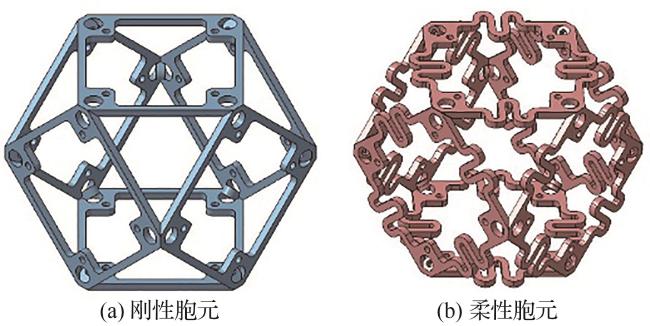
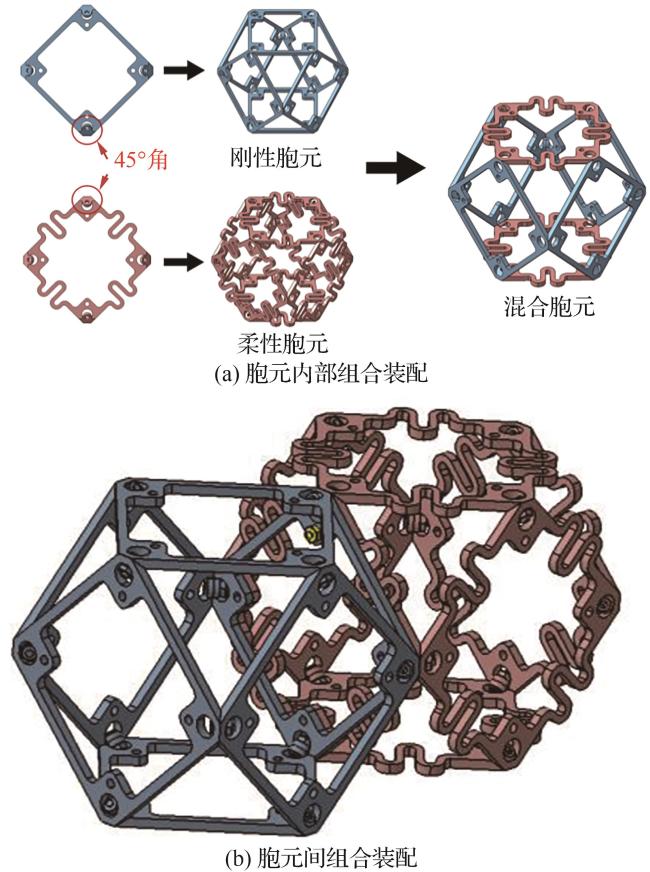
多模式变构超材料机翼要求内部的超材料结构具备按需定制的力学性能分布,只有异质超材料才能满足这一需求。同时为了保证异质胞元能够组合在一起,胞元间还需具有高效的模块化装配能力。因此,如何构建不同力学性能的胞元结构、实现高效的装配标准化技术是需要解决的首要问题。研究表明,晶格的拓扑结构会直接影响点阵力学性能。首先,选择立方八面体晶格,其属于典型的拉伸主导晶格,可作为承载能力强的刚性胞元。进一步,通过将刚性胞元的直梁替换为带“S”形弯梁,演化出第二类柔性胞元,如图1所示。在之前研究中[37],作者通过数值模拟与试验相结合的方法,分别分析了2种胞元关键几何参数(胞元几何特征、相对密度)等与宏观力学特性(泊松比、等效弹性模量)间的数学关系。结果表明,刚性胞元弹性模量较高,整体上呈高刚度特性,保证几何结构轻量化的同时,又具有足够高的承载能力。柔性胞元弹性模量比刚性胞元低一个数量级,泊松比可依据“S”形梁高度进行调整,具有较大的变形能力,可满足点阵结构在变形方向的增加或缩小。值得注意的是,柔性胞元的“S”型梁高度越高,其泊松比越接近于0。将2类胞元组合有望构建出同时满足高强度与大变形能力的复杂力学超材料机翼结构。
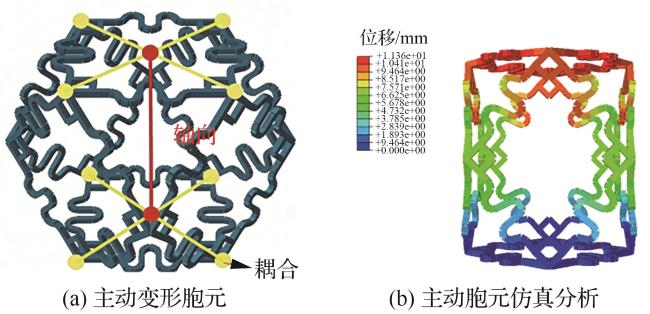
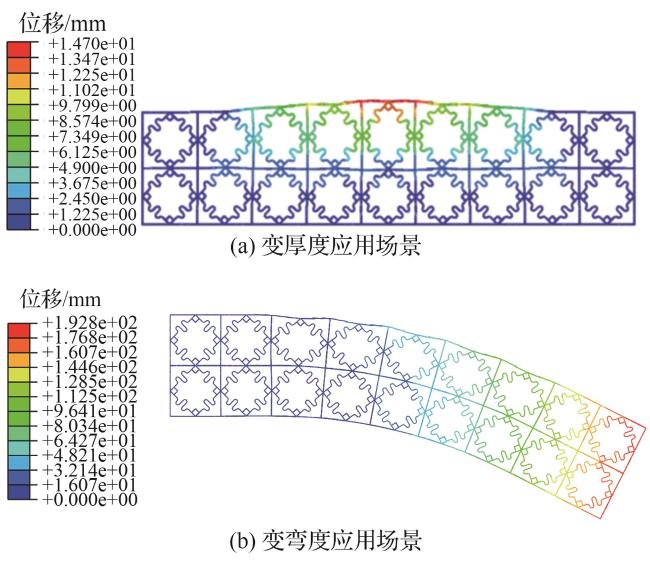
其次,针对多模式变构机翼的变厚度功能需求,其核心挑战在于开发兼具大变形能力与高承载特性的主动变形胞元结构。受限于驱动材料本身的限制,基于压电材料、形状记忆合金等智能材料驱动胞元变形存在应变输出小、响应迟滞时间长及控制精度低等问题,导致这类主动变形胞元难以满足大型变体机翼的工程化应用需求。与此同时,变厚度机翼通常要求机翼结构实现在某一方向的伸长或缩短,而在其他方向保持不变。鉴于此,本文提出以柔性胞元为基础,通过在胞元内部嵌入微型电机,构建可实现主动伸缩变形的智能胞元(图2)。通过多胞元的位移传递与协同作用,离散的局部形变可耦合为连续全局变形。如图3所示,带有红色驱动线的为主动变形胞元,其余为被动胞元。若将主动变形胞元沿垂直方向布置,可实现机翼结构的主动变厚度功能;而将其沿水平方向布置的构型,则被视为未来实现机翼变弯度需求的重要技术路径。
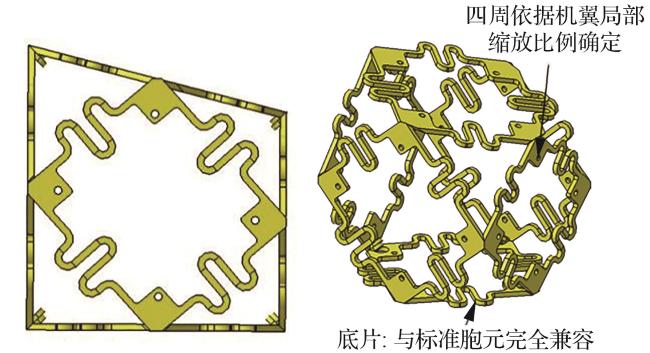
此外,本研究针对翼型气动轮廓的几何适配需求,设计了具有非均匀几何特征的过渡胞元结构,如图4所示。该胞元的核心功能在于实现常规点阵结构与翼型曲面外缘的精确衔接,其设计准则包括:① 保持底面接口尺寸与标准胞元完全兼容;② 通过非等比率缩放算法对4个侧面及顶面进行几何重构,缩放系数根据机翼局部曲率变化动态调整。为解决传统手动建模效率低下问题,本文基于CATIA V5的二次开发模块,采用VBA编程实现参数化快速建模——即输入翼型截面坐标点数据后,系统可自动生成过渡胞元几何模型。
1.2 可逆装配技术
传统增材制造技术的主要局限在于结构一旦整体成型便不可逆,可重构性较差。为解决这一问题,提出了一种基于可逆装配机制的全层级模块化设计体系。首先,在单胞层面,采用45°斜接孔的标准化单元,利用螺栓连接方法构建基础模块。其次,建立了跨尺度的统一装配接口标准,使得任意拓扑构型的胞元都能通过标准化连接界面进行自由组合,如图5所示。这种方案的优势在于:第一,模块化设计摆脱了传统制造对尺寸的约束,理论上支持结构的无限扩展;第二,统一的接口标准确保了局部损坏单元能被快速替换,仅需拆卸对应的损坏模块即可完成维护。第三,参数化的孔位设计为多功能结构系统的定制化组装奠定了基础;通过对不同性能胞元进行拓扑重组,可以快速构建满足特定需求的复合超材料结构。
2 力学超材料机翼设计

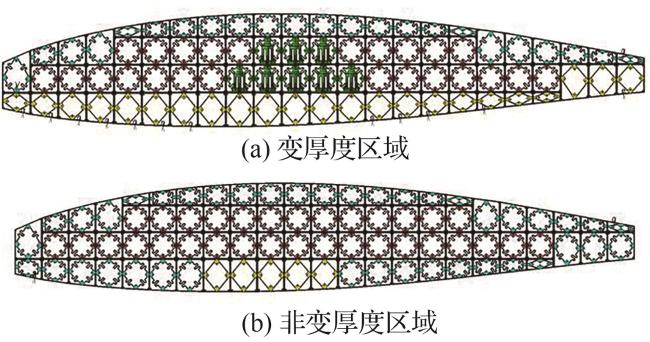
基于力学超材料的变形机翼设计需兼顾承载、变形与驱动控制要求,确保结构在稳定承载的同时实现显著的扭转变形。为此,基于可逆装配力学超材料的机翼结构需具备空间可调的力学性能:整体结构以柔性胞元为主体,尤其是在构成上下翼面及变厚度区域的区域,以实现优异的多模态变形潜力;同时在关键承载路径,特别是展向(翼梁方向),策略性地布置刚性胞元,以提供高强度和刚度支撑自重与气动载荷。这种由刚性胞元与柔性胞元组合装配而成的新型力学超材料结构(布置方式见图7),通过柔性主体保障核心变形能力,利用刚性骨架维持关键承载路径的稳定性,从而在保证结构整体性的前提下,有效协调了承载与变形需求,满足机翼对各向异性性能的要求。力学超材料机翼沿展向划分为变厚度区域和非变厚度区域,其展向分布由24列胞元组合构成:翼根至第9列为非变厚度区,10~15列为核心变厚度区,16~24列延续为非变厚度区。这种分区设计既满足了气动外形精确调控需求,又保障了整体结构的力学可靠性。
2.1 局部变厚度
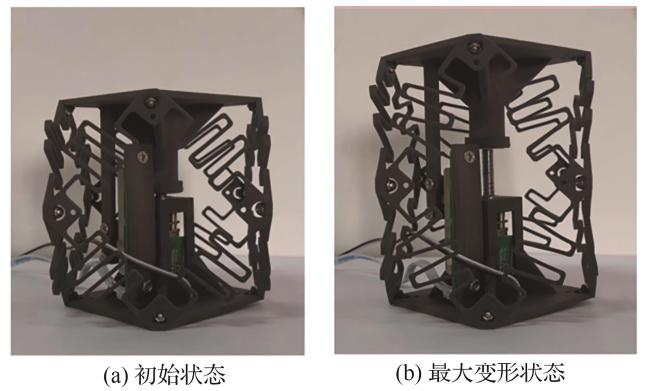
理想的变厚度结构应该能够准确地实现多种空气动力学形状,甚至是任意形状。这种精确的可变形性意味着结构可以在表面上的每个点精确地变形为目标轮廓。实现这种精密可控变形的核心技术在于主动变形胞元的设计。如图8所示,提出的主动变形胞元采用微型电机作为驱动器,通过滚动轴承驱动连接螺杆旋转,当控制电路控制微型电机正转时,连接螺杆旋进上壁板,带动柔性胞元结构件产生拉伸变形,实现胞元整体的伸长。同时,为实现主动变形胞元的精确控制,本项目针对微型电机驱动的主动胞元设计加装了变形限位器,通过对控制电路板的程序输入,可以实现胞元变形量的精确控制,本文所设计的主动变形胞元的最大变形增量为25 mm。
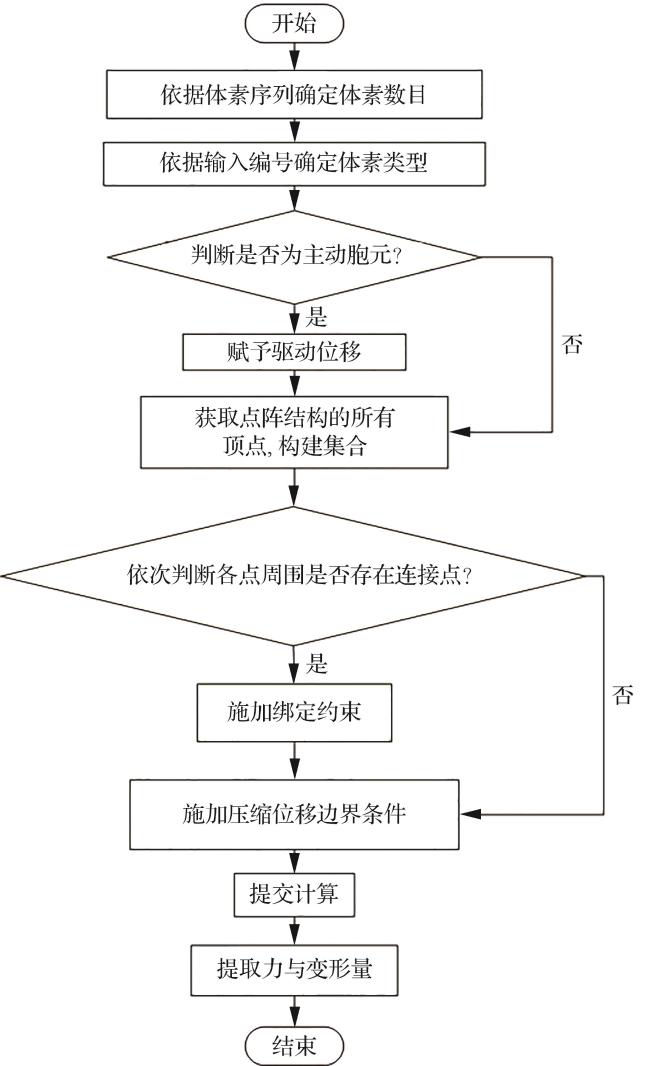
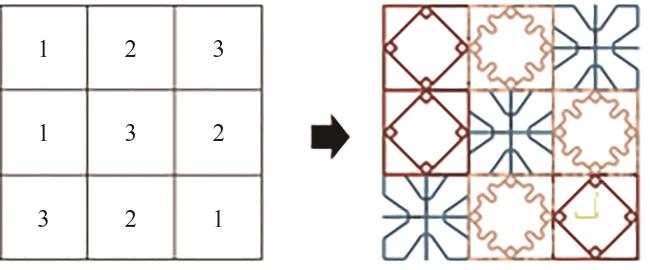
本文所设计设计的力学超材料机翼共包含2 376个胞元,因胞元数量庞大,而传统手动建模需逐一定义胞元类型、连接关系及属性参数(单胞建模耗时5 min,整体建模周期超过200 h)。因此,基于Abaqus-Python协同建模系统,开发了基于拓扑编码的参数化建模方法,如图9所示。首先,建立编码映射层,将五类功能胞元(刚性/柔性/混合/过渡/主动)抽象为数字编码(1~5),通过布置数字编码矩阵解析模型空间构型,如图10所示;其次,进行属性定义,通过子程序文件基于编码自动赋予各类胞元结构基本属性(材料选择PEEK,弹性模量为3.6 GPa,泊松比为0.3,梁截面尺寸为1.75 mm,主动胞元驱动行程位移为15 mm);最后,实现装配控制层,主程序依据几何拓扑规则生成标准化接口,并施加Tie约束模拟螺接力学行为(若监测点周围0.5 mm内还存在其他点,则对个范围内所有的点添加绑定约束)。该参数化系统将单胞建模时间从5 min压缩至5 s,成功实现包含2 376个胞元的机翼结构125 min内自动建模,该方法为大规模超材料结构的高效设计与性能验证提供了标准化工具链,成为实现机翼“性能可编程化”的方法论核心。
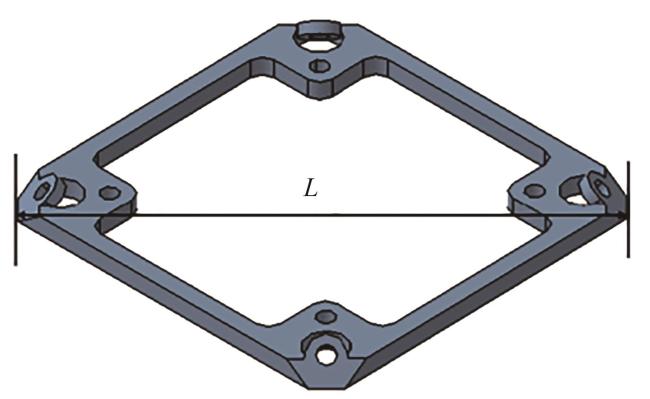
在点阵结构设计中,胞元外形尺寸L是一个重要几何参数是,如图11所示。胞元外形尺寸的确定需遵循多层级约束准则,其核心在于平衡胞元力学性能、制造可行性与功能适配性之间的协同关系。首先,基于结构轻量化目标,在满足整体刚度与强度需求的前提下,尽可能减少胞元数量以降低装配复杂度;同时,考虑增材制造工艺的成型效率、连接螺钉的尺寸兼容性及主动胞元中最小电机的尺寸限制,本文中胞元轮廓尺寸定位70 mm。
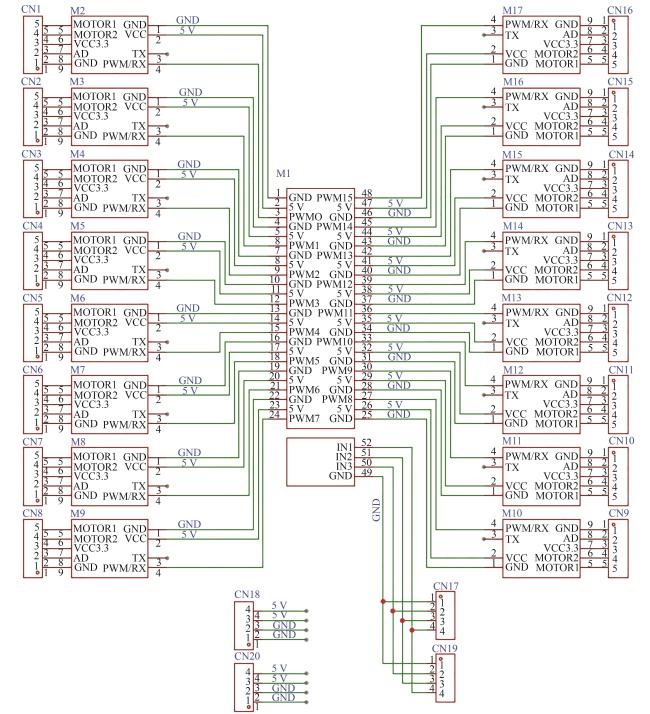
针对传统机械驱动系统在重量、复杂性和响应速度上的技术瓶颈,本研究提出了一种融合微型机电驱动与超材料拓扑协同驱动框架。该框架以微型电机的高响应机电转换为核心驱动力,通过电信号精准控制微型伺服系统的转动角度与输出扭矩,在宏观尺度实现可编程的线性/旋转输出;在此基础上,通过仿生设计的超材料胞元与微型减速机构,将电机的机械能高效转化为可控形变;最终,通过分布式微型电机阵列与传动机构的位移传递、协同控制,使离散的局部运动耦合为连续全局变形,形成具备快速响应特性的全电控可变体结构系统。该变厚度机翼结构的逻辑控制图如图12所示。
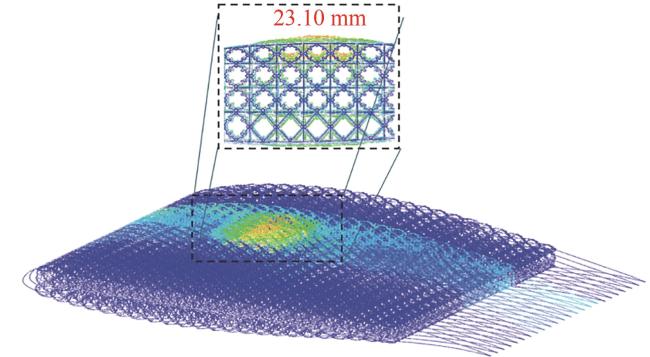
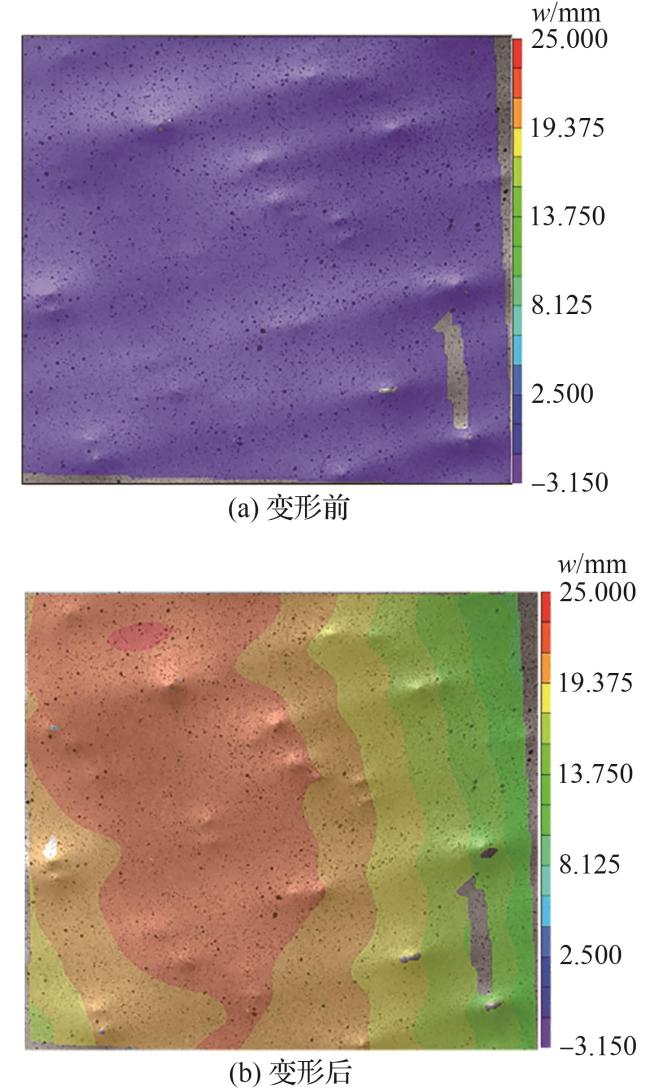
最大厚度变化量Δh:在目标区域实现了显著的局部厚度变化,其最大位移量达到23.10 mm。
初始厚度h₀:变厚度后,机翼剖面的最大厚度点测量值为284.29 mm。
厚度变化率(Δh/h₀):以机翼原始厚度为基准,计算得到的最大相对厚度变形量(即厚度增加量相对于原始厚度的百分比)为8.13%。
这一结果验证了所设计的主动变形胞元驱动机制、分布式协同控制策略以及梯度支撑体系的综合有效性,成功实现了对机翼局部气动外形的精确、可控重构。
2.2 翼面整体扭转
为验证机翼扭转性能的可行性,基于前文的变厚度机翼模型完成扭转模型的构建。如图14所示,其方案主要通过一根刚性杆沿力学超材料机翼的展向贯穿整个机翼结构,这根刚性杆的一端牢固地与翼根相连并固定,另一端则与翼梢相连并固定,从而形成一个完整的扭矩传递路径。在进行扭转变形试验时,可通过在翼梢固定处施加扭矩,利用这根刚性杆作为力矩传递的介质,能够精准地控制机翼的扭转角度和变形程度,进而完成机翼的扭转变形过程。需要强调的是,这种扭转变形的本质是沿展向不同剖面(翼肋位置)之间存在扭转角差,导致机翼剖面相对初始位置发生绕翼根轴线的旋转;而整体扭转角(Δφ)正是这种分布式角度差的宏观体现。这种构建方式不仅操作简便,而且能够有效地模拟机翼在实际飞行过程中可能遇到的各种扭转工况,为后续的性能测试和数据分析提供了坚实的基础。同时,该方案还能够方便地与变厚度机翼模型相结合,充分发挥变厚度机翼在扭转过程中的优势,如提高扭转刚度、改善气动性能等,从而更全面地验证机翼扭转性能的可行性和优越性。
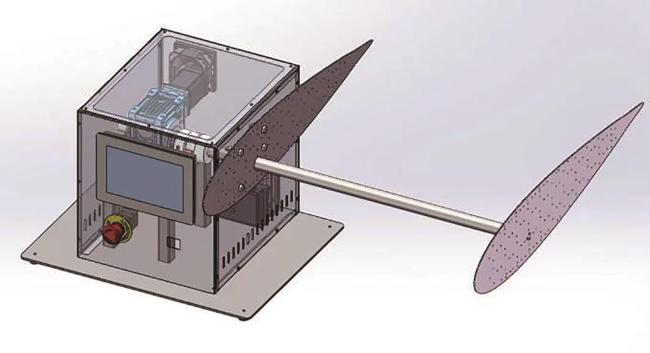
该驱动系统由多个关键部件协同工作,共同实现精确的驱动功能。包括驱动电机、蜗轮蜗杆减速机、限位开关、触摸屏、驱动器、控制器、直流电源等。步进电机作为核心动力源,为整个驱动系统提供稳定的动力输出。步进电机驱动器接收控制指令,精准调节电机的转速和转向,确保其按预定模式运行。蜗轮蜗杆减速机则与步进电机紧密配合,通过降低转速、增大扭矩的方式,将电机的高速旋转转化为适合机翼变形的低速、大扭矩运动,从而满足机翼变形对力矩的要求。专用电源为整个驱动系统提供稳定可靠的电力支持,保证各电气元件的正常运行。触摸式控制器则作为人机交互的核心部件,为操作人员提供便捷的操作界面。此外,系统还配备了限位开关,用于设定运动范围并提供安全保护。各部件紧密配合,共同完成对机翼变形的精确驱动与控制。
本文利用Abaqus软件对三维力学超材料机翼模型进行扭转功能仿真分析,核心流程如下:首先在Geometry模块中导入机翼模型并创建沿展向贯穿机翼的刚性扭转杆部件(直径d=30 mm,长度L=1.68 m)。其次,在Assembly模块中完成机翼与扭转杆的装配,调整位置使其精确匹配(坐标定位误差<0.01 mm);再次,在Property模块中定义机翼和扭转杆的材料及截面属性(材料选择PEEK,弹性模量为3.6 GPa,泊松比为0.3,梁单元截面类型选择矩形,尺寸为1.75 mm×1.75 mm);接下来,在Mesh模块中对装配体进行网格划分,特别关注机翼与扭转杆连接区域的网格质量(每个胞元设置网格尺寸为3.7 mm)。在 Load 模块中设置边界条件:将机翼翼根完全固定(Encastre约束),在机翼与扭转杆的连接区域施加绑定约束(Tie Constraint),并通过翼梢处的参考点(Reference Point, RP)施加扭矩载荷0.157 1 rad。之后,在 Step 模块中创建静力学通用分析步(Static, General),并启用几何非线性(Nlgeom=ON)选项,以准确模拟机翼扭转时产生的大位移和大转角效应。提交作业并完成计算后,在Visualization模块中进行后处理,观察变形形态,从而评估机翼的扭转性能。值得注意的是,为简化模型并便于实际制造,机翼的前缘和后缘结构已进行适当简化处理。整个分析过程需精细配置各项参数,确保模型能有效反映实际工况,为后续研究提供可靠依据。有限元分析结果详见图15所示。
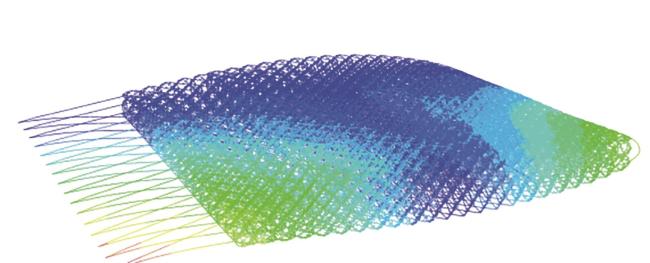
扭转仿真分析表明:在扭矩载荷作用下,超材料机翼结构呈现出预期的扭转变形行为。翼梢参考点(RP)达到0.157 1 rad(9°)的扭转角,实现了预期的下偏变形。机翼位移场清晰地展示了沿展向的扭转变形梯度,与理论预期一致。该结果为后续的实物制造、试验验证及精度评估提供了关键的设计依据和性能预测。
3 全点阵变形机翼试验验证
3.1 测试对象及系统
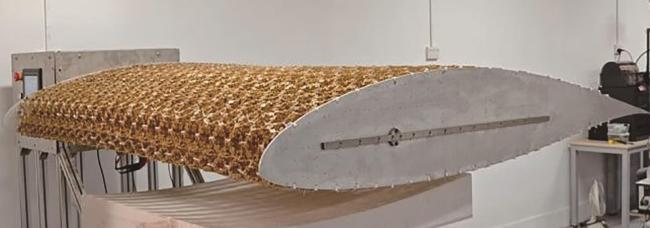
最终,基于设计方案研制出全点阵机翼物理样件,如图16所示,并搭建了多模式变构全点阵变形机翼试验平台,试验结果表明该机翼可通过内部点阵单元协同调控实现大范围光滑连续变形。在制造工艺上,采用熔融沉积成型(Fused Deposition Modeling, FDM)技术,利用高性能聚醚醚酮(PEEK)材料,基于材料逐层堆积原理制造超材料机翼结构。PEEK材料具备优异的综合性能:热稳定性好(熔点343 ℃)、机械强度高(抗拉强度90~100 MPa),并兼具耐疲劳和抗蠕变特性,特别适用于航空领域高频变形的严苛工况。通过精确控制喷头温度与层间结合工艺,在保证成型精度的前提下,改善制件表面粗糙度。材料为变体机翼的精准运动调控提供了兼具轻量化与高承载特性的结构基础。PEEK材料为变体机翼提供了轻量化与高承载能力兼备的结构基础,有力支撑了其精准的运动调控需求。
为验证多模式变构机翼的厚度调控功能与气动扭转功能,本试验通过高精度测量系统分别测量机翼在静止状态与目标状态下的三维形貌。通过对比初始构型、目标气动构型与实测变形轮廓的匹配度。在变厚度功能验证方面,基于弦向截面轮廓分析,量化了电机驱动下机翼的厚度变化率(Δh/h₀),即最大厚度变化量Δh与初始厚度h₀的比值;在气动扭转功能验证方面,通过追踪翼稍轴线变形前后的扭转角度。
试验系统由多模式变构点阵机翼试验件和德国GOM公司ARAMIS三维光学测量系统构成。该系统核心为双目视觉测量装置,配备2个500万像素工业级摄像头(分辨率2 448×2 050),搭配60 mm定焦镜头组,正对试验件周向表面或翼面。测量基于数字图像相关法(Digital Image Correlation, DIC)技术,对机翼表面预置的标记点进行非接触式三维坐标采集。测量过程中,双摄像头以设定频率同步采集图像,获取标记点群的空间位置信息。利用GOM Correlate软件构建全局坐标系,离线解算得到机翼的三维形变数据。
为减小随机误差,试验过程中对每个目标构型进行了3次循环驱动-复位操作,并对测量结果进行平均处理,最终给出平均变形误差。
3.2 测试结果分析
3.2.1 局部变厚度结果分析
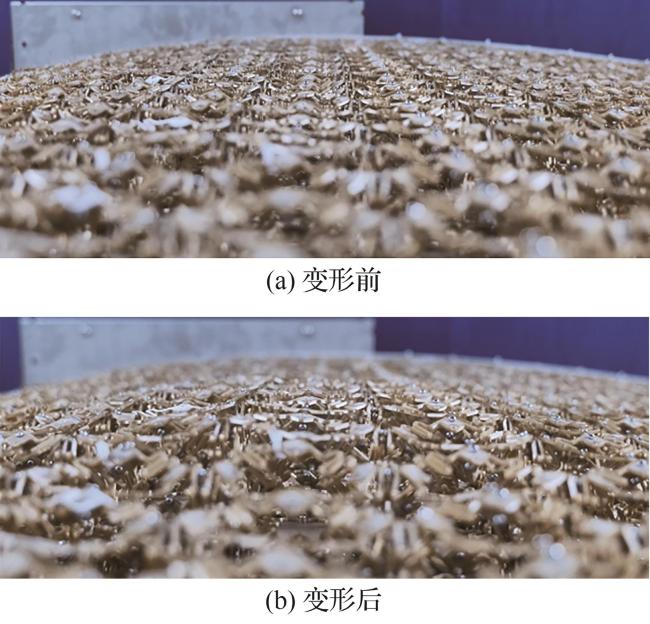
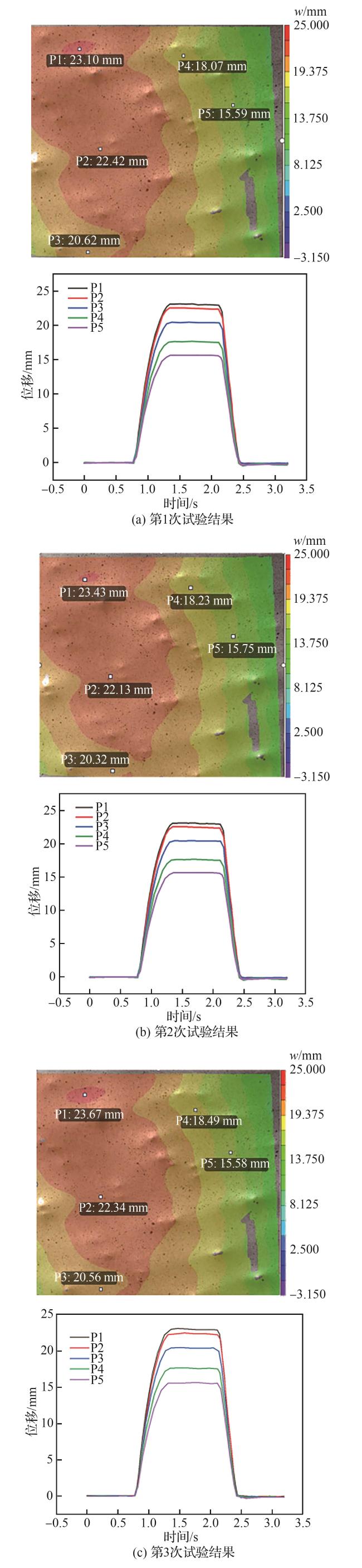
第1次试验:最大厚度变化量Δh=23.10 mm,初始厚度h₀=287.96 mm,厚度变化率(Δh/h₀)=8.02%。
第2次试验:最大厚度变化量Δh=23.43 mm,初始厚度h₀=286.37 mm,厚度变化率(Δh/h₀)=8.18%。
第3次试验:最大厚度变化量Δh=23.67 mm,初始厚度h₀=285.85 mm,厚度变化率(Δh/h₀)=8.28%。
综上,3次变厚度机翼点阵结构试验结果与有限元结果吻合较好,该变厚度机翼点阵结构的变形量大于8%。通过3次循环加载试验得到最大厚度变化率分别为8.02%、8.18%、8.28%,计算其相对标准偏差(RSD)=1.61%,表明重复性误差较小,验证了结构变形的可逆性与动态稳定性。
3.2.2 翼面整体扭转
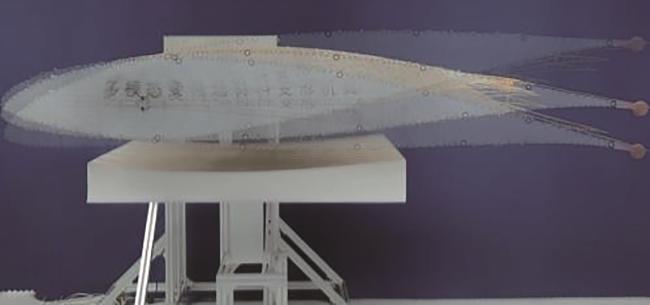
为精确量化机翼扭转动态特性,本研究开发了一套基于三维光学测量的多尺度评估体系。核心方法包括:在翼梢关键气动剖面周向等间隔布置200个反光标记点,同步获取全工况下多翼肋截面的三维运动轨迹;建立以翼根为基准的整体扭转坐标系,通过连接翼梢截面选定的前缘与后缘特征标记点构建弦向基准线,将扭转角(Δφ)定义为该基准线相对于翼根参考系的实时转角。此方案通过特征点直接关联定义Δφ,规避了传统中性轴拟合的复杂性,既能表征整体扭转效应,又为分布式变形分析提供数据基础。
基于上述评估体系,开展了机翼扭转试验(图20)。试验覆盖了包括初始状态、设计目标的下扭状态(9°)及用于扩展验证的上扭状态(12°)在内的多种工况。图中清晰展示了不同扭转状态下的机翼形态。该多尺度、基于特征点的动态评估体系为机翼扭转性能的高精度量化提供了可靠方法。
本研究提出的力学超材料机翼成功实现了双向可控扭转功能。为系统验证其动态性能与结构可靠性,开展3轮独立驱动循环试验(加载-卸载全过程),并通过高精度光学测量系统捕获翼梢截面的实时偏转响应。试验结果总结如表2所示,同步对比目标值。
表2 机翼扭转试验结果统计Table 2 Statistic of wing torsion experiment results |
| 参数 | 上偏转角/(°) | 下偏转角/(°) | 控制精度误差/% |
|---|---|---|---|
| 重复性误差/% | 1.23 | 4.05 | |
| 目标值 | +12.0 | -9.0 | |
| 第1次试验 | +12.3 | -8.6 | <5 |
| 第2次试验 | +12.6 | -9.3 | <5 |
| 第3次试验 | +12.5 | -8.8 | <5 |
首次加载时上偏转角达+12.3°,下偏转角为-8.6°;第2次试验测得12.6°/-9.3°;第3次结果为12.5°/-8.8°。试验采用3次驱动循环测试,通过3次循环加载-卸载试验验证,基于相对标准偏差(RSD)计算:上偏转角重复性误差(数据12.3°、12.6°、12.5°的RSD)为1.23%;下偏转角重复性误差(数据8.6°、9.3°、8.8°的RSD)为4.05%,如图21所示。
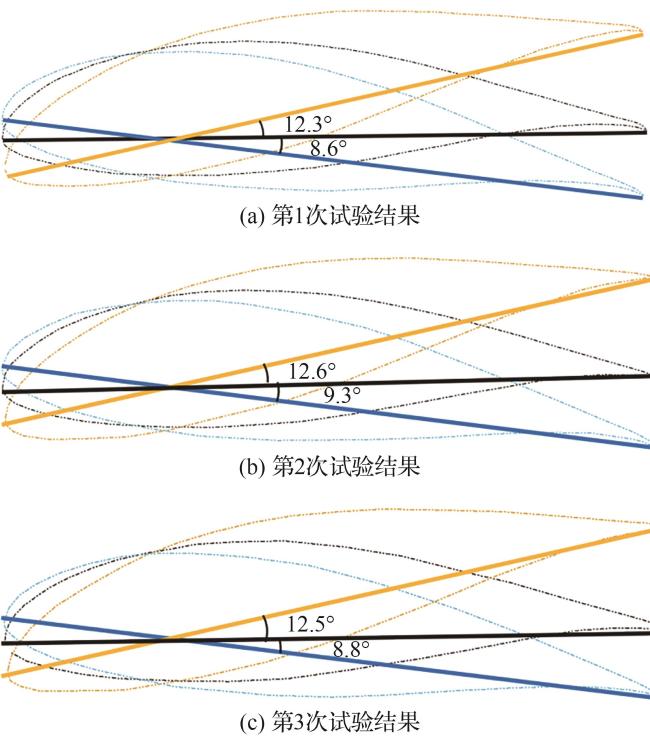


控制精度误差(实测角度与目标角度的绝对偏差相对于目标角度的百分比)小于5%,充分验证了该机翼气动扭转功能的可控性与结构可靠性。
4 结 论
点阵结构是未来航空航天领域的重要结构形式之一。本文基于可逆装配方法,提出了基于力学超材料的多模式变构全点阵变形机翼结构概念,并通过有限元仿真分析,试验验证分析验证了机翼变形的有效性,得出以下结论:
1) 本研究通过构建刚性与柔性异质超材料胞元组合结构,实现了机翼高强度与大变形协同特性。创新提出嵌入微型电机驱动的主动变形胞元方案,通过单个胞元局部变形可累积实现机翼的全局变形。研究成果为多模式变构机翼提供了兼具力学性能定制化与高效装配可行性的技术路径。
2) 提出了一种基于力学超材料的多模式变构点阵变形机翼结构概念,一方面通过超材料机翼的变厚度区域实现弦向气动外形重构,另一方面结合翼面整体扭转构建三维流场控制能力。针对该方案,从理论设计与仿真分析方面阐述了全点阵变形机翼基本原理、从试验验证角度验证了该设计方案的可行性。
3) 针对变厚度机翼变形需求,提出嵌入微型电机式主动胞元结构(单胞变形量25 mm),驱动整体机翼变形幅度>8%。经3次循环加载验证,最大厚度变化量重复性误差小于1.61%,表明结构具备高精度可逆变形能力与动态稳定性。
4) 针对气动扭转功能验证,基于翼梢轴线扭转角度追踪表明:超材料机翼可实现双向可控扭转,经3次独立加载试验,翼梢截面最大上/下偏转角分别达+12°/-9°,扭转角度重复性误差<4.05%,控制精度误差<5%,证实了气动扭转功能的可控性与结构可靠性。