

 CJA
CJA
随着现代红外探测系统、地空与空空导弹的日益发展,飞行器的生存能力面临着巨大挑战,为了提高飞行器的生存概率,顺利达成战略目标,飞行器红外隐身技术得到各国的重视[1-2]。发动机排气系统是飞行器的主要红外辐射源,在低马赫数飞行状态下,3~5 μm波段的红外辐射贡献占比达90%以上[3-4]。发动机排气系统的红外辐射包括排气系统可视高温壁面的固体辐射和喷流辐射两部分[5]。传统的飞行器与发动机设计相对独立,由发动机和飞机系统间强关联衍生出的一体化优化设计问题凸显[6],例如发动机进/排气设计与飞行器气动外型的一致性设计匹配问题等,这些问题的出现不利于飞行器气动与红外辐射特性的进一步提高。而飞行器与发动机匹配设计通过飞机设计师和发动机设计师结合各自专业领域的理论和实践,得出以飞机全局气动与红外辐射特征最优为目标的设计方案[2]。因此飞行器与发动机一体化的红外隐身设计是飞行器飞/发匹配设计的重要研究方向。
S形喷管可以利用弯曲的流道遮挡发动机内低压涡轮转子等高温部件,降低排气系统的红外辐射特征,在飞行器上得到了广泛的应用[7-12]。国内外学者对S形喷管的红外辐射特性开展了大量研究,比如魏鑫[13]研究了正尾向全遮挡的S形二元收扩喷管的红外抑制技术,得出流道型面对其红外辐射特征的影响规律。杨坤等[14]通过试验研究了遮挡偏距比SR对双S形二元排气系统壁温与红外辐射的影响,发现SR从55%提高到100%,能有效抑制上方探测面5°和10°的红外辐射。An等[15]研究了在考虑大气环境影响的情况下曲率对S形喷管红外辐射特征的影响。而对S形喷管与飞行器的匹配设计及其红外辐射特性研究较少。Martens[16]在喷管与后机身一体化设计研究中发现,飞行过程中内流和外流的相互干扰会改变原有的飞机气动和隐身性能。波音公司[17]开展的排气系统红外抑制研究表明,与机身一体化设计的红外抑制器可有效降低高温部件的红外辐射。高翔等[18]通过数值模拟,对耦合进排气系统的飞翼无人机红外辐射特征进行了研究,研究表明:S形排气系统的飞翼无人机,前向红外辐射强度明显小于后向。蒋世豪[19]数值研究了飞机和排气系统一体化设计参数对其红外辐射特征的影响规律。张勃等[20]开展了不同形式喷管红外特性抑制试验研究,总结出了轴对称喷管、矩形喷口喷管、S弯喷管的红外抑制效果随方位角与高度角的变化规律。王怡等[21]开展了某型发动机地面红外辐射特性测试,结果表明,随着测试角度的增加,在中波被测目标辐射强度呈递减趋势,随着测试角度的增加辐射强度递减幅度也较大;在大于20°的测试角度内,随着测试角度增加可观测到的目标最高温度值逐渐降低,但由于尾焰可观测的面积越来越大,因而辐射强度变化总体趋于平缓。尽管对排气系统的数值模拟研究、红外辐射试验已形成了较为完善的理论体系,针对飞/发一体化飞行器的红外特征的系统性试验研究却相对匮乏,缺乏充分的试验数据支撑与深入的机理分析。
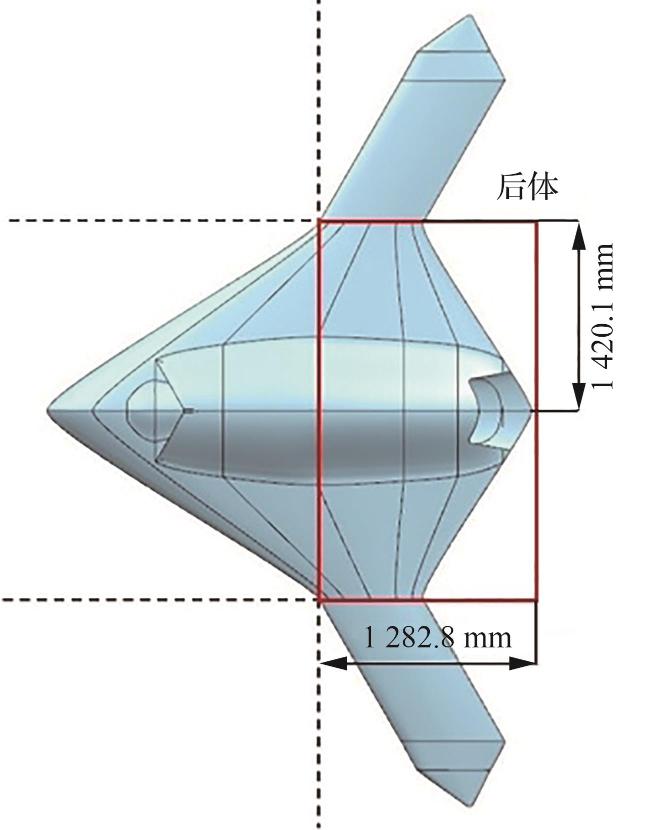
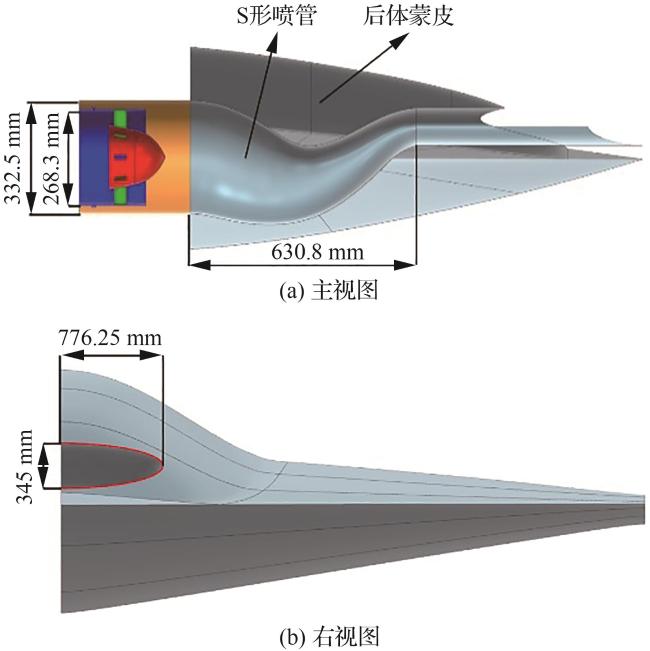
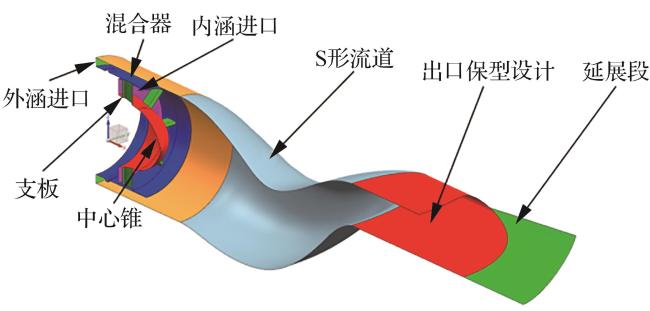
针对典型飞翼布局飞行器,基于项目组涡扇发动机红外辐射特性模拟试验台测试能力,设计加工了飞行器后体缩比试验模型,分别测试了S形喷管与飞机后体一体化模型、S形喷管模型在地面试验状态的红外辐射空间分布,揭示了发动机排气系统与飞行器后体一体化的红外辐射空间分布规律,以及飞行器后体对排气系统红外辐射特征的影响规律,这些规律对于排气系统及飞行器后体一体化的红外隐身设计具有参考意义。
1 试验模型
1.1 试验模型设计
1.2 热电偶布置
2 试验台及红外测量系统
2.1 试验台
试验在自行设计的涡扇发动机排气系统红外辐射特性模拟试验台上开展。试验台主要由燃气发生器系统、试验段组成。图5给出了试验台的示意图,下面将分别对部分系统进行详细介绍。
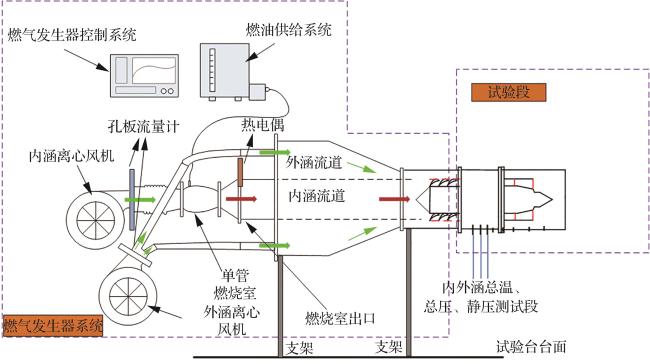
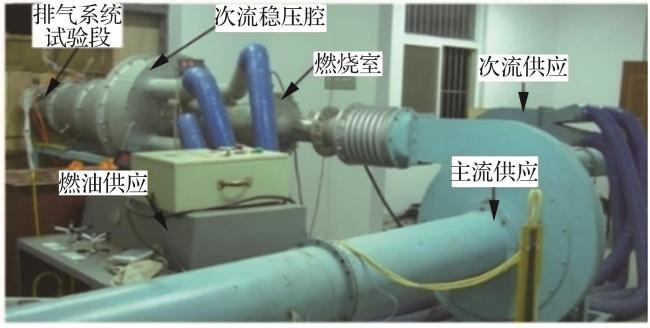
图6为燃气发生器系统实物图。燃气发生器系统作为一种重要的地面试验装置,能够有效地模拟航空发动机的关键工作状态,其提供的主流高温气流可生成最高温度达870 K、质量流量为1 kg/s的高温燃气。次流低温气流供应由外涵风机供应,气体温度主要受环境温度决定,其质量流量亦可达到1 kg/s。
试验中排气系统内外涵道气流流量通过孔板流量计测量得到。温度测量系统主要由K分度镍镉-镍硅热电偶、热电偶延长线和JK-64U型多通道温度巡检仪组成。
2.2 红外测量系统
2.3 背景遮挡装置
背景遮挡装置的主要作用是遮挡住探测器视场中除被测目标以外的其他高温固体部件,减小其他高温固体部件的辐射对探测目标的红外测量结果的影响,从而保证从探测器视角方向只探测到试验件自身的腔体辐射和尾喷流辐射。
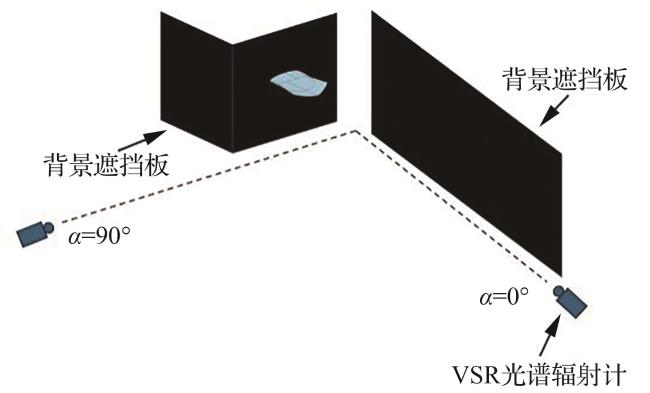
模型1的背景遮挡装置如图8所示。靠近试验件处,2块背景板垂直放置,有效遮挡内、外涵总温总压测试段的高温部件产生的直射红外辐射。该背景板布置方式确保模型1完整暴露于探测视场中,以保障其红外辐射场空间分布测量的完整性。第3块背景板放置于试验场地侧边,减少试验场地墙壁对红外辐射特征的反射带来的测量误差。
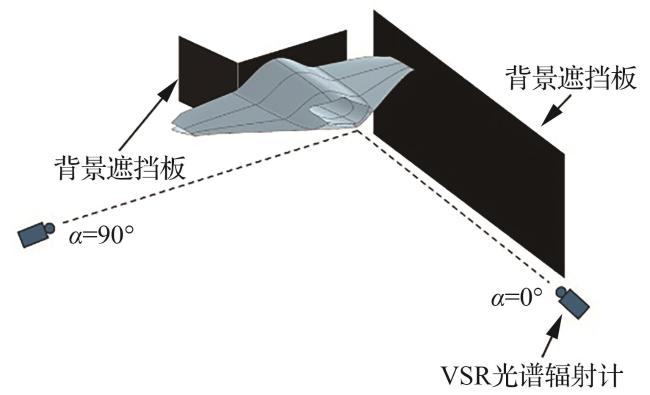
模型2的背景遮挡装置如图9所示,两块垂直的背景板遮挡住内、外涵总温总压测试段件及喷管壁面等高温部件,避免其干扰测量数据。背景板的位置在试验件S形流道与出口保型段设计的交界处。场地的背景板布置与模型1保持一致。
3 试验方案
3.1 探测点布置与试验工况
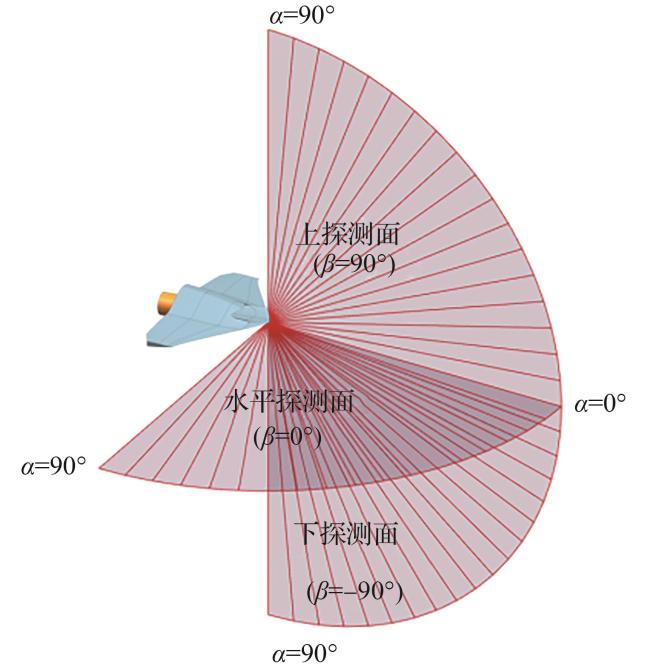
图10给出了飞机后体试验件的红外辐射测量探测点布置示意图,记探测角为α,探测平面为β。共试验3个探测面:上探测面( )、水平探测面( )与下探测面( )。在每个探测面内,探测范围为 ,以正尾向为0°探测点,每隔5°布置一个探测点。为减少背景辐射的干扰,探测器的视场选择标准是尽量使得目标充满视场,因而光谱仪在采用宽视场镜头时,探测距离为25 m。
试验的工况为:内涵气流拟定温度850 K,内涵气流质量流量0.6 kg/s;外涵质量流量0.2 kg/s,温度为环境温度。试验时,大气压力为101 500 Pa,环境温度为2 ℃。
3.2 红外辐射特征分区测量方法
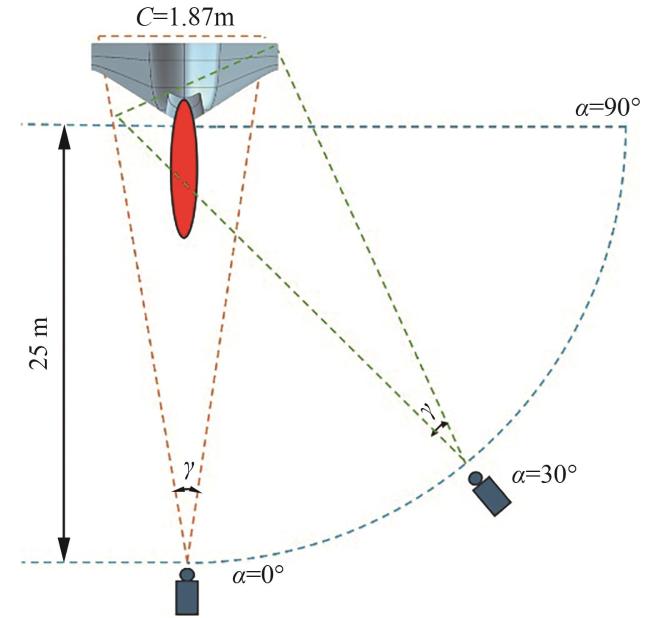
设视场角为γ,试验选取的红外镜头视场角γ=74.8×10⁻³ rad,红外镜头距离被探测物体的距离为h,视场所对应的弧长为C,观测面积直径为L,当h=25 m时:
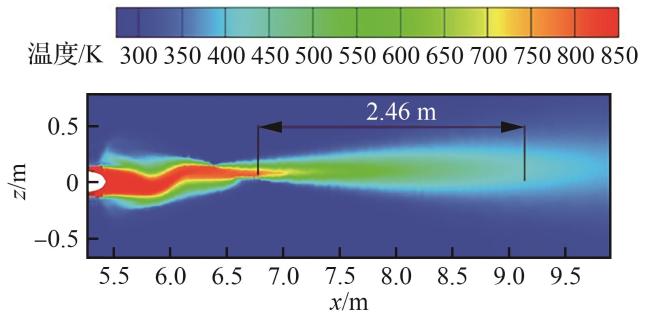
弧长和观测面积直径相差0.8 mm,因此在试验中,均以弧长C来近似等价观测面积的直径L。对模型1进行地面状态数值仿真,其边界条件参考文献[23]进行设置,内、外涵进口设置为流量进口条件,外界环境设置为压力远场,边界条件设置的数据由试验测试得出。
单次测量视场与试验件空间位置示意图如图12所示。通过计算可知,在30°及更大角度的探测位置,单次测量难以覆盖完整的喷流核心区,会产生显著的测量误差。为此,试验采用分区测量方法,以有效避免该误差的产生。
试验测量首先进行背景辐射测量,试验仅研究腔体辐射和喷流辐射,因此地面辐射、试验件壁面辐射以及被测目标以外的其他辐射源产生的辐射均为背景辐射。在试验件组装好、燃烧室不点火前测量背景辐射,记为I bg。试验台点火且工作状态稳定后进行目标辐射测量,记为I ta。在试验数据后处理时,待测目标的积分辐射强度记为I,I=I ta-I bg。试验在夜间进行,以排除太阳辐射这一最大干扰源。除此之外,试验安装了背景遮挡装置,有效防止了高温部件的辐射被红外光谱辐射计接收,从而确保了数据测量准确性。在同一试验条件下,对不同构型进行对比性测量时,由于各次测量所受的背景干扰变化规律和量级相似,因此测量结果的相对差异和变化趋势是可信的,能够为设计优化提供明确、可靠的指导。
分区测量的示意图如图13所示,目标点火且状态稳定后,在相同探测点分区域测量,通过调整视场使第2次拍摄(视场B)的左边界与第1次拍摄(视场A)的右边界对齐,将A、B视场内采集数据处理后得到的辐射强度分别记为I A、I B,则该探测点积分辐射强度为I=I A+I B。
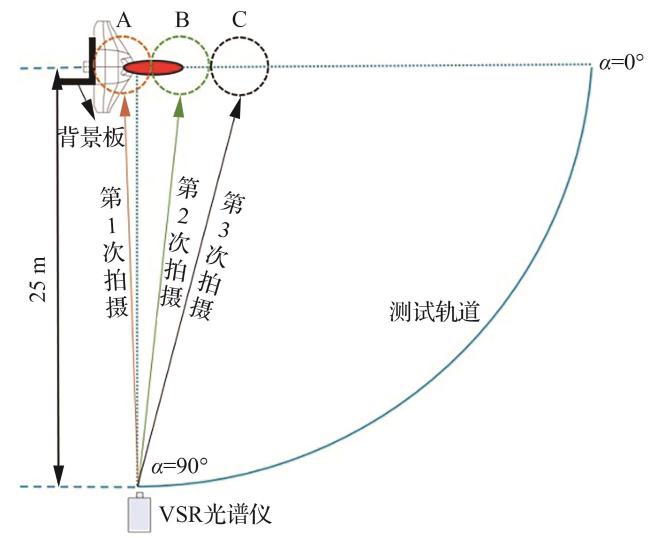
为防止第2次拍摄不能够完全捕捉喷流的红外辐射特征,试验时在水平探测面30°、60°及90°探测方位角下进行了3次拍摄。其中,第3次拍摄(视场C)的视场左边界与第2次拍摄的视场右边界相切,测量结果记为I C。试验数据表明,I B分别为I的5.1%、9.8%、13.7%,I C仅为I的0.003%、0.004%、0.005%,这一数量级的差异充分证明,设置的分区测量视场已完整覆盖了核心辐射区域,成功避免了因视场限制导致的特征遗漏,即分区测量方法满足高精度测量的要求。
3.3 不确定度分析
光谱辐射计红外特征试验测试误差包括以下5个方面:
1) 设备误差
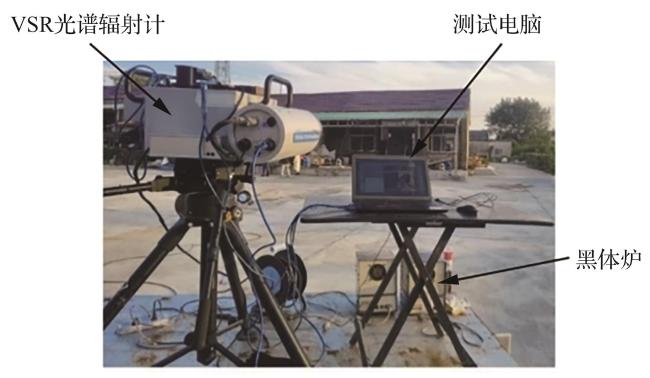
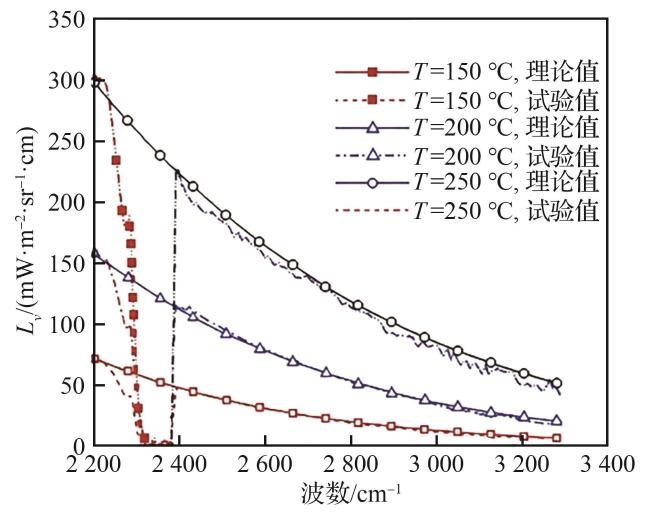
选用标准的黑体炉并将其放置在下游25 m位置处,采用VSR光谱仪,测试了3种不同温度(150、200、250 ℃)下2 000~3 300 cm-1范围内的光谱辐射亮度,图14为3种不同温度下黑体光谱辐射亮度试验值与理论值对比图,从图中可以看出,除2 100~2 400 cm-1范围被沿程空气中CO2吸收外,其余波段光谱辐射亮度试验值与理论计算值吻合较好,误差小于2%。
通过计量机构对试验热电偶进行校准,校准结果表明在273~860 K的温度范围内,热电偶测量的不确定度为0.86%。
2) 减背景辐射的不确定度
一般情况下,背景辐射远低于发动机的红外辐射,然而,在某些情况下,背景辐射的量级也会与发动机喷流相当,尤其是目标占视场比例较小的情况,以至于会产生较大的相对不确定度,经验性[23]的估算值约为2%。
3) 试验台工作状态不确定度
理论上讲,各个测点得到的应是试验台在同一状态下的红外辐射特征,但由于测试条件限制,试验单次开车完成一组试验,共19个探测点。然而,由于测点数量较多,难以保证各测点测试时试验台的工作状态完全一致。假设试验台燃烧室温度变化为±10 ℃,燃烧室温度最高为850 K,根据斯蒂芬-玻尔兹曼定律计算得到固体部分红外辐射强度的最大不确定度约为4.5%。
4) 环境变化及人为操作误差(经验误差)
测试过程中周围环境变化以及人为操作引起的测量不确定度约为3%[24]。
5) 总误差
根据方和根[25]计算可得,总的试验测量不确定度约为6.1%。
4 试验结果与分析
4.1 分区测量与单次测量结果分析
图15以模型1水平探测面(β=0°)的试验数据为例,将I A、I B、I进行对比分析。图示结果表明,在大角度探测点处,I A与I B的结果存在显著数值差异,该差异主要源于第2次拍摄的喷流积分辐射强度贡献。
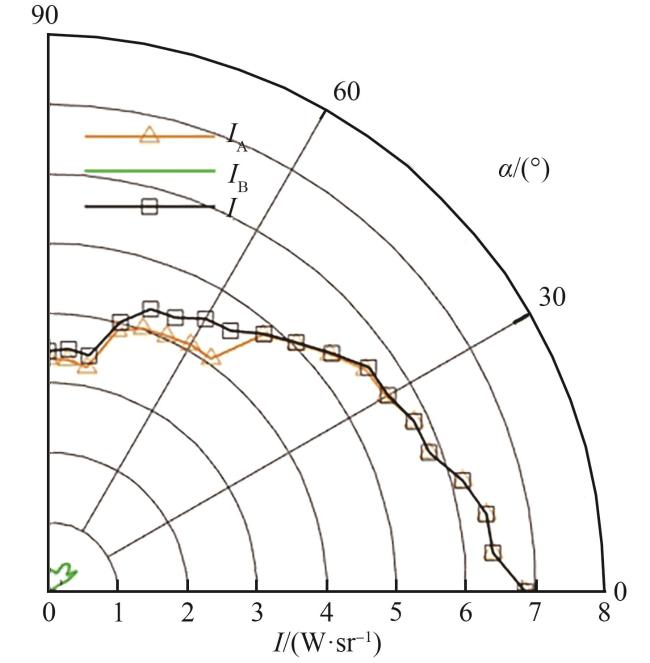
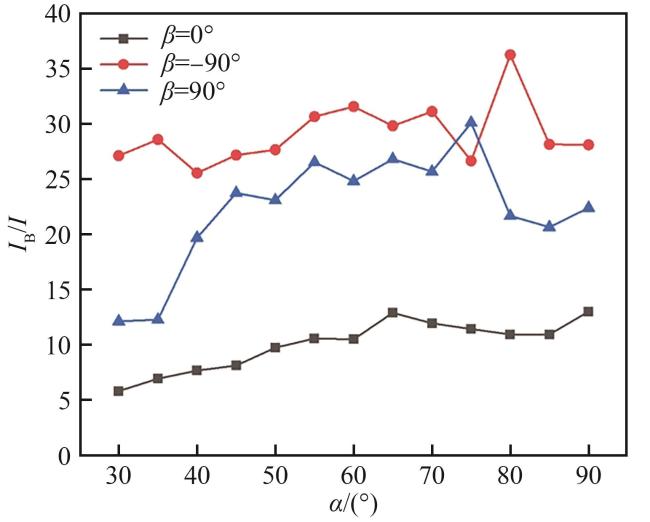
图16展示了3个典型探测面内I B在I中的贡献占比分布。从图中可以看出,在水平探测面(β=0°)内,I B(主要表征喷流辐射)对I的贡献率普遍超过7%,其平均贡献率为8.7%,随着方位角增大,I B对I的贡献率呈递增趋势;而在下探测面(β=-90°)内,该贡献率显著提升,普遍高于25%,平均贡献率达到29.2%。在上探测面(β=90°)内,I B对总积分辐射强度的贡献率普遍超过13%,其平均贡献率为21.4%。上述试验结果揭示了喷流辐射在上、下探测面相较于水平探测面具有明显的主导性,进一步凸显出分区测量方法对于精确捕捉特定空间区域内喷流辐射特征的必要性。
4.2 壁面温度测量结果分析
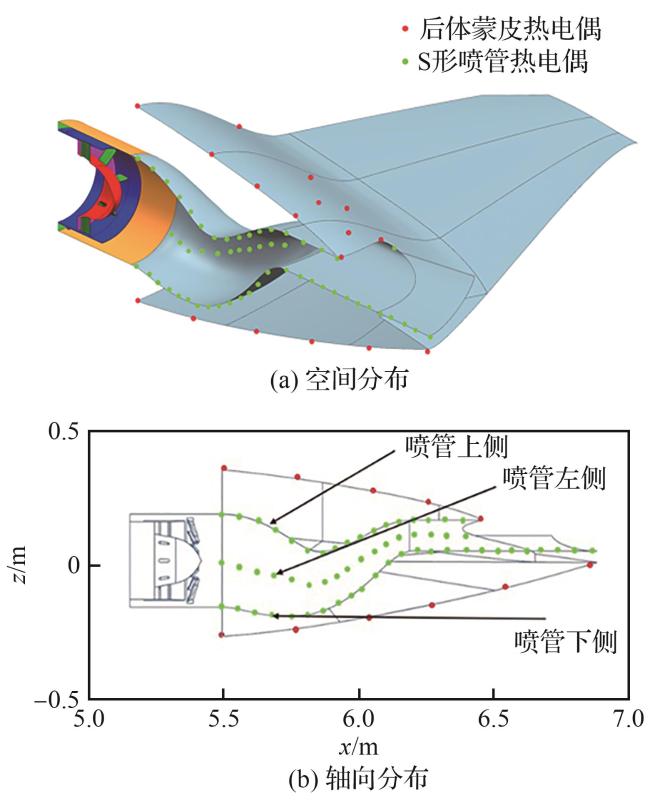
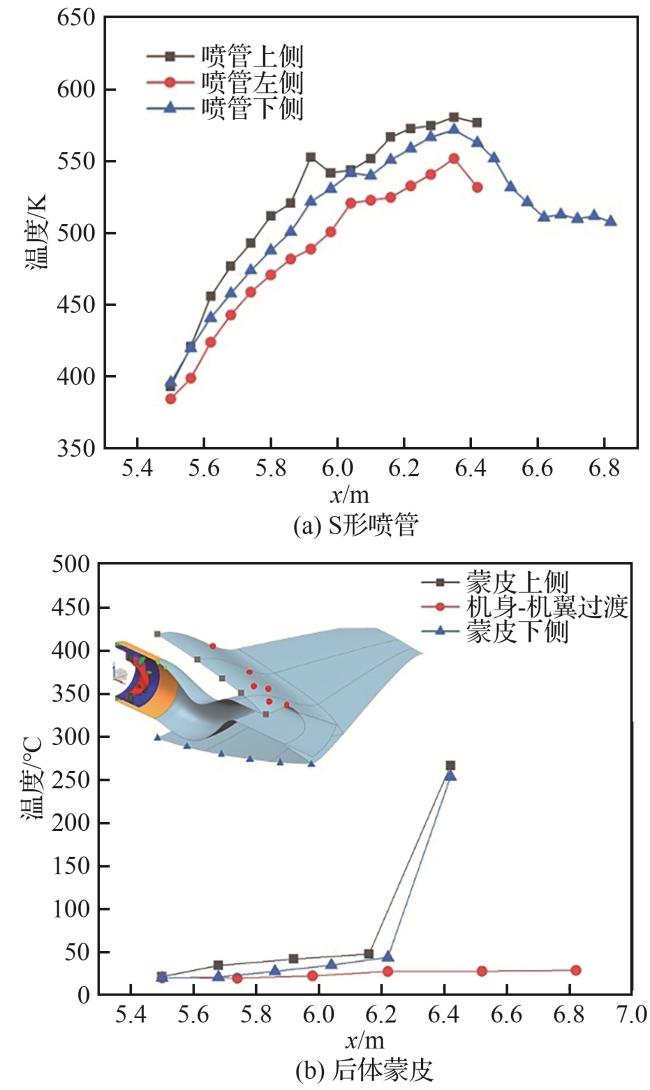
试验测量了S形喷管及后体蒙皮的温度分布,图17(a)为S形排气系统壁面温度图。从图中可以看出,喷管整体的温度变化趋势为逐渐上升趋势,最后略微下降,这是因为喷管为保留后体构型延展段的收敛喷管,收敛段因受高温燃气高速冲击,对流换热系数显著增大,导致该区域壁面温度持续升高;而在后体延展段,因燃气膨胀降温且壁面主要与外部冷空气发生对流-辐射耦合换热,致使壁面温度小幅回落。除此之外,同一轴向位置处喷管上侧的壁面温度高于喷管下侧的壁温,上侧整体平均温度高于下侧约21.5 K,这是因为喷管的上壁面由于向中心线弯曲更容易受到高温燃气的直接冲击,而喷管的左侧由于没有受到高温燃气的直接冲击,整体平均壁面温度相比于喷管下侧壁温低约39.8 K。后体蒙皮温度如图17(b)所示,仅有靠近喷口的2个温度探测点温度超过了250 ℃,其余探测点温度略高于环境温度,结果表明,后体所承受的尾喷流最显著的热影响区集中于紧邻S形喷管出口的区域。
4.3 红外辐射强度测量结果分析
4.3.1 光谱辐射特性分析
中波范围内排气系统光谱辐射强度主要由高温部件辐射和高温喷流辐射组成。图18为水平探测面(β=0°)内模型1与模型2的光谱辐射强度图,纵坐标无量纲化参数 ,其中 代表试验测量的光谱辐射强度,单位为 ; 表示试验模型在3个探测面内测得的光谱辐射强度最大值。横坐标λ为波长。
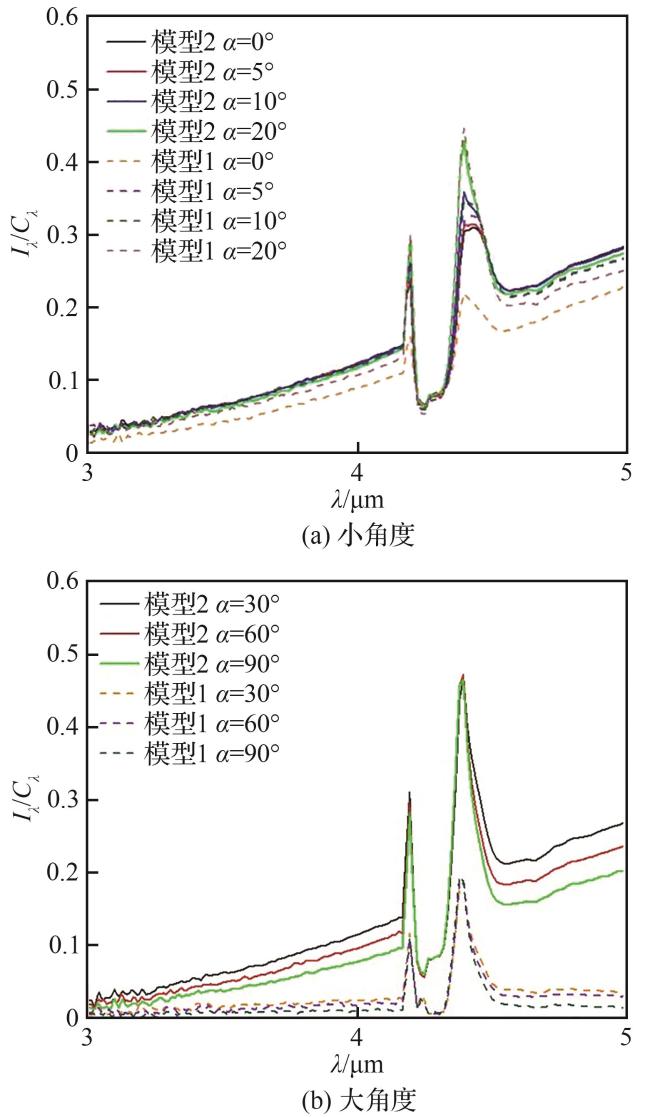
从图18中可以看出,高温部件辐射在整个波段范围内的分布是连续的,而高温喷流辐射具有选择性。4.16~4.62 μm波段内的波峰和波谷分别是由于空气和燃气中CO2的强吸收和强发射作用产生的,这些热辐射在抵达探测器之前,必须穿过喷流外围温度较低、CO₂浓度依然可观的燃气层以及周围环境大气。外围的低温CO₂气体对中心波段的辐射具有极强的吸收能力,从而强烈衰减了来自高温核心的辐射信号。在吸收系数最强的中心波段,此效应最为显著,因此在光谱曲线上形成了一个明显的波谷。在吸收带的边缘波长,CO₂的吸收系数会显著下降。因此,来自高温核心的辐射在穿过外围低温区域时,被衰减的程度大大减轻,更多的辐射能够穿透出来,从而在光谱上表现为波峰[26-28]。
除此之外,图18还能得到以下结论:模型1在水平面内的固体壁面辐射贡献度显著低于模型2,此差异在较大探测角度(α≥30°)内尤为显著,且随探测角增大,模型1与模型2的固体辐射的贡献呈单调递减趋势。值得注意的是,在较小探测角度(α≤20°),固体辐射贡献度随探测角的变化呈现非单调特性,表现为随探测角增大先增强后衰减的规律。
图19为上探测面(β=90°)内模型1与模型2的光谱辐射强度图,从图中可以看出,上探测面所测得的固体壁面热辐射与气体分子辐射谱带强度均显著高于水平探测面。在相同探测点,模型1的光谱辐射强度峰值与平均值均低于模型2,反映出后体蒙皮对固体壁面辐射的抑制效果。在较小探测角范围(α≤20°),α=10°观测点处模型1的辐射强度显著低于模型2,且为该角度域内辐射强度最小值,表明后体在此方位对高温壁面辐射与喷流气体辐射的遮挡效果最优。此外,在较大探测角范围(α≥30°),各观测点模型1的辐射强度亦显著低于模型2;其中,α=30°观测点的辐射强度峰值相对最低,表明该探测角下后体蒙皮仍具有明显降低红外辐射特征的作用。
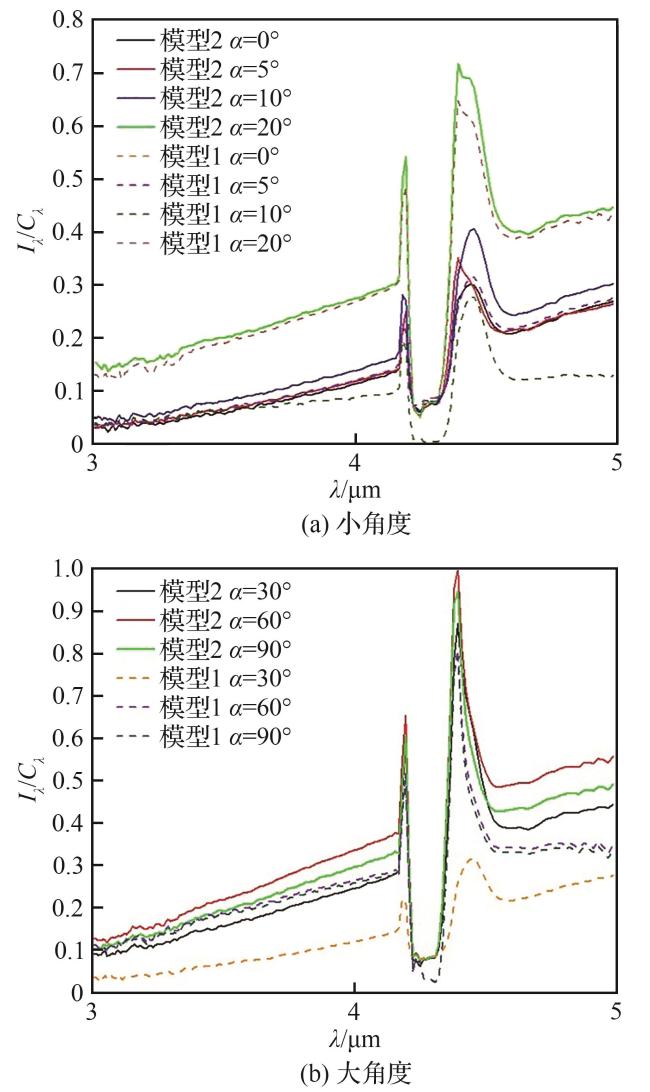
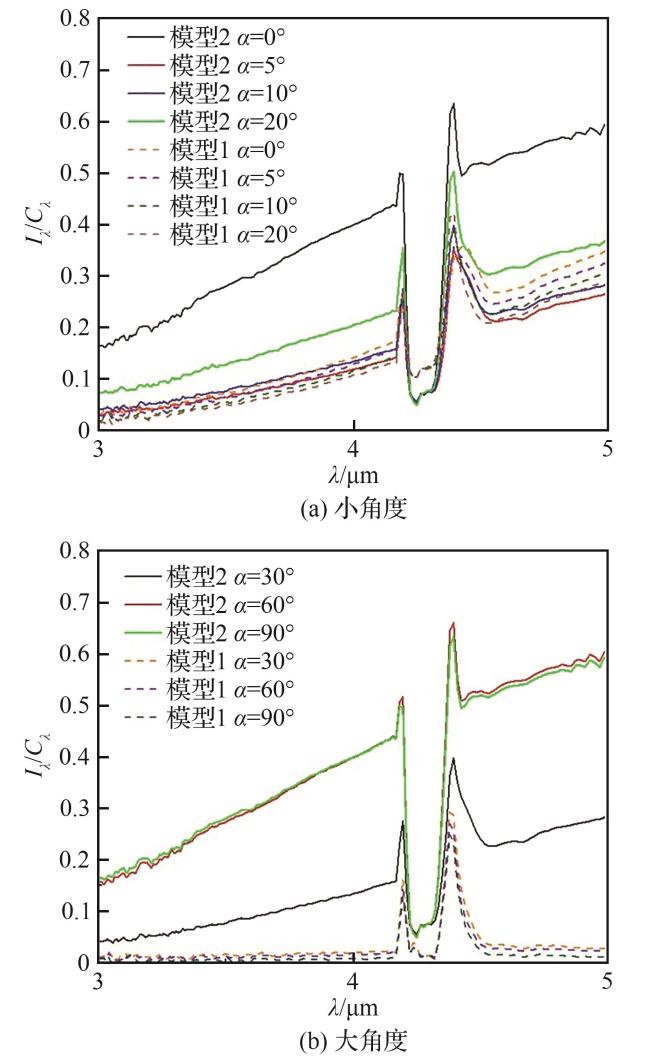
图20为下探测面(β=-90°)内模型1与模型2的光谱辐射强度图,从图中可以看出,在较小观测角范围(α≤20°),2个试验件的光谱辐射均呈现固体壁面热辐射与气体分子辐射谱带的耦合特征。然而,在较大观测角范围(α≥30°),模型1的红外辐射谱主要源于喷流气体辐射贡献,而模型2的光谱辐射强度仍维持固体与气体辐射的耦合特性。模型1的光谱辐射强度随观测角α增大呈单调递减趋势,反映出后体蒙皮的红外遮蔽效能随观测角增大而显著增强。与模型1相比,模型2的光谱辐射强度在较小观测角域(α≤20°)呈现非单调变化特征:随α增大先衰减至局部极小值(出现在α=5°观测点),随后上升;而在较大观测角域(α≥30°),其光谱辐射强度在α=30°观测点达到最小值。
4.3.2 积分辐射强度分析
图21对比了水平探测面内模型1与模型2的积分辐射强度分布特性。分析表明:在0°~5°探测角区间,模型1的红外积分辐射强度略高于模型2;而在5°~90°探测角范围内,该趋势发生逆转,模型2的积分辐射强度相对更高。值得注意的是,模型1正尾向探测点(α=0°)的积分辐射强度在整个水平面内达到峰值,其积分辐射强度为6.98 ,而模型2的积分辐射强度为6.21 ,模型1较模型2提高了12.3%,主要原因为后体蒙皮在高温燃气流作用下被加热,温度显著高于环境温度,成为强辐射源。该方位红外特征的增大,是后体在探测器视线方向呈现最大投影面积与其表面局部温升效应共同作用的结果。此外,在探测角α>5°的范围内,后体蒙皮独特的几何构型对高温核心燃气流产生了有效的红外遮挡效应,致使模型1的积分辐射强度相较于模型2平均降低了约10.52%。
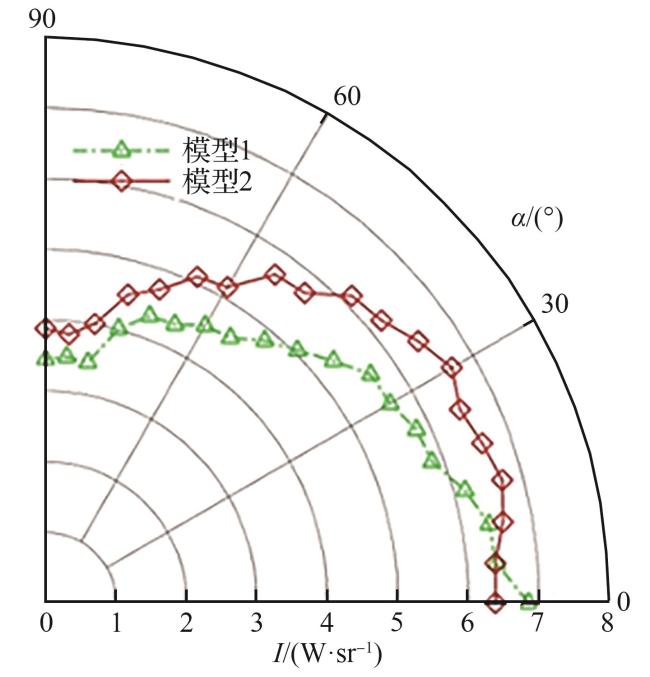
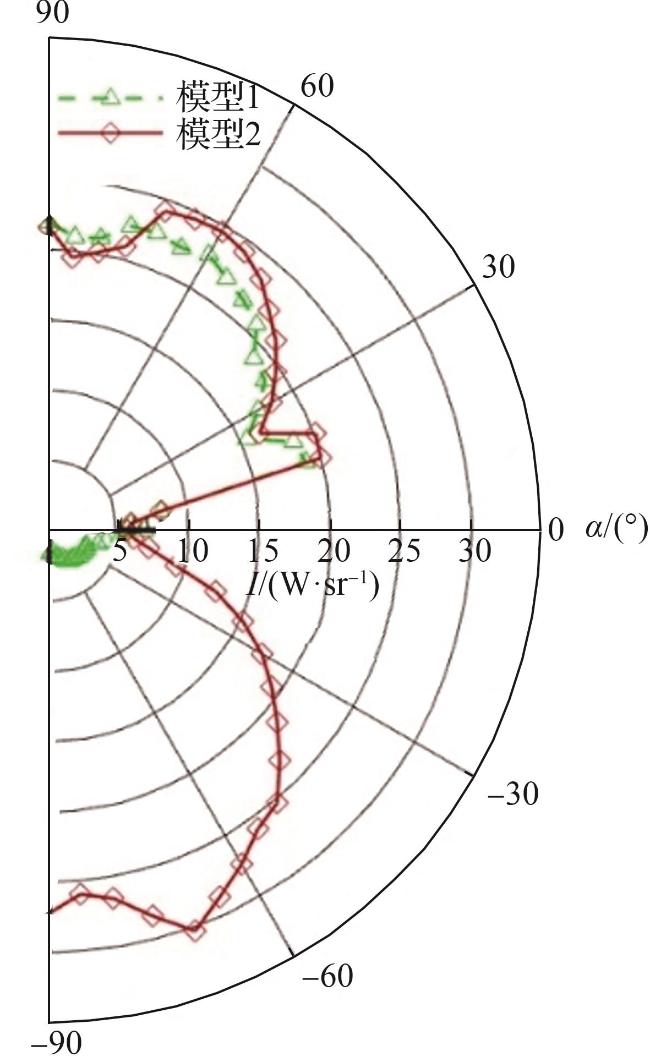
图22为竖直探测面内模型1与模型2的积分辐射强度分布图,图中可以看出:在上探测面(β=90°)内,模型1与模型2的辐射强度分布趋势高度一致,且两者绝对数值差异不显著,大角度(α≥30°)探测点两者绝对辐射强度的全局相对偏差均值为8.027%。值得注意的是,在0°~70°探测角范围内,模型1的积分辐射强度略低于模型2。这一现象产生的原因为:后体蒙皮在上探测面方向对高温固体壁面(排气系统出口保型设计段)产生了有效的红外遮挡效应。尽管高温喷流会对后体表面产生对流、辐射换热作用,但其表面稳态温度仍显著低于排气系统高温壁面或核心喷流的温度,因此,后体蒙皮在的红外辐射贡献相对有限。同时,其几何遮挡效应使得模型1在部分探测点的积分辐射强度低于模型2。这一结果说明了后体对于飞行器红外辐射特征的影响具有空间依赖性,随观测方位的改变而变化。在下探测面(β=-90°)内,模型1的红外积分辐射强度显著低于模型2,最大降低幅度在α=80°探测点,降低了94.62%。该现象的核心物理机制可归结为两点:首先,后体蒙皮的几何结构有效遮蔽了下方探测器视场范围内的关键高温辐射源,特别是被高温燃气流强烈加热的排气系统延伸段壁面;其次,下探测面所能探测到的后体蒙皮区域,受燃气流气动加热及热传导效应的影响相对微弱,其表面温度分布趋近于环境大气温度,导致该区域自身的红外辐射极低。综上所述,后体蒙皮对下方高温热源的强遮挡效应与下方自身极低的红外辐射贡献共同作用,使得模型1在下方探测面上的积分辐射强度明显小于模型2。


5 结 论
针对飞翼布局飞行器后体对S形喷管的红外辐射特征影响开展了试验研究,通过对试验数据的分析得到以下主要结论:
1) 红外辐射特征分区测量方法具备科学性与必要性。该方法有效克服了单次测量在特定探测角度(尤其是大角度探测方向)无法完全覆盖喷流核心区的局限性,显著降低了因喷流辐射贡献被低估或掩盖而引入的系统性测量误差。
2) S形喷管上侧和下侧壁面在第一个S形段温度升高比较明显并且上侧壁面温度升高的幅度比较大。试验件蒙皮温度分布呈现显著的空间非均匀性,高温区域主要集中在保型段设计附近,对试验件在水平探测面及上探测面这两个关键观测方向的红外隐身性能构成了实质性削弱,成为制约其实现有效红外抑制的关键挑战之一。
3) 后体蒙皮在飞行器红外隐身设计中扮演着双重角色,其效应具有显著的方位依赖性。在正尾向(α=0°)附近,被高温燃气流加热的后体表面成为主要的红外辐射源,构成红外暴露的主要风险点,亟待通过高效冷却手段抑制其表面温度;而在侧向(典型如α>5°)探测方位,后体蒙皮有效遮蔽了探测器视线方向上的高温核心燃气流及排气系统热端部件,从而显著降低了系统的红外积分辐射强度。
4) 高温部件的壁面辐射是飞行器的主要辐射源,其辐射值远大于喷管内部高温燃气辐射和喷流辐射,后机身试验件的总辐射分布特征主要由壁面辐射决定。带后体蒙皮的试验件积分辐射强度最大值在上探测面(β=90°)α=10°探测点,最小值在下探测面(β=-90°)α=80°探测点。