Acta Aeronautica et Astronautica Sinica ›› 2026, Vol. 47 ›› Issue (14): 332880.doi: 10.7527/S1000-6893.2026.32880
• Electronics and Electrical Engineering and Control • Previous Articles
Yixuan WANG1, Binbin PEI1,2( ), Yibing ZHAO3, Xinmin HAN2, Haojun XU2
Received:2025-10-10
Revised:2025-11-25
Accepted:2026-03-26
Online:2026-04-07
Published:2026-04-02
Contact:
Binbin PEI
E-mail:bbpei@xidian.edu.cn
Supported by:CLC Number:
Yixuan WANG, Binbin PEI, Yibing ZHAO, Xinmin HAN, Haojun XU. Dynamic RCS simulation of flying wing with control surface deflections[J]. Acta Aeronautica et Astronautica Sinica, 2026, 47(14): 332880.
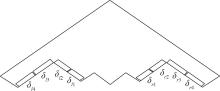
Fig.1
Structural diagram of flying wing aircraft
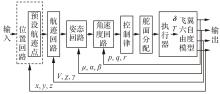
Fig.2
Flight path tracking control model of flying wing aircraft
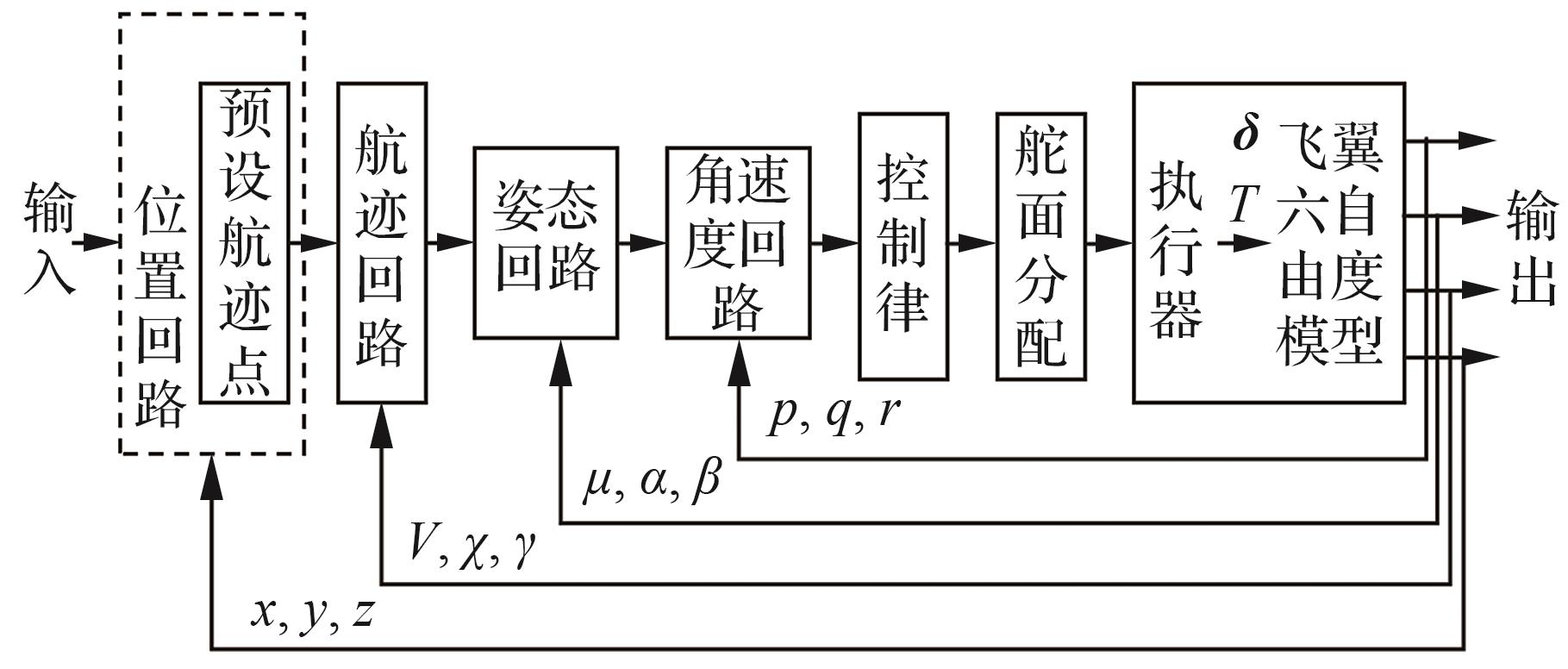

Fig.3
Geometric model of flying wing aircraft
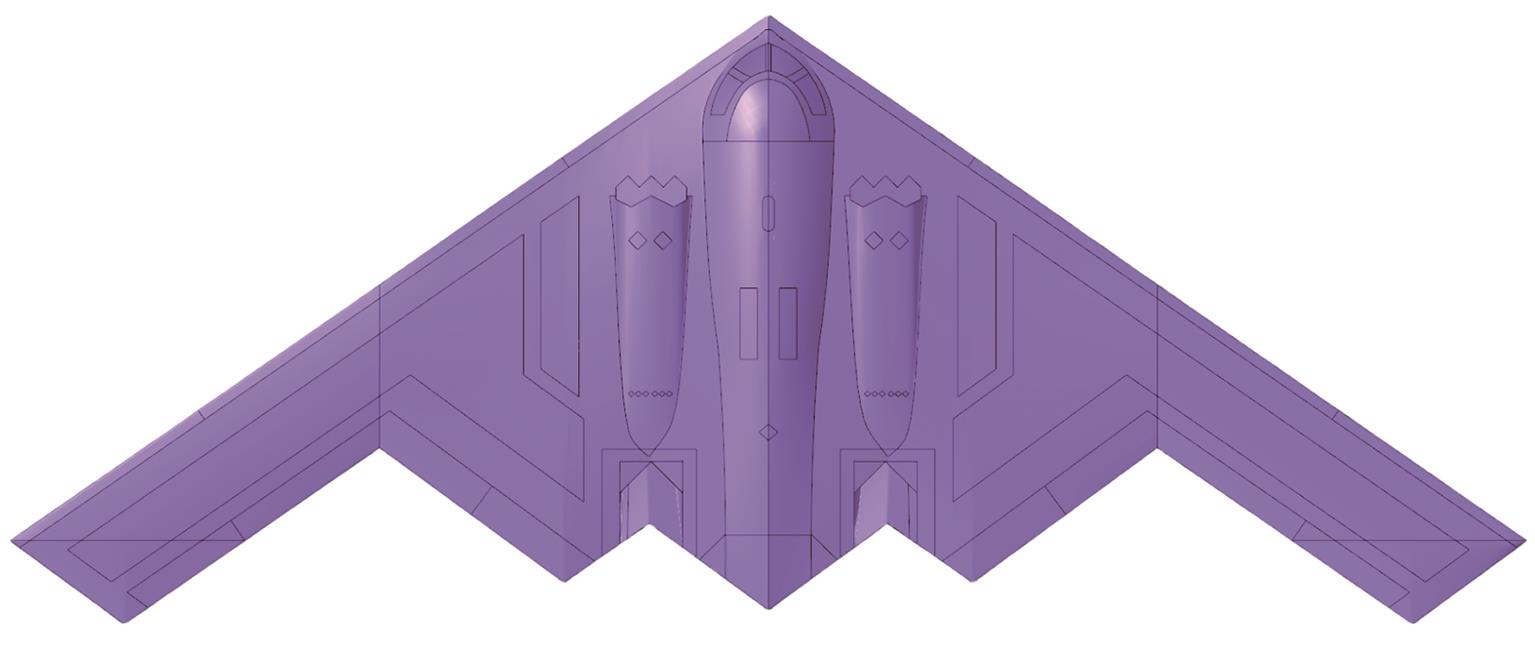
Fig.4
Model after control surface segmentation
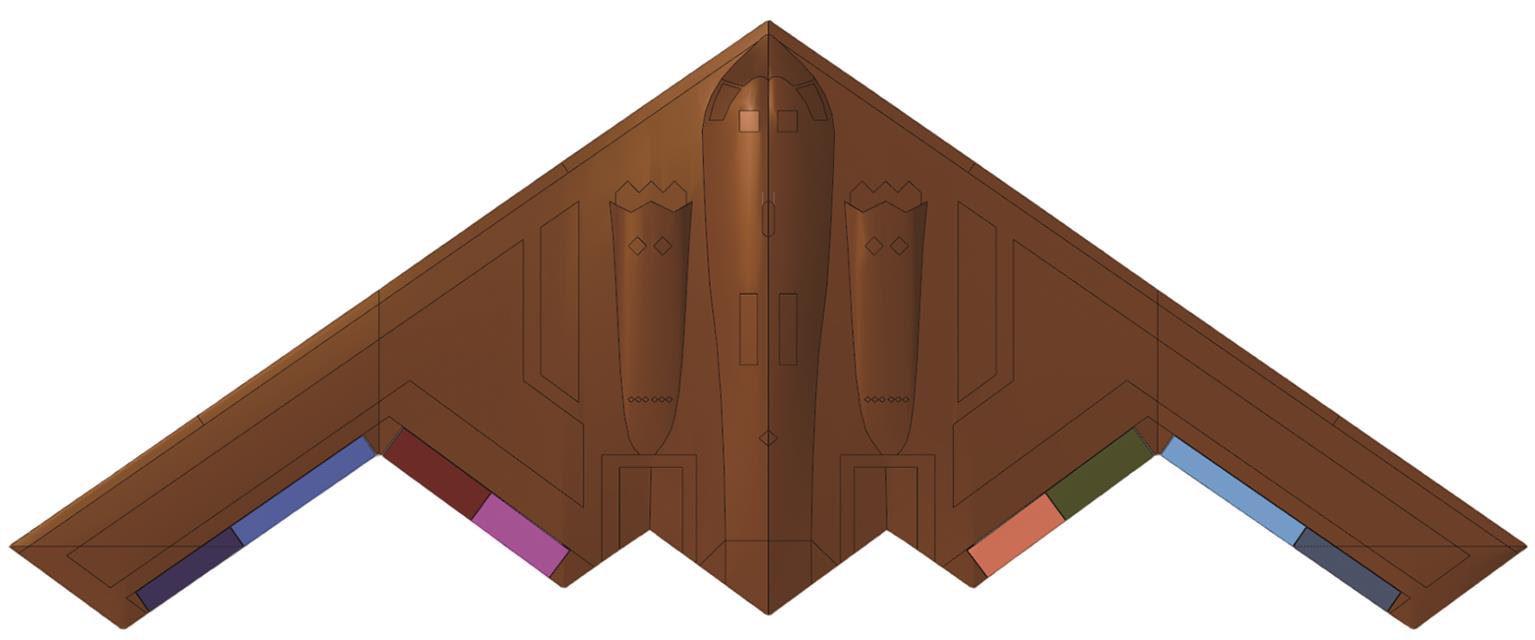
Fig.5
Mesh of flying wing aircraft
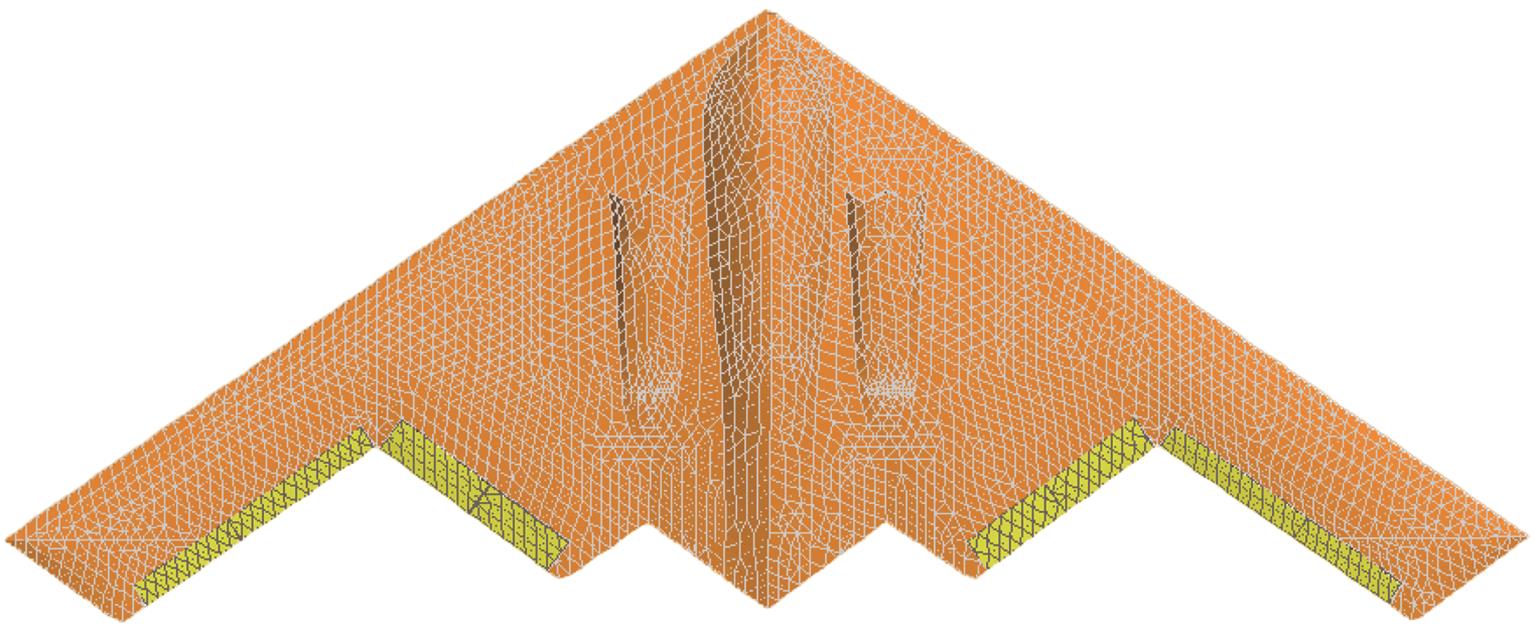
Fig.6
Schematic diagram of rotation axis setting
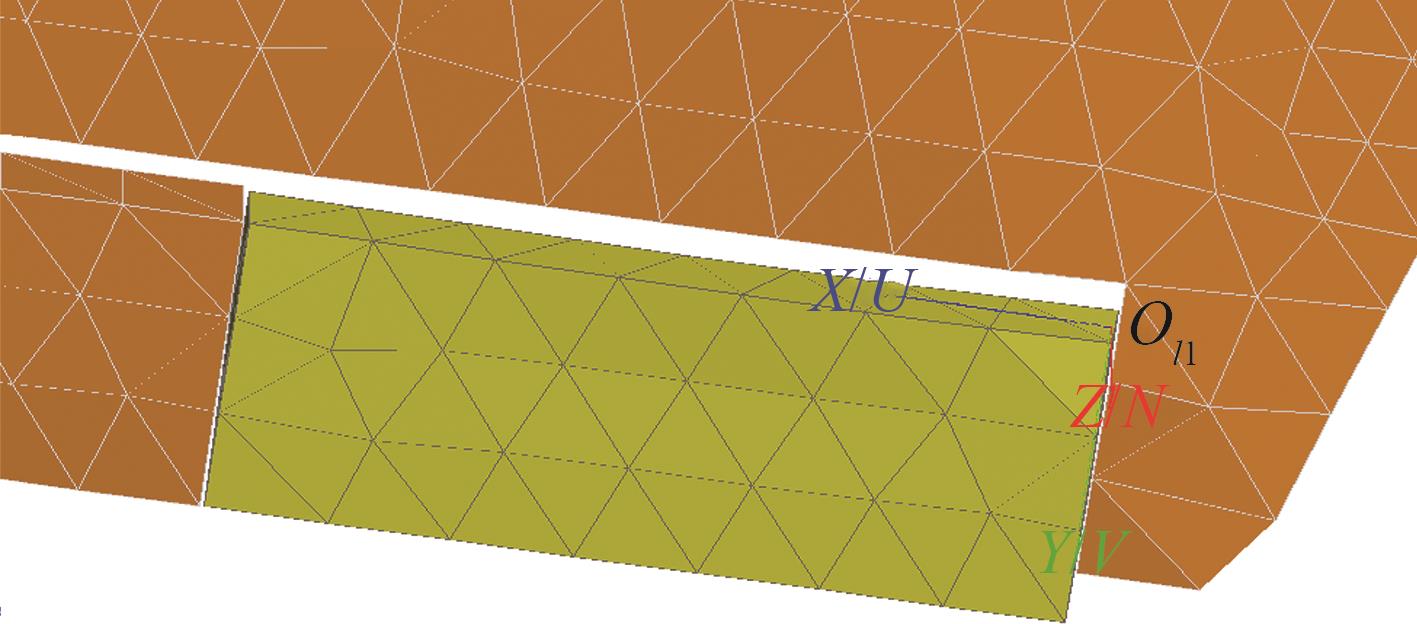
Fig.7
Geometric model of control surface pre-deflection
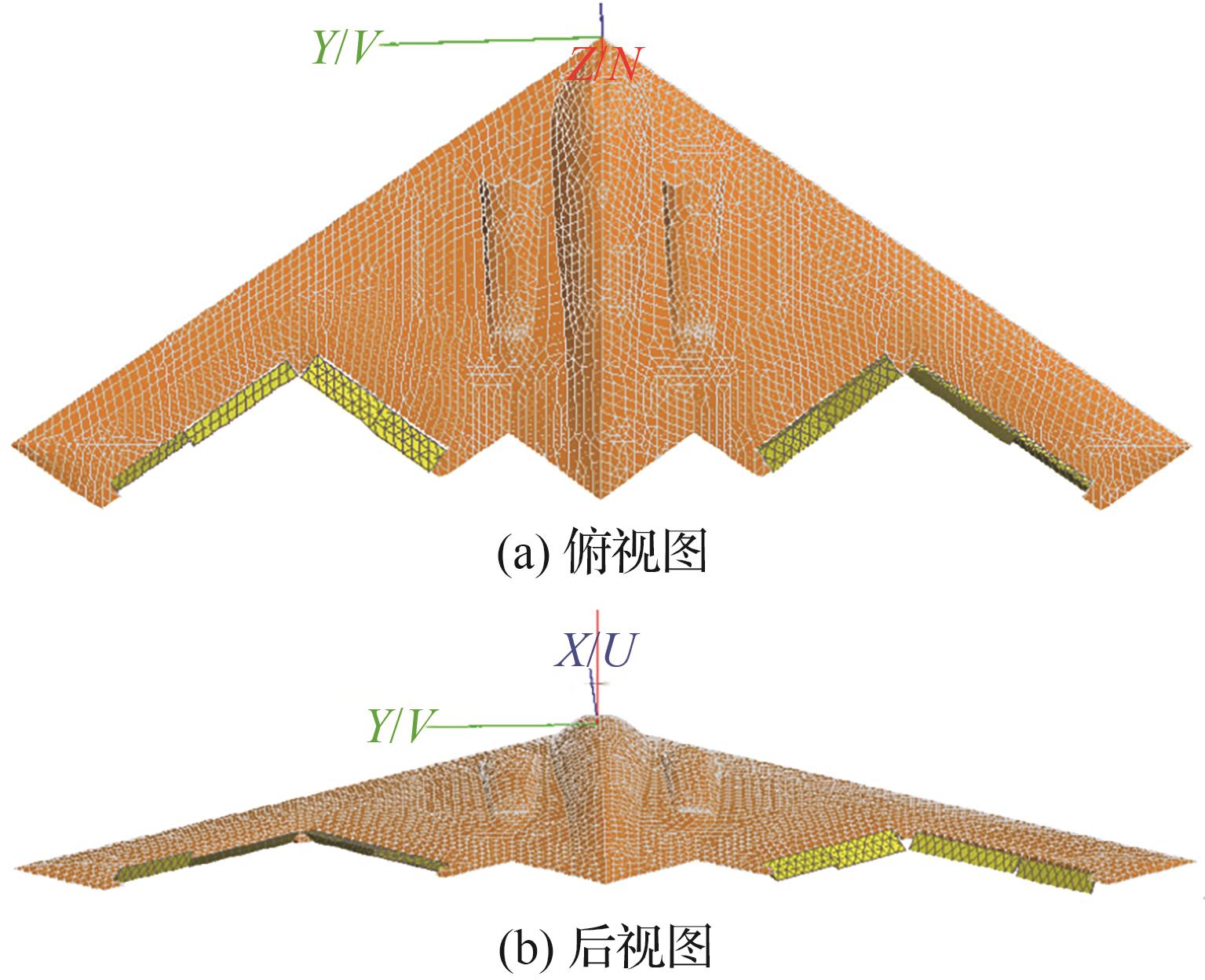
Fig.8
Schematic diagram of radar line-of-sight angle
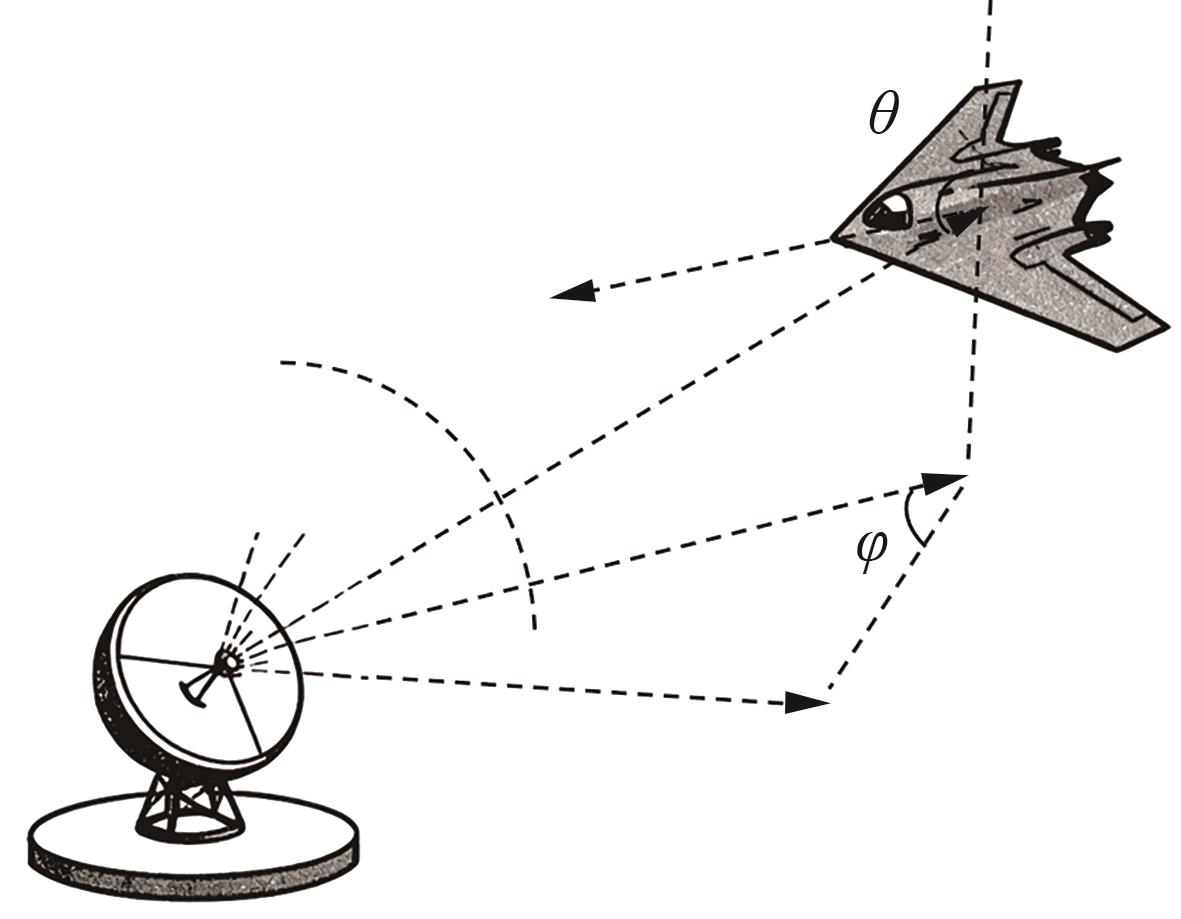
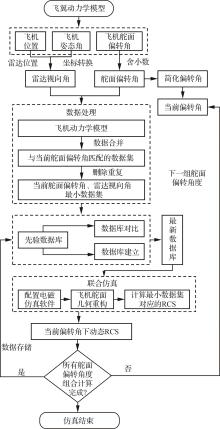
Fig.9
Flowchart of joint simulation algorithm
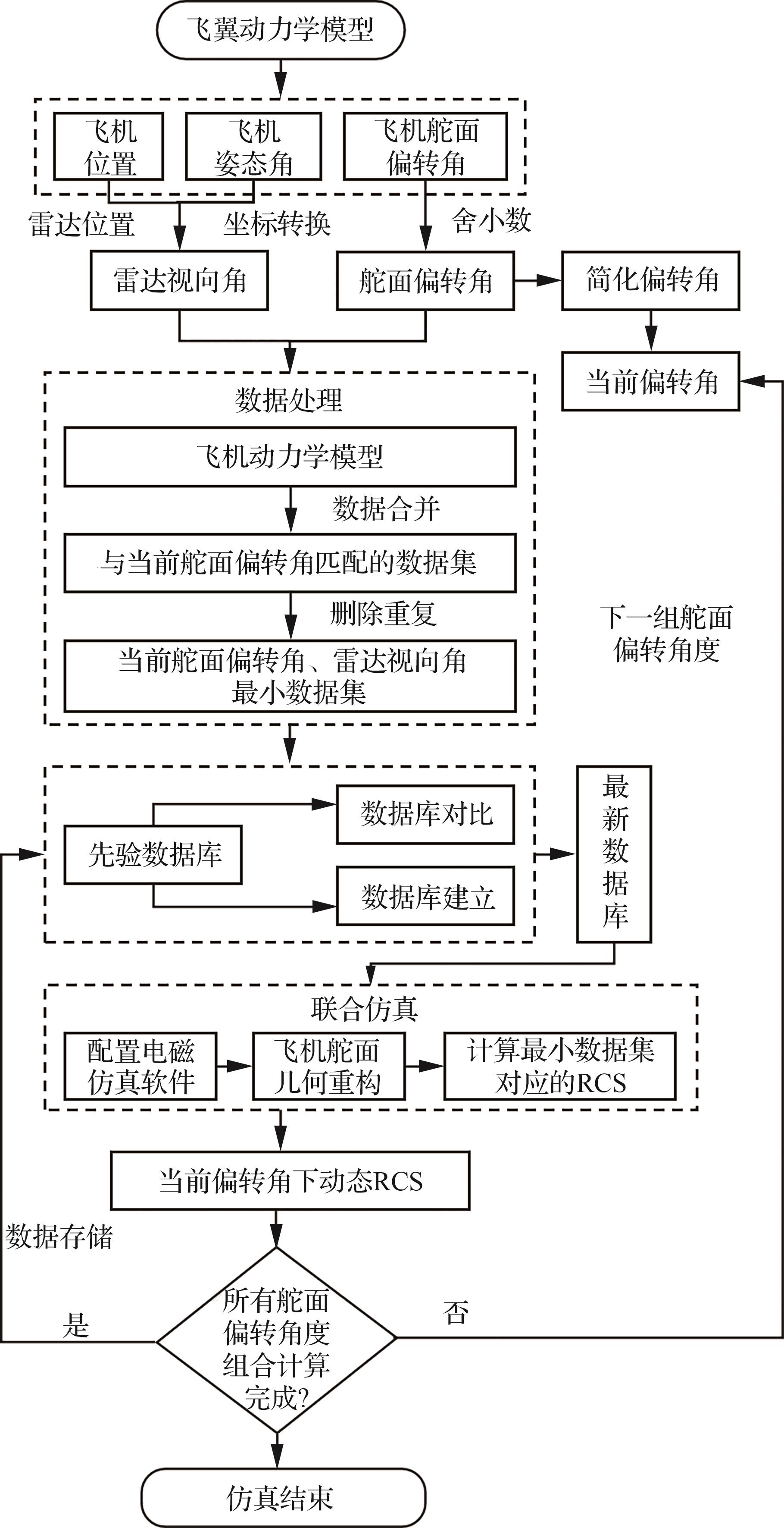

Table 1
Waypoint coordinates
| 航迹点 | 坐标/km |
|---|---|
| 初始位置 | (100,30,8) |
| 过程航迹点 | (100,50,8) |
| 过程航迹点 | (100,80,10) |
| 过程航迹点 | (100,100,12) |
| 过程航迹点 | (150,110,12) |
| 过程航迹点 | (153,80,9) |
| 过程航迹点 | (153,50,9) |
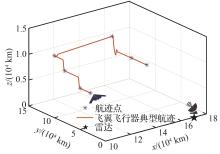
Fig.10
Diagram of typical flight path
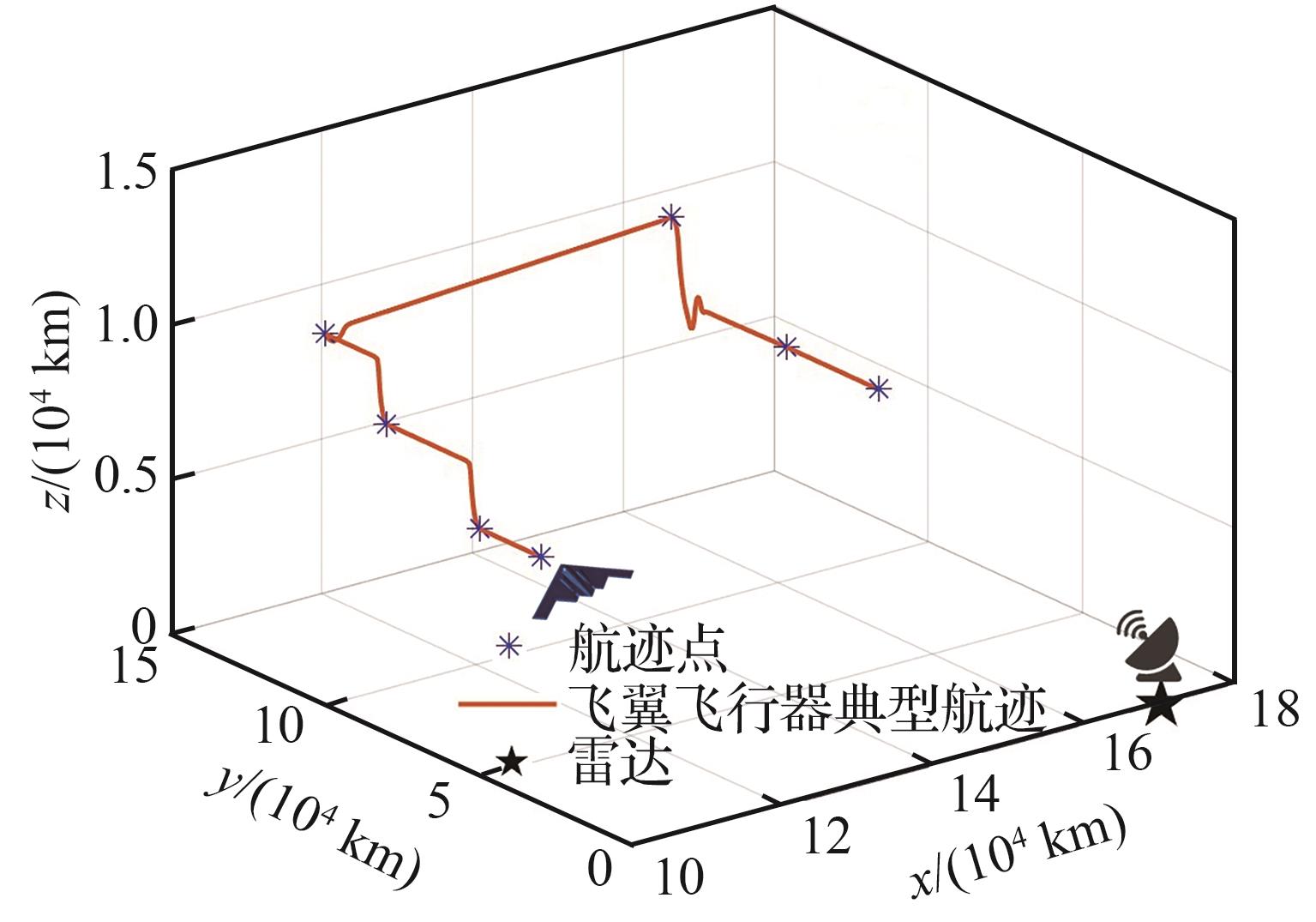
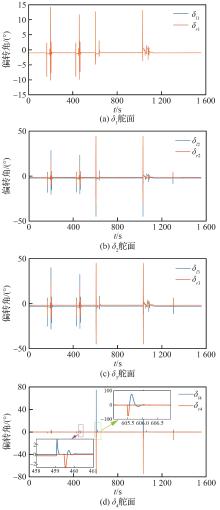
Fig.11
Simulation results of control surface deflections
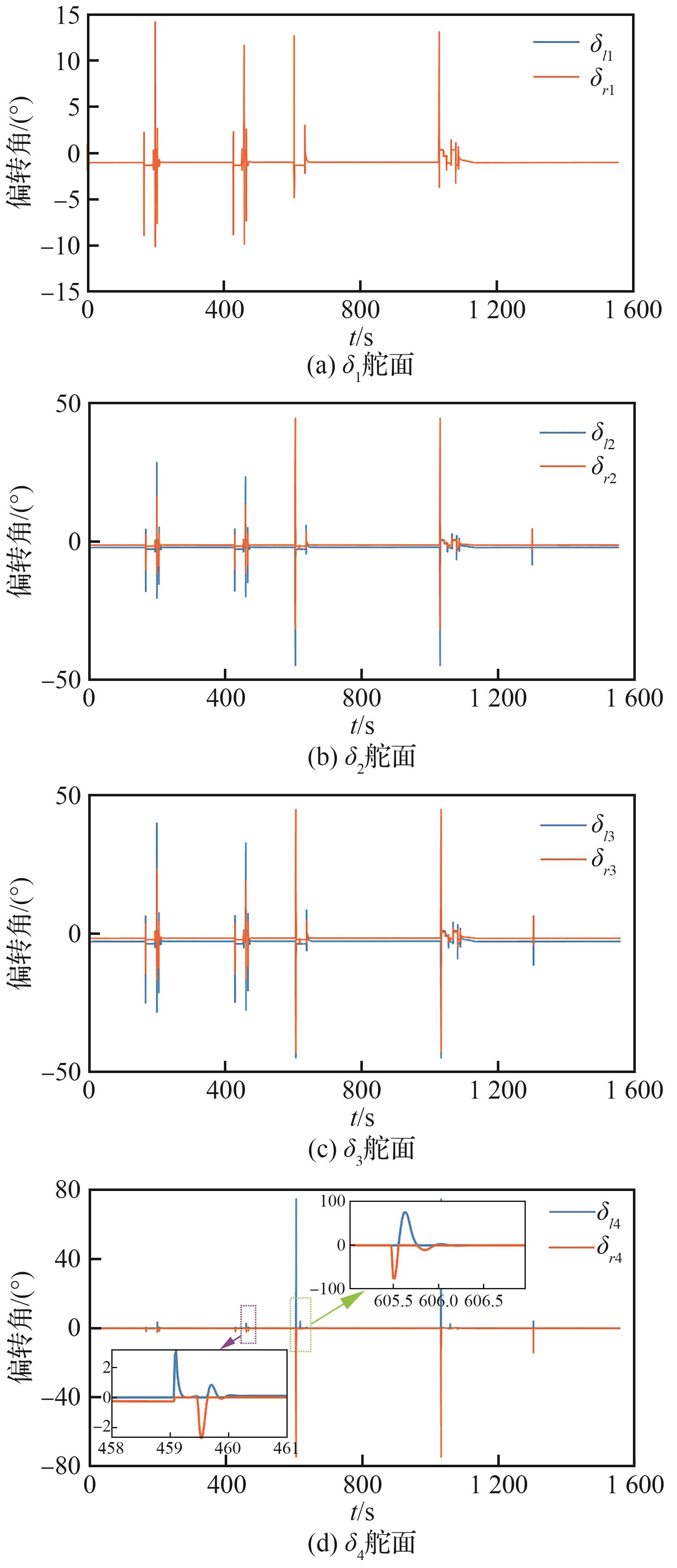
Table 2
Pre-set deflection angle of control surface
| 舵面预偏转 | 角度/(°) | 舵面预偏转 | 角度/(°) |
|---|---|---|---|
| 第1组左侧 | 15 | 第1组右侧 | -16 |
| 第2组左侧 | 25 | 第2组右侧 | -26 |
| 第3组左侧 | 35 | 第3组右侧 | -36 |
| 第4组左侧 | 55 | 第4组右侧 | 0 |
Fig.12
Line-of-sight angle profile for entire trajectory
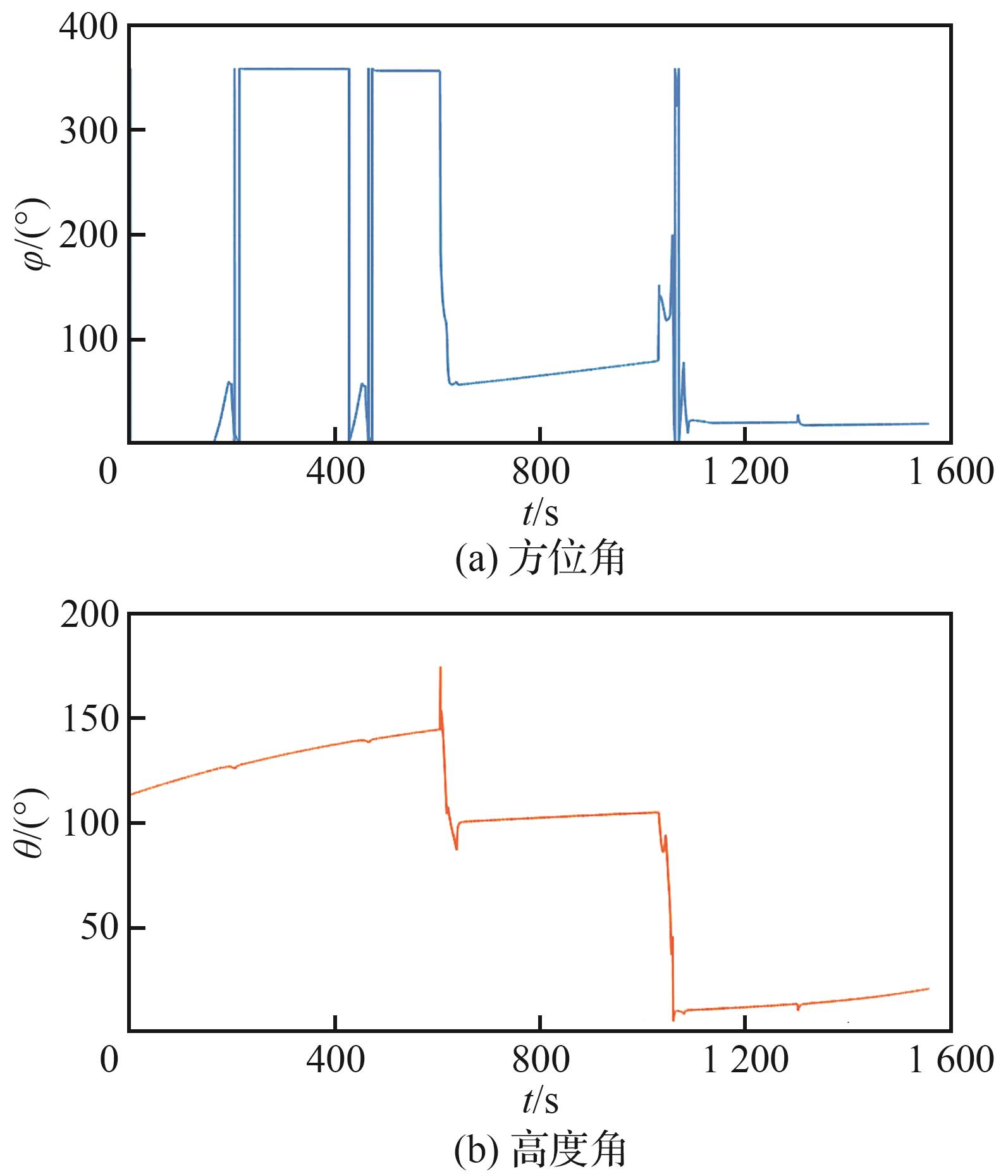
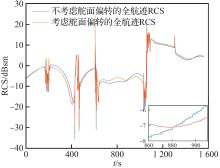
Fig.13
Comparison of full-trajectory dynamic RCS results with and without control surface deflection
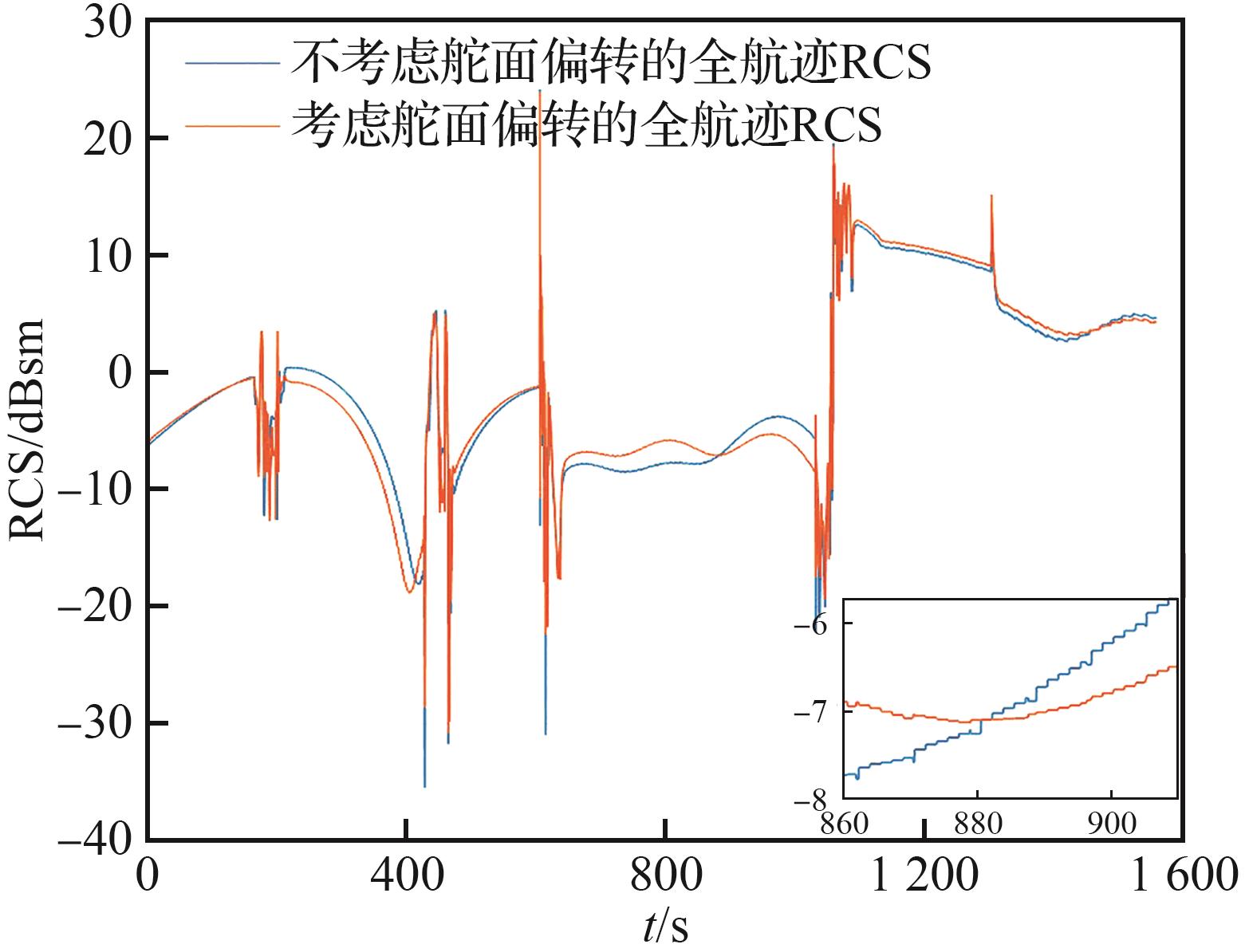
Table 3
Result of full-trajectory dynamic RCS with and without control surface deflection
| 是否考虑舵面偏转 | 方差/dBsm2 | 平均值/dBsm |
|---|---|---|
| 不考虑 | 51.62 | -1.354 2 |
| 考虑 | 54.01 | -1.352 6 |
Table 4
Comparison of Pearson correlation coefficients by different flight path segment
| 航迹段 | Pearson相关系数 |
|---|---|
| 侧站平飞 | 0.989 8 |
| 侧站平飞 | 0.941 1 |
| 背站拉起 | 0.955 1 |
| 背站拉起 | 0.964 4 |
| 侧站盘旋 | 0.826 3 |
| 对站俯冲 | 0.997 4 |
Table 5
Comparison of RMSD by different flight path segment
| 航迹段 | RMSD/dBsm |
|---|---|
| 侧站平飞 | 0.281 4 |
| 侧站平飞 | 0.498 0 |
| 背站拉起 | 2.275 9 |
| 背站拉起 | 1.236 2 |
| 侧站盘旋 | 1.454 1 |
| 对站俯冲 | 0.714 0 |
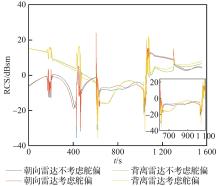
Fig.14
Comparison of full-trajectory dynamic RCS toward and away from radar station
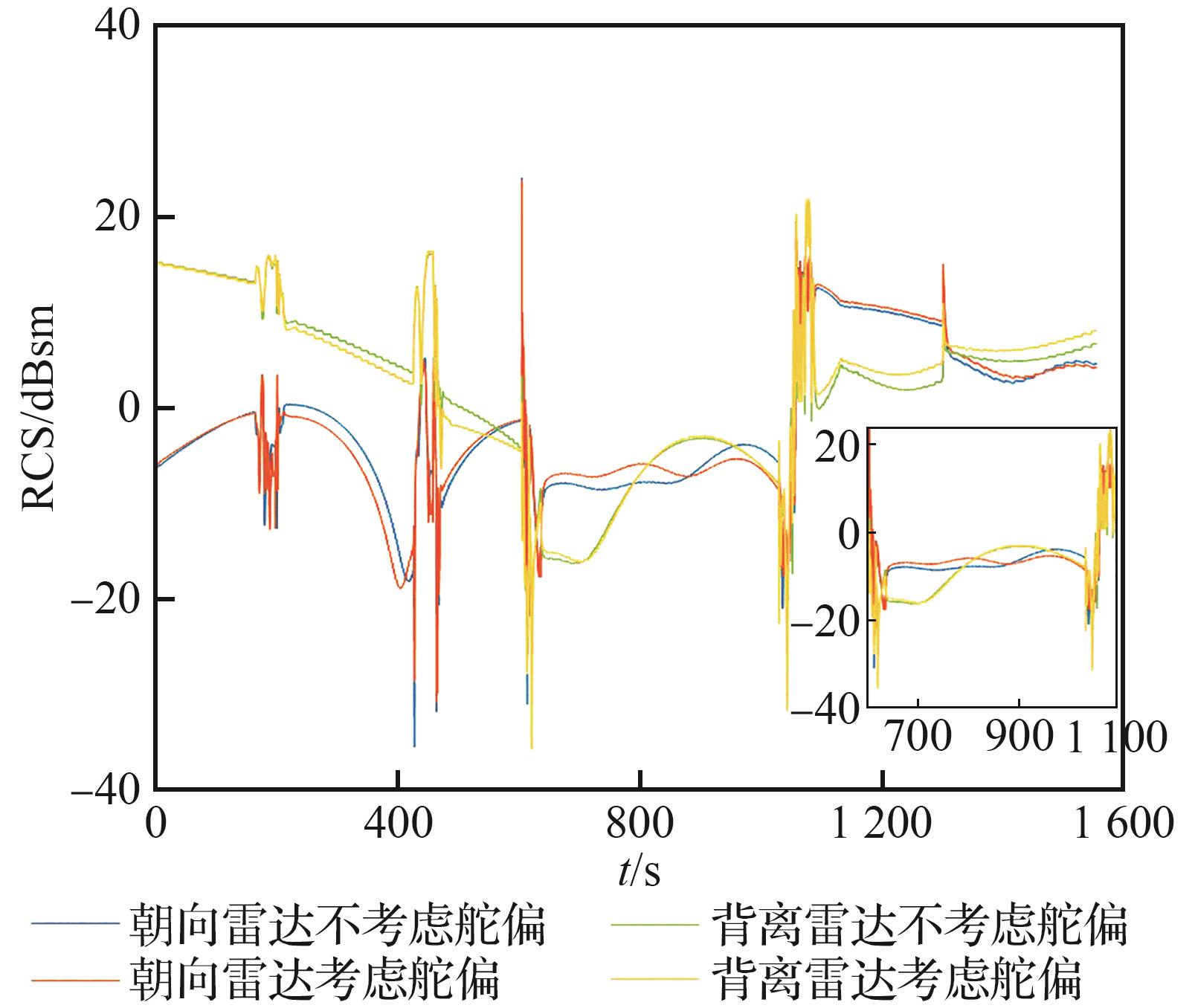
Table 6
Comparison of RCS fluctuation toward or away from radar station
| 朝向还是背离雷达 | 波动幅度/% |
|---|---|
| 朝向雷达 | 7.80 |
| 背离雷达 | 0.05 |
Table 7
Comparison of RCS peak spikes toward or away from radar station
| 朝向还是背离雷达 | 峰值突增/dB |
|---|---|
| 朝向雷达 | 11.61 |
| 背离雷达 | 5.73 |
Table 8
Comparison of Pearson correlation coefficients toward or away from radar station
| 朝向还是背离雷达 | Pearson相关系数 |
|---|---|
| 朝向雷达 | 0.972 2 |
| 背离雷达 | 0.996 9 |
Table 9
Comparison of RMSD toward or away from radar station
| 朝向还是背离雷达 | RMSD/dBsm |
|---|---|
| 朝向雷达 | 1.423 1 |
| 背离雷达 | 0.595 7 |
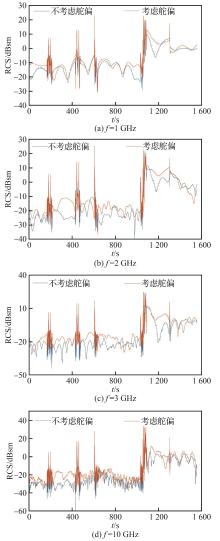
Fig.15
Comparison diagram of flight-trajectory dynamic RCS under different radar operating frequencies
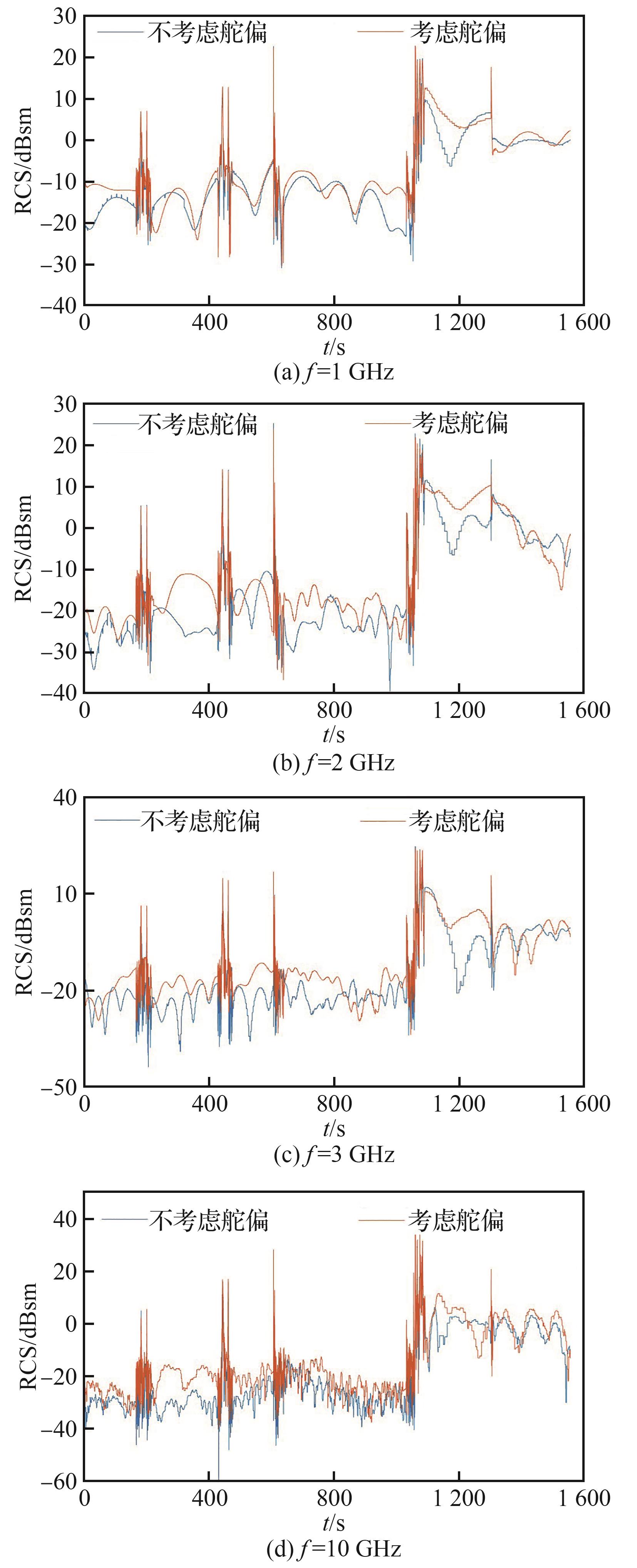
Table 10
Comparison of average RCS values under different radar operating frequencies
| 雷达工作频率/Hz | RCS平均值/dBsm | |
|---|---|---|
| 不考虑舵面偏转 | 考虑舵面偏转 | |
| 435 M | -1.35 | -1.35 |
| 1 G | -9.02 | -7.13 |
| 2 G | -14.34 | -11.09 |
| 3 G | -15.78 | -11.84 |
| 10 G | -19.06 | -14.25 |
Table 11
Influence comparison of control surface deflection on RCS under different radar operating frequencies
| 雷达工作频率/Hz | 平均值增大百分比 |
|---|---|
| 435 M | 0.12 |
| 1 G | 20.93 |
| 2 G | 22.67 |
| 3 G | 24.97 |
| 10 G | 25.24 |
Table 12
Comparison of Pearson correlation coefficients under different radar operating frequencies
| 雷达工作频率/Hz | Pearson相关系数 |
|---|---|
| 435 M | 0.983 6 |
| 1 G | 0.904 7 |
| 2 G | 0.889 0 |
| 3 G | 0.840 6 |
| 10 G | 0.893 6 |
Table 13
Comparison of RMSD under different radar operating frequencies
| 雷达工作频率/Hz | RMSD/dBsm |
|---|---|
| 435 M | 1.327 0 |
| 1 G | 4.133 3 |
| 2 G | 6.381 0 |
| 3 G | 7.192 9 |
| 10 G | 7.742 3 |
| [1] | 陈黎. 从历代战斗机核心性能特征看未来六代机发展方向[J]. 军事文摘, 2022, 1(15): 45-50. |
| CHEN L. From the core performance characteristics of historical fighter aircraft to development direction of the sixth-generation fighter[J]. Military Digest, 2022, 1(15): 45-50 (in Chinese). | |
| [2] | LI M, BAI J Q, LI L, et al. A gradient-based aero-stealth optimization design method for flying wing aircraft[J]. Aerospace Science and Technology, 2019, 92: 156-169. |
| [3] | 陈清阳, 辛宏博, 王鹏, 等. 飞翼布局飞行器研究现状分析[J]. 国防科技大学学报, 2024, 46(3): 39-58. |
| CHEN Q Y, XIN H B, WANG P, et al. Analysis of the current research on the flying-wing aircraft[J]. Journal of National University of Defense Technology, 2024, 46(3): 39-58 (in Chinese). | |
| [4] | 徐一航, 李宁, 刘玉祥, 等. 战损飞翼布局飞行器气动特性分析[J]. 哈尔滨工业大学学报, 2025, 57(8): 34-44. |
| XU Y H, LI N, LIU Y X, et al. Aerodynamic characteristics of battle-damaged flying-wing aircrafts[J]. Journal of Harbin Institute of Technology, 2025, 57(8): 34-44 (in Chinese). | |
| [5] | GU Y R, CHEN S S, GAO Z H, et al. Investigations on electromagnetic scattering characteristics of aircraft rudder considering electromagnetic discontinuities[J]. Proceedings of the Institution of Mechanical Engineers, Part G: Journal of Aerospace Engineering, 2023, 237(16): 3696-3708. |
| [6] | 陈彧娇, 裴彬彬, 赵一兵, 等. 动力学特性对单站动态雷达散射截面的影响分析[J]. 飞行力学, 2024, 42(4): 88-94. |
| CHEN Y J, PEI B B, ZHAO Y B, et al. Analysis of the influence of dynamic characteristics on single station dynamic radar cross section[J]. Flight Dynamics, 2024, 42(4): 88-94 (in Chinese). | |
| [7] | 杨铭铎. 无人机高频雷达散射截面计算及RCS缩减技术研究[D]. 成都: 电子科技大学, 2024: 5-15. |
| YANG M D. Calculation of high-frequency radar cross section for unmanned aerial vehicles and research on rcs reduction techniques[D]. Chengdu: University of Electronic Science and Technology of China, 2024: 5-15 (in Chinese). | |
| [8] | 徐文丰, 李颖晖, 裴彬彬, 等. 飞机动态RCS计算方法的修正与改进[J]. 空军工程大学学报, 2024, 25(1): 39-46. |
| XU W F, LI Y H, PEI B B, et al. Modification and improvement of dynamic RCS calculation method for aircraft[J]. Journal of Air Force Engineering University, 2024, 25(1): 39-46 (in Chinese). | |
| [9] | LU X Q, HUANG J, WU Y C, et al. Influence of stealth aircraft dynamic RCS peak on radar detection probability[J]. Chinese Journal of Aeronautics, 2023, 36(3): 137-145. |
| [10] | 曾昭锋, 于新华, 莫锦军. 弹道目标动态雷达散射特征仿真系统设计[J]. 电子制作, 2023, 31(13): 3-6, 101. |
| ZENG Z F, YU X H, MO J J. Design of simulation system for dynamic radar scattering characteristics of ballistic targets[J]. Practical Electronics, 2023, 31(13): 3-6, 101 (in Chinese). | |
| [11] | HAO W, CHEN G, LI Y M, et al. Analysis of RCS characteristics in dynamic flight of stealth UAV[C]∥2023 IEEE 3rd International Conference on Electronic Technology, Communication and Information (ICETCI). Piscataway: IEEE Press, 2023: 1208-1212. |
| [12] | 杨岩, 费钟阳, 招启军, 等. 复合式共轴直升机动态电磁散射特性分析[J]. 航空动力学报, 2025, 40(6): 20240020. |
| YANG Y, FEI Z Y, ZHAO Q J, et al. Analysis of dynamic electromagnetic scattering characteristics of compound coaxial helicopter[J]. Journal of Aerospace Power, 2025, 40(6): 20240020 (in Chinese). | |
| [13] | SEN K, AKSIMSEK S, KARA A. Dynamic RCS modeling and aspect angle analysis for highly maneuverable UAVs[J]. Aerospace, 2024, 11(9): 775. |
| [14] | 贾继鹏, 段其省. 一种外场雷达RCS测量方法[J]. 电子测试, 2019(9): 64-65, 67. |
| JIA J P, DUAN Q S. A RCS Measurement method for external field radar[J]. Electronic Test, 2019(9): 64-65, 67 (in Chinese). | |
| [15] | 李抟, 田博, 李铁, 等. 基于RCS起伏模型的箔条云近场实测数据分析方法[J]. 探测与控制学报, 2020, 42(2): 52-55. |
| LI T, TIAN B, LI T, et al. Near-field measured data analysis of chaff cloud based on RCS fluctuation model[J]. Journal of Detection & Control, 2020, 42(2): 52-55 (in Chinese). | |
| [16] | 李勇, 胡伟东, 张洋, 等. 外场RCS测量中背景杂波抑制技术研究[J]. 兵器装备工程学报, 2021, 42(3): 65-68, 106. |
| LI Y, HU W D, ZHANG Y, et al. Research on technology of background clutter suppression in outdoor RCS measurement[J]. Journal of Sichuan Ordnance, 2021, 42(3): 65-68, 106 (in Chinese). | |
| [17] | 张伟, 赵轲, 夏露, 等. 飞翼布局翼型系列设计进展[J]. 空气动力学学报, 2021, 39(6): 37-52. |
| ZHANG W, ZHAO K, XIA L, et al. A multi-disciplinary global/local optimization method for flying-wing airfoils design[J]. Acta Aerodynamica Sinica, 2021, 39(6): 37-52 (in Chinese). | |
| [18] | 梁爽, 滕杰, 聂暾, 等. 舵面偏转对机翼RCS影响仿真与分析[J]. 航空科学技术, 2017, 28(6): 9-14. |
| LIANG S, TENG J, NIE T, et al. Simulation and analysis of the wing RCS due to control surface deployed[J]. Aeronautical Science and Technology, 2017, 28(6): 9-14 (in Chinese). | |
| [19] | ZHOU Z Y, HUANG J. Hybrid deflection of spoiler influencing radar cross-section of tailless fighter[J]. Sensors, 2021, 21(24): 8459. |
| [20] | 李艺海, 何太, 袁广田. 飞翼布局飞机舵面偏转对RCS的影响研究[J]. 科技创新与应用, 2020, 10(25): 5-8. |
| LI Y H, HE T, YUAN G T. Research on the influence of the control surface deflection on RCS of flying wing aircraft[J]. Technology Innovation and Application, 2020, 10(25): 5-8 (in Chinese). | |
| [21] | NATH DUBBA S C. Effect of trailing edge flap deflection on bi-static radar cross section of a wing[C]∥2021 International Conference on Communication, Control and Information Sciences (ICCISc). Piscataway: IEEE Press, 2021: 1-4. |
| [22] | FERNANDES G, MALDONADO V. The U.S. air force next-generation air-refueling system: A resurgence of the blended wing body?[J]. Aerospace, 2024, 11(6): 494. |
| [23] | 戴崇. 雷达目标动态RCS特性建模方法研究[D]. 长沙: 国防科学技术大学, 2013: 10-35. |
| DAI C. Research on radar target dynamic RCS characteristics modeling method[D]. Changsha: National University of Defense Technology, 2013: 10-35 (in Chinese). |
| [1] | FEI Zhongyang, JIANG Xiangwen, ZHAO Qijun. Design of helicopter target rotor based on similar dynamic RCS characteristics [J]. ACTA AERONAUTICAET ASTRONAUTICA SINICA, 2022, 43(7): 125465-125465. |
| [2] | LEI Pengxuan, YU Li, CHEN Dehua, LYU Binbin. Influence of flight control law on body freedom flutter characteristics: Experimental study [J]. ACTA AERONAUTICAET ASTRONAUTICA SINICA, 2021, 42(6): 124378-124378. |
| [3] | SUN Quanbing, SHI Zhiwei, GENG Xi, WANG Lishuang, ZHANG Weiyuan. Attitude control of flying wing aircraft without control surfaces based on active flow control [J]. ACTA AERONAUTICAET ASTRONAUTICA SINICA, 2020, 41(12): 124080-124080. |
| Viewed | ||||||
|
Full text |
|
|||||
|
Abstract |
|
|||||
Address: No.238, Baiyan Buiding, Beisihuan Zhonglu Road, Haidian District, Beijing, China
Postal code : 100083
E-mail:hkxb@buaa.edu.cn
Total visits: 6658907 Today visits: 1341All copyright © editorial office of Chinese Journal of Aeronautics
All copyright © editorial office of Chinese Journal of Aeronautics
Total visits: 6658907 Today visits: 1341

 CJA
CJA
