Acta Aeronautica et Astronautica Sinica ›› 2026, Vol. 47 ›› Issue (14): 332775.doi: 10.7527/S1000-6893.2025.32775
• Electronics and Electrical Engineering and Control • Previous Articles
Shuzong XIE1, Qinmin YANG2, Qiang CHEN3( ), Beiping HOU1
Received:2025-09-11
Revised:2025-09-30
Accepted:2025-11-03
Online:2025-11-17
Published:2025-11-07
Contact:
Qiang CHEN
E-mail:sdnjchq@zjut.edu.cn
Supported by:CLC Number:
Shuzong XIE, Qinmin YANG, Qiang CHEN, Beiping HOU. Specified-time adaptive attitude tracking control for spacecraft with guaranteed prescribed performance[J]. Acta Aeronautica et Astronautica Sinica, 2026, 47(14): 332775.
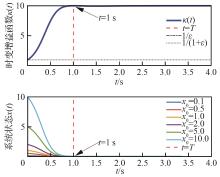
Fig.1
Time-varying gain function and state convergence curves
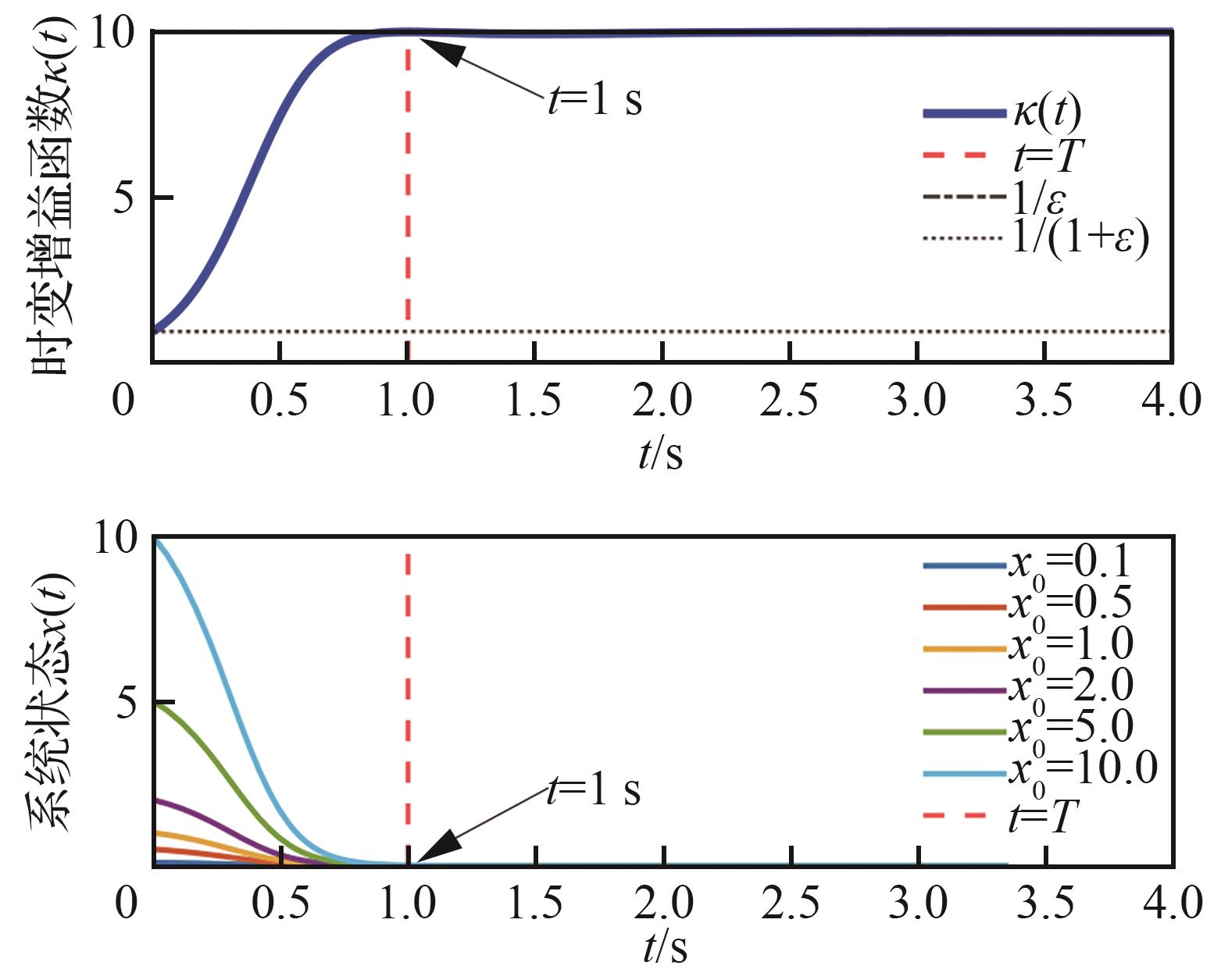
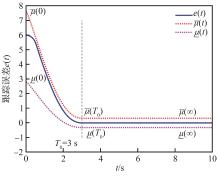
Fig.2
Monotonic preset boundary function
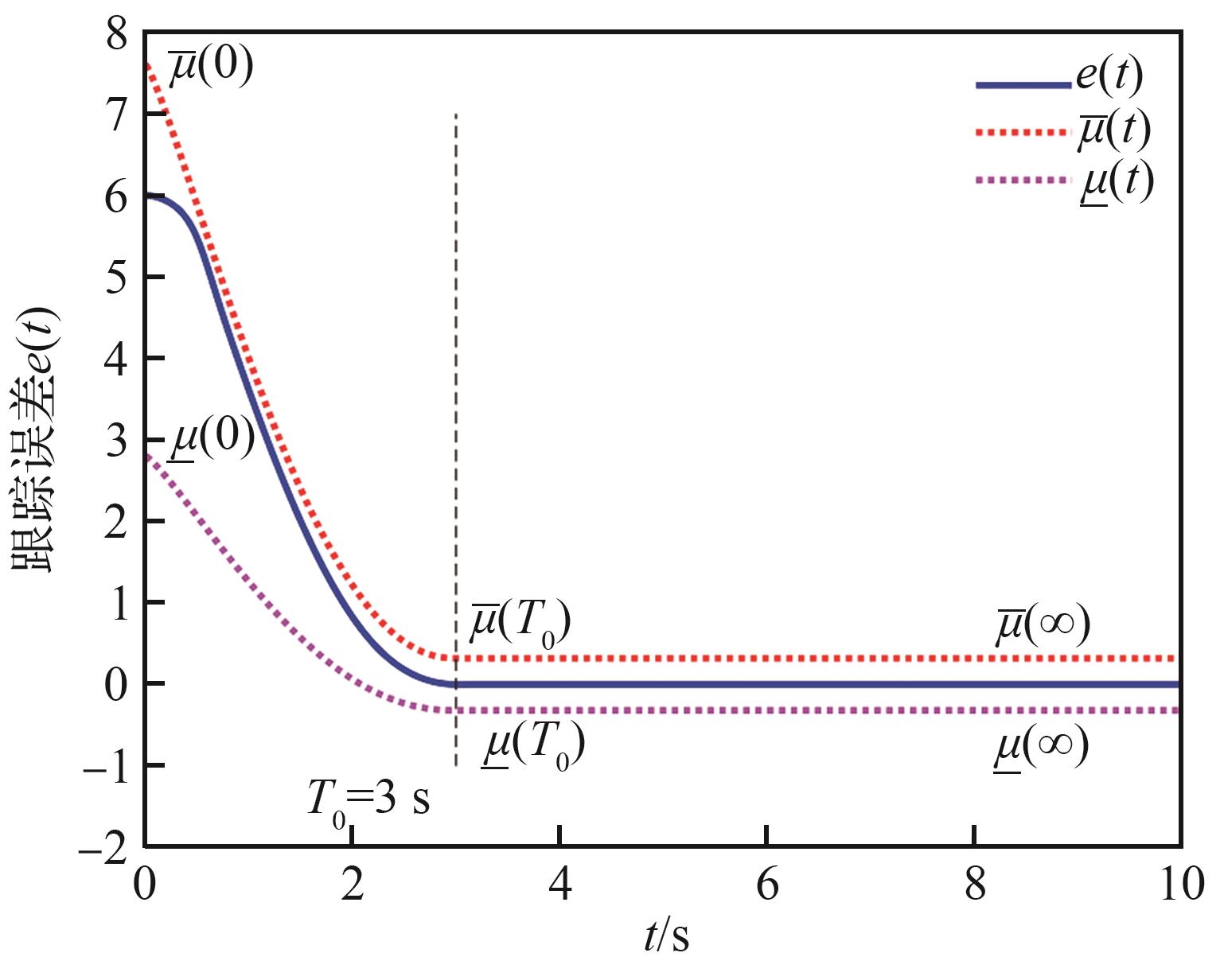
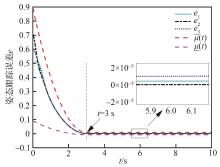
Fig.3
Attitude tracking error curves under initial condition ①
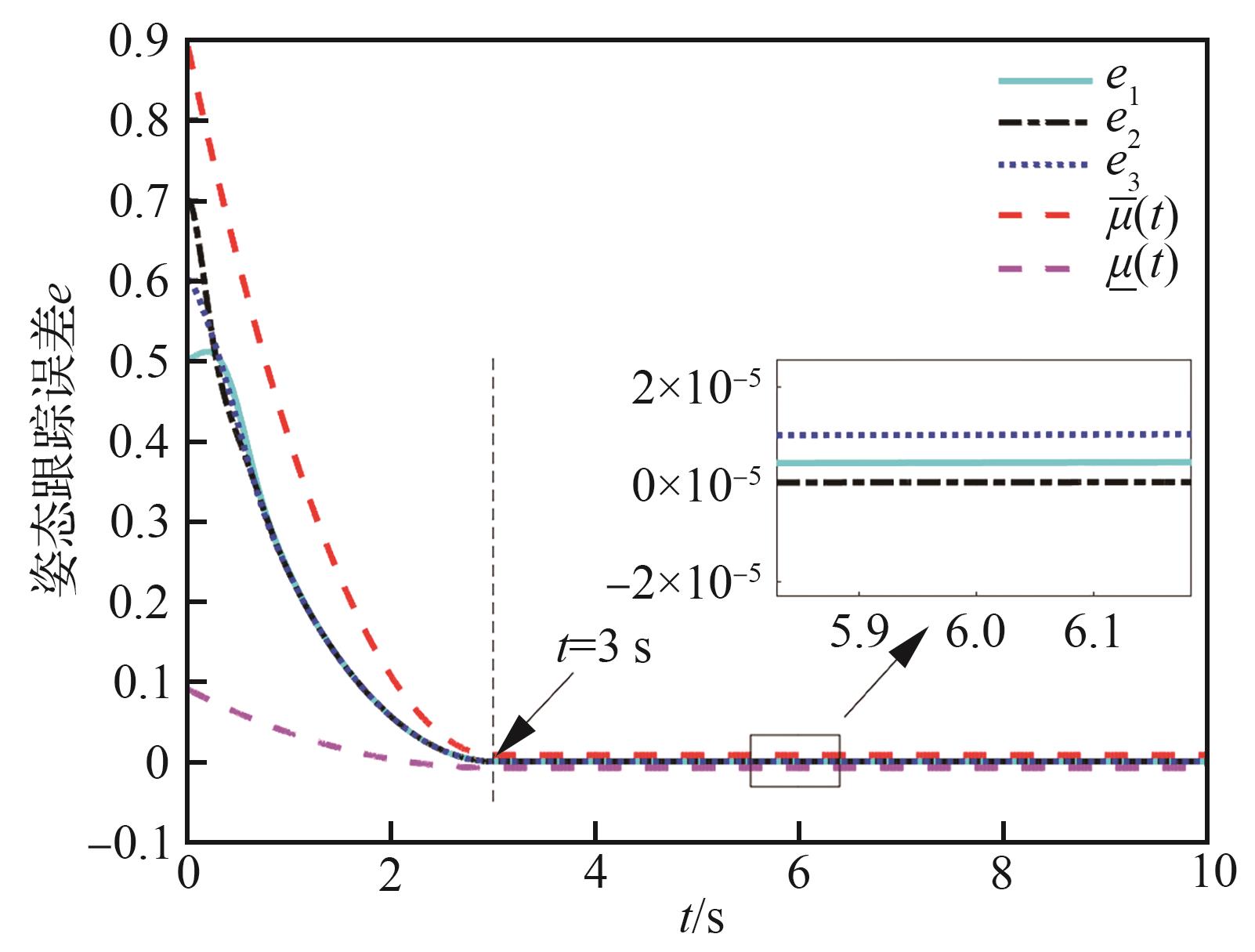
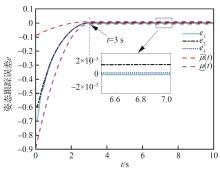
Fig.4
Attitude tracking error curves under initial condition ②
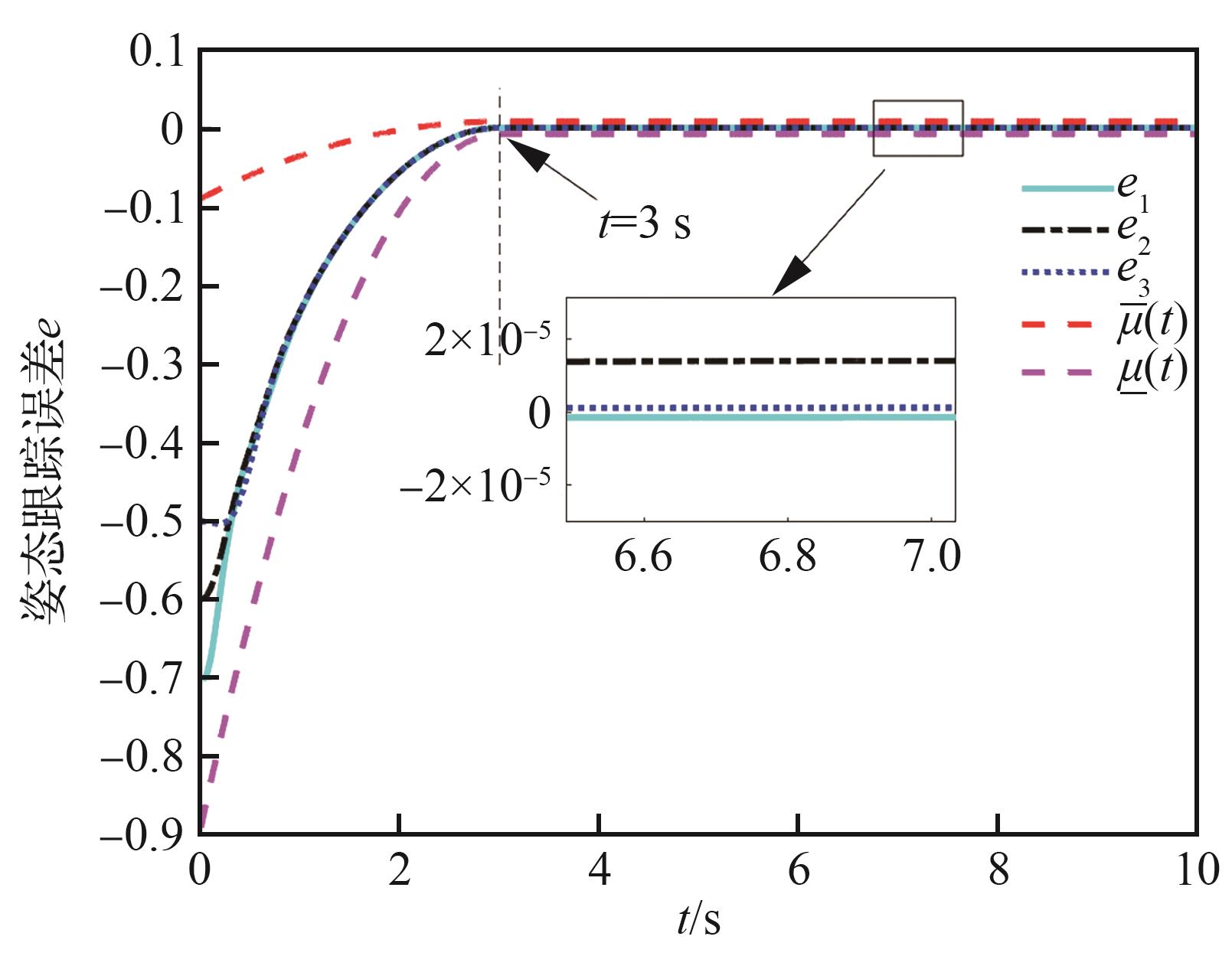
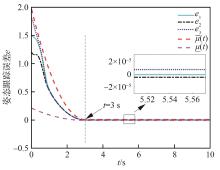
Fig.5
Attitude tracking error curves under initial condition ③
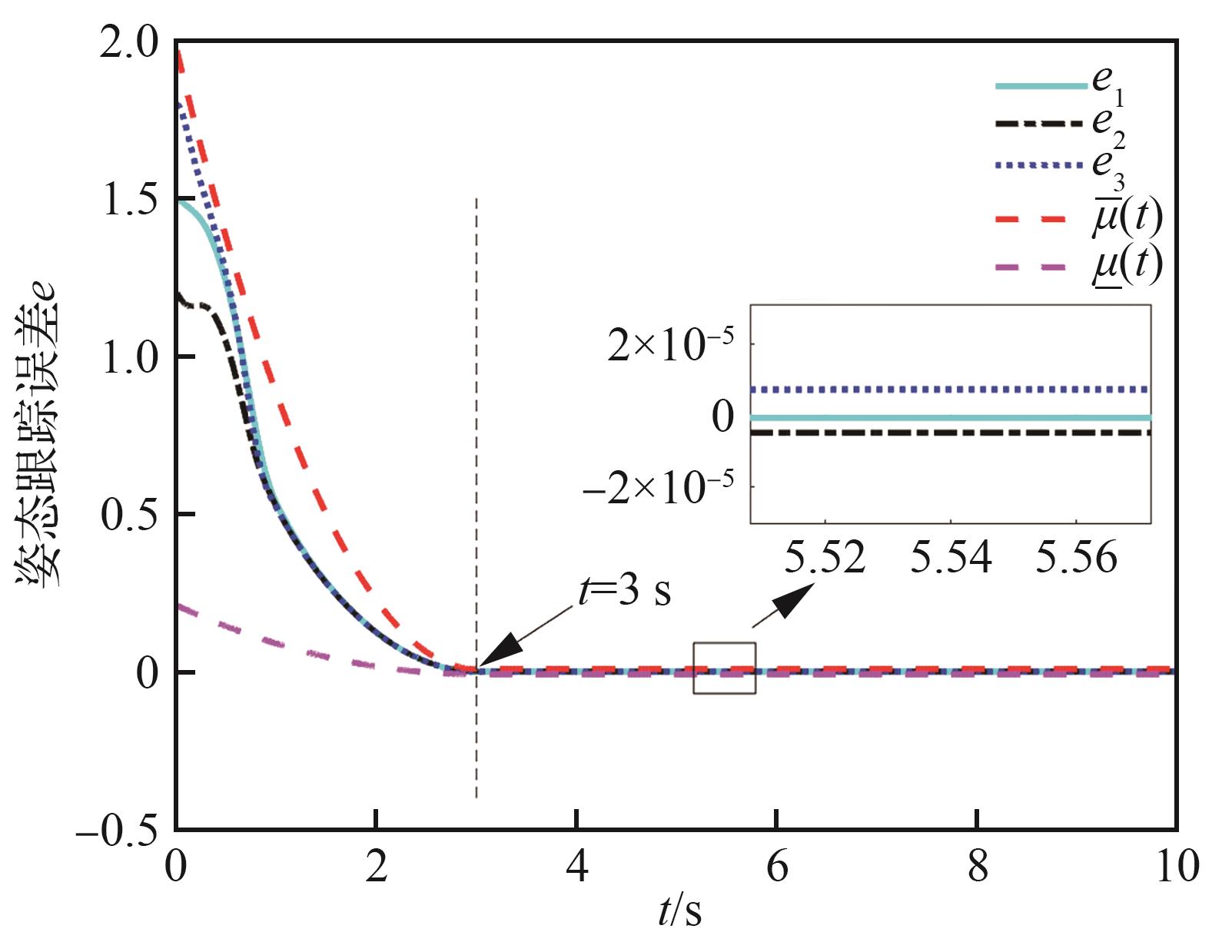
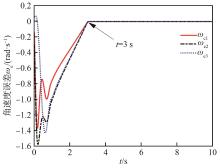
Fig.6
Angular velocity error curves under initial condition ①
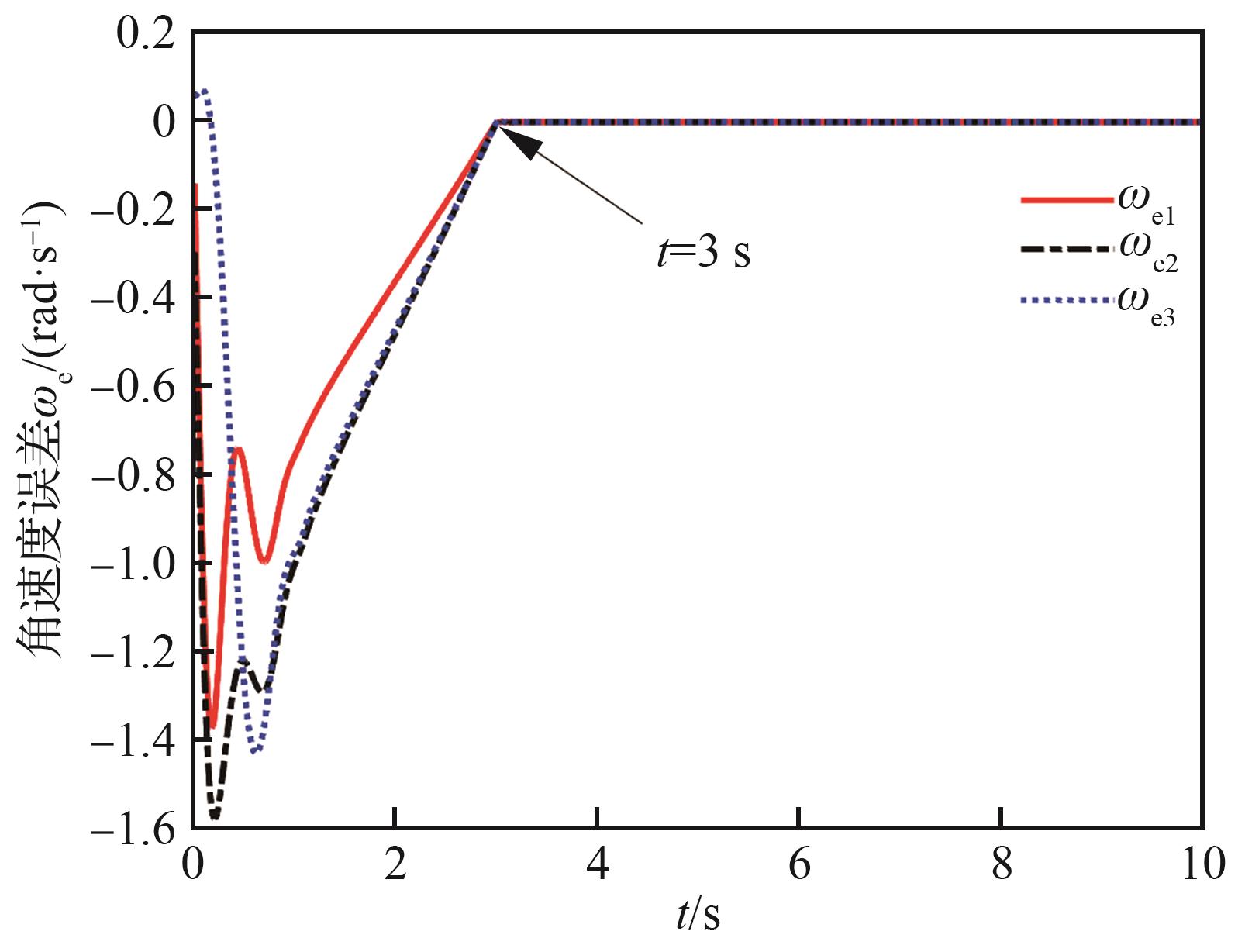
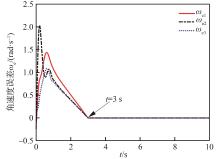
Fig.7
Angular velocity error curves under initial condition ②
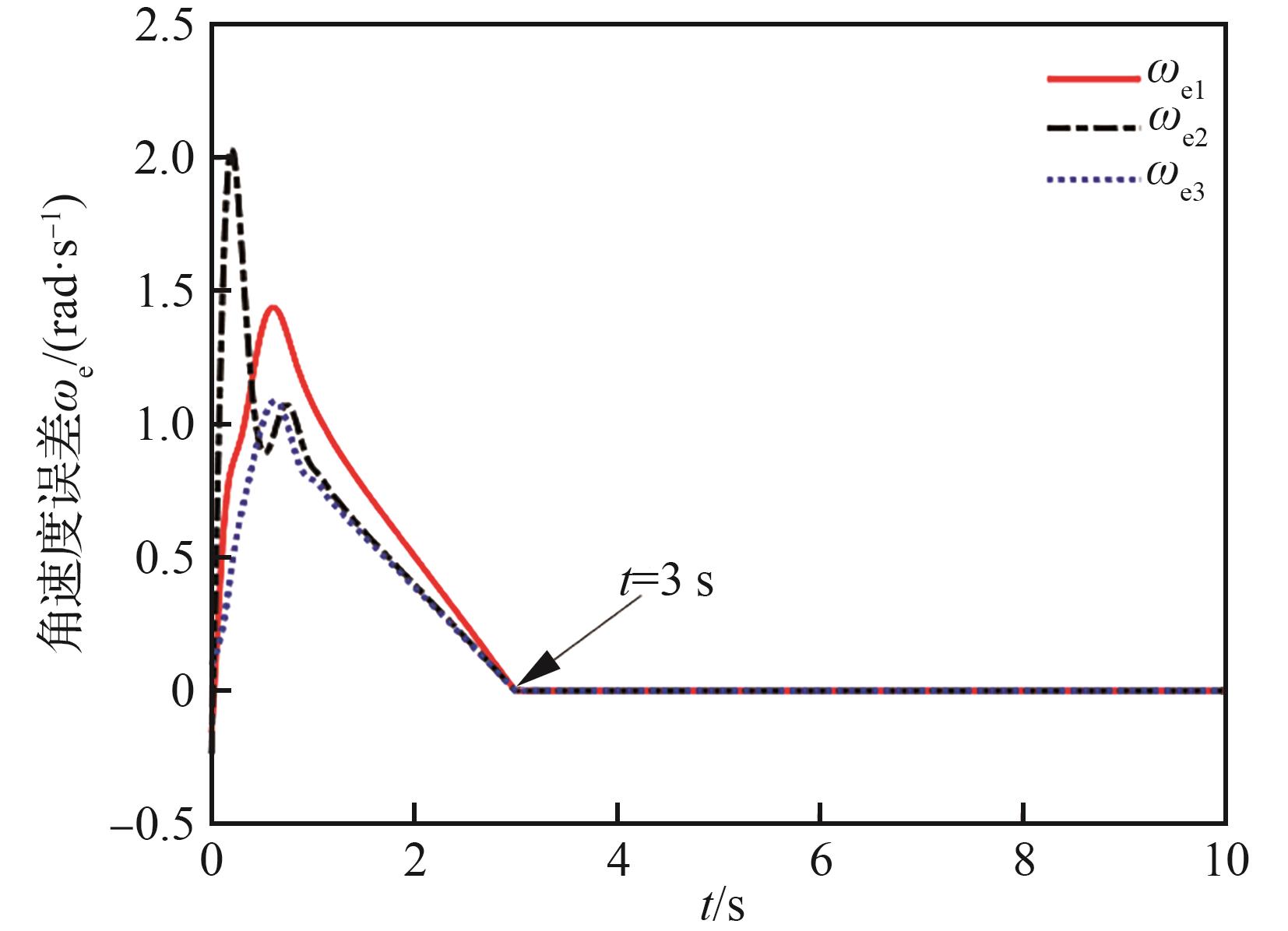
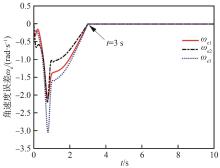
Fig.8
Angular velocity error curves under initial condition ③
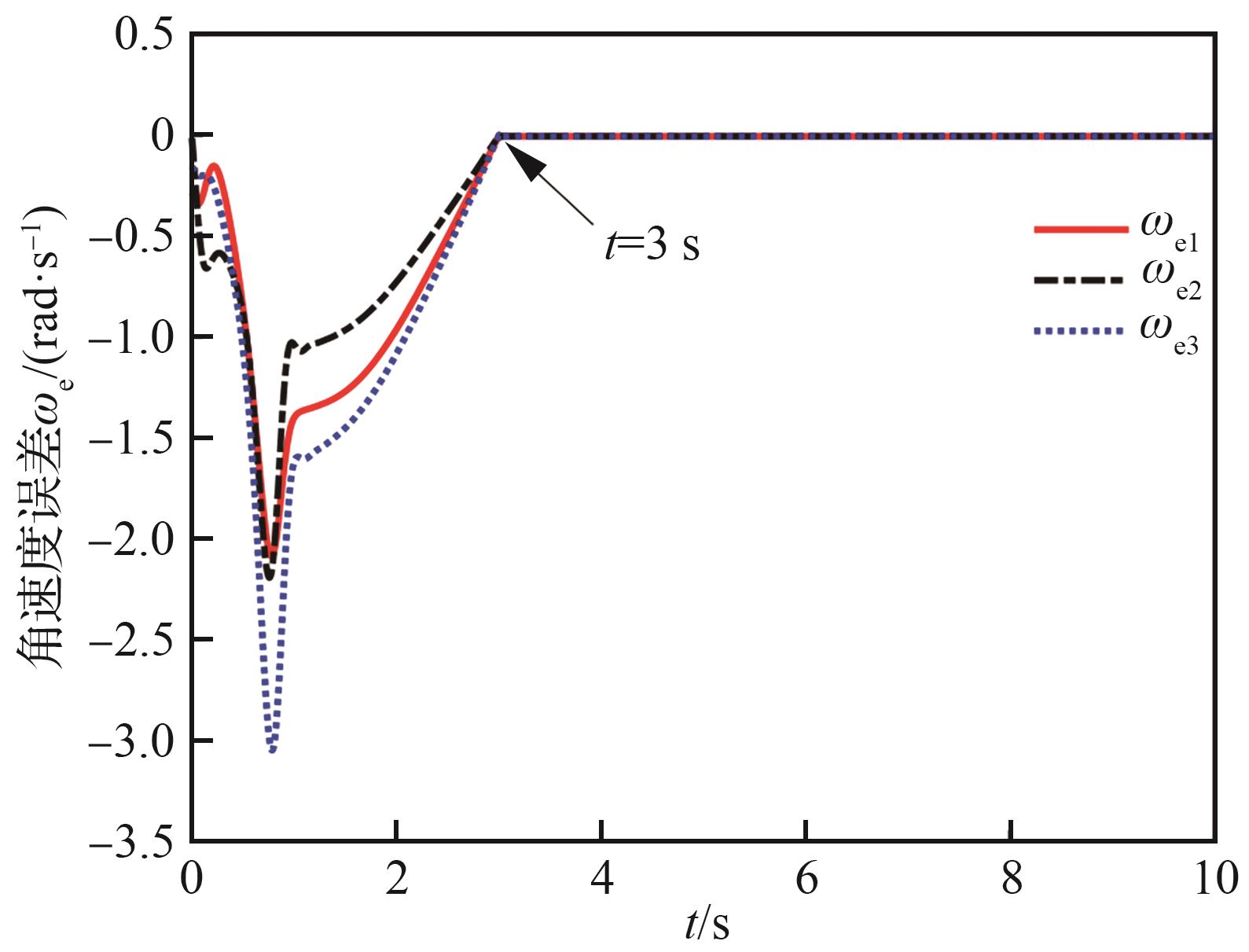
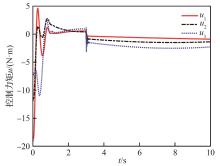
Fig.9
Control torque curves under initial condition ①
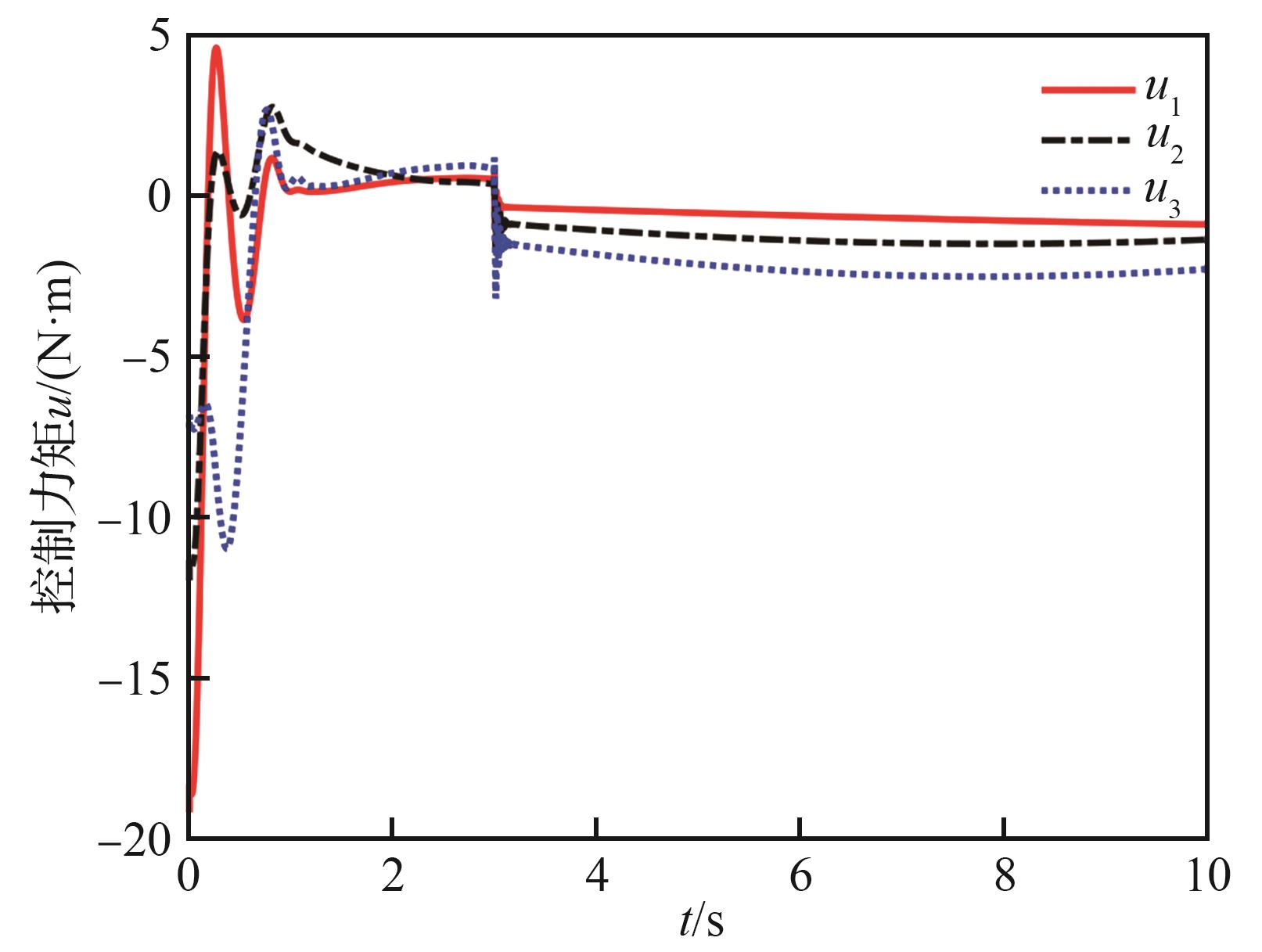
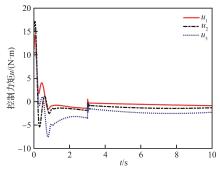
Fig.10
Control torque curves under initial condition ②
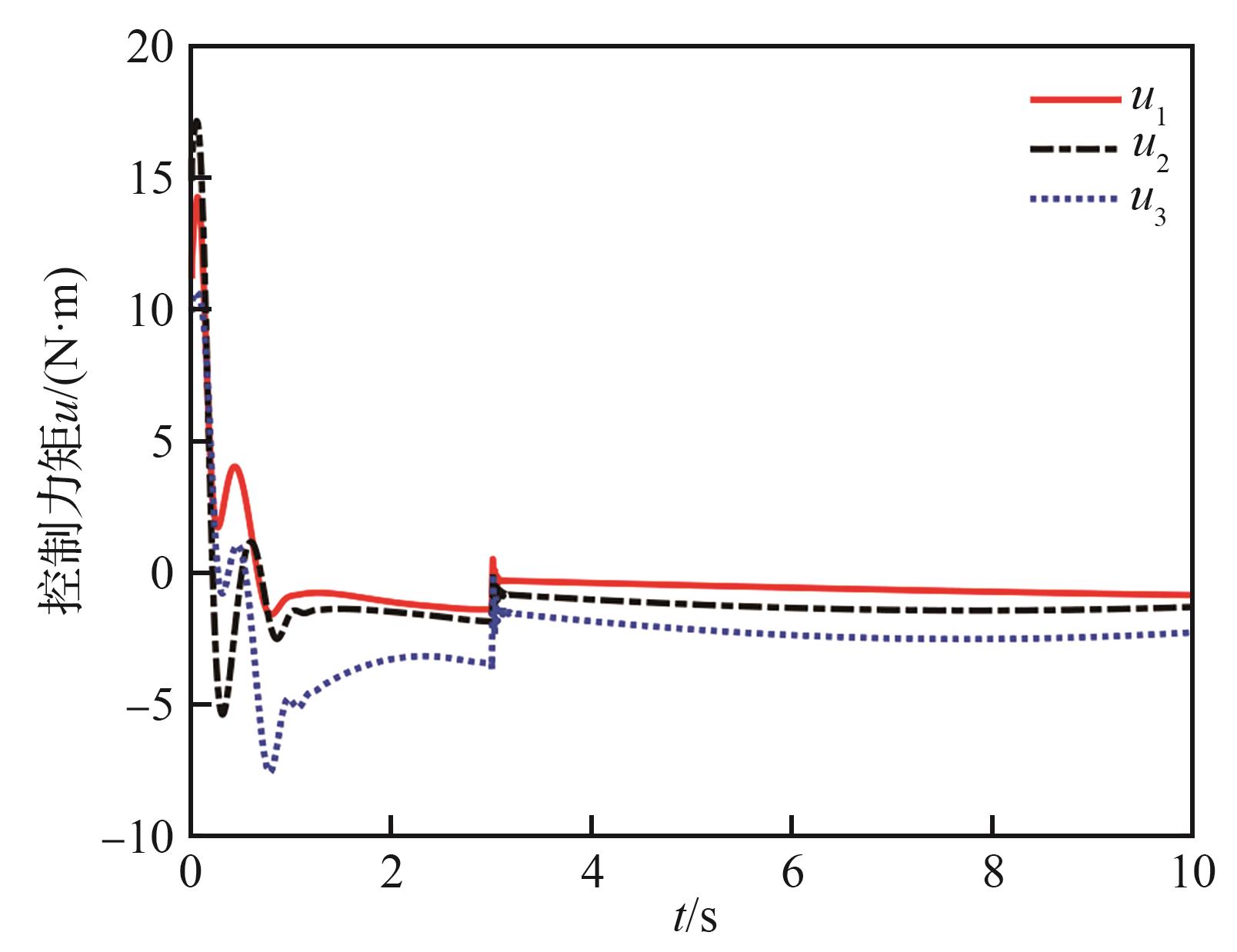
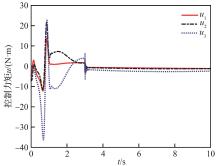
Fig.11
Control torque curves under initial condition ③
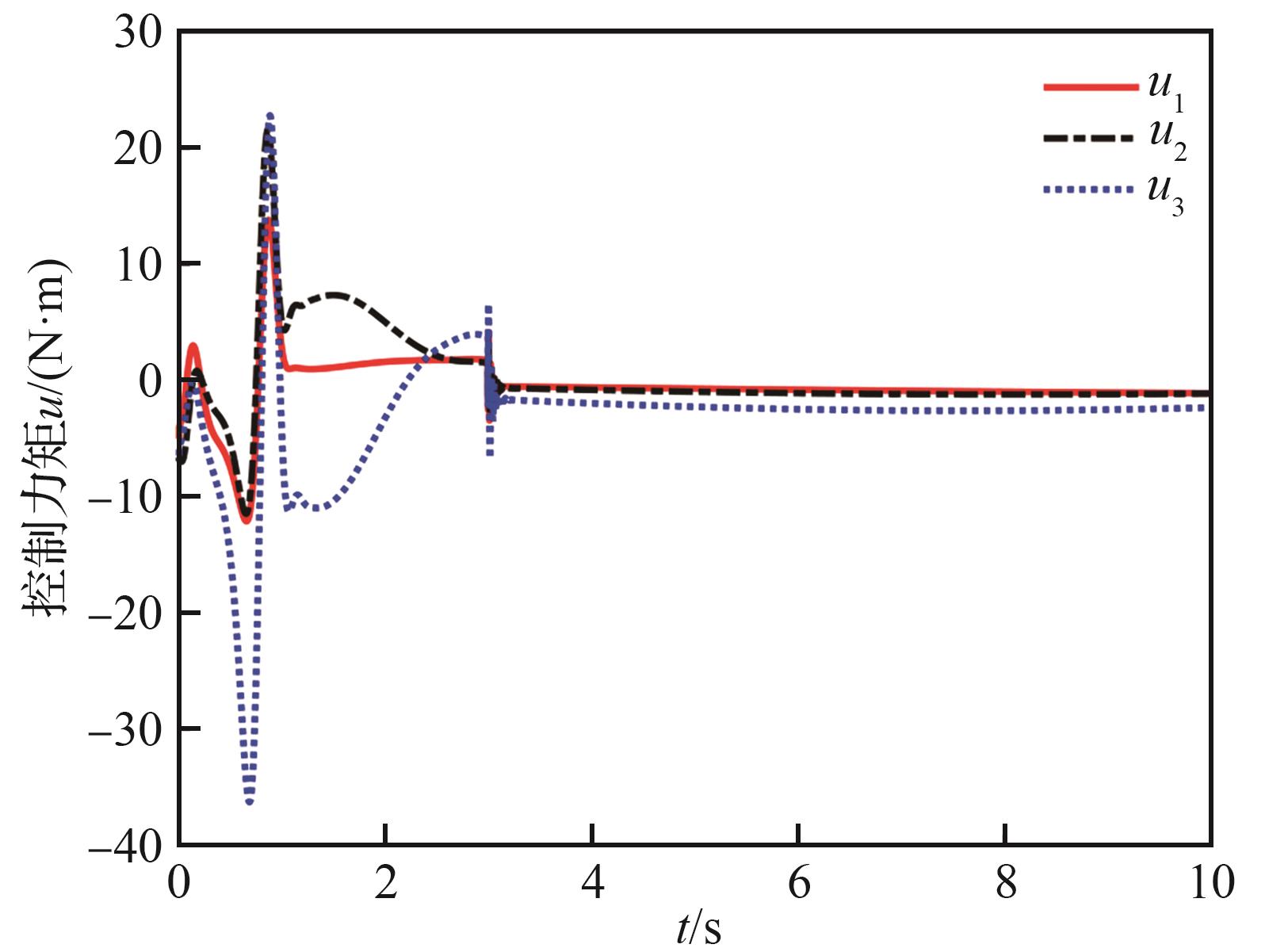
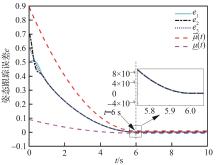
Fig.12
Attitude tracking error curves under T0=6 s
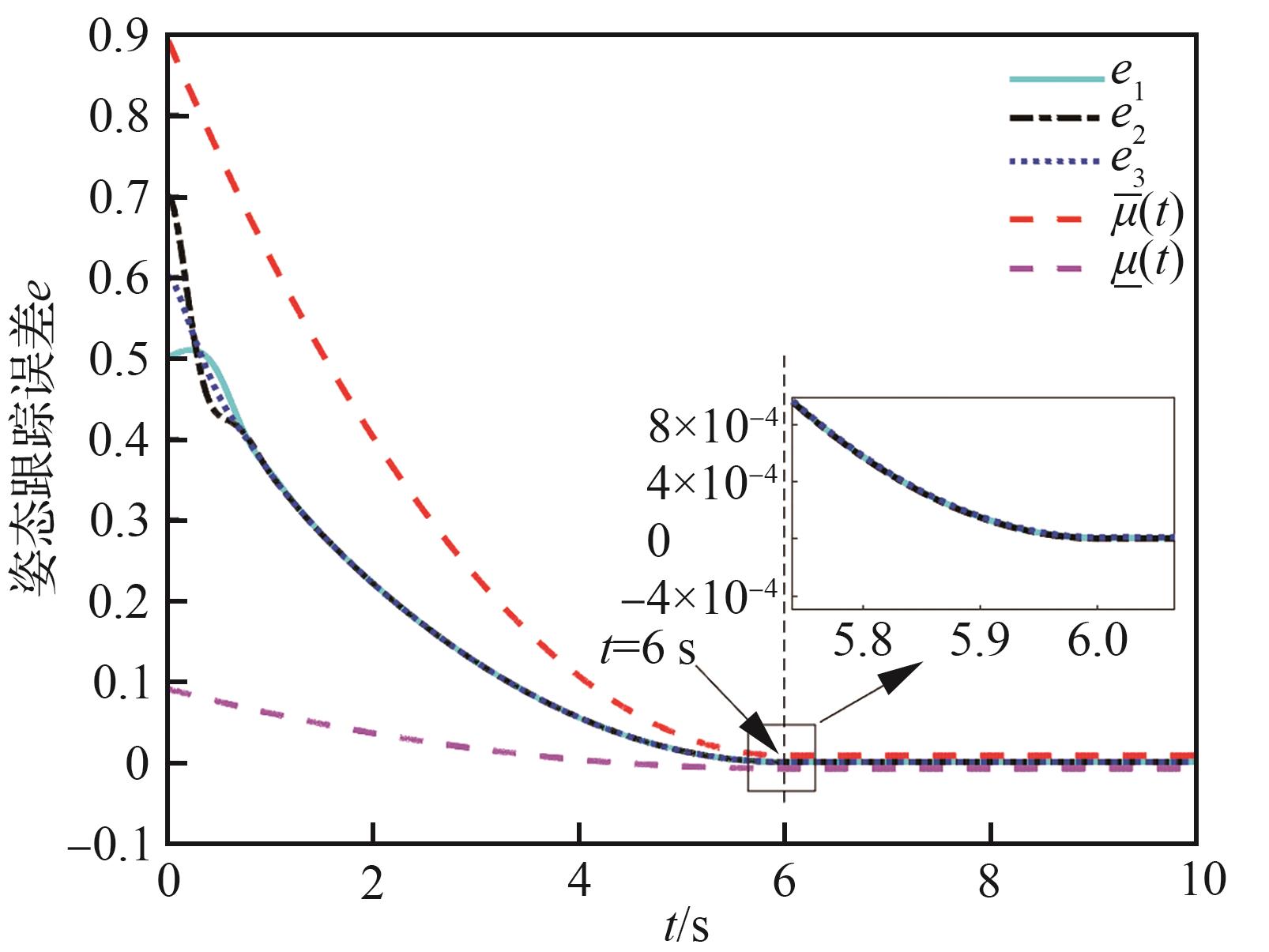
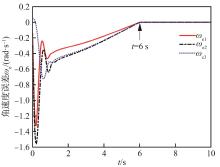
Fig.13
Angular velocity error curves under T0=6 s
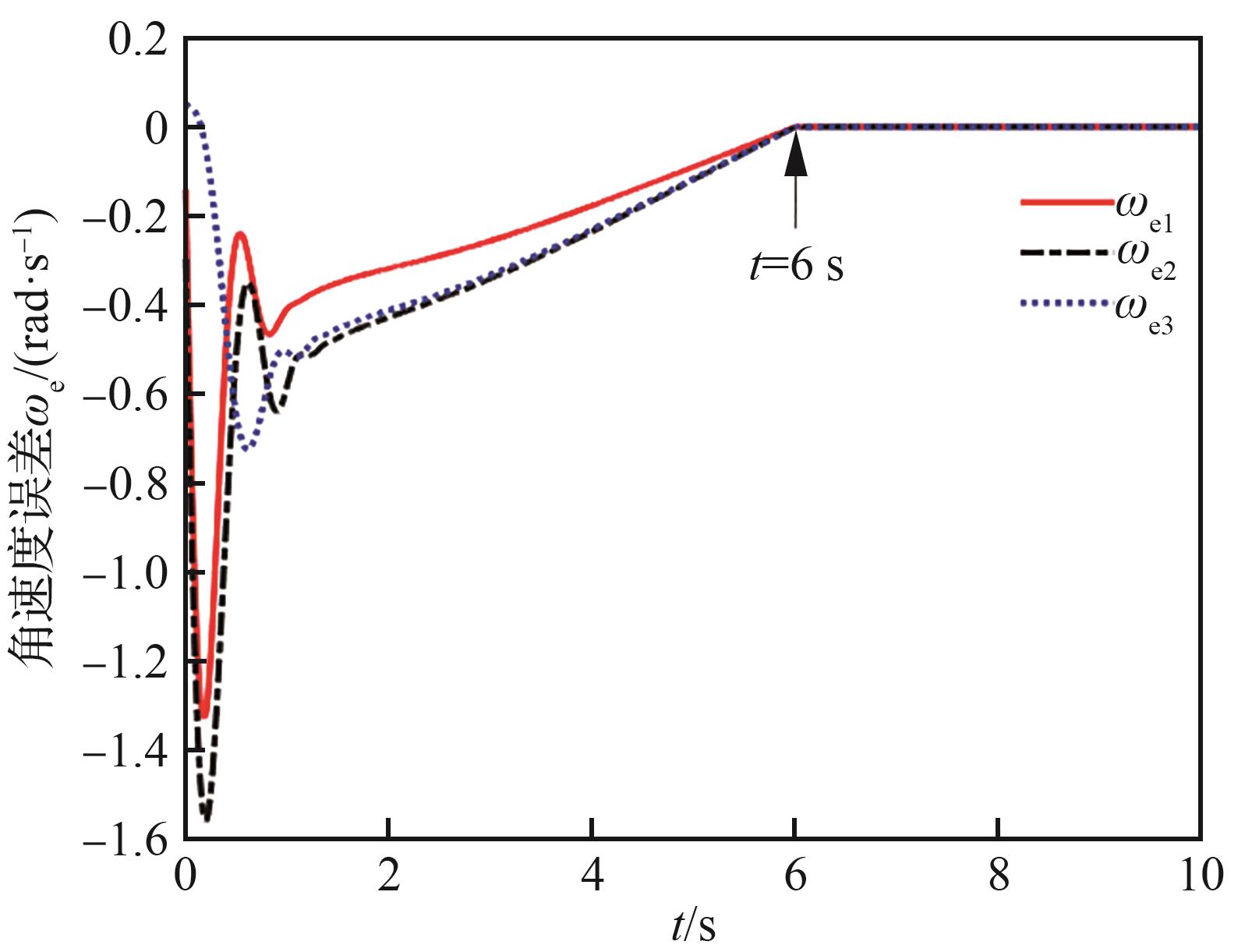
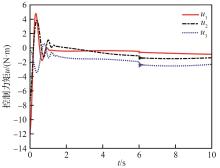
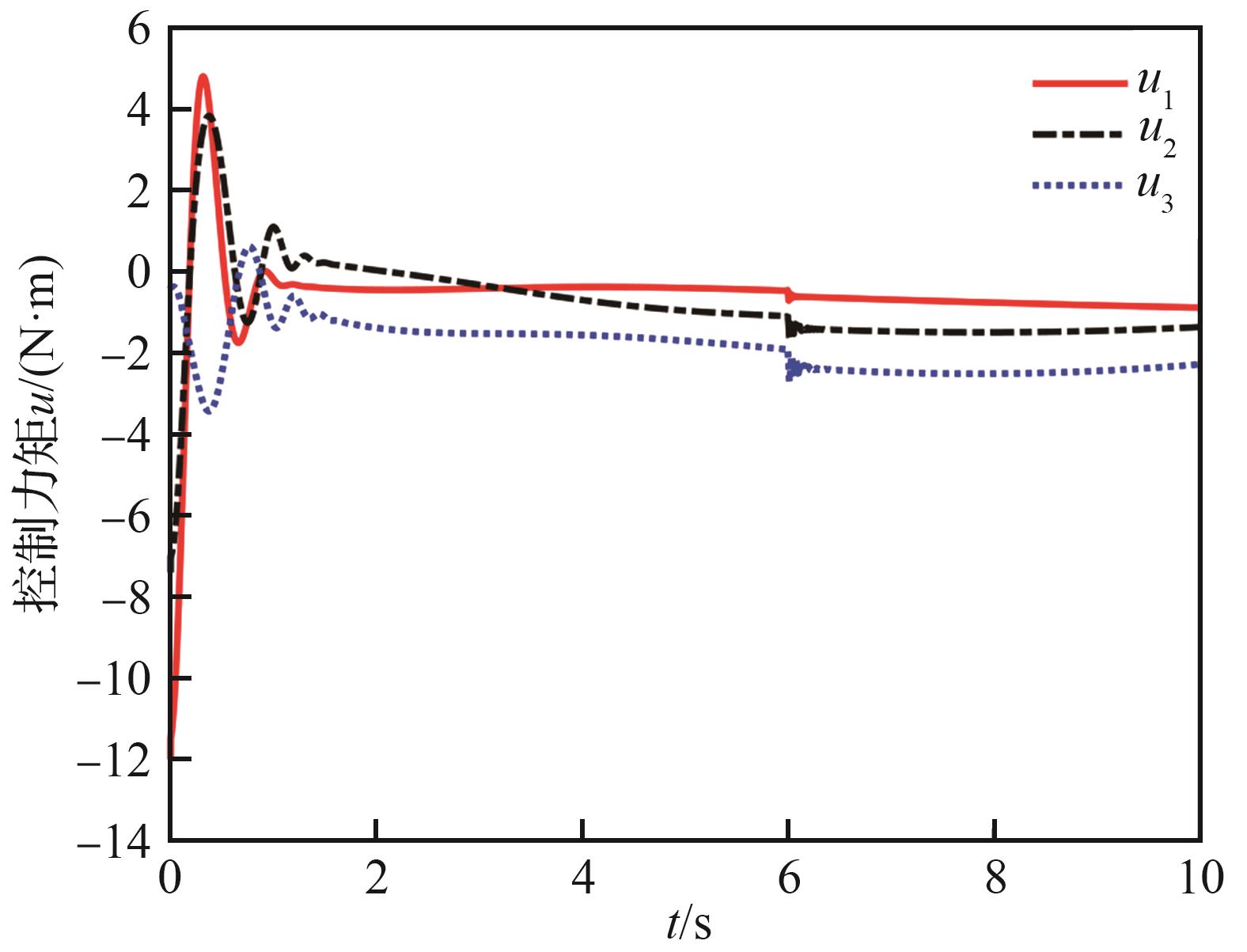
Fig.14
Control torque curves under T0=6 s
| [1] | CROUCH P. Spacecraft attitude control and stabilization: Applications of geometric control theory to rigid body models[J]. IEEE Transactions on Automatic Control, 1984, 29(4): 321-331. |
| [2] | 包为民. 航天飞行器控制技术研究现状与发展趋势[J]. 自动化学报, 2013, 39(6): 697-702. |
| BAO W M. Present situation and development tendency of aerospace control techniques[J]. Acta Automatica Sinica, 2013, 39(6): 697-702 (in Chinese). | |
| [3] | CHEN Z Y, HUANG J. Attitude tracking and disturbance rejection of rigid spacecraft by adaptive control[J]. IEEE Transactions on Automatic Control, 2009, 54(3): 600-605. |
| [4] | 方乐言, 蒙晗, 侯明哲. 带有参数精确估计的迭代学习滑模控制及应用[J]. 航空学报, 2024, 45(1): 628889. |
| FANG L Y, MENG H, HOU M Z. Iterative learning sliding mode control with precise parameter estimation and its application[J]. Acta Aeronautica et Astronautica Sinica, 2024, 45(1): 628889 (in Chinese). | |
| [5] | WU B L, CAO X B. Robust attitude tracking control for spacecraft with quantized torques[J]. IEEE Transactions on Aerospace and Electronic Systems, 2018, 54(2): 1020-1028. |
| [6] | BHAT S P, BERNSTEIN D S. Continuous finite-time stabilization of the translational and rotational double integrators[J]. IEEE Transactions on Automatic Control, 1998, 43(5): 678-682. |
| [7] | 王辉, 胡庆雷, 石忠, 等. 基于反步法的航天器有限时间姿态跟踪容错控制[J]. 航空学报, 2015, 36(6): 1933-1939. |
| WANG H, HU Q L, SHI Z, et al. Backstepping-based finite-time fault-tolerant attitude tracking control for spacecraft[J]. Acta Aeronautica et Astronautica Sinica, 2015, 36(6): 1933-1939 (in Chinese). | |
| [8] | ESMAEILZADEH S M, ZEYGHAMI M S. Nonlinear finite time attitude control of flexible spacecraft based on a novel output redefinition method[J]. Chinese Journal of Aeronautics, 2023, 36(11): 373-385. |
| [9] | ZHAO L, YU J P, CHEN X K. Neural-network-based adaptive finite-time output feedback control for spacecraft attitude tracking[J]. IEEE Transactions on Neural Networks and Learning Systems, 2023, 34(10): 8116-8123. |
| [10] | POLYAKOV A. Nonlinear feedback design for fixed-time stabilization of linear control systems[J]. IEEE Transactions on Automatic Control, 2012, 57(8): 2106-2110. |
| [11] | CHEN Q, XIE S Z, SUN M X, et al. Adaptive nonsingular fixed-time attitude stabilization of uncertain spacecraft[J]. IEEE Transactions on Aerospace and Electronic Systems, 2018, 54(6): 2937-2950. |
| [12] | 许闯, 吴宝林. 输入饱和下多航天器分布式固定时间输出反馈姿态协同控制[J]. 航空学报, 2023, 44(10): 327465. |
| XU C, WU B L. Distributed fixed-time output-feedback attitude consensus control for multiple spacecraft with input saturation[J]. Acta Aeronautica et Astronautica Sinica, 2023, 44(10): 327465 (in Chinese). | |
| [13] | HU Q L, CHEN W, GUO L, et al. Adaptive fixed-time attitude tracking control of spacecraft with uncertainty-rejection capability[J]. IEEE Transactions on Systems, Man, and Cybernetics: Systems, 2022, 52(7): 4634-4647. |
| [14] | SONG Y D, WANG Y J, HOLLOWAY J, et al. Time-varying feedback for regulation of normal-form nonlinear systems in prescribed finite time[J]. Automatica, 2017, 83: 243-251. |
| [15] | 石尚, 张国胜, 闵惠芳. 非匹配条件下非线性系统的指定时间二阶滑模控制[J]. 控制与决策, 2024, 39(9): 3043-3051. |
| SHI S, ZHANG G S, MIN H F. Prescribed-time SOSM control of nonlinear systems subject to mismatched terms[J]. Control and Decision, 2024, 39(9): 3043-3051 (in Chinese). | |
| [16] | SHI H H, XIE S Z, CHEN Q, et al. Adaptive tunable predefined-time backstepping control for uncertain robotic manipulators[J]. IECE Transactions on Sensing, Communication, and Control, 2024, 1(2): 126-135. |
| [17] | HUA C C, LI H, LI K, et al. Adaptive prescribed-time stabilization of uncertain nonlinear systems with unknown control directions[J]. IEEE Transactions on Automatic Control, 2024, 69(6): 3968-3974. |
| [18] | LI D Y, ZHANG L, MO C S, et al. Application of improved appointed time control in helicopter mode of a tilt-rotor eVTOL aircraft[J]. Aerospace Science and Technology, 2024, 153: 109447. |
| [19] | ZHANG Y, CHADLI M, XIANG Z R. Prescribed-time adaptive fuzzy optimal control for nonlinear systems[J]. IEEE Transactions on Fuzzy Systems, 2024, 32(4): 2403-2412. |
| [20] | YAO Y G, KANG Y, ZHAO Y B, et al. A novel prescribed-time control approach of state-constrained high-order nonlinear systems[J]. IEEE Transactions on Systems, Man, and Cybernetics: Systems, 2024, 54(5): 2941-2951. |
| [21] | CHEN Z R, JU X Z, WANG Z W, et al. The prescribed time sliding mode control for attitude tracking of spacecraft[J]. Asian Journal of Control, 2022, 24(4): 1650-1662. |
| [22] | XIAO Y, YANG Y L, YE D, et al. Scaling-transformation-based attitude tracking control for rigid spacecraft with prescribed time and prescribed bound[J]. IEEE Transactions on Aerospace and Electronic Systems, 2025, 61(1): 433-442. |
| [23] | BECHLIOULIS C P, ROVITHAKIS G A. Robust adaptive control of feedback linearizable MIMO nonlinear systems with prescribed performance[J]. IEEE Transactions on Automatic Control, 2008, 53(9): 2090-2099. |
| [24] | LEI J K, MENG T, LI D Y, et al. Switched hybrid control for spacecraft attitude control with flexible and guaranteed performance[J]. IEEE Transactions on Control Systems Technology, 2025, 33(2): 582-596. |
| [25] | SHAO X D, HU Q L, SHI Y, et al. Fault-tolerant prescribed performance attitude tracking control for spacecraft under input saturation[J]. IEEE Transactions on Control Systems Technology, 2020, 28(2): 574-582. |
| [26] | GOLESTANI M, MOBAYEN S, DIN S U, et al. Prescribed performance attitude stabilization of a rigid body under physical limitations[J]. IEEE Transactions on Aerospace and Electronic Systems, 2022, 58(5): 4147-4155. |
| [27] | LEI J K, MENG T, WANG W J, et al. Singularity-avoidance prescribed performance control for spacecraft attitude tracking[J]. IEEE Transactions on Aerospace and Electronic Systems, 2023, 59(5): 5405-5421. |
| [28] | XIE S Z, CHEN Q, YANG Q M. Adaptive fuzzy predefined-time dynamic surface control for attitude tracking of spacecraft with state constraints[J]. IEEE Transactions on Fuzzy Systems, 2023, 31(7): 2292-2304. |
| [29] | XIE S Z, CHEN Q, HE X X. Predefined-time approximation-free attitude constraint control of rigid spacecraft[J]. IEEE Transactions on Aerospace and Electronic Systems, 2023, 59(1): 347-358. |
| [30] | SIDI M J. Spacecraft dynamics and control[M]. Cambridge: Cambridge University Press, 1997: 64-66. |
| [1] | Qinbo SUN, Zhaohui DANG. Spacecraft guardian strategy design via motion-intent recognition [J]. Acta Aeronautica et Astronautica Sinica, 2026, 47(S1): 733013-733013. |
| [2] | Yaping SUN, Yong WANG, Shuang YUAN, Housheng SU, Suoxia MIAO, Xinsong YANG. Fully distributed scaled consensus for switched multi-agent systems [J]. Acta Aeronautica et Astronautica Sinica, 2026, 47(S1): 732998-732998. |
| [3] | Yuhan ZHANG, Cheng XU, Hua JI, Mingjun WEI. Adaptive formation rendezvous control for aerial refueling based on total energy method [J]. Acta Aeronautica et Astronautica Sinica, 2026, 47(S1): 732997-732997. |
| [4] | Ming LIU, Jiao WU. Neural network-assisted cooperative navigation of spacecraft clusters under GNSS denials [J]. Acta Aeronautica et Astronautica Sinica, 2026, 47(9): 532303-532303. |
| [5] | Qie LIU, Junying LU, Fei XIE, Wenbo LI. Adaptive hybrid dynamic programming for fault-tolerant attitude control of underactuated spacecraft [J]. Acta Aeronautica et Astronautica Sinica, 2026, 47(9): 532531-532531. |
| [6] | Jianfeng WU, Yi DING, Bin ZHOU. Prescribed-time attitude tracking control for spacecraft based on periodic delayed feedback [J]. Acta Aeronautica et Astronautica Sinica, 2026, 47(9): 0-532776-. |
| [7] | Dawei WANG, Dong YE, Yan XIAO, Haiyang LI. Design and analysis of asymmetric resonant Halo orbits for solar sail spacecraft [J]. Acta Aeronautica et Astronautica Sinica, 2026, 47(6): 332576-332576. |
| [8] | Xin HUANG, Jiahe ZOU, Shuyi XIAO, Xiaohang LI. An adaptive control strategy for defending against cyber stealthy attacks [J]. Acta Aeronautica et Astronautica Sinica, 2026, 47(4): 332290-332290. |
| [9] | Yuying GUO, Lanxin LIAO, Xiaoqiang ZHANG, Youmin ZHANG, Kai WANG. Finite-time fault-tolerant control of compound actuator faults for unmanned aerial vehicles [J]. Acta Aeronautica et Astronautica Sinica, 2026, 47(4): 332659-332659. |
| [10] | Cheng LUO, Guiping LIN, Min LUO, Yuandong GUO. Thermally induced vibration and suppression of space deployable antenna support structures [J]. Acta Aeronautica et Astronautica Sinica, 2026, 47(14): 232798-232798. |
| [11] | Dapeng ZHOU, Chong ZHEN, Xiaolei QU, Fei LUO. Hybrid active-passive fault-tolerant control for carrier landing subject to control surface effectiveness loss [J]. Acta Aeronautica et Astronautica Sinica, 2026, 47(11): 332544-332544. |
| [12] | Ronghai KOU, Wenbo LI, Qingqing DANG, Jinjin XIE. Fault diagnosis of spacecraft attitude control system driven by data and model [J]. Acta Aeronautica et Astronautica Sinica, 2025, 46(S1): 732259-732259. |
| [13] | Yifan WANG, Xiyun GUO, Shiyuan JIA, Gang CHEN, Mo REN. Configuration optimization method of three-branch robot for truss holding [J]. Acta Aeronautica et Astronautica Sinica, 2025, 46(7): 431033-431033. |
| [14] | Naigang CUI, Guoxin QU, Xinhai MA, Shihao XU, Changzhu WEI. Adaptive prescribed-time/performance control for plane-symmetric aircraft in boost phase [J]. Acta Aeronautica et Astronautica Sinica, 2025, 46(6): 531470-531470. |
| [15] | Zhengyu SONG. Promoting continuous innovation in space transportation systems: Control technologies and challenges [J]. Acta Aeronautica et Astronautica Sinica, 2025, 46(6): 531446-531446. |
| Viewed | ||||||
|
Full text |
|
|||||
|
Abstract |
|
|||||
Address: No.238, Baiyan Buiding, Beisihuan Zhonglu Road, Haidian District, Beijing, China
Postal code : 100083
E-mail:hkxb@buaa.edu.cn
Total visits: 6658907 Today visits: 1341All copyright © editorial office of Chinese Journal of Aeronautics
All copyright © editorial office of Chinese Journal of Aeronautics
Total visits: 6658907 Today visits: 1341

 CJA
CJA
